The Meaning Behind Seeing A Gila Monster In Your Arizona Yard For The First Time In Years
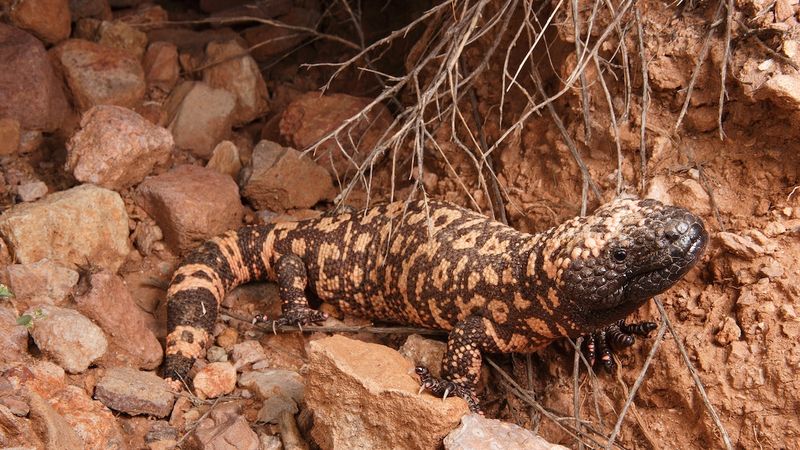
Stepping outside on a warm Arizona morning and spotting a Gila monster near your garden wall is the kind of moment that stops you cold. These heavy-bodied, bead-scaled lizards are so secretive that many Arizona residents go years, sometimes decades, without ever laying eyes on one.
Whether you live in the Phoenix metro or the Tucson foothills, a first sighting in years naturally raises questions about what it means, what to do, and whether the animal signals something bigger. This article separates personal wonder from science, cultural folklore from verified biology, and curiosity from unnecessary fear.
What Does Seeing a Gila Monster Mean in Arizona?
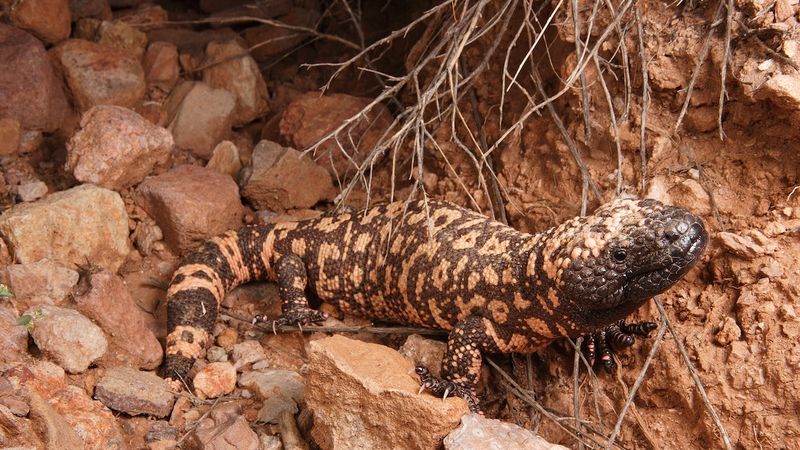
Spotting a Gila monster in an Arizona yard after years without one is a genuinely unusual encounter, and it is completely natural to wonder whether it carries a deeper message. Science, however, does not assign a universal omen to the sighting.
No peer-reviewed study connects a Gila monster appearing in a yard to incoming luck, financial change, personal transformation, or looming danger. National Park Service guidance on the Gila monster describes a rarely seen, largely underground animal, not a sign-bearer with a coded message for the homeowner who happens to catch a glimpse.
That said, dismissing your reaction entirely would miss something real. Arizona has a way of making the desert feel alive, and seeing one of its most secretive reptiles up close can inspire honest reflection.
Themes of patience, resilience, survival, and respect for the Sonoran Desert are all reasonable personal interpretations of the encounter. Treating the sighting as a prompt for quiet wonder is very different from treating it as a prediction.
The key distinction is between what the moment means to you and what documented behavior can actually establish. The animal was present in Arizona habitat that may have offered shelter, prey, water, or a travel route.
Beyond that, the sighting remains an unusual, memorable gift from the Arizona desert, not a forecast.
Why Arizona Homeowners Rarely See This Secretive Lizard
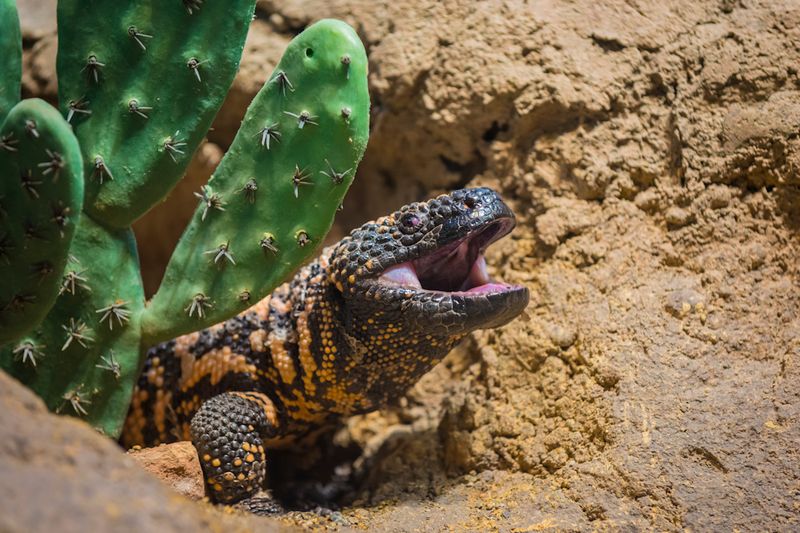
Most Arizona residents who have lived here for decades never see a Gila monster in the wild, and that is not a coincidence. Organ Pipe Cactus National Monument wildlife records note that Gila monsters spend roughly 90 to 95 percent of their lives underground, sheltering in burrows and rocky crevices.
An animal that is underground nearly all the time simply does not cross paths with Arizona homeowners very often, no matter how many are living in the surrounding desert.
When Gila monsters do come above ground in Arizona, they tend to do so during favorable conditions, particularly in spring and early summer when temperatures are warm but not yet extreme, and sometimes during the monsoon season. The exact timing shifts with temperature, weather patterns, and the specific location within Arizona.
A yard sighting in April feels different from one in July, but both reflect the animal following its own internal schedule rather than delivering a message.
Seeing one does not mean Arizona’s Gila monster population is growing or shrinking in your neighborhood. The rarity of the experience reflects the animal’s secretive habits, full stop.
Your Arizona Garden Changes Every Week. Your Plan Should Too.
Gardening in Arizona changes quickly throughout the season. Every Friday you’ll receive a simple weekly plan showing exactly what to plant, prune, fertilize, harvest, and protect so you never miss the right timing.
What an Arizona Yard May Offer a Gila Monster
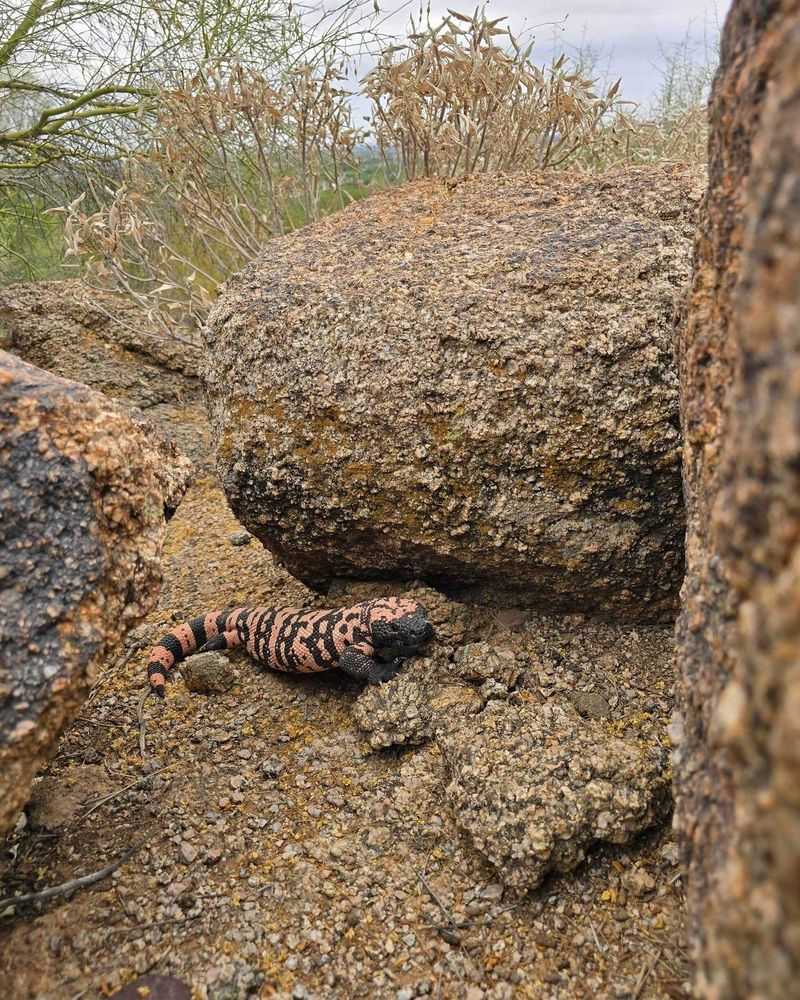
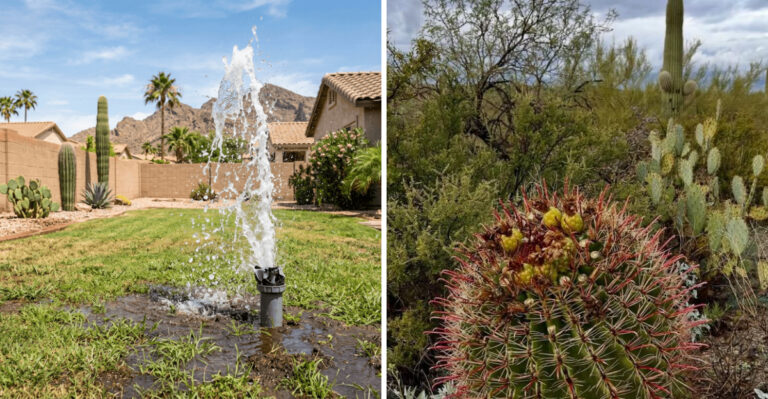
Arizona yards, especially those in the Phoenix and Tucson regions, often sit directly adjacent to desert washes, undeveloped lots, or rocky hillsides that form part of connected Sonoran Desert habitat. A Gila monster moving through that landscape may find a yard useful for several reasons, none of which require the homeowner to have done anything special to attract it.
Rocky borders, low block walls, wood piles, and dense native plantings all create the kind of cover the animal seeks.
Leaking irrigation lines, pet water bowls left outside, and birdbaths can make a yard a practical stop along a travel route. Prey availability, including bird eggs, lizard eggs, and young rodents, may also factor into why an animal passes through a particular Arizona property.
Crucially, one sighting does not mean the animal has set up permanent residence under your house or that your yard contains an active den. The animal may be moving through or using nearby habitat that happens to include your property.
Arizona yards are not isolated islands; they exist within a broader landscape that Gila monsters navigate on their own terms, and a single visit is just that, a visit whose exact reason remains unresolved.
Arizona Traditions Give the Sighting Different Meanings
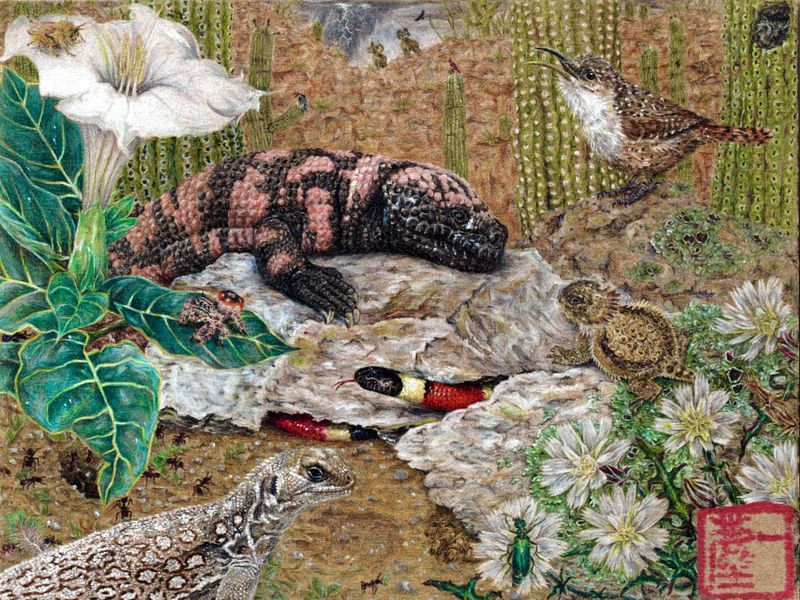
Cultural interpretations of the Gila monster in Arizona are real, but they require careful, specific attribution rather than a broad generalization. One documented example comes from ethnographic records: a Walapai belief, recorded in a University of Arizona Press ethnography of traditional Arizona Indian cultures, holds that disturbing a Gila monster could bring rain and destructive storms.
That is a specific belief tied to a specific community, not a universal Arizona rule.
Separately, some Navajo and other Southwestern traditions associate the Gila monster with healing or sacred knowledge. These associations are also community-specific and historically grounded.
Folding them all into one generic statement, such as claiming that Arizona people believe a Gila monster in the yard means rain is coming, would misrepresent traditions that are distinct from each other and from modern casual interpretation.
For Arizona homeowners today, the honest approach is to acknowledge these traditions with respect and precision rather than borrowing them loosely as personal omens. If the encounter sparks reflection on patience, endurance, or your own relationship with the Arizona desert, that is a legitimate personal response.
What the sighting does not do, by any scientific or broadly shared cultural standard, is guarantee a specific outcome. Personal meaning and verified cultural belief are two separate things, and keeping them separate honors both.
Identify the Arizona Animal Before You Interpret It
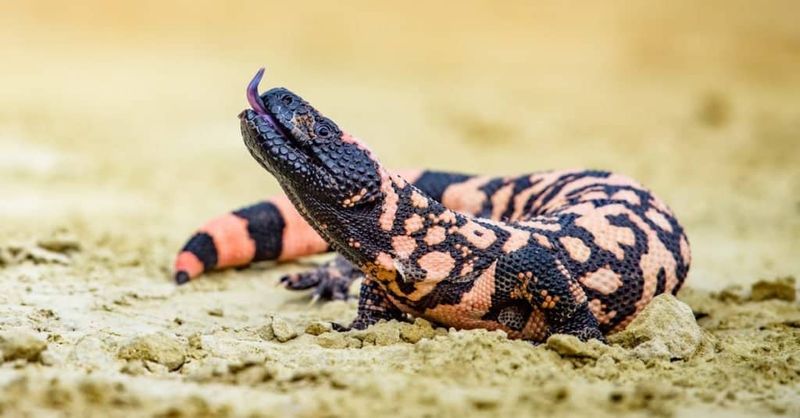
Before drawing any conclusions from a yard sighting in Arizona, confirming that you actually saw a Gila monster matters. Arizona is home to a variety of lizard species, and the Arizona Game and Fish Department master species list records Gila monsters and horned lizards as entirely distinct animals.
The safety guidance in this article applies specifically to a Gila monster, not to every lizard that wanders through an Arizona yard.
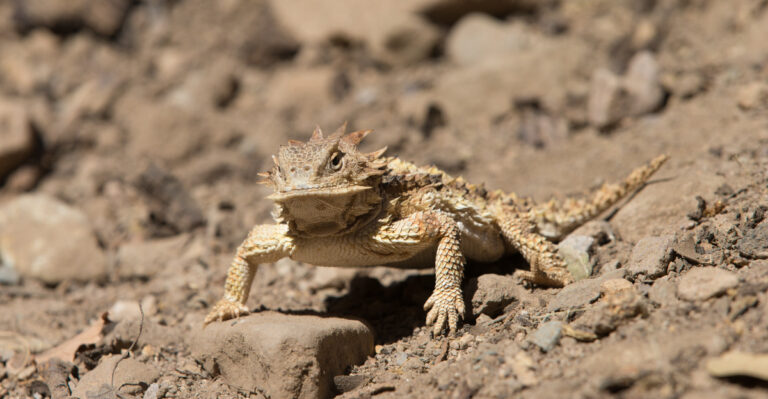
A Gila monster has several features that set it apart. Its body is heavy and slow-moving, with a thick, sausage-like tail that stores fat reserves.
The scales are bead-like rather than smooth, giving the skin a bumpy, almost mosaic texture. The coloring runs in bold patterns of black combined with orange or pink, making it one of the more visually striking reptiles in the Arizona desert.
Adults typically reach 18 to 22 inches in length.
No other common Arizona lizard matches that combination of heavy build, beaded scales, and vivid banding. If the animal you saw was small, smooth-scaled, or flat and spiny rather than rounded and heavy, it was almost certainly something else.
Correct identification is not just an intellectual exercise in Arizona; it determines whether the safety steps described in the following sections are necessary at all.
How to Respond to a Gila Monster in an Arizona Yard
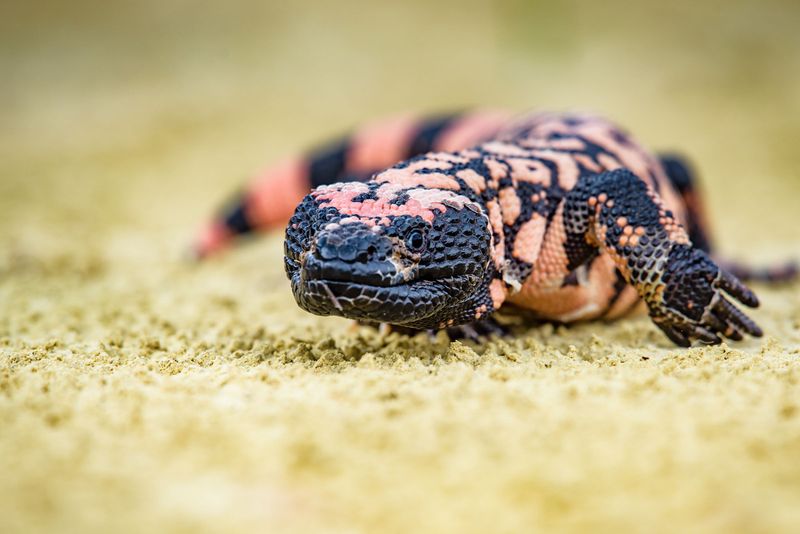
Calm, distance, and patience are the right responses when a Gila monster turns up in an Arizona yard. Move children and pets inside or well away from the animal immediately.
Give the lizard a clear, unobstructed path so it can move on without feeling cornered. Most Gila monsters in Arizona yards are passing through, and an animal that is not blocked or frightened will usually continue on its own route within minutes or hours.
Arizona law makes the next point non-negotiable. The National Park Service at Tonto National Monument states clearly that it is illegal to harass, harm, pursue, hunt, shoot, wound, kill, trap, capture, or collect a Gila monster.
That protection applies whether the animal is on public land or in a private Arizona yard. Attempting to relocate it yourself is both legally risky and physically dangerous.
Photographing the animal from a comfortable, non-stressful distance is fine and can be genuinely useful for Arizona citizen-science reporting. Keep the lens between you and the lizard rather than closing in.
If the Gila monster appears injured, is trapped in a pool, or creates an immediate safety problem that you cannot manage by simply waiting, contact a licensed Arizona wildlife professional or your local Arizona Game and Fish regional office for guidance. Doing nothing except watching from a safe distance is almost always the correct first move in an Arizona yard encounter.
What an Arizona Gila Monster Bite Requires
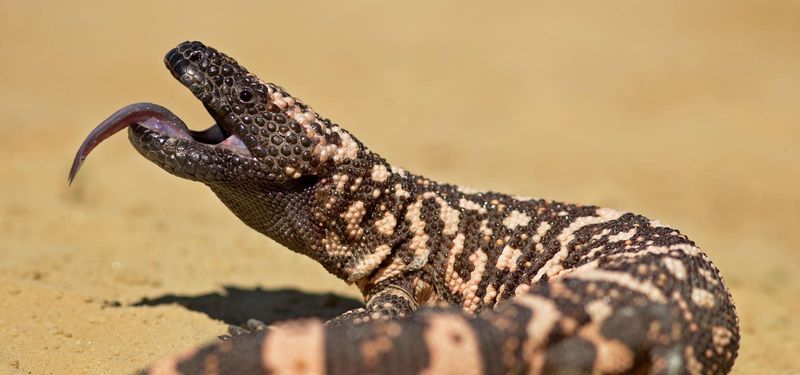
Gila monsters in Arizona do not hunt people, and the animal’s default response to a human is avoidance. A USGS fact sheet on the species found that in more than half of 123 recorded visual observations in Arizona, the animal moved under cover, fled, or retreated into a burrow.
Bites happen when the lizard is cornered, stepped on, restrained, or handled, not because it is targeting anyone.
When a bite does occur in Arizona, the consequences are serious enough to require immediate medical attention. Swelling, nausea, vomiting, weakness, faintness, and blood-pressure changes are all documented effects.
Anyone bitten in Arizona should call Poison Help at 1-800-222-1222 and go to a medical facility; the Center routes all Gila monster bite callers directly to emergency care.
Ice, constriction bandages, and tourniquets should not be used. If a pet is bitten in Arizona, skip the home first-aid debate and head straight to a veterinarian.
Fatal bites in healthy adults are considered extremely rare, but that is not a reason to wait and see how symptoms develop.
Let the Arizona Sighting Inspire Wonder, Not Prediction
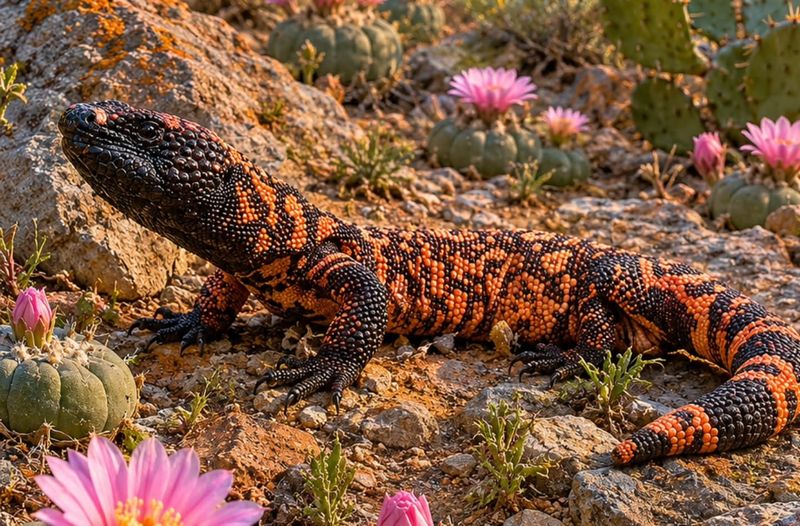
An Arizona Gila monster sighting after years without one deserves to be recognized for exactly what it is: a rare encounter with one of the desert’s most secretive and visually striking reptiles. The biology is honest about its limits.
A rarely seen Arizona lizard was observed using or moving through habitat, and the precise reason for that particular visit on that particular morning remains unresolved.
Culturally specific traditions, personal reflection, and a deepened respect for the Arizona desert are all legitimate responses to the experience. What the sighting does not provide is a forecast.
No scientific evidence connects a Gila monster in an Arizona yard to luck, rain, wealth, or change, and treating it as a guaranteed sign of anything reduces a genuinely remarkable moment to a guessing game.
Keep your distance, keep your pets and children safe, and let the animal move on in peace. The Sonoran Desert has been shaping Arizona for millions of years, and the Gila monster has been part of it the whole time.
Catching a glimpse of that living history is already more than most Arizona residents ever get.