Should You Still Fertilize Desert Rose In September? What Florida Gardeners Should Know
Yes, it still feels like summer.
The afternoons are punishing, the storms roll in like clockwork, and everything in the garden looks like it is still running at full speed.
So you stand there with a bag of fertilizer and a desert rose that just stopped blooming, wondering if it needs another meal or if it is trying to tell you something else entirely.
This is one of the more common mistakes Florida gardeners make with Adenium.
Not out of carelessness. Out of genuine confusion, because the plant looks fine, the weather feels like July, and nothing about September seems like a good reason to stop feeding.
But the plant is paying attention to things you are not. Day length. Night temperature. Signals that have nothing to do with the heat index.
And feeding at the wrong moment does not just waste fertilizer. It sets up a situation you will regret when the first cool snap arrives.
What is the desert rose actually telling you right now? That answer is worth understanding before you open that bag.
1. Growth Naturally Slows As Days Shorten
Sunlight is the real boss of your desert rose, and September starts quietly cutting its hours.
Florida loses a few minutes of daylight every single day starting in late summer, and Adenium obesum reads that shift as a signal to change gears.
The slowdown does not happen all at once. New leaves come out smaller. Stem tips extend more slowly. The plant begins redirecting its energy inward, packing water and starch into that fat caudex at the base instead of building new growth at the tips.
South Florida gardeners may barely notice this in September because temperatures stay high and afternoon storms keep the garden lush. Farther north, around Ocala or Jacksonville, the shift shows up sooner and more clearly.
Fertilizer works best when a plant is actively building tissue and can put those nutrients to use. Feed heavily during a seasonal slowdown and much of that plant food either sits in the soil or washes out with the next storm.
A good habit is checking your plant weekly with a real look, not a guess. Compare the newest leaves to photos you took in June. Smaller, fewer, and slower is the seasonal shift making itself known.
Here is a fun detail worth knowing: desert rose comes from arid regions of East Africa and the Arabian Peninsula, where it naturally drops leaves during dry periods.
That built-in rest instinct never went away, even after decades of living in Florida nurseries and screened lanais.
Your Adenium remembers where it came from. It is already preparing. The bag of fertilizer in your hand may be the only one in this situation that has not gotten the memo yet.
2. Late Feeding Pushes Risky Tender Growth
Nitrogen is basically a standing invitation for a plant to grow fast, and fast growth is always soft growth.
Those pale, floppy new shoots that appear after a heavy feeding have thin cell walls and hold a lot of water. They are the first part of the plant to show stress when temperatures drop.
Your Florida Garden Changes Every Week. Your Plan Should Too.
Gardening in Florida changes quickly throughout the season. Every Friday you’ll receive a simple weekly plan showing exactly what to plant, prune, fertilize, harvest, and protect so you never miss the right timing.
Florida cold snaps rarely announce themselves with much courtesy. Central and North Florida can swing from shorts weather to the upper thirties within a single week in November or December, and a desert rose full of brand-new soft growth has no time to toughen up first.
Hardening off, the natural process where plant tissue firms up and becomes more cold-tolerant, takes weeks of gradually cooler weather to happen. It cannot be rushed.
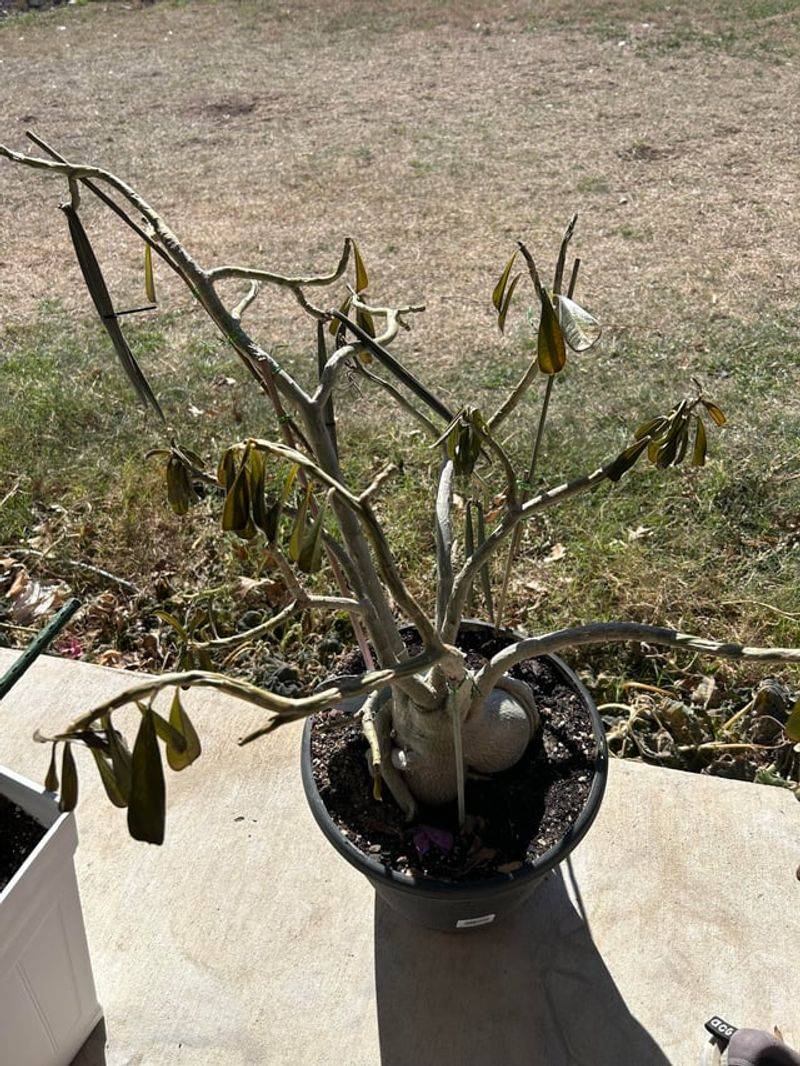
Cold damage on Adenium is not just cosmetic either. Mushy stem tips invite rot, and rot on a succulent stem can travel downward into the caudex.
The caudex is the part you cannot replace.
Practical move: stop any high-nitrogen product now. If your plant in Miami or Naples is still actively flushing new leaves, a diluted low-nitrogen formula at half strength and only once is a reasonable compromise.
Anything more is just optimism with a price tag attached.
Feeding a plant heavily right before a cold snap is a bit like giving someone a large energizing meal right before they need to sleep through a long winter. The timing is simply wrong for what comes next.
3. Cooler Nights Signal Coming Dormancy
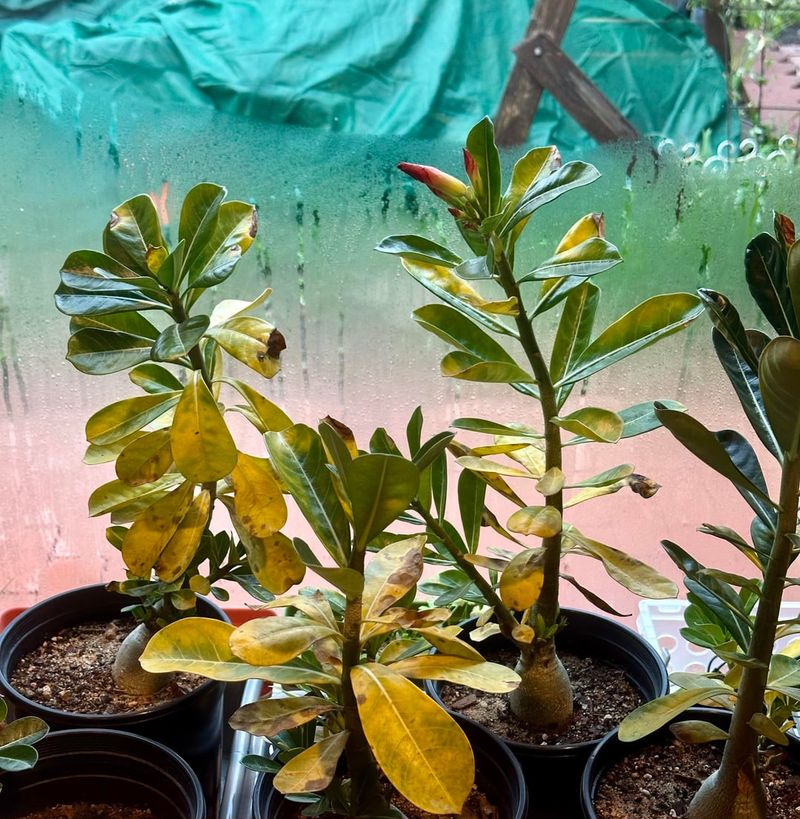
Nighttime lows tell you more than daytime highs ever will about where your desert rose is headed.
Adenium pays close attention to how cool it gets after dark. Once nights settle into the low sixties, the plant begins its slide toward a semi-dormant winter rest, regardless of how hot the afternoons still feel.
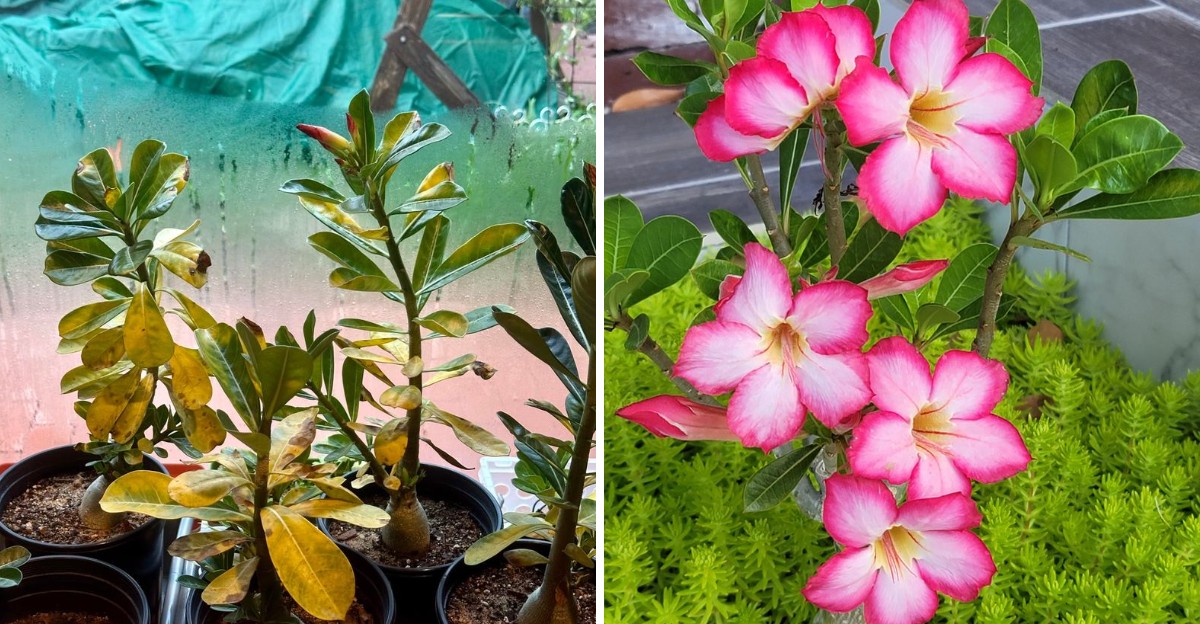
During that rest, roots absorb less water, leaves may yellow and drop, and the whole plant takes on a slightly deflated look. None of that means trouble. It means the plant is doing exactly what it evolved to do.
South Florida gardeners often see only a partial rest, with some plants holding leaves and even producing a stray bloom all winter long.
Panhandle and North Florida gardeners usually see a fuller leaf drop that makes the dormancy unmistakable.
Feeding a plant that is already heading toward rest creates a real mismatch. Roots slow down their uptake while fertilizer salts stay behind in the potting mix.
Concentrated salts can burn fine roots on a succulent that is already pulling back on water use.
Track your nights with a cheap outdoor thermometer or a weather app. Once several nights in a row drop under about 65 degrees, treat that as your cue to wind down feeding rather than continue on routine autopilot.
One more tip worth keeping in mind: desert rose genuinely struggles when temperatures drop below roughly 40 degrees.
Knowing when dormancy starts also tells you when to start thinking about moving pots to a protected spot. Two problems, one temperature reading. Efficient.
4. Skip Nitrogen Once Blooms Start Fading
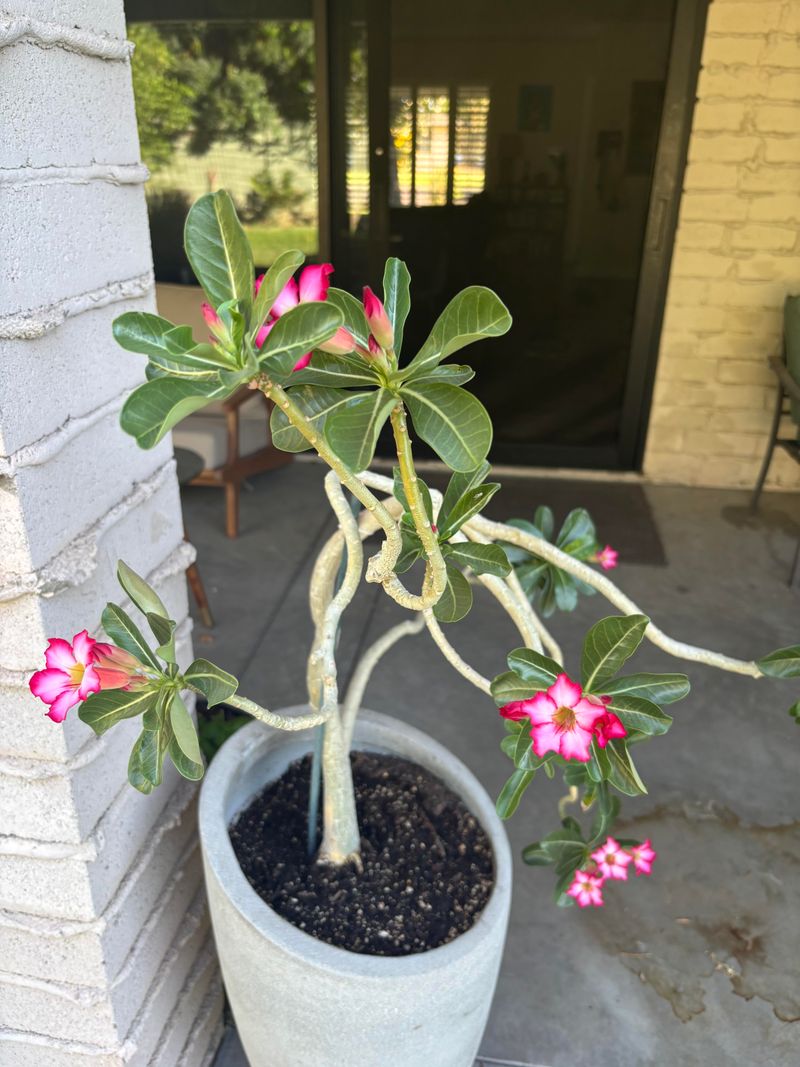
Your plant sends you a receipt when its big push for the year is finished, and it comes in the form of flowers.
When bloom production drops from a steady show to a stray blossom every couple of weeks, that is the plant signaling that the heavy season is wrapping up. Use that fading bloom cycle as your practical off-ramp from fertilizer.
Instead of stopping cold, taper down. Cut the normal feeding rate in half. Then stretch the time between applications. Then stop entirely.
For a plant receiving a balanced bloom-boosting product every three to four weeks through summer, the taper might look like one half-strength application in early September and nothing after that. Simple, and easy to stick to.
Skip anything labeled with a high first number on the bag. That first number is nitrogen. Lawn fertilizers and general foliage boosters are the worst offenders and have no business near a desert rose heading into fall.
Trimming spent blooms is still helpful during this period. It keeps the plant tidy and reduces spots where trapped moisture might cause rot on old flower tissue.
Here is a detail many gardeners learn the hard way: desert rose blooms best with heat, bright light, and slightly dry roots.
Pushing the plant with more fertilizer in fall usually produces leaves instead of flowers, which is the exact opposite of what most people are hoping for when they reach for that bag.
More food, fewer blooms. Fall fertilizing has a very specific way of rewarding effort with disappointment.
5. Watch Soil Moisture More Than Fertilizer
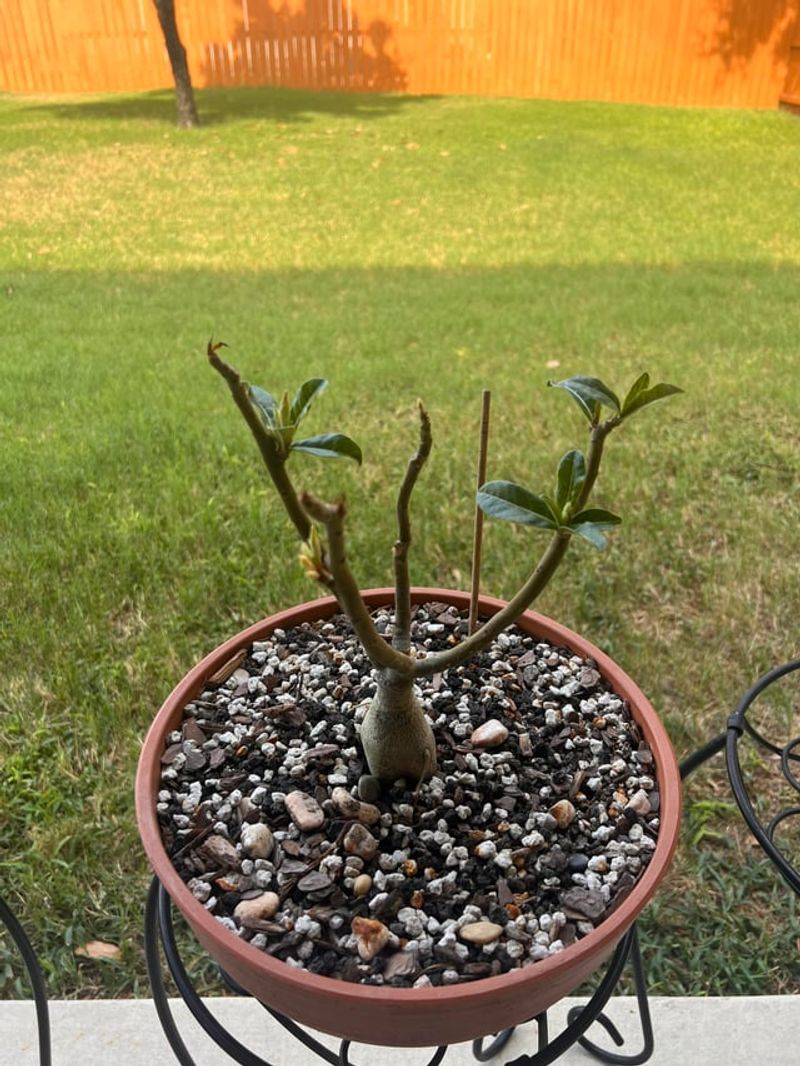
By September, water management matters far more to your desert rose than any plant food you could buy. This is the twist most people miss.
Florida’s rainy season is still running strong, and soggy roots are the most common reason Adenium struggles in this state.
That swollen caudex is a built-in water storage tank. A plant that already carries stored water, receives daily thunderstorms, and sits in a pot that drains slowly is a rot situation waiting to develop.
Check moisture with your finger a couple of inches down before adding any water. If the mix feels damp, walk away and check again in a few days. The plant is fine.
Container growers have a real advantage here because pots can be tipped, shifted under an eave, or moved to catch more sun and dry out faster.
That flexibility is worth using during heavy rain weeks rather than just accepting whatever the weather delivers.
Drainage is the other variable that deserves honest attention. A gritty mix with perlite, coarse sand, or pumice and a pot with a wide open drain hole protects the caudex better than any fertilizer schedule ever will.
As nights cool through October and November, reduce watering noticeably. A dormant or semi-dormant desert rose may only need water every two to three weeks, sometimes less if it has dropped its leaves and is running on stored reserves.
Dry and slightly hungry consistently beats wet and overfed with this plant. That is not a gardening preference. It is just how Adenium is built.
6. Resume Feeding Only In Spring
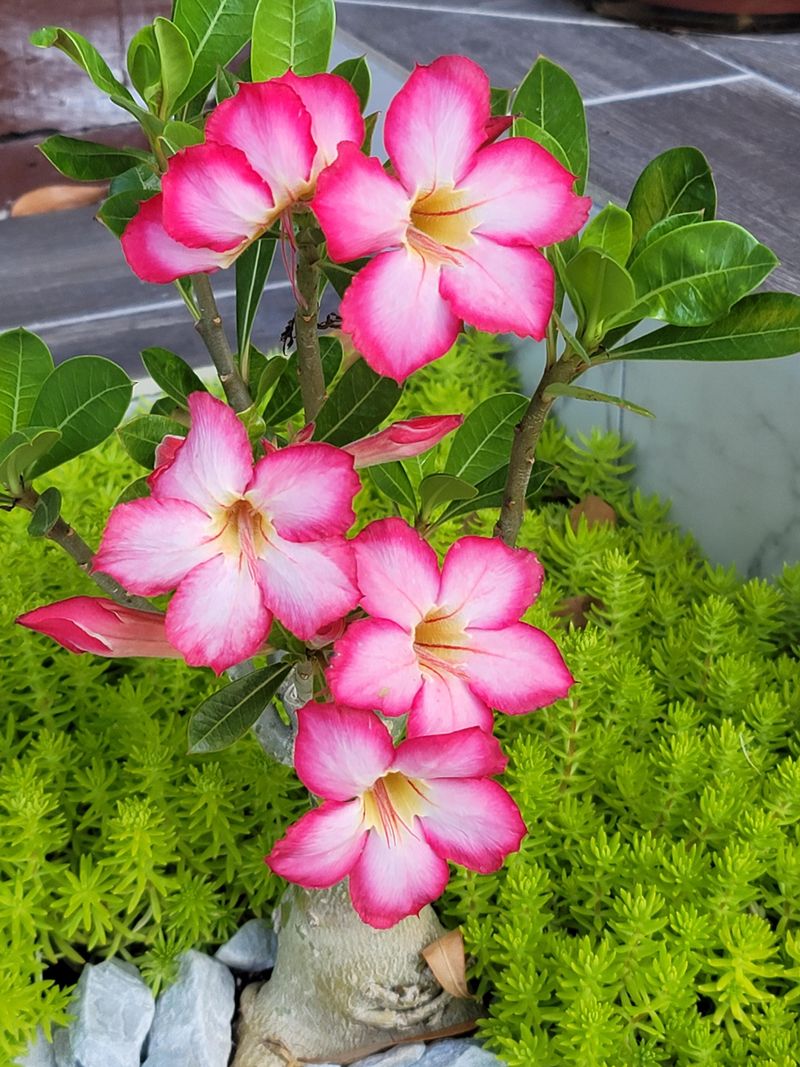
Mark your calendar loosely, then let the plant have the final word on timing.
Most Florida gardeners can start feeding desert rose again when spring warmth returns and the plant pushes genuine new growth on its own. Depending on the region, that often lands somewhere between late February and April.
The signal to watch for is actual new leaves unfurling at branch tips, not just a warm afternoon in January that makes the whole garden feel optimistic.
Start gently once that growth begins. A balanced liquid fertilizer at half strength works well as a first feeding, followed by regular applications every three to four weeks through the warm season as the plant picks up speed.
Slow-release granules are a solid spring option too. They release nutrients gradually over several weeks, which reduces the risk of fertilizer salt buildup and makes the feeding process more forgiving of imprecise timing.
Waiting until spring also creates a natural opportunity to repot if needed, refresh the potting mix, and check roots for any rot that might have developed quietly over winter.
Doing all of that in one go saves effort and stresses the plant less than spreading it across multiple sessions.
Between now and then, your desert rose asks very little. Bright light, protection from serious cold, restrained watering, and patience carry it through until the days lengthen again.
That is genuinely a low-maintenance plant being a low-maintenance plant. Let it.
7. Established Plants Need Less Than You Think
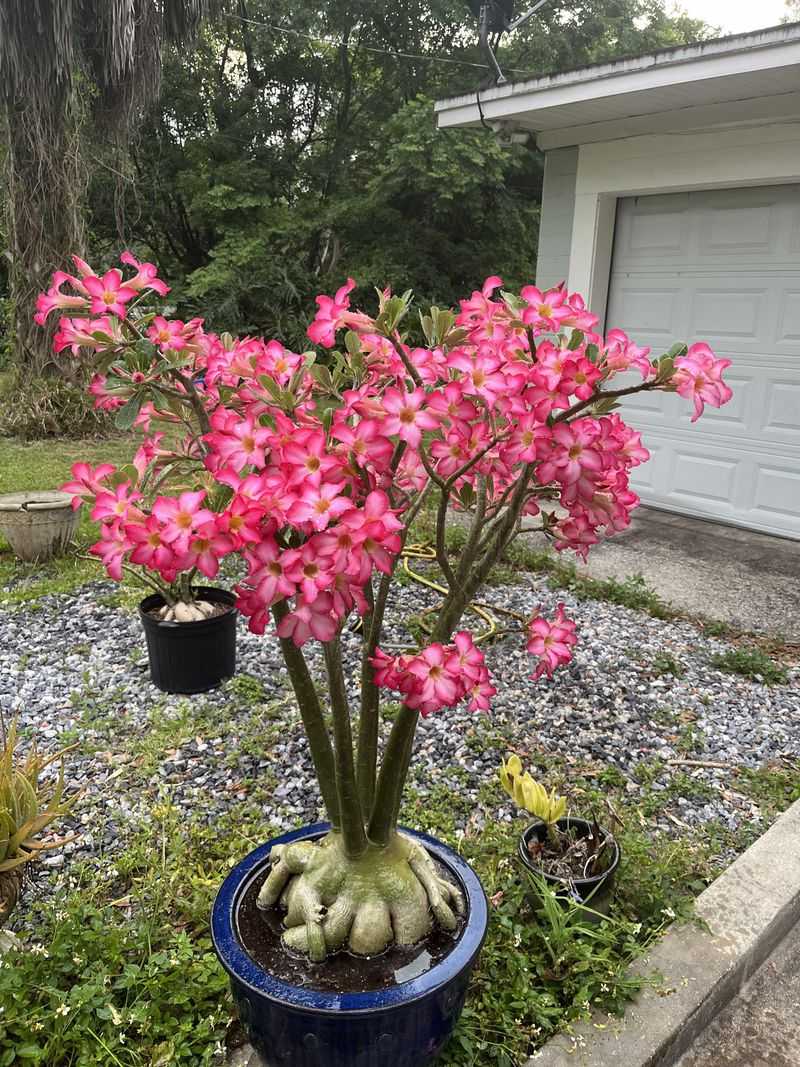
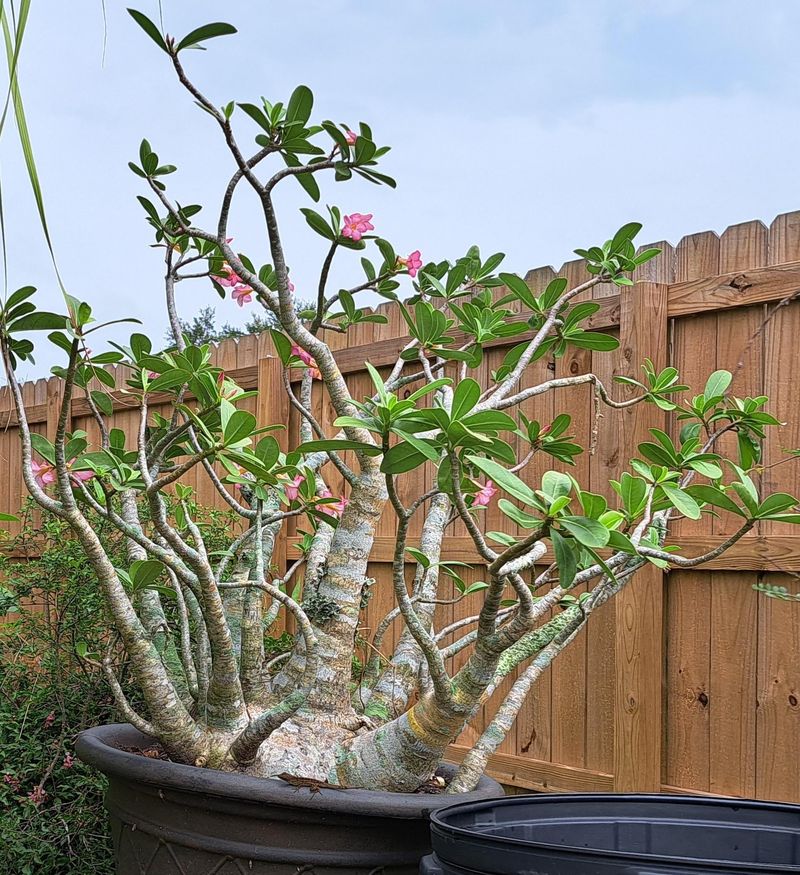
A mature desert rose with a thick, gnarled caudex has years of stored energy inside it and simply does not depend on frequent feeding the way a young seedling does.
Many gardeners overfeed out of affection. More plant food feels like more care, which is an understandable instinct.
But with a succulent from dry, nutrient-limited regions, generosity tends to show up as weak stretched stems, fewer flowers, and roots stressed by fertilizer salts.
Signs of overfeeding are worth knowing. A white crust forming on the soil surface or pot rim, brown edges on leaves, and lush leafy growth with almost no blooms are all signals the plant has had more than it could use well.
Flushing the pot thoroughly with plain water helps clear out excess salt accumulation and gives the root zone a cleaner starting point.
Desert rose rewards restraint consistently: full sun, sharply draining soil, careful watering, and modest fertilizing only during the active growing months.
That combination produces the plant most people are hoping for when they buy it. Excess feeding produces a different plant that most people do not enjoy nearly as much.
So the September answer is a clear no on heavy feeding, with a small allowance for tapering if your plant in far South Florida is still visibly flowering and actively growing.
Put the bag away. Let your desert rose rest. Come spring, that patience shows up as a fatter caudex and a flush of blooms that no amount of autumn fertilizer could have bought.
Some things really do get better when you stop trying so hard. Desert rose in September is one of them.