What Those Small Holes Appearing Across Your Ohio Lawn Could Actually Mean
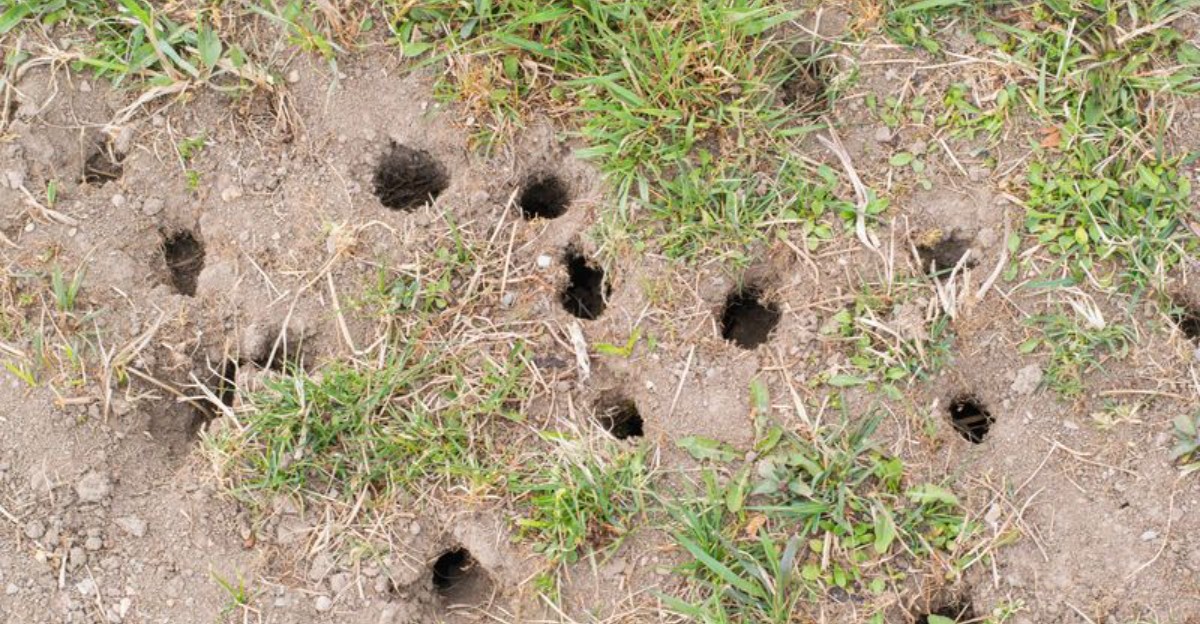
Small holes scattered across an Ohio lawn can look like a minor annoyance, but the ground is often giving you a clue before the bigger signs appear. One hole near a flower bed may mean something completely different from dozens spread across open grass.
The size, shape, location, and even the time of year can point toward very different causes. Birds may leave one type of mark.
Burrowing animals may create another. Insects can bring their own pattern of damage.
The frustrating part is that many of these signs look almost identical at first glance, which makes the wrong fix easy to choose. Filling the holes might hide the evidence, but it does not explain why they appeared.
Before you reach for a treatment or blame the first creature that comes to mind, look at the pattern your lawn is creating. Those little openings may be telling a much bigger story about what is happening below the surface.
1. Moles Tunneling For Worms
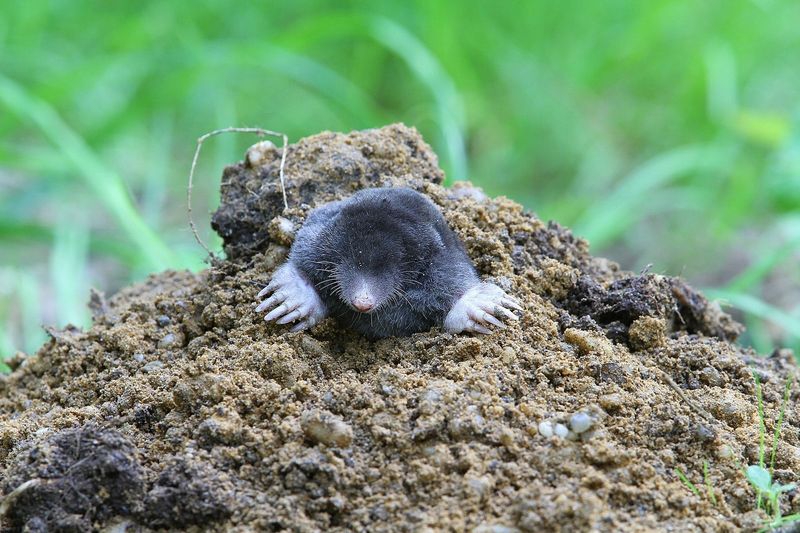
Picture a tiny underground bulldozer working the night shift, and you’ve pretty much got a mole. These little diggers leave quarter-sized holes and long, raised ridges that snake across your grass like squiggly lines.
Moles aren’t after your plants at all. They spend their days hunting earthworms and grubs living in the soil, and all that digging just happens to wreck your smooth lawn along the way.
You’ll usually spot their raised tunnels first, since they push soil upward as they travel. The entry holes are round and neat, often surrounded by loose dirt they kicked out.
Because moles mainly hunt underground prey like earthworms and insects, reducing soil conditions that attract their food sources may help, but grub treatments alone usually will not eliminate a mole problem.
Keeping your lawn a little drier can also make it less inviting for the worms they love.
If tunnels keep popping up, you can gently press them back down and watch to see if fresh ones appear, which tells you a mole is still active. Trapping is another option many Ohio homeowners use.
A single mole can create an impressive network of tunnels, which explains how quickly damage can appear across a lawn.
2. Skunks Digging For A Snack
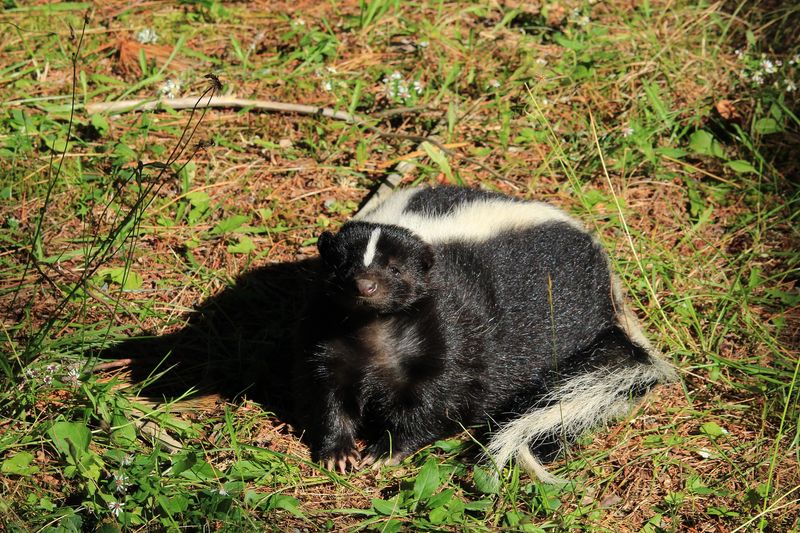
If your lawn looks like someone poked it with a pencil and gave it a swirl, a skunk may have stopped by for dinner. These black-and-white visitors dig little cone-shaped holes about three inches deep while searching for tasty grubs.
Skunks are night owls, so you probably won’t catch them in the act. Instead, you’ll wake up to scattered holes across the yard, especially in areas where grubs are hiding just below the surface.
The good news is that skunk damage usually points to a bigger clue: your lawn likely has a grub problem worth fixing. Handle the grubs, and the skunks often lose interest and wander off.
Their larger burrows can have entrances about the size of a grapefruit, so keep an eye out near sheds, decks, and woodpiles where they like to hide during the day.
Your Ohio Garden Changes Every Week. Your Plan Should Too.
Gardening in Ohio changes quickly throughout the season. Every Friday you’ll receive a simple weekly plan showing exactly what to plant, prune, fertilize, harvest, and protect so you never miss the right timing.
To discourage them, remove food sources, secure trash cans, and clear away brush piles that make cozy hiding spots. Motion-activated sprinklers can also send them packing.
Here’s something neat: skunks actually help gardeners by eating harmful insects, so while their digging is annoying, they’re doing a bit of pest control for free.
3. Raccoons Rolling Back The Sod

Ever seen your grass peeled back like a carpet someone forgot to nail down? That’s a classic raccoon calling card.
These clever, masked bandits use their nimble front paws to flip up chunks of sod while hunting for grubs underneath.
Raccoon holes look a lot like skunk damage but tend to be a bit bigger and messier. The rolled-back turf is the biggest hint, since raccoons are strong enough to lift whole sections of lawn.
Like skunks, they’re mostly after the grubs living in your soil, so a heavy grub population practically rings the dinner bell for them.
Fixing the grub problem is your best long-term defense. In the meantime, you can gently press the flipped sod back into place and water it so the roots can settle again.
Securing garbage cans and pet food helps too, because raccoons remember easy meals and keep coming back for more. Bright lights and noise makers can also make your yard less appealing.
Did you know raccoons have incredibly sensitive paws, almost like human hands, which is why they can feel around for grubs so easily? That skill makes them surprisingly efficient at tearing up an otherwise healthy lawn overnight.
4. Chipmunks Building Secret Tunnels
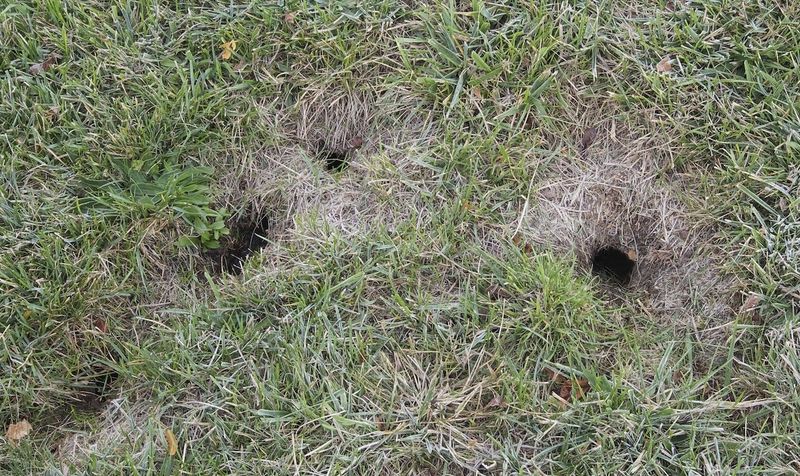
Cute as they are, chipmunks can turn your yard into a maze of hidden passageways. These striped little speedsters dig shallow holes while hunting for seeds, nuts, and bulbs to stash away.
Their burrow entrances are surprisingly tidy, usually about the size of a fifty-cent piece with no big mound of dirt around them. That clean opening is a great way to tell chipmunks apart from other diggers.
You’ll often find their holes near sidewalks, houses, sheds, or tree roots, since those spots offer protection and easy access to their underground tunnels.
While one chipmunk seems harmless, their tunnel systems can stretch several feet and sometimes cause trouble near foundations or walkways over time.
To keep them in check, remove fallen seeds and nuts, and consider planting bulbs they don’t like, such as daffodils. Gravel barriers around foundations can also discourage digging.
If they become a serious issue, check Ohio regulations before attempting trapping or relocation.
A chipmunk’s cheek pouches can stretch to nearly three times the size of its head, letting it carry a huge load of food back to its burrow in one quick trip.
5. Groundhogs Excavating Big Burrows
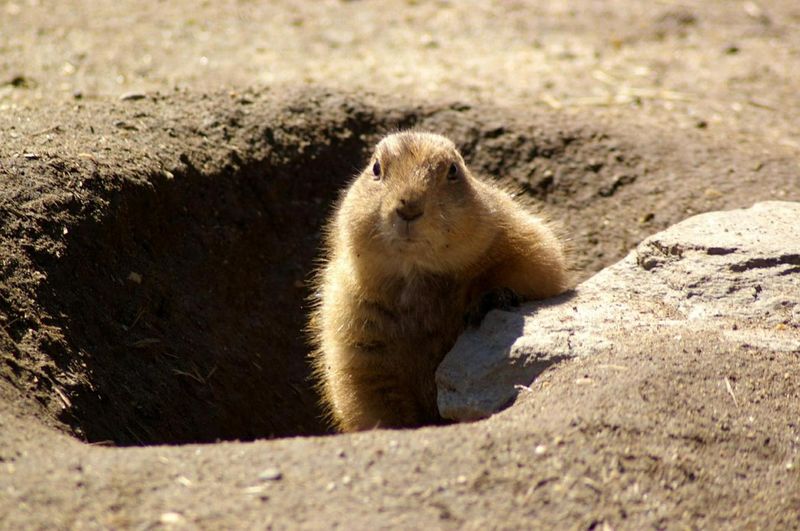
When a hole looks big enough to lose a baseball in, you might be dealing with a groundhog, also called a woodchuck. These chunky diggers create openings around 8 to 12 inches wide, often with a mound of loose dirt out front nicknamed a porch.
Groundhogs are serious excavators, building extensive tunnel systems that can stretch many feet underground. Those tunnels sometimes cause real trouble when they run under sheds, decks, or house foundations.
They’re also hungry vegetarians, so your garden veggies and flowers can disappear fast once a groundhog moves in nearby.
Spotting the large entrance and the telltale dirt porch is usually all it takes to identify them. You may even see the animal itself sunbathing near the hole on warm afternoons.
To deal with groundhogs, you can install fencing that goes underground, fill in burrows when they’re empty, and remove brush piles that offer cover. Some people use trapping when the damage gets serious.
Because their burrows can weaken structures, it’s smart to act before the tunnels grow.
Groundhogs are true hibernators, sleeping deep underground through Ohio’s cold winter and often not waking until early spring, which is why activity spikes when the weather warms.
6. Voles Making Nickel-Sized Openings
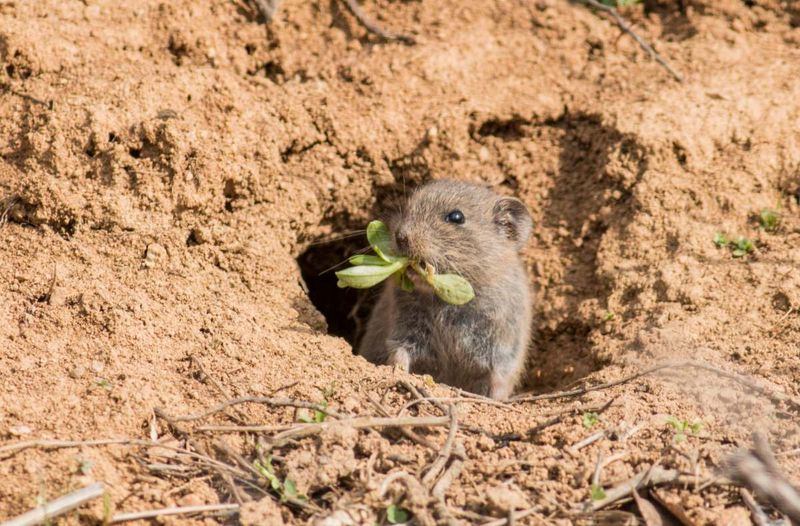
Small but busy, voles leave behind nickel-sized holes and skinny little pathways carved right through your grass. These mouse-like rodents stay active year-round and can quietly damage a lawn before you even notice them.
The holes mark the entrances to their burrows, and the narrow surface runways connect one hidden home to the next. Those matted trails through the grass are one of the easiest ways to spot a vole problem.
Voles munch on grass, roots, and bulbs, which can leave brown, thinning patches across your yard. They’re especially sneaky under snow, where they tunnel through the grass all winter long.
Come spring, you might uncover a network of trails once the snow melts, revealing just how busy they were.
Keeping your grass trimmed and clearing away thick mulch or ground cover removes the cover they love. Cleaning up around the base of trees and shrubs helps too.
If they become a big issue, traps placed along their runways work well for catching them.
Here’s something surprising: voles reproduce incredibly fast, with females able to have several litters a year, so a small problem can grow into a large one quickly if left alone in your Ohio yard.
7. Squirrels Burying Their Treasure
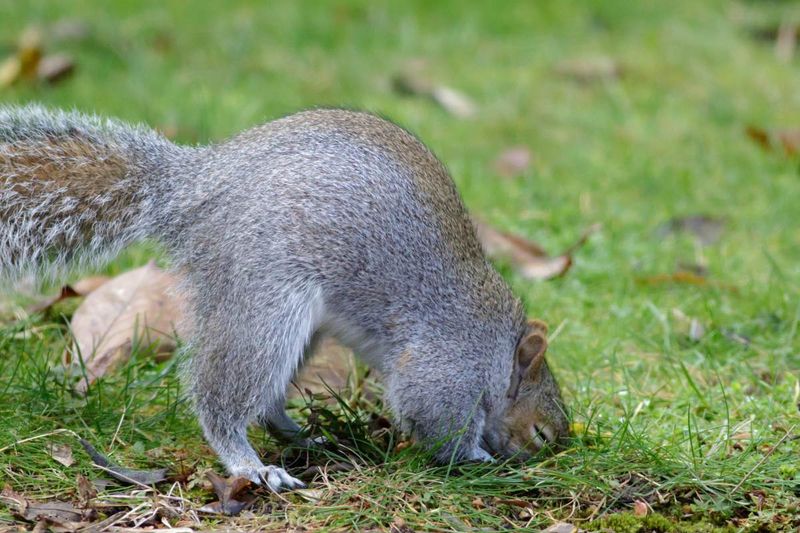
Those scattered little divots in your lawn might just be a squirrel’s version of a treasure map. These bushy-tailed acrobats dig shallow holes to bury nuts in fall and then dig again later to find their hidden stash.
Squirrel holes are usually small and shallow, without the neat entrances or dirt mounds you’d see from burrowing animals. You’ll often notice more of them in autumn when squirrels are stocking up for winter.
The digging rarely causes serious harm, but it can leave your grass looking a little pockmarked and messy for a while.
If they’re targeting your flower pots or freshly planted bulbs, that’s when the annoyance really kicks in. Squirrels have a knack for finding the exact spot you just planted.
To gently discourage them, you can cover new plantings with mesh or netting until things settle. Removing fallen nuts and bird seed also cuts down on the buffet drawing them in.
Most of the time, a few squirrel holes are just a normal part of having trees around your Ohio home.
Fun fact: squirrels forget where they bury many of their nuts, and those forgotten acorns often sprout into new trees, making squirrels accidental gardeners of the forest.
8. Birds Poking For Insects
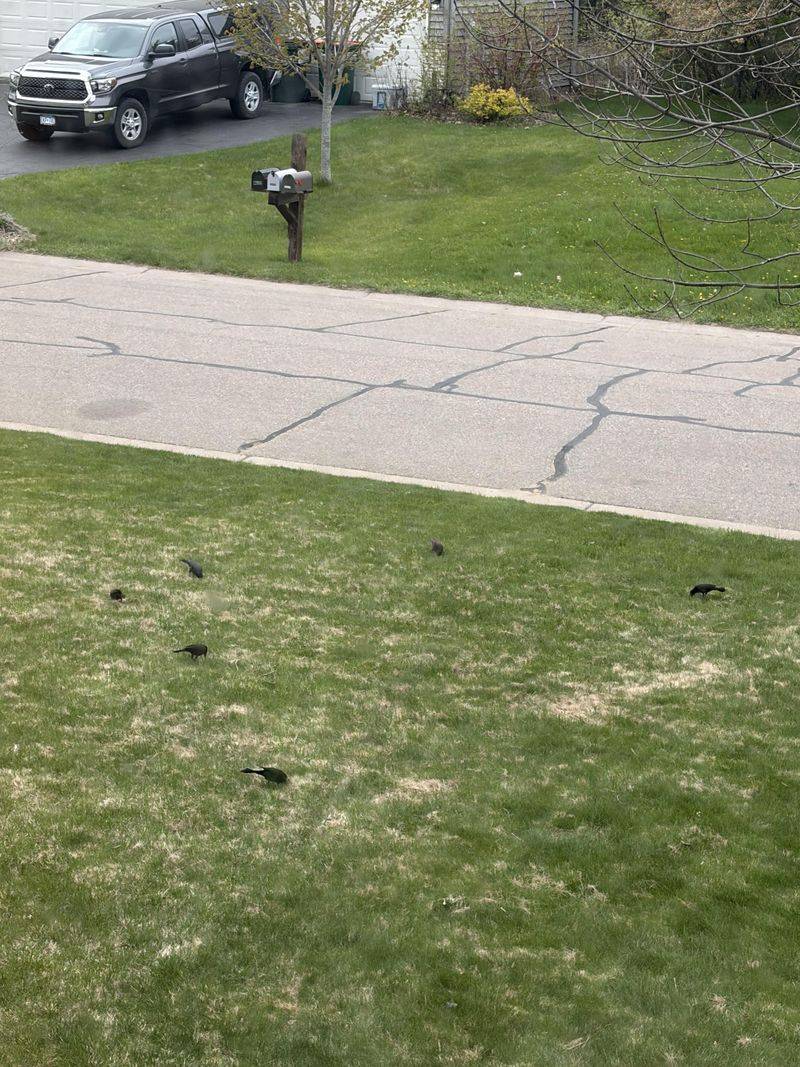
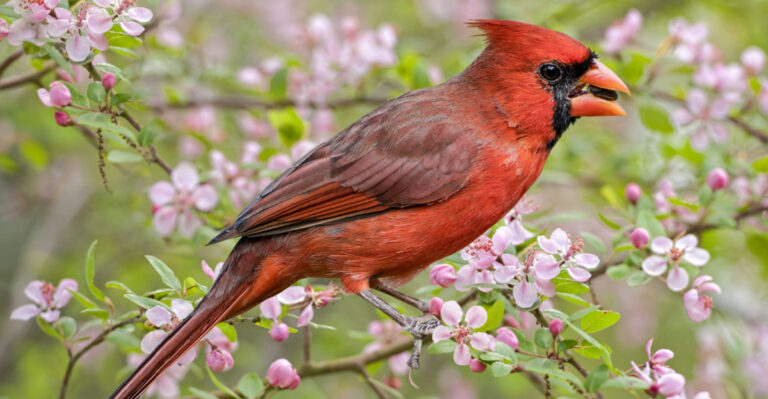
Sometimes the culprit behind tiny lawn holes is fluttering right above your head. Birds like robins and starlings poke small holes in the ground while hunting for insects, worms, and grubs hiding just below the surface.
These holes are usually shallow and neat, without any mound of dirt around them. That clean, poked look is a good sign a bird was searching for a meal rather than a critter digging a burrow.
Birds tend to visit lawns that are rich with bugs, so lots of bird activity can actually hint at a grub or insect problem underneath.
The holes themselves rarely hurt your grass much, and in many ways the birds are doing you a favor by eating pests that would otherwise damage the roots.
If you’d rather cut down on the poking, tackling the underlying insect population is the way to go. A healthier lawn with fewer grubs simply won’t draw as many hungry beaks.
You can also enjoy the free pest control the birds provide and watch which species show up in your yard.
Did you know a robin can eat up to 14 feet of earthworms in a single day? That appetite explains all those little holes.
9. Sod Webworms Hiding In Burrows
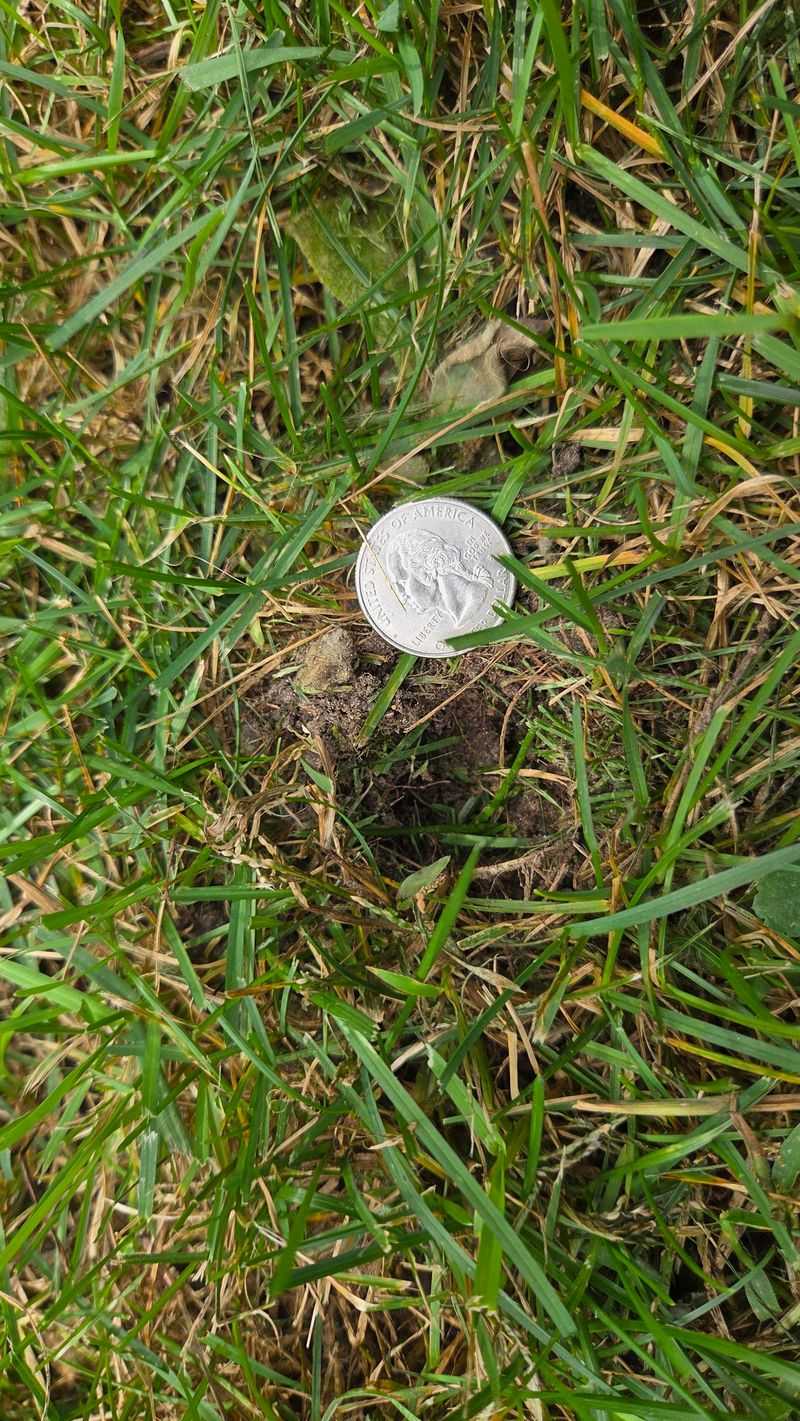
Brown patches dotted with tiny holes often point to a sneaky pest called the sod webworm. These little caterpillars are the young stage of small lawn moths you might see fluttering low over your grass at dusk.
Sod webworms chew grass blades near the soil line, creating ragged brown spots that spread over time. Birds may create small holes while searching for sod webworms, but the main clues are thinning grass, brown patches, and signs of feeding damage.
During the day the caterpillars hide in silk-lined tunnels in the thatch, then come out at night to feed.
To spot them, look closely at the edges of brown areas for small green pellets, which are their droppings, or watch for moths zigzagging over the lawn in the evening.
A soapy water test can flush them to the surface so you can count how many are present. Just mix dish soap with water and pour it over a small patch.
Keeping your lawn healthy and well-watered helps it bounce back from mild damage. For heavier problems, targeted insect treatments work well.
Those adult lawn moths don’t actually harm your grass at all, but their egg-laying leads to the hungry caterpillars that do the real damage.
10. Ground-Nesting Bees And Wasps
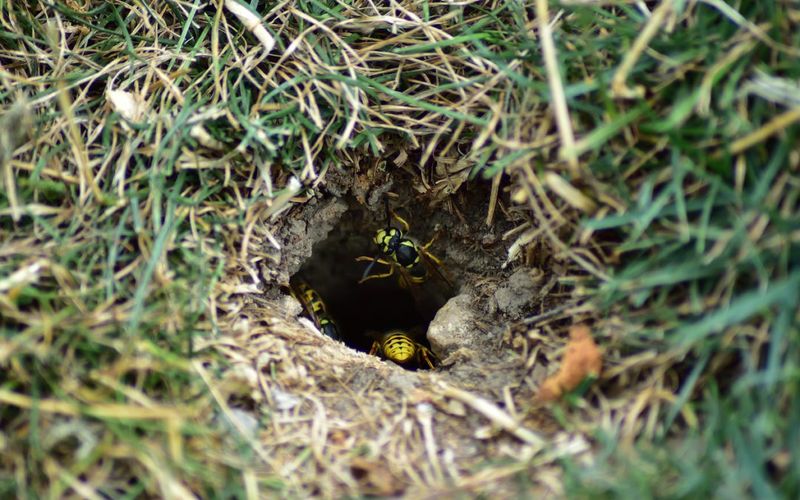
A little cluster of pencil-width holes with tiny dirt mounds might mean solitary bees or wasps have set up house in your yard. Unlike hive insects, these loners each dig their own small burrow to lay eggs.
The holes usually measure a quarter to half an inch wide and often show up in dry, sunny, thin patches of lawn. Each opening leads to an underground nest where the insect stores food for its young.
Ground-nesting bees are actually gentle and important pollinators, so they rarely sting and are worth leaving alone when you can.
Cicada-hunting wasps are the big exception in size, digging tunnels half an inch to a full inch wide. Despite their scary appearance, they mostly hunt cicadas and seldom bother people.
If the nests are in a spot where people walk barefoot, thickening the grass and keeping the area watered makes it less inviting for future nesting.
Filling bare patches with healthy turf usually solves the problem naturally over time.
Here’s something cool: a single ground-nesting bee can pollinate as many flowers as several honeybees, making these quiet diggers surprisingly valuable helpers for your garden and the plants all around your Ohio neighborhood.
11. Cicada-Hunting Wasps Digging Tunnels
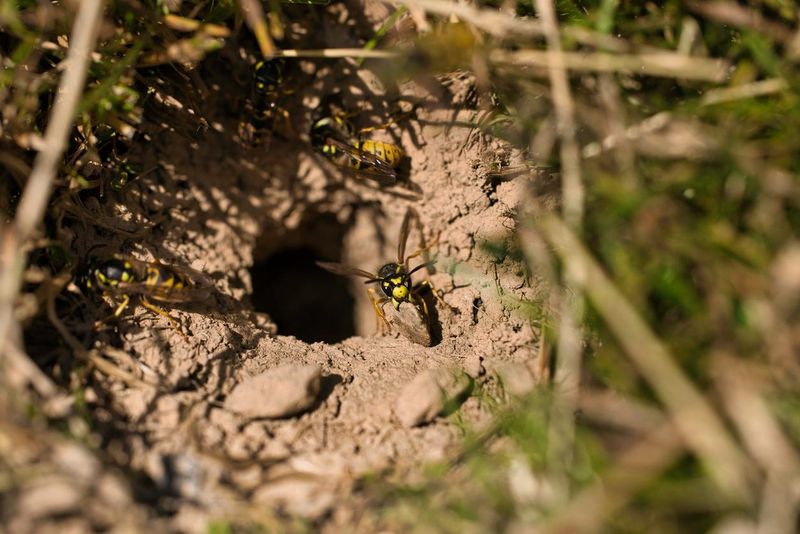
Big, buzzing, and downright intimidating, the cicada-hunting wasp looks far scarier than it really is. These giant solitary wasps dig tunnels half an inch to a full inch wide, often leaving a fan-shaped pile of soil at the entrance.
You’ll usually spot their burrows in bare, sandy, or thin areas of the lawn, especially along sidewalks and slopes that get plenty of sun. Several wasps might nest close together, making it look like a busy little colony.
Despite their size, these wasps almost never sting people. The females are focused on hunting cicadas to feed their young, and the males can’t sting at all even though they act aggressive.
Because they help control cicada numbers, many experts suggest leaving them be when possible.
If the burrows are in a high-traffic spot, the best fix is growing thicker, healthier grass, since these wasps avoid dense turf. Watering thin areas and adding seed can push them elsewhere.
Try not to panic if one hovers near you, as swatting only makes them nervous.
A female cicada-hunting wasp paralyzes a cicada, drags it into her burrow, and lays an egg on it so her larva has a fresh meal waiting when it hatches.