Something Is Moving Through New York Lawns, And It Won’t Stay Put
Your lawn can change almost overnight, and the reason may be hiding right under your nose.
One day, the grass looks thick and healthy. A few days later, you notice chewed blades, thinning patches, or areas that suddenly lose their color.
Nothing obvious happened, yet something has clearly been moving through the turf.
September can bring some surprising lawn problems, especially when small visitors arrive, feed quietly, and move on before you notice them. By the time the damage catches your eye, whatever caused it may already be somewhere else in the yard.
For New York homeowners, knowing where to look and what clues to watch can make a big difference. A closer inspection of the grass can reveal signs that aren’t visible from the patio or driveway.
The mystery becomes much easier to solve once you know what has been passing through your lawn and why it can spread so quickly.
The Fast-Moving Caterpillar Hiding In Your Grass
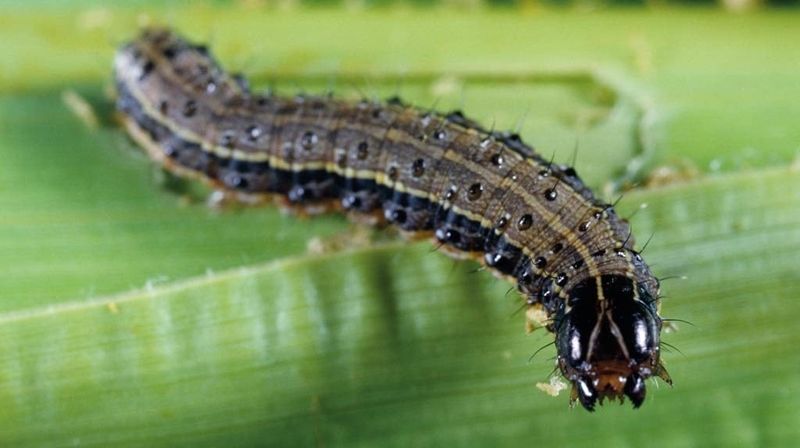
Meet the culprit: the fall armyworm, which is not a worm at all. It is the caterpillar stage of a moth, and this is when it does its damage, feeding heavily for a few weeks before transforming into an adult moth.
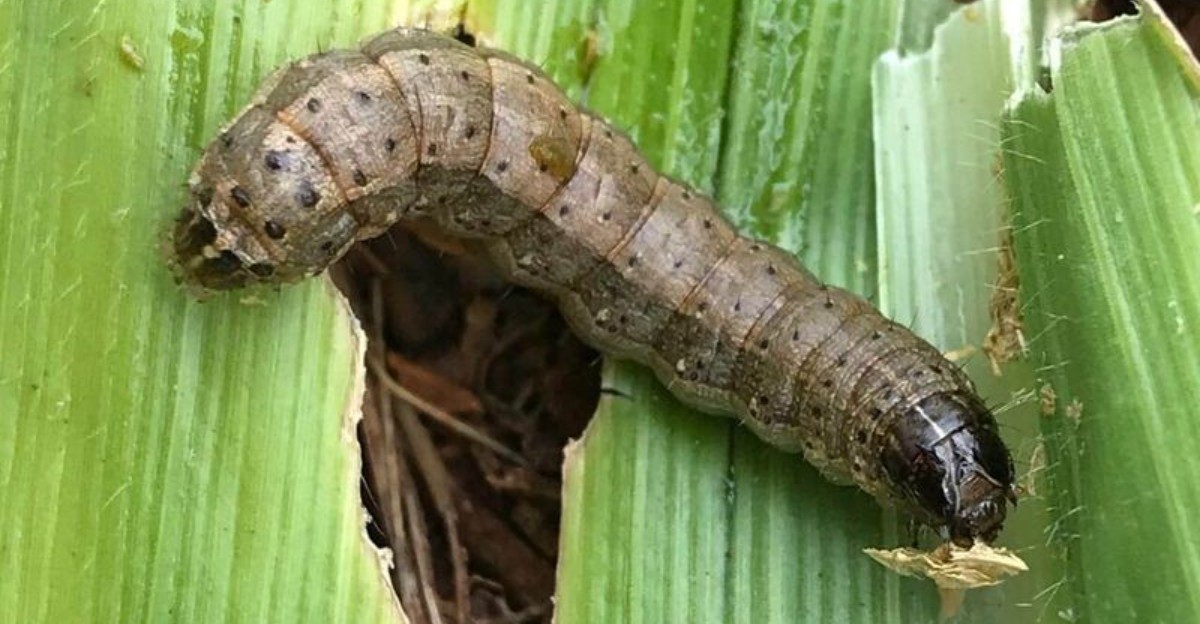
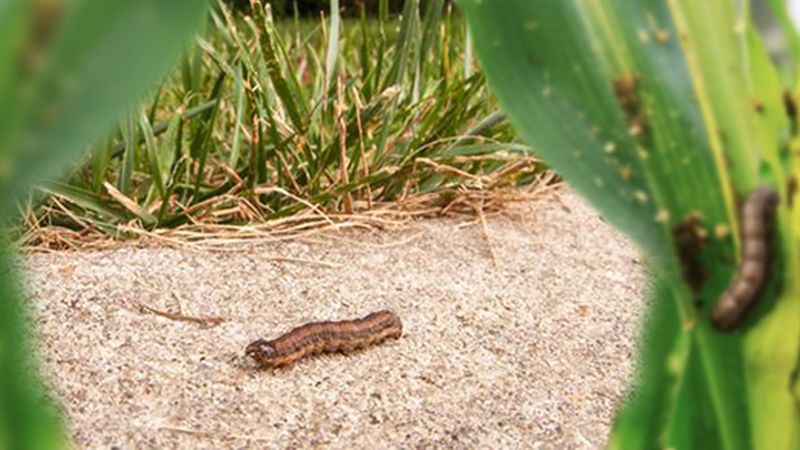
Full-grown caterpillars reach about 1.5 inches long. Their colors can range from green and tan to brown or nearly black as they mature.
The clearest giveaway sits right on the head. Look for a pale, upside-down letter Y between the eyes, a marking no other common lawn caterpillar wears.
You may also notice long stripes running down the body and four dark spots grouped in a square shape near the back end. Those small details help separate armyworms from cutworms and sod webworms.
Here is why so many homeowners miss them at first. In their earliest stages, the caterpillars are tiny, barely more than specks against green blades.
They also hide. During the hottest hours, they slip down into the thatch layer or press close to the soil where shade keeps them cool.
Feeding picks up when temperatures drop, mostly in early morning or late afternoon into evening. That schedule keeps them out of sight while your lawn quietly changes.
By the time patches look obviously wrong, a large group may already be well fed and moving along.
September Can Bring A Fresh Wave Into New York
Fall armyworms do not live in New York year-round, and that surprises a lot of people. Winter here is simply too cold for them to survive in any stage.
So how do they show up every year? They fly in.
Adult moths make long northward trips from warmer places, often starting in Florida and the deeper subtropics.
Fall armyworms can arrive in the state during the growing season as migratory adults move north from populations farther south. Their activity can become especially noticeable in late summer and early fall.
Wind helps carry migratory moths northward from southern populations, allowing fall armyworms to reach the state during the growing season.
Think of it as a one-way trip with no return ticket. The moths that reach New York lay eggs, the caterpillars feed, and cold weather ends the local population each fall.
Your New York Garden Changes Every Week. Your Plan Should Too.
Gardening in New York changes quickly throughout the season. Every Friday you’ll receive a simple weekly plan showing exactly what to plant, prune, fertilize, harvest, and protect so you never miss the right timing.
That yearly reset is actually good news for homeowners. A rough armyworm season in your neighborhood does not mean next year will be just as bad, because everything depends on the weather far to the south.
It also explains the sudden feel of an outbreak. One week your lawn is fine, and the next week caterpillars seem to appear out of nowhere.
Keeping an eye out in late summer pays off.
One Hungry Group Can Sweep Across A Lawn
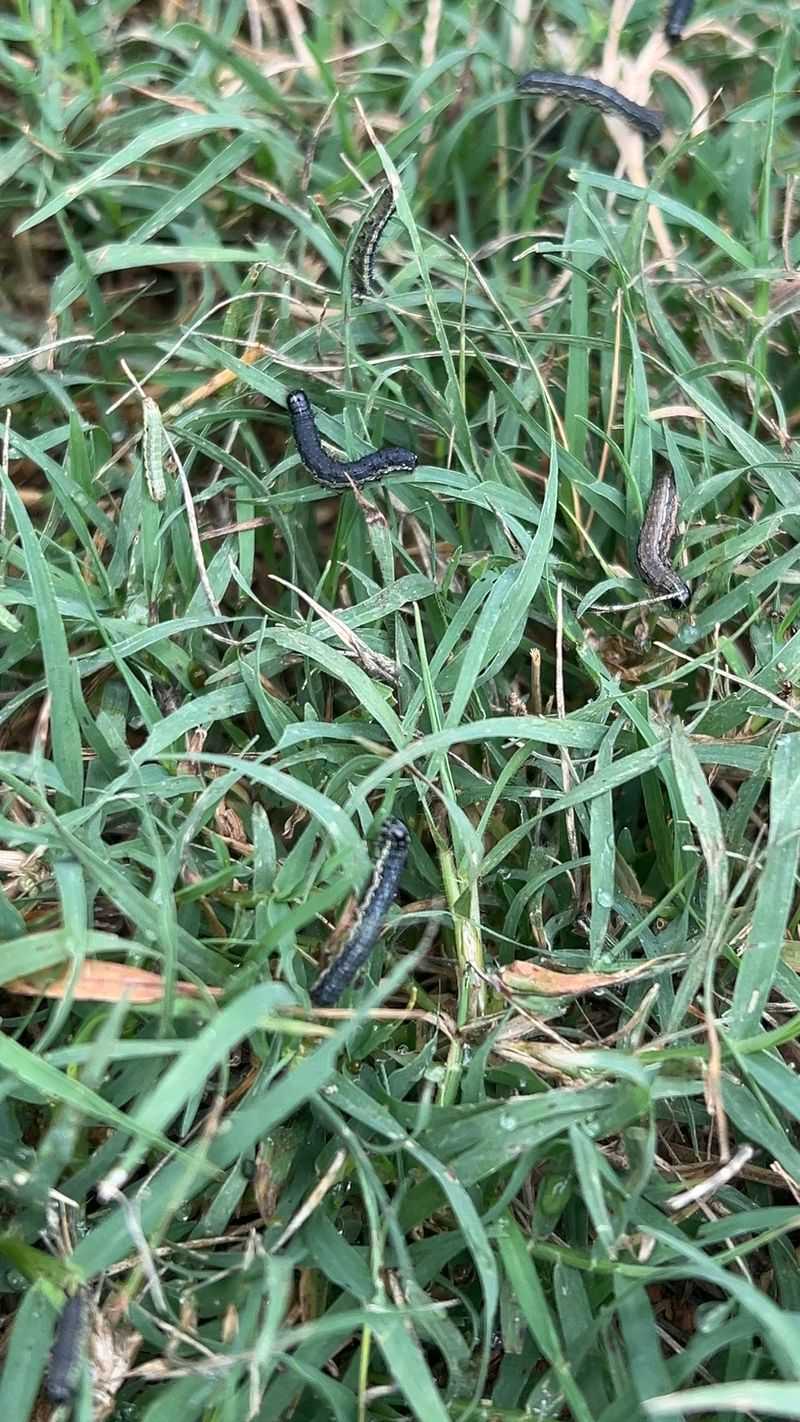
The name armyworm was earned honestly. These caterpillars feed in large groups and travel together across turf like a marching column, which is exactly why the pest will not stay put.
Most lawn caterpillars keep to themselves. Cutworms, for example, feed alone and quietly.
Armyworms behave the opposite way, clustering by the dozens or hundreds in one advancing wave.
Group feeding adds up fast. Heavy populations can consume large amounts of turf quickly because the caterpillars feed together and move across the grass.
One of the strangest sights they leave behind is a sharp dividing line. On one side sits chewed, stubbly turf, and inches away the grass looks untouched and green.
That line is the front edge of the group. Follow it, and you will often find the caterpillars themselves just ahead in the healthy grass.
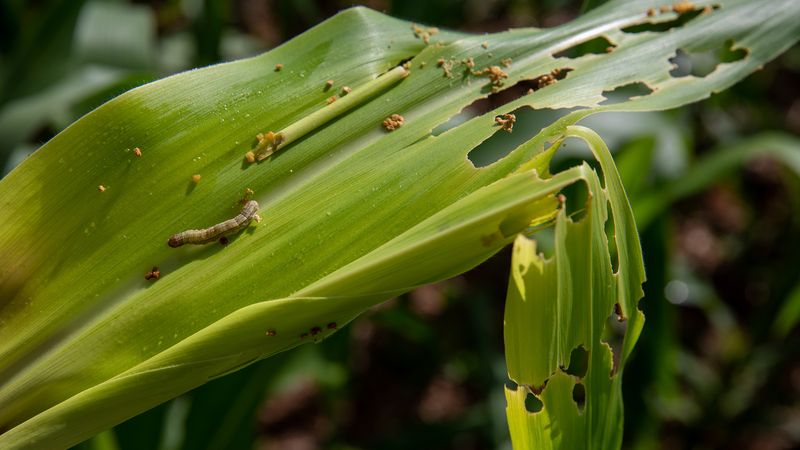
Appetite changes with age, too. Young larvae scrape only the surface tissue of a blade, leaving a see-through, papery look sometimes called windowpaning.
Older caterpillars go all in, chewing through whole blade edges and tender stems. Roughly the last few days of feeding cause most of the visible change to a lawn.
That timing matters. Catching the group while larvae are still small makes a big difference in how much turf gets eaten before things settle down.
The First Damage Can Look Like Lawn Stress
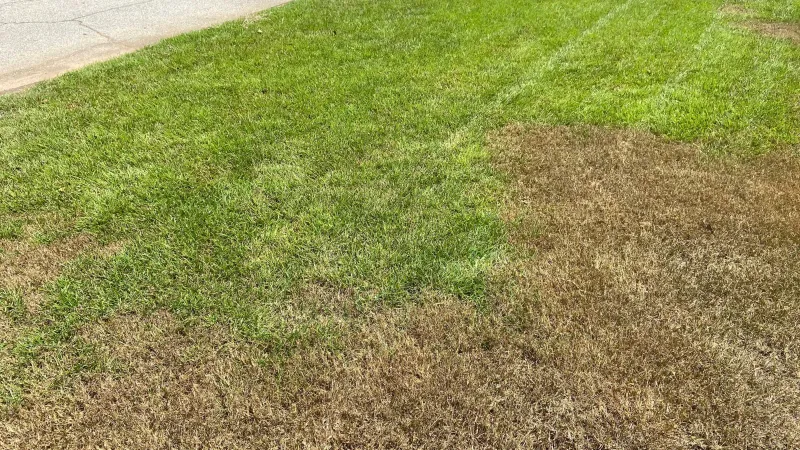
Brown patches show up, and the first thought is almost always the same: the lawn must need water. That reasonable guess is what lets armyworms work unnoticed for a few extra days.
Early symptoms are honestly pretty generic. Irregular tan or brown patches appear, thin spots widen, and some areas take on a dull yellow cast.
Drought stress, fungal disease, and even pet spots can look similar from the porch. The difference is speed.
Grass short on water fades slowly over a week or more. Armyworm feeding can change a section of lawn overnight, and that quick turnaround is the biggest clue.
A slight discoloration on Saturday can become chewed-down stubble by Monday. When the change outruns the weather, insects deserve a look.
Get down on your knees and study individual blades. Younger larvae feed on the foliage and can leave visibly damaged or ragged grass blades as they grow.
Older feeding looks messy instead. Blade edges appear ragged and torn, almost like someone trimmed them with dull scissors.
Another hint comes from the shape of the affected area. Armyworm damage often has an expanding edge that creeps outward day by day rather than staying the same size.
Across the state, plenty of fall brown patches turn out to be ordinary stress. Still, sudden and spreading damage is worth a hands-on inspection before you reach for the hose.
Look Closely When The Lawn Starts Losing Green
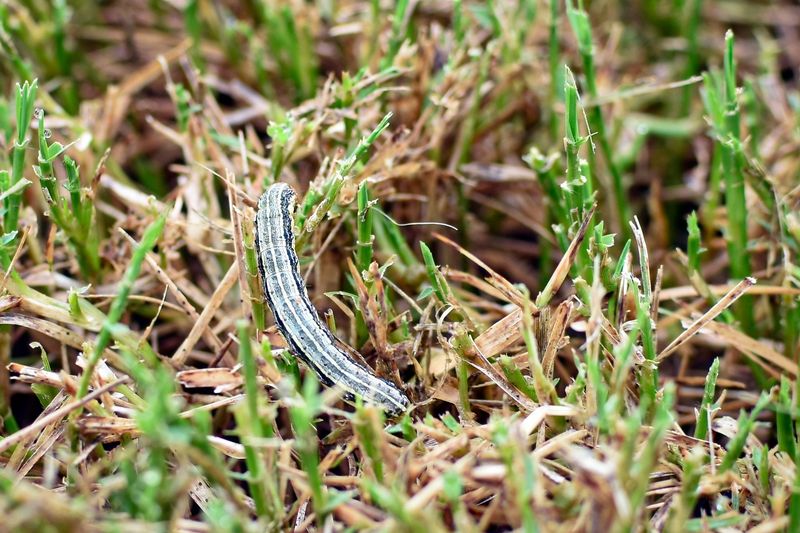
Scouting is where guessing ends. A few minutes with your hands in the grass tells you far more than staring at the yard from the driveway.
Timing helps a lot. Plan your check for early morning or late afternoon into evening, when caterpillars come up to feed instead of hiding from midday heat.
Start at the edge of a damaged patch, right where brown meets green. Part the blades with your fingers and study the thatch layer and the soil surface.
Armyworms are surface feeders, so there is no need to dig. Everything you need to see sits in the top inch of turf.
Three things confirm the diagnosis: the caterpillars themselves, freshly chewed blades, and small greenish-black pellets called frass, which are simply droppings.
Want a faster answer? Mix about one tablespoon of liquid dish soap into a gallon of water and pour it slowly over a four-by-four-foot section.
The soap irritates hidden larvae, and within a few minutes they wriggle up to the surface where you can count them easily. Rinse the area afterward with plain water.
Birds can tip you off, too. When robins, starlings, and grackles suddenly swarm one part of a yard and keep pecking, they are usually feasting on something.
Take a picture of what you find. Photos make it much easier to get help identifying the pest later.
Cool-Season Grass Gives Them A Tasty Target
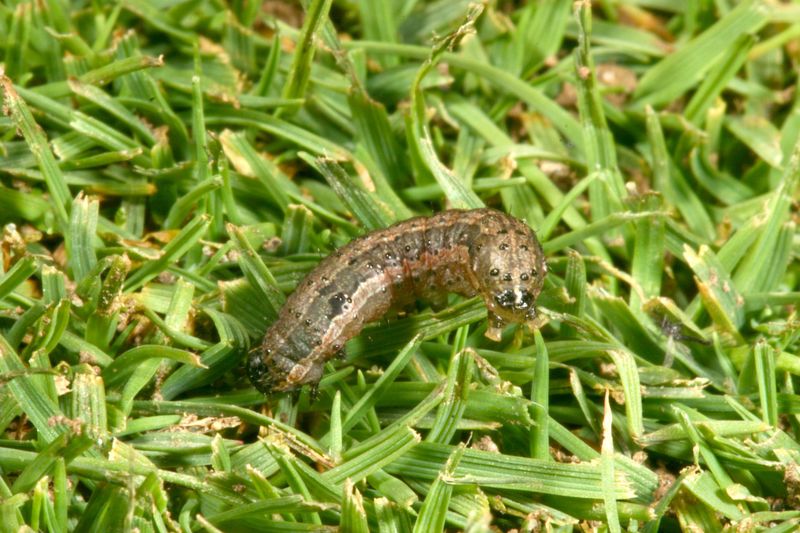
Grass is the main course, and New York happens to serve exactly what these caterpillars prefer. Cool-season lawns dominate the state, and cool-season lawns are on the menu.
Kentucky bluegrass, perennial ryegrass, and several fescue species are common cool-season turfgrasses in the state and can be affected when fall armyworms feed on turf.
Feeding stays above ground. Caterpillars work on leaf blades and tender stems, leaving the crowns and roots below mostly untouched.
That habit shapes what you see. Small larvae scrape blade surfaces into thin windowpanes, while bigger ones chew through whole leaf sections and leave short, uneven stubble.
Some lawns look more appetizing than others. Newly seeded areas and turf less than a year old are especially vulnerable because young plants have fewer reserves and thinner blades.
A vigorous lawn can still experience fall armyworm damage when the caterpillars are present, so healthy turf should be monitored even when it looks well maintained.
That does not mean you should neglect your yard. It simply means a September fertilizer push deserves a little extra scouting in the weeks that follow.
Fun detail worth knowing: the fall armyworm feeds on well over one hundred plant species, including corn and sorghum, which is why farmers watch it just as closely as homeowners do.
Your lawn is only one stop on a very long menu.
Healthy Turf Can Bounce Back After Feeding
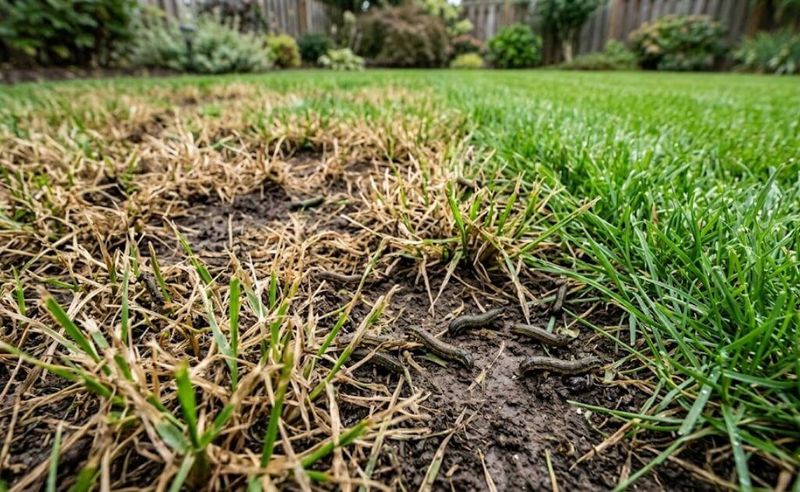
Take a breath before you panic and rip out the yard. Turf can recover from fall armyworm feeding when the growing points and root systems remain healthy, although the extent and speed of recovery depend on the severity of the damage and the condition of the lawn.
The reason comes down to anatomy. Because fall armyworms primarily feed on above-ground foliage, turf may be able to produce new growth after feeding, particularly when the plants remain otherwise healthy.
Water is your best tool. Deep, regular watering supports fresh blade development, especially if the soil went dry during a warm September stretch.
Aim for soaking sessions rather than daily sprinkles. Roots respond better to moisture that reaches several inches down.
Go easy on fertilizer. If your lawn needs fall fertilization, follow a soil-based fertility plan and the recommendations for your particular turfgrass rather than adding fertilizer simply because armyworm damage has occurred.
Already on a regular feeding program? Extra nitrogen probably will not help and may just encourage soft growth.
Hold off on mowing while the turf sits still. Cutting stressed grass that is not actively growing bothers the crowns right when they need to build new tillers and leaves.
Overseeding is the real hero of fall repair. Raking seed into bare and thinned spots fills gaps, thickens weak turf, and blocks weeds from claiming open soil next spring.
Autumn in New York offers cool air, warm ground, and steady moisture, which is close to ideal for germination. Seed sown now roots well before the first hard freeze.
A Quick Check Can Keep A Small Problem From Spreading
Everything hinges on catching them early. Because a group can reshape a lawn in two or three days, the homeowner who looks on day one has a huge advantage.
Rapid browning or sudden thinning is your cue to kneel down and inspect. Waiting a week to see what happens usually costs more grass.
Be careful not to blame armyworms for every blemish. Fungal diseases, dull mower blades, dog spots, grubs, and plain dry weather all cause similar looking patches in yards.
Correct identification decides the response, so confirm caterpillars before treating anything. A soapy flush and a good photo settle most arguments.
Turf specialists often use a simple threshold. The need for management depends on the number of caterpillars, the amount of feeding damage, and the condition and value of the turf.
Confirm the pest before deciding whether treatment is necessary.
Egg masses give you an even earlier warning. Female moths lay clusters of hundreds of eggs on vertical surfaces such as fences, tree trunks, siding, mailboxes, and playground equipment.
The clusters look fuzzy and grayish, almost like a smear of felt or lint. Scanning those surfaces after big storms roll through can reveal a wave before it hatches.
Still unsure what is happening out there? A local lawn care professional or your county Cooperative Extension office can identify the problem and suggest the right next step for your yard.