What Comes Indoors On Connecticut Houseplants Every September
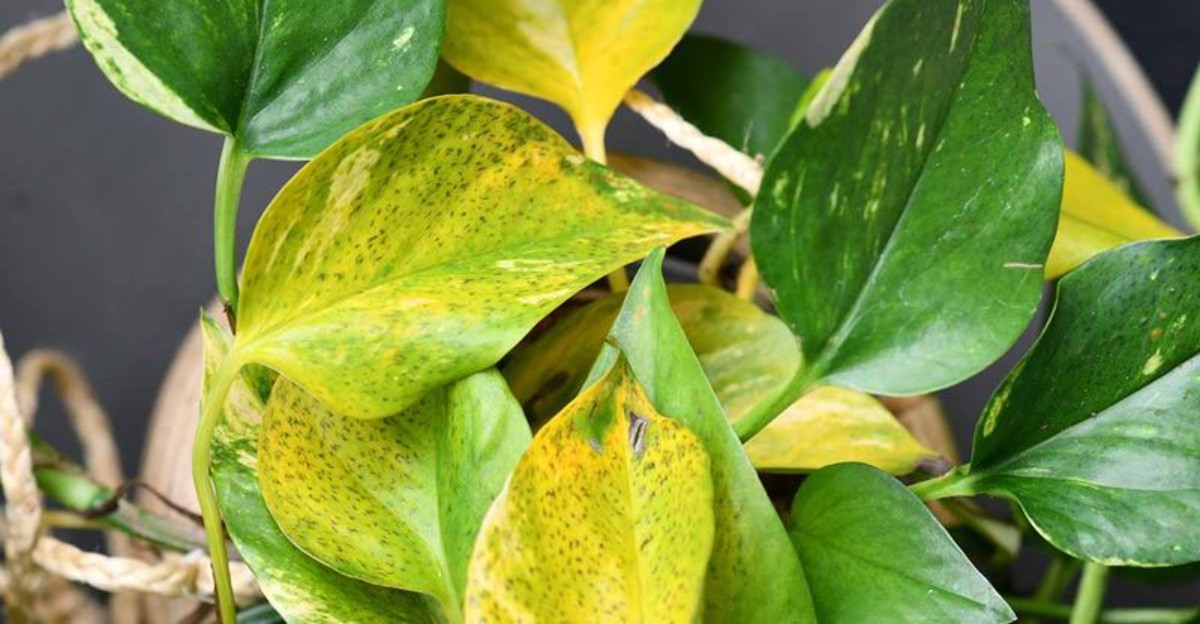
The porch feels different in September. One evening you reach for your sweater, and the next morning the deck boards are damp and cold under bare feet.
Your plants noticed before you did. They spent all summer soaking up Connecticut sun, growing wide and leafy and a little wild.
Now it is time to bring them back inside, and most of us do it the same way our parents did: grab the pot, haul it through the door, done. That quick trip is where trouble sneaks in.
Something tiny has been living in those leaves and that soil for months. It has been quiet outdoors, held in check by rain, wind, and hungry beetles.
Indoors, with warm air and no predators, that quiet guest gets very comfortable. Here is what actually happens, why September is the turning point, and how to handle it before your windowsill turns into a bug hotel.
Why Cool Connecticut Nights Force The Move Indoors
Somewhere around the first week of September, Connecticut nights start dipping into the fifties. By mid-month, inland towns like Torrington and Storrs can flirt with the forties before sunrise.
Tropical houseplants read those numbers as an alarm bell. Pothos, monstera, philodendron, and rubber trees evolved in places where the thermometer rarely drops below sixty degrees.
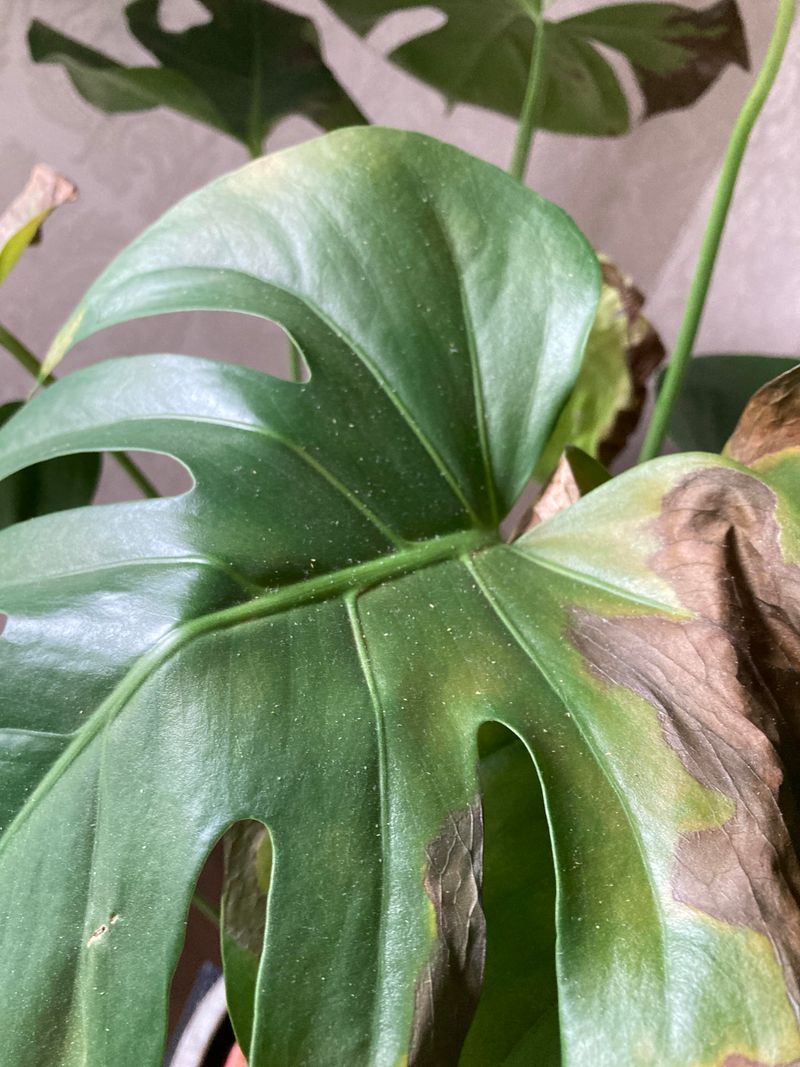
When roots sit in chilly, damp soil, they slow down and stop pulling water properly. Leaves may yellow, edges may darken, and the plant sulks for weeks even after it warms up.
Most Connecticut gardeners use 50 degrees as the trigger point. Once nighttime lows are consistently at or under that mark, it is time to plan the move.
Timing matters more than people expect. Waiting until October means dragging plants inside during a cold snap, which stacks temperature shock on top of the light change they already face.
Moving them in September gives everything a gentler transition. Days are still bright, indoor and outdoor temperatures are closer together, and the plant has energy left to adjust.
Here is the part people miss, though. Those pots have been sitting outside for four months, collecting far more than sunshine.
Soil surfaces, leaf undersides, drainage holes, and pot rims all become tiny neighborhoods over a summer. Rain washed some things away, spiders and ladybugs ate others, and the rest just settled in.
Bringing the pot inside brings that whole neighborhood with it. The plant gets rescued from the cold, and its passengers get rescued right along with it.
Scale Insects And Their Sneaky Summer Head Start
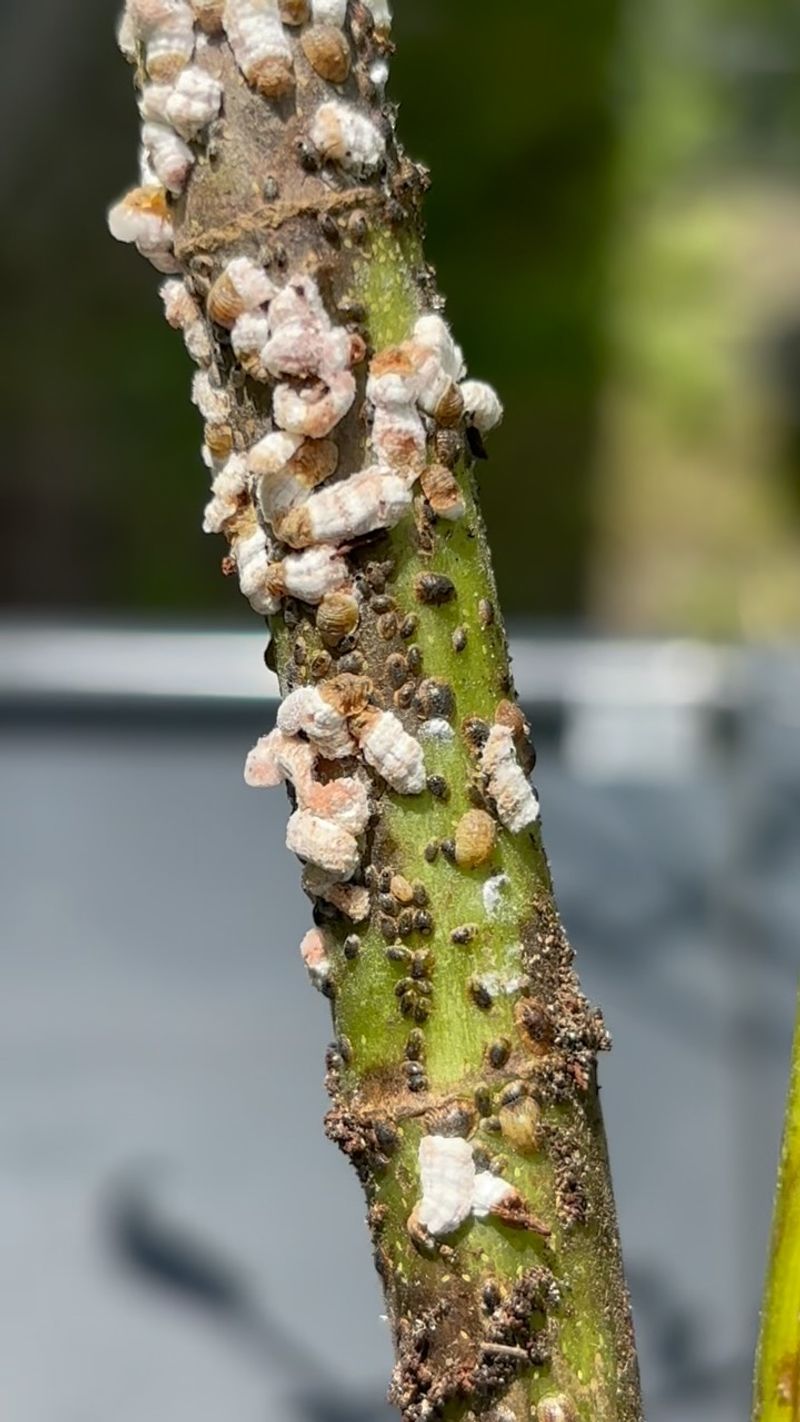
Run your finger along a stem and feel a row of little bumps that do not brush off. Congratulations, you have met scale.
Scale insects look more like plant warts than bugs. Adults hide under a hard or waxy shell, glue themselves to stems and leaf veins, and sip sap through a straw-like mouthpart.
Because they barely move, people mistake them for bark texture or leftover fertilizer crust for months. Meanwhile the population quietly doubles.
Outdoors in Connecticut, natural enemies keep scale numbers modest. Tiny parasitic wasps, lacewing larvae, and heavy August thunderstorms all knock them back.
Your Connecticut Garden Changes Every Week. Your Plan Should Too.
Gardening in Connecticut changes quickly throughout the season. Every Friday you’ll receive a simple weekly plan showing exactly what to plant, prune, fertilize, harvest, and protect so you never miss the right timing.
Indoors, none of that exists. A dozen scales on a ficus in September can become a heavy infestation by Thanksgiving.
The clearest warning sign is stickiness. Scale excretes honeydew, a sugary waste that coats leaves, drips onto the floor, and eventually grows a black sooty mold.
If your windowsill feels tacky or your hardwood has mysterious shiny spots under a plant, look up. Something is feeding above.
Treatment takes patience because the shell repels most sprays. Scrape adults off with a fingernail, an old toothbrush, or a cotton swab dipped in isopropyl solution.
Follow up with horticultural oil or insecticide soap every seven to ten days for a month, hitting stem joints and leaf undersides. The goal is catching the mobile young crawlers between adult stages.
Check susceptible plants before they cross your threshold. Ficus, citrus, jade, ferns, and orchids are the usual suspects in Connecticut homes.
Thrips Arrive Small And Leave Silver Streaks Behind
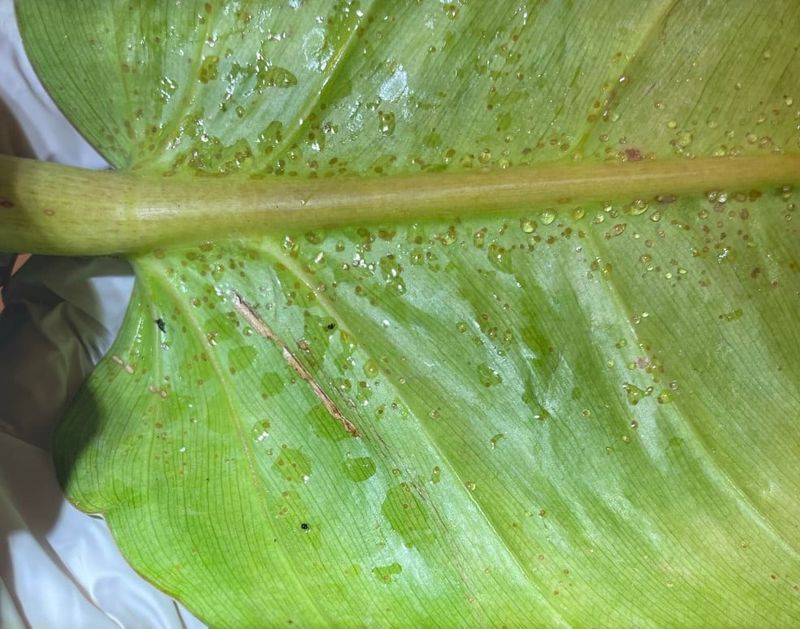
Thrips are barely the size of a comma on this page. You will notice their damage long before you notice them.
Look for leaves that appear silvery, dusty, or scratched, almost like someone rubbed them with fine sandpaper. Add tiny black dots of waste scattered across the surface, and the diagnosis is nearly certain.
These slender insects rasp open plant cells and drink what leaks out. Air fills the empty cells, which is what creates that metallic sheen.
Late summer is peak thrips season across Connecticut. They ride in on garden flowers, drift on breezes from nearby fields, and land on whatever is convenient, including your patio plants.
New growth takes the worst hit. Emerging leaves come out puckered, twisted, or stunted, and flower buds may brown and drop before opening.
Part of what makes thrips stubborn is their life cycle. A portion of it happens in the soil, where larvae drop down to pupate out of reach of leaf sprays.
Effective treatment targets both zones. Spray foliage with insecticidal soap or spinosad, then treat the soil surface or use sticky blue cards to trap the adults flying between.
Repeat every five to seven days for three rounds, since eggs are tucked inside leaf tissue and hatch on their own schedule. Skipping a round undoes the progress.
Before the move indoors, give plants a firm shake over a sheet of white paper. If specks scatter and start crawling, treat outside first.
Fungus Gnats And The Damp Soil They Love
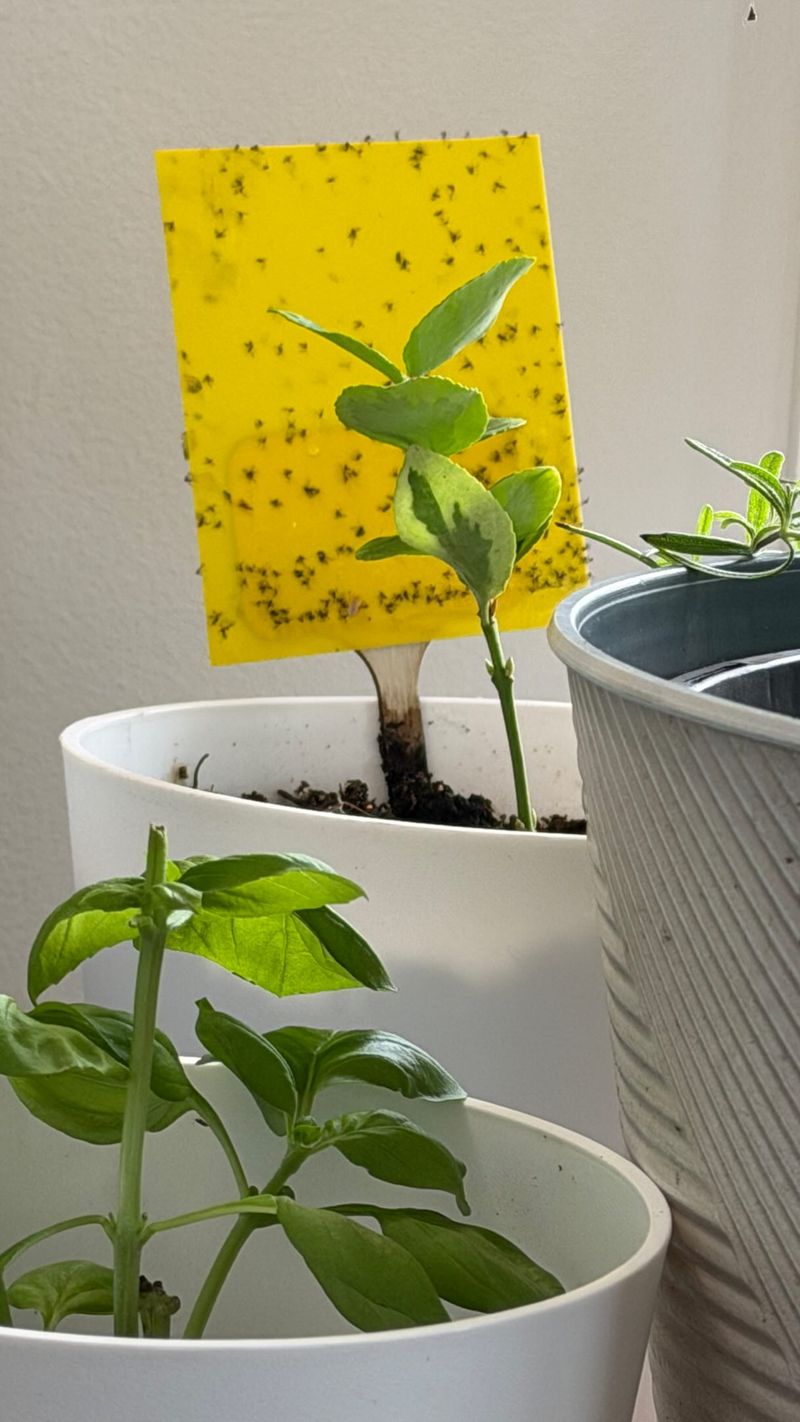
Nothing announces a bad transition faster than a cloud of little black flies rising every time you water. Fungus gnats have arrived, and they brought family.
Adults resemble miniature mosquitoes and are mostly harmless nuisances. Their larvae live in the top inch or two of soil, feeding on fungi, decaying matter, and tender young roots.
A heavy larval population can genuinely slow a seedling or a plant with fine roots. Mostly, though, they just drive people up the wall.
September conditions set them up perfectly. Pots absorbed late-summer rain, outdoor soil stayed damp, and then that moisture moves into a home with less light and slower evaporation.
Wet soil plus warm indoor air equals a gnat nursery. A single female lays around 200 eggs, and the whole cycle finishes in roughly three weeks.
The fix starts with water habits rather than sprays. Let the top two inches of soil dry out between waterings, and dump saucers so pots are not sitting in a puddle.
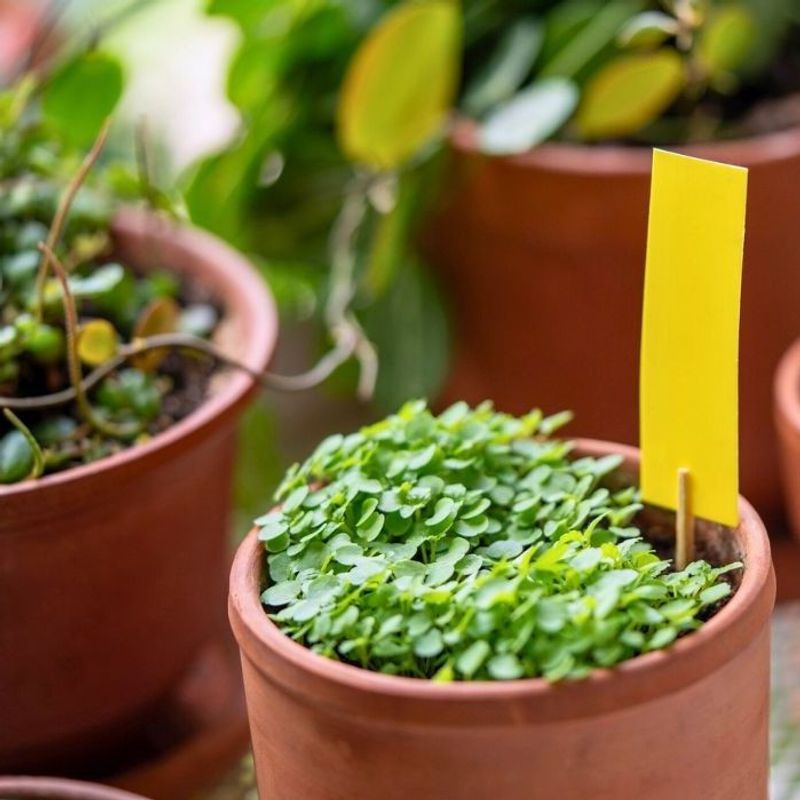
Yellow sticky traps laid flat on the soil catch adults before they lay. For larvae, a soil drench of Bacillus thuringiensis israelensis works well and is safe around pets and people.
A half-inch layer of coarse sand or small gravel on top of the soil also blocks egg laying. Many Connecticut plant owners swear by it as a permanent barrier.
Handle moisture in September, and you rarely fight gnats in January.
The Quick Grab And Go Mistake Almost Everyone Makes
Picture the classic September scene. Rain is coming, the forecast says 44 degrees, and you sprint outside hauling pots two at a time straight to their winter spots.
Understandable, and also the single biggest reason indoor pest problems escalate in October.
Plants that go directly from patio to living room carry everything they collected. Eggs on leaf undersides, larvae in the soil, spiders in the drainage holes, and slugs stuck to the pot bottom all get a free ride.
Worse, they land next to plants that spent the summer inside and have no defenses built up. One infested pot can seed an entire collection within a few weeks.
Another common misstep involves placement. Plants get set wherever there is space, often crowded together on a single sunny sill.
Tight spacing lets pests walk from leaf to leaf and traps humid air around the foliage. Both conditions favor bugs and fungal issues.
Some people also fertilize heavily right after bringing plants in, hoping to help them settle. That pushes soft new growth exactly when the plant should be slowing down, and soft growth is what sap-feeding insects prefer.
The better approach is boring but effective. Start the process two or three weeks before the cold arrives, handle one plant at a time, and give each a proper look-over.
Twenty minutes of inspection in September saves months of spraying, scrubbing, and apologizing to your ferns.
How To Inspect And Clean Plants Before They Cross The Threshold
Think of this as customs screening for greenery. Nothing gets waved through without a look.
Set up outside on a driveway or lawn where mess does not matter. Bring a hose, a spray bottle of insecticidal soap, gloves, and a few old rags.
Start by flipping every leaf. Undersides are where scale, thrips, spider mites, and eggs hide, and the top of a leaf tells you almost nothing.
Next, run a hose with moderate pressure over the whole plant. A firm rinse dislodges a surprising percentage of pests and washes off dust that blocks light.
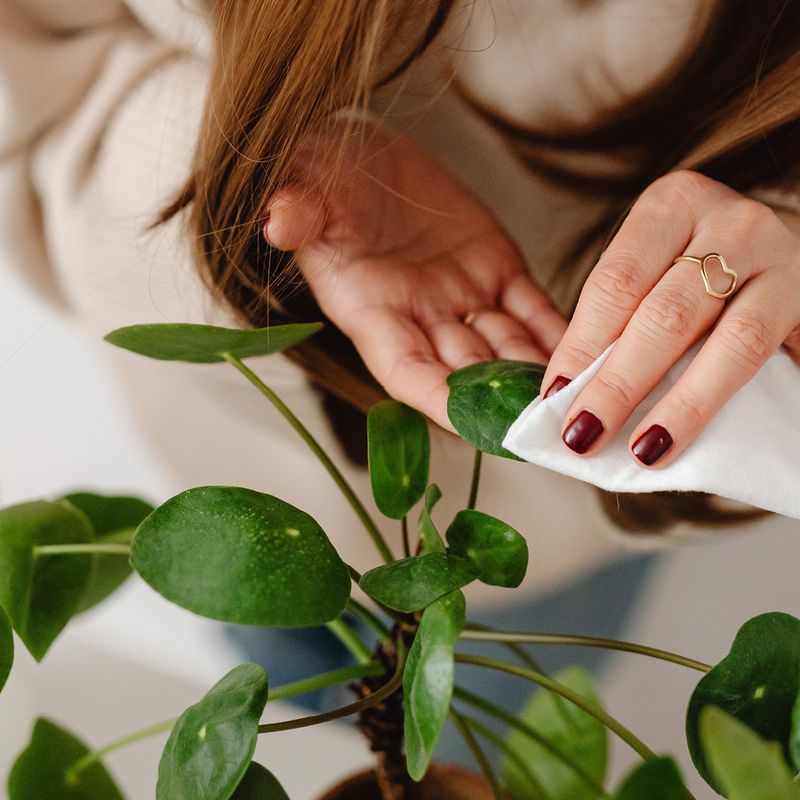
Wipe broad leaves individually with a damp cloth. Rubber plants, monstera, and philodendron all respond well, and the process forces you to look closely at each one.
Check the pot itself. Scrub the rim and sides, lift it to look for slugs or ants underneath, and poke a finger into the drainage holes.
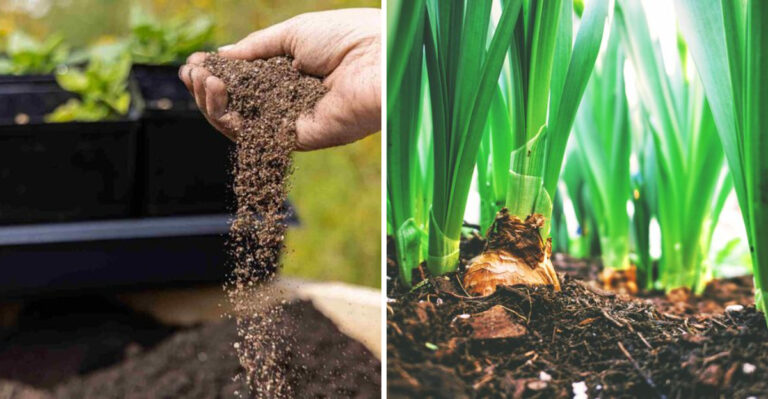
Soil deserves attention too. Scrape off the top inch and replace it with fresh potting mix, which removes many gnat eggs and larvae in one move.
For a stubborn soil problem, submerge the whole pot in a bucket of room-temperature water for fifteen minutes. Anything living underground floats up or gives up.
Finish with a full spray of insecticidal soap or horticultural oil, covering stems, both leaf surfaces, and the soil top. Let everything dry in the shade before the plant heads indoors.