These Tiny Red Bugs Can Suddenly Cover Georgia Patios And Concrete
Tiny red specks scattered across a patio can be easy to dismiss until hundreds seem to appear together. Their bright color makes the sudden crowd impossible to ignore.
What looks like a mysterious invasion often has a much smaller explanation hiding in plain sight.
Clover mites can gather on sunny concrete, walls, and other warm surfaces near lawns. In Georgia, their activity may become noticeable when conditions encourage them to move from nearby vegetation.
The good news is that their appearance is usually more annoying than threatening.
Before reacting, learn how to recognize these tiny visitors and why they gather around certain parts of the yard. Correct identification can save you plenty of unnecessary worry.
Once you know what brought them there, the red-speckled patio becomes much less puzzling overall.
1. Tiny Red Specks Can Show Up In Large Numbers
One minute the patio looks normal, and an hour later it seems to be moving. That sudden shift catches almost everyone off guard.
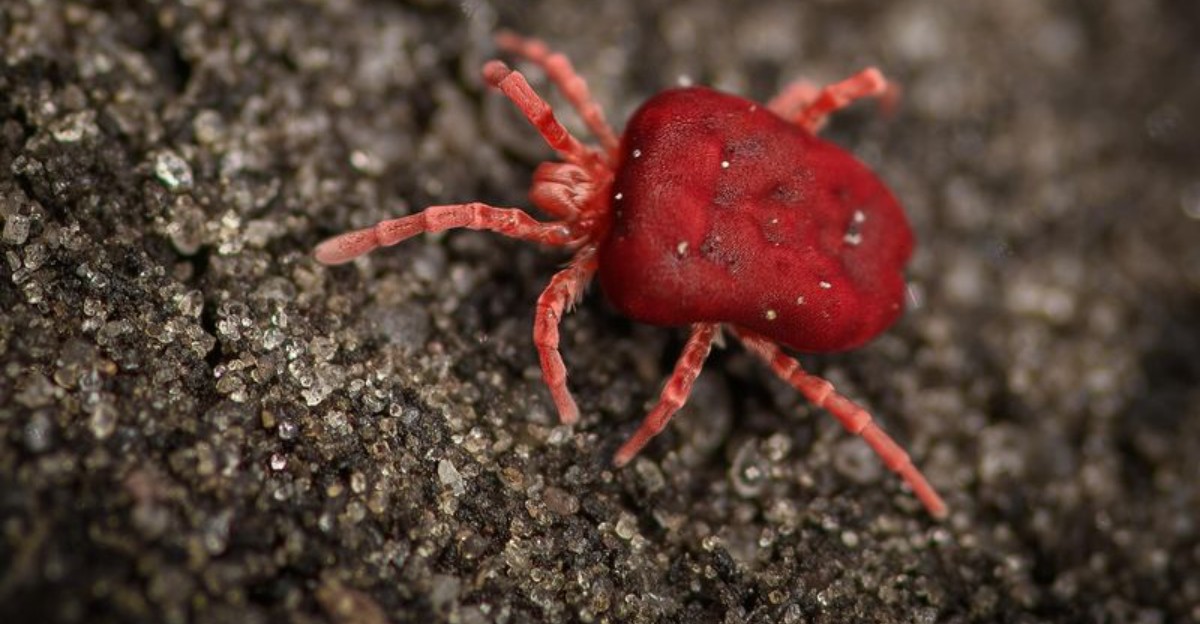
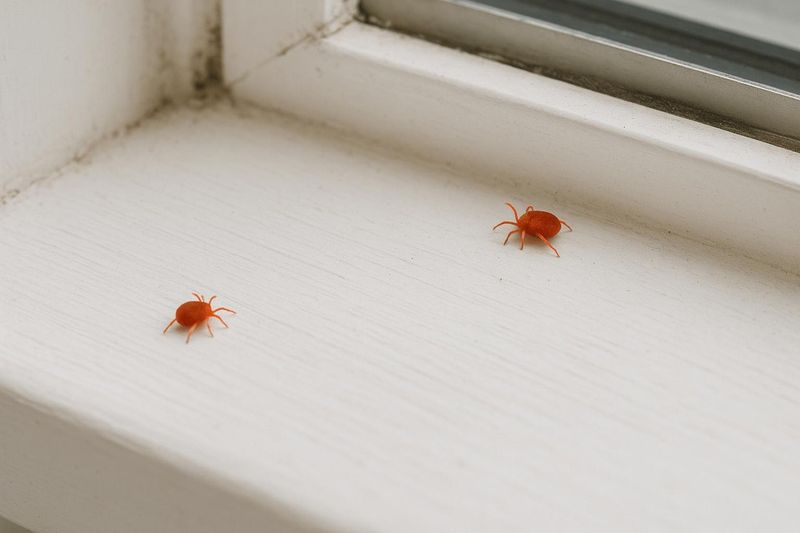
Clover mites are roughly the size of a pinhead, which is why people often mistake them for dust or paprika sprinkled across the slab. Look closer and you will see the specks crawling steadily in one general direction.
Numbers matter here more than size.
A single mite goes unnoticed, but a few hundred on light-colored concrete look alarming. Homeowners in Georgia often report them along south-facing walls first, since those surfaces warm up earliest in the day.
Population sizes vary a lot from yard to yard and season to season.
Lawns with thick grass and steady moisture tend to support more of them, though weather swings can change activity quickly. A warm stretch after cool days often brings the biggest surge.
Resist the urge to wipe them with a dry cloth. Crushed mites leave rusty red stains that can set into porous concrete, grout, and light siding.
A damp sponge or a quick pass with a hose usually works better.
Keep in mind that these gatherings are typically short-lived. Activity often fades within a few weeks as temperatures move past their comfortable range.
2. Clover Mites May Be Behind The Sudden Crowd
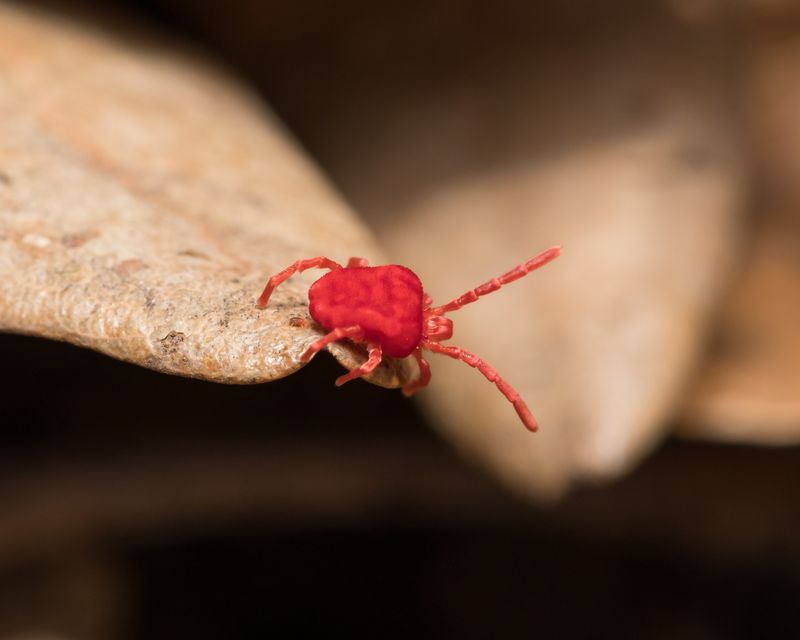
Most red specks on siding turn out to be one specific culprit. Clover mites belong to the mite family, so they are relatives of spiders and ticks rather than true insects.
Their front legs stand out once you get close. Those two legs stretch forward and look almost like antennae, which helps separate them from other small red arthropods.
Color changes as they age, shifting from bright red toward a darker reddish brown.
Females can lay eggs in cracks, under siding, and in brick mortar joints without any male involved. That habit explains how numbers build up so fast in a small area.
Cool weather suits them well.
Peak activity in Georgia usually lands in spring and again in fall, when days stay mild rather than hot. Summer heat tends to push them deeper into shaded soil and thatch.
Your Georgia Garden Changes Every Week. Your Plan Should Too.
Gardening in Georgia changes quickly throughout the season. Every Friday you’ll receive a simple weekly plan showing exactly what to plant, prune, fertilize, harvest, and protect so you never miss the right timing.
Plants provide their food, not people or pets. Clover, grasses, and other low greenery give them the sap they feed on.
Identification helps you skip unnecessary treatments.
If the specks have eight legs, feed on lawn plants, and appear near sunny walls, clover mites are the likely answer. Chiggers, spider mites, and red velvet mites behave differently and show up in other places.
3. Sunny Surfaces Give Them A Warm Place To Gather
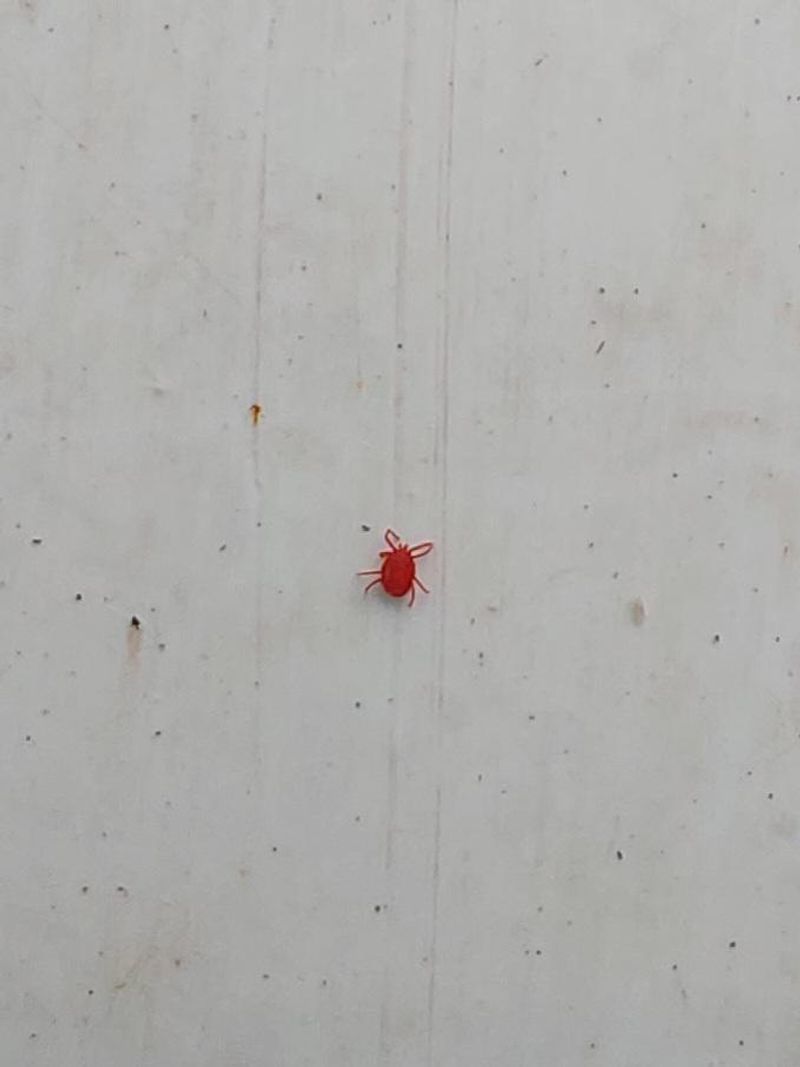
Warmth is the main attraction. Concrete, brick, and light siding soak up morning sun and hold that heat longer than surrounding grass.
Clover mites drift toward those warm spots on cool mornings, which is why patios and driveways look busiest before noon.
South and west walls usually see the heaviest traffic, since they catch the most direct light through the day. North-facing sides often stay quiet by comparison.
Color plays a role too.
Pale concrete and cream-colored siding make the mites obvious, while dark brick can hide the same numbers. People sometimes assume one side of the house has more when it simply shows them better.
Weather shifts change the pattern within hours.
Cloud cover, a passing shower, or a hot afternoon can clear the slab entirely, then the crowd returns once conditions feel right. Activity in Georgia often follows those quick temperature swings closely.
Shade offers a simple advantage here. Patios shaded by a pergola, awning, or mature tree tend to attract fewer mites during peak weeks.
Hosing warm surfaces in the morning knocks numbers down temporarily, though they may return by the next sunny day.
Think of the concrete as a heat trap rather than a nest, because the mites are visiting, not living there.
4. Nearby Lawns Can Be Where The Activity Begins

The lawn is the real starting point. Clover mites feed on grass, clover, and other soft green growth, then wander toward the house when conditions change.
Yards with heavy fertilizer use and lush, thick turf often support larger populations than thin or drought-stressed lawns.
Newly seeded and freshly sodded lawns can also see spikes, especially when the grass grows right up against the foundation.
Watch where the greenery meets the wall.
A strip of bare soil, gravel, or mulch between turf and foundation gives the mites less reason to travel that route. Roughly eighteen inches to two feet works well for most homes.
Groundcover vines climbing a foundation wall create a direct path indoors. Trimming those back reduces easy access.
Mowing habits matter, though results vary with rainfall and soil.
Keeping grass at the recommended height for your turf type and easing off excess nitrogen may help over time. Homeowners across Georgia often notice fewer mites once that foundation strip stays clear.
Shrubs planted tight against siding hold moisture and shade, which supports mite activity nearby.
Pull them back a foot or so during your next planting project. Improvements usually show up gradually rather than overnight, so give any change a full season before judging it.
5. Small Openings May Let Them Slip Inside
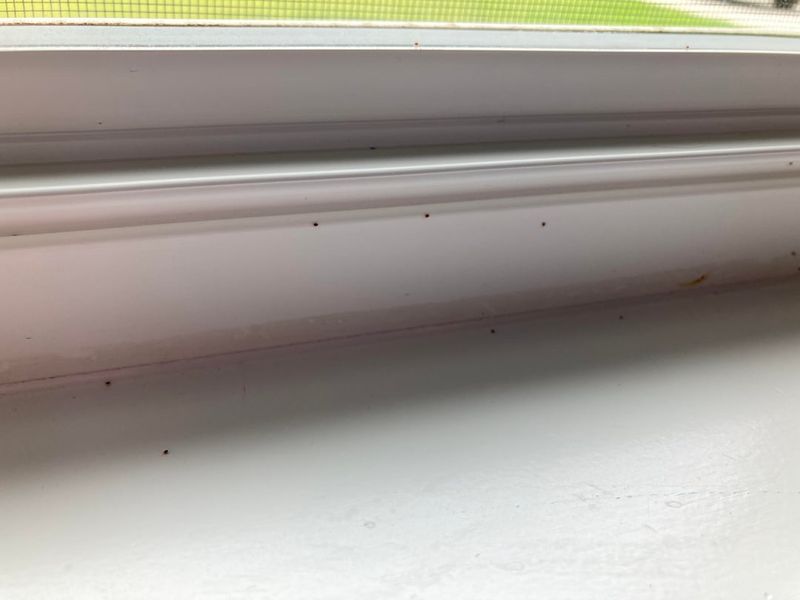
A gap the width of a pencil line is plenty. Clover mites are small enough to squeeze through worn weatherstripping, cracked caulk, and loose window screens.
Indoors they show up on windowsills, curtains, and pale walls, usually on the sunniest side of the room.
Sealing beats spraying in most cases.
Fresh caulk around window and door frames, tight door sweeps, and repaired screens address the actual entry points. Utility line penetrations and gaps behind siding trim deserve a look as well.
Vacuuming handles the ones already inside without leaving stains.
Use the hose attachment and avoid pressing them into carpet or upholstery, since the red pigment can mark light fabric. A soft brush attachment helps on window tracks.
Damp paper towels work for a handful on a sill.
Indoor mites do not reproduce in the house, because they need living plants to feed on. Those that wander in generally fade out within a day or two.
Skip the indoor bug bombs. They rarely reach the cracks where the mites enter, and they add chemicals to your living space for little benefit.
Older homes in Georgia with original wood windows tend to need the most attention here.
A caulk gun and a weekend afternoon often make a noticeable difference.
6. Their Bright Color Makes Them Hard To Miss
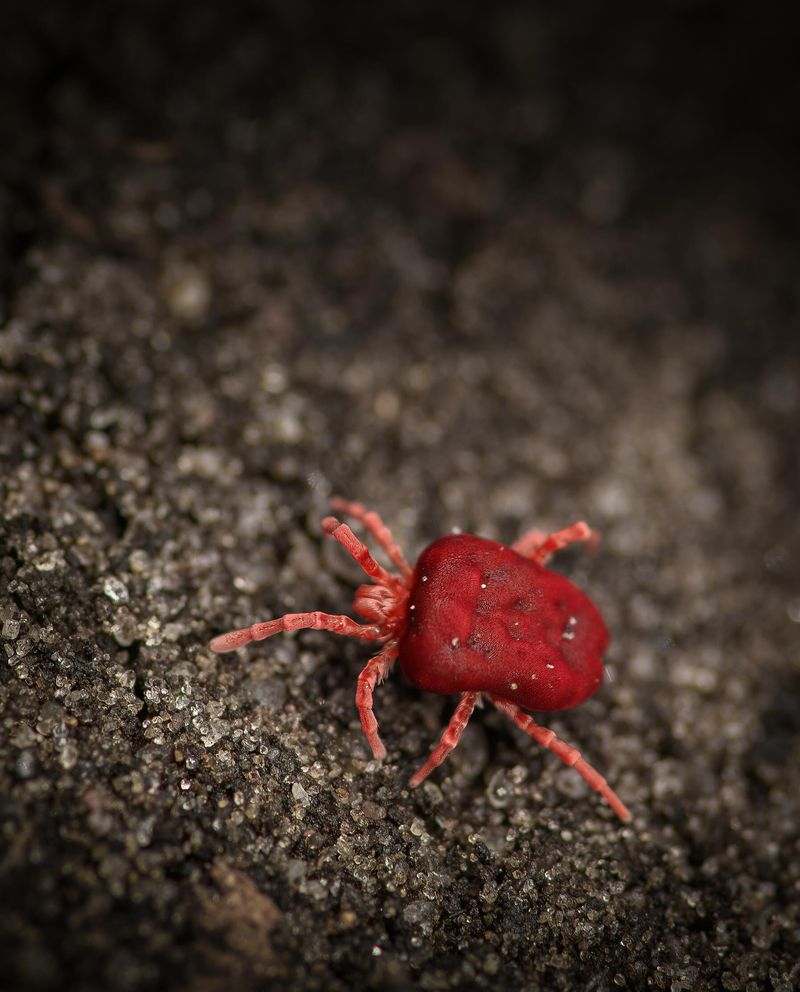
Red on white concrete draws the eye instantly. That contrast is a big reason clover mites feel like a sudden invasion even when numbers stay modest.
Their bodies carry a reddish pigment, and pressure releases it. One careless swipe across a windowsill can leave a streak that lingers.
Porous materials hold the mark longest.
Unsealed concrete, grout lines, and light-colored fabric tend to stain more than glass or finished metal. Acting quickly with a damp cloth usually prevents a permanent spot.
Test any cleaner on a hidden area first.
Mild dish soap and water handle most fresh marks on painted surfaces. Older stains on concrete may need a stiff brush and patience, and some may not lift entirely.
Color also helps you tell them apart from other tiny red visitors.
Chiggers stay nearly invisible to the naked eye and are found in tall grass, not on sunny slabs. Red velvet mites look larger and fuzzier, and they usually stick to mulch and leaf litter.
Homeowners in Georgia sometimes assume the red color signals something dangerous.
Bright coloring in nature can mean a warning, but not here. The pigment simply belongs to the mite and carries no threat to people, pets, or plants indoors.
7. These Tiny Visitors Do Not Bite Homeowners
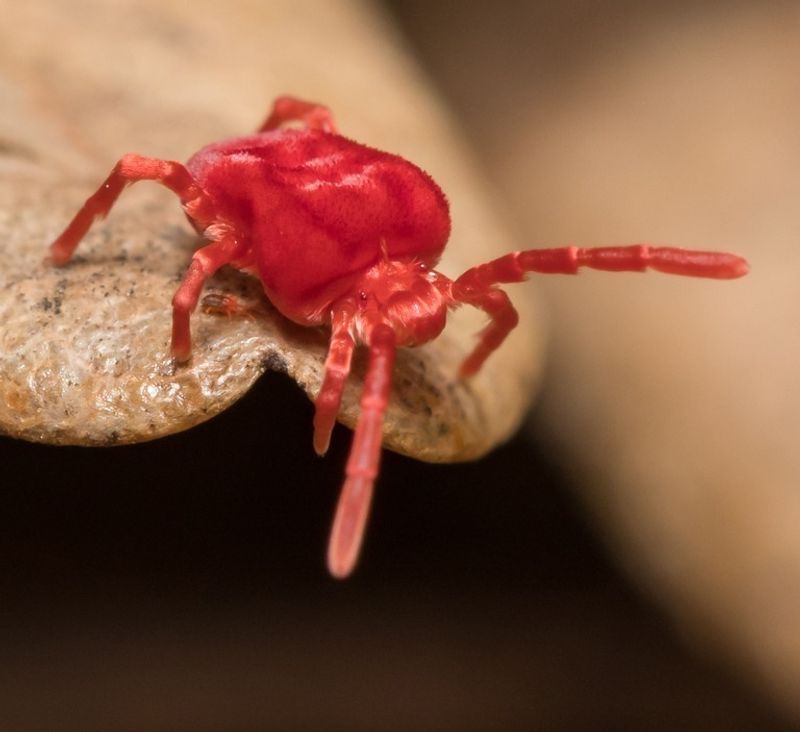
Good news first: clover mites do not bite people. Their mouthparts are built for piercing plant tissue, not skin.
Pets stay safe as well, since dogs and cats hold no interest for a plant feeder. No disease transmission has been linked to them either.
Damage to your home is not a concern.
Unlike termites or carpenter ants, these mites do not chew wood, fabric, or stored food. Staining from crushed bodies is the only real mess they create.
Outdoor plants generally shrug them off.
Heavy feeding may leave silvery patches on lawn grass in some cases, though most Georgia yards recover on their own once the weather shifts. Turf that already struggles from drought or compaction shows stress more clearly.
Some people mistake unrelated itching for mite bites.
Dry indoor air, laundry products, and other seasonal irritants are more likely explanations. A doctor is the right call for any skin issue that persists.
Patience solves most of these situations.
Populations rise and fall with temperature, so the crowd on your patio typically thins out within a few weeks. Sealing entry points and keeping a clear border along the foundation gives lasting help.
If numbers seem extreme year after year, a licensed pest professional can suggest targeted perimeter options.