Native Georgia Shrubs That Beat Leyland Cypress As Privacy Screens
A Georgia privacy screen can look impressive for years, then suddenly reveal every weakness at once.
One plant opens a gap. Another leans after a storm. The row that once blocked a patio view starts demanding ladders, constant trimming, and awkward repairs just to keep the boundary looking intentional.
Replacing the whole thing with another identical wall can repeat the same problem on a different schedule.
A better screen begins with a different question.
What actually needs to happen along that property line once height, shade, drainage, winter cover, and mature width all enter the picture?
The strongest answer is rarely one plant copied from fence to fence. Georgia yards change quickly across a few feet, especially where sun gives way to woodland shade or a low spot holds storm water longer than the rest.
Several native shrubs can handle those conditions in very different ways.
Used carefully, they create privacy that looks less like a green barricade and more like a landscape designed to stay useful as it matures.
1. Build Fast Cover With Southern Wax Myrtle
A sunny Georgia property line needs a shrub that can gain height without turning into another oversized conifer problem.
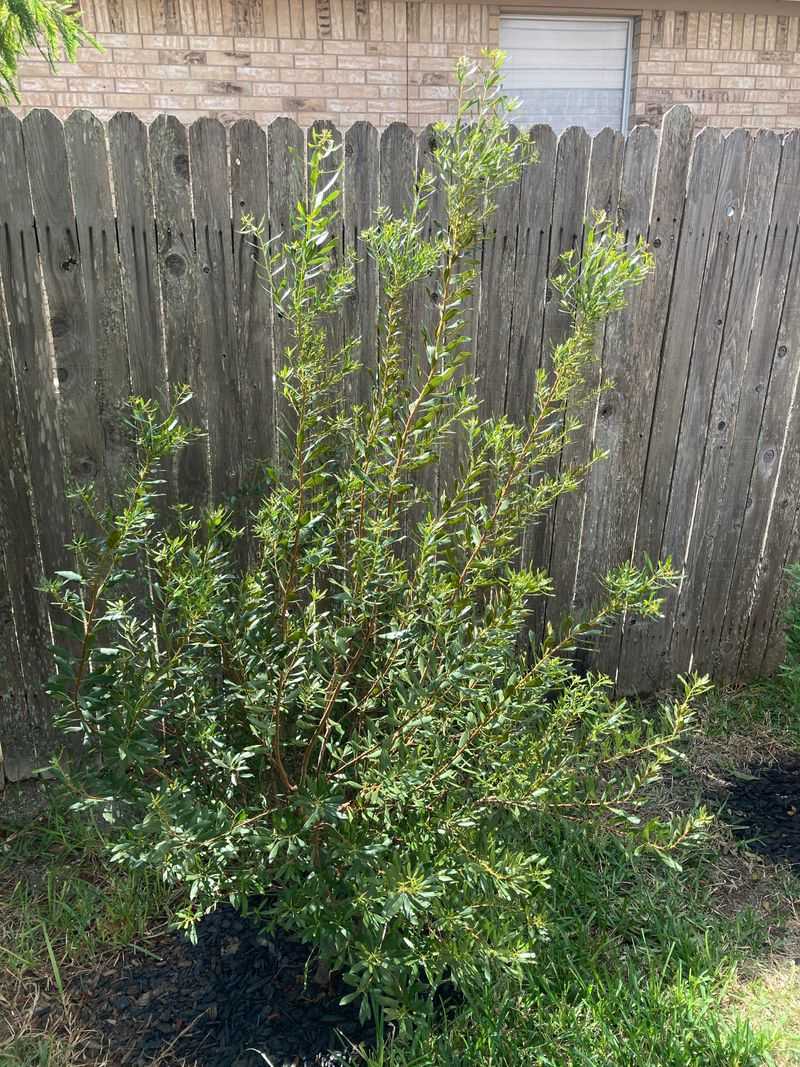
Southern wax myrtle, Morella cerifera, fits that role with evergreen foliage, a naturally broad form, and a mature size around 15 to 20 feet tall and wide.
It works especially well as a loose screen where there is enough room for the shrub to develop rather than being forced into a narrow hedge.
Give it full sun to light shade and dependable moisture during establishment.
The species handles a surprisingly broad range of sites, from wet depressions to fairly dry sandy ground, once settled. T
hat flexibility makes it useful across much of Georgia, especially in the Coastal Plain and warmer landscapes where evergreen coverage matters through winter.
Female plants can produce blue-gray fruit that attracts birds, but fruit requires nearby male pollination. The foliage is aromatic, and the plant can spread enough to form thickets in favorable conditions.
Spacing deserves more attention than speed.
Planting shrubs too close creates a solid wall quickly, then turns pruning into a permanent chore once the crowns collide. Give mature width room and let neighboring plants overlap naturally.
One caution belongs on the plan: wax myrtle wood can break during ice or heavy storms. Use it as part of a mixed screen rather than asking one row to carry the whole privacy job.
Fast cover is useful. Fast cover with backup is better.
2. Use Yaupon Holly For Evergreen Privacy
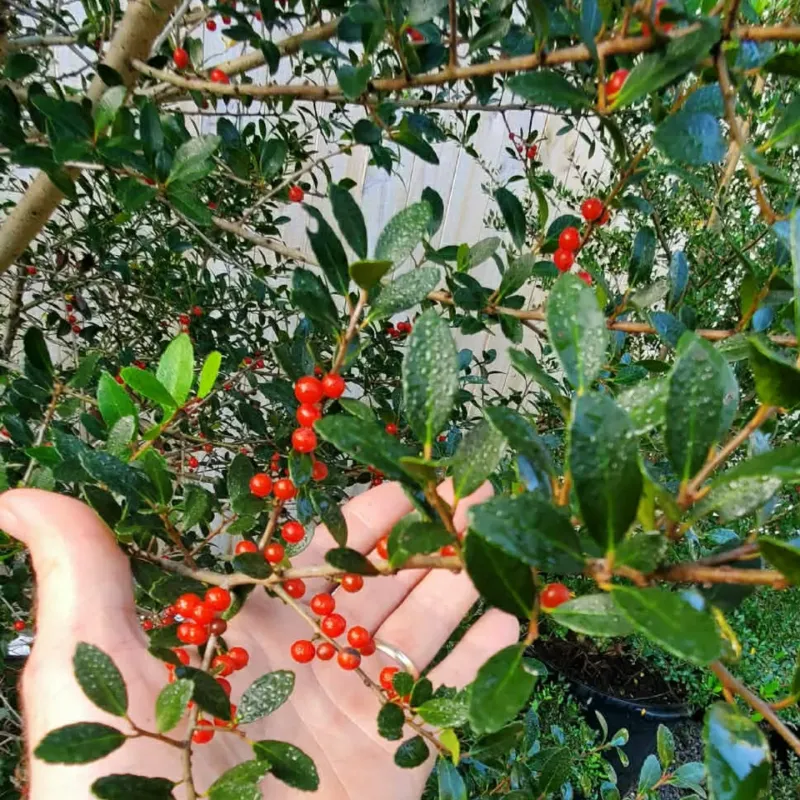
A privacy screen gets easier to manage when one evergreen can handle very different soil conditions without demanding a perfect planting bed.
Yaupon holly, Ilex vomitoria, is unusually adaptable. It grows in sun or shade, tolerates both wet and dry sites, and can handle acidic or alkaline soils.
Mature plants commonly reach about 12 to 20 feet tall and 8 to 12 feet wide, giving them enough size for meaningful screening without the extreme height of Leyland cypress.
The natural form is irregular and often multi-stemmed.
Your Georgia Garden Changes Every Week. Your Plan Should Too.
Gardening in Georgia changes quickly throughout the season. Every Friday you’ll receive a simple weekly plan showing exactly what to plant, prune, fertilize, harvest, and protect so you never miss the right timing.
That shape works beautifully in a relaxed native border. Regular shearing can turn it into a denser hedge, but constant geometric trimming is not required for privacy.
Select a cultivar with the mature size and habit that matches the space, since dwarf and weeping forms behave very differently.
Red fruit adds winter interest on female plants.
Yaupon hollies have male and female flowers on separate plants, so fruiting females need a compatible male nearby. Birds often use the berries as colder weather advances.
Leave enough room around the crown from the beginning.
Crowding several full-size yaupons into a narrow strip creates the same maintenance trap gardeners were trying to escape.
Storm damage can occur, particularly during ice events, so a diversified screen remains smarter than a single-species wall.
Yaupon is the steady framework plant. It keeps leaves through winter, accepts pruning when needed, and does not require the hedge trimmer to become a member of the household.
3. Plant Inkberry For A Medium Native Hedge
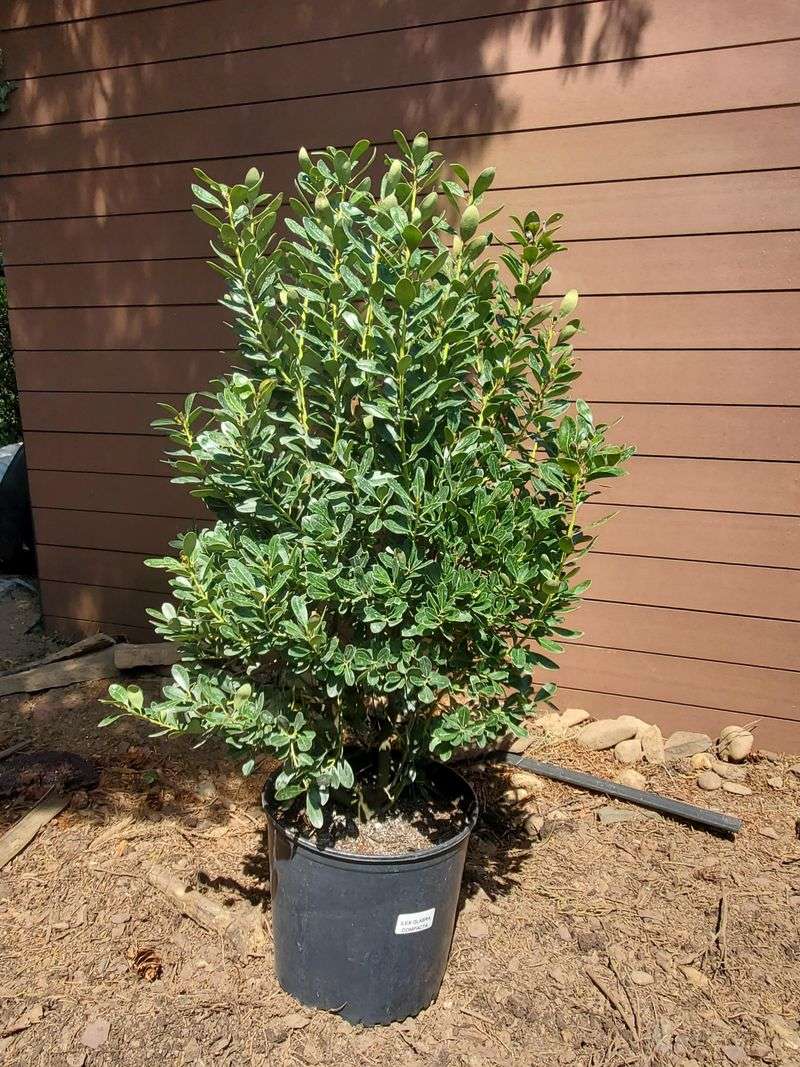
A lower privacy hedge becomes much easier when the site naturally supplies the moisture the shrub wants.
Inkberry, also called gallberry, Ilex glabra, is a broadleaf evergreen that reaches about 6 to 8 feet tall and 4 to 6 feet wide. It spreads gradually by stolons, letting plants knit into a colony without the towering scale of a tree-form screen.
Moist soil is the key requirement.
This holly occurs naturally in boggy, acidic habitats and performs poorly during extended drought. That makes it a strong match for low sections of a Georgia yard, rain-garden edges, or boundaries where runoff keeps the soil damp.
A dry slope beside hot pavement belongs to a different plant.
Sun to shade can work, though denser growth usually comes with adequate light.
Dark fruit appears on female plants, and the flowers provide nectar for bees. Like other hollies, inkberry has separate male and female plants, so fruiting requires a suitable pollinator nearby.
Use its suckering habit as part of the design.
A few new shoots can help close small gaps at ground level, which is where many privacy screens become transparent over time. Remove unwanted expansion at the outer edge instead of shearing the whole shrub into a box.
Inkberry is not the shrub for every Georgia fence line.
On the right moist site, though, it creates a useful middle-height evergreen layer that fills from the ground up instead of becoming a tall screen with bare ankles.
4. Grow Florida Doghobble In Shadier Screens
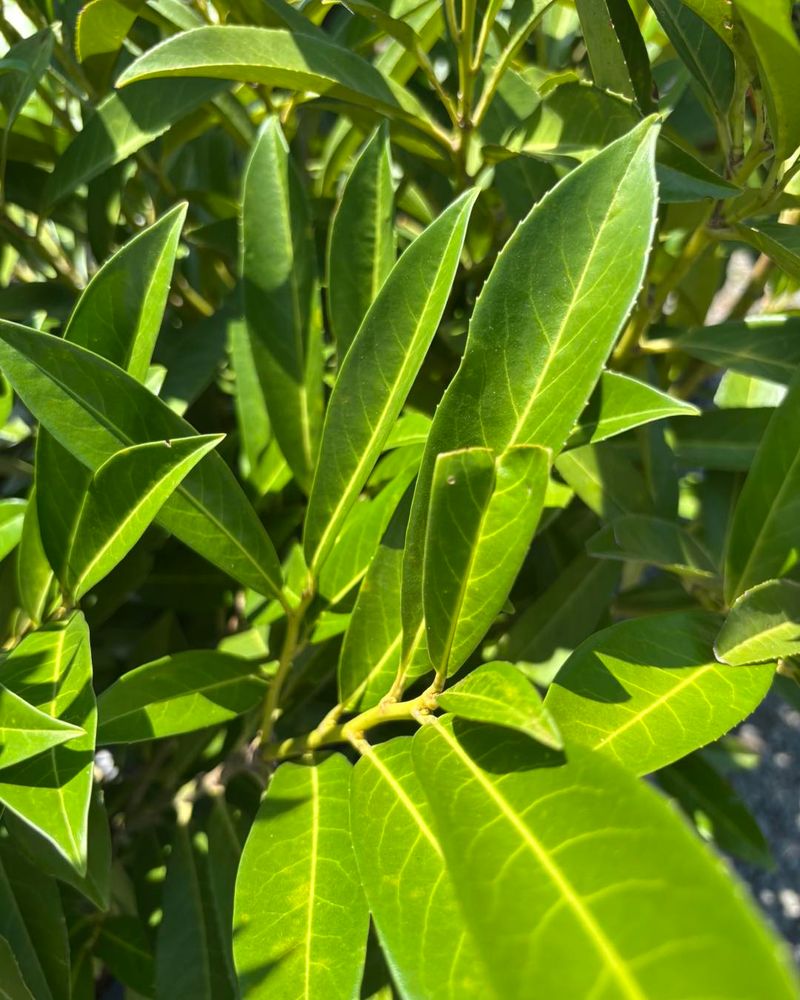
Deep shade can make the usual privacy shrubs stretch, thin out, and reveal the very view they were planted to hide.
Florida doghobble, Agarista populifolia, is built for that understory situation. This evergreen shrub develops arching branches and can reach roughly 6 to 15 feet tall with a spread around 5 to 8 feet.
It grows best in moist, well-drained soil with dappled shade or morning sun and can tolerate full shade.
That combination makes it valuable along wooded property lines.
Use it beneath taller trees, beside a shaded patio, or along a boundary where afternoon sun barely reaches the ground. The arching habit looks more natural than a tightly clipped wall, and evergreen leaves keep the screen useful during winter.
Small cream-colored flowers appear in late spring.
The blooms add interest without turning the shrub into a seasonal spectacle, so the foliage remains the main screening feature. Older stems can be removed periodically to keep the plant full and fresh rather than repeatedly shearing the outer shell.
Moisture still matters.
A hot, exposed Georgia slope is a poor match for a shrub associated with stream banks, swamp edges, and hammocks. Keep mulch over the root zone and allow room for the mature spread.
This is a screen for shade, not a universal replacement.
Where the fence line feels more like woodland than suburbia, doghobble can turn a difficult low-light gap into dense evergreen structure without forcing a sun-loving shrub to fake enthusiasm.
5. Use Florida Anise For Dense Evergreen Cover
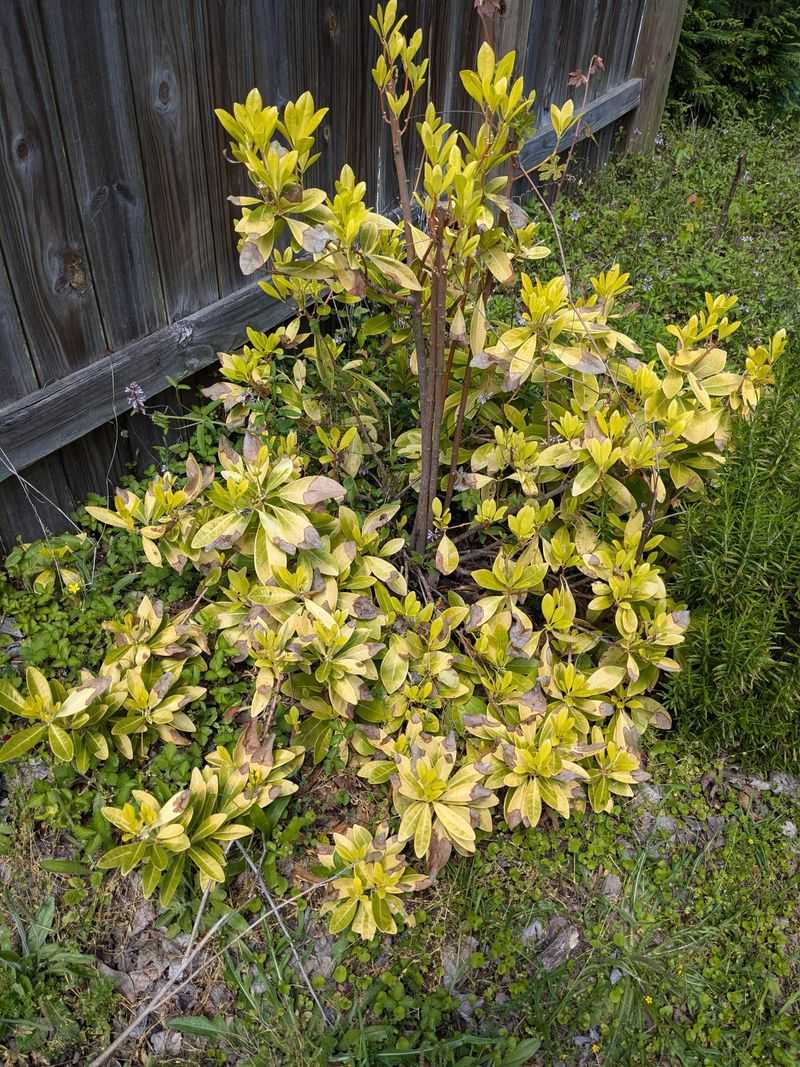
A broadleaf evergreen with real screening height can solve a difficult boundary where the soil stays moist and the landscape needs more than a waist-high hedge.
Small anise-tree, Illicium parviflorum, is native to southern Georgia and Florida. It develops an upright, pyramidal form and commonly reaches about 8 to 15 feet tall with a 6- to 10-foot spread.
The light green foliage is aromatic when crushed, and the plant grows at a medium-fast pace once established.
Moist soil suits it best.
Natural populations occur around streams, bays, hammocks, and other damp sandy sites. In the landscape, it can grow from full sun into light shade, though brighter conditions generally create a denser plant. Heavy shade can produce a looser screen.
Give it enough width from the start.
An eight-foot shrub planted three feet from a walkway will eventually file a complaint through every branch it owns. Use mature dimensions to set the bed depth before planting rather than planning years of corrective pruning.
Yellow-green flowers appear in early summer but are often hidden by foliage.
That makes this shrub more useful for structure than flower display. Some pruning may still be needed to manage size or encourage the desired hedge form.
For northern Georgia, another native shrub may fit more naturally.
In southern Georgia, small anise-tree offers evergreen height, aromatic foliage, and a screening habit that belongs to the region rather than merely surviving there.
6. Add Arrowwood Viburnum For Seasonal Bulk
Not every privacy plant needs leaves in January to make the screen work.
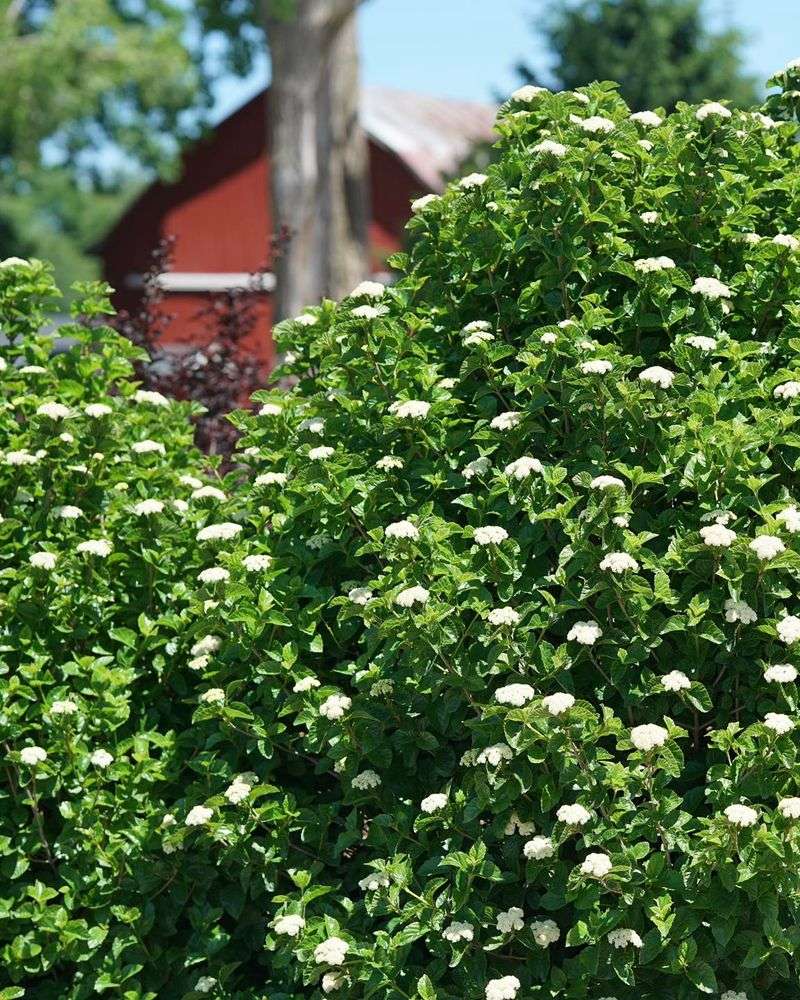
Arrowwood viburnum, Viburnum dentatum, is deciduous, but its upright branching and broad form can add substantial seasonal bulk to a mixed hedge.
Plants may reach roughly 6 to 15 feet tall and wide, so they need real room rather than a narrow foundation strip.
Spring brings flat clusters of creamy white flowers.
Fruit follows later and can attract birds, while autumn foliage may shift through yellow, red, or purple. The shrub works in full sun to partial shade and prefers moist soil, though it tolerates heavier soils better than many ornamental shrubs.
Use it behind or between evergreen anchors.
A yaupon or wax myrtle can maintain winter coverage while arrowwood adds flowers, fruit, changing foliage, and another branch layer through the season.
That mixture also prevents one pest, storm, or site mismatch from creating a gap across the entire screen.
Mature width is the detail most likely to be underestimated.
Several arrowwoods planted shoulder to shoulder can become a thicket faster than the property line can accommodate. Space them for their eventual spread and let the branches overlap instead of forcing dense planting on day one.
Winter transparency is part of the design, not a flaw.
The framework still breaks up views after leaves fall, while nearby evergreens handle the heavier blocking.
A mixed screen should change with the seasons. Arrowwood gives it permission to do that without surrendering privacy.
7. Let Sweetshrub Fill A Woodland Boundary
A privacy border near mature trees often needs a shrub that can fill space without looking like a formal hedge wandered into the woods.
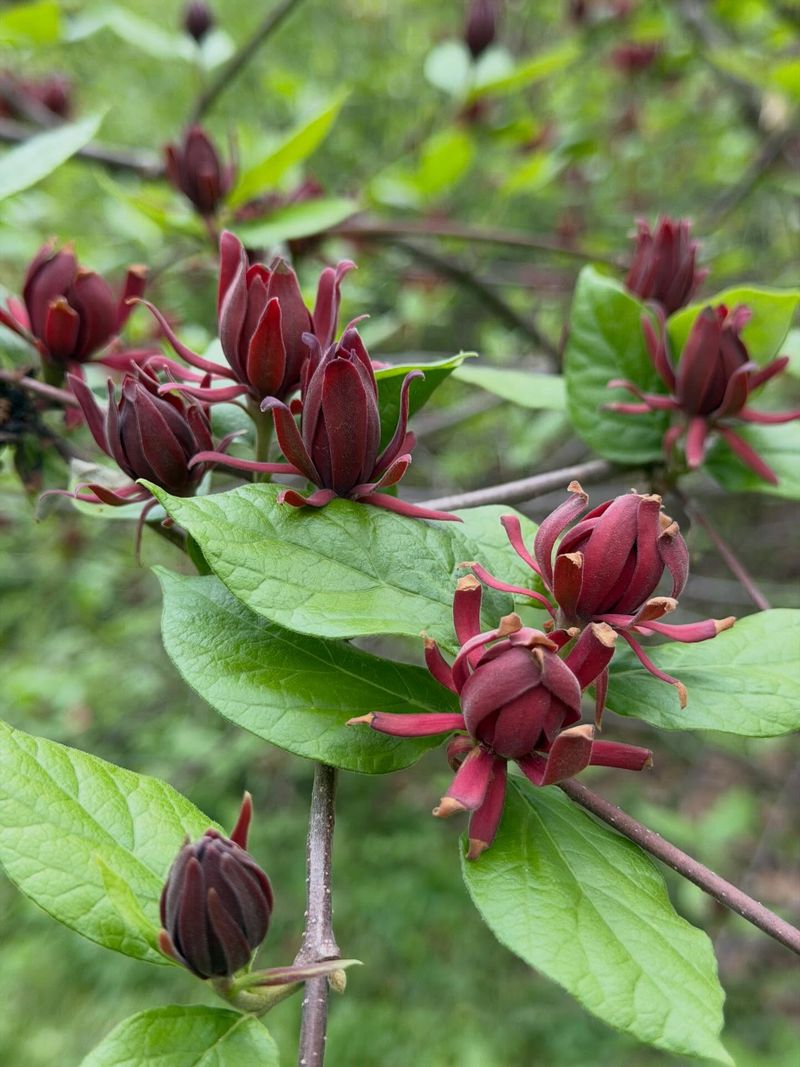
Sweetshrub, Calycanthus floridus, brings an upright, mounding habit and can reach about 8 to 10 feet tall with a 4- to 6-foot spread.
It also spreads outward from the parent plant, gradually forming colonies that work well along relaxed woodland boundaries.
Moist, fertile soil supports the strongest growth.
Full sun to partial shade can work, though the plant feels especially natural where taller trees soften the afternoon light.
Aromatic foliage and fragrant reddish-brown flowers add another reason to place it near a path or side-yard boundary where people pass close enough to notice.
The flowers arrive in spring, and the foliage stays useful through summer.
That gives sweetshrub a longer visual role than a shrub chosen only for one bloom week. Yellow fall color closes the season before the branches become bare.
Sweetshrub is deciduous.
That limits winter opacity, which makes it better as part of a layered screen than as the only barrier between a porch and the neighbor’s driveway. Pair it with evergreen shrubs farther back or at intervals along the row.
Allow the colony to broaden where space permits.
Remove unwanted suckers near paths rather than trying to shear the entire plant into a narrow rectangle.
This shrub does not build a green wall. It builds a softer boundary, exactly what a shaded Georgia yard needed.
8. Mix American Beautyberry Into The Lower Screen
The lower half of a privacy planting is where a tall screen can quietly fail.
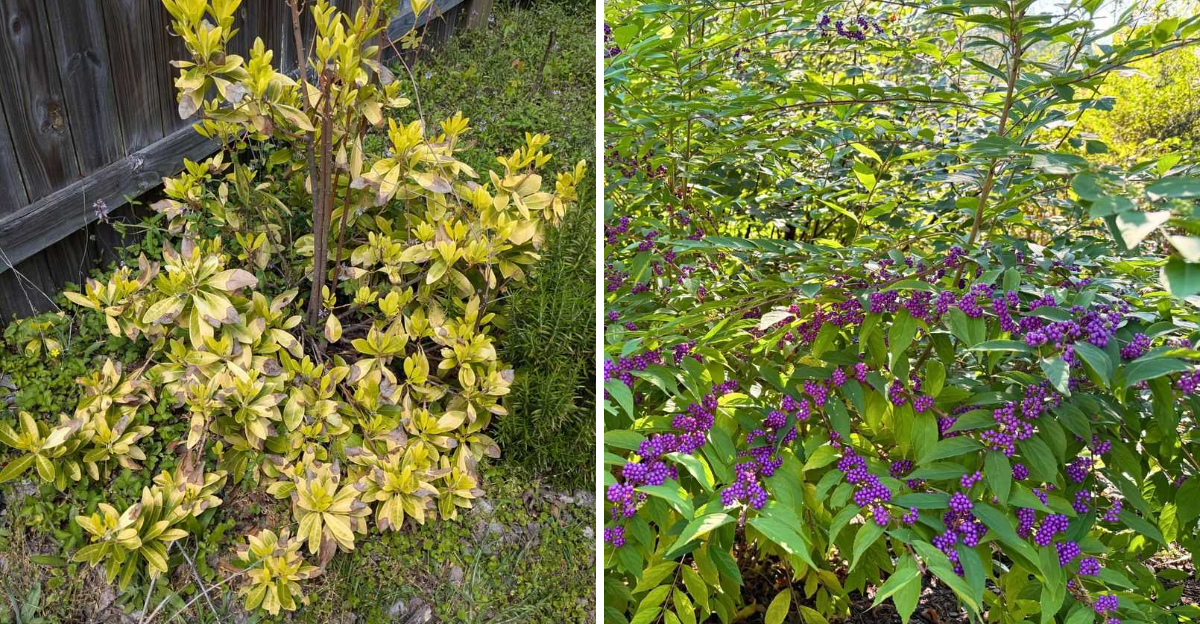
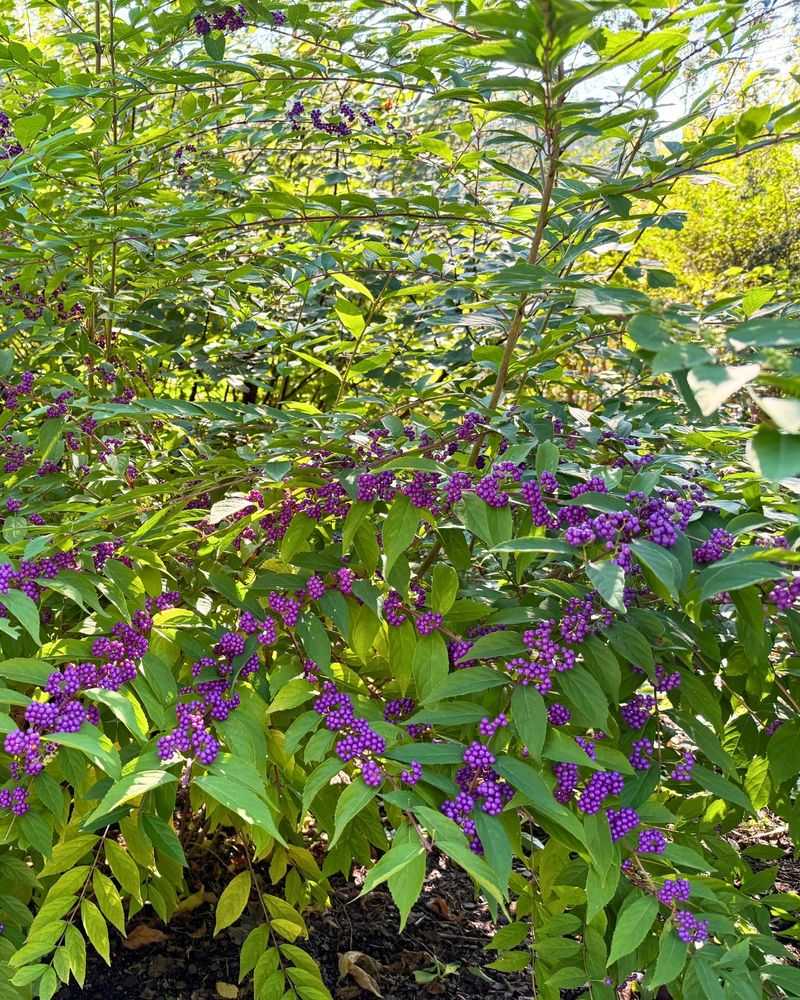
American beautyberry, Callicarpa americana, fills that layer with a loose shrub reaching about 4 to 8 feet tall and 4 to 6 feet wide.
It is deciduous, so it cannot provide winter privacy alone, but its summer mass and vivid fall fruit make it useful in front of taller evergreen plants.
Sun produces the strongest fruit display.
The shrub can also handle partial shade and adapts to Georgia sites from moist to fairly dry conditions. Small flowers appear during summer, followed by bright purple fruit clustered tightly around the stems in fall.
Birds use the fruit, adding activity to the screen.
Keep pruning purposeful.
Beautyberry flowers and fruits on new growth, so late-winter pruning can be used to renew older plants or control size. Hard annual cutting is not mandatory.
A naturally arching specimen often looks better in a mixed border than one reduced to a green meatball every spring.
Plant it where the broad habit has space.
The branches can reach into a walkway when the shrub is squeezed against a narrow fence bed.
Beautyberry works best as the colorful front layer, not the backbone.
Evergreens behind it maintain coverage, while its foliage fills summer gaps and the fruit turns the screen into a September focal point. Privacy can have personality. There is no rule requiring every boundary plant to look like it works in accounting.