The Most Underrated Florida Native That Can Help Keep Spider Mites Out Of Backyards
A Tampa gardener spent three Augusts fighting spider mites on her tomatoes.
Soap sprays. Horticultural oil. Whatever the garden center recommended that week.
They kept coming back.
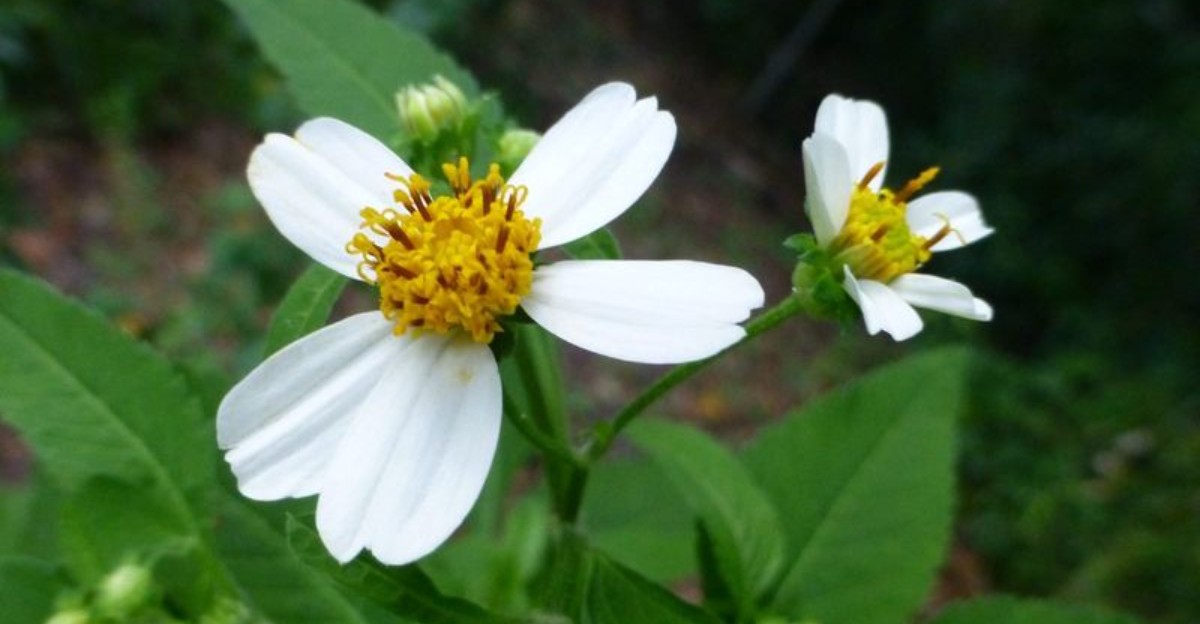
Meanwhile she was pulling out a scruffy white-flowered plant along the fence line every few weeks. Seeds stuck to her socks, so out it went.
That plant was feeding the insects that eat spider mites for a living.
Here’s what nobody explains about beneficial insects: they don’t arrive at a garden with nothing to eat and nowhere to rest.
Adult predators need nectar and pollen even when their larvae hunt pests. Without flowers, the population never establishes.
One Florida native provides that support better than almost anything you could buy, and most people treat it as a weed.
Curious what you’ve been pulling out?
1. Meet Spanish Needle, The Overlooked Native
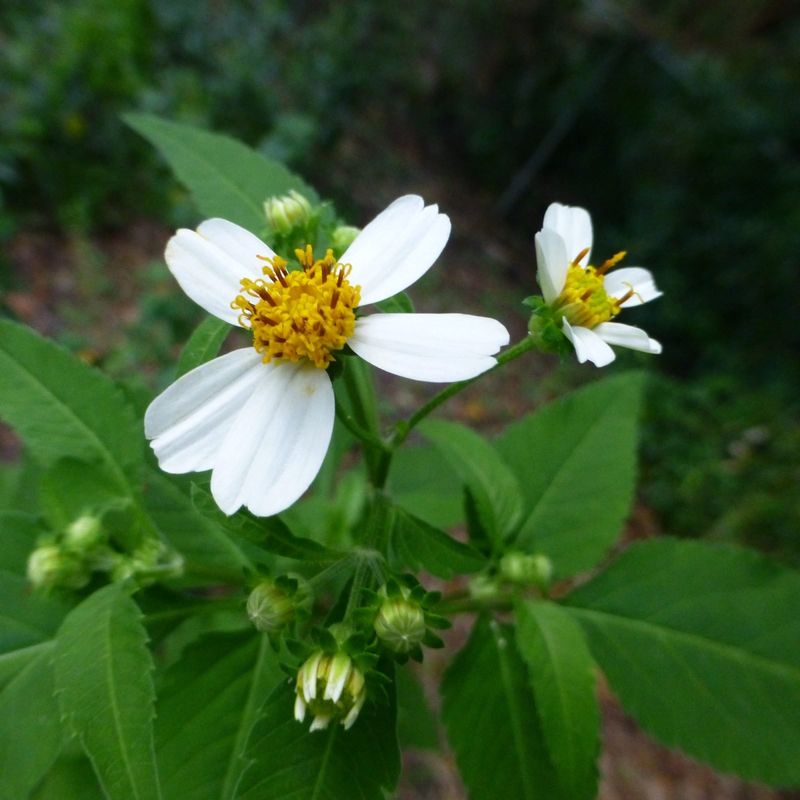
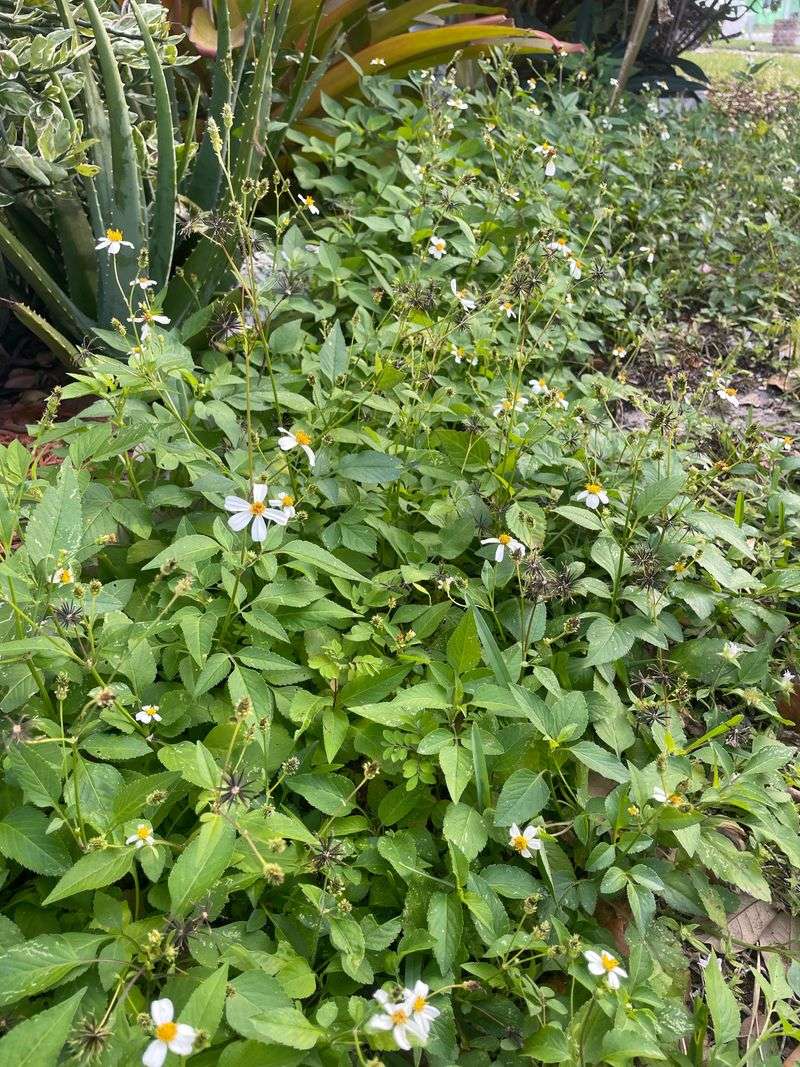
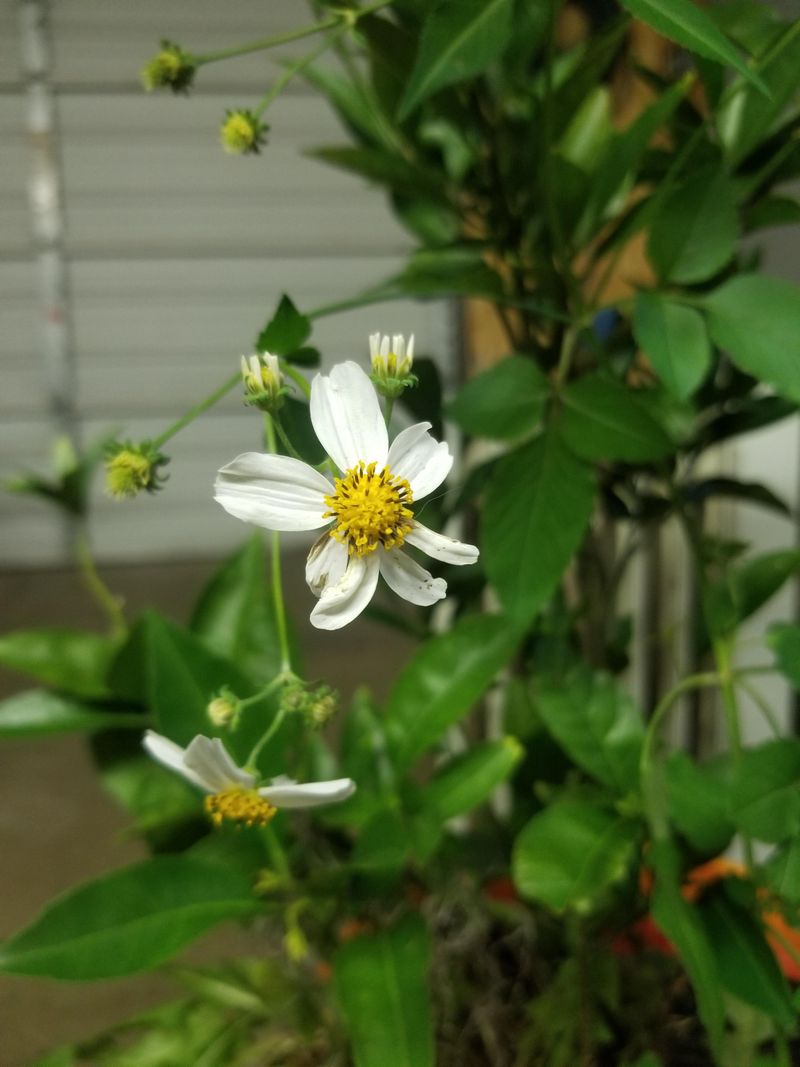
Small white petals, a yellow button center, and seeds that stick to socks like tiny fishhooks.
That’s Spanish needle, known botanically as Bidens alba and to most Floridians as that annoying thing in the ditch.
Native across the state, it thrives in sandy soil, sun, part shade, roadsides, pasture edges, and the neglected strip behind the shed.
It blooms nearly year-round in much of Florida, which is both unusual and important. Continuous flowers mean a continuous food supply for insects.
Gardeners rip it out on sight because of the clingy seeds and general reputation. Fair enough, since it spreads fast.
Research has repeatedly highlighted it as a valuable nectar and pollen source. Researchers have studied it specifically as an insectary plant.
That term means a plant grown to host helpful insects rather than for appearance. Different purpose entirely.
Bees work it heavily and butterflies use it constantly. It ranks among the top honey plants in South Florida.
Beyond pollinators, its flowers and foliage host a crowd of predators and parasitoids that hunt garden pests.
Treat it as a working plant rather than an ornamental. A back corner, hedgerow, or unmowed border suits its wild appearance.
Contain the spread by trimming before seeds mature. You get the benefits without a takeover.
2. Beneficial Insects Flock To Its Blooms
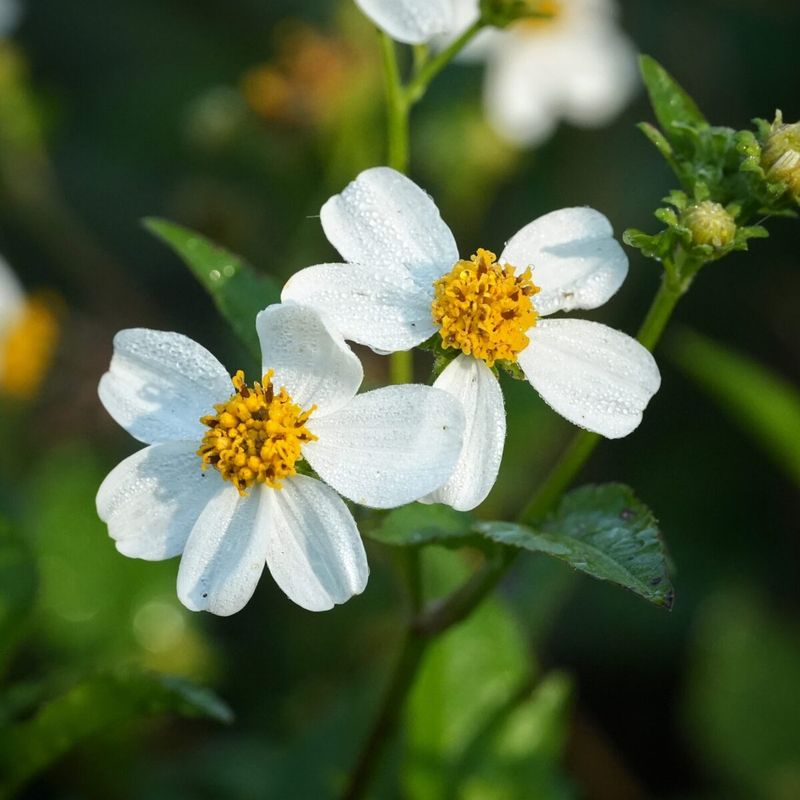
Stand next to a blooming patch on a warm morning and you’ll hear it before seeing it.
Traffic runs constant. Sweat bees, honey bees, hoverflies, butterflies, and wasps so small they resemble specks of dust.
Those specks are the interesting part. Many predatory and parasitic insects need sugar and protein from flowers during adulthood.
Their larvae are ruthless hunters while the adults require nectar. That distinction matters for garden planning.
Shallow open blooms like Spanish needle work ideally, since short mouthparts reach the nectar easily.
Deep tubular flowers exclude these tiny helpers entirely. Flower shape determines who can feed.
Parasitic wasps targeting aphids, caterpillars, and whiteflies visit frequently.
Minute pirate bugs, which feed on thrips and mite eggs, also use flowering plants for pollen and moisture.
Hoverfly adults sip nectar, then lay eggs near aphid colonies where larvae consume dozens of pests each.
Your Florida Garden Changes Every Week. Your Plan Should Too.
Gardening in Florida changes quickly throughout the season. Every Friday you’ll receive a simple weekly plan showing exactly what to plant, prune, fertilize, harvest, and protect so you never miss the right timing.
Bloom timing gives Spanish needle a real edge. Florida pest cycles don’t pause for winter, and neither does this plant in warmer zones.
A predator population with food in February is already established when spring pests appear.
Leave a stand of at least a few square feet rather than one plant. Placing it within twenty to thirty feet of vegetables shortens the commute.
3. Predatory Mites Find Food And Shelter Here
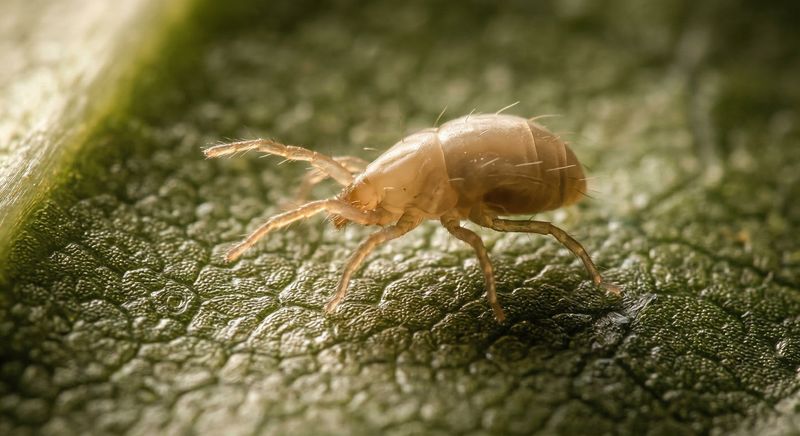
Under a hand lens, the smallest drama in your garden becomes visible.
Fast-moving pear-shaped predatory mites chase slower spider mites across leaf surfaces. One predator consumes several pest mites and their eggs daily.
Those predators need more than prey to stay around. Many species also eat pollen, fungal spores, and plant sap when pest numbers drop.
Pollen-rich hairy-leaved plants become refuges between outbreaks. Research on banker and insectary plants highlights exactly that function.
Spanish needle contributes on both counts. Its long bloom period supplies pollen for months.
Its leaves and stems offer sheltered spots where mites hide from heat, heavy rain, and their own predators.
Leaf hairs and crevices matter more than most people realize. Bare glossy foliage gives mites nothing to grip.
Honesty check belongs here. No publication states that Bidens alba alone controls spider mites on nearby crops.
The documented value is habitat support. Pest suppression comes from predator populations building over time.
Avoid broad-spectrum miticides and pyrethroids near the patch. Those products harm predatory mites faster than pest mites recover.
Skip overhead blasting of habitat plants during dry spells, when predators are working hardest.
4. Ladybugs And Lacewings Move In Too
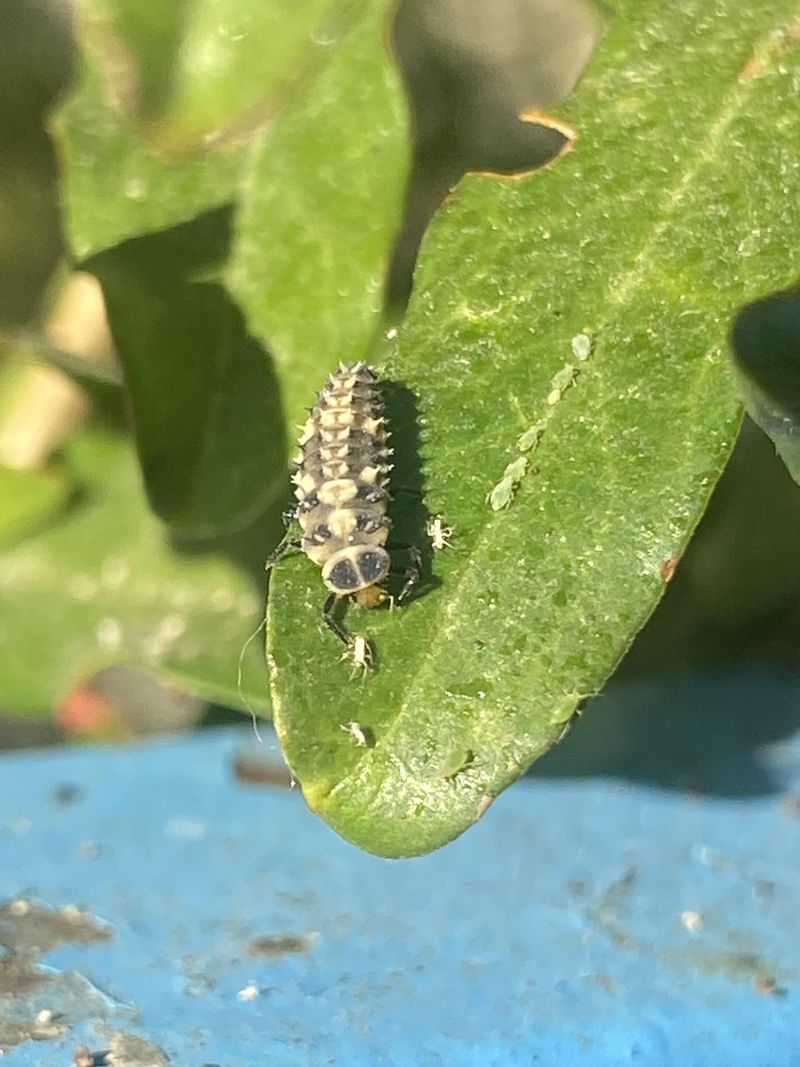
Two of the most recognizable garden allies show up on Spanish needle for different reasons.
Ladybug adults arrive hunting aphids and soft-bodied prey, then linger for pollen when prey runs thin.
Green lacewing adults come strictly for nectar and pollen. Their jaws are built for sipping rather than biting.
Lacewing larvae are the actual muscle. Nicknamed aphid lions, these bristly hunters attack aphids, thrips, mealybugs, whitefly nymphs, small caterpillars, and spider mites.
A single larva can clear hundreds of pests before pupating. Substantial return on one flowering plant.
Certain ladybug species feed on mites too. The spider mite destroyer beetle, Stethorus, specializes almost entirely on tetranychid mites.
It responds to landscapes with mixed vegetation and reduced pesticide pressure. Habitat rather than product.
Larger ladybugs like the convergent lady beetle eat mite eggs when aphids run scarce.
Getting these insects to nest rather than visit requires some restraint. Adults lay eggs near food.
A garden with some tolerable pest activity keeps predators breeding. Zero pests means zero predators, and the next outbreak has nothing slowing it.
Give them cover too. Unmowed edges, leaf litter, and native shrubs near the patch offer shade and overwintering spots.
5. One Plant Supports A Whole Food Web
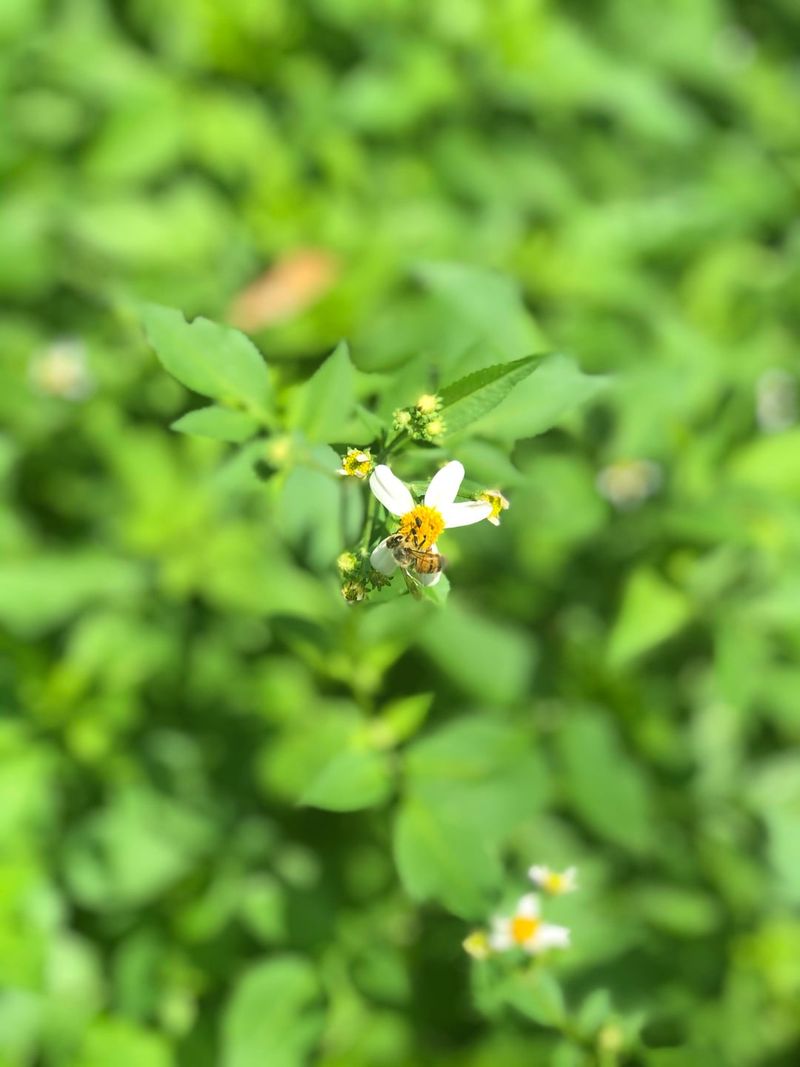
Pull one thread in a backyard and the whole fabric shifts.
Flowers feed pollen and nectar eaters, those insects feed spiders and predatory bugs, and predators keep plant feeders from exploding.
Spanish needle sits near the base of that chain in many Florida yards.
It supports honey bees and dozens of native bees, hosts caterpillars of the dainty sulphur butterfly, and provides seeds small birds work through in fall.
Cardinals, buntings, and sparrows pick the seed heads while insect-eating birds hunt the foliage.
Each layer buys the gardener something. Birds remove caterpillars and beetles.
Spiders and pirate bugs take thrips. Parasitic wasps reduce aphid colonies from the inside.
Predatory mites patrol leaf undersides where spider mites start their colonies. Different specialists, different targets.
Diversity makes the system steady rather than erratic. A yard with one flowering species and substantial turf produces boom-and-bust pest cycles.
Continuous bloom, varied leaf textures, and undisturbed corners hold a standing crew of predators year-round.
Pair Bidens with other Florida natives for even coverage. Blanketflower, tickseed, frogfruit, beach sunflower, and dotted horsemint all bloom at overlapping times.
Frogfruit doubles as a walkable groundcover, so the habitat needn’t look unkempt.
6. Treat It As Support Not A Single Fix
Plenty of online lists promise plants that repel spider mites.
Those claims usually outrun the evidence considerably. Spanish needle deserves an accurate description instead.
Nothing in extension guidance identifies Bidens alba, or any single native, as a proven direct control for spider mites.
The plant emits no mite-repelling scent. Planting one along the fence won’t clear webbing off your tomatoes next week.
What it does is documented and genuinely useful. It feeds and shelters a wide range of natural enemies.
Those enemies collectively help suppress pests over time. Weeks and seasons rather than days.
Expectations should match that reality. Predator populations build gradually.
A severe mite outbreak on stressed dusty drought-hit plants still needs direct attention.
Improved watering, dust control, pruning the worst foliage, or a targeted oil or soap treatment all apply in that situation.
Spanish needle carries tradeoffs worth naming. It spreads aggressively and its seeds hitch rides on clothing and pets.
It can look messy in a manicured front yard. Some gardeners keep it contained in a back border or a large pot.
Framed correctly, it’s a habitat investment rather than a spray substitute. Gardens expecting a miracle plant end up reaching for chemicals anyway.
7. Combine It With Good Pest Management Habits
Habits decide whether habitat plants actually pay off.
A broad-spectrum insecticide applied on impulse erases months of predator buildup in an afternoon. Spider mites bounce back faster than their enemies do.
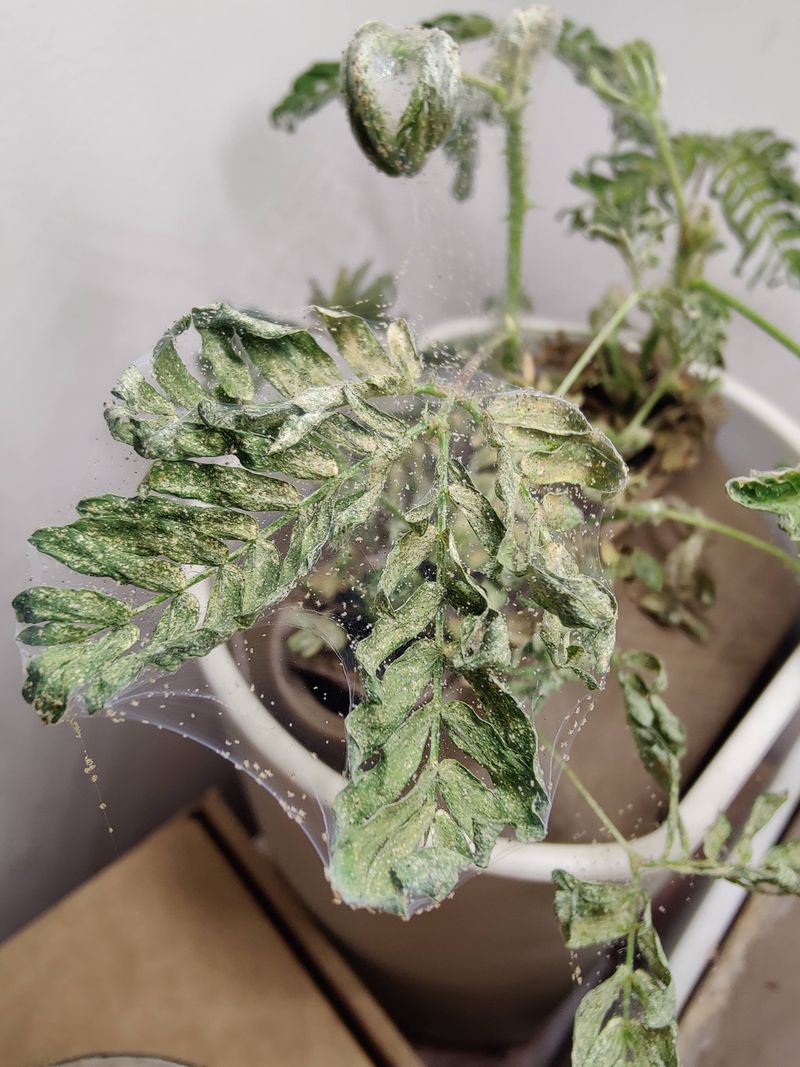
Scout before you spray. Flip a few leaves twice weekly and look for fine stippling, pale speckles, or thin webbing underneath.
A cheap 10x hand lens shows whether the moving dots are pests or the faster shinier predators already working.
Water and dust management matter more than most gardeners expect. Spider mites thrive on hot dry dusty foliage.
Mulch bare soil, irrigate properly, and rinse dust off leaf undersides during dry stretches. Simple and effective.
Avoid heavy nitrogen fertilizer, which produces the tender growth mites feed on eagerly.
Choose selective treatments when action becomes necessary. Insecticidal soap and horticultural oil work on contact and break down quickly.
Both spare more beneficials than pyrethroids or carbaryl. Spot-treat the affected plant rather than the whole yard.
Add plant variety around the Bidens patch so bloom never stops. Leave a corner unmowed.
Skip the fall cleanup obsession, since predators overwinter in stems and litter.
Do all that and one scruffy roadside native quietly starts earning its keep.
8. Keep It From Taking Over Your Yard
Spanish needle earns its reputation honestly. Left alone, it spreads.
Each plant produces substantial seed, and those barbed seeds attach to clothing, pet fur, and equipment. Distribution happens whether you intended it or not.
Trimming before seeds mature is the single most effective control. Cut spent flowers while they’re still soft rather than dry and brown.
That timing preserves the habitat value while limiting the spread. Flowers keep coming after cutting anyway.
Location choice does most of the work. A back fence line, a hedgerow, or an unmowed border all suit it without creating problems.
Containers work for gardeners wanting strict boundaries. A large pot supplies flowers without any seed reaching soil.
Mowing an adjacent strip keeps edges defined. Regular passes stop seedlings before they establish.
Pull volunteers while they’re small, since the taproot deepens with age. Damp soil after rain makes that considerably easier.
Skip it entirely near a natural area, where the aggressive habit works against surrounding native plants.
Some gardeners find the tradeoff worthwhile and others don’t. Both conclusions are defensible.
If Spanish needle isn’t right for your yard, the same principle applies to better-behaved natives. Blanketflower, tickseed, and frogfruit all support beneficial insects without the seed problem.
9. Other Florida Natives Worth Planting Alongside It
Spanish needle handles a lot and it works considerably better with company.
Continuous bloom is the goal, and no single plant covers every week of a Florida year.
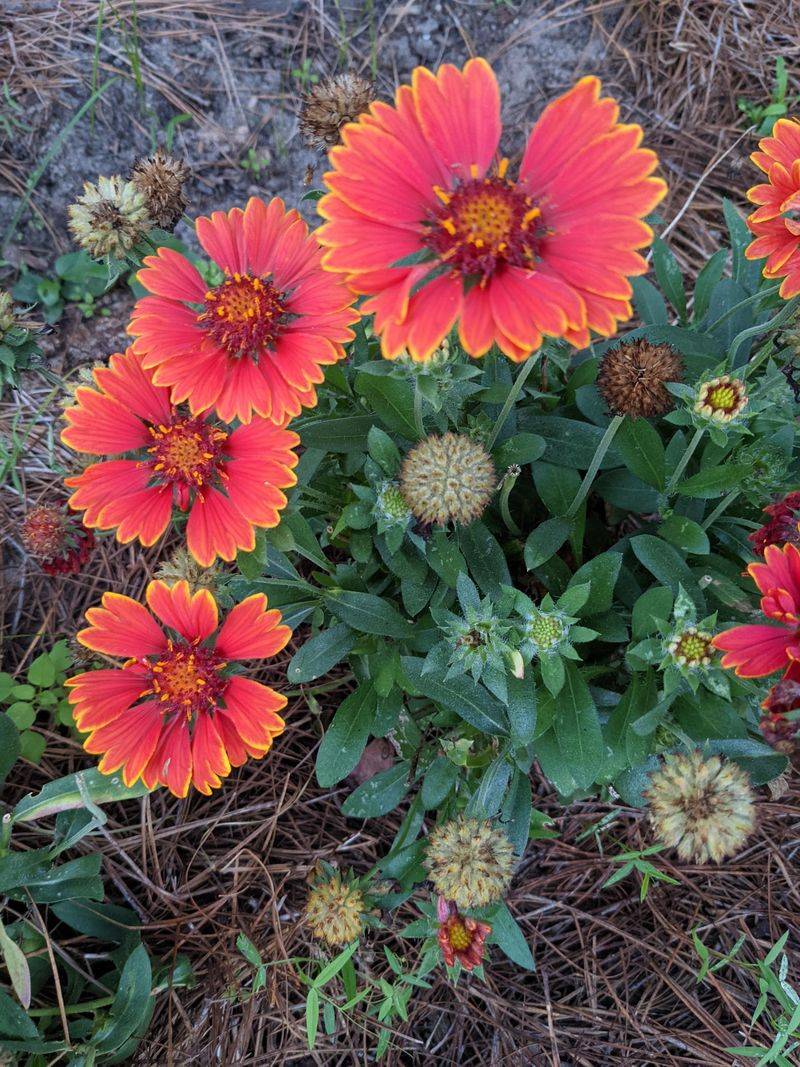
Blanketflower brings red and yellow daisy flowers through much of the growing season. Open blooms suit the same short-mouthed predators.
Tickseed is Florida’s state wildflower and comes in several species. Lanceleaf and leavenworth’s both perform well in home gardens.
Frogfruit deserves particular mention for anyone wanting tidy habitat. It spreads as a low walkable groundcover while flowering almost continuously.
That habit makes it useful along paths and between stepping stones. Habitat without any wild appearance.
Beach sunflower handles sandy soil and salt exposure, which suits coastal yards where little else thrives.
Dotted horsemint, also called spotted beebalm, draws heavy insect traffic in late summer. Its unusual layered flowers stand out in a bed.
Goldenrod fills the fall window when many plants have finished. Seaside goldenrod suits Florida conditions well.
Wild petunia and twinflower both work in partial shade, which extends where you can place habitat.
Mixing three or four species gives you overlapping bloom and varied flower shapes. Different predators prefer different structures.
Leaf texture matters too, since hairy foliage shelters predatory mites better than smooth surfaces. Variety in the planting means variety in the shelter available.
Place the group within reasonable distance of vegetables. Twenty to thirty feet keeps the commute short for insects that hunt on foot.