How To Stop Heavy Rain From Splashing Disease Onto Ohio Tomatoes
Friday evening, the tomatoes looked perfect.
Deep green, loaded with fruit, no complaints. Then an Ohio thunderstorm arrived overnight and dropped an inch of rain in twenty minutes, as they do.
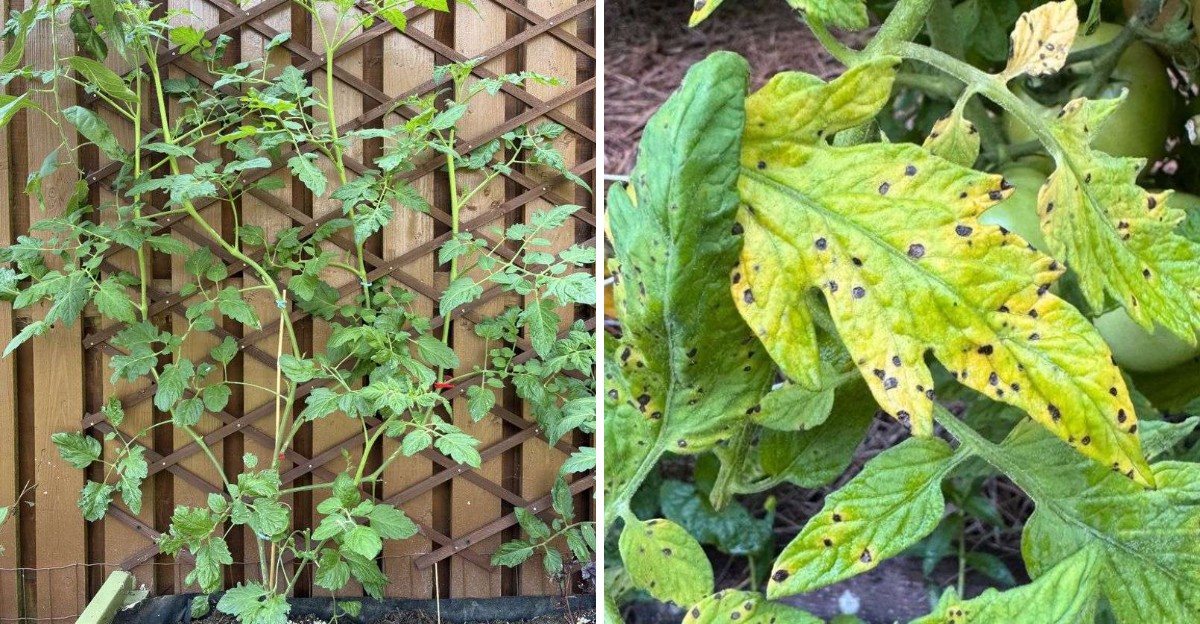
By Monday morning, the bottom leaves were freckled with dark spots ringed in yellow, and the damage was already climbing.
Most Ohio gardeners assume disease arrives from somewhere else, maybe wind, maybe a sick plant from the nursery.
The truth is messier. Fungi like septoria leaf spot and early blight are already in your soil, waiting in old plant debris and ground, and a pounding rainstorm launches those infected particles directly onto your lowest leaves.
The storm did not bring the disease. It delivered it.
The good news is that a few straightforward habits interrupt that cycle before it gets going. None of them require expensive sprays or complicated schedules.
Want to know what actually works before the next storm rolls through?
1. Mulch Heavily Beneath Every Plant
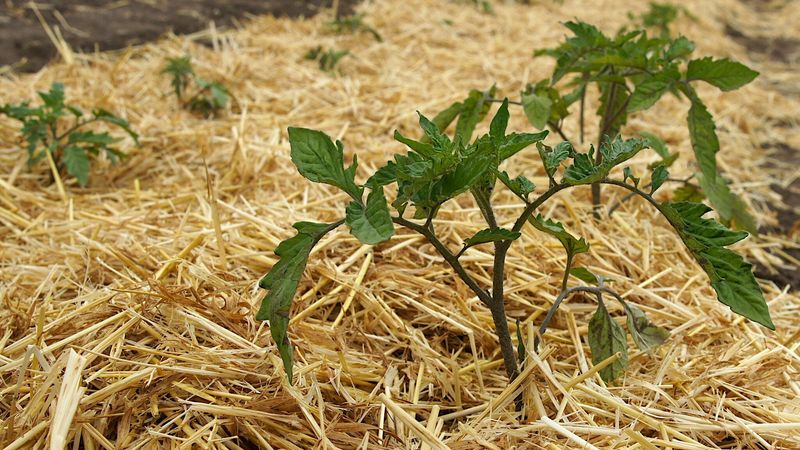
Mulch is a shock absorber for raindrops, and understanding that changes how you think about it.
When water hits bare soil at storm speed, it blasts tiny particles up to a foot or more into the air. Those particles carry fungal spores that overwintered in the soil and old plant debris, and they land directly on your lowest leaves.
A layer of straw, shredded leaves, grass clippings without herbicide residue, or newspaper topped with straw all work well as a physical barrier between rain and soil.
Aim for roughly two to three inches of loose organic mulch spread past the plant’s drip line, not just a small tidy ring around the stem.
Splashing does not respect neat circles, so covering the whole bed gives meaningfully better protection than spot mulching.
Timing matters in Ohio. Wait until soil has warmed in late May or early June, then mulch before the summer storm season builds. Mulching cold, soggy spring soil can actually slow root development.
Keep mulch pulled back an inch or two from the stem so the base stays dry. Check after big storms, since heavy rain can wash thin spots open again and undo the barrier right where it matters most.
Mulch also holds moisture through dry August stretches, which is a bonus that has nothing to do with disease.
One layer of straw is not a cure, but it is the cheapest and most immediate thing you can do to change what happens the next time a storm rolls through. Start there and build from it.
2. Remove Lower Leaves Near The Soil
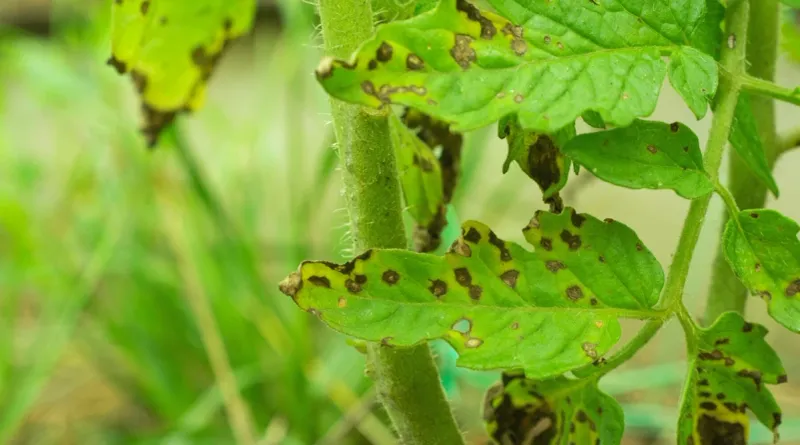
The lowest leaves on a tomato plant live in the splash zone, and they almost always show spots first.
Once infected, those same leaves become a launch point for spores moving upward. Removing them breaks the cycle at its lowest rung before it climbs the rest of the plant.
Many Ohio gardeners strip foliage from the ground up to about ten to twelve inches on the main stem once plants are established and showing strong upper growth.
Your Ohio Garden Changes Every Week. Your Plan Should Too.
Gardening in Ohio changes quickly throughout the season. Every Friday you’ll receive a simple weekly plan showing exactly what to plant, prune, fertilize, harvest, and protect so you never miss the right timing.
Wait until there is enough foliage above to support the plant. Pulling leaves too early exposes developing fruit to sunscald and slows overall growth in ways that show up at harvest.
Do this work when leaves are dry, ideally on a sunny morning after a rainy stretch. Wet foliage carries spores on hands and tools with surprising efficiency, spreading the problem while trying to fix it.
Wipe pruning snips with rubbing alcohol between plants. A dirty blade is just a spore delivery system with a comfortable handle.
Toss removed leaves in the trash or bury them well away from the garden. Leaving them on top of the mulch means the spores are still right there, waiting for the next downpour to launch them again.
Check every couple of weeks through July, because Ohio’s humid summers let disease climb faster than most people expect.
Removing lower leaves slows the infection ladder considerably. It will not stop spores that arrive by wind or on transplants, but it removes the most reliable entry point the disease uses season after season.
3. Stake Plants To Keep Foliage Off Ground
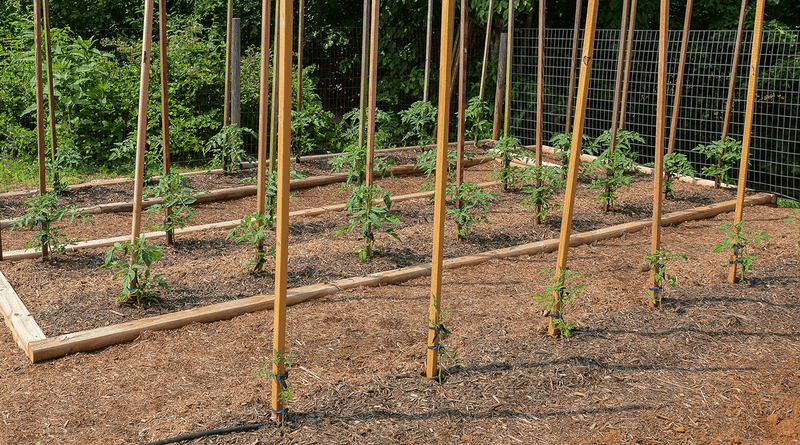
Sprawling tomato vines on the ground sit directly in the zone where rain-thrown soil lands hardest and most often.
Getting foliage up and away from that surface is one of the simplest structural changes in the garden, and it pays off through the entire season.
Stakes, cages, and trellis systems all accomplish the same basic goal. The form matters less than the outcome, which is foliage living above the splash zone rather than in it.
Choose supports that survive a real Ohio storm. Flimsy cone cages tip over under a loaded indeterminate plant, and a collapsed plant lands right back in the splash zone at the worst possible moment.
Seven-foot wooden stakes driven eighteen inches deep, cattle panel trellises, or heavy-gauge concrete reinforcing wire cages all hold through summer wind events. Set supports at planting time to avoid stabbing established roots later.
Tie stems loosely with soft cloth strips or garden twine every eight to ten inches as the plant climbs. Snug ties cut into stems and create wounds that invite other problems.
There is a harvest bonus here too. Fruit hanging in the air stays cleaner, dodges slug damage, and avoids the ground rot that catches low-hanging tomatoes after a wet week.
Height helps considerably, but spores can still travel upward gradually through a season. Combine support with mulch and lower-leaf removal for genuinely good odds through even a rainy Ohio July.
4. Water At The Base Not The Leaves
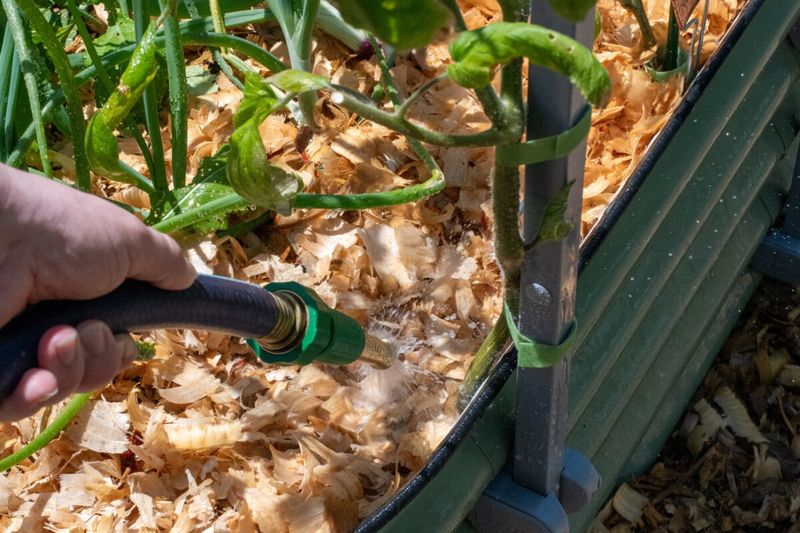
Rain is out of your hands, but the hose is not.
Overhead sprinkling recreates exactly the same splash effect as a thunderstorm, and it soaks foliage that stays wet for hours afterward, giving fungal spores the moisture film they need to establish and spread.
Drip irrigation and soaker hoses deliver water straight to the root zone under the mulch, keeping leaves dry while roots get exactly what they need. A watering can with the rose removed works fine for a smaller patch.
Morning is the smart window for any watering that might contact foliage. Sun and breeze dry leaves quickly during the day, while evening watering leaves plants damp all night long.
Ohio summers swing between soaking wet and bone dry, so deep, infrequent watering beats daily sprinkles.
Roughly an inch to an inch and a half per week, counting rainfall, keeps plants steady and helps prevent blossom end rot from moisture swings.
Push a finger two inches into the soil under the mulch before watering. Damp soil means wait. This takes five seconds and saves water as well as leaves.
A cheap rain gauge takes the guesswork out after a storm. A heavy Ohio downpour may already cover the week’s full water needs without any help from the hose.
Base watering will not stop spores that arrive with natural rain. What it does is remove one repeated source of wet leaves and splash that you are personally adding to the problem several times a week.
Fewer wet-leaf hours means fewer windows for infection to take hold. The math on that is simple and consistently in your favor.
5. Space Plants For Better Airflow
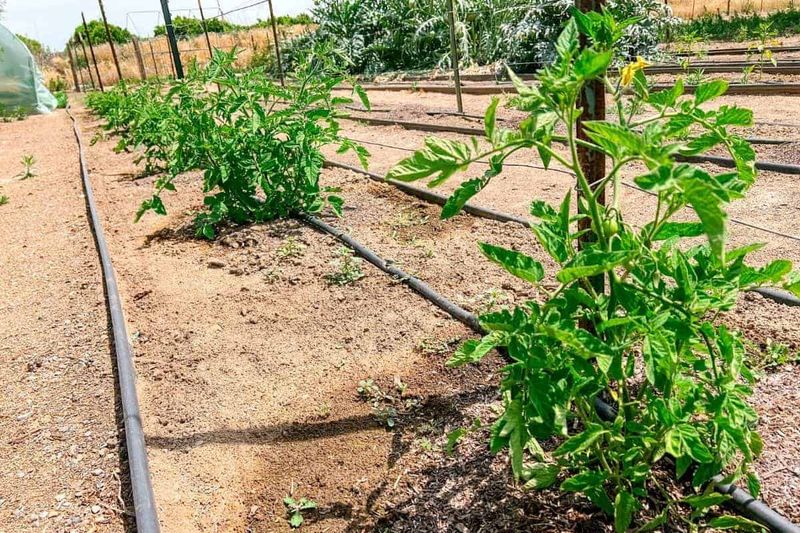
Crowding is the most common mistake in a home garden, and it makes complete sense in May.
Those small transplants look lonely three feet apart. So gardeners tuck them in a little closer, and by July the row has become a solid green wall that holds humidity and never fully dries out between storms.
Air movement is what pulls moisture off leaves after rain. Foliage that dries within a few hours gives fungal spores far less opportunity than foliage that stays damp until noon.
Give staked plants about twenty-four inches between them and three to four feet between rows. Caged or sprawling plants need more, often three feet in every direction.
Orient rows so prevailing summer breezes can travel down them rather than slamming into a hedge or fence. Even a small adjustment in layout improves drying time through the season.
Pruning suckers on indeterminate varieties opens the canopy and improves airflow. Determinate types should mostly be left alone since they set their crop on limited growth that removing harms more than helps.
Skip planting tomatoes tight against a house wall or solid privacy fence where humidity pools and morning sun arrives late. Those microclimates reward disease more than any other spot in the yard.
Wide spacing feels wasteful in a small plot until you compare the harvest. Six healthy plants in good air almost always outproduce ten struggling ones fighting leaf spot in close quarters.
Airflow alone will not defeat disease during a wet Ohio July. It buys valuable drying hours after every storm, and those hours add up over an entire season.
6. Rotate Planting Spots Each Season
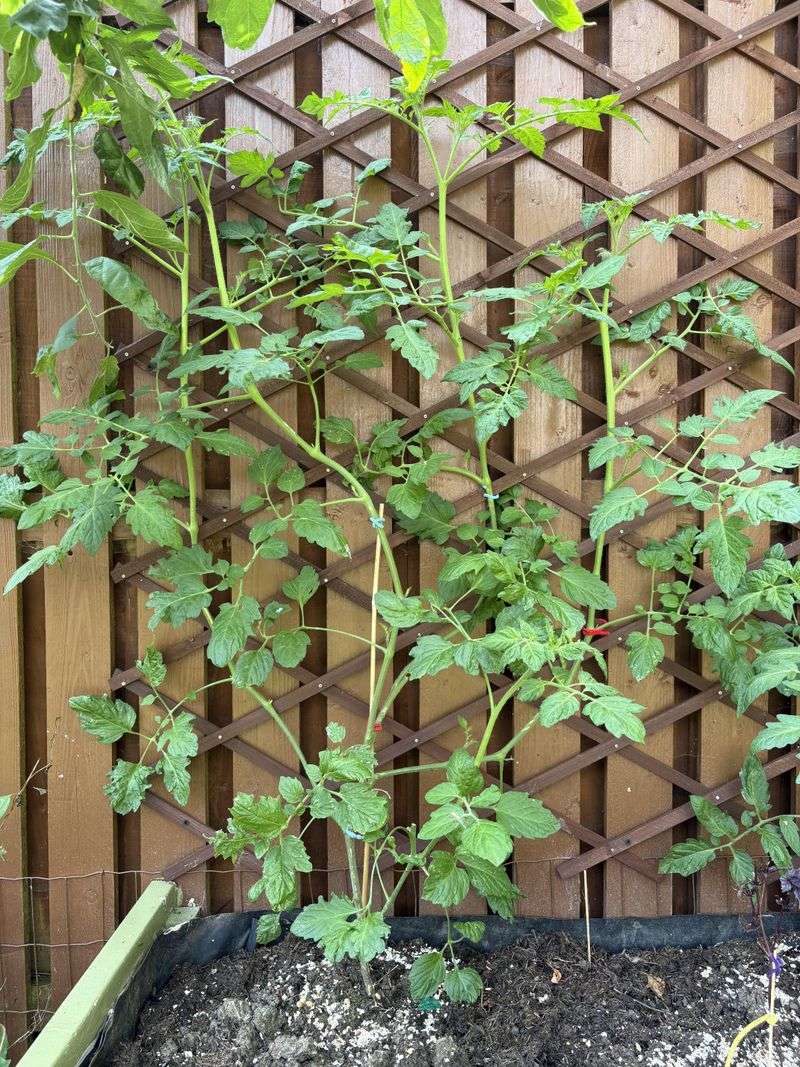
Fungi that cause septoria leaf spot and early blight do not disappear when frost arrives.
They survive the winter in infected plant debris and soil, patient as anything, waiting for next season’s rain to launch them onto a fresh crop.
Planting in the same spot every year hands those pathogens a reliable new host without them having to do anything different.
Rotation breaks the pattern by moving the target. Waiting at least three years before returning tomatoes to the same ground reduces the spore load already living in that soil.
Keep peppers, potatoes, and eggplant out of the resting space too. They belong to the same nightshade family and share several diseases that would happily bridge the gap between seasons.
Small Ohio yards make a full three-year rotation genuinely tricky. Rotating between raised beds, using large containers with fresh potting mix, or swapping growing space with a willing neighbor are all workable adaptations.
Fill resting ground with beans, sweet corn, squash, lettuce, or a fall cover crop of cereal rye. None of those host tomato blights, and most of them improve the soil while they wait.
Sketch a simple map each spring and keep it somewhere findable. Memory is remarkably unreliable by the following March.
Rotation is a long game that delivers gradual improvement rather than immediate results. Windblown spores can still arrive from elsewhere regardless of where the tomatoes are planted.
Even so, lowering the spore load already living in the soil means every heavy rain throws less trouble upward. That reduction compounds over years in a way that nothing else on this list can match.
7. Clean Up Fallen Leaves Promptly
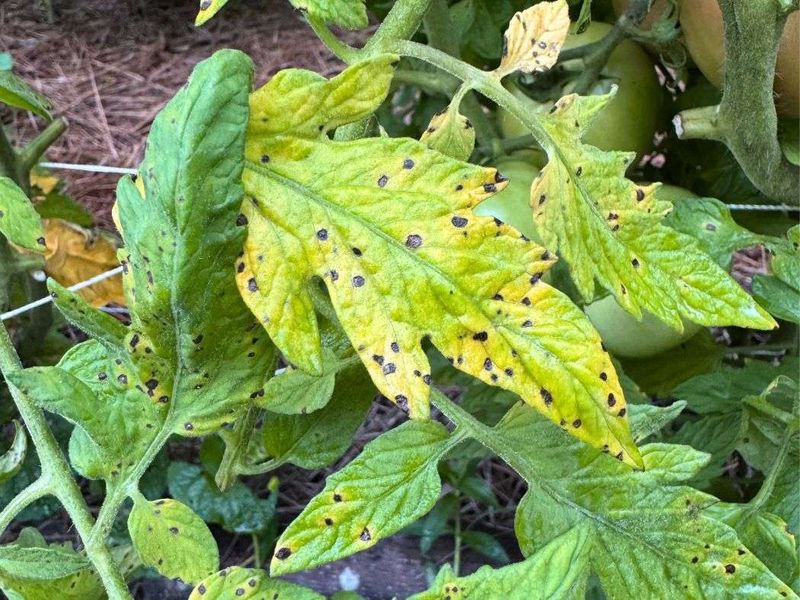
Every spotted leaf that lands on the mulch becomes a spore source sitting inches from healthy foliage above it.
The next storm picks up right where the last one left off, and the cycle continues until something interrupts it.
Walking the tomato row twice a week with a bucket takes about five minutes and removes a surprising amount of disease pressure before it has a chance to launch again.
Pull yellowing, spotted leaves still attached to the plant and scoop up anything already on the ground.
Handle plants only when foliage is dry. Moving through a wet canopy spreads spores from leaf to leaf on sleeves and hands faster than most gardeners realize.
Bag debris for trash pickup rather than tossing it on the compost pile. Most backyard compost never reaches temperatures high enough to consistently break down these fungi, so the pile becomes a spore reserve rather than a solution.
End-of-season cleanup carries the same weight as anything done during the summer. Pulling every vine, dropped fruit, and leaf pile in October reduces the overwintering reservoir that heavy rain draws from the following June.
Wash tomato cages and stakes with soapy water before storing them. A diluted bleach rinse on supports that held diseased plants removes contamination before it sits in the shed all winter waiting for spring.
Sanitation alone will not guarantee a spotless crop in a wet Ohio summer, and no single habit on this list will.
Combined with mulch, staking, smart watering, good spacing, and rotation, though, regular cleanup shrinks the disease pressure enough that most gardeners keep harvesting comfortably into September.
Each small habit covers what the others miss, and together they make a genuinely durable system.