Why Some Georgia Crape Myrtles Are Turning Red Weeks Before Fall Officially Arrives
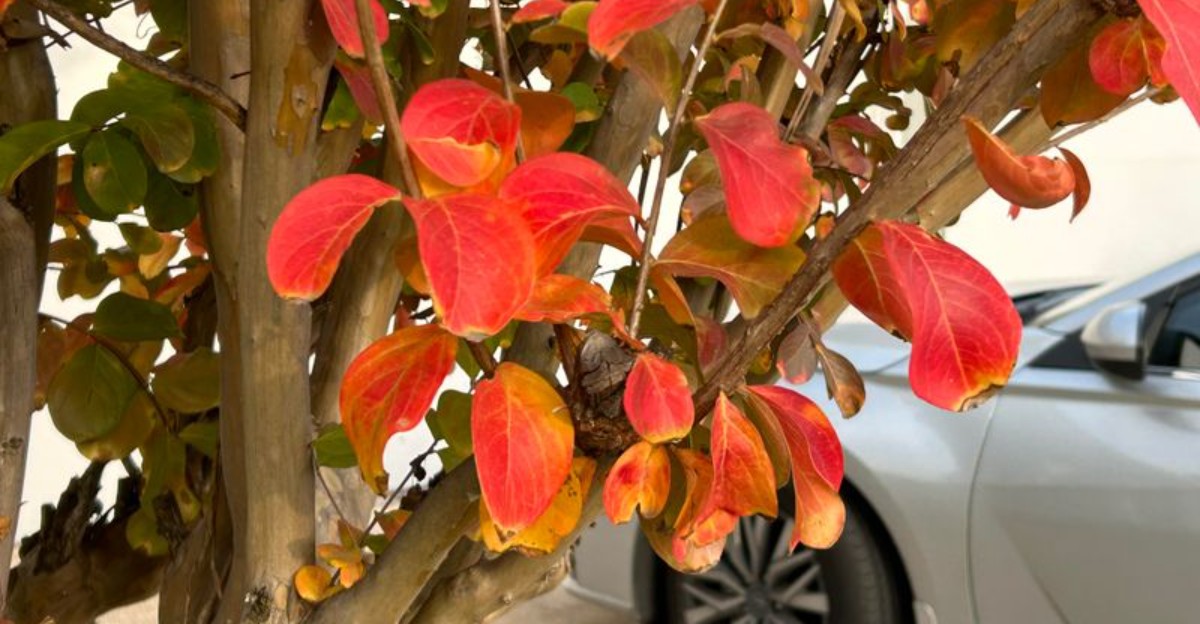
Red leaves on a crape myrtle can feel strangely out of place when September still looks and feels like summer. That early color shift naturally makes the tree stand out.
Before assuming fall simply arrived ahead of schedule, take a closer look at what the leaves are showing you.
Crape myrtles can change color early for several reasons, and the pattern often provides useful clues. Georgia weather can push trees through very different conditions within one growing season.
Your tree may be responding to those conditions rather than following the calendar.
Notice whether the color covers the whole canopy or appears only in certain areas. The rest of the tree can help complete the picture.
Read those signs together, and you will have an idea of what those early red leaves mean.
1. Red Leaves This Early Can Mean More Than One Thing
Red leaves can look surprising when September still feels more like summer than fall. Crape myrtles are deciduous trees, however, so a change in foliage color is eventually part of their normal seasonal cycle.
The tricky part is that color can appear for more than one reason. Timing, weather, moisture, cultivar, and leaf health can all influence what you see.
That is especially useful to remember in Georgia, where warm afternoons can continue even as seasonal changes begin affecting plants. The calendar alone cannot tell you whether those red leaves are normal.
Start by looking at the entire canopy instead of focusing on one bright branch. Gradual color appearing throughout the tree tells a different story from scattered patches of damaged or spotted foliage.
Leaf condition matters just as much as color.
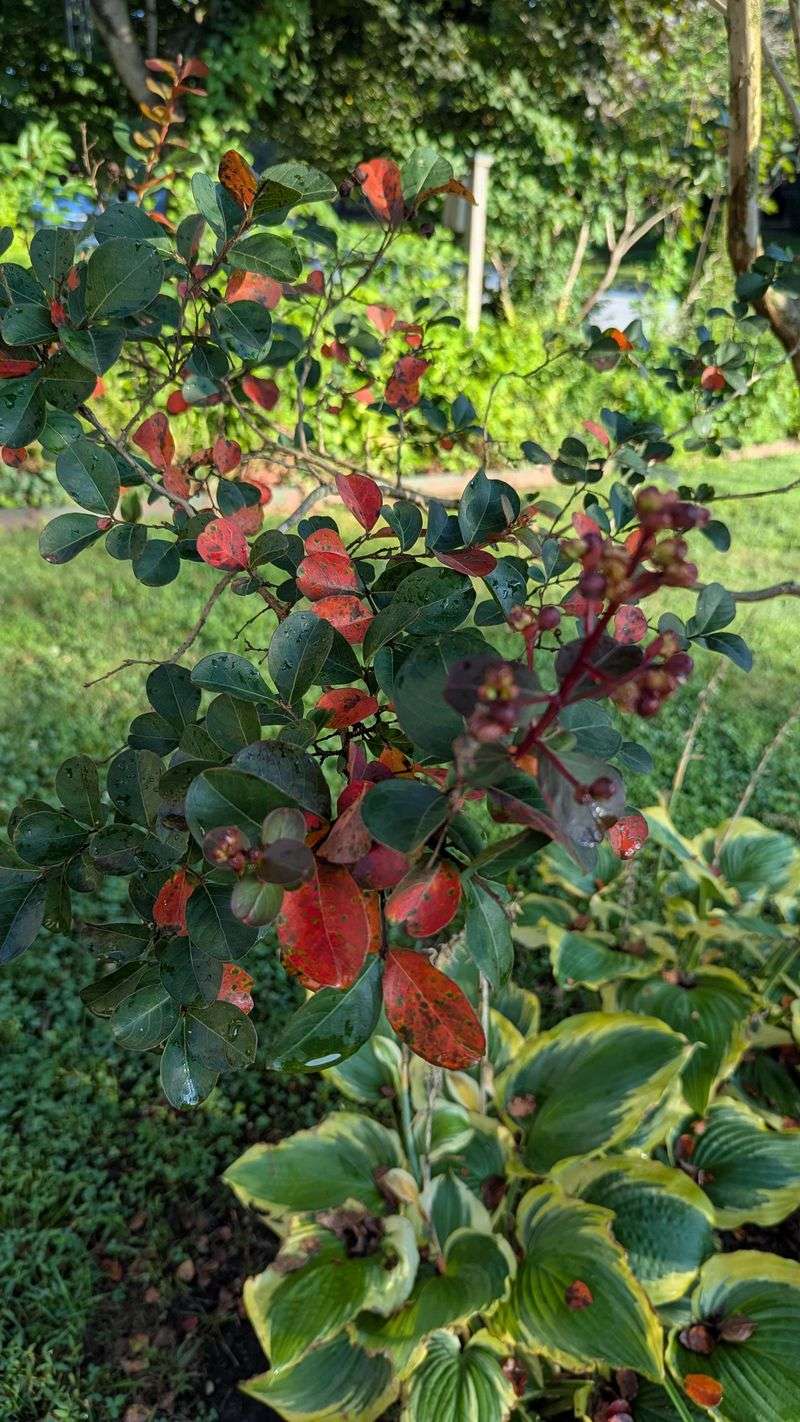
Smooth leaves that are simply changing shade are different from leaves covered with distinct brown spots or other visible symptoms.
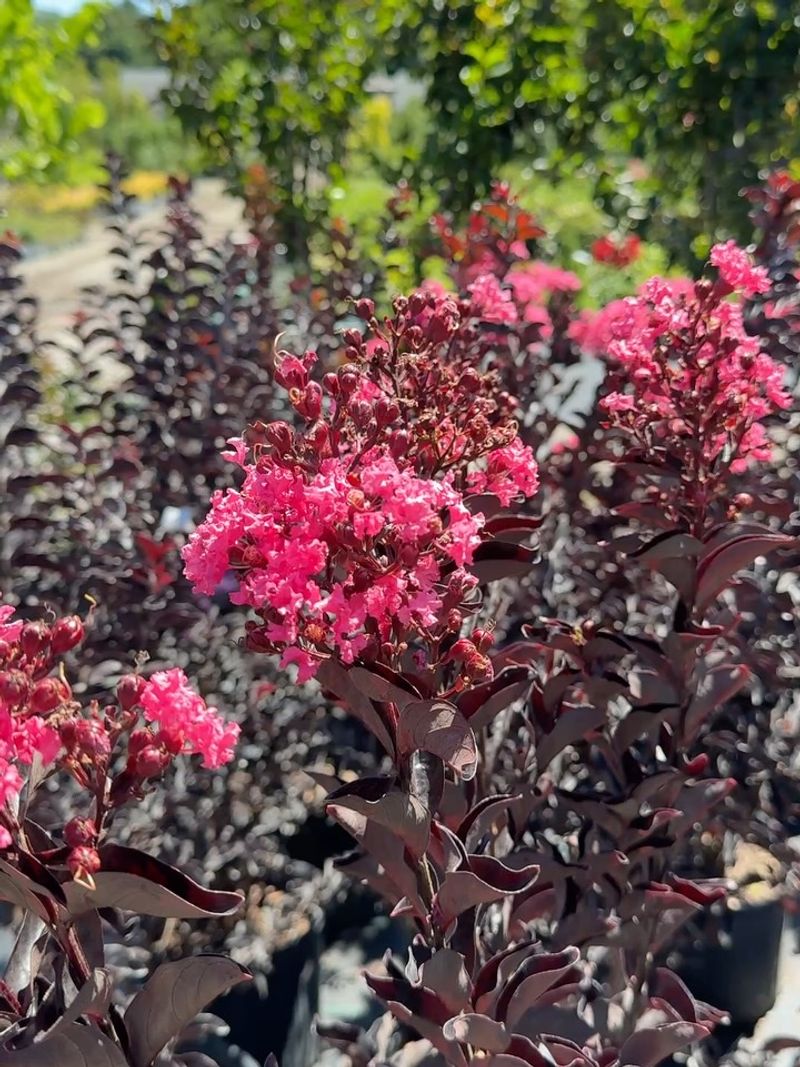
Crape myrtle cultivars can also develop different fall colors. Some produce stronger reds and oranges, while others lean toward yellow.
There is no reason to react to early color alone. First notice where it appears, how quickly it is spreading, and whether anything else about the foliage looks unusual.
Those details will help you understand what the tree is actually showing you.
2. Cooler Nights Can Bring Out Color Earlier Than Expected
Fall color does not wait for one specific date on the calendar. Deciduous trees respond to seasonal signals that gradually change what is happening inside their leaves.
Shorter days play an important role in that process. As chlorophyll breaks down, pigments that were hidden by the strong green color become easier to see.
Temperature can influence the display as well. Cool nights paired with sunny days can favor brighter red coloration in many deciduous plants.
That means a crape myrtle in Georgia can begin showing color even while afternoons remain fairly warm. A few red leaves do not necessarily mean the tree is struggling.
The change should make more sense when you look at the broader pattern.
Gradual color developing through otherwise healthy foliage fits a seasonal transition better than isolated damaged areas.
Your Georgia Garden Changes Every Week. Your Plan Should Too.
Gardening in Georgia changes quickly throughout the season. Every Friday you’ll receive a simple weekly plan showing exactly what to plant, prune, fertilize, harvest, and protect so you never miss the right timing.
Do not expect every crape myrtle in the neighborhood to change at exactly the same time. Local conditions around each tree can be slightly different.
One tree may receive more sun, while another grows beside pavement or a building that holds heat. Those small differences can affect the conditions surrounding the canopy.
Cultivar differences add another layer to the timing. Two healthy trees can therefore begin their fall displays at different times without either one having a problem.
3. Dry Conditions Can Push The Color Change Along
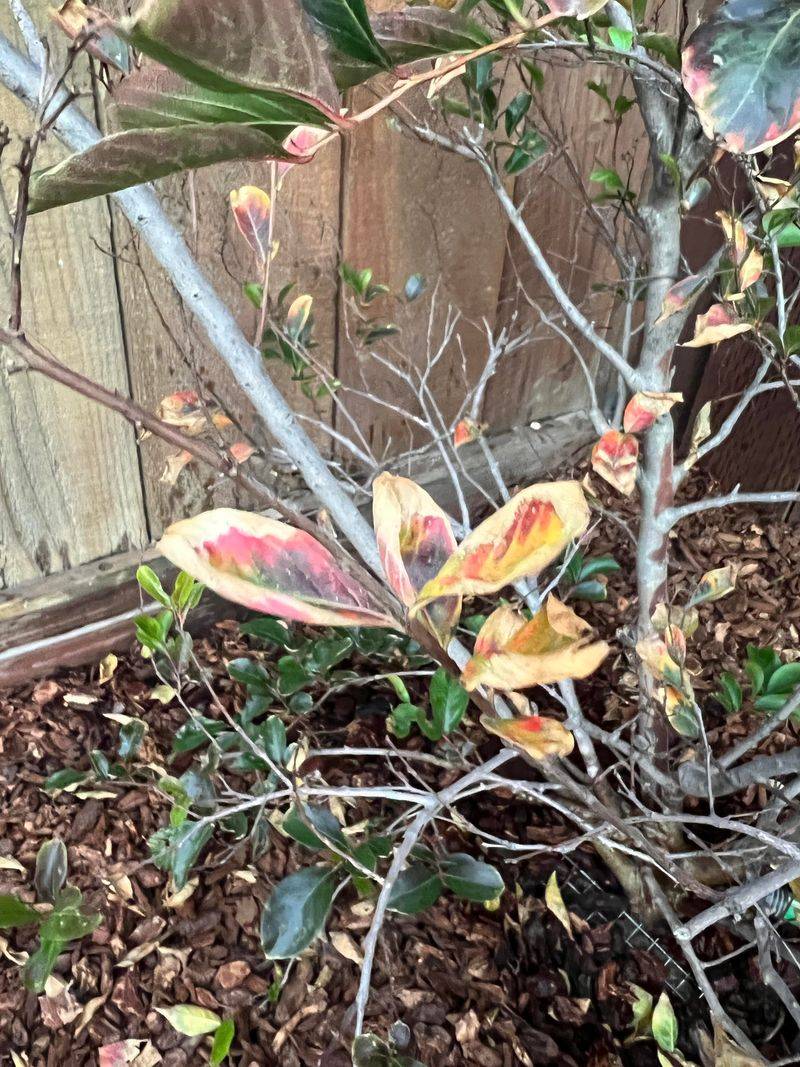
Dry conditions can change how foliage looks before the normal fall transition is complete.
Water stress may contribute to earlier discoloration, browning, wilting, or leaf drop.
Do not judge moisture by the surface of the ground alone. The top layer can look dry while soil farther down still holds enough water around the roots.
Recent rainfall is worth considering because conditions can change quickly during a Georgia September. Established crape myrtles tolerate dry periods fairly well, but prolonged drought can still place them under stress.
If the soil is genuinely dry, water thoroughly rather than giving the tree frequent light sprinkles. Slow watering allows moisture to reach farther into the root zone.
Mulch can help the soil hold moisture for longer. Keep it spread around the root area without piling it against the trunks.
Then give the tree time before judging the result. Leaves that have already started changing color may not suddenly become green again after watering.
Watch for other signs that suggest moisture stress is involved. Browning edges, wilting, or unusually early leaf drop provide more information than red color by itself.
Dry soil should therefore be treated as one clue rather than the automatic explanation.
Combine it with recent weather and the condition of the canopy before deciding what the tree needs.
4. Even Color Across The Canopy Usually Points To A Seasonal Shift
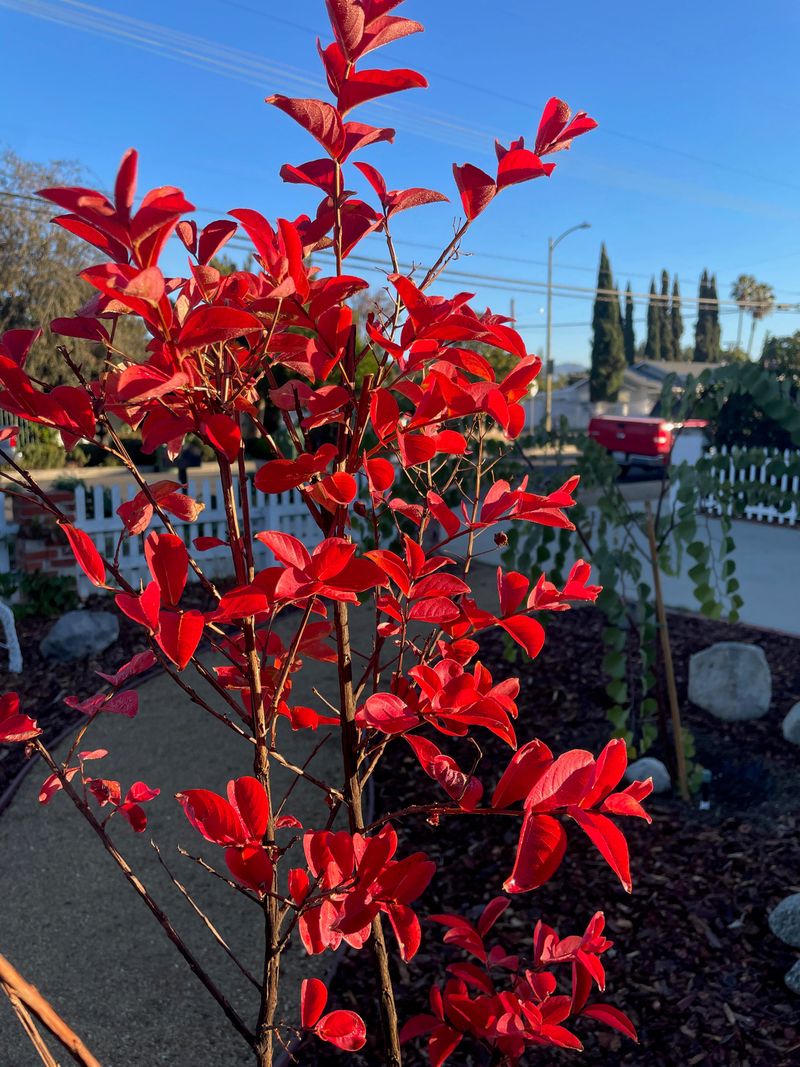
The location of the changing leaves can tell you almost as much as their color. Step away from the tree first so you can see the entire canopy at once.
Normal seasonal color often develops broadly rather than appearing as one sharply defined damaged patch. You may see green mixed with yellow, orange, and red as the transition progresses.
That wider pattern is useful when examining crape myrtles in Georgia.
Individual trees can change at different times because cultivar and growing conditions affect their fall display.
Next, move closer and inspect several leaves from different parts of the canopy. Look beyond their color and pay attention to the surface of each leaf.
Leaves moving normally toward fall should not need an obvious lesion or coating to explain their changing shade. Distinct spots or unusual surface changes point you toward another possibility.
One branch can occasionally behave differently from the rest of the tree. That makes the overall pattern more reliable than a handful of leaves.
Compare the upper and lower portions of the canopy as well. Disease symptoms can develop in patterns that look different from a broad seasonal transition.
If the color remains even and the foliage otherwise looks healthy, seasonal change becomes a stronger explanation. Visible spots or unusual leaf loss deserve a closer inspection instead.
5. Spots And Uneven Discoloration Can Signal A Different Problem
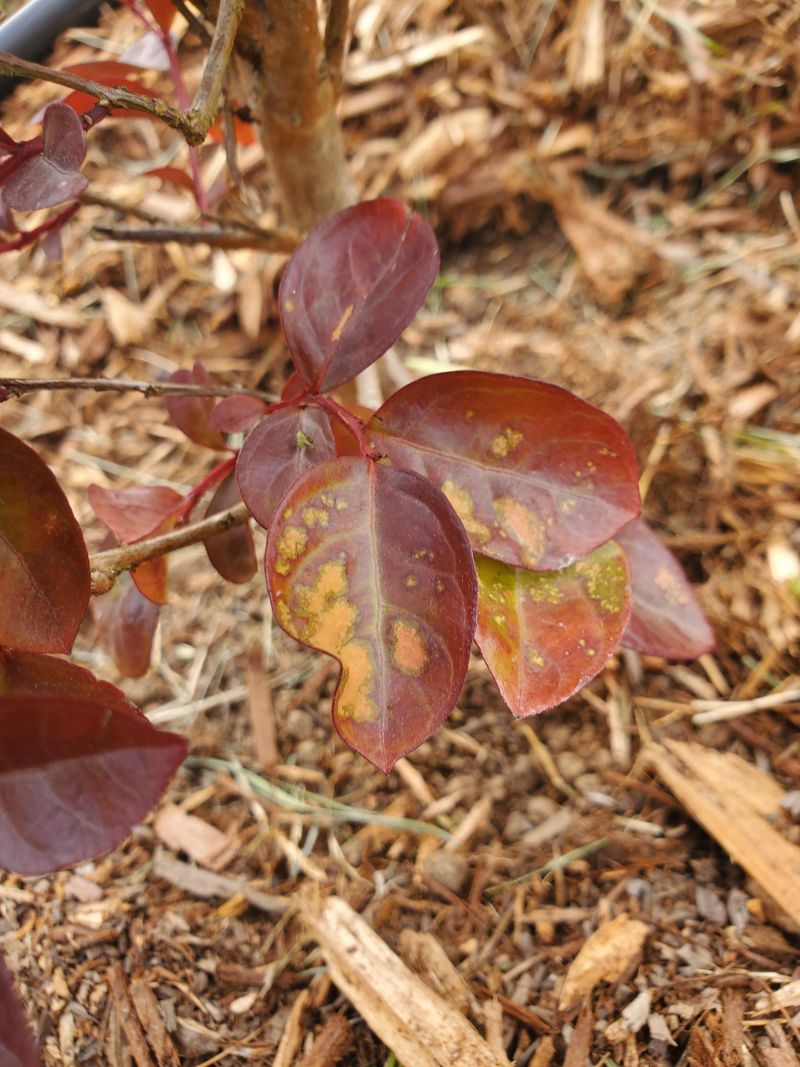
Color becomes more concerning when the leaves show clear symptoms along with it.
Crape myrtles can develop Cercospora leaf spot, which commonly becomes noticeable from summer into fall.
The disease produces distinct dark spots on the foliage. Yellowing can develop around affected areas, and heavily affected leaves may drop before the normal end of the growing season.
That can make the tree look as though fall arrived unusually early. In Georgia, warm and humid conditions can favor leaf diseases, so checking the leaf surface is important.
Start with foliage lower in the canopy and inspect several leaves closely. Cercospora symptoms often become noticeable on lower foliage before progressing farther through the tree.
Do not confuse every yellow or red leaf with disease. A clear lesion gives you much stronger evidence than color alone.
Powdery mildew produces a different appearance. Instead of dark leaf spots, it creates a pale powdery growth that can coat affected plant tissue.
Finding a few imperfect leaves also does not mean the entire tree is in serious trouble. Crape myrtles can experience foliar diseases without requiring an immediate drastic response.
Focus on identifying what you actually see before choosing any treatment. Distinct spots, unusual coatings, and premature leaf loss provide better clues than an early red shade by itself.
6. Some Crape Myrtle Varieties Naturally Turn Red Earlier
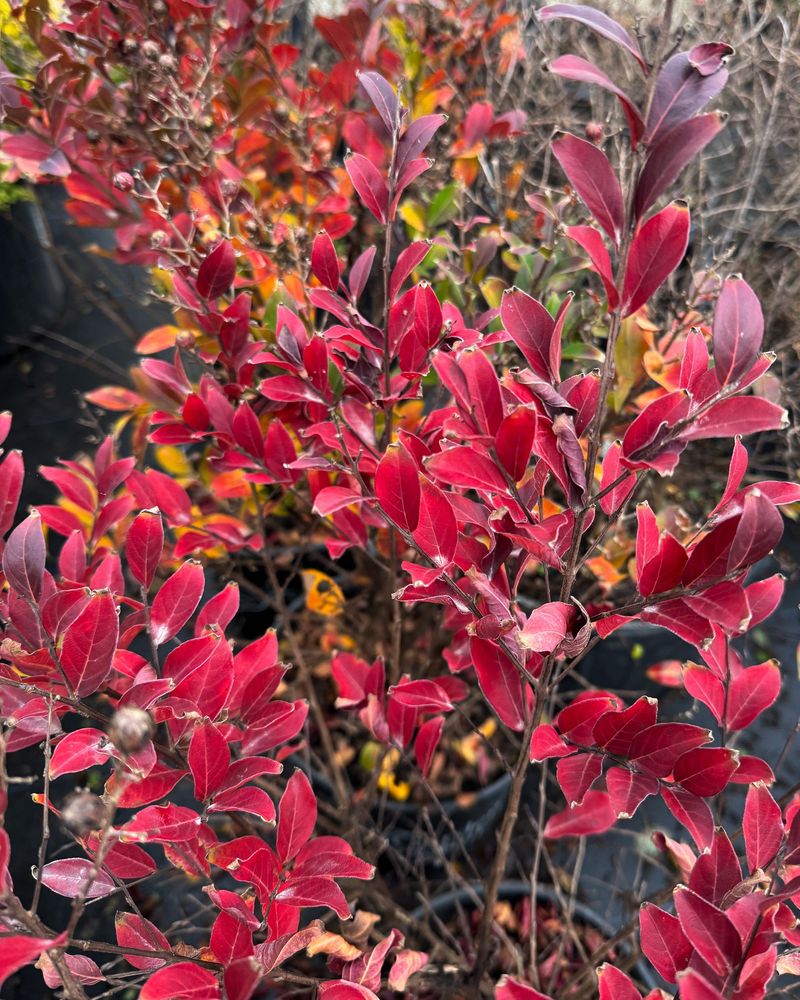
Crape myrtles do not all produce the same fall display. Cultivar differences influence foliage color, so comparing two different trees can easily create unnecessary concern.
Some cultivars develop strong red or orange shades as the growing season ends. Others may show more yellow or a less dramatic mixture of colors.
University of Georgia Extension specifically notes that fall leaf color varies depending on cultivar. That makes the identity of your tree useful when deciding whether its appearance is unusual.
Think about this before comparing it with the crape myrtle next door. Similar growing conditions do not make two different cultivars behave exactly alike.
The difference is not limited to color intensity.
Timing can also appear different as individual trees respond to their genetics and immediate growing conditions.
Sun exposure can further change how a fall display looks. A tree receiving strong light may not look identical to one growing in a more protected location.
If you know the cultivar name, check its expected ornamental characteristics. That gives you a more useful comparison than relying on an unidentified tree nearby.
Natural variation can explain why one Georgia crape myrtle becomes noticeably red while another remains mostly green. Once cultivar differences are considered, an apparently unusual color change may fit the tree perfectly well.
7. The Whole Tree Reveals What Those Early Red Leaves Really Mean
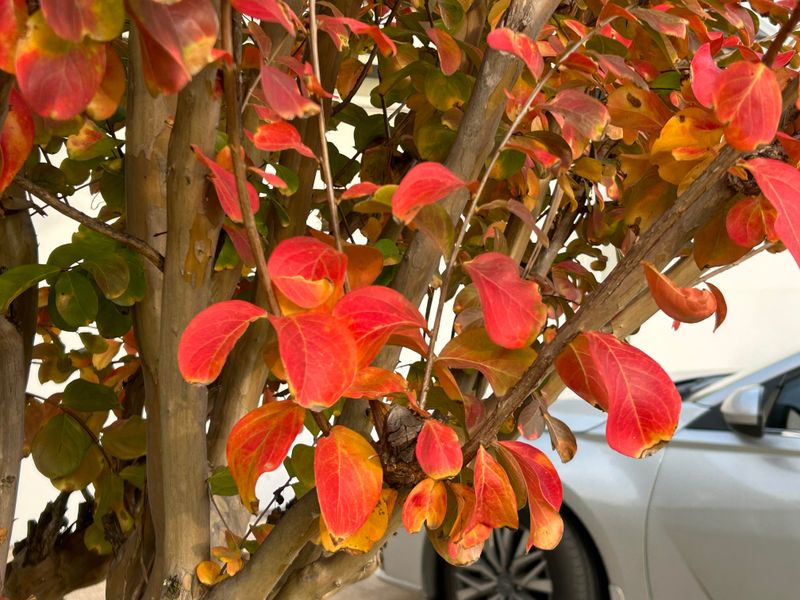
One red branch cannot tell you everything happening with a crape myrtle. The best conclusion comes from combining several clues rather than relying on color alone.
Start with the canopy and notice whether the change looks gradual and widespread. Then inspect individual leaves for spots, coatings, browning, or other unusual symptoms.
Recent weather adds another piece of the picture.
Dry conditions can stress foliage, while normal seasonal changes can begin even before temperatures feel consistently cool.
Cultivar matters too because crape myrtles naturally differ in fall color. A strong red display may simply be one of the ornamental traits of that particular tree.
Georgia weather can make the transition seem early when warm afternoons are still hanging on. What matters more is whether the rest of the tree looks healthy.
Avoid responding to red foliage alone with fertilizer, heavy pruning, or unnecessary treatments. First determine whether there is an actual problem that needs attention.
If you find distinct dark spots or unusual leaf loss, investigate those symptoms separately. They provide more useful evidence than color by itself.
If the canopy looks healthy and the color is developing gradually, a seasonal transition becomes a reasonable explanation. Reading the entire tree gives you a much clearer answer than judging a few bright leaves.