What Georgia Gardeners Should Do With Banana Plants After The First Frost
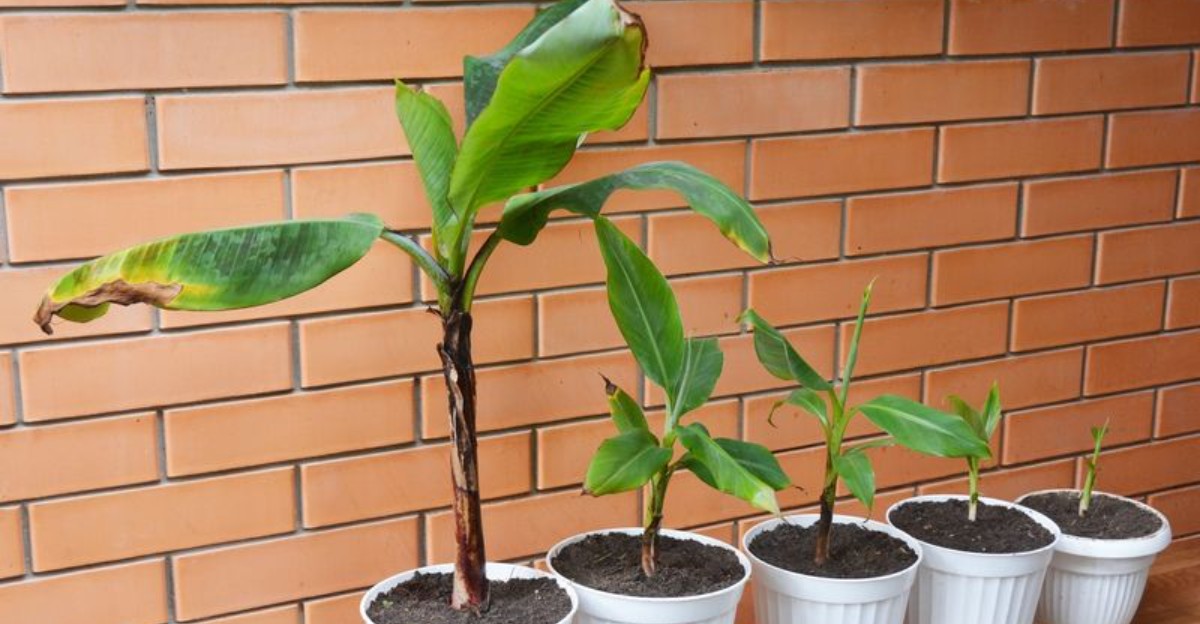
That towering trunk in the corner of your yard is not a trunk at all. It is a tight roll of leaf sheaths, wrapped like a giant green cigar, with the real engine hiding underground.
One frosty Georgia night can turn those huge paddle leaves into limp brown flags. I still remember the first time it happened in my yard.
I stood there with my coffee, sure I had lost the whole plant.
You’re in for a pleasant surprise, though. Many hardy types bounce back from the roots after a rough winter, and they can shoot up several feet in a single summer.
I love how a plant that looks so fragile can be so stubborn.
The tricky part is knowing what to cut, what to cover, and what to leave alone. A few simple moves this week can decide how big your tropical corner looks next July.
1. Those Blackened Banana Leaves Are Hiding A Bigger Story
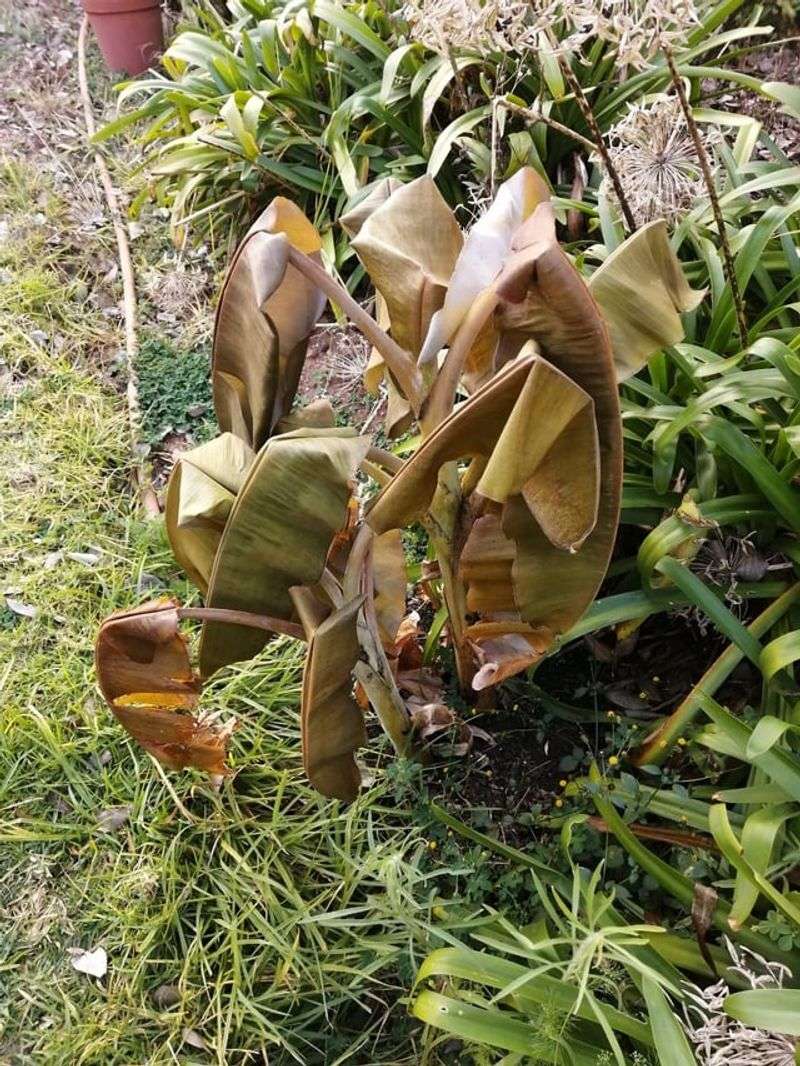
Frost on a banana plant looks like a disaster, but most of the drama happens above ground. The leaves are tender and turn black or mushy after temperatures dip near 32 degrees.
That ugly look is mostly cosmetic for the roots below.
What looks like a trunk is a pseudostem, a stack of rolled leaf bases. The true stem is a corm, or rhizome, sitting in the soil.
As long as that underground piece stays healthy and does not freeze solid, many plants send up fresh shoots in spring.
Variety matters a lot here. Japanese fiber banana, Musa basjoo, is cold hardy and often returns from the roots across much of the state.
Many edible types, like Dwarf Cavendish, are far more sensitive and struggle in colder spots.
So take a breath before you grab the shovel. Check which kind you planted, if you still have the tag.
A quick look at the base of the plant can also tell you a lot.
Firm, pale tissue near the soil line is a hopeful sign. Soft, smelly, or slimy tissue points to rot.
Knowing which situation you face shapes every step that comes next, from pruning to mulching to bringing pots inside.
2. Cut The Banana Stalks Back To A Short Stump
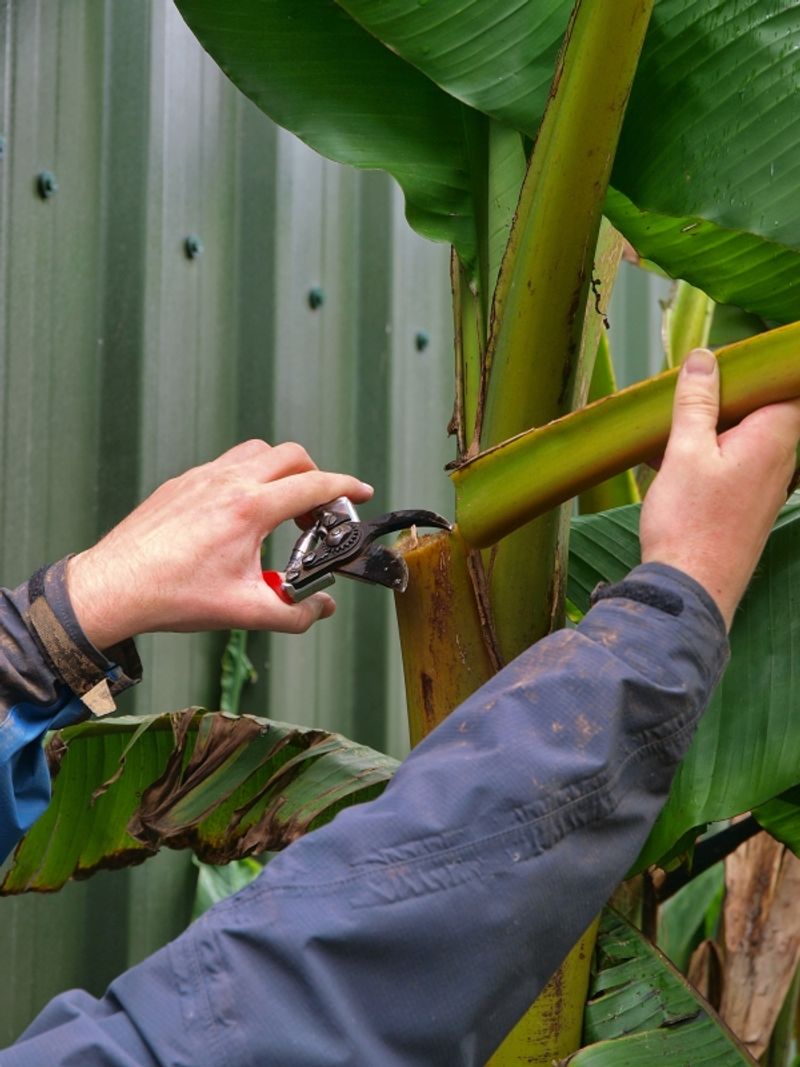
Grab a sharp pruning saw or a long kitchen knife, because banana stems slice like celery.
Once frost has browned the leaves, remove the damaged foliage, but leave firm, healthy pseudostems standing if possible, since preserving them can help the plant resume growth faster in spring.
Many Southern gardeners, including longtime Georgia garden writer Walter Reeves, favor this simple trim.
Why leave a stump at all? A short stub marks the spot and gives you something to mulch around.
Some growers also cut the top at a slight angle so rain runs off instead of soaking into the center.
Toss the floppy leaves and chopped stems into the compost pile. They break down fast and add lots of moisture to the mix.
Skip composting any pieces that look diseased or rotten.
Timing makes a difference. Cutting right after the first hard frost usually works best, since the leaves have finished their job by then.
Cutting green, healthy stems in early fall robs the plant of energy it could still store.
A few gardeners in warmer coastal areas leave tall stems standing all winter. That can work there, and it may help a stalk flower sooner.
In colder spots, a tidy stump is often easier to protect.
3. A Thick Pile Of Pine Straw Keeps Banana Roots Cozy
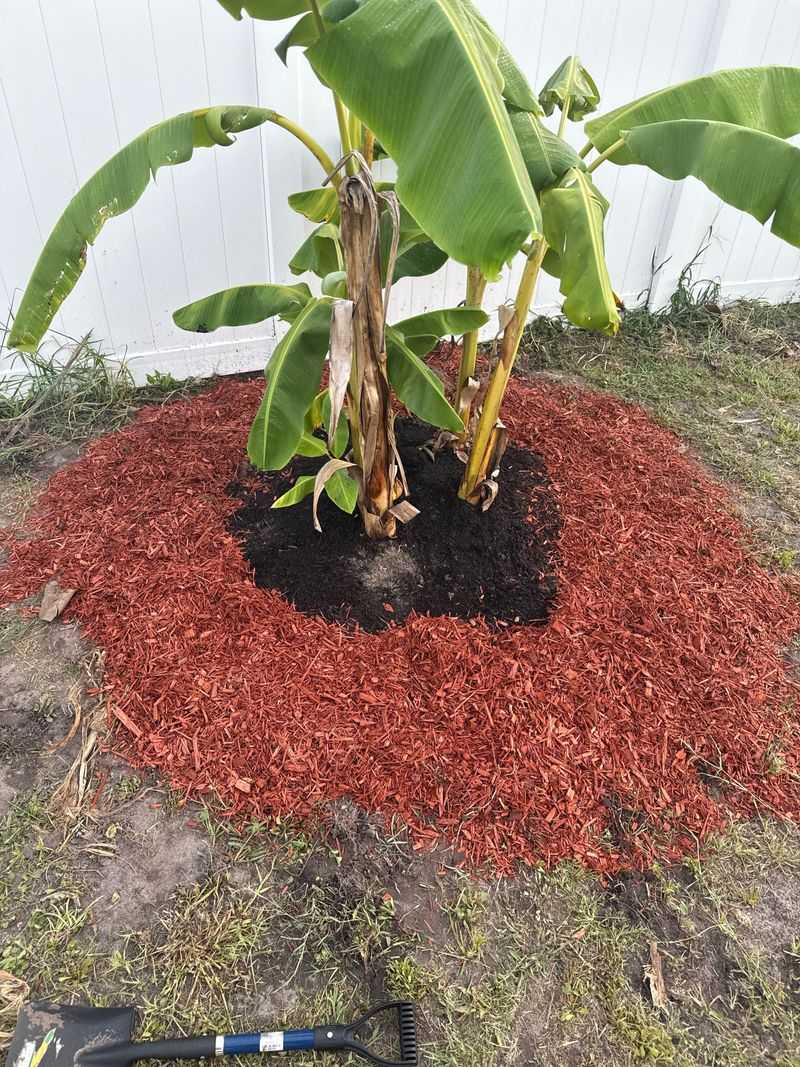
Pine straw might be the most Georgia thing you can pile on a banana plant, and it works beautifully. After trimming, heap mulch around the stump at least a foot deep.
Shredded leaves, straw, and pine straw all do the job.
For extra insurance, wrap a ring of chicken wire around the stump. Fill that cage with dry leaves until the stub disappears.
Think of it as a sleeping bag for the corm.
Keeping the mulch dry matters as much as keeping it thick. Wet, packed mulch can encourage rot in cold weather.
Some gardeners lay a sheet of plastic or a tarp over the top during long rainy stretches, then remove it on mild days so moisture does not build up.
Fun fact for your next garden chat: Musa basjoo roots can handle soil temperatures far colder than the leaves ever could. Mulch helps keep that soil from swinging between freezing and thawing.
Gardeners in north Georgia mountain counties should go heavier with the pile. Folks near Savannah or Valdosta can often get by with less.
Either way, a fluffy mound now saves a lot of worry in January.
4. Potted Bananas Would Love A Spot Indoors
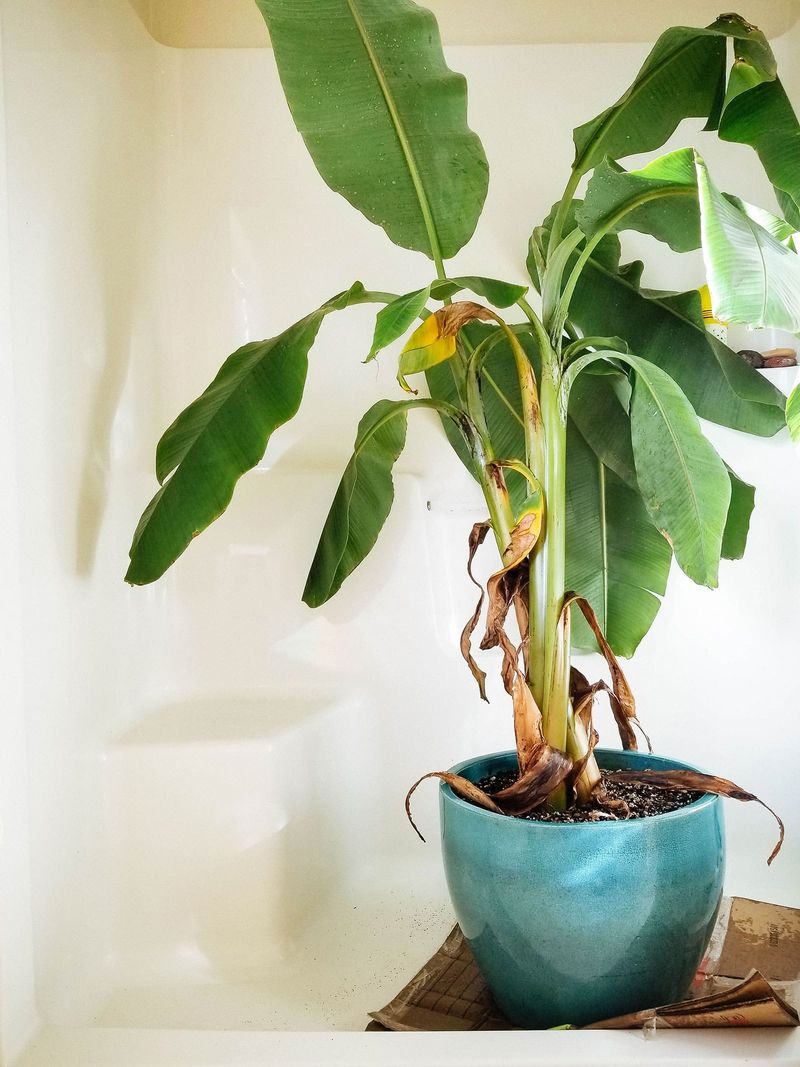
Container bananas get the easiest deal of all. You can roll them inside and enjoy them as giant houseplants.
Ideally, move pots in before nights stay below about 50 degrees.
Missed that window? No problem.
Trim off any frost-damaged leaves before the pot comes indoors, since mushy tissue invites mold and pests.
A bright south or west window gives the best light. Water when the top inch or two of soil feels dry, and let extra water drain out.
Indoor bananas grow slowly in winter, so they need much less water than in July.
Watch for spider mites, which love warm, dry indoor air. Wiping the big leaves with a damp cloth helps, and so does a nearby humidifier.
Skip fertilizer until spring wakes the plant up.
Short on window space? Another route is letting the pot go dormant.
Cut the plant back to about 6 inches, keep the soil barely moist, and park it in a cool garage or basement that stays around 45 to 50 degrees.
Either way, your banana gets a vacation from the cold. Personally, I enjoy the jungle vibe in the living room.
5. Digging Up Tender Banana Corms Can Save Fussy Varieties
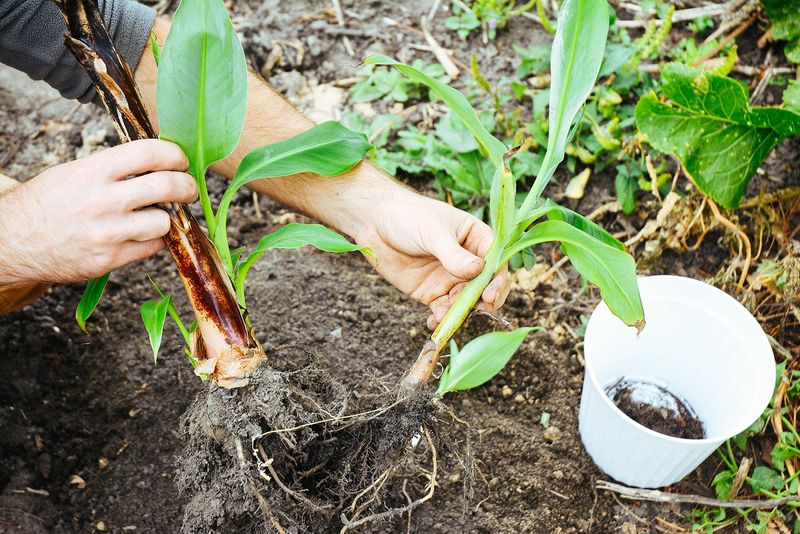
Some bananas simply are not built for a Georgia winter outdoors. Edible types and the showy red Abyssinian banana, Ensete ventricosum, are good examples.
For these tender plants, lifting the corm is often the safest move.
Start by cutting the stem back to roughly 6 inches. Then dig a wide circle around the base, staying several inches out to protect the root mass.
Lift gently, because the corm can be heavier than you expect.
Shake off loose soil and let the clump air dry for a day or two. Next, store it in a cool, dark place that stays above freezing, such as a garage or crawl space.
Some gardeners nestle the corm in a box of slightly damp sand or peat to keep it from shriveling.
Check on it every few weeks. A little wrinkling is fine, while soft or moldy spots should be trimmed away.
Fun fact: Ensete does not usually make pups the way Musa bananas do, so saving the main plant really counts. With a bit of patience, you can replant your stored corm once the soil warms up in spring.
6. Those Little Banana Pups Need Some Thinning
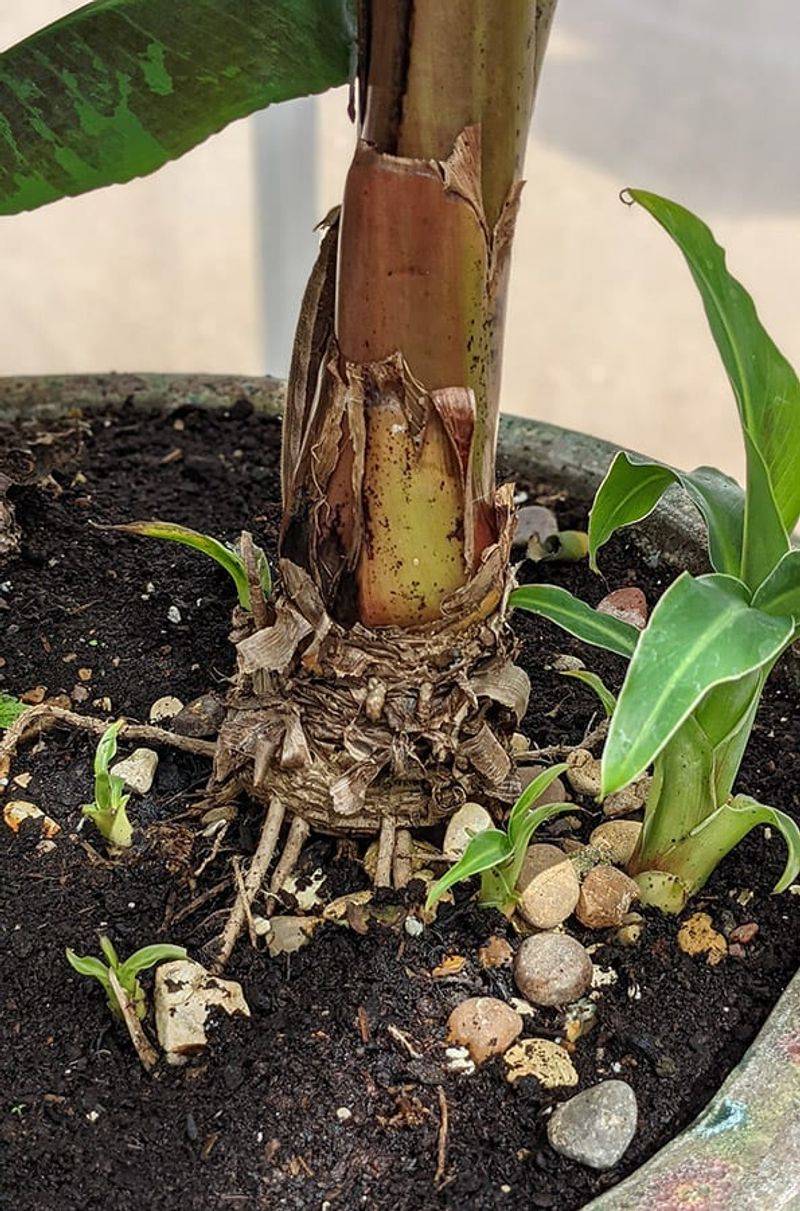
Ever notice tiny banana plants popping up around the big one? Growers call those suckers or pups.
A healthy clump can make plenty of them, and they all compete for the same food and water.
Each stalk that blooms and fruits will not fruit again. Gardeners hoping for bananas often keep one main stem plus one or two strong pups for the future.
Extra suckers can be removed or shared with friends.
Fall is a fine time to make a plan, but spring is often better for the actual digging. Pups pulled in late fall have a tough time rooting before cold weather.
If you do separate one now, pot it up and keep it indoors.
To remove a pup, slice down between it and the parent with a sharp spade. Try to get a chunk of corm and some roots attached.
Sword-shaped pups with narrow leaves usually grow stronger than wide-leafed water suckers.
Gardeners growing bananas just for big tropical leaves can relax. A bushy clump looks lush and full.
Thinning mainly matters if you are chasing that rare Georgia banana harvest, which takes a long warm season to ripen.
7. Fresh Banana Shoots Will Return When Spring Warms Up
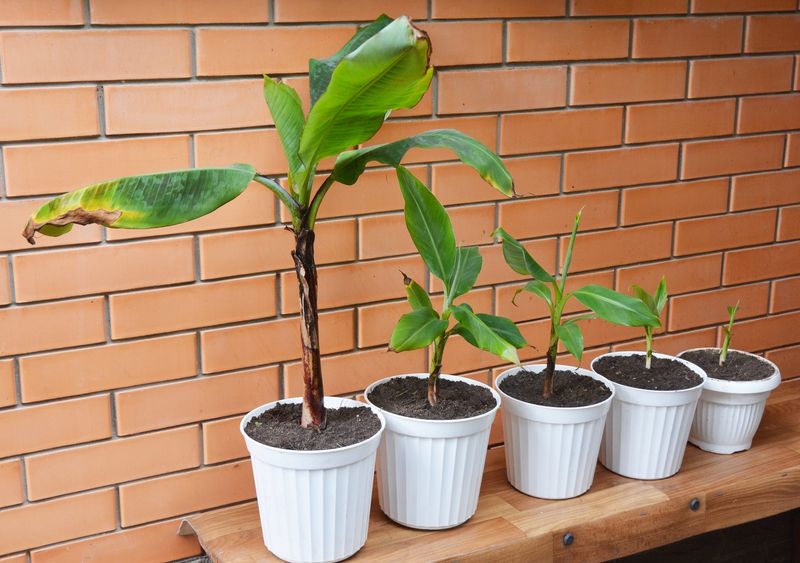
Spring is the payoff, and it is worth the wait. Pull back mulch once the danger of frost has passed.
In much of Georgia, that lands somewhere between late March and late April, depending on where you live.
Do not panic if nothing shows up right away. Bananas love heat, and new shoots often appear only after the soil warms.
Some gardeners wait until May before spotting that first curled green leaf.
Give the area a deep drink and a balanced fertilizer once growth begins. Bananas are hungry plants with a big appetite for nitrogen and potassium.
Steady watering through summer keeps those giant leaves looking glossy.
Indoor pots need a slow welcome back outside. Start them in a shady, sheltered spot for about a week, then move them into fuller sun.
Rushing this step can scorch leaves that got used to window light.
Stored corms can go back into the ground once nights stay above 50 degrees. Keep notes on what worked this year.
Your future self will thank you next fall, when that familiar frost forecast pops up again.