That Massive Alien-Looking Bug You Dug Up In Your Arizona Soil – Here’s What It Really Is
Turning over a shovel of Arizona soil and finding a large, striped, bald-headed insect staring back at you is genuinely startling. Before you reach for a spray can or assume the worst, knowing what you are actually looking at changes everything.
The insect you found is most likely a Jerusalem cricket, and understanding what it does, what it cannot do, and how to handle the situation will save you a lot of unnecessary worry.
The best match may be a Jerusalem cricket
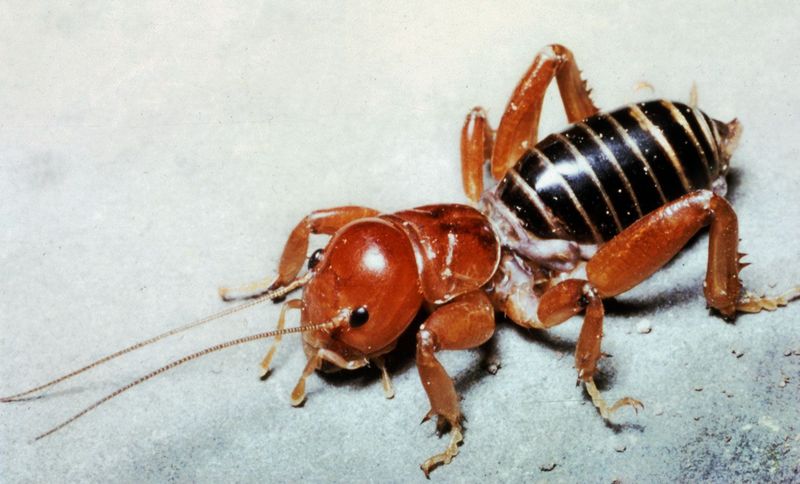
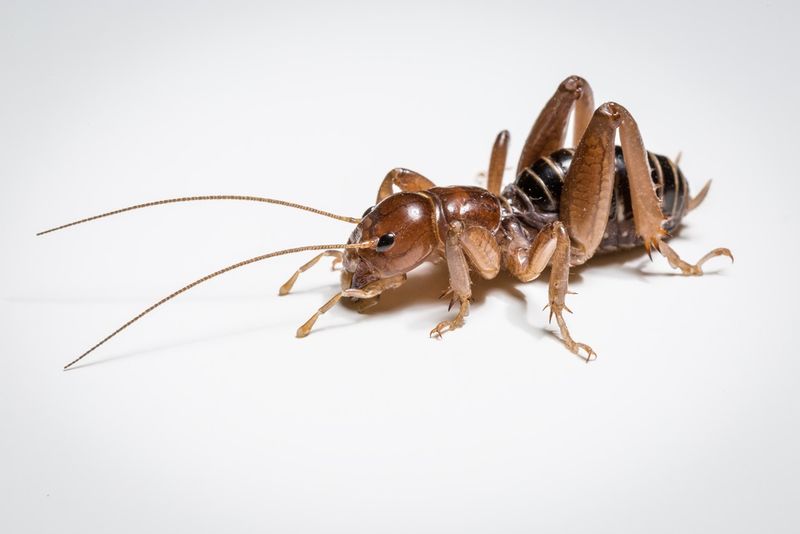
An insect with a smooth, rounded reddish-brown or tan head, long antennae, thick spiny legs built for digging, and a plump abdomen marked with alternating dark bands is a strong candidate for a Jerusalem cricket. These are wingless orthopterans, meaning they are relatives of crickets, katydids, and grasshoppers rather than beetles or beetle larvae.
That distinction matters because the animal’s overall shape, leg structure, and banded body are quite different from anything in the beetle world.
Jerusalem crickets generally fall in the genus Stenopelmatus, and adults can reach roughly 1 to 2 inches in length, with some individuals approaching 2.5 inches. UC IPM’s Jerusalem cricket guidance describes the insect’s bald head, long antennae, spiny legs, and dark-banded abdomen as its defining features.
Immature individuals look like smaller versions of adults, which is part of why the insect gets mistaken for a striped grub.
That said, a description alone cannot confirm the identification or pin down an exact species. Arizona soil holds several large underground insects, and a photograph is genuinely needed before treating any single-specimen find as settled.
What the visible legs, antennae, and adult-like body do tell you is that this is almost certainly not a beetle grub, and that changes the response you need.
Why digging or watering exposed it
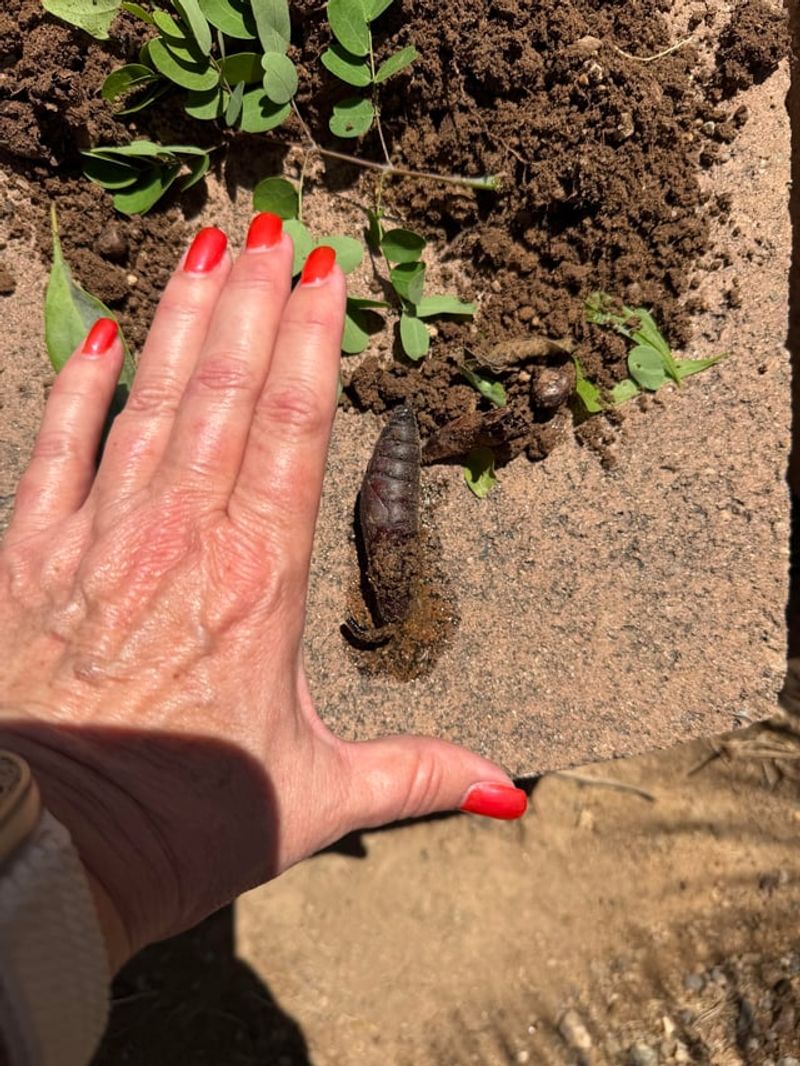
Jerusalem crickets spend most of their lives underground, tunneling through soil and foraging beneath the surface during daylight hours. When a shovel breaks through their tunnel or irrigation soaks the ground deeply enough to displace them, the insect ends up on the surface with no cover and nowhere to go.
That is the entire explanation for the encounter, and it does not signal an infestation.
According to UC IPM, gardeners commonly expose Jerusalem crickets while digging, and sightings can also increase after heavy irrigation or rainfall pushes the insects upward or into open soil. The insect was not attracted to your garden by something you planted or by a specific condition you created.
You simply broke into the underground habitat it was already using.
Finding one specimen while turning a bed is a routine consequence of disturbing soil, not evidence of a colony or a warning that something is wrong below the surface. The insect does not build visible nests or travel in groups the way social insects do.
A single discovery during routine garden work is exactly that, a single discovery, and the appropriate response is observation rather than alarm.
It is usually not dangerous, but it can bite
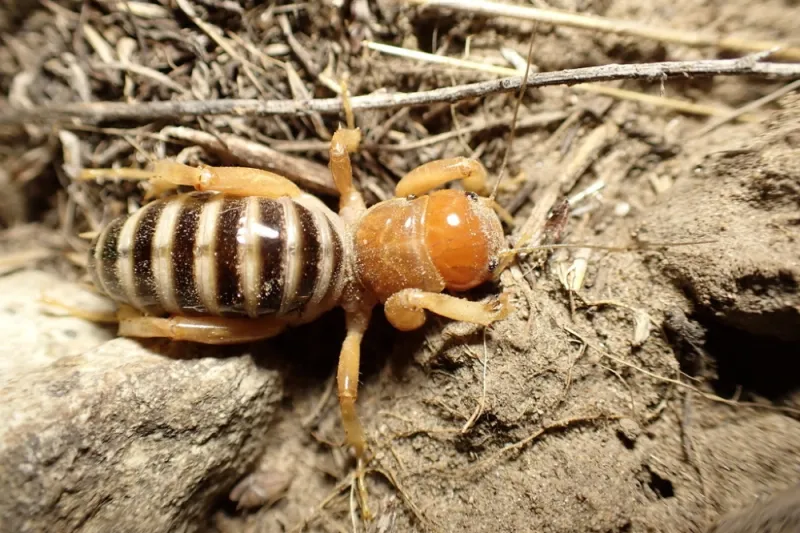
Jerusalem crickets do not sting and carry no venom. UC IPM confirms that the insect poses no sting-based or venom-based threat, and the National Park Service’s Chiricahua invertebrate page describes the bite as painful, which is the actual risk to keep in mind.
Your Arizona Garden Changes Every Week. Your Plan Should Too.
Gardening in Arizona changes quickly throughout the season. Every Friday you’ll receive a simple weekly plan showing exactly what to plant, prune, fertilize, harvest, and protect so you never miss the right timing.
The jaws are strong enough to cause a sharp pinch or bite when the insect is squeezed, grabbed carelessly, or cornered with nowhere to escape.
That risk is avoidable with straightforward precautions. Do not pick the insect up with bare hands, and keep children and pets from poking at it or holding it near the head.
The insect bites in self-defense when it feels threatened, not because it is aggressive by nature. Treating it like a wasp, meaning giving it space and not handling it directly, removes almost all of the bite risk.
The safest way to deal with one you want to move is to place a container or jar over it, slide a piece of stiff cardboard or paper underneath, and carry it to a new location. A garden trowel or similar tool works just as well for guiding it into a box.
No physical contact with the insect is necessary at any point, and a bite is not a medical emergency, but it is sharp enough that avoiding one is worth the small extra effort.
One insect does not signal a garden crisis
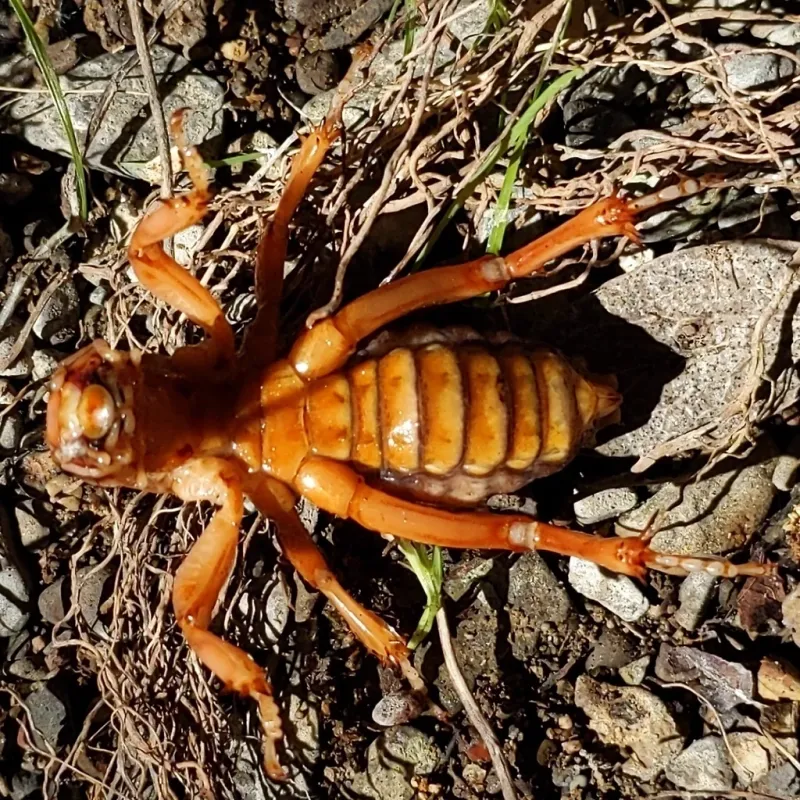
Finding a single Jerusalem cricket in a garden bed is not cause to treat the soil or pull up plants. These insects are generally harmless to people and to established woody plants, and a lone specimen does not indicate a population large enough to cause measurable damage.
Their presence in Arizona soil is normal, not exceptional.
On the ecological side, Jerusalem crickets eat other insects and organic matter, which places them in a useful spot in the food web. The National Park Service notes that owls and foxes are among the animals that eat them, meaning the insect itself is part of the prey base that supports Arizona wildlife.
That role does not make them automatically beneficial to your specific garden, but it does mean that removing every one you find has costs beyond the garden bed.
At the same time, their diet includes nonwoody roots and tubers, and occasional feeding damage to vegetables or turf is possible. UC IPM notes that while control is rarely necessary, feeding on garden plants can occur.
The honest framing is that Jerusalem crickets are generally not a pest, not that they are guaranteed helpers. Judge the situation by what you observe in the plants, not by the insect’s unsettling appearance.
Repeated wilting, root damage, or dying patches of turf near repeated sightings are the signals worth investigating. One insect, found once, is a reason to watch, not to act.
Compare the body before calling it a beetle grub
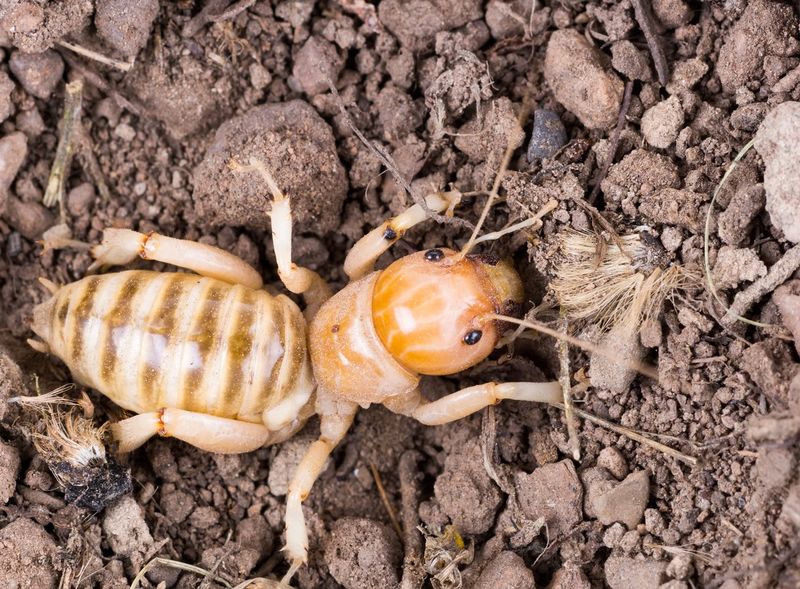
Body shape is the fastest way to separate a Jerusalem cricket from the beetle larvae most Arizona gardeners encounter. A Jerusalem cricket has an obvious large head, long antennae, six prominent legs spaced along the body, and a banded abdomen.
The whole animal looks like a functional, adult-sized insect even when it is not fully mature.
A typical white grub, which is a scarab beetle larva, looks completely different. According to the University of Arizona Extension white grubs guide, these larvae are pale, C-shaped, and carry a small brown head with three pairs of short legs clustered near the front.
The rest of the body is soft, legless, and distinctly larval. If the insect you found has a large head, antennae, and legs distributed along the body, it does not fit that description.
A third possibility worth knowing about is the palo verde root borer larva. This is a beetle larva that can reach roughly 5 inches, is pale and legless, and is associated with the roots of declining desert trees, particularly palo verdes and mesquites.
According to University of Arizona Extension guidance on palo verde and mesquite trees, a tree showing unexplained decline warrants a separate evaluation. If you found a large, pale, legless larva inside or immediately next to the roots of a struggling woody tree, that is a different situation from the banded, legged insect described in the sections above.
Location relative to roots, leg presence, and body shape together tell the real story.
Leave it alone unless plants show documented damage
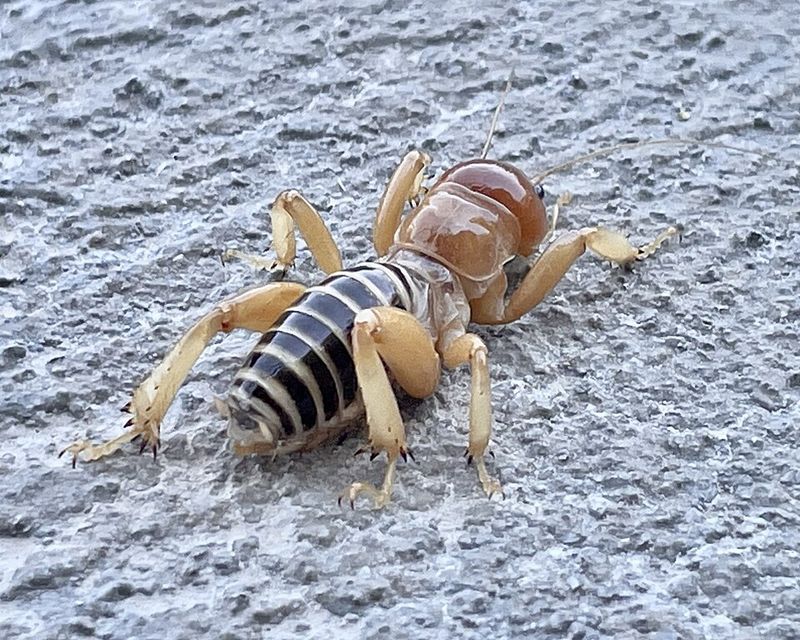
For most Arizona gardeners who find a single specimen, the right move is to leave it where it is or relocate it without touching it. Scoop the insect into a jar or box using stiff paper or a garden trowel, carry it to a spot away from the bed, and set it free.
UC IPM specifically recommends this approach and states that no control is necessary for a single Jerusalem cricket find.
Before considering any treatment at all, look at the plants first. Check for repeated feeding damage on roots or tubers, patches of turf that are dying back without an obvious water or heat explanation, or wilting that keeps returning in the same area after watering.
If those symptoms appear alongside multiple sightings over time, that is when a closer investigation makes sense. A single discovery with no plant symptoms does not meet that bar.
Broad-spectrum insecticide is not an appropriate response to one underground insect, full stop. Unnecessary pesticide use harms non-target insects, including pollinators and the predatory insects that help keep other pest populations in check.
The practical rule is straightforward: confirm the body shape, avoid squeezing the insect, and let measurable plant damage, not the insect’s appearance, drive any decision to act. An insect that looks like it belongs in a science fiction film can still be doing nothing wrong in your garden.