The California Native Plants Worth Buying Now For Fall Planting
The air finally turns cool in the evenings, and the dust on the driveway smells different after the first real rain. Something in the yard eases up, and fall arrives before the calendar does, and gardeners notice first.
Summer asked too much of everyone, including the soil. Hoses dragged across scorched paths, leaves curled at the edges, and watering felt like a second job that never quite ended.
But the months ahead hand you a rare gift. The ground softens, the sun turns mild, and roots get to stretch out while nobody is watching. Plant now, and next spring does most of the work for you.
Nurseries know this secret, which is why their shelves fill up fast once October arrives. Smart shoppers show up early to grab the best stock before it thins out.
1. California Poppy For Instant Golden Color
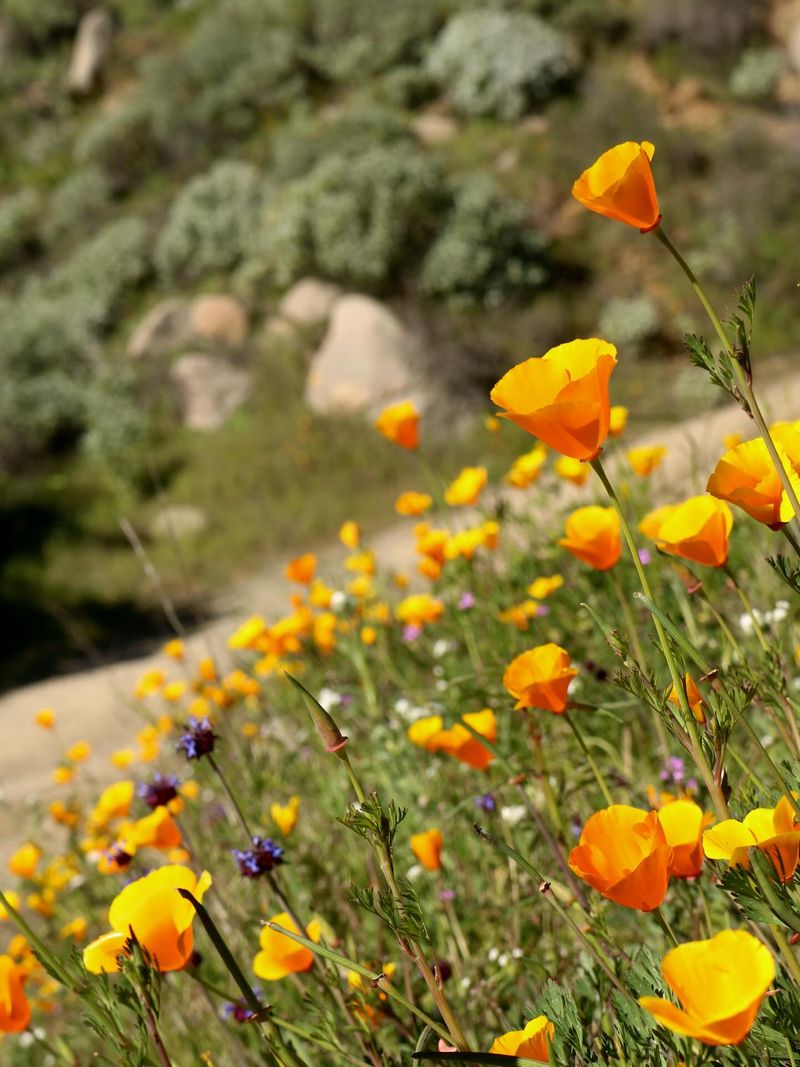
Every spring, hillsides from Antelope Valley to the coast light up orange, and the star of that show costs about as much as a candy bar. The California poppy is the state flower, and it practically grows itself.
Fall is the ideal time to scatter seeds because winter rains do the watering for you. Rake the soil lightly, sprinkle seeds on top, then press them down with your hand or foot. Skip the thick layer of mulch, since these seeds need light and contact with bare soil to sprout.
Within weeks you will see small blue-green seedlings that look almost feathery. They sit low through the cold months, then explode into bloom around March and April.
Gardeners love how poppies reseed themselves year after year. One packet in October can turn into a patch that returns without any help from you, sometimes popping up in sidewalk cracks and gravel paths.
Give them full sun and lean soil. Rich compost and heavy fertilizer make them floppy and leggy, which sounds backward but holds true.
Fun detail: the flowers close at night and on cloudy days, then reopen when the sun returns. Kids find that endlessly entertaining.
Pair them with purple lupine or blue-eyed grass for a wildflower look that draws bees all season. Once blooming slows in summer, let the seed pods dry and pop open on their own, and your patch grows a little wider each year.
2. Cleveland Sage For Fragrance And Pollinators
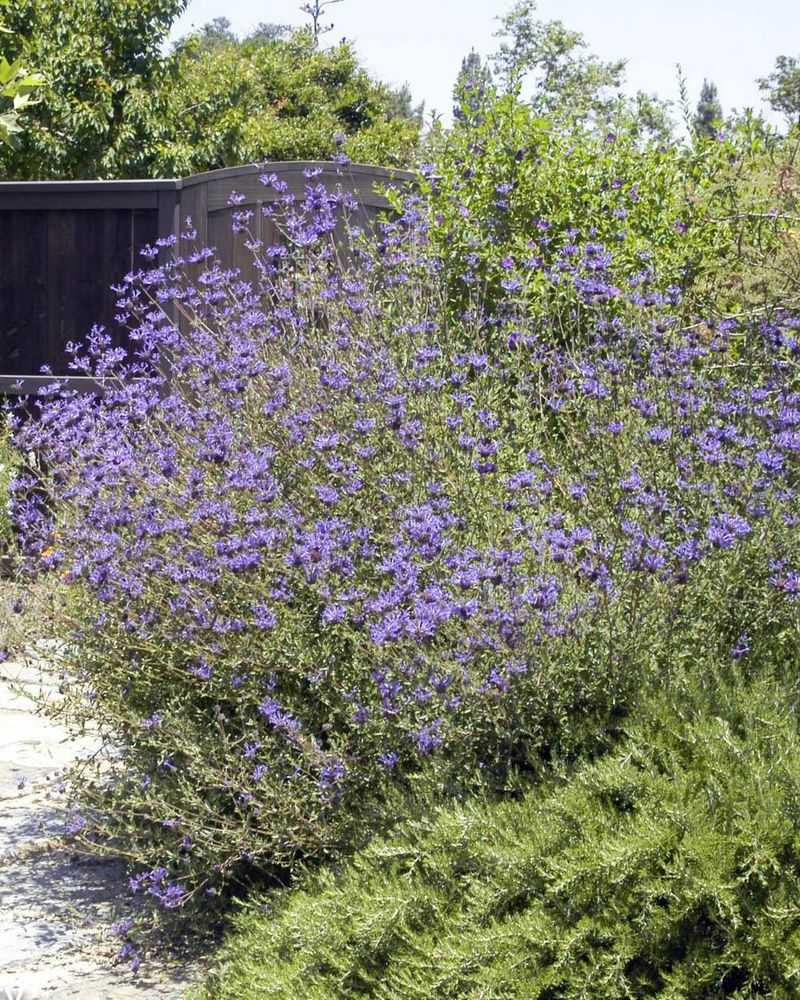
Brush your hand across this shrub and your fingers hold the scent for an hour. Cleveland sage, or Salvia clevelandii, smells like a mix of pine, mint, and desert air after rain.
Fall planting suits it perfectly. Roots settle in during the cool, damp months, so by the time summer heat arrives the plant can handle long stretches without a drink.
Expect a rounded shrub roughly three to four feet tall and just as wide. Purple flower clusters stack up along the stems in late spring like little pom-poms on a skewer.
Bees go wild for it. Hummingbirds stop by too, and the dried flower stalks look sculptural in the garden well into autumn.
Your California Garden Changes Every Week. Your Plan Should Too.
Gardening in California changes quickly throughout the season. Every Friday you’ll receive a simple weekly plan showing exactly what to plant, prune, fertilize, harvest, and protect so you never miss the right timing.
The one rule worth following: drainage matters more than anything else. Heavy clay that stays soggy in winter causes trouble, so plant on a slight mound or slope if your yard holds water.
Give it sun, space, and very little summer irrigation once established. Overwatering during hot months is the most common mistake, and it shortens the plant’s life considerably.
Prune lightly after flowering, cutting back maybe a third of the new growth. Avoid cutting into old woody stems, because sages rarely resprout from bare wood.
Varieties like Winnifred Gilman stay more compact and hold darker purple blooms, which works well in smaller yards. Gardeners often plant one near a walkway just so they can touch it every time they pass by.
3. Toyon For Winter Berries And Birds
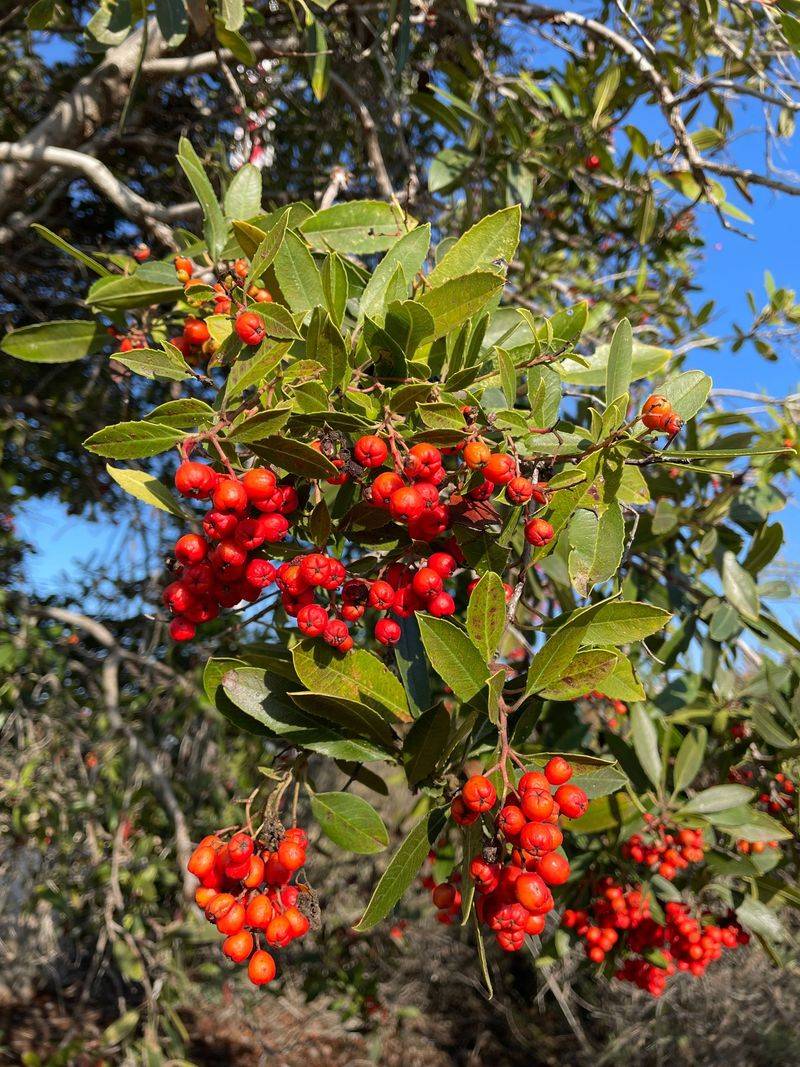
Toyon is often linked to the name Hollywood, though historians say the story is more legend than fact. Toyon, sometimes called Christmas berry, is one tough shrub with a festive streak.
Autumn planting gives it a long head start. The roots go deep during winter rains, and deep roots mean a plant that barely needs a hose later on.
Left alone, toyon grows into a large shrub eight to fifteen feet tall, though it can be shaped into a small tree with a single trunk. Glossy, toothed leaves stay green all year, which makes it useful as a privacy screen.
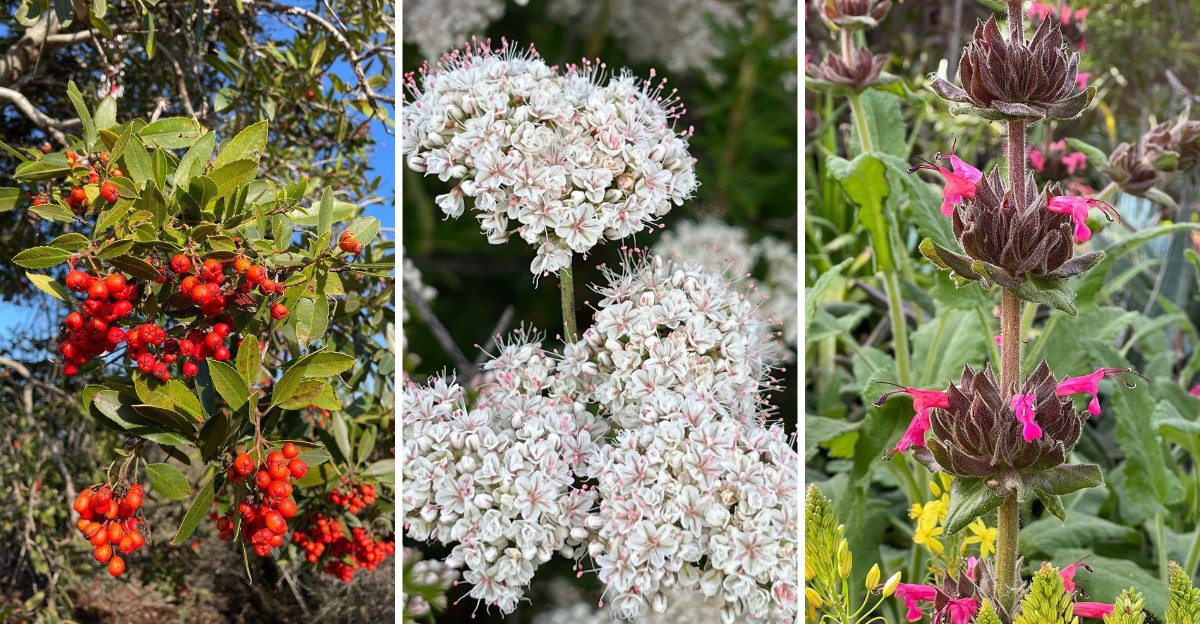
White flower clusters open in early summer and feed all kinds of insects. By late fall those flowers turn into heavy bunches of scarlet berries that robins, mockingbirds, and cedar waxwings strip clean.
Plant it in sun or part shade. It tolerates clay better than many natives, which makes it a solid pick for tricky yards.
Water it every couple of weeks during the first summer, then taper off. After the second year, occasional deep soakings are plenty.
Native peoples in California cooked the berries before eating them, since raw berries contain compounds that cooking breaks down. Leave them for the birds instead and enjoy the show from a window.
Space it generously, because a cramped toyon gets awkward and leggy. Given room, it becomes the backbone of a wildlife-friendly yard.
4. Ceanothus For Clouds Of Blue Blooms
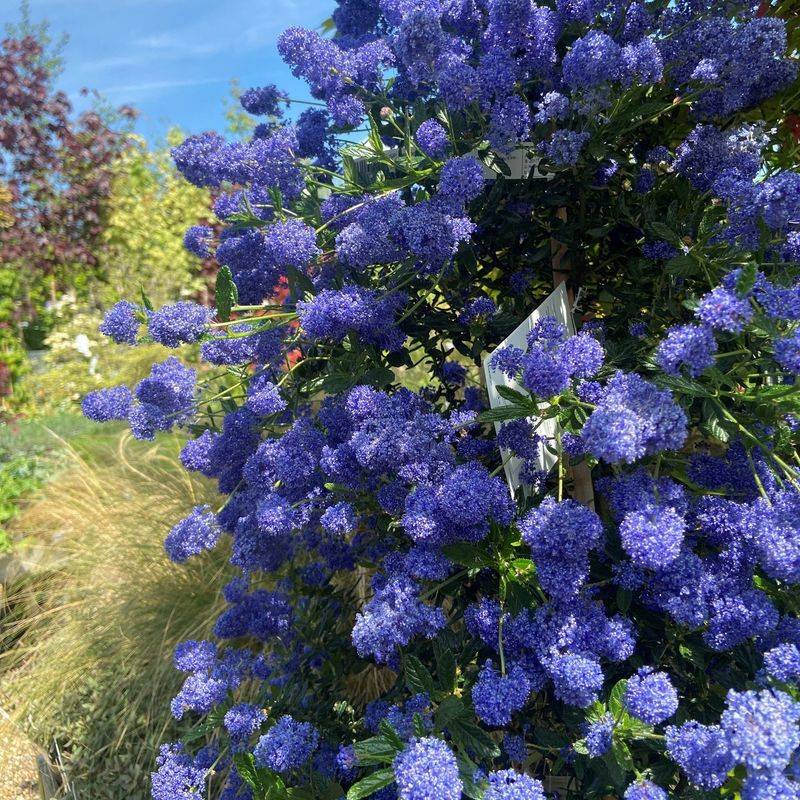
Picture a shrub so covered in blue flowers that bees swarm it constantly. Ceanothus, known as California lilac, does exactly that for a few glorious weeks each spring.
There is a variety for nearly every yard. Ground-hugging types like Yankee Point spread wide and stay under three feet, while upright forms such as Ray Hartman can reach the size of a small tree.
Fall is the smart time to buy because nurseries stock the widest selection then. Get one in the ground before the rains, and the plant establishes with almost no effort on your part.
Sun and sharp drainage keep ceanothus happy. Planting on a slope or raised area helps enormously, especially in gardens with dense clay.
Here is the part people get wrong: summer water can shorten its life dramatically. Once the plant has been in the ground a full year, back off the irrigation and let it coast.
Blooms range from powder blue to deep navy, with a few white forms available. Bees, butterflies, and tiny beneficial wasps swarm the flowers, and the buzzing is genuinely loud up close.
Prune only lightly, snipping tips to shape it rather than hacking it back. Heavy cuts into old wood rarely recover well.
Most ceanothus live around ten to fifteen years, which feels short but matches how they behave in the wild. Think of them as fast, generous performers rather than permanent fixtures, and plant a replacement nearby after year eight.
5. Deergrass For Texture And Erosion Control
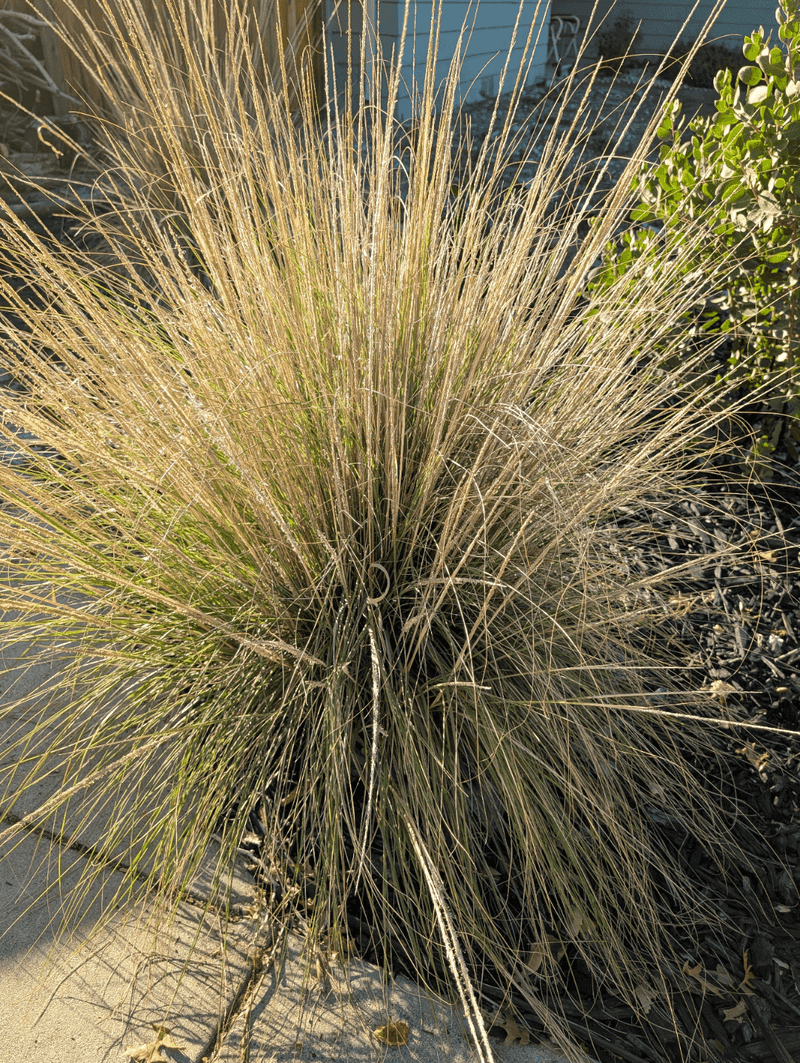
Some plants shout, and others just hold the whole garden together. Deergrass belongs firmly in the second group.
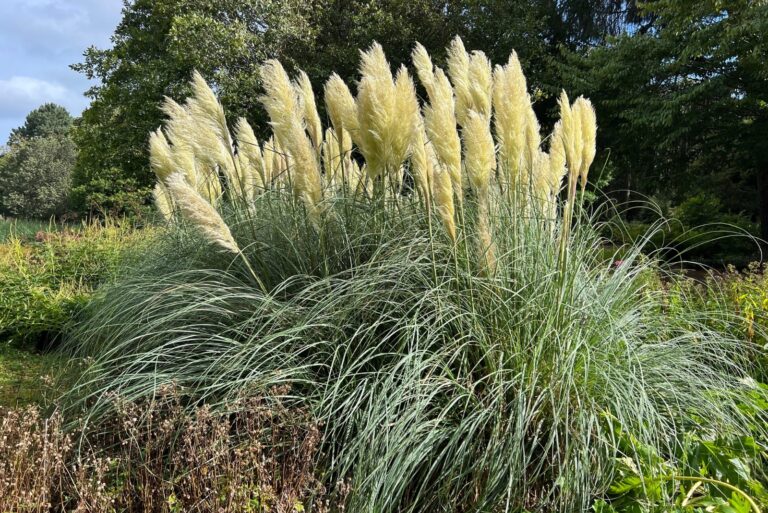
Muhlenbergia rigens forms a tidy fountain of narrow green blades, usually three to four feet across. Tall seed stalks shoot up in summer and catch the light like thin golden wands.
Landscape designers reach for it constantly because it softens the gaps between shrubs. Plant three or five in a loose group and the whole bed suddenly looks intentional.
Roots run deep and fibrous, which makes deergrass excellent on slopes where soil tends to slide during heavy rain. Fall planting lets those roots grab hold before winter storms arrive.
Maintenance stays refreshingly simple. Once every two or three years, cut the clump back to about six inches in late fall, and it regrows fuller than before.
It handles sun, part shade, clay, sand, and neglect. Occasional summer water keeps it greener, but skipping it just turns the blades a wheat color that many gardeners actually prefer.
Basket weavers among California tribes have long harvested the flower stalks, which are strong, straight, and remarkably uniform. That history alone makes the plant worth a spot in the yard.
Birds pick through the seed heads in late summer, and small lizards shelter at the base. Combine deergrass with buckwheat, sage, and poppies for a planting that looks like a slice of foothill hillside dropped into a suburban front yard.
6. California Buckwheat For Year Round Structure
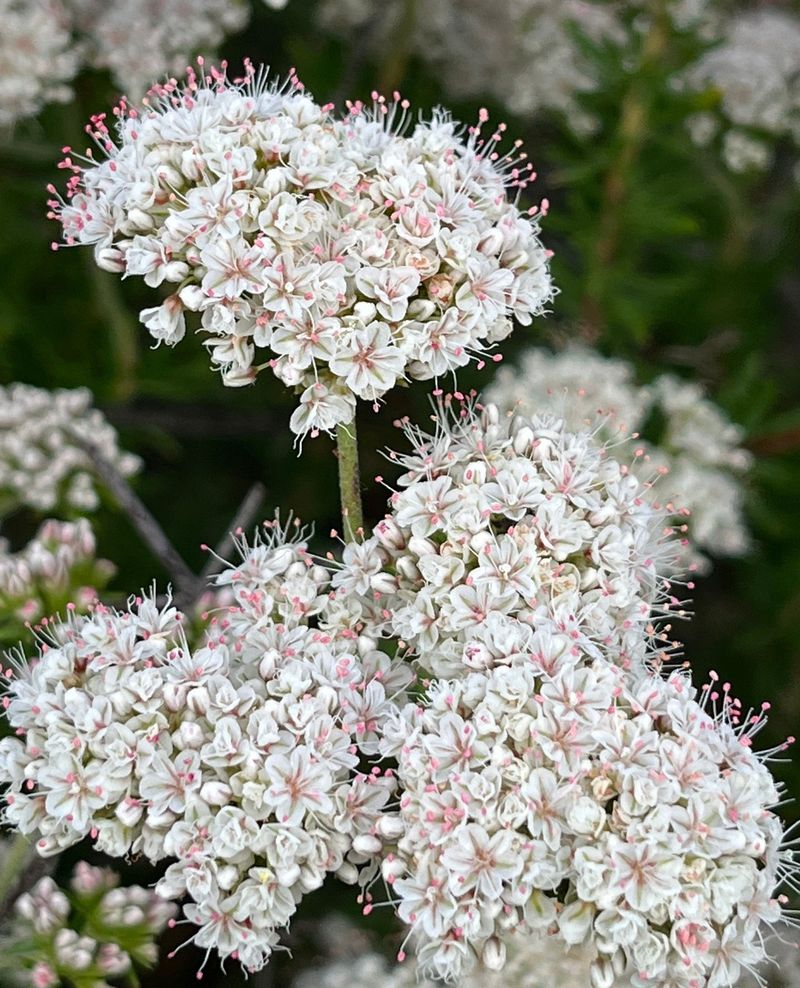
Few shrubs support more native butterflies than this one. California buckwheat supports dozens of native insect species, which in turn feed birds all year.
Eriogonum fasciculatum grows into a low, spreading mound roughly two to three feet tall. Small needle-like leaves cover the branches, giving it a soft gray-green haze from a distance.
Flowers open white or pale pink in late spring, then slowly age into rusty copper by autumn. Those faded blooms stay on the plant through winter and look fantastic against a fence or boulder.
Planting in October or November means the shrub uses free rainfall to establish. By its second summer it asks for almost nothing.
Full sun and quick-draining soil are the main requirements. Rocky, poor ground suits it better than pampered garden beds.
Give it a light trim in late fall, removing spent flower heads and shaping the mound. Cutting into bare wood is risky, so keep pruning shallow.
Different buckwheat species exist for different regions, including the coastal seaside variety with its flat-topped flower clusters. Ask your local native nursery which one grew naturally in your area.
Beekeepers prize buckwheat honey made from these flowers, and the plant blooms during a stretch when little else does. Tuck one into a hot, dry corner where nothing else has thrived, and watch that forgotten spot turn into the busiest place in the yard.
7. Hummingbird Sage For Shady Trouble Spots
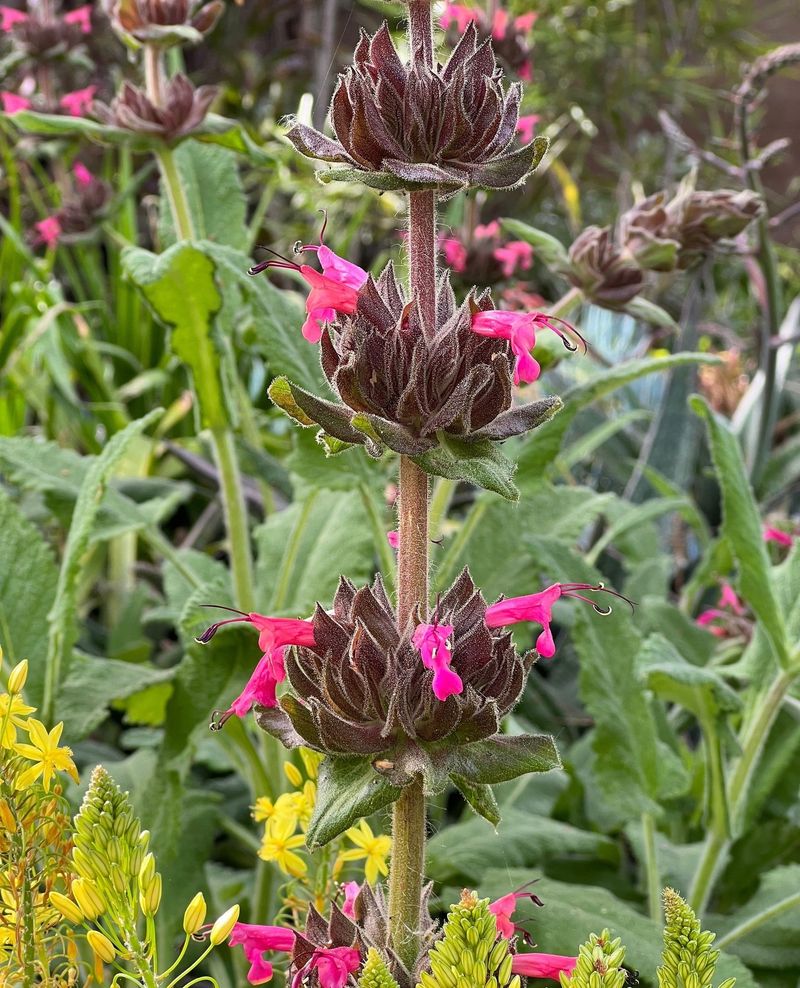
Shady corners under trees frustrate almost every gardener, and hummingbird sage quietly solves the problem. Salvia spathacea spreads by underground runners and fills those awkward gaps without complaint.
Crush a leaf and you get a scent somewhere between fruit punch and pine sap. The foliage is broad, slightly sticky, and bright green, which stands out against typical gray-leaved natives.
Magenta flowers stack in whorls along stems that rise a foot or two above the leaves. Hummingbirds visit constantly from late winter into spring, sometimes guarding a single patch like it belongs to them.
Plant it in fall under oaks, beneath tall shrubs, or along the north side of a house. Dappled light suits it best, though it handles more sun near the coast.
Unlike many natives, this one appreciates a bit of summer water in shade. A deep soak once a month keeps the leaves fresh instead of crispy.
Because it spreads, give it room to wander or plant it where a border keeps it in check. Digging up runners and replanting them elsewhere is easy and free.
Cut spent flower stalks at the base once blooming finishes. The plant looks tidier and often pushes out a second round of flowers.
Gardeners in the Bay Area and Southern California both grow it successfully, which makes it unusually flexible. For a shady strip that has resisted every plant you tried, this sage may finally be the answer.
8. Coast Live Oak For A Lasting Legacy
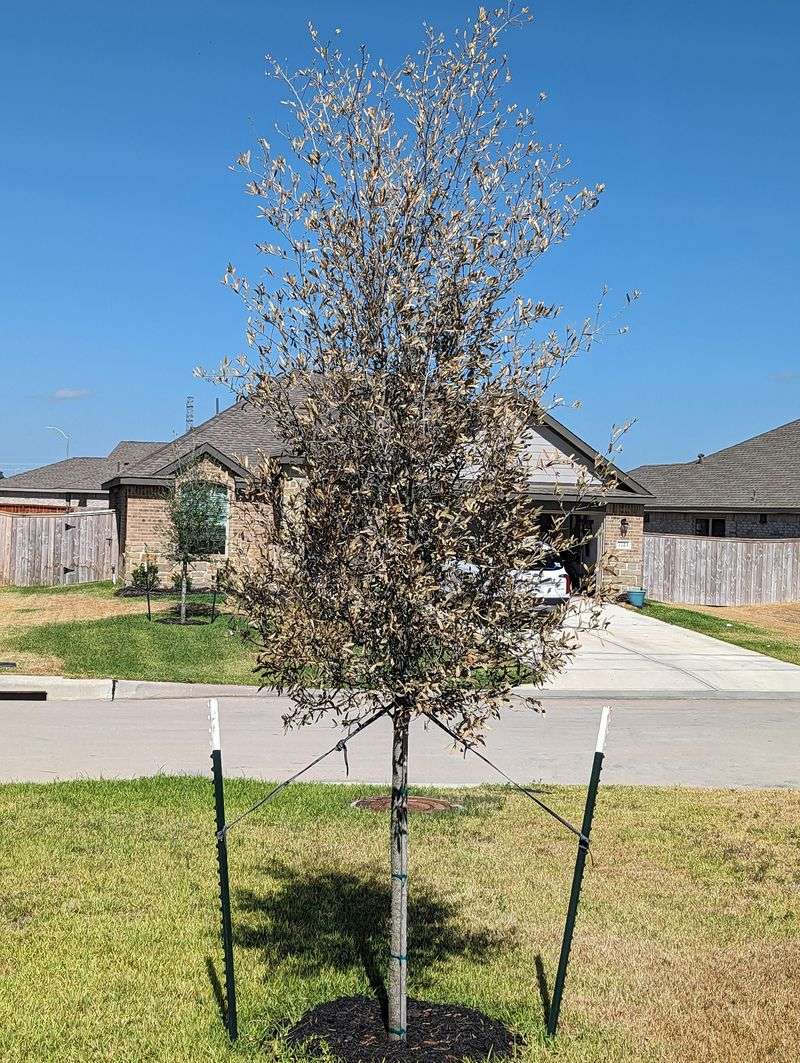
Planting an acorn feels like a small act, but it can shape a property for two centuries. Coast live oak, Quercus agrifolia, is the tree that defines much of California’s landscape.
Autumn is prime time for planting nursery seedlings or fresh acorns. Smaller plants often establish faster than boxed trees, sometimes overtaking them within five years.
Mature trees develop wide, low canopies with twisting branches and small holly-like leaves. Squirrels, acorn woodpeckers, scrub jays, and hundreds of insect species depend on them.
Choose the location carefully, because moving an oak later is not realistic. Keep it well away from lawns, septic lines, and foundations, and give it at least twenty-five feet of open space.
Water deeply but infrequently during the first two or three summers. After that, summer irrigation near the trunk invites root rot, so keep the area under the canopy dry and mulched with fallen leaves.
Skip the fertilizer. Oaks evolved in lean soil and grow sturdier without it.
Protect young seedlings with a wire cage, since gophers and rabbits find them delicious. A simple sleeve of hardware cloth solves most problems.
Growth feels slow at first, then surprises you around year six or seven. Someone planted the oaks you admire today, and this fall you get the chance to return the favor.