Why Powdery Mildew Appears On Oregon Plants At Summer’s End
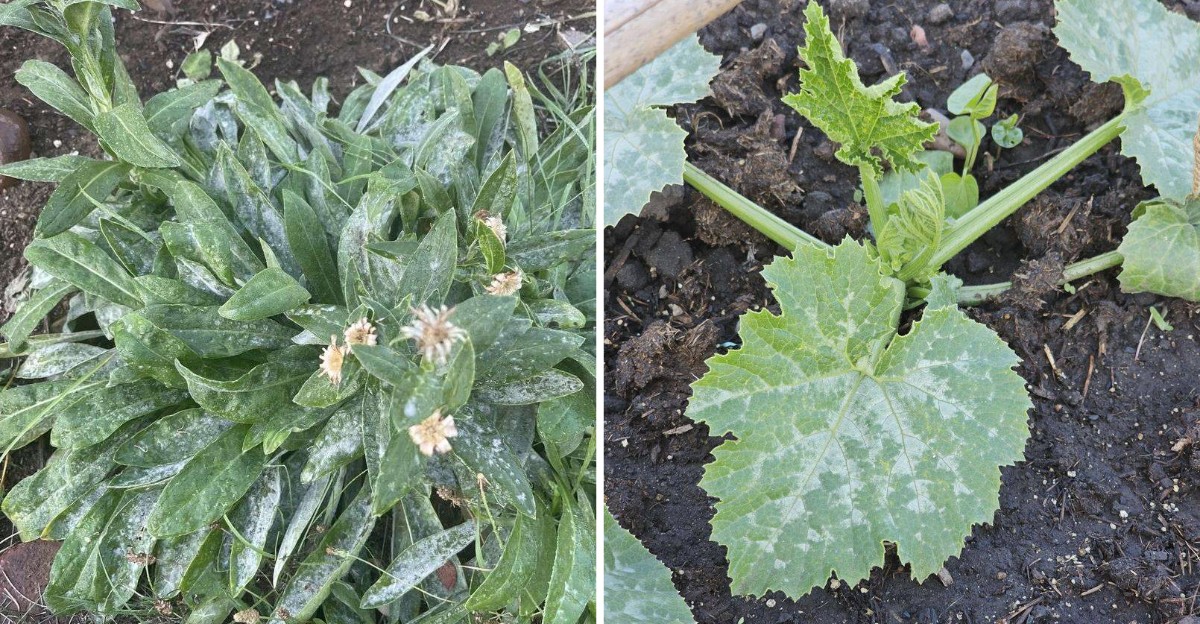
Your zucchini leaves looked clean and green just days ago, without a single mark anywhere on them. Pale dust now clings to almost every leaf on that same plant, spreading faster than the weather should allow.
Oregon nights swing sharply colder the moment August tips toward September, catching gardens off guard before sunrise. Warm afternoons still bake the raised beds dry, yet dew soaks every leaf long before the sun climbs high.
Nothing about that spread feels random when you watch the pattern closely enough over a few short weeks. Squash vines, climbing roses, and backyard lilacs all pick up that same strange dusting within days of each other.
Gardeners across Oregon trade the same puzzled messages every year around this exact stretch of the calendar. This pattern has a clear cause behind it, and the reason might catch you off guard entirely.
The Cool Nights And Warm Days Behind That White Dust
Blame the Oregon calendar as much as the fungus. Late summer in the Willamette Valley brings warm, dry afternoons around 75 to 85 degrees and nights in the low 50s. A swing powdery mildew spores wait all season for.
Unlike most garden fungi, this one doesn’t need standing rain to start. It germinates in humid air, and dew on chilly Oregon nights is plenty. By sunrise, the spore has already tunneled into the leaf.
Spore pressure also builds through the neighborhood, not just the yard. Each infected leaf nearby releases spores that drift on the lightest breeze, so gardens surrounded by other gardens tend to see symptoms earlier.
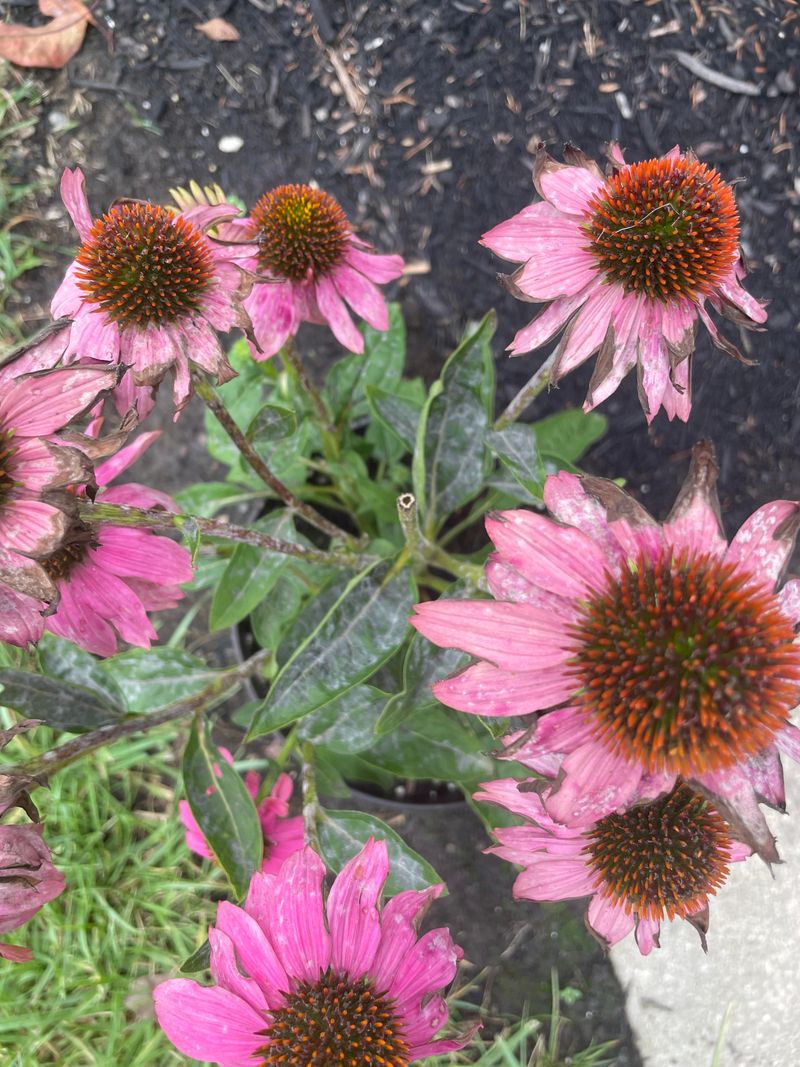
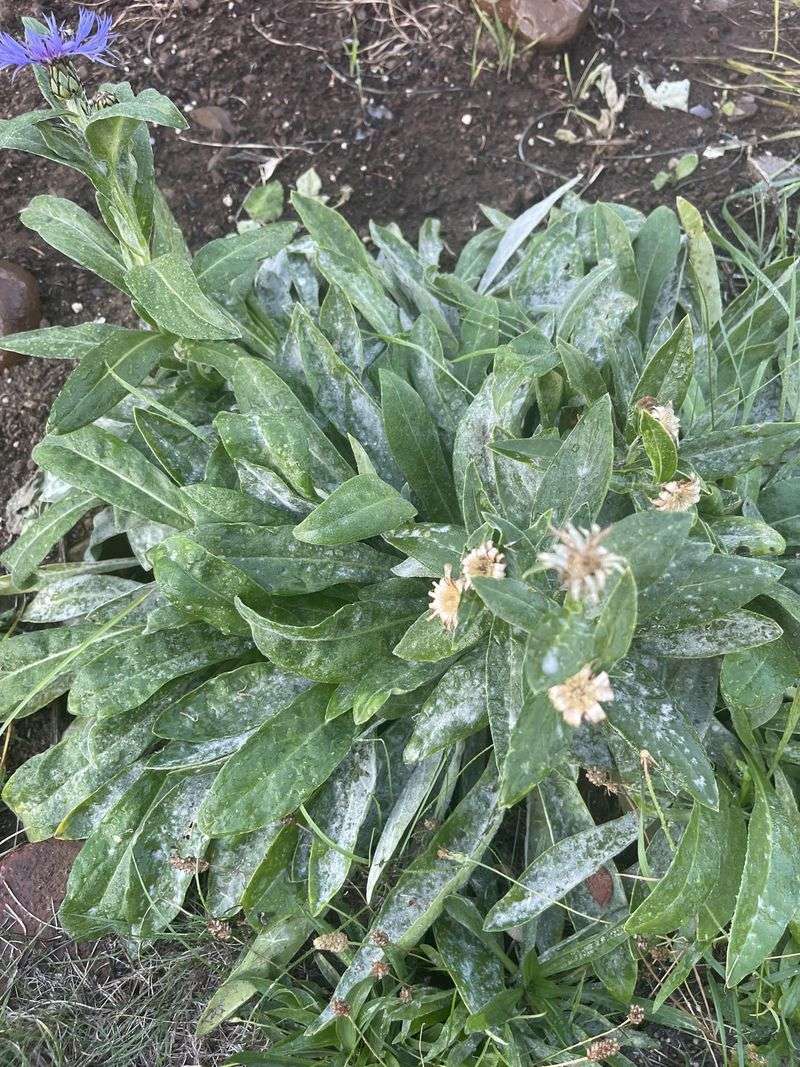
The white coating isn’t dust or spray residue. It’s a mat of fungal threads and spore chains feeding on the leaf, stealing sugar meant for fruit and roots. Peel some off and the green underneath often looks bleached.
Dry soil makes the problem worse, which surprises a lot of gardeners. A squash plant that wilts every afternoon in August has thinner, more stressed leaves, and stressed tissue gives the fungus an easy landing pad.
Shade and airflow play a role too. Beds tucked against a north fence or under a big Douglas fir hold humidity long past sunrise, and those spots usually turn pale and powdery first, while sunnier rows stay green weeks longer.
The Peak Window In Oregon Gardens
Timing follows a weather pattern that repeats most years west of the Cascades. Rain shuts off in July and humidity drops, but fog and dew return as nights lengthen. The fungus thrives on that split, dry days for spores, damp nights for germination.
East of the Cascades, in Bend or Hermiston, the pattern shifts slightly. Irrigation keeps humidity high inside dense plantings, and the big day-to-night temperature drop does the rest, so infections often show up a week or two earlier.
Plant age matters as well. Older leaves lose some of their natural defenses, so a zucchini planted in May is far more vulnerable in August than a July-sown replacement with young tissue.
Spore pressure also builds all summer. Each infected leaf on your street releases millions of spores that drift on the lightest breeze, so by late summer the air itself carries a heavy load.
Your Oregon Garden Changes Every Week. Your Plan Should Too.
Gardening in Oregon changes quickly throughout the season. Every Friday you’ll receive a simple weekly plan showing exactly what to plant, prune, fertilize, harvest, and protect so you never miss the right timing.
Watch the ten-day forecast in early August. A stretch of 80-degree afternoons followed by 50-degree nights is your signal to start scouting the undersides of leaves, because that is where the first colonies usually hide.
Container gardens follow their own timeline too. Pots on a deck or patio dry out and warm up faster than in-ground beds, so the same swing between hot days and cool nights can show up slightly ahead of the rest of the yard.
Overhead Watering And Crowded Beds, The Common Missteps
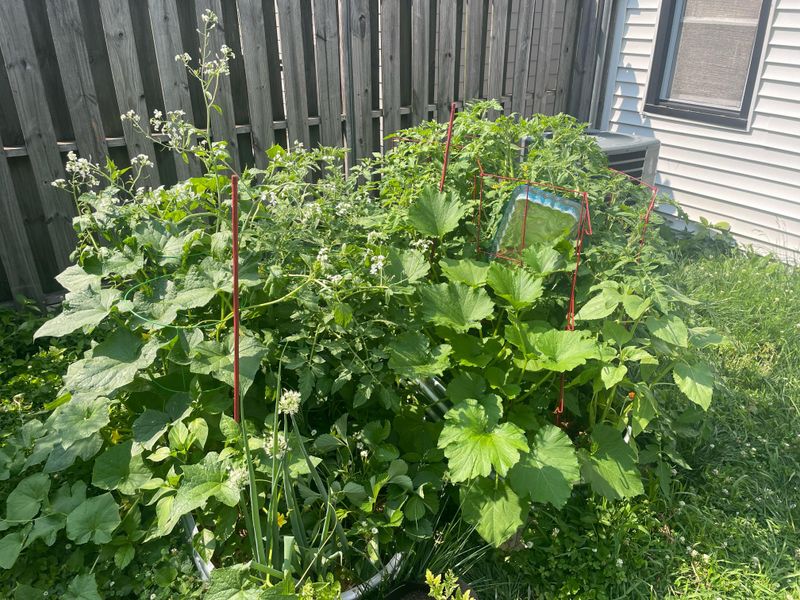
Here is the move that trips up even careful gardeners, and it happens at dusk with a hose in hand. Watering overhead in the evening leaves foliage damp through the coolest hours, and damp foliage in September is an open invitation.
Crowding ranks a close second. Three squash plants squeezed into a four-foot bed, or dahlias packed shoulder to shoulder, trap still, humid air in the middle where leaves rarely dry.
Then there is the nitrogen habit. A late feeding of high-nitrogen fertilizer pushes out soft, tender growth in August, and that soft growth is the fungus’s favorite meal.
Plenty of people also wait too long. The first colony is a dime-sized pale circle on an older, shaded leaf, and folks tend to shrug at it until half the canopy has turned gray.
Tossing infected leaves on the compost pile is another quiet mistake. Backyard piles rarely get hot enough to break down the resting structures, so you end up storing the problem until spring.
Using the same fungicide over and over can stop working too. Populations adapt, and by the third season the spray that once worked barely slows things down.
Skipping the undersides when you do spray wastes effort. Coverage has to reach both leaf surfaces and the stems, or the surviving colonies simply rebuild within a week.
One more habit worth breaking is hauling pruners from an infected plant straight to a clean one. A quick wipe with disinfecting solution between cuts costs ten seconds and saves a lot of hassle.
Practical Treatments That Slow The Spread
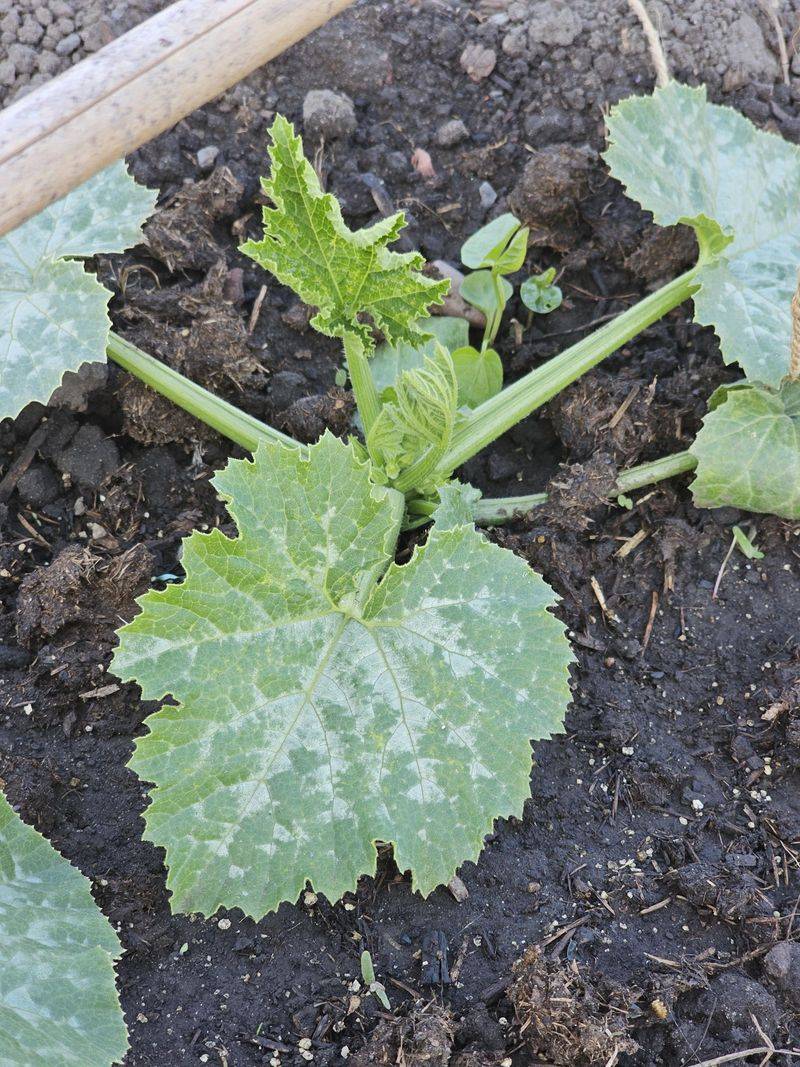
Even an infected plant is not finished. Catching those pale patches early and acting within a few days usually keeps a squash vine or a phlox clump producing right through October.
Start with scissors. Snip off the worst leaves, the ones more than half coated, and drop them straight into a bag rather than shaking them over the bed. Sanitize the blades afterward so you are not carrying spores to the tomatoes.
Open the plant up next. Thinning a few inner leaves on zucchini or removing lower stems on bee balm lets Oregon’s afternoon breeze move through, and moving air dries leaf surfaces fast.
Gardeners in the Pacific Northwest have good luck with potassium bicarbonate, horticultural oils, and sulfur products labeled for the crop. Milk diluted one part to nine parts water also has decent research behind it for cucurbits.
Whatever you choose, apply in the morning so leaves dry before night, and skip oil sprays when the thermometer climbs past 85 degrees to avoid leaf burn. Sulfur and oil should also be kept at least two weeks apart.
Repeat coverage every seven to ten days matters more than the product itself. One thorough pass rarely holds, especially in September when dew returns each night. Mark the dates on a garage calendar if you tend to lose track.
And water at the roots, in the morning, deeply. A well-hydrated plant recovers better than a thirsty one, even when its leaves already carry a few gray patches.
The Outcome For Fruit, Flowers, And Next Year’s Soil
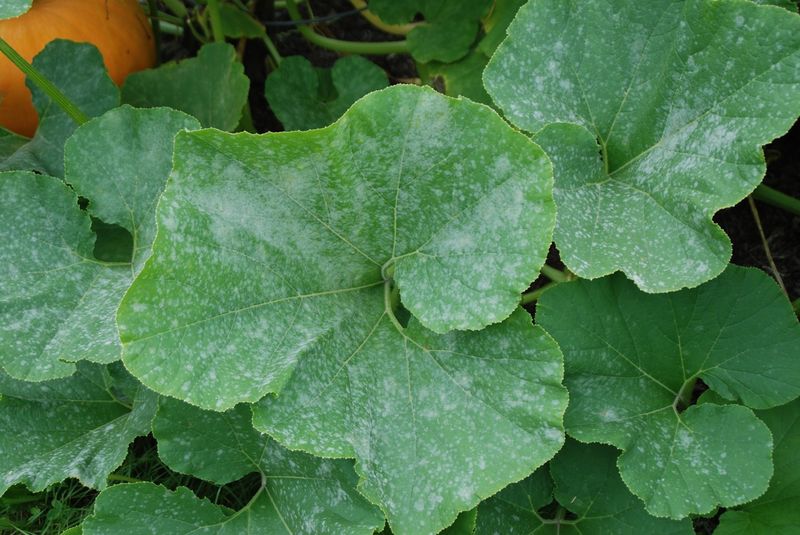
What actually happens if you let it run its course? On a zucchini in late August, the answer is usually a slow fade rather than a sudden collapse.
Coated leaves capture less sunlight, so the plant makes less sugar. Fruit gets smaller, ripens unevenly, and tastes flatter, and a pumpkin destined for Halloween may stall at softball size.
Flavor is the part gardeners notice most. A heavily infected plant sends fewer sugars into its fruit, and late melons or winter squash can taste watery instead of rich.
Stems and fruit stalks that lose their leaf cover also sunburn in the last hot spell of the season. Winter squash with scalded shoulders will not store well in the garage through November.
Ornamentals take a cosmetic hit more than a structural one. Roses, phlox, lilacs, and bee balm often finish the season looking tired, then push out clean growth the following spring as if nothing happened.
Grapes are a different story in Oregon wine country. Infection on clusters can split berries and open the door to bunch rot, which is part of why vineyard crews scout so obsessively in July and August.
There is a timing mercy built in, though. If the white patches show up after your squash has already set and sized its fruit, the harvest damage is often small.
The bigger cost tends to be next year. Fungal structures overwinter on fallen debris and perennial buds, so an ignored September means an earlier, angrier start the following summer.
Resistant Varieties And Fall Cleanup For A Cleaner Next Season
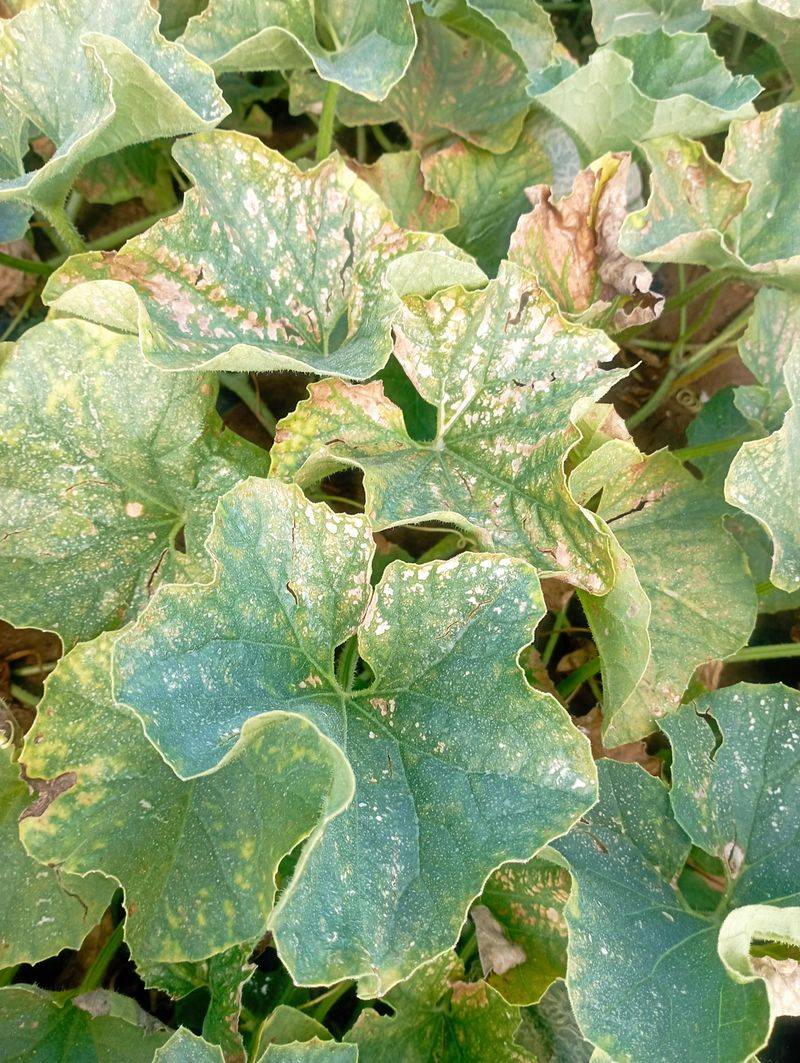
Next season starts with a seed catalog and a rake. Choosing varieties bred for resistance is the single easiest upgrade, and the choices keep getting better.
Look for powdery mildew resistance codes on squash, cucumber, melon, and pumpkin seed. Oregon State University trials have flagged plenty of performers, and resistant zucchini can stay green weeks longer than the old standby.
For the flower bed, swap in mildew-tough cultivars. Phlox like David, bee balm like Jacob Cline, and lilacs in the Syringa pubescens group hold up far better in a damp Willamette Valley fall.
Spacing is free medicine. Give plants the full distance listed on the seed packet, orient rows to catch the prevailing northwest breeze, and resist the urge to tuck in one extra transplant.
Fall cleanup does the heavy lifting. Rake and remove infected leaves and vines in October, cut perennials back, and keep that material out of the backyard compost pile. Municipal yard debris bins handle it better.
Rotation helps in the vegetable garden. Moving cucurbits to a different bed each year, on a three-year cycle, lowers the spore load waiting in the soil and debris.
Some gardeners start protective sprays in mid-July, before any symptoms show. On plants that get hit year after year, that head start beats trying to catch up once the fungus has already spread.
Finally, sun matters more than people admit. A bed that gets six or more hours of direct light dries early and stays cleaner all the way to frost.