Don’t Plant Autumn Olive For Wildlife – Ohio Has Better Native Options
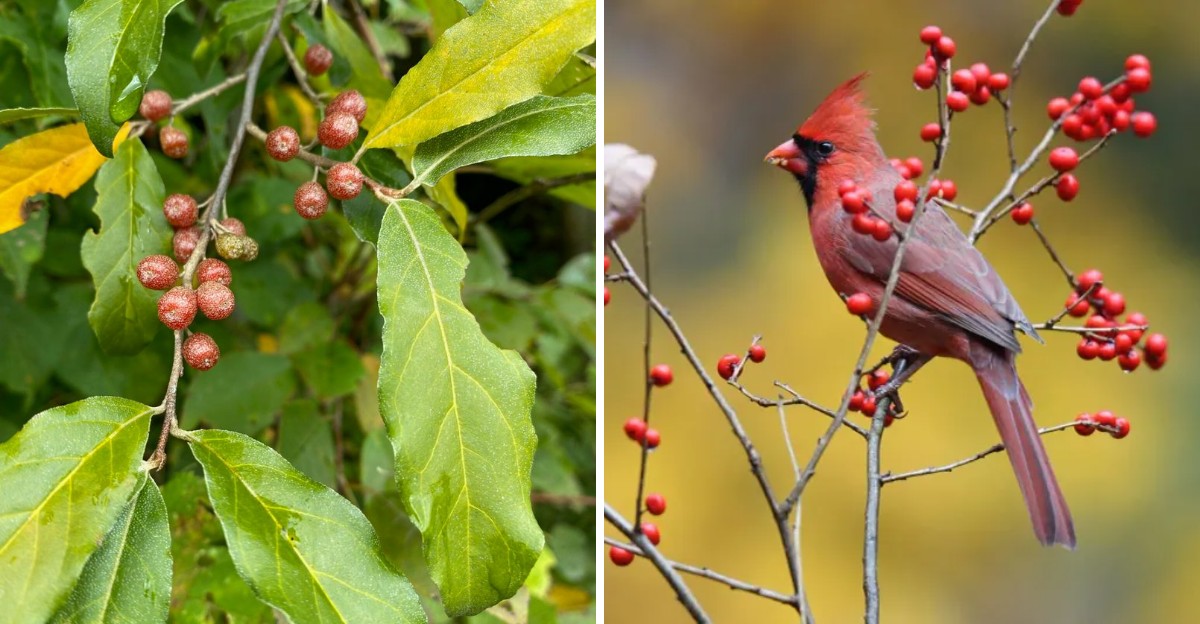
That shrub loaded with small red berries looks like exactly what a wildlife-friendly yard should include. Birds swarm it every fall.
It seems to be doing its job just fine. Look closer at what happens once it’s established, though, and the picture changes fast.
Autumn olive spreads aggressively once it takes hold. It pushes into natural areas well beyond wherever it was planted, crowding out native plants that wildlife actually depend on for more than a quick meal.
Those berries give birds a burst of easy calories. But a yard overrun with something that outcompetes everything around it isn’t the win it looks like at first.
Ohio has native shrubs that support wildlife far more completely, without the same spreading problem. Making the switch means trading a plant that looks helpful for one that actually is.
1. Avoid Autumn Olive Before It Spreads
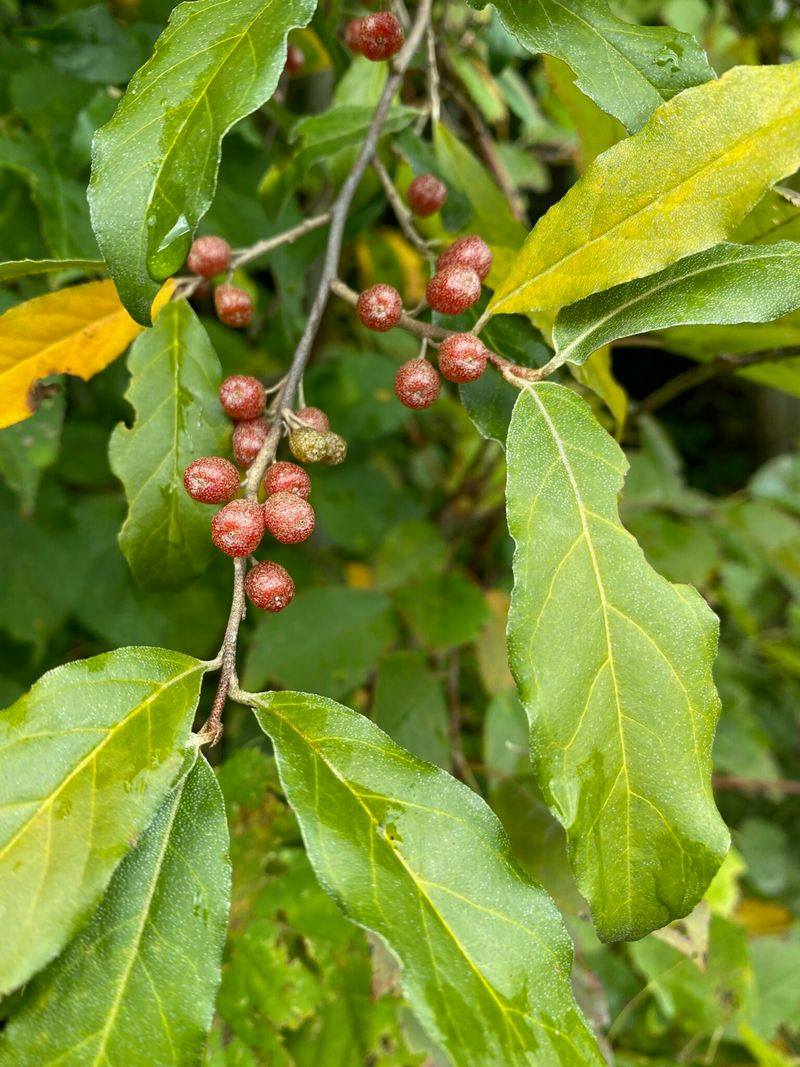
Back in the 1940s, conservation agencies handed out this Asian shrub like candy, praising it for erosion control, wildlife cover, and healing scarred mine land. It arrived in the United States around the 1830s, and by the 1970s it was planted across Ohio on purpose.
Today autumn olive turns up in all 88 Ohio counties, and it is ranked among the state’s most disruptive invasive shrubs. A mature plant can produce large numbers of seeds, which birds spread widely.
Birds do the shipping. A robin eats fruit here and drops seeds miles away, which is how old pastures become silvery thickets in less than a decade.
There is a nutrition problem too. The berries provide food, but a landscape dominated by autumn olive offers far less ecological variety than a mix of native shrubs and plants.
Its nitrogen-fixing ability can change soil conditions, which may give some invasive plants an advantage. Enriched ground then favors other aggressive newcomers, stacking the deck further.
If you spot it, pull seedlings while they are small and treat cut stumps, since chopping alone encourages resprouting. Then replant that gap with something native before the seed bank fills it for you.
2. Plant Serviceberry For Native Wildlife
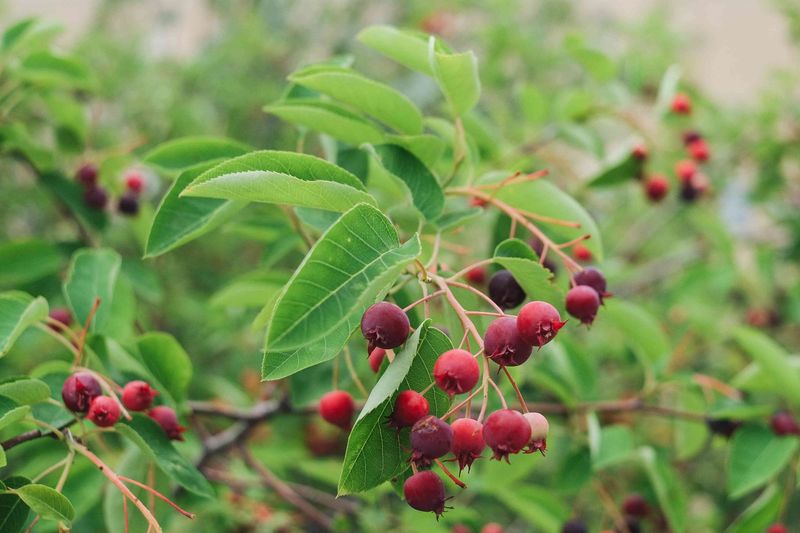
Few small trees pull off four seasons as gracefully as serviceberry. Downy serviceberry and Allegheny serviceberry both grow wild across Ohio, and either one fits a front yard, a hedgerow, or a woodland edge.
White flowers open in early spring, often before the last chilly nights have finished. That timing matters, because emerging native bees and other early insects find nectar and pollen when almost nothing else is open.
The bigger story hides in the leaves. Serviceberries host more than 100 kinds of butterflies and moths, which means a steady supply of caterpillars, and caterpillars are the protein that nestling chickadees and wrens grow on.
Fruit ripens in early summer, turning blue-purple and packed with sugars and healthy fats. Robins, catbirds, cedar waxwings, orioles, and thrushes clean the branches fast, so pick a few for yourself early if you want a taste.
Branches also give small birds cover and tidy nesting spots, something a bare lawn tree cannot offer.
Your Ohio Garden Changes Every Week. Your Plan Should Too.
Gardening in Ohio changes quickly throughout the season. Every Friday you’ll receive a simple weekly plan showing exactly what to plant, prune, fertilize, harvest, and protect so you never miss the right timing.
Growing conditions are forgiving. Serviceberry handles sun or shade, prefers moist, rich, slightly acidic soil, and tolerates drier ground once roots settle in.
Fun bit of history: the name comes from old spring funeral services held when the blooms appeared and the ground thawed.
3. Grow Elderberry For Birds And Pollinators
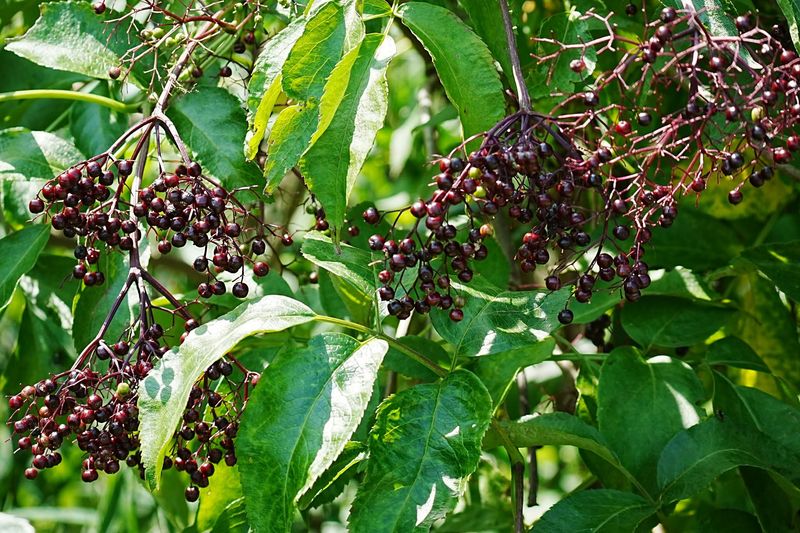
Walk any damp roadside ditch or streambank in Ohio in June and you may catch a lemony scent drifting past. That is American black elderberry, showing off flat, dinner-plate clusters of tiny white flowers.
Multi-stemmed and fast, the shrub reaches roughly eight to twelve feet, filling space that autumn olive would otherwise claim. It works beautifully in rain gardens, along fence lines, or at the soggy corner of a property where little else thrives.
Native pollinators crowd those June blooms, and by August the flowers have become heavy clusters of purplish-black fruit hanging into September.
The guest list at harvest time is long: Ruffed Grouse, Eastern Bluebird, Northern Cardinal, Gray Catbird, American Robin, Wood Thrush, Red-eyed Vireo, and Cedar Waxwing, plus foxes and other mammals. Dense, leafy stems double as protected nesting cover.
Give elderberry moist to wet but well-drained, moderately acidic soil in full sun to light shade, and it asks for little else. Cutting older canes to the ground every few years keeps growth vigorous.
One kitchen caution worth remembering: raw elderberries are not for eating, since cooking is needed to neutralize natural compounds in the fruit. Jelly, syrup, and pie are the safe routes.
Plant two shrubs for heavier fruit set.
4. Choose Spicebush For Woodland Gardens
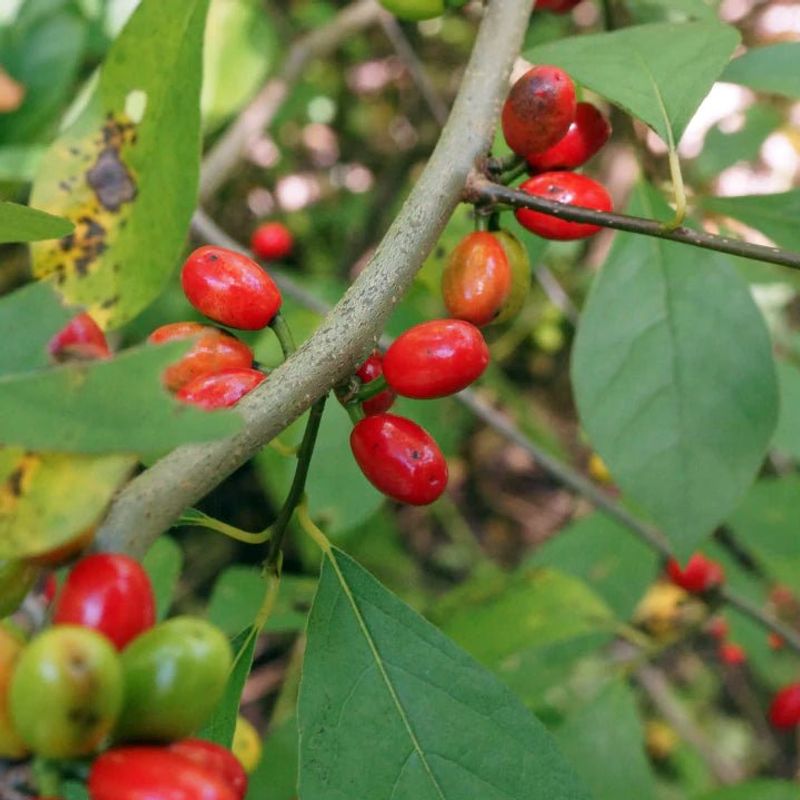
Crush a leaf between your fingers and you get a burst of citrus and pepper. Northern spicebush earns its name honestly, and it is one of Ohio’s most useful understory shrubs for shady yards.
Blooming arrives remarkably early, sometimes in late winter, when hazy yellow flowers dust the bare branches. Those blossoms feed early butterflies and native pollinators at a moment when the woods look mostly brown.
Caterpillar duty is where spicebush really shines. It is the main host for the Spicebush Swallowtail, whose larvae fold themselves into leaves and sport big fake eyespots, and it also supports the Promethea Silkmoth.
Female plants carry glossy red drupes in late summer and early fall. The fruit is unusually rich, giving migrating thrushes and other songbirds high-energy fuel right when they need to put on weight.
Shade is no obstacle. Spicebush handles full shade, prefers moist, rich soil, and adjusts to drier, sunnier ground with patience.
Gardeners appreciate that it shrugs off most pests and diseases, and deer usually walk right past it, likely because of that spicy scent.
Plant a small group with at least one male for pollination if you want berries. Pair it with woodland wildflowers for a layered, low-maintenance native corner.
5. Add Winterberry Holly For Winter Food
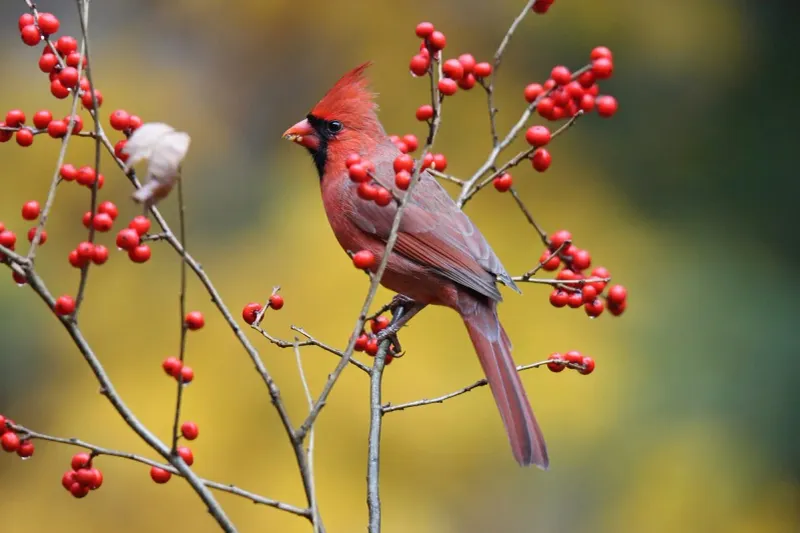
Nothing brightens a gray Ohio February like a shrub glowing with red beads against snow. Winterberry holly drops its leaves in fall, which only makes the fruit display more dramatic.
Unlike its evergreen holly cousins, this native deciduous species holds berries deep into winter. That timing turns it into a pantry for thrushes, waxwings, woodpeckers, American Robins, Eastern Bluebirds, and Northern Cardinals when insects and soft fruit have long vanished.
Here is a neat detail: the berries usually become more palatable after several freeze and thaw cycles, so birds often ignore them until midwinter. Patience is part of the design.
Pollination requires teamwork. You need at least one male plant near your females, generally one male for every three to five females, or you will get a handsome green shrub and no fruit.
Flowers appear from April into June and quietly feed native solitary bees, and the shrub hosts Henry’s Elfin butterfly larvae.
Soggy spots suit it perfectly. Winterberry thrives in wet, poorly drained, acidic ground and still manages in average garden soil that does not bake dry.
Its thicket-forming habit gives nesting birds solid cover, and clipped branches make honest holiday decorations. Plant it where you can see it from a kitchen window.
6. Use Arrowwood Viburnum For Native Berries
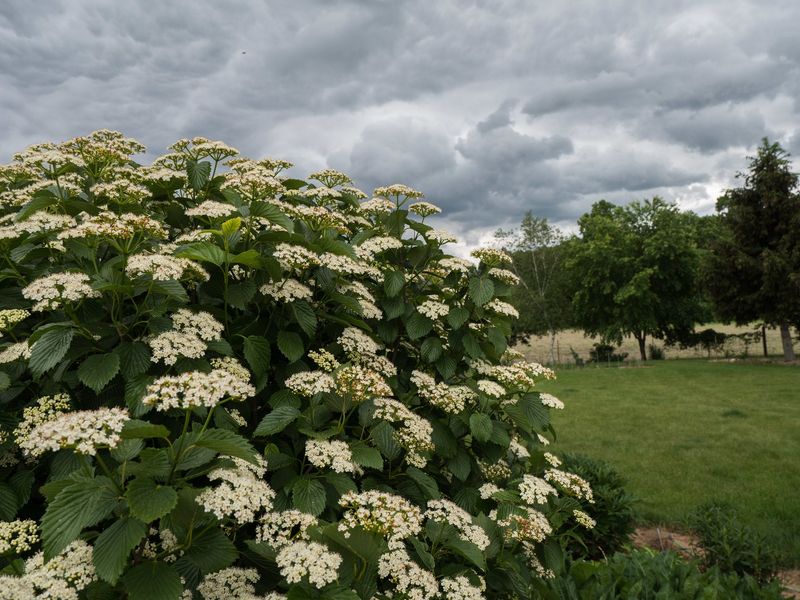
Native peoples once used the straight, sturdy shoots of this viburnum for arrow shafts, which is exactly how it got its common name. Arrowwood viburnum is native across much of eastern North America and fits many Ohio landscapes.
Creamy-white flower clusters arrive in late spring and early summer, drawing native bees, monarchs, and swallowtails. Larvae of the Spring Azure, arrowwood sallow moths, and hummingbird moths all feed on the foliage.
Then come the berries, deep blue and ripening from midsummer through fall. Unlike sugary invasive fruit, these are high in fat, which is precisely the balanced nutrition migrating birds burn through on long flights.
Eastern Bluebirds, Northern Flickers, Gray Catbirds, American Robins, grouse, wild turkeys, and small mammals all show up for the meal. Thick, twiggy branching gives songbirds safe resting and nesting real estate at the same time.
Toughness is another selling point. Arrowwood takes full sun to full shade, grows in moist, rocky, or clay soil, and tolerates short droughts as well as occasional standing water.
One planting tip makes a real difference: set out two genetically different plants, not two clones of the same cultivar, so cross-pollination produces a heavy fruit crop.
Use a row of them as a living privacy screen along a property edge.
7. Try Red Chokeberry For Fall Color
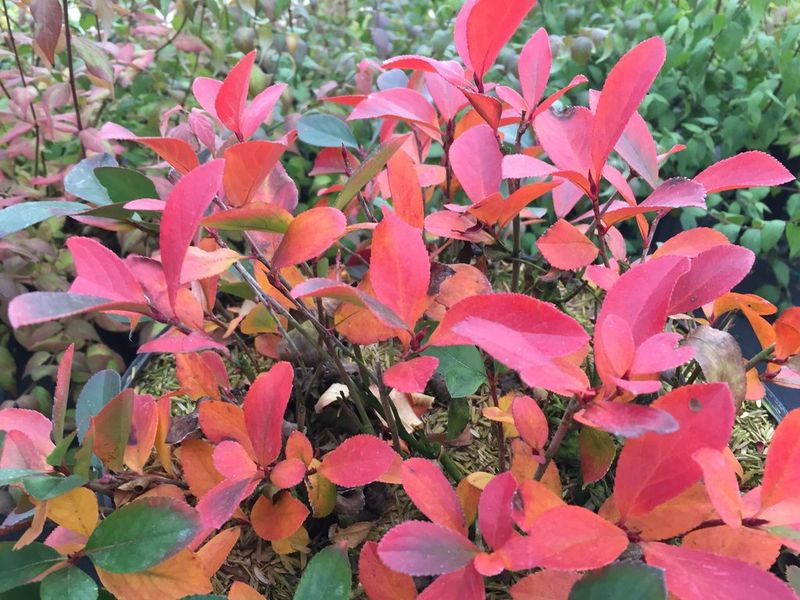
Red chokeberry is a valuable native shrub that can add wildlife habitat and fall color. Adding one to your yard is a small act of restoration.
Growth runs six to twelve feet on multiple slim stems, giving an upright, casual shape that fits narrow beds and property lines.
Spring brings clouds of white to pink blossoms, and its flowers attract a variety of pollinators, including bees, butterflies, and flower flies. Foliage then hosts 29 kinds of moth and butterfly larvae, among them the coral hairstreak.
Autumn is the showstopper. Glossy green leaves flip to burning orange-red, a color that rivals any imported landscape shrub sold at big box stores.
Red fruit ripens in early fall and clings through winter storms, feeding roughly 40 bird species during the lean months. The berries taste puckery to people, which is exactly why they last long enough to matter to wildlife.
Site it in full sun for the best color, though partial shade works fine. Wet ground, bog edges, dry thickets, and brief flooding are all within its comfort zone.
Plant several together, since chokeberry suckers gently and looks best as a loose colony rather than a lonely specimen.
8. Plant Ninebark For Pollinator Support
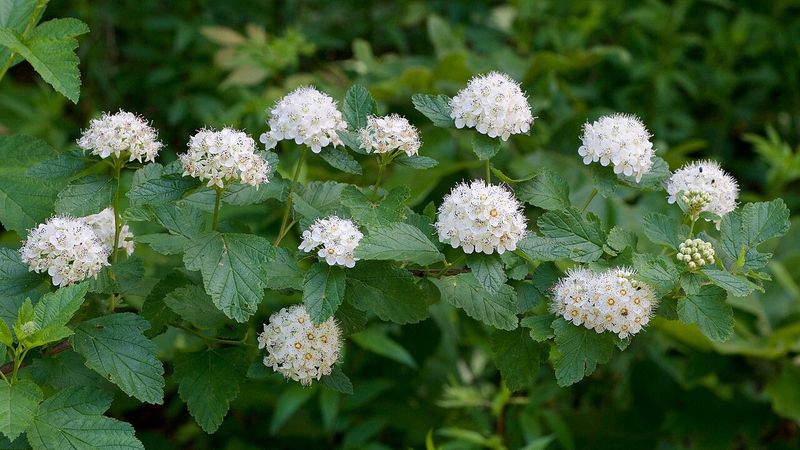
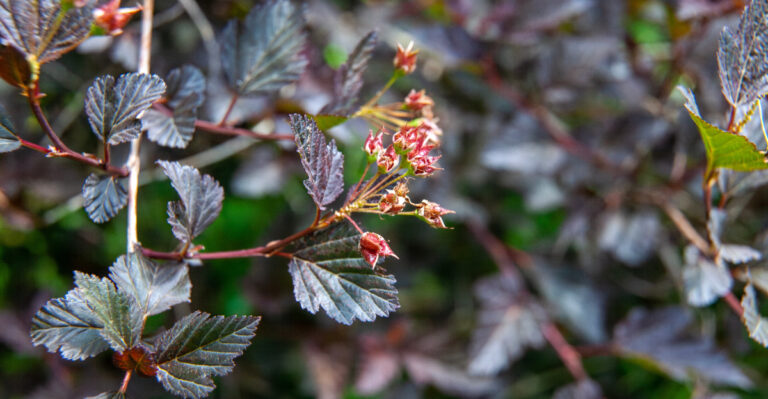
Peel back a strip of bark on an older stem and you will see why gardeners named it ninebark. The papery layers shred away in ribbons, giving the shrub character all winter long.
Common ninebark grows through much of Ohio, reaching five to ten feet tall and about as wide, with arching stems that form a rounded mound.
Late spring and early summer bring rounded clusters of white to pinkish flowers. Native bees, spring azures, swallowtails, hummingbirds, and beetles all work the blooms, making the shrub sound busy on a warm afternoon.
The caterpillar list is impressive: Io moth, Cecropia moth, Ninebark Dagger moth, Glorious Habrosyne, Bluish Spring Moth, and Large Maple Spanworm all feed here. Those larvae become bird food, which is the whole point of a wildlife garden.
Reddish seed capsules follow the flowers and offer a modest snack for birds in late summer and fall, while the dense branching shelters nesting songbirds.
Soil fussiness is not an issue. Clay, dry banks, or damp low spots all work, and established plants handle drought well enough for erosion control on slopes.
Prune older canes at the base after flowering rather than shearing the top, and the natural fountain shape stays intact.
9. Grow Gray Dogwood For Birds And Wildlife
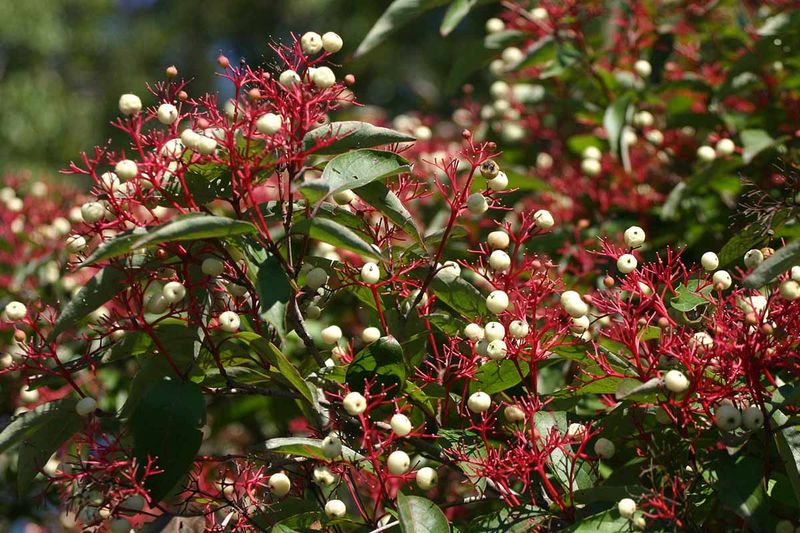
Gray dogwood is the kind of native shrub that quietly does everything a wildlife garden needs. It does not rely on flashy flowers or unusual colors to earn its place – it provides food, shelter, and structure throughout the year.
Clusters of small white flowers appear in late spring and early summer, attracting native bees and other pollinators. Those flowers later become pale fruits that mature into a favorite fall and winter food source for many birds.
Songbirds such as cardinals, bluebirds, and catbirds visit the shrub for its berries, while the dense branching creates safe cover for nesting and resting. In winter, the reddish stems stand out against snow and add interest after many garden plants have gone dormant.
Gray dogwood spreads naturally into thickets, making it especially useful along property edges, woodland borders, and areas where you want wildlife habitat instead of a sterile hedge.
It handles sun to partial shade, tolerates a wide range of soils, and adapts well once established. Pruning older stems back occasionally helps maintain a healthier, more attractive shape while encouraging fresh growth.
Plant it where you want birds to gather and where a low-maintenance native screen would do more good than another ornamental shrub.