The Christmas Cactus Care Calendar Arizona Gardeners Follow Now For On-Time Holiday Blooms
Your Christmas cactus might actually be a Thanksgiving cactus, and that small detail changes everything about your fall care plan. These colorful plants can absolutely bloom right on schedule for the holidays, but low-desert Arizona throws some real curveballs, from lingering triple-digit afternoons to surprise cold snaps that can stress a plant overnight.
Getting the timing right means counting backward from your target display window and managing light, temperature, and water in ways that suit a rainforest plant living in the desert. Follow the steps below and you give your holiday cactus a genuinely good shot at flowering when you want it most.
Identify the holiday cactus before setting a bloom date
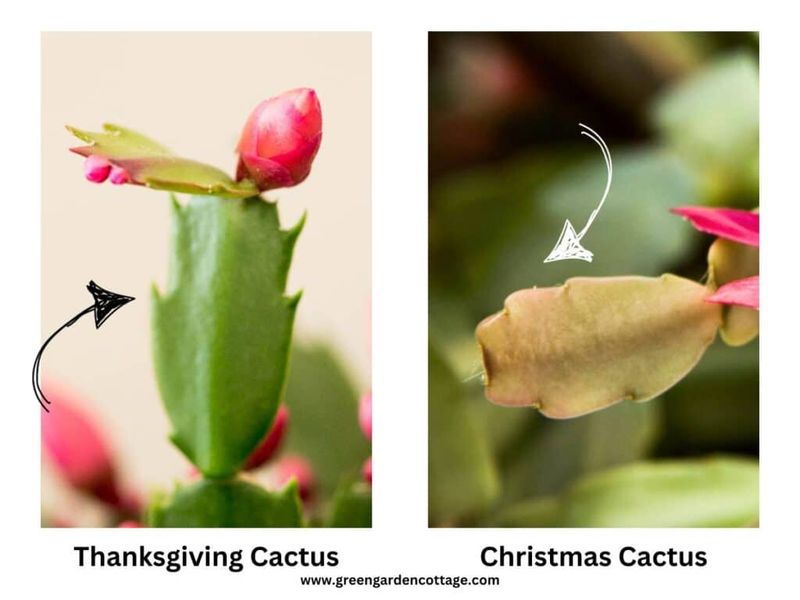
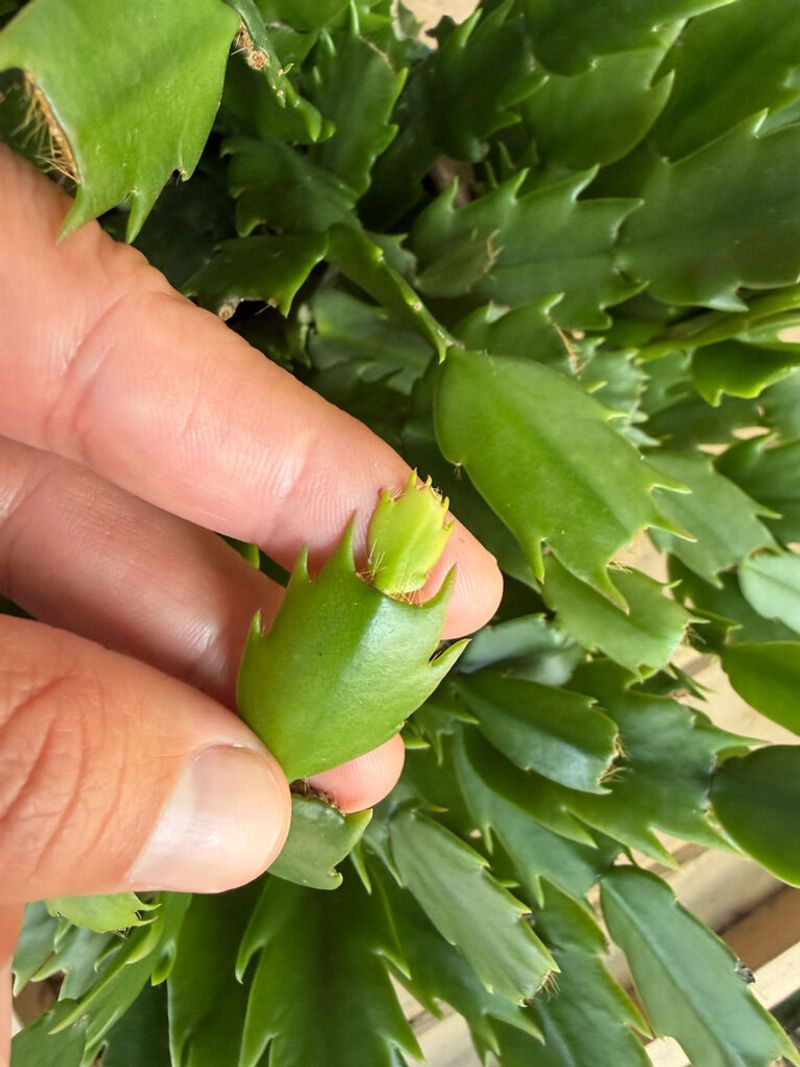
Flip one of the flat stem segments over and look at its edges. If the margins are sharply toothed with pointed projections, you most likely have a Thanksgiving cactus.
If the edges look more rounded and scalloped with softer curves, you are probably looking at a true Christmas cactus. That distinction matters because NC State Extension’s guide to holiday cacti explains that Thanksgiving cactus commonly flowers from mid-November into late December, while true Christmas cactus may not peak until late November through early February.
Many plants sold under the Christmas cactus label at big-box stores and garden centers are actually Thanksgiving cacti or hybrids of the two. Buying a plant in full bloom in late November is a clue that it leans Thanksgiving.
A plant that consistently opens its first flowers in late December or January is more likely a true Christmas cactus or a hybrid with that later natural window.
Pinning down the identity before you plan a bloom routine prevents frustration later. A Thanksgiving cactus started on a schedule aimed at December 25 may already be finishing its bloom cycle by then.
Choose a realistic target display window based on what your plant actually is, and treat that date as the anchor for every care decision that follows.
Give the plant an Arizona-safe fall home
Holiday cacti are native to the cloud forests of southeastern Brazil, where they grow as epiphytes in the forks of trees under a canopy of filtered light. That origin story is the single most useful piece of information an Arizona gardener can carry, because it means these plants are nothing like the barrel cactus or prickly pear thriving in a south-facing yard.
University of Arizona Cooperative Extension describes holiday cacti as rainforest plants that need bright indirect light rather than direct desert sun.
A north or east-facing window indoors is often the safest choice in the Phoenix or Tucson metro. An east window catches gentle morning light and stays shaded through the hottest part of the afternoon.
A west-facing window, by contrast, can push interior temperatures well past what the plant tolerates comfortably, and a south-facing patio without shade cloth can scorch the flat stem segments and heat developing buds beyond recovery.
Shaded patios under a ramada, lattice cover, or mature tree canopy can work during the cooler parts of fall, but the key word is filtered. Direct Arizona sun, even in October, is intense enough to bleach stem segments and create heat stress that weakens the plant before buds even start to form.
Your Arizona Garden Changes Every Week. Your Plan Should Too.
Gardening in Arizona changes quickly throughout the season. Every Friday you’ll receive a simple weekly plan showing exactly what to plant, prune, fertilize, harvest, and protect so you never miss the right timing.
Position the plant where bright light reaches it without the sun landing directly on the stems, and you set the foundation for everything that follows.
Count back from the display and create the bloom trigger
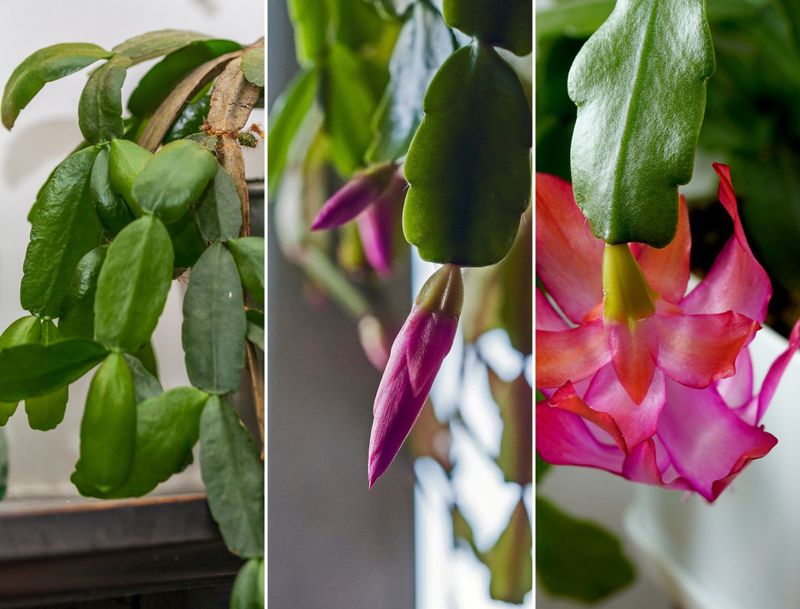
Start by picking your target display window, whether that is Thanksgiving week, the first week of December, or Christmas Eve, and then count backward roughly six to eight weeks on the calendar. That is approximately when the bloom induction routine should begin.
University of Arizona Cooperative Extension recommends providing about 12 to 16 hours of uninterrupted darkness each night combined with cool temperatures, noting that roughly 60 to 65 degrees Fahrenheit at night works well for initiating buds. Minnesota Extension similarly describes about six weeks of short days with cooler evenings as the core of the routine.
Temperature and darkness work together, and neither one alone is enough. Nights that stay above roughly 65 to 70 degrees Fahrenheit can suppress flowering for many cultivars even when darkness is plentiful, which is a real challenge in the Phoenix metro during September and early October when overnight lows sometimes hold above that range.
If your nights are reliably cool, the plant may begin responding to naturally shortening days without any extra help. If indoor lighting or warm temperatures make natural induction unreliable, covering the plant with a cardboard box or moving it to a dark closet each evening for about 12 to 16 uninterrupted hours can substitute.
Common household interruptions matter more than most gardeners expect. A lamp switched on at 9 p.m., light from a kitchen down the hall, a streetlight shining through a window, or even a string of holiday lights nearby can reset the plant’s internal clock and delay or prevent bud formation.
The six-to-eight-week estimate is a practical planning guide, not a guaranteed biological timer, and cultivar differences, plant health, and prior growing conditions can all shift the result earlier or later.
Keep roots healthy while buds develop
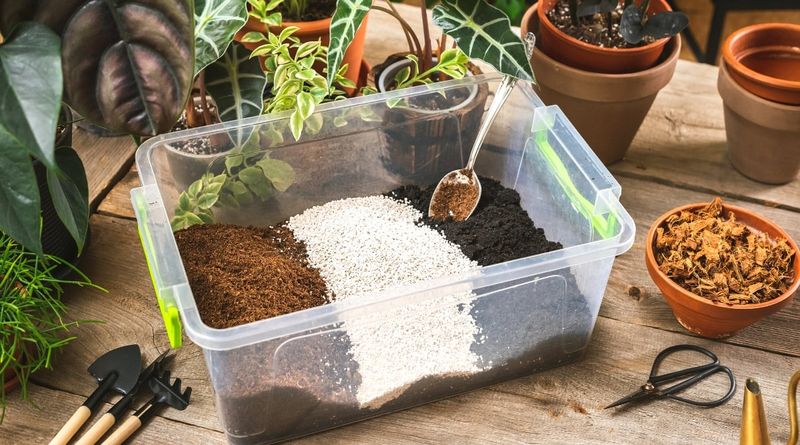
A porous potting mix is not optional for holiday cacti in Arizona. Because indoor conditions here tend to be dry and warm, it is tempting to water generously and often, but saturated roots in a heavy mix break down quickly.
The University of Arizona Holiday Cacti fact sheet suggests a blend of approximately 60 to 80 percent potting soil combined with 40 to 20 percent perlite, which keeps the medium light, airy, and fast-draining while still holding enough moisture for a plant that is not a true desert cactus.
Water the pot thoroughly until water runs freely from the drainage holes, then empty the saucer or decorative cachepot so the roots are never sitting in standing water. Let the top inch or so of the medium dry before watering again.
During the bud development period, both extremes cause problems: severe dryness can trigger bud drop, while persistent wetness invites root rot that weakens the plant just when it needs the most energy. University of Minnesota Extension’s holiday cacti guidance reinforces watering thoroughly and then allowing the mix to dry between waterings rather than keeping it constantly moist.
Watch the stem segments for signals. Wrinkled or slightly puckered segments usually mean the plant is thirsty.
Limp, translucent, or darkening segments near the soil line, especially combined with a soft or foul-smelling root zone, point toward overwatering or root damage instead. A complete houseplant fertilizer applied monthly from April through October supports overall health, but fertilizer is a background practice and will not substitute for the dark and cool period the plant needs to set buds.
Skip the fertilizer once buds are visible and the plant is heading into its display phase.
Use a sheltered patio only while temperatures cooperate
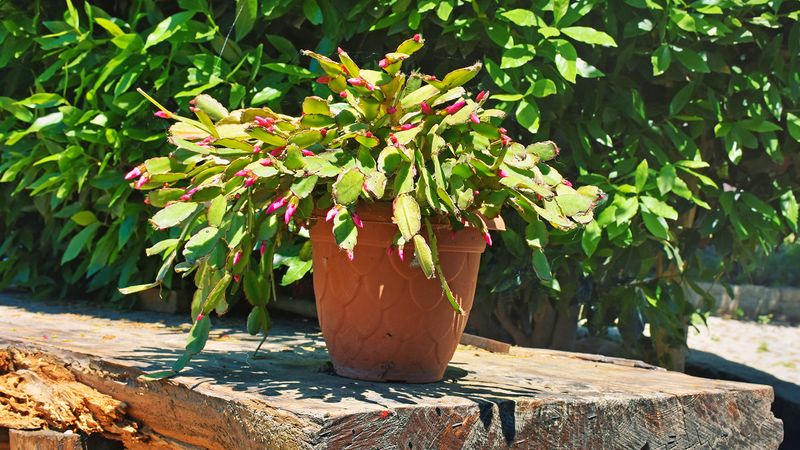
A protected patio can be a useful tool in fall because it gives the plant naturally shortening days and gradually cooling nights without requiring you to manage a dark closet routine indoors. The catch in low-desert Arizona is that September and October afternoons can still reach well into the 90s in Phoenix, and even in Tucson the days often stay warmer than ideal for bud initiation.
Afternoon heat on a patio can undo the benefit of cooler nights, so outdoor placement works best as a transitional strategy rather than a set-it-and-forget-it solution.
The University of Arizona Holiday Cacti fact sheet advises moving holiday cacti indoors before temperatures fall below 45 degrees Fahrenheit, and that threshold matters in both directions. Maricopa County frost dates vary considerably by location: the UA Cooperative Extension frost protection publication notes that average first frost dates in the county range from late November in Buckeye to mid-December in central Phoenix, with local microclimates shifting those dates further in either direction.
A sheltered south-facing wall in a Scottsdale backyard behaves very differently from an open north-facing patio in Surprise.
Monitor actual overnight lows at your specific address rather than relying on a single countywide average. A weather app with hourly forecasts, a simple outdoor thermometer, or a smart sensor near the plant gives you far better information than a regional frost date chart.
When the forecast dips toward 50 degrees or an early cold snap is possible, bring the plant inside. The goal is to use outdoor conditions while they are genuinely helpful and protect the plant the moment they stop being safe.
Protect developing buds with stable care
Once small buds appear at the tips of the stem segments, the plant’s priorities shift and so should yours. Repotting is one of the first things to take off the table.
Holiday cacti generally tolerate being somewhat pot-bound, and the University of Arizona Holiday Cacti fact sheet notes that repotting fits better after flowering or in spring. Disturbing the root zone while buds are forming adds stress at exactly the wrong moment and can contribute to bud drop even when the induction routine went perfectly.
Location stability matters just as much. Repeatedly rotating the pot, moving it from room to room, or setting it near a heating vent or air conditioning return can cause buds to abort before they open.
Iowa State University Extension and Outreach specifically advises waiting until flowers actually begin opening before moving the plant for display purposes, which is a practical distinction worth remembering. Checking on the plant or adjusting its position once is very different from carrying it to a new spot every few days.
Drafts from doors, windows, and HVAC registers are a particular hazard in Arizona homes where air conditioning or forced-air heat runs nearly year-round. Even a brief blast of cold or hot air from a nearby vent can stress buds enough to cause drop.
Abrupt swings in watering, such as letting the pot go completely dry and then flooding it, carry the same risk. Keep conditions as steady as possible through the bud and early bloom stage, and the plant will reward the consistency.
Interpret the result without expecting an exact Christmas date
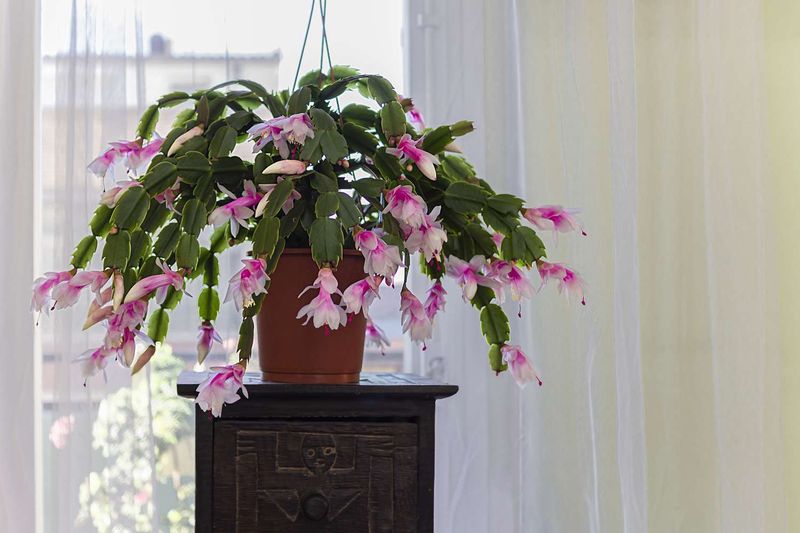
When buds do not form after several weeks of the routine, resist the urge to add fertilizer or try a new supplement. Check plant identity first, since a Thanksgiving cactus started on a December target schedule may have already missed its natural window.
Then review whether any light was leaking into the dark period, whether nighttime temperatures stayed reliably below 65 to 70 degrees Fahrenheit, and whether the plant was healthy and well-rooted going into the routine. Excessive direct sun can add heat stress and tissue damage that weakens the plant’s capacity to flower, but it is rarely the first explanation when buds fail to appear.
Bud drop after formation usually points to unstable conditions rather than a failed induction. Drafts, abrupt moves, watering extremes, or a sudden temperature swing are the most common culprits.
Stabilizing those factors and waiting a bit longer often allows the remaining buds to develop and open.
The honest measure of success with a holiday cactus in Arizona is a noticeably better chance of flowering near your target window, not a guarantee of blooms on a specific date. NC State Extension’s holiday cacti comparison reminds growers that cultivar, plant health, and prior conditions all influence when a plant actually blooms.
Start the routine based on your target display, manage the Arizona-specific variables that can disrupt induction, and a healthy plant will usually find its moment to flower, even if it arrives a week or two off the holiday you had in mind.