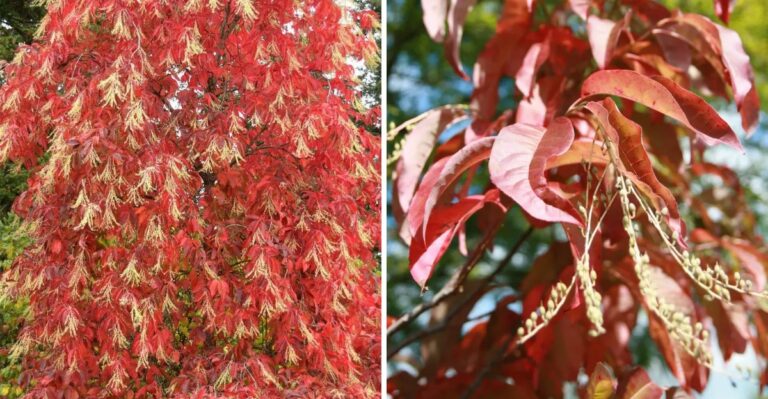
Tennessee Officials Are On High Alert As An Invasive Insect Spreads Into More Counties This Fall
Something invisible is spreading fast across Tennessee, and your quiet porch is not immune. Sticky residue on your sidewalk is not rain. Wasps swarming near your grapevines are not random.
Bark that glistens strangely without recent showers signals real trouble underneath. Agriculture crews are combing Tennessee’s back roads with binoculars right now. Their notebooks fill with new coordinates daily.
Gray egg smudges hide quietly on fence posts and tree trunks. Vineyard owners are watching their harvest with tightened jaws. Nursery workers scan incoming shipments for hitchhikers nobody wants.
Backyard gardeners notice a strange, sweet tang drifting through warm air. Sweetness in the breeze often means fermentation, not flowers. Insects gathering for a feast seldom bring good news.
Officials are asking everyone nearby to look much closer, fast. Watching closely now could spare your trees serious damage later. You will not want to miss what is crawling toward your backyard next.
The Polka-Dotted Hitchhiker Behind All The Fuss
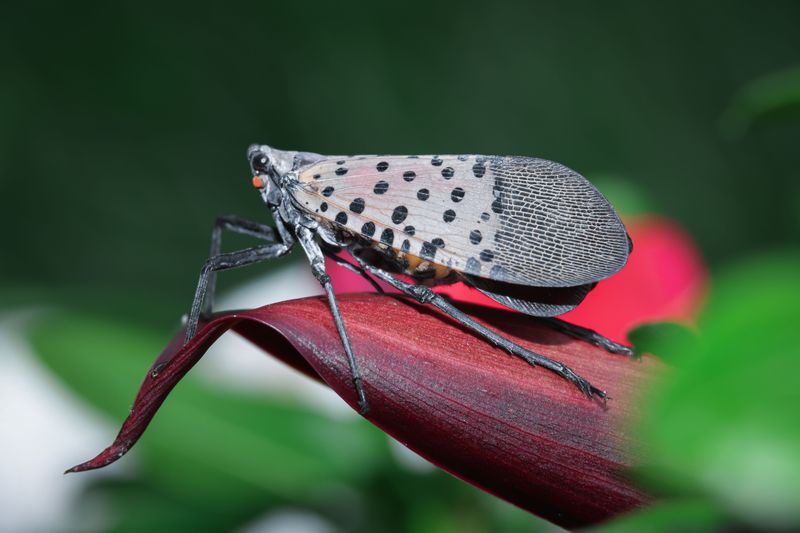
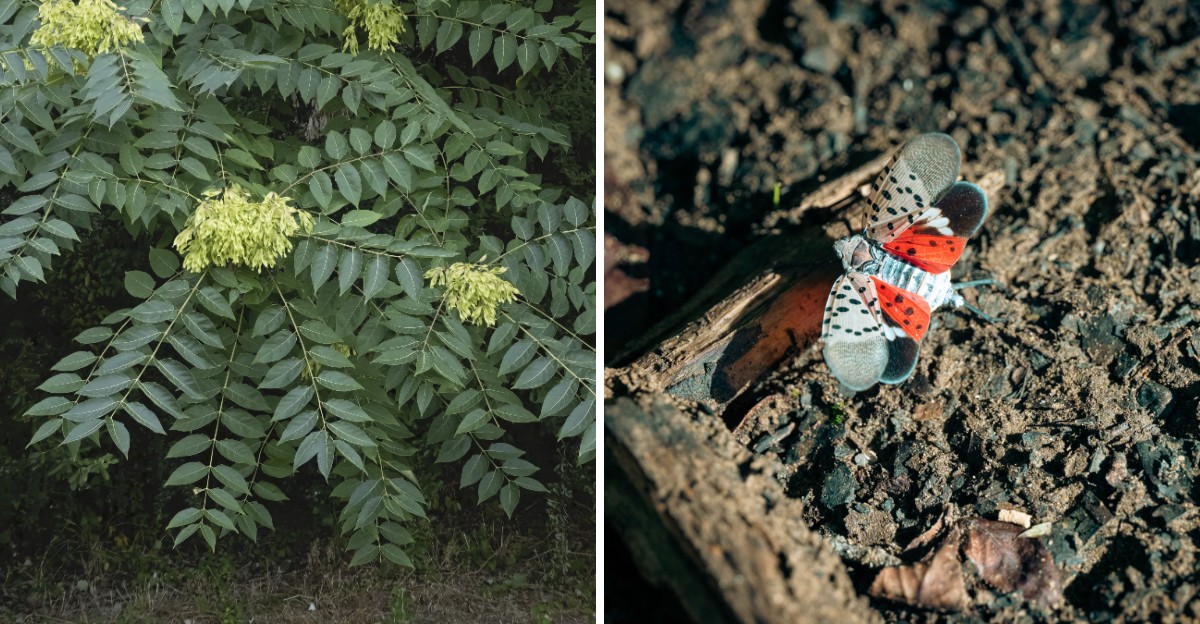
Picture an insect wearing gray pajamas covered in black polka dots, then imagine it flipping open bright red underwings like a tiny magician’s cape.
That performer is the spotted lanternfly, and it is the reason Tennessee inspectors keep flashlights and photo logs in their trucks.
Native to parts of China and Vietnam, it arrived in Pennsylvania around 2014, likely as eggs glued to a shipment of landscaping stone. From there it moved outward county by county, mostly by hitching rides with people rather than flying long distances.
Tennessee confirmed its first established group in 2023 in the Nashville area, and later surveys turned up additional pockets. The pattern so far looks scattered rather than sweeping, which gives crews more time to respond.
Despite those showy wings, it feeds by stabbing plant stems with a straw-like mouthpart and slurping sap. Grapevines, young maples, and ornamental trees take the hardest hit, and stressed plants may produce weaker growth the following season.
Adults are easiest to notice in September, when they gather on trunks at roughly chest height. Snap a clear photo before it hops, because a sharp image helps entomologists confirm a sighting fast.
Fun detail: it is a planthopper, not a fly or a moth, and it is a clumsy flier. It would rather leap, which is why a wide jar held just above one works better than a swat from the side.
Learning that silhouette now pays off later. Once the spotted wings register in your memory, you start noticing them on posts, poles, and patio chairs.
Vineyards Along The Cumberland Have Skin In The Game

Ask a Tennessee winemaker what keeps them up at night and the answer used to be late frost. Lately the conversation has shifted to a sap-sucking insect that treats grapevines like an open juice box.
Grapes are the favorite target once the insects reach adulthood. Large groups feed on canes and trunks, draining sugars the vine needs to ripen fruit and store energy for winter.
Growers in states hit earlier reported reduced yields, weaker vines, and rising labor costs during heavy infestation years. Some vineyards reported noticeably higher spray and labor costs during heavy years.
Your Tennessee Garden Changes Every Week. Your Plan Should Too.
Gardening in Tennessee changes quickly throughout the season. Every Friday you’ll receive a simple weekly plan showing exactly what to plant, prune, fertilize, harvest, and protect so you never miss the right timing.
Tennessee has dozens of wineries and hundreds of acres of vines, plus fruit farms that welcome visitors for tastings and tours. A single infested load of pallets or trellis posts can introduce eggs to a farm that has stayed clear so far.
Vineyard crews are now scouting weekly, checking the base of trunks and the shady side of posts. Sticky bands wrapped with wire mesh and circle traps help track numbers without catching birds.
Farm visitors can help too. Brushing off shoes, closing car windows while parked near vines, and reporting odd insects to staff all reduce accidental transport.
Vineyards that catch early activity and report it quickly can often get guidance from state specialists and university extension agents before damage spreads.
Harvest season runs through September and October here. Extra eyes in the rows during those busy weeks make a genuine difference for the crop and the region’s growing wine reputation.
Where The State Map Keeps Gaining New Dots

State surveyors update their distribution map the way weather forecasters update radar. Each new confirmation gets a pin, and this fall the pins have been clustering.
The earliest Tennessee finds centered on Davidson County, and follow-up trapping and public reports expanded the picture into neighboring counties in Middle Tennessee. Rail lines, interstates, and busy freight yards show up again and again in those reports.
That pattern is not a coincidence. Egg masses laid on train cars, trailers, and stacked building materials travel wherever the cargo goes, so highway corridors act like express lanes.
The Tennessee Department of Agriculture posts current county lists and any quarantine boundaries online. Checking that page before hauling firewood, plants, or equipment across the state takes about a minute and prevents accidental spread.
Quarantine rules mainly affect businesses that move regulated items, including nurseries, landscapers, and construction suppliers.
Permits typically involve basic training and an inspection checklist. Check with the Tennessee Department of Agriculture for current requirements.
Homeowners are not left out of the effort. Reports from ordinary people walking dogs or grilling in the backyard have triggered several official investigations in recent years.
East Tennessee and West Tennessee have seen fewer confirmations so far, which is exactly why scouting there matters. Finding a small group early gives crews a real chance to knock numbers down before the insects settle in.
Bookmark the map now, then check it again in spring. Watching those dots is a strange hobby, though it beats being surprised by a swarm on your maple in October.
The Weedy Tree That Rolls Out A Welcome Mat
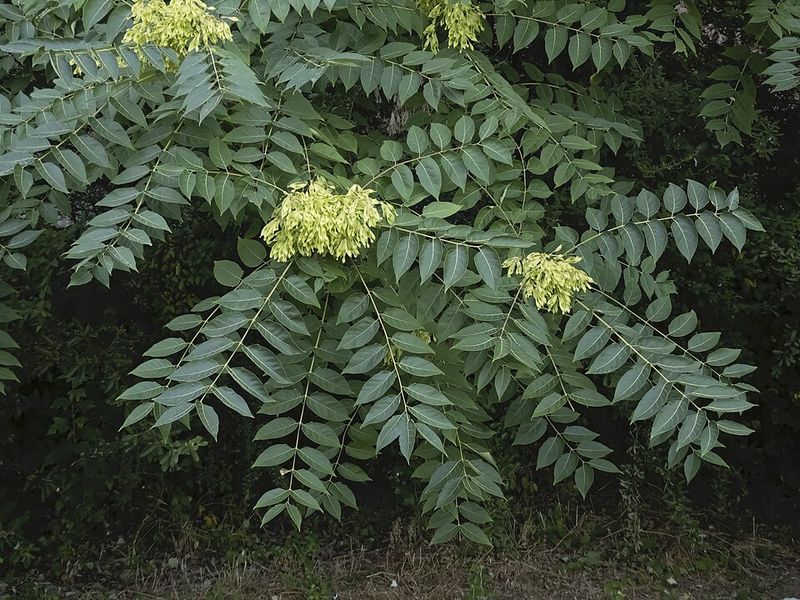
There is a fast-growing tree along Tennessee roadsides, fence lines, and alley edges that smells faintly like burnt peanut butter when you crush a leaf. Botanists call it tree of heaven, and the spotted lanternfly treats it like a favorite diner.
Both species came from Asia, which explains the partnership. Ailanthus altissima sap appears to boost the insects, and heavy clusters often gather on those trunks before moving to other plants.
Identification is easier than the Latin name suggests. Look for long compound leaves with 11 to 41 leaflets, each leaflet with a small bump near its base, plus smooth gray bark streaked with lighter lines.
Removing the tree helps, though it fights back. Cutting alone triggers dozens of root sprouts, so land managers pair cutting with a labeled herbicide applied to the stump or through a basal treatment in late summer or early fall.
Some property owners take a different route. They leave one or two trees standing as trap trees, treat them with systemic products, and let those trunks pull insects away from prized maples and vines.
Check your own place for seedlings first. Young ones pull out surprisingly easily after rain, and clearing them in September prevents a thicket next year.
Neighborhood cleanups have become more common in states farther north. Groups map ailanthus patches on vacant lots, then coordinate removal with city crews over a season or two.
Fewer host trees means fewer welcome mats. It is slow, unglamorous work that quietly shrinks the insect’s options across a county.
Sticky Decks, Sooty Mold, And Wasps At The Picnic
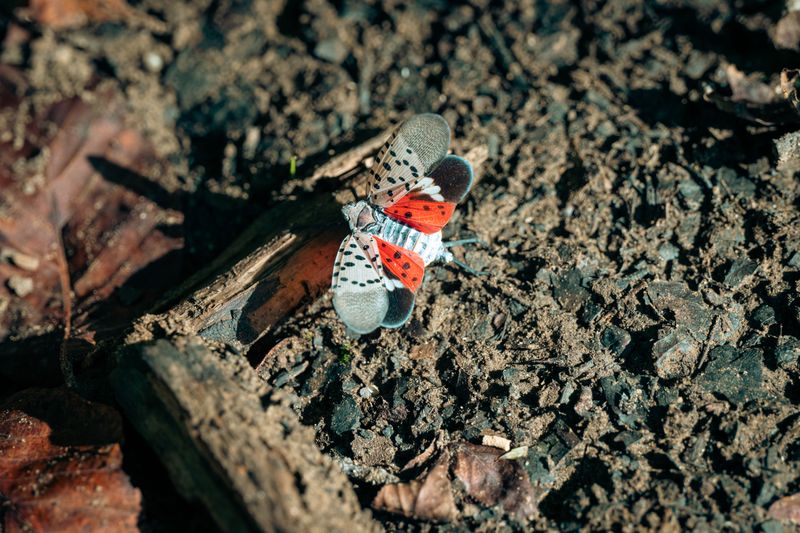
Homeowners in infested areas often notice the mess before they notice the insect. Patio furniture turns tacky, car hoods pick up shiny spots, and a sweet-sour smell hangs around like spilled soda.
The culprit is honeydew, the sugary liquid these planthoppers excrete while feeding on sap. When hundreds feed overhead, the drizzle coats whatever sits below.
Black sooty mold grows on that residue within days. Railings, sidewalks, mulch, and hostas can look scorched even though the fungus itself feeds only on the sugar film.
Wasps, hornets, ants, and flies show up for the buffet. In heavily infested parts of Pennsylvania, residents have reported avoiding backyard gatherings during peak weeks.
Cleanup is manageable with patience. Warm water and mild dish soap lift fresh honeydew, and a soft brush handles sooty mold on wood or concrete once the source above is addressed.
Rinse plants below infested trees too. A gentle hose spray on leaves keeps the coating from blocking sunlight and helps shrubs bounce back.
Treat the sticky film as a clue rather than only a chore. Tracing drips upward usually leads to a trunk covered in feeding adults, which is exactly the location worth photographing and reporting.
Neighbors comparing notes helps as well. If three houses on a street report the same sticky maples, extension agents can map the cluster instead of guessing.
September through October brings the heaviest honeydew because adults feed hard before laying eggs. Keeping cushions covered and cars parked away from favored trees saves a lot of scrubbing.
Gray Smudges That Look Like Dried Mud
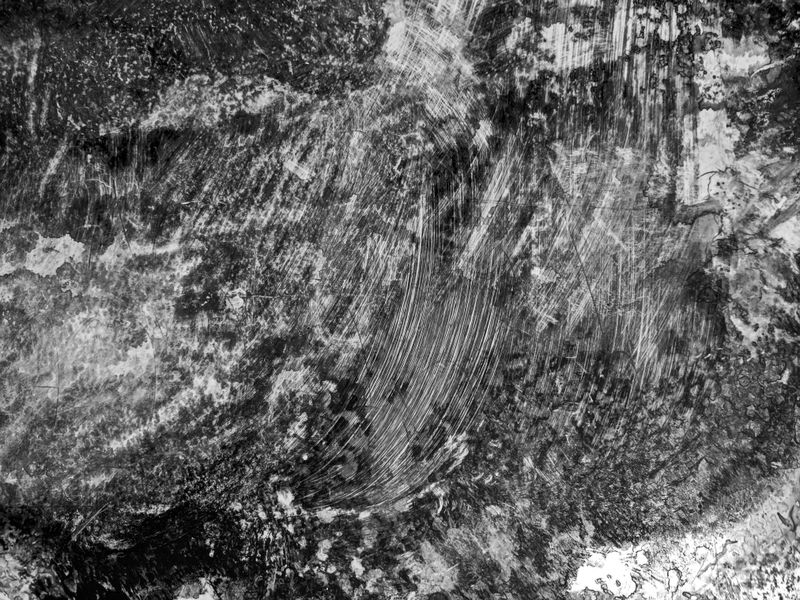
Here is the sneaky part of the whole story. The next generation spends winter disguised as a splash of dried mud roughly the size of a postage stamp.
Females begin laying in late September and continue through fall, pressing 30 to 50 eggs into neat rows and covering them with a putty-like coating. Fresh masses look gray and glossy, while older ones crack and turn tan.
Location is the frustrating part. They choose tree bark, but also rusty trailers, patio stones, grills, lawn furniture, firewood stacks, and the underside of truck bumpers.
Scraping is genuinely effective and costs almost nothing. Use an old credit card or putty knife, scrape the mass into a bag or container with rubbing alcohol or hand sanitizer, then seal it and throw it away.
Pressing the eggs firmly against bark also works if you cannot bag them. Smearing without crushing leaves some viable, so apply real pressure.
Community scouting efforts have grown in some states farther north. Volunteers walk parks with scrapers and headlamps, logging counts as they go.
Tennesseans can start checking now on smooth-barked trees around driveways and near lights. Take a photo of anything suspicious before scraping so specialists can verify the find.
One helpful reminder: many harmless creatures also glue things to bark, including moths and spiders. When in doubt, photograph first and ask your county extension office.
Each mass handled in fall means dozens fewer hoppers climbing your maple next May. Few garden chores offer that kind of return.
Your Car Might Be The Fastest Ride In Town
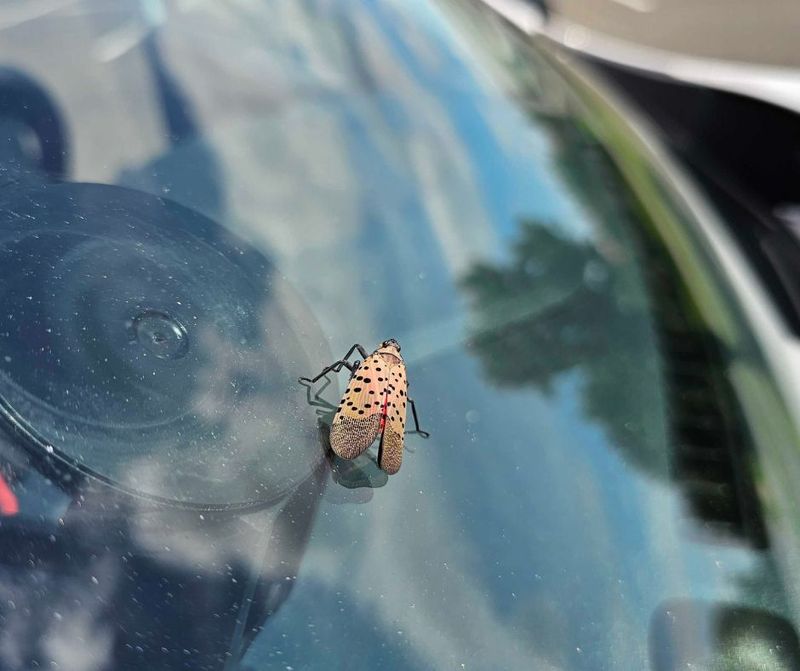
These insects are weak fliers with a talent for public transportation. Bumpers, wheel wells, truck beds, and camper roofs all serve as free shuttles.
Fall travel makes the risk higher. Football weekends, leaf-peeping road trips, and firewood runs move vehicles between counties and states during peak adult season.
Build a quick habit before pulling out of a parking spot. Glance at the grille, tailgate, wheel wells, and the tarp over anything in the bed.
Keep windows closed when parked under trees in reported areas. Adults hop toward vertical surfaces, and an open sunroof is an invitation.
Firewood deserves special attention. Buying wood near where you plan to burn it remains one of the simplest ways to slow many forest pests, not only this one.
Landscapers and contractors carry extra responsibility. Stone pallets, nursery stock, trellis posts, and construction equipment sitting outdoors collect egg masses through fall and winter.
Travelers coming home from Pennsylvania, Ohio, Virginia, or Indiana should look twice. Those states have dealt with larger populations, and eggs on a camper can start a new Tennessee pocket.
Similar cases in other states illustrate the risk, where a single load of stored materials introduced eggs to a new area.
None of this requires special gear. A flashlight, two minutes, and a willingness to look under the bumper covers the basics.
Tell a friend who tows a boat or hauls mulch. Spread the checklist, and fewer of these hitchhikers reach fresh territory this autumn.