The White Grains On A Missouri Tomato Hornworm Mean You Should Leave It Alone
September mornings in Missouri smell like damp soil, and the garden still hums with plenty of hidden activity. Something out there is quietly chewing your leaves, and something much smaller is already watching it chew.
Gardeners react fast when they spot damage, grabbing gloves and heading down the row with real purpose. Speed usually feels productive, but the garden sometimes hands you a strange little clue first.
The clue can look like spilled grains of rice, or tiny white beads glued where nothing belongs. Most folks brush the whole thing off, remove the problem, and go back to their coffee.
Your garden already hired help that works for free. Remove that clue and you have just fired an unpaid crew right in the middle of lunch.
Tiny White Cocoons And The Helpers Inside Them
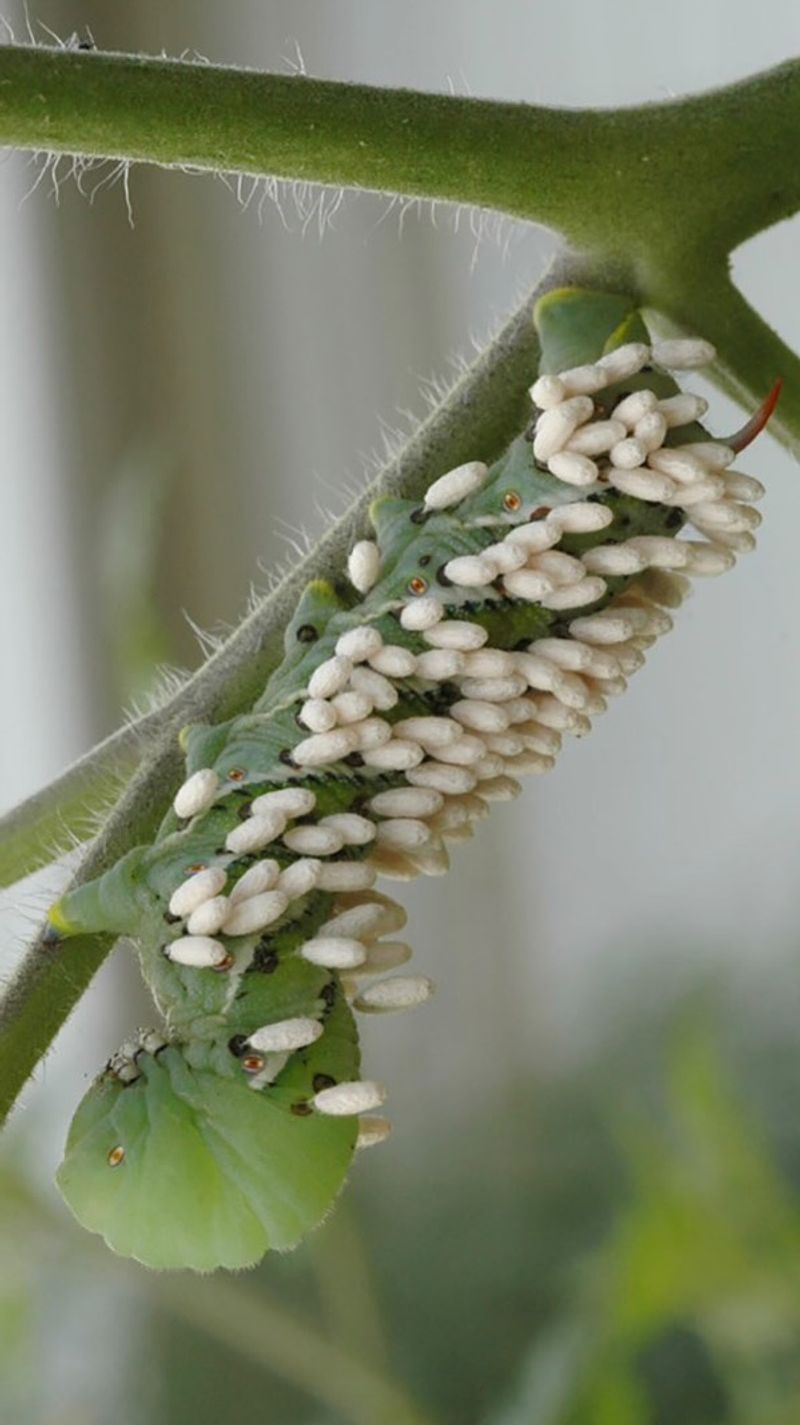
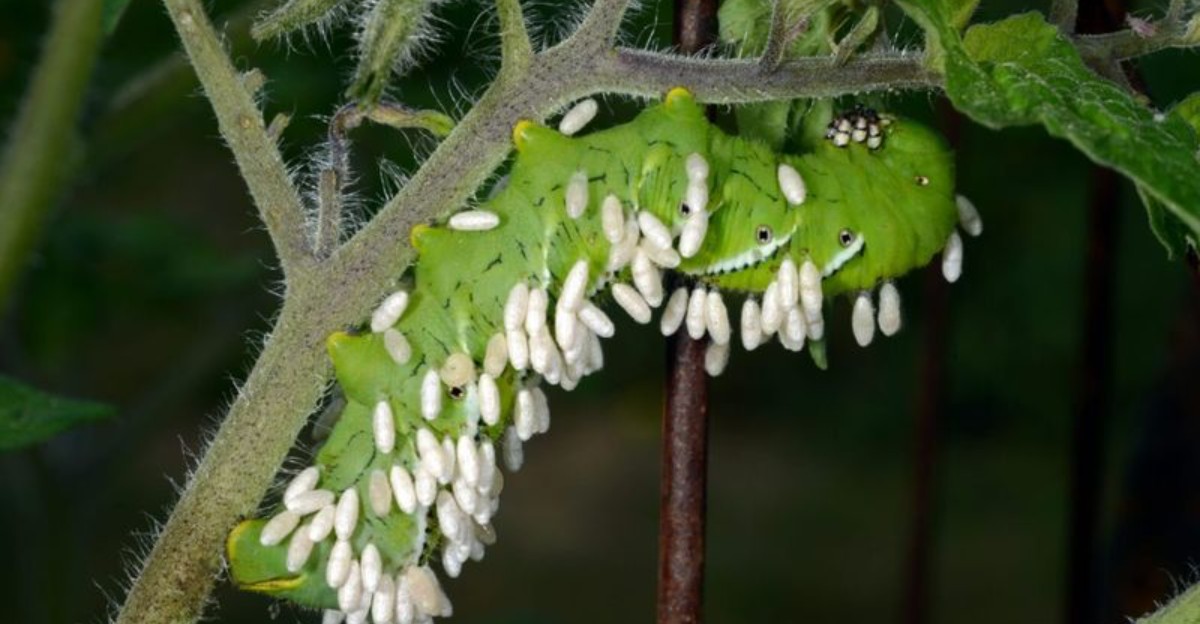
Those white grains are not eggs, and they are not a disease spreading across your plants. They are cocoons spun by braconid wasp larvae that fed inside the caterpillar.
A female braconid wasp found that hornworm weeks earlier and laid eggs beneath its skin. Her young grew quietly, then chewed their way out to spin those small silk capsules.
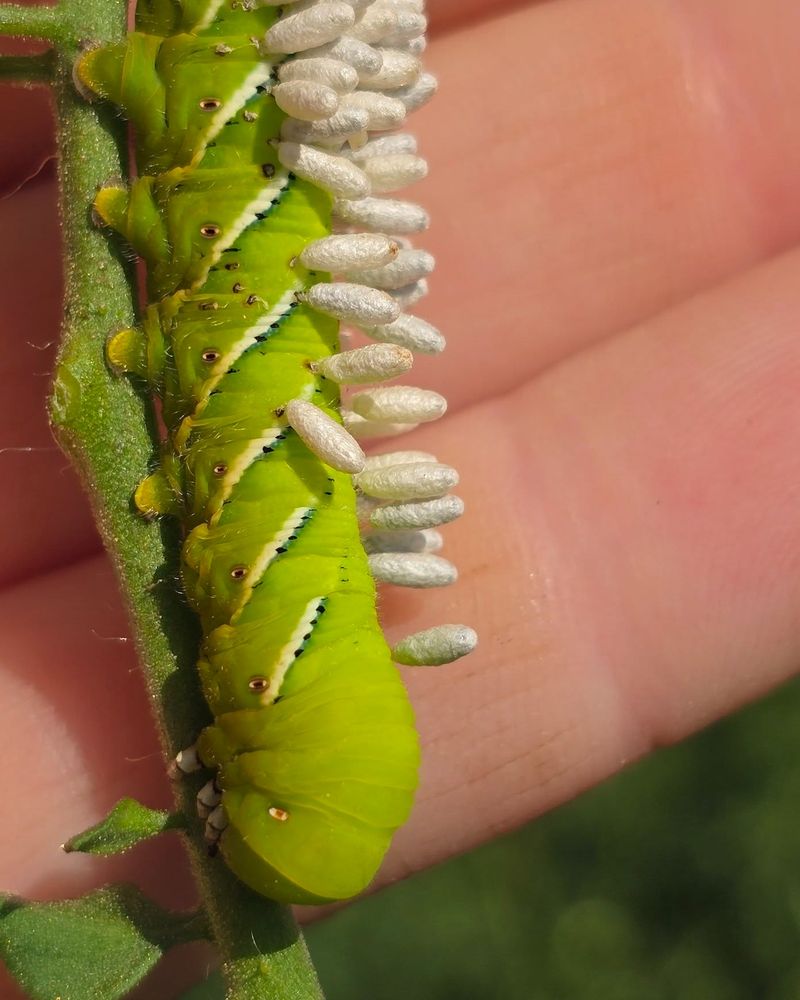
Each grain is about the size of a rice kernel, cream colored, and slightly fuzzy. Dozens can cover one caterpillar, which makes the whole thing look oddly decorated.
Missouri gardeners see this often because braconid wasps are common across the state’s vegetable beds. The wasps are tiny, harmless to people, and far too small to sting anyone.
A marked hornworm has already stopped being a serious threat to your plants. It barely feeds, moves slowly, and is unlikely to reach the moth stage.
Think of the cocoons as a receipt showing the work was finished for you. Inside each one, a future wasp is waiting to work your garden next.
Confusion happens because people assume white specks mean eggs about to hatch into more pests. The opposite is true here, and a quick look with a hand lens confirms it.
Hornworm eggs, by contrast, are laid singly on leaves and look like pale green pearls. Cocoons cling to the caterpillar’s back instead of sitting loosely on the foliage.
Learning that difference saves you time and keeps a helpful insect working in your rows. One glance, one decision, and the garden handles the rest without further help.
Late Summer Timing In Missouri Gardens
September is prime season for this discovery in Missouri, since hornworm numbers peak in late summer. Warm nights and big leafy plants give caterpillars plenty of cover through August and September.
Second generation hornworms show up now, and the wasps that track them have multiplied too. By this point in the year, parasitized caterpillars often outnumber healthy ones on a vine.
Your tomato plants are also winding down, with fruit ripening faster than new growth appears. A little leaf chewing in September costs far less than it would in June.
Cooler mornings slow the caterpillars, so they sit still and become easy to inspect. Check the undersides of leaves around nine in the morning for the clearest view.
Your Missouri Garden Changes Every Week. Your Plan Should Too.
Gardening in Missouri changes quickly throughout the season. Every Friday you’ll receive a simple weekly plan showing exactly what to plant, prune, fertilize, harvest, and protect so you never miss the right timing.
Wasps emerging this month still have time to find more hosts before frost arrives. Missouri frost usually lands in late October, giving those wasps several productive weeks.
Some cocoons overwinter in soil and leaf litter, hatching when spring warms the beds. That head start means fewer hornworm problems the following June and July.
Timing matters for cleanup too, because raking every scrap of debris removes future wasps. Leave a few inches of mulch undisturbed near the tomato row this fall.
Gardeners who watch closely in September start noticing the pattern year after year. The same beds fill with tiny helpers once the habit of leaving things alone sticks.
September patience pays a dividend you can actually see on next summer’s plants. Fewer caterpillars, less spraying, and more tomatoes in the basket.
The Common Mistake Of Removing A Marked Caterpillar
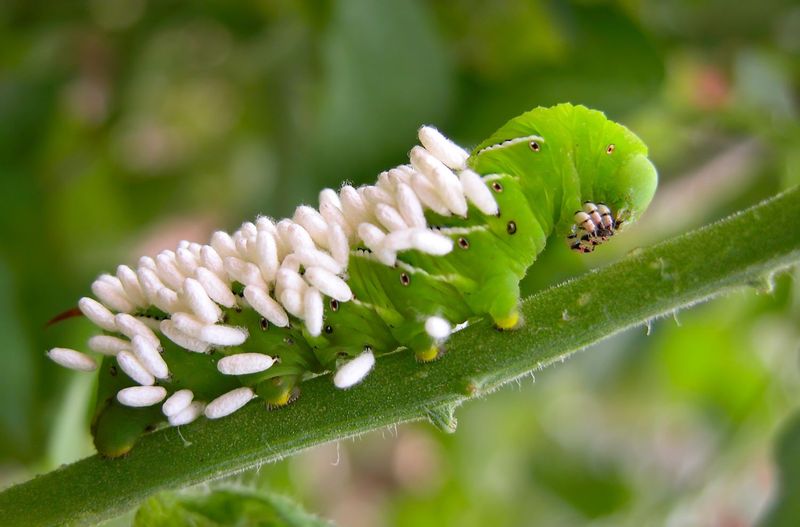
Plenty of gardeners drop a cocoon covered hornworm into soapy water without a second thought. That single splash ends the development of twenty or more wasps that were nearly ready to emerge.
Crushing the caterpillar by hand does the same damage, only faster and messier on your fingers. Handing it off to chickens has the identical result, since the cocoons go along with it.
Spraying broad insecticides on the plant creates a bigger setback than most people expect. Adult braconid wasps are delicate, and residues reach them long after the spray dries.
Even Bt products, which many gardeners trust, work against you in this specific case. Bt affects the caterpillar, and the larvae inside it lose their food source early.
Another slip is moving the caterpillar far from the garden to be kind. Relocation sends the emerging wasps somewhere else, and your tomatoes get none of the benefit.
Pulling the cocoons off with tweezers seems tidy, but it ends the process abruptly. Handling also crushes the thin silk walls that protect each developing wasp.
Mistaking the cocoons for insect eggs drives most of these hasty decisions. A five second pause and a closer look prevents a season of extra work.
Missouri extension offices field this exact question every August and September from puzzled growers. Their answer stays the same, which is to step back and let things finish.
Skipping the cleanup feels wrong at first, especially for neat and orderly gardeners. The reward arrives quietly, one fewer chewed leaf at a time.
A Simple Hands Off Plan For Your Tomato Row
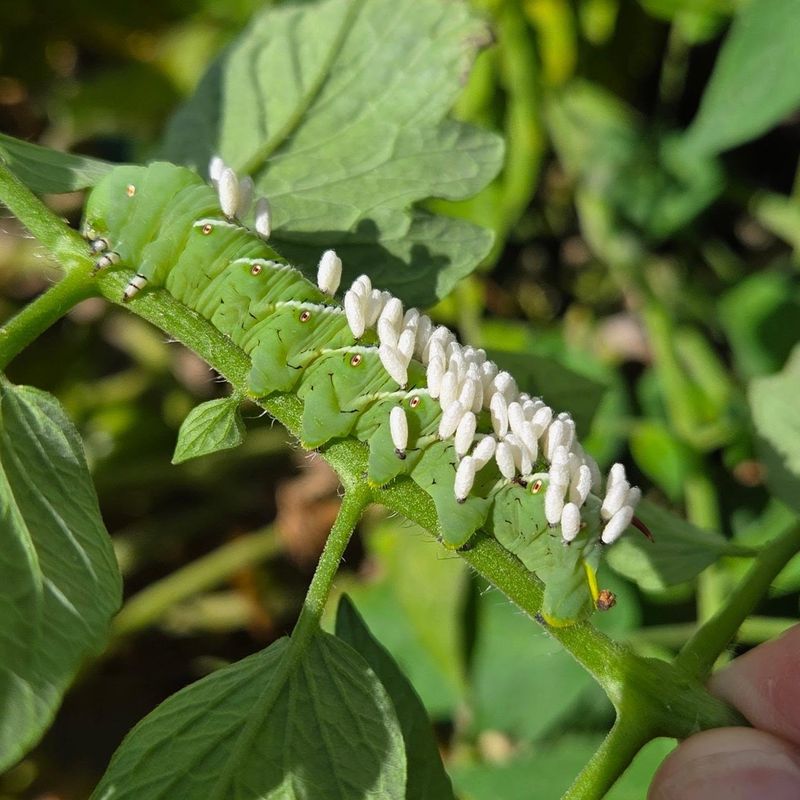
Doing nothing counts as a legitimate strategy here, which is rare in vegetable gardening. Leave the marked caterpillar right where you found it, cocoons and all.
If the caterpillar sits on a leaf you plan to prune, clip carefully. Set that leaf on the soil nearby so the wasps can still emerge safely.
Some gardeners move the whole leaf into a shaded jar with a mesh lid. Once the wasps hatch, open the jar beside the tomatoes and let them scatter.
Unmarked hornworms are still fair game, so pick those off by hand. Drop them in a bucket of soapy water or set them out for the birds to find.
Hold off on any broad spectrum spray for the rest of the season. Spot treatments aimed at real outbreaks work better than blanket coverage across the row.
Water at the base and keep foliage dry to avoid knocking cocoons loose. Strong hose blasts remove more helpers than pests, which is a poor trade.
Mark the spot with a plant tag so nobody in the family tidies it up. Kids often enjoy checking daily to see the little exit holes appear.
Expect the wasps to leave within four to fourteen days, depending on temperature. Warm September weather in Missouri usually keeps that window on the shorter side.
After the cocoons look empty and papery, you can clip the leaf and compost it. At that point, the whole crew has clocked out and moved on for good.
The Payoff After The Wasps Emerge
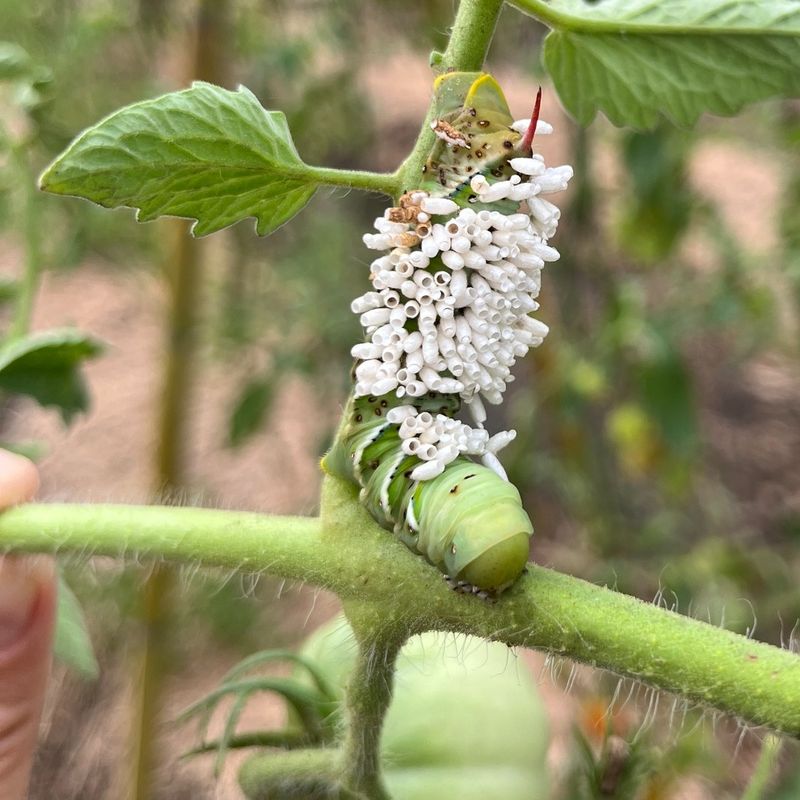
Picture twenty new wasps lifting off a single caterpillar and fanning out over your beds. Each female can find dozens of hornworms during her short adult life.
The math adds up quickly, turning one discovery into hundreds of future catches. That is free pest control with no shopping list and no mixing instructions.
Braconid wasps also target cabbage worms, aphids, and several beetle larvae in Missouri gardens. Different species specialize, so a healthy population helps across many crops at once.
Adults sip nectar from small flowers, then hunt for caterpillars between meals. You may spot them as thin dark specks hovering near tomato foliage.
The parasitized hornworm stops eating well before the wasps finish developing inside it. Leaf damage slows almost immediately, even while the caterpillar still clings to the stem.
Fewer hornworms also means fewer five spotted hawk moths laying eggs next spring. Breaking that cycle once tends to lighten the workload for several seasons.
Gardeners who stop spraying often report a quieter, more balanced tomato patch within two years. Predators and parasitoids settle in when the chemical pressure disappears.
Curious fact for the trivia pile, these wasps locate hosts partly by scent. Damaged tomato leaves release compounds that act like a dinner bell for them.
Your plants are basically sending out a signal, and help answers within hours. All you have to do is stay out of the way.
Season after season, that hands off habit becomes the cheapest tool in the shed. It costs nothing and asks only for a little trust.
Garden Habits That Keep Braconid Wasps Around
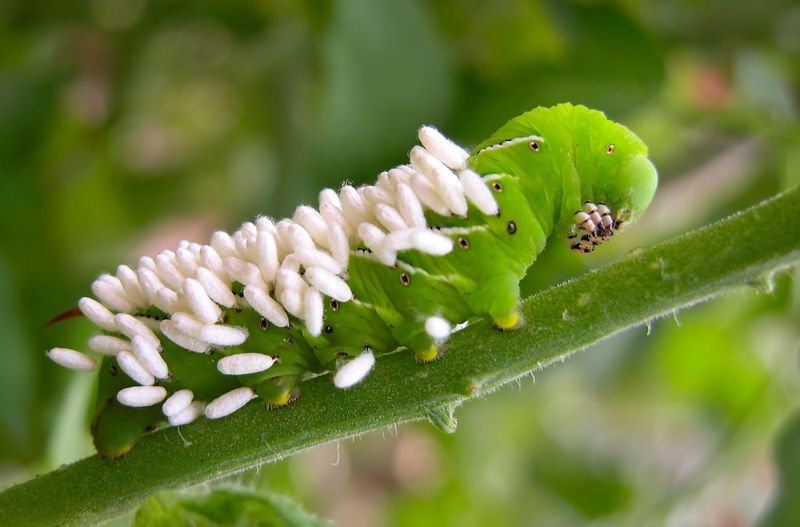
Keeping these wasps in the neighborhood comes down to food, shelter, and restraint. Adults need tiny flowers with shallow nectar they can actually reach.
Dill, fennel, cilantro, and sweet alyssum are favorites and grow well in Missouri. Let a few of them bolt and bloom instead of pulling them out.
Yarrow, buckwheat, and native mountain mint extend the bloom season into early fall. Plant them along the edges of the vegetable garden where they get full sun.
Skip the fall habit of scraping every bed down to bare soil. Leaf litter and spent stems shelter overwintering wasps through Missouri’s cold snaps.
Wait until soil temperatures climb in spring before tidying the garden borders. Mid April usually works for most of the state without much guesswork.
Rotate away from broad insecticides and reach for targeted options only when needed. Handpicking pests during morning walks handles most trouble in a home sized plot.
A shallow water dish with pebbles gives small insects a safe place to drink. Refill it during dry September stretches when rain gets scarce.
Mixed plantings help too, since wasps hunt better where crops and flowers overlap. Long solid rows of one vegetable make searching harder for a tiny insect.
Tell neighbors and family members what the white grains mean before anyone helps out. Shared knowledge protects more gardens than any single careful gardener can.
Small choices stack up, and the wasps notice the difference faster than you might guess. Give them a reason to stay, and they will keep showing up uninvited.