The Real Reason Wasps Choose Missouri Porches For Their Summer Nests
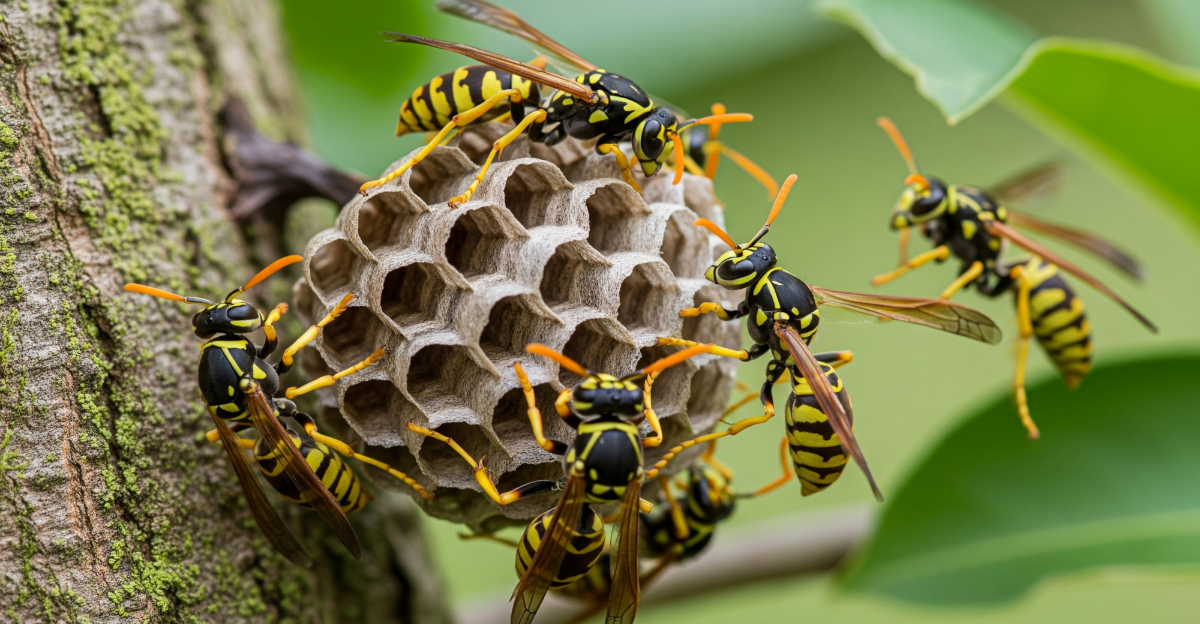
Every summer, the same unwelcome discovery waits on Missouri porches, a papery, gray nest wedged under the eave like it was always meant to be there. It feels personal. That is because, in a way, it is.
Wasps do not build randomly. They send out scouts, and those scouts are very good at their jobs. Your porch passed the inspection.
A porch ticks every box on a wasp’s checklist: rain cover, wind protection, and food sources within easy flying range. The moment one scout approves your eave or porch light, the rest follow.
Knowing exactly what draws them in is the first step toward keeping them out.
Your Porch Offers Everything A Wasp Colony Needs
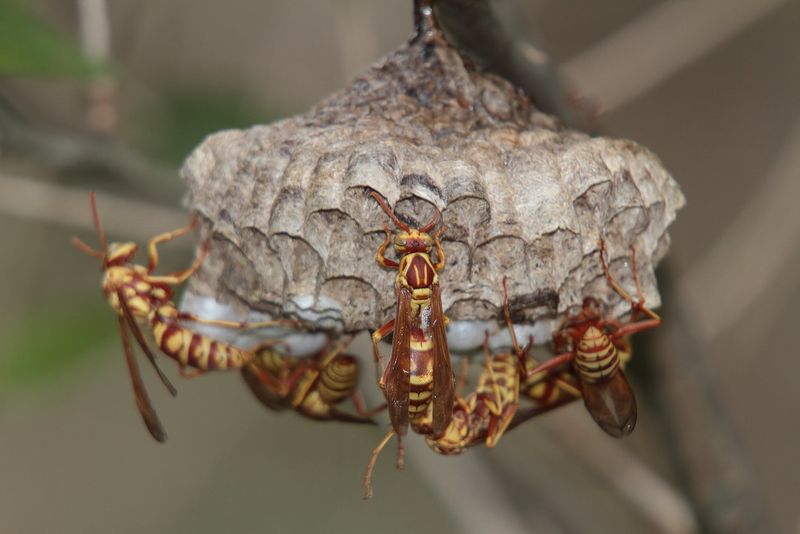
Think of your porch as the perfect neighborhood wasp has been searching for all spring long. The real reason wasps choose Missouri porches for their summer nests comes down to one simple word: resources.
Wasps need three things to start a colony: shelter, food, and water. Your porch checks every single box without effort.
The overhang above your front door blocks rain and wind. That protection keeps a paper nest dry and intact through Missouri’s unpredictable summer storms.
Nearby flower beds attract insects that wasps hunt for protein. A single worker wasp can cover a wide area around the nest, hunting caterpillars, spiders, and soft-bodied bugs.
Standing water in a forgotten flower pot or birdbath gives the colony drinking water. Wasps need hydration just like any living creature, and your yard likely provides it without you realizing.
Wood siding, untreated lumber, and old fence posts give queen wasps raw material for nest building. They scrape wood fibers and mix them with saliva to create that familiar gray papery structure.
Even the warmth your porch absorbs during the day matters. Brick and concrete hold heat, and wasps prefer nesting in spots that stay consistently warm overnight.
Your porch is not just convenient, from a wasp’s perspective, it checks nearly every box. Once a colony settles in, removing them becomes a weekend project rather than a quick fix.
How Wasps Scout And Claim A Nesting Spot
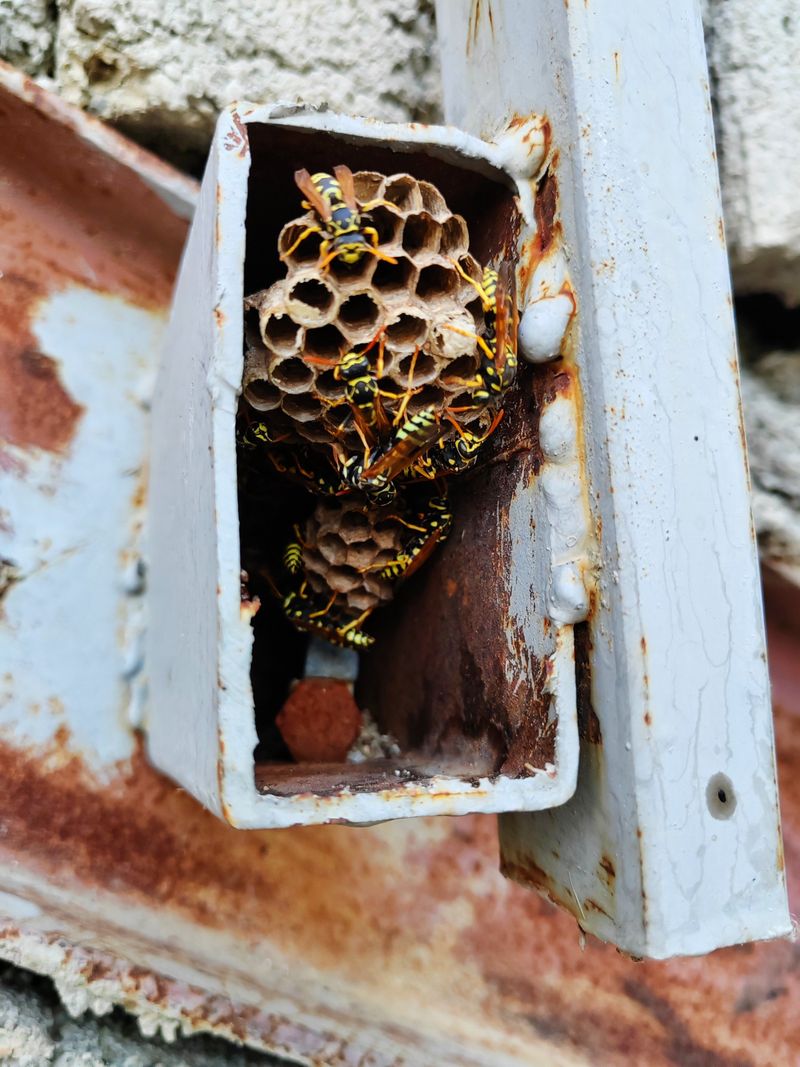
Before a single nest cell gets built, a queen wasp does her homework. She emerges in early spring and begins flying slow, low inspection routes around structures in search of the ideal spot.
This scouting behavior is deliberate and methodical. She is looking for enclosed spaces with a small opening, a solid overhead surface, and protection from direct sunlight.
Porch ceilings, window frames, and shutters are prime targets. The queen lands, walks the surface with her antennae tapping, and evaluates texture, temperature, and stability before committing.
Once she selects a site, she begins building alone. The first few cells form a tiny cluster, almost invisible to the human eye, hanging from a single papery stalk called a petiole.
Worker wasps hatch from those first cells and immediately join the scouting effort. They fan out to find food and water, reporting back through chemical signals called pheromones.
Your Missouri Garden Changes Every Week. Your Plan Should Too.
Gardening in Missouri changes quickly throughout the season. Every Friday you’ll receive a simple weekly plan showing exactly what to plant, prune, fertilize, harvest, and protect so you never miss the right timing.
Those pheromones are powerful recruitment tools. A successful scout leaves a chemical trail that draws more workers to the same food source, reinforcing the colony’s attachment to your property.
By the time you notice a nest the size of a golf ball, the colony has already been operating for weeks. The queen chose your porch in April, long before you pulled out your patio furniture.
Knowing when scouting begins means you can disrupt it early. Catching the queen before the first cells harden can make a real difference for the rest of your summer.
Common Porch Features That Attract Wasps In Missouri
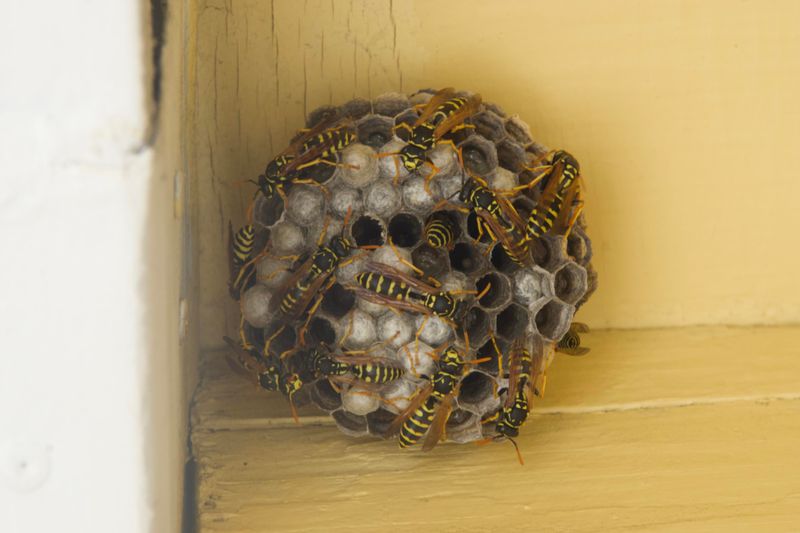
Not every porch gets targeted equally. Certain features act like a neon welcome sign for nesting wasps, and most homeowners have no idea their porch is broadcasting that signal.
Porch lights are one of the biggest culprits. Lights attract moths and beetles at night, giving wasps a reliable hunting ground just steps from their nest.
Hanging flower baskets create sheltered cavities underneath the pot. A queen can tuck a starter nest inside the basket liner, hidden by trailing vines and blooms.
Untreated or weathered wood is another major draw. Old porch railings and bare timber are easier to scrape than painted or sealed surfaces, making them preferred nest material sources.
Open gaps around window trim, soffit edges, and light fixtures give wasps access to interior wall voids. Once inside, a colony can grow much larger than one built in the open air.
Outdoor trash cans without tight lids attract scavenging wasps looking for sugars from food scraps. Even a sticky soda spill on a porch table can bring scouts circling within minutes.
Hummingbird feeders and fruit trees close to the porch add another layer of temptation. Overripe fruit and sweet nectar draw yellowjackets in late summer when their natural food sources begin to run low.
Fixing these features one by one removes the invitation. A porch that offers nothing gets passed over, and that is exactly where you want to be by June.
Wasp Species Most Likely To Nest On Missouri Porches
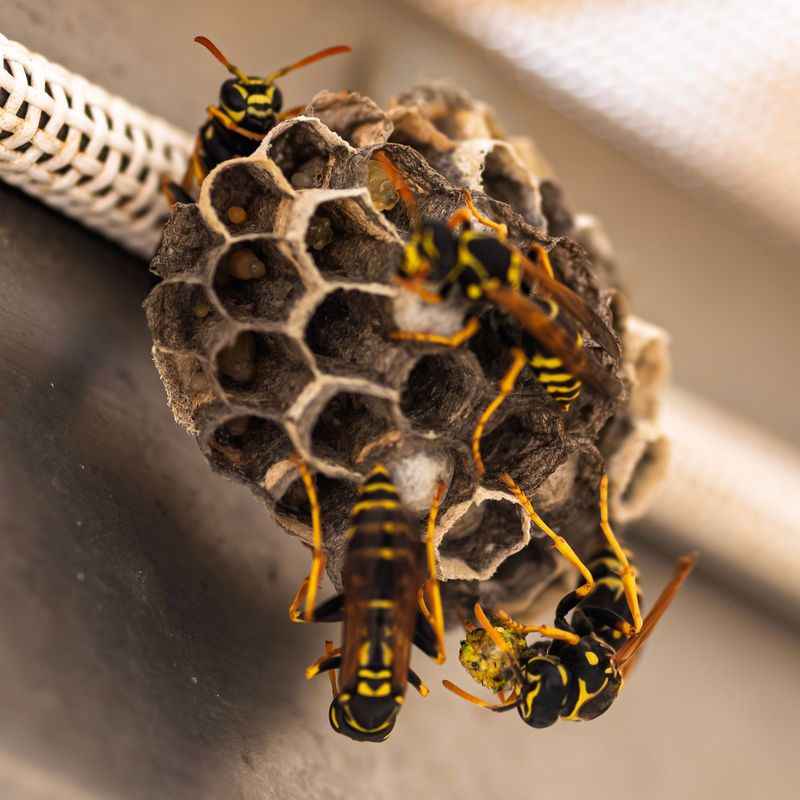
Missouri is home to several wasp species, but three show up on porches more than any others. Knowing which species you are dealing with changes how you approach the problem.
Paper wasps are the most common porch nesters in the state. Their open-celled, umbrella-shaped nests hang from a single stalk and are usually visible under eaves and porch ceilings.
These wasps are relatively calm unless the nest is disturbed. They will sting when threatened, but they rarely chase people across a yard the way some other species do.
Yellowjackets are a different story. They prefer enclosed spaces like wall voids, ground holes, and hollow porch posts, making their nests harder to spot and much more dangerous to approach.
A mature yellowjacket colony can hold thousands of workers by August. Their aggression tends to increase in late summer as food becomes scarcer and the colony grows more protective.
Bald-faced hornets are technically yellowjackets, but they build large gray paper nests that can reach the size of a basketball. Porch overhangs and nearby shrubs are common attachment points.
These hornets are highly aggressive and will defend a wide perimeter around the nest. Getting too close triggers a coordinated response from multiple workers at once.
Mud daubers also visit porches, but they are solitary and rarely sting. Their small mud tubes on walls and ceilings look alarming but pose almost no threat to people nearby.
How To Make Your Porch Less Appealing To Nesting Wasps
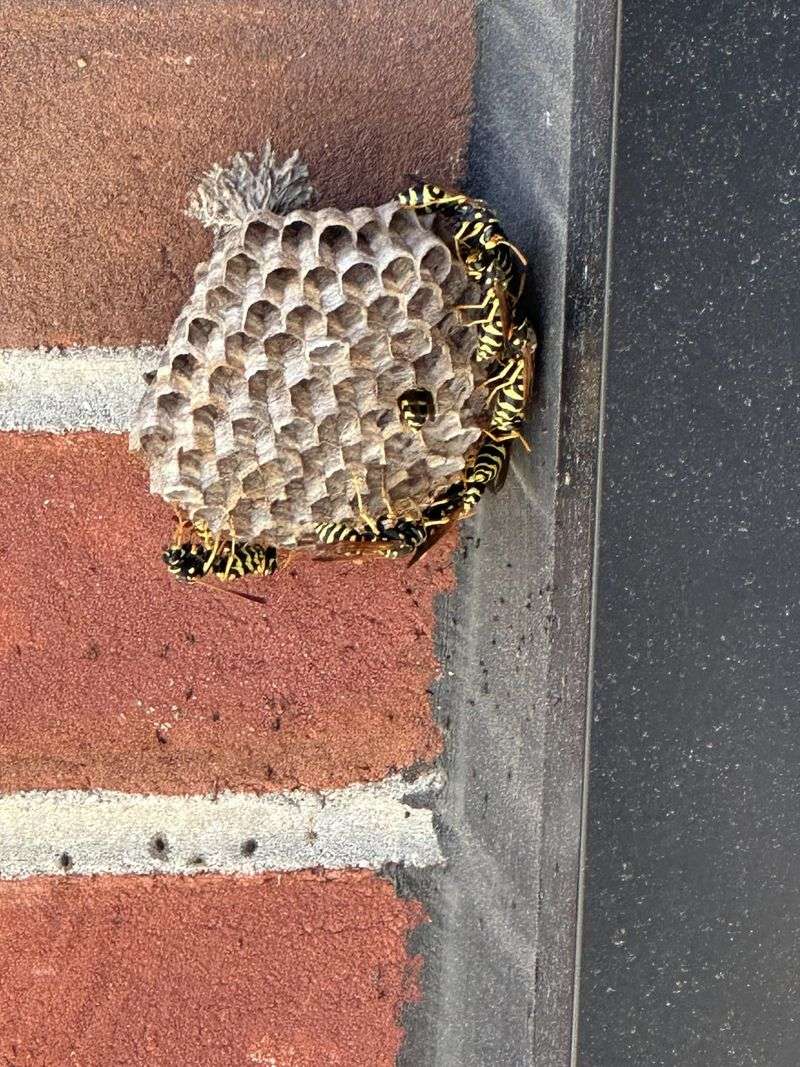
Prevention beats removal every single time. Making small changes to your porch in early spring can stop a colony from ever getting started on your property.
Start by sealing every gap you can find around trim, soffits, and light fixtures. A tube of exterior caulk and an afternoon of work eliminates dozens of potential entry points.
Paint or seal all exposed wood on railings, beams, and posts. Finished surfaces are harder to scrape, which makes them far less useful for nest construction.
Swap out bright white porch bulbs for yellow bug lights. Yellow wavelengths attract fewer insects, which means fewer hunting opportunities for foraging workers near your door.
Keep trash cans sealed and clean up food and drink spills immediately. Even a small residue of sugary liquid on a porch table can bring scouts circling within the hour.
Peppermint oil is a natural deterrent that many homeowners swear by. Mix a few drops with water in a spray bottle and apply it along eaves, railings, and corners every few weeks.
Remove old, abandoned nests from previous seasons. Wasps rarely rebuild directly on an old nest, but they tend to return to the same location year after year. Removing the old structure takes away that signal.
Fake wasp nests, sold as decoys, can deter some paper wasp species. Territorial by nature, they tend to avoid areas where a rival colony appears to already be established.
A porch that offers no reward sends scouts elsewhere. Small, consistent efforts throughout spring and early summer make the biggest difference in keeping your outdoor space wasp-free.
Safe Removal Options For Porch Wasp Nests
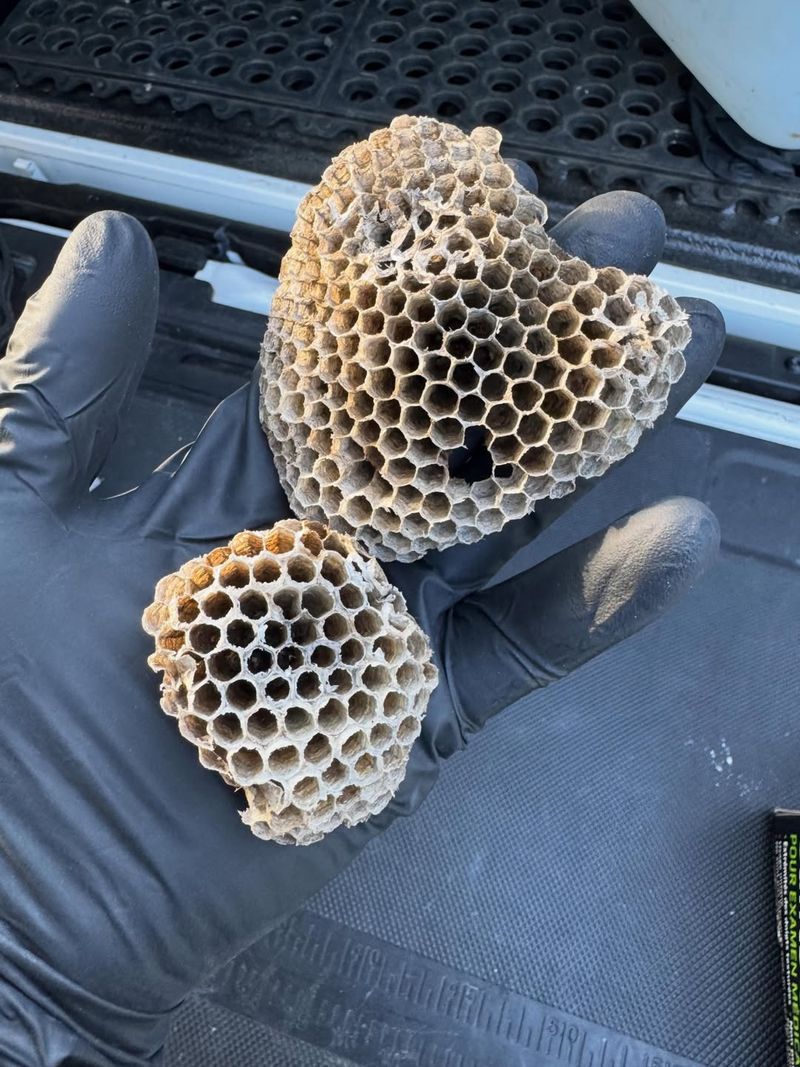
Removing a wasp nest is not a midday project. Timing, protective gear, and the right product make the difference between a smooth fix and a painful retreat across the yard.
Dusk and dawn are the safest windows for nest removal. Wasps are slow and groggy in low light, and most of the colony is clustered inside the nest rather than out foraging.
Aerosol wasp sprays that shoot a stream up to 20 feet allow you to treat a nest without standing directly beneath it. Apply the product in short bursts and step back immediately.
Foam-expanding sprays work well for nests inside cracks, gaps, and enclosed wall voids. The foam fills the space and coats the colony without requiring direct access to the interior.
Protective clothing matters even at dusk. Long sleeves, gloves, and eye protection reduce risk significantly if a few agitated workers do emerge after treatment.
Wait at least 24 hours before physically removing the treated nest. Workers that were out foraging will return overnight and enter the nest, ensuring a more complete treatment result.
For large nests or colonies inside wall voids, hiring a licensed pest control professional is the smarter choice. They carry equipment and products that are not available to the general public.
After removal, clean the attachment site thoroughly and apply a deterrent spray. Leaving the area bare and untreated is an open invitation for the next scout that passes through.
Safe removal is not about bravado, it is about being prepared. A little caution now saves a lot of discomfort later in the season.