Turn A Plain Arizona Lawn Into A Colorful Low-Water Flower Border That Beats The Heat
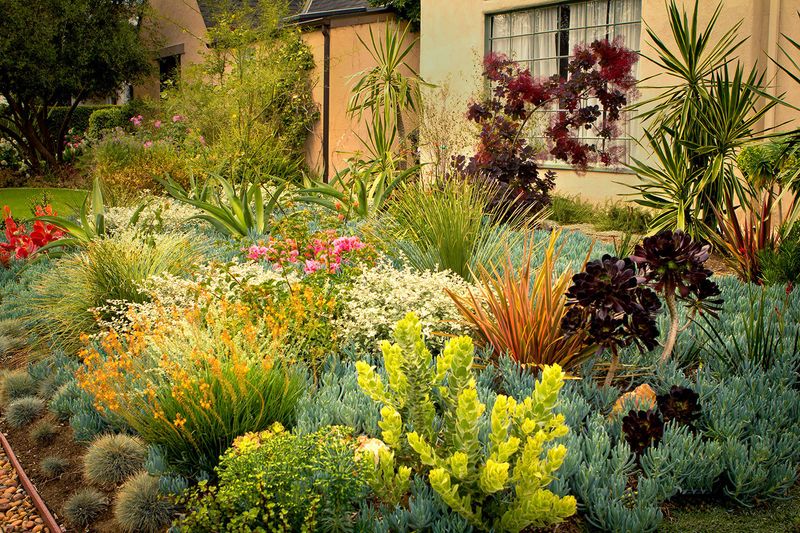
A flat stretch of thirsty grass is one of the most common sights in Phoenix and Tucson yards, but it does not have to stay that way. Replacing some or all of that turf with a border of native and desert-adapted flowering plants can bring seasonal color, reduce the time spent mowing, and lower water use once the plants are established.
The catch is that getting there takes real planning, honest site assessment, and a willingness to water new plants through their first months in the ground. What follows is a practical, low-desert-specific guide to making that transformation work.
Plan a low-desert conversion before removing the lawn
Before a single shovelful of turf comes out, the most useful thing a low-desert homeowner can do is spend a few afternoons watching the yard. Walk the space at different times of day and note where the sun hits hardest, where western or southern walls bounce reflected heat onto the ground, where rainwater pools after a monsoon, and where foot traffic naturally flows.
Mark retained trees, utility lines, walkways, seating areas, and any existing irrigation heads on a rough sketch.
That sketch becomes the foundation of a real replacement design. Skipping the design step and pulling grass first is a reliable way to end up with bare, compacted soil and no clear plan for what comes next.
The plan should account for mature plant size, not just what fits in a nursery container today. A brittlebush that looks tidy at planting can spread four feet wide within a couple of seasons, and a desert willow planted too close to a walkway becomes a pruning headache.
Settle the irrigation zone layout, fire-safety clearances, and maintenance access before demolition begins. The realistic payoff from a well-executed conversion is lower water demand and less mowing after establishment, not zero water or zero work.
Let heat, exposure, and caliche shape the design
Low-desert Arizona does not offer a single uniform growing environment. A west-facing bed in Phoenix that absorbs afternoon sun bouncing off a block wall is a fundamentally different site than a north-facing border in a Tucson yard shaded by an old mesquite.
Elevation, frost pockets, wind corridors, monsoon exposure, and nearby hardscape can shift what a plant experiences far beyond what a simple full-sun label predicts. Choosing flowers based on a general plant list without checking the actual exposure is one of the most common reasons a border underperforms.
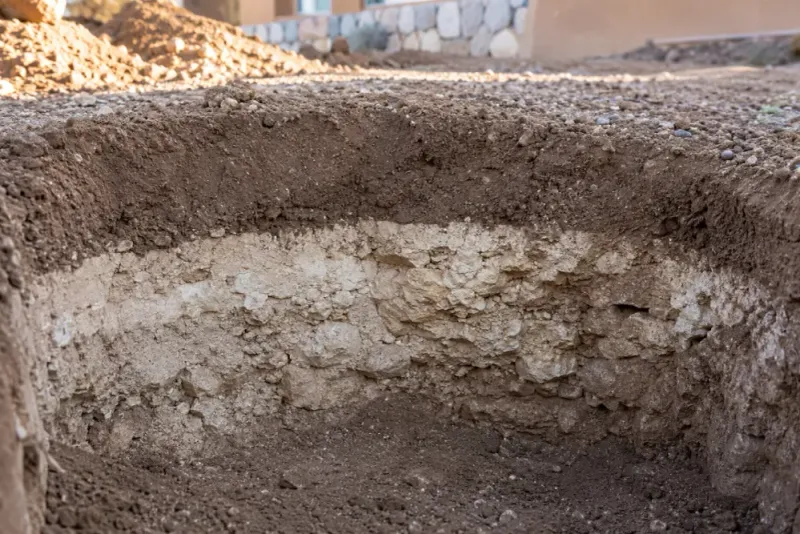
Soil is the other half of that equation, and University of Arizona caliche management guidance is direct about what an impermeable layer can do: it restricts roots, blocks drainage, contributes to salt accumulation, and reduces iron availability. The test is simple: dig a hole about a foot deep, fill it with water, and watch.
If the water sits for several hours without draining, a cemented caliche layer is likely present beneath the surface.
Compost can improve soil texture and biology in the upper layer, but it will not dissolve a solid caliche pan. When drainage is genuinely blocked, the practical options are breaking through the layer with a breaker bar or auger where the soil depth allows, removing it from planting pockets, or building a raised planting area that sits above it.
Your Arizona Garden Changes Every Week. Your Plan Should Too.
Gardening in Arizona changes quickly throughout the season. Every Friday you’ll receive a simple weekly plan showing exactly what to plant, prune, fertilize, harvest, and protect so you never miss the right timing.
Matching plants to the actual drainage condition rather than assuming it will improve on its own protects both the plants and the investment in establishing them.
Remove turf without sacrificing existing trees
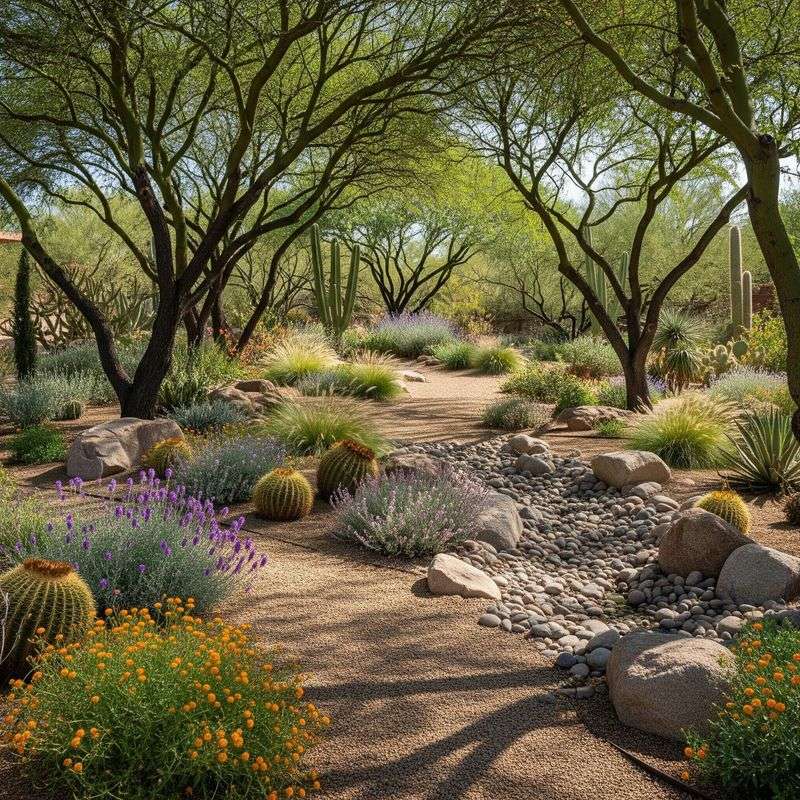
Grass removal feels like the most straightforward step in a conversion, but it carries a real risk that often goes unnoticed until damage shows up months later. Existing shade trees, whether a palo verde, a mesquite, or a citrus planted years ago, depend on the same root zone that runs through the lawn.
Severing or heavily disturbing those roots during sod removal, regrading, or trench work can stress or kill a tree that took years to establish, and losing that canopy also means losing the shade that makes the new border survivable through summer.
The University of Arizona turf-conversion guidance is specific on this point: protecting retained trees and maintaining functional irrigation for them during and after construction is essential, not optional. Work within a tree’s root zone should stay shallow, and any irrigation that currently reaches that zone must be preserved or rerouted before the old turf system is removed.
Keep heavy equipment, soil stockpiles, and foot traffic away from the area beneath the canopy drip line.
Outside the tree zones, the conversion sequence is more straightforward. Remove or smother existing grass using solarization, cardboard sheet mulching, or mechanical removal depending on the grass type and timeline.
Bermuda grass in particular requires thorough removal because it regrows aggressively from even small root fragments. Once the bed is clear and graded, install irrigation before adding plants or mulch, not after.
Getting the infrastructure in place first avoids disrupting newly planted root zones later.
Create color with a succession of correctly matched plants
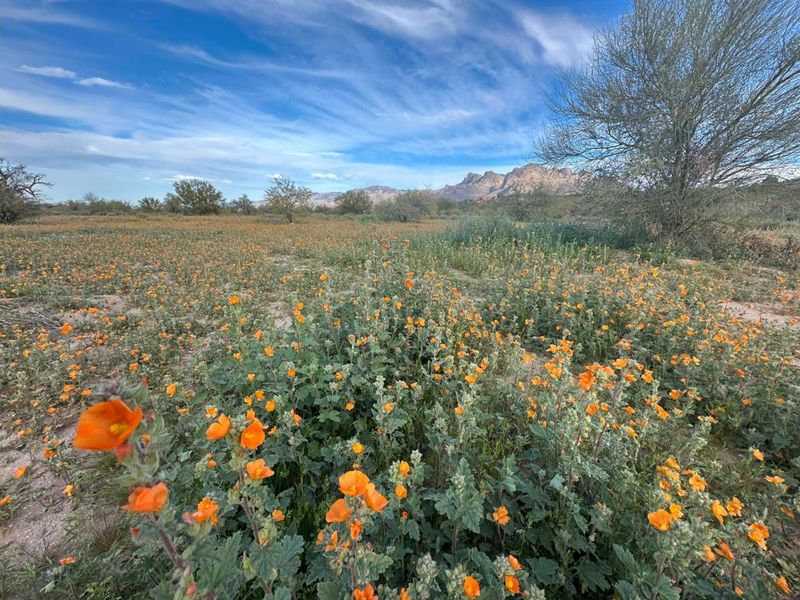
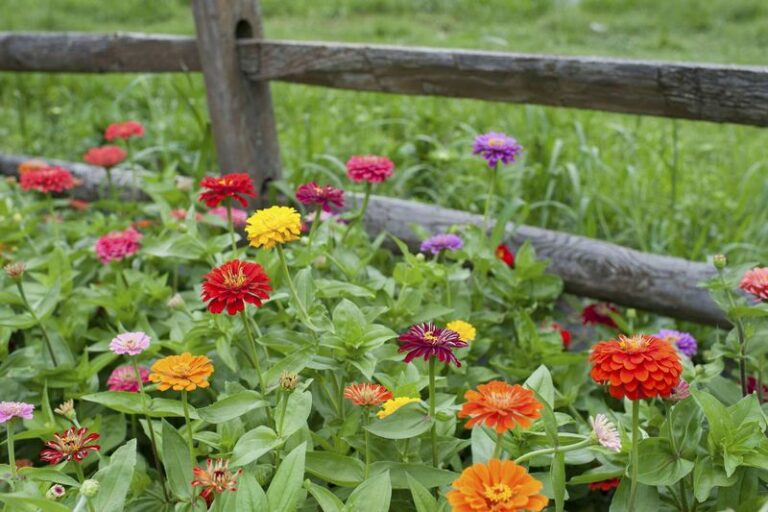
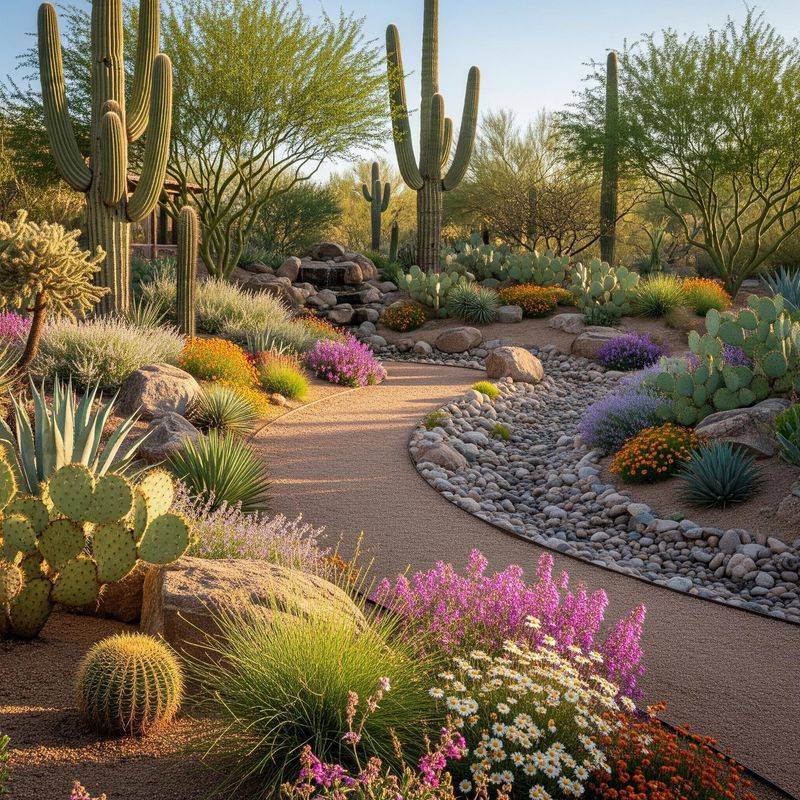
One of the most common disappointments in a new desert border is a brief, spectacular bloom followed by weeks of green or brown. The fix is not a single showstopper plant but a layered mix of species with different bloom windows, heights, and textures that hand color off from one to the next across the seasons.
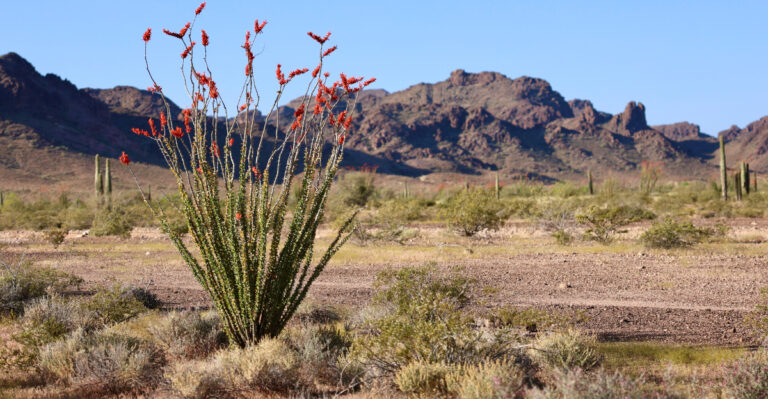
Brittlebush delivers a wave of yellow in late winter and early spring and handles reflected heat and dry conditions well once established. Desert globemallow offers orange to salmon blooms across a long season and tolerates poor soil and full sun, though it needs room to sprawl.
Desert marigold blooms yellow from spring through fall and reseeds reliably in gravelly, well-drained spots. Desert willow provides summer flowers in pink, lavender, or white and grows into a small tree that earns its place in a larger border.
Desert penstemon is worth naming precisely here. Penstemon pseudospectabilis, the desert penstemon native to gravelly slopes and dry washes, is a specific plant with specific needs: excellent drainage, full sun, and low supplemental water once established.
It is not a stand-in name for the entire penstemon genus, which includes species with very different cold tolerance, size, and water requirements. Bloom timing for any of these plants shifts with weather, elevation, and individual site conditions, so treat published bloom calendars as a general guide rather than a fixed schedule.
Design irrigation around each plant’s water needs
Irrigation is the infrastructure that determines whether a new border survives its first summer, and designing it as an afterthought is one of the fastest ways to lose plants in a low-desert yard. Delivering water near the soil through a measured emitter reduces evaporation and runoff compared with overhead spray, which matters enormously when summer temperatures push well past 110 degrees and evaporation rates are extreme.
That efficiency advantage, though, disappears when emitters clog with mineral deposits, lines crack from UV exposure or accidental damage, or scheduling is left on a calendar setting that made sense in April but overwatered in January.
Group plants with similar water needs on the same irrigation valve. A desert marigold and a desert globemallow can share a zone with modest, infrequent deep watering once established, but pairing either with a plant that needs weekly irrigation will either drown one or starve the other.
Check emitters seasonally, not just when something looks stressed, because a clogged or misplaced emitter often goes unnoticed until a plant declines.
Berms, basins, and careful grading can direct monsoon runoff toward plant root zones and reduce how often the irrigation system needs to run, but only when the plants selected can tolerate the resulting wet-then-dry cycle. Rainwater harvesting supplements irrigation; it does not replace the need for a working drip system during dry stretches.
Use fall planting to establish the border gradually
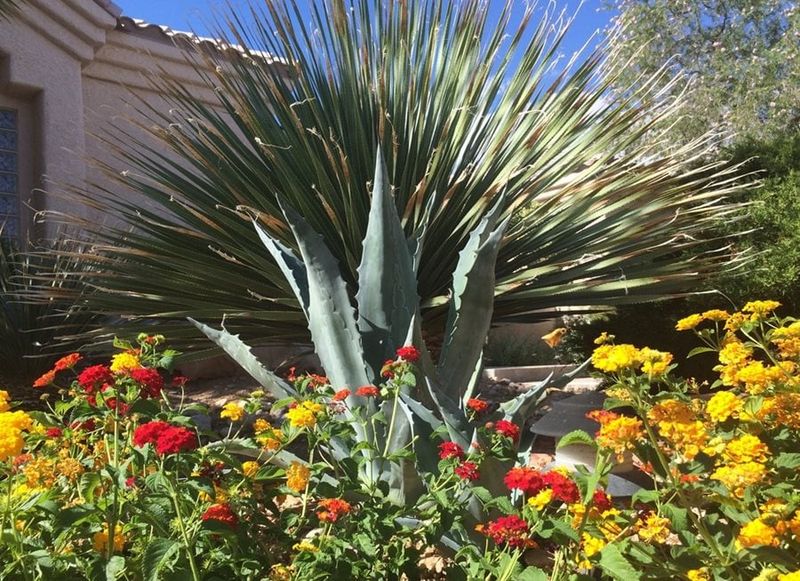
Fall is the most productive planting window for low-desert Arizona, and October is a particularly useful month to act. Cooler air temperatures reduce the heat stress on newly transplanted roots, while soil that has been warming since spring stays warm enough to encourage root growth before winter slows things down.
Pima County Extension’s October gardening guide recommends planting trees and shrubs early in the month and lists desert-adapted perennials including Angelita daisy, Blackfoot daisy, desert mallow, evening primrose, penstemon, salvia, and verbena as strong fall candidates alongside cool-season annual flowers for winter and spring color.
Newly planted desert-adapted plants need more frequent irrigation than the same plants will require once established. A general pattern from University of Arizona establishment guidance suggests watering every one to two days during the first two weeks for summer-planted material, then gradually stretching intervals through weeks three to eight as roots develop.
Fall-planted material in cooler conditions typically needs less frequent watering than that schedule implies, but actual timing still depends on soil type, plant size, exposure, and the weather that particular week. Publishing any schedule as a guarantee misses the point: the goal is to watch the plant and the soil, not to follow a fixed calendar.
Established native and desert-adapted plants generally use less water than turf, but they are not maintenance-free or water-free. During prolonged dry stretches, extended heat events, or unusually low monsoon rainfall, even well-established plants in a difficult urban site may need supplemental irrigation to stay healthy and continue blooming.
Support pollinators without promising pest control
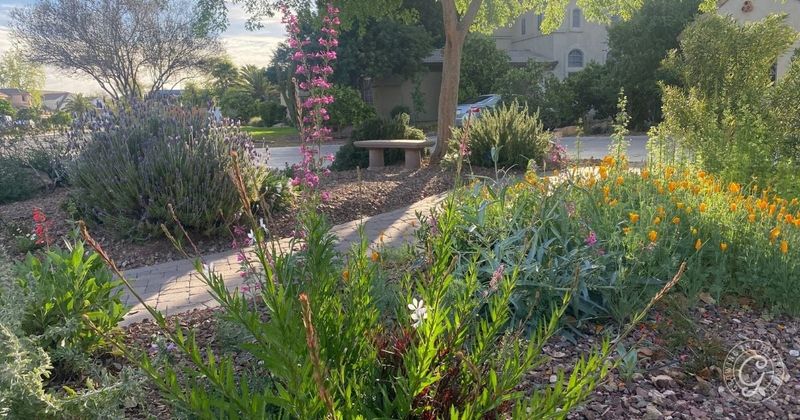
A border planted with overlapping bloom periods does more than look good across the seasons. Pollinators need pollen and nectar continuously, not just during one dramatic spring flush, and a mix of flowering species that hands off bloom from brittlebush in late winter to desert marigold in summer to salvia in fall gives bees, butterflies, and other beneficial insects a reason to stay in the yard through the whole year.
The University of Arizona pollinator guide notes that most pollinators are generalists but that some depend on particular plants or habitat features, which is a practical reason to vary species rather than massing one plant in large blocks.
Flowers provide food resources. They do not reliably control scorpions, repel mosquitoes, or guarantee the arrival of roadrunners, bats, or any other specific animal.
Scorpion management in Arizona depends on removing debris near the home, keeping vegetation from pressing against walls, trimming branches that overhang the roof, sealing gaps around doors and screens, and monitoring with a black light at night. University of Arizona scorpion guidance covers these exclusion steps in detail and does not identify a particular flower as a deterrent.
Mosquito reduction follows a separate logic entirely. Standing water in saucers, clogged gutters, birdbaths, and irrigation puddles breeds mosquitoes far more reliably than any flower attracts them.
CDC guidance on home mosquito control prioritizes eliminating standing water, covering water-storage containers, maintaining window and door screens, and using labeled larvicides where water cannot be removed. A flower border can be a genuinely productive habitat feature while still requiring separate, specific action on scorpions and mosquitoes.
Maintain a border that stays lower-water and safe
Turf removal does not end the maintenance calendar; it changes it. A flower border in a low-desert yard still needs regular weeding, especially during and after the monsoon when weed seeds germinate quickly in moist soil.
Irrigation emitters and lines need seasonal inspection for clogs, leaks, cracked tubing, and misplaced heads. Spent flower stalks may need deadheading or cutting back to encourage reblooming, and plants that fail from heat, frost, or drainage problems need prompt replacement before weeds fill the gap.
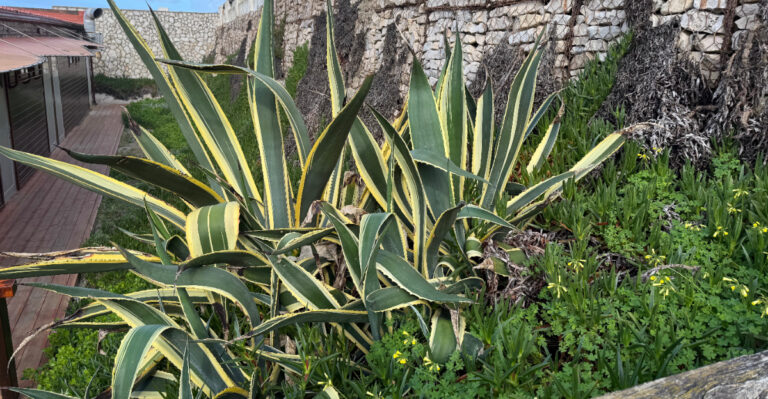
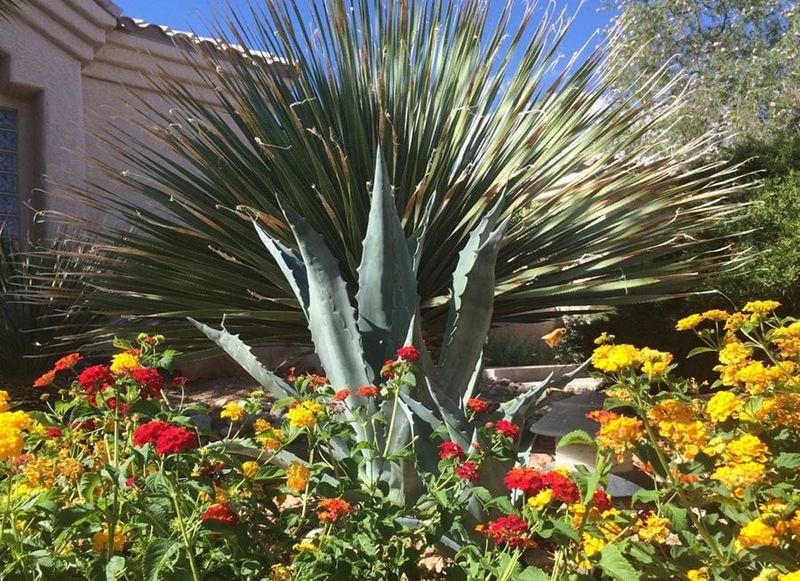
Plant placement matters for safety as well as aesthetics. Thorny or spiny plants such as agaves and certain cacti should stay well clear of doorways, play areas, walkways, and seating zones where contact is likely.
Vegetation pressed against walls or fences creates hiding spots for scorpions and can trap moisture against stucco. The Arizona Department of Water Resources water-harvesting guidance recommends accounting for thorns, maintenance access, and site-specific conditions when positioning plants, and that advice applies equally to a flower border.
Fire safety is non-negotiable in a low-desert yard. No plant is fireproof when it is dry, and a border packed with dead stems and accumulated leaf litter against a wall is a fuel load.
University of Arizona wildfire and defensible-space guidance recommends keeping the immediate five-foot zone around a home lean, clean, and free of highly flammable buildup, and managing invasive species such as buffelgrass and stinknet that carry fire readily. A border that combines seasonal color, habitat value, and reduced water demand with realistic maintenance and a clear safety zone is not a compromise; it is what a well-designed low-desert yard actually looks like.