Beautiful Arizona Plants That Grow Well Under Desert Trees
A shady spot under a desert tree can feel impossible to fill. Too much shade for some plants.
Too much heat for others. Then there is the battle for water as tree roots soak up every drop they can find.
The good news is that some plants handle those conditions surprisingly well. They settle in beneath the canopy, stay attractive through the heat, and help turn bare ground into something worth looking at.
A few even put on colorful blooms when the rest of the yard looks tired.
Arizona yards are full of these tricky spaces, but they do not have to stay empty. The right plant can soften the area, brighten the view, and make the whole garden feel more complete.
Some of the best choices might not be the ones most people think of first, and that is what makes them worth a closer look.
1. Globe Mallow Delivers Months Of Color In Filtered Light
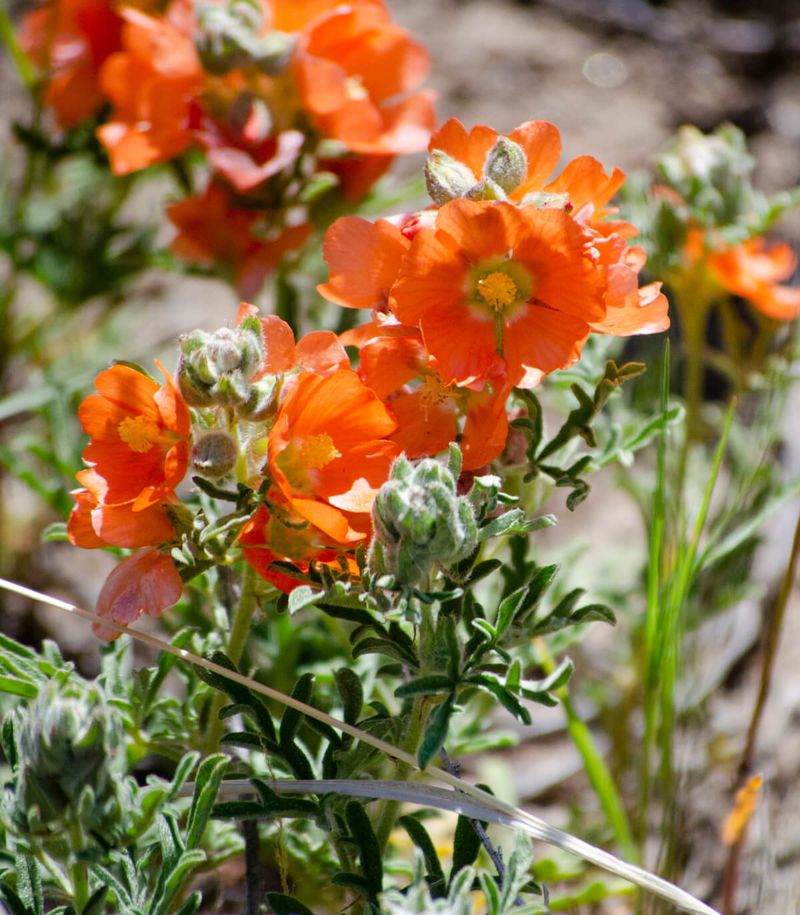
Few plants put on a show as long as Globe Mallow. Cup-shaped blooms in shades of orange, coral, red, and even lavender keep coming from late winter through early summer.
Under a palo verde or mesquite canopy, where sunlight breaks through in patches, Globe Mallow settles in like it was made for the spot.
Reaching two to four feet tall, it stays compact enough to fit neatly around tree bases without crowding. Roots go deep quickly, which helps it handle the dry, competitive soil near established trees.
Water it a few times after planting, then back off as it establishes.
Hummingbirds visit the blooms regularly. Native bees love it too.
Beyond wildlife value, it adds warm color to spots that tend to look bare and forgotten under tree canopies.
Deadheading spent flowers can extend the bloom season a bit. Cutting plants back hard after summer heat arrives helps them bounce back stronger the following spring.
Avoid overwatering, especially in clay-heavy soils, since soggy roots cause problems fast.
Globe Mallow reseeds freely, so expect new seedlings to pop up nearby over time. Thin them out or let them spread.
Either way, this plant keeps the area under your desert trees looking alive and colorful with very little effort on your part.
2. Desert Marigold Brightens Spots Where Sunlight Fades
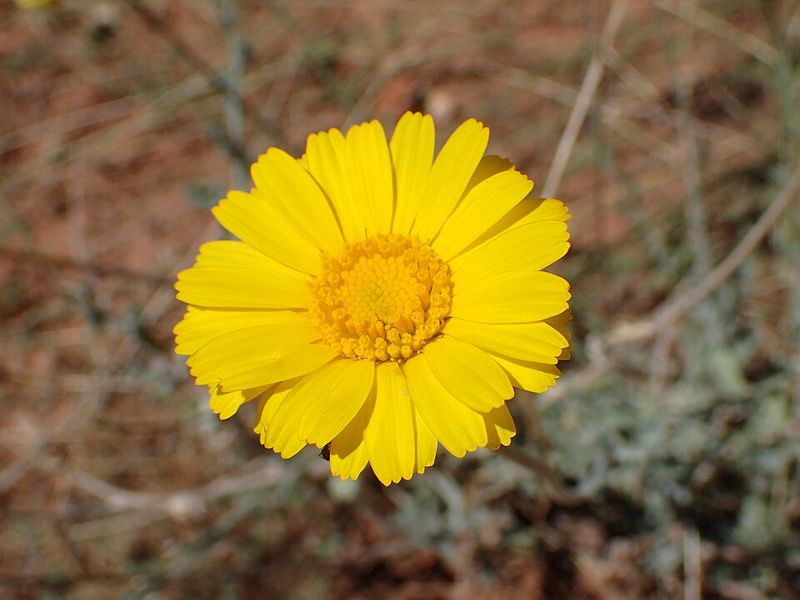
Yellow flowers that bloom almost nine months out of the year sound too good to be true. Desert Marigold proves it is not.
Bright golden blooms rise on slender stems above silvery-gray foliage, creating a cheerful contrast even in low-light situations beneath tree canopies.
Filtered shade does not slow this plant down much. It performs best with at least a few hours of direct sun each day, so plant it at the outer edges of a tree canopy rather than directly under the densest part.
Even there, it holds its own better than most wildflowers.
Plants grow roughly one to two feet tall and wide. They spread through reseeding, so a single plant can turn into a small colony over a few seasons.
Your Arizona Garden Changes Every Week. Your Plan Should Too.
Gardening in Arizona changes quickly throughout the season. Every Friday you’ll receive a simple weekly plan showing exactly what to plant, prune, fertilize, harvest, and protect so you never miss the right timing.
That self-spreading habit makes it excellent for filling in bare patches around tree bases without any extra effort.
Drought tolerance is strong once plants are established. After the first season, supplemental watering becomes minimal.
Plants may look ragged in midsummer heat, but they usually recover and rebloom as temperatures drop in fall.
One thing worth knowing: Desert Marigold leaves can cause skin irritation in some people, so wear gloves when handling.
That minor detail aside, it is one of the most reliable and low-maintenance bloomers you can plant beneath desert trees anywhere across the region.
3. Desert Ruellia Lights Up Open Canopies With Seasonal Color
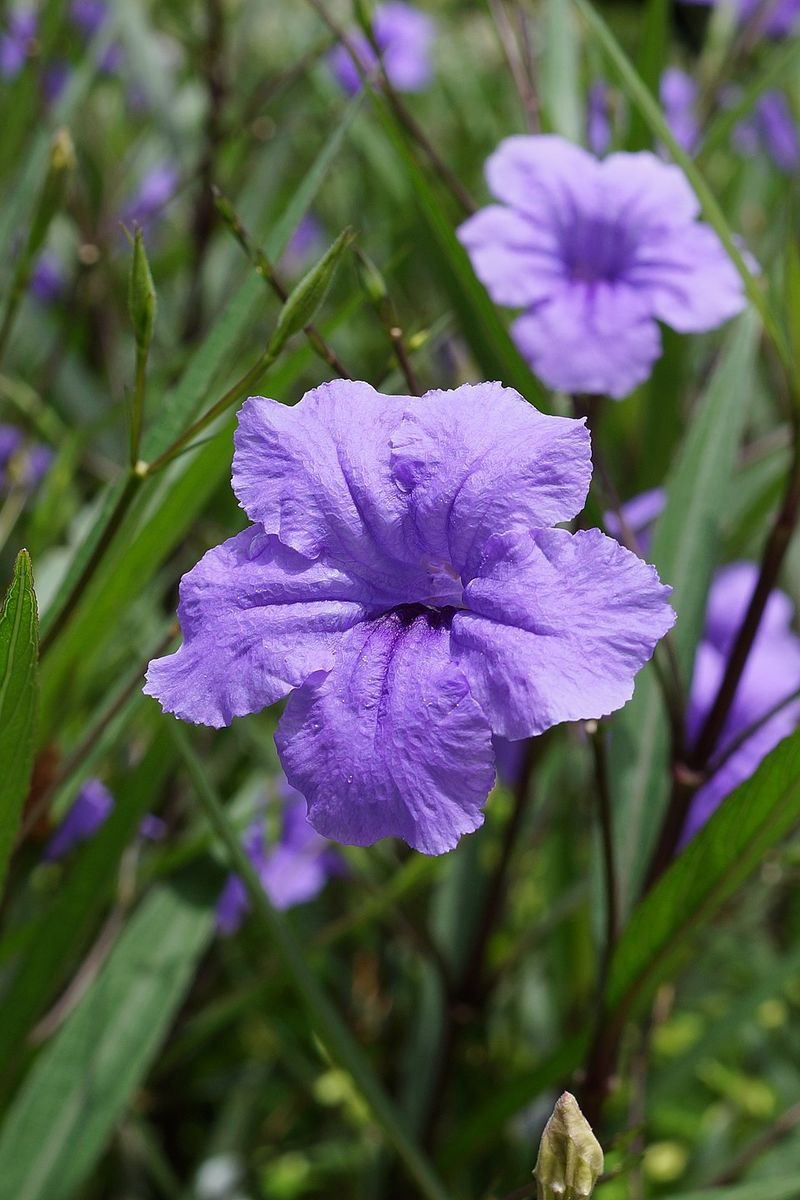
Purple blooms on a plant that barely needs watering? Desert Ruellia makes that happen.
Also called Desert Petunia, it produces trumpet-shaped lavender-purple flowers from spring through fall. Under open canopies where sunlight filters through, the blooms catch the light and stand out sharply against dry soil.
Plants stay low, typically under two feet tall, which makes them easy to tuck around tree bases and along rocky edges. Stems are slightly woody at the base, giving the plant structure even when it is not in bloom.
Foliage stays green through much of the year in warmer low-desert areas.
Established plants handle serious drought. Once roots settle in, which usually takes one growing season, you can cut back watering significantly.
In the hottest stretches of summer, a deep soak every couple of weeks is usually enough.
Birds and pollinators visit the flowers regularly. Doves sometimes eat the seeds.
That wildlife interaction adds another layer of value to what is already a practical and attractive plant.
Ruellia spreads slowly by rhizome and reseeds modestly. It will not take over a bed aggressively, but it will gradually fill in gaps around tree roots where other plants struggle.
For spots under ironwood or desert willow trees where you want color without constant care, Desert Ruellia is a dependable and visually rewarding choice.
4. Goodding’s Verbena Spreads Quickly Around Tree Bases
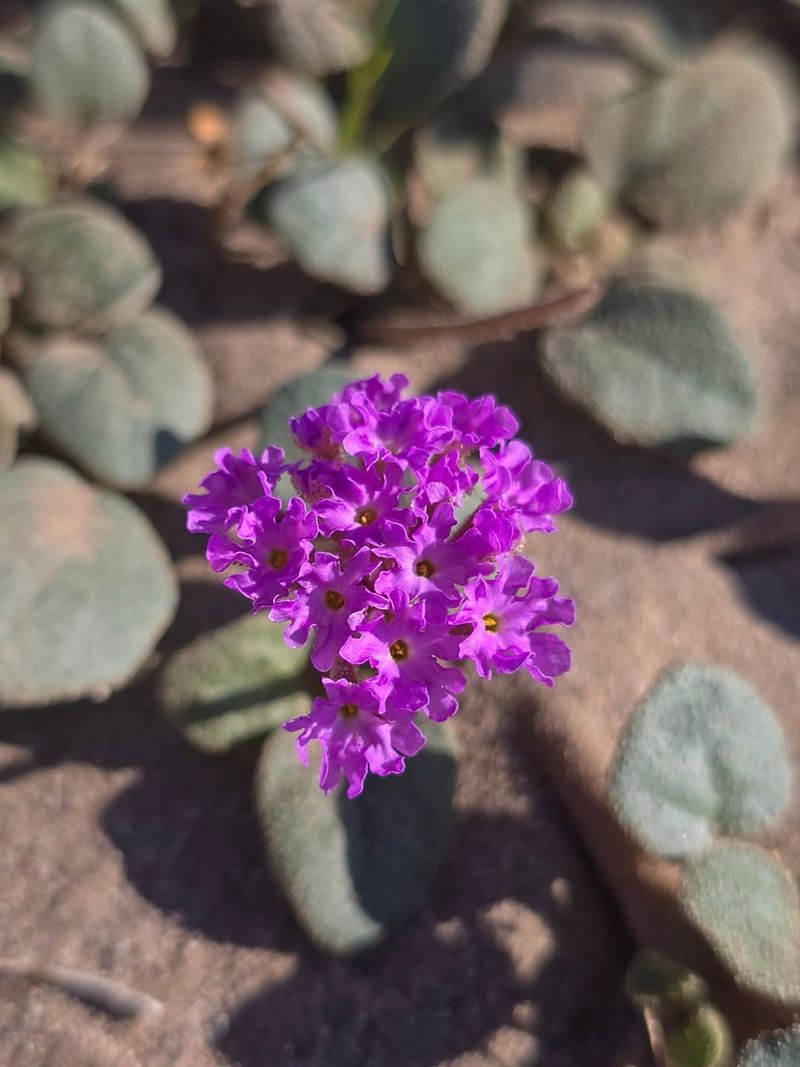
Bare soil around tree bases looks unfinished. Goodding’s Verbena fixes that faster than almost anything else.
Once planted, it spreads laterally across the ground, weaving between rocks and roots, covering open patches with a mat of fine-textured foliage and clusters of small purple flowers.
Blooms appear most heavily in spring and again in fall when temperatures ease off. During peak summer heat, flowering slows but the plant stays green and holds its ground.
That persistent coverage is exactly what you want in spots where bare soil bakes and erodes under tree canopies.
Stems root where they touch the ground, which accelerates spreading. A single plant can cover two to three square feet within one season.
Use that to your advantage by spacing plants a bit further apart and letting them fill in naturally.
Water needs are moderate at first, then drop significantly once the plant establishes. Deep, infrequent watering works better than frequent shallow watering.
Overwatering in poorly draining soil shortens the plant’s lifespan noticeably.
Pollinators are drawn to the small blooms consistently through the growing season. Butterflies, bees, and even skippers visit regularly.
Beyond the wildlife benefit, Goodding’s Verbena simply makes the area under your trees look cared for and intentional without demanding much from you in return. It is a practical groundcover with genuine visual appeal.
5. Desert Four O’Clock Fills Shaded Areas With Evening Blooms
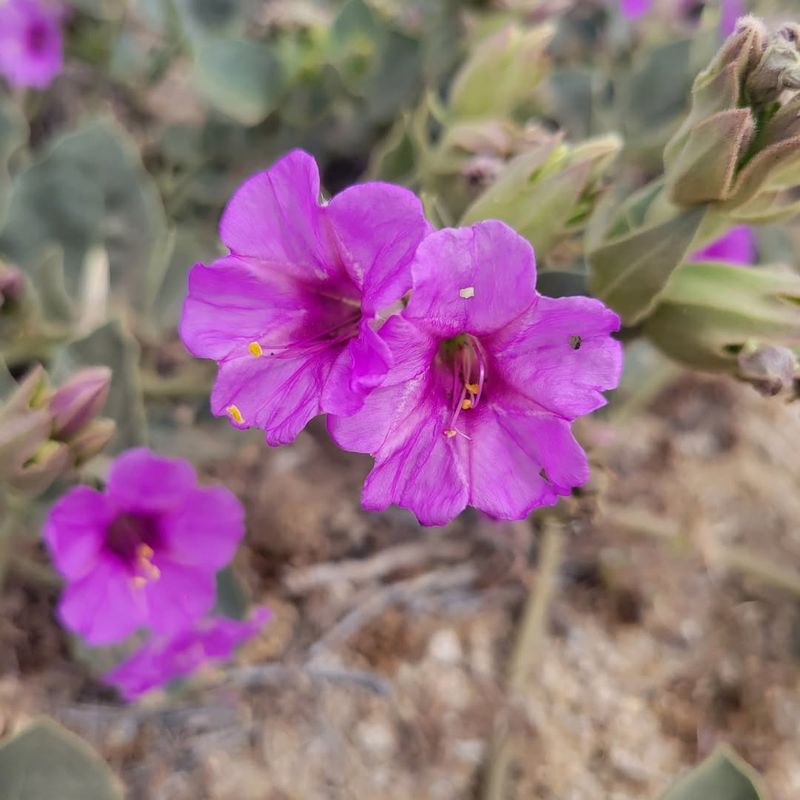
Magenta flowers that open in the late afternoon and evening bring a completely different energy to a garden. Desert Four O’Clock works on its own schedule, staying closed during the hottest part of the day and opening as temperatures drop.
Under tree canopies where shade deepens toward evening, the timing feels perfectly matched.
Plants grow fairly large, reaching three to four feet tall and wide in good conditions. Thick, tuberous roots store water and nutrients, which gives the plant serious drought resilience once established.
Those roots also help anchor the plant in loose, sandy desert soils around tree bases.
Blooms attract hawk moths in the evening hours. Watching those large moths hover at the flowers after sunset is genuinely impressive.
That pollinator activity alone makes Desert Four O’Clock worth planting in visible spots around your yard.
Cut plants back hard in late fall or early winter. New growth emerges reliably from the root crown each spring.
In colder high-desert areas, plants may go fully dormant in winter and return the following year from the roots.
Shaded spots under large trees are often overlooked in desert garden design. Desert Four O’Clock turns those spaces into something worth watching in the evenings.
Color, fragrance, and wildlife activity all happen right there beneath the branches, with almost no maintenance required to keep it going season after season.
6. Trailing Lantana Covers Empty Ground Below Tree Branches
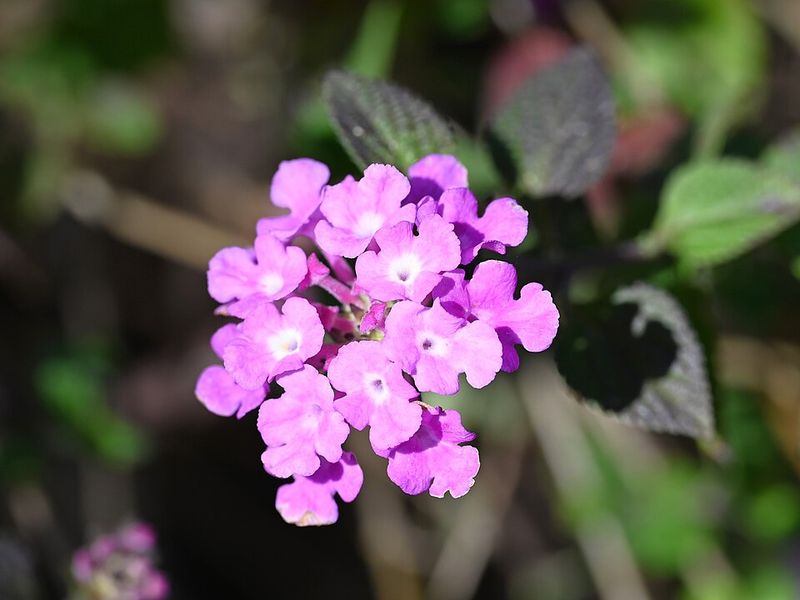
Empty ground under tree branches invites weeds. Trailing Lantana shuts that problem down fast.
Low-growing stems spread outward in every direction, forming a dense mat that crowds out unwanted plants while producing cheerful clusters of yellow, orange, and lavender flowers almost year-round in warmer zones.
Unlike upright Lantana varieties, the trailing type stays low, typically under two feet tall. Spread can reach six feet or more over time.
That wide, flat growth habit makes it one of the best true groundcovers for large open areas beneath desert trees where bare soil keeps reappearing.
Heat tolerance is exceptional. Even in the blistering stretch of a desert summer, Trailing Lantana keeps blooming where other plants slow down or stop entirely.
Full sun is ideal, but it handles filtered shade beneath open canopies without losing much of its vigor.
Water it weekly the first summer, then taper off. Established plants survive on rainfall alone in most low-desert locations, though an occasional deep soak during extended dry spells helps maintain dense growth and steady blooming.
Butterflies flock to the flowers. Hummingbirds visit as well.
Small berries form after flowering and attract birds, which sometimes carry seeds to new spots. Worth noting: Lantana berries are toxic to pets and small children, so keep that in mind when choosing planting locations.
Placed thoughtfully, Trailing Lantana is one of the hardest-working groundcovers available for desert landscapes.
7. Fairy Duster Softens Bare Ground Beneath Desert Trees
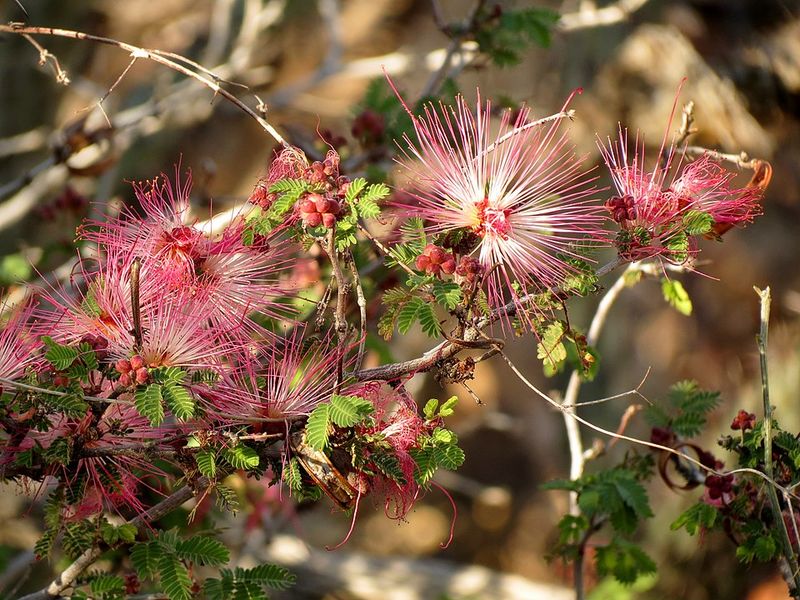
Soft, feathery pink blooms that look almost too delicate for the desert. Fairy Duster surprises a lot of people with how tough it actually is.
Those fluffy, pom-pom-like flowers appear in late winter and spring, sometimes again in fall, bringing a light and airy texture to spots beneath desert trees that tend to look harsh and bare.
Plants grow two to four feet tall and equally wide. Finely divided leaves give the shrub a soft, lacy appearance even when not in bloom.
Under ironwood or palo verde trees where filtered light keeps things from getting too intense, Fairy Duster thrives and looks at home.
Root systems go deep and wide, making the plant very drought-tolerant once established. During the first summer, water every one to two weeks.
After that, rainfall and occasional deep soaks are usually sufficient in low-desert environments.
Hummingbirds absolutely love the flowers. Watching them hover among the bright pink blooms is one of the highlights of having this plant in your garden.
Quail and other birds sometimes feed on the seeds that follow the blooms.
Pruning is rarely necessary. If plants get leggy or woody, a light trim in early spring before new growth starts helps them stay full and attractive.
Fairy Duster is native to the Sonoran Desert region, which means it evolved alongside the very trees you are planting it beneath. That natural compatibility shows in how well it performs with minimal intervention from you.
8. Blackfoot Daisy Keeps Blooming In Dappled Desert Light
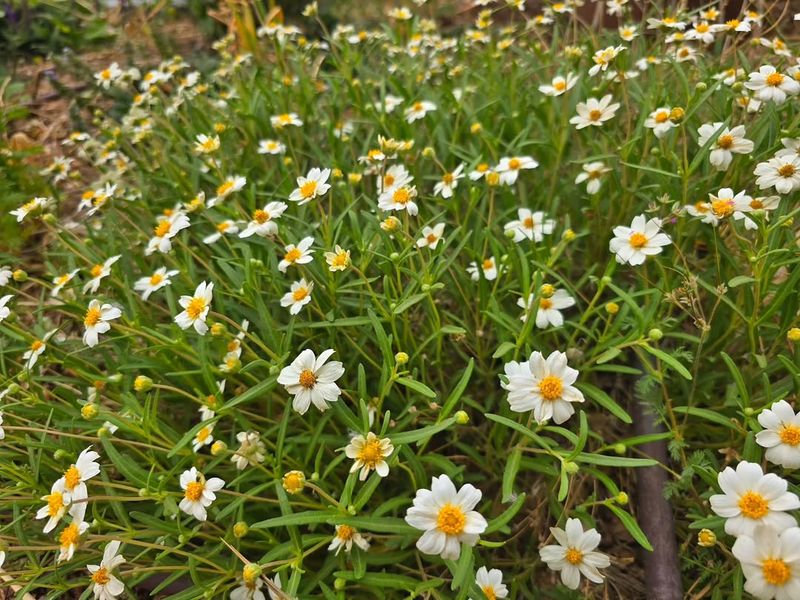
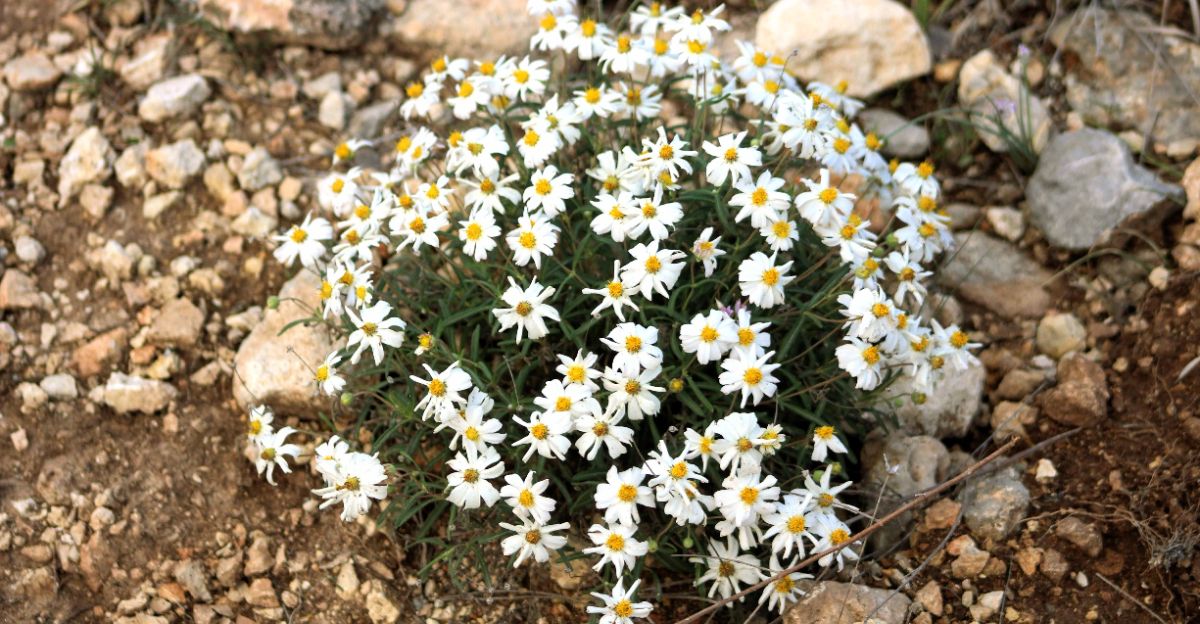
White petals with yellow centers on a plant that blooms from late winter through fall. Blackfoot Daisy earns its place in any desert garden through sheer persistence.
Even under the shifting, broken light beneath a palo verde or mesquite canopy, it keeps producing flowers without any coaxing.
Plants stay compact, usually under one foot tall and one to two feet wide. That modest size makes them easy to tuck into tight spaces around tree roots or between rocks at the base of a trunk.
They look best planted in small groups rather than as single specimens.
Soil drainage matters a lot with Blackfoot Daisy. Rocky or sandy soil is ideal.
Clay-heavy spots hold too much moisture, which leads to root problems. If your soil is dense, mix in coarse gravel before planting to improve drainage around the root zone.
Once established, plants need very little water. During the hottest months, a deep soak every ten to fourteen days is typically enough.
Overwatering shortens their lifespan considerably, so resist the urge to treat them like thirstier plants.
Native bees visit the flowers constantly throughout the blooming season. The honey-like fragrance is subtle but noticeable up close.
For gardeners who want low-effort color in shaded desert spots without worrying about aggressive spreading or frequent replanting, Blackfoot Daisy is a reliable, cheerful, and genuinely satisfying option that delivers season after season.