A Spotted Lanternfly Just Appeared In Your New York Yard, Now What
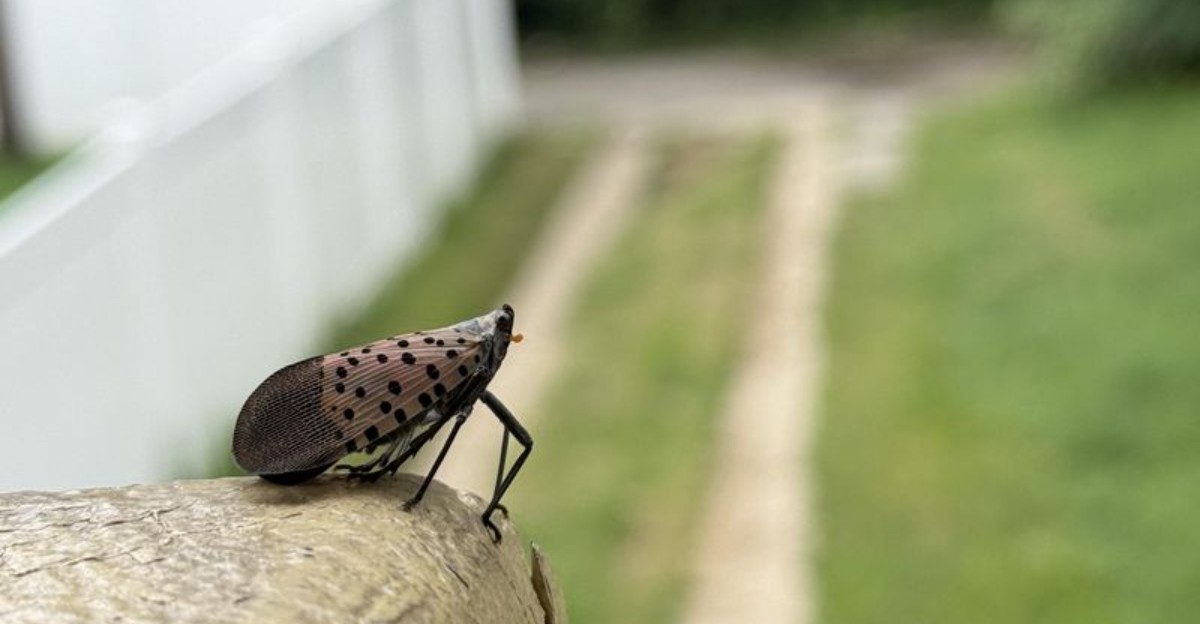
You glance outside at the maple by the fence, and spot something strange crawling on the trunk. It has black spots, pale wings, and a flash of red when it moves.
That eye-catching bug is the spotted lanternfly.
This invasive planthopper feeds on sap from plants like grapevines, fruit trees, hops, and some landscape trees. Homeowners often find it on tree trunks, decks, patio furniture, and other outdoor surfaces.
Finding one does not mean your yard is in trouble. The key is knowing what you are looking at and what to check next.
A quick inspection of favorite host plants, proper reporting, and watching for egg masses can help slow its spread and protect your New York landscape.
Confirm The Insect Before Taking Action
Plenty of harmless bugs get squashed by mistake every summer. Before you act, take a good look at what is actually on your bark.
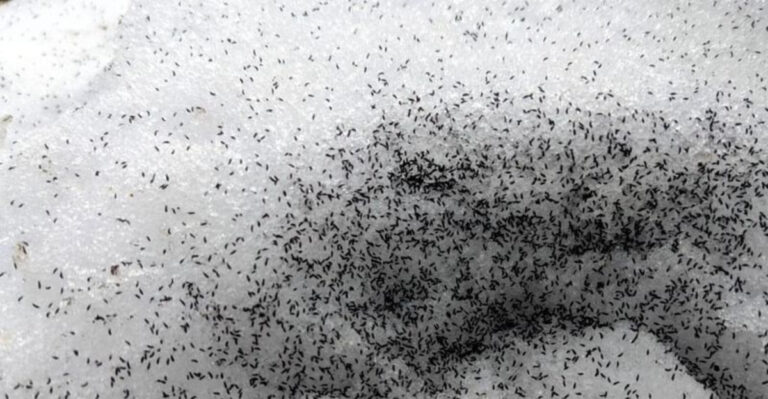
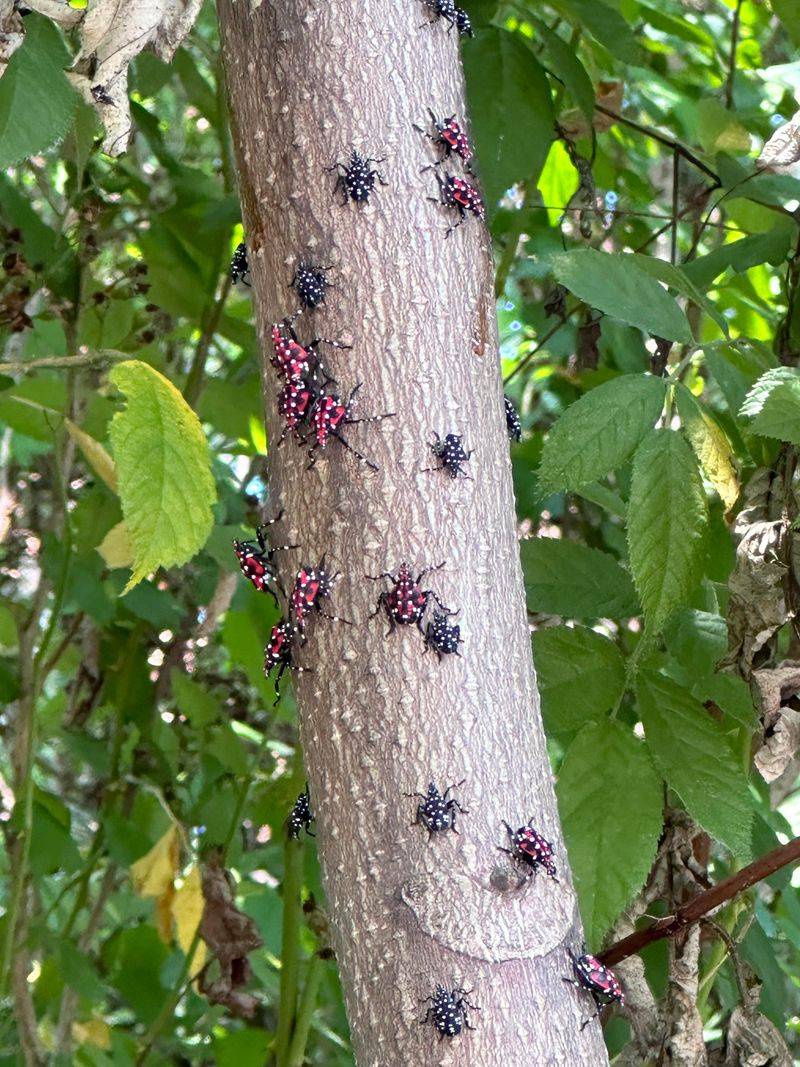
Young nymphs appear from roughly April through July and look like tiny black beetles speckled with white dots. By midsummer, the later stage nymphs turn bright red with black and white markings, which is hard to miss.
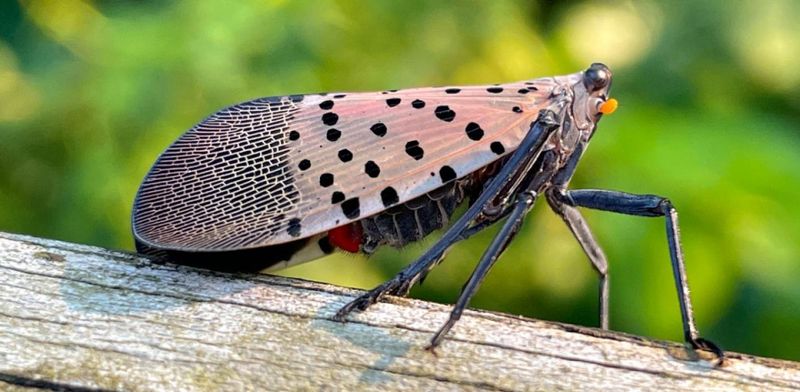
Adults show up starting in July and stretch about an inch long. Their folded forewings are grayish tan with black spots, while the hidden hindwings flash red, black, and a clean white stripe when they hop.
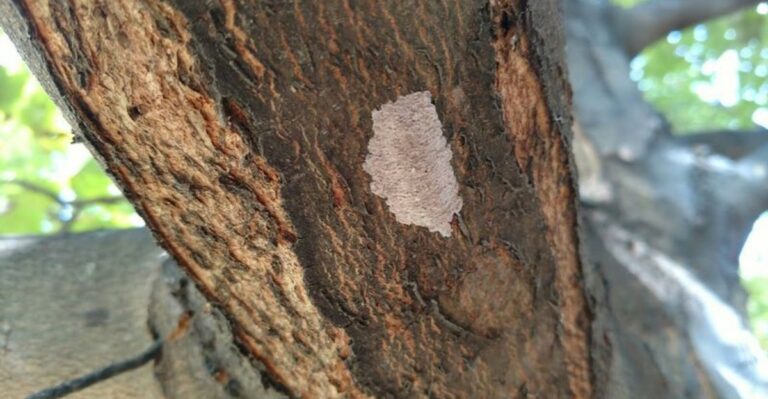
Egg masses matter too, since they look nothing like an insect. Freshly laid ones resemble a smear of putty, then dry into a brownish gray patch that could pass for mud or cement.
Look-alikes trip people up constantly. Boxelder bugs, milkweed bugs, and even ticks get reported as lanternflies by well-meaning homeowners every season.
A quick phone photo helps enormously. Zoom in, compare it against images from Cornell or the state agriculture department, and check the wing pattern rather than just the color.
Take a second to notice how it moves, because these insects hop more than they fly. That awkward launch is one of the easiest giveaways once you have seen it.
Getting identification right saves your time, protects harmless native insects, and keeps your next steps focused on the actual pest instead of a neighbor bug.
Report New Sightings To Help Track Lanternfly Spread
State trackers rely on ordinary people with phones far more than you might guess. Your single photo can mark the edge of a spreading population.
Where you live changes the advice. In areas where spotted lanternfly is already established, reporting requirements may differ.
Check the current New York State Department of Agriculture and Markets guidance before submitting a sighting.
Residents in those areas get simpler instructions: squash the bug on the spot and move on. Officials already know the population is there.
Anywhere else in the state, though, your report carries real weight. Sightings in counties without established populations help agencies target inspections and slow the expansion northward and westward.
Start with a clear photo of the insect or egg mass. Blurry shots get rejected, so steady your hand and fill the frame.
Your New York Garden Changes Every Week. Your Plan Should Too.
Gardening in New York changes quickly throughout the season. Every Friday you’ll receive a simple weekly plan showing exactly what to plant, prune, fertilize, harvest, and protect so you never miss the right timing.
Write down the precise spot as well: street address, zip code, or GPS coordinates from your phone map. Vague locations make follow-up nearly impossible.
If you collect a specimen for confirmation, follow the instructions provided by the reporting agency. A clear photo is usually the safest first step.
Submit everything through the New York State Department of Agriculture and Markets website or the iMapInvasives database. Both take only a few minutes.
Reports from alert neighbors are how new hot spots get found early enough to matter.
Check Trees And Plants For More Lanternfly Activity
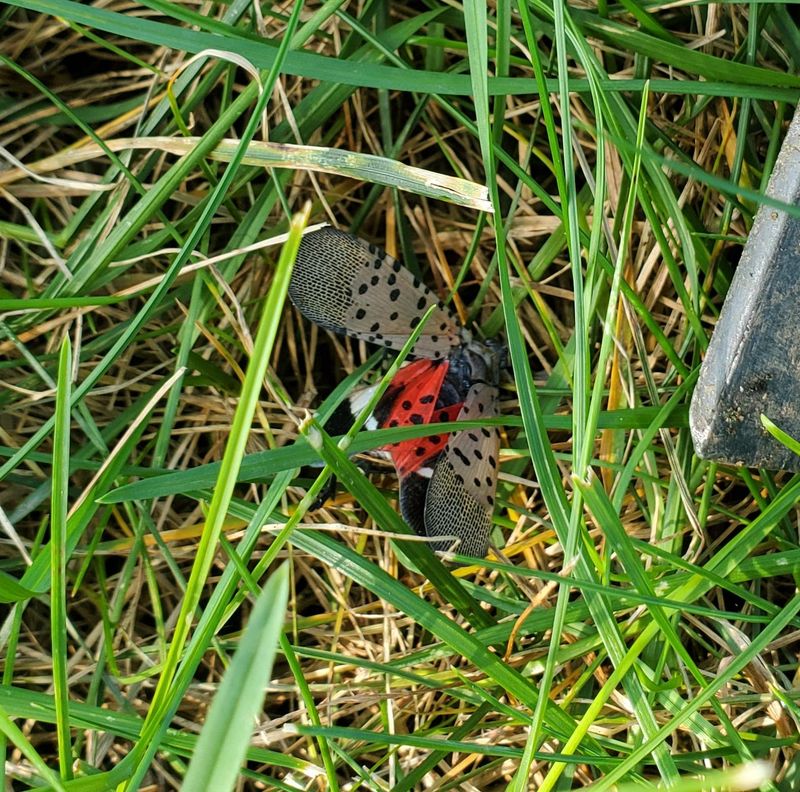
One bug rarely travels solo. Where there is a single lanternfly, a wider inspection usually turns up evidence you missed.
Feeding leaves marks behind. These insects pierce stems and trunks to sip sap, and the wounds often weep, sometimes carrying a slightly fermented, vinegary smell.
Next, watch for honeydew. That sticky, sugary waste drips onto leaves, bark, patio chairs, and anything parked underneath an infested tree.
Sooty mold follows the honeydew like clockwork. The black fungal coating spreads across surfaces and blocks sunlight, making it harder for leaves to photosynthesize properly.
Wasps, ants, and bees crowding around a tree trunk can also tip you off. They come for the sugar, not the tree itself.
Scan plant stems and trunks at eye level and below, since nymphs often gather in clusters. Grapevines, maples, black walnut, willows, and Tree of Heaven tend to draw the biggest crowds in yards.
Evening checks work surprisingly well. Lanternflies often shift up and down trunks through the day, and a flashlight sweep reveals groups that blend into bark during bright sunlight.
Keep brief notes about which plants show activity and roughly how many insects you see. That record helps you judge whether numbers are climbing or holding steady.
Spotting problems early gives you room to respond with simple methods before anything escalates into a serious infestation.
Look For Egg Masses Before Cold Weather Arrives
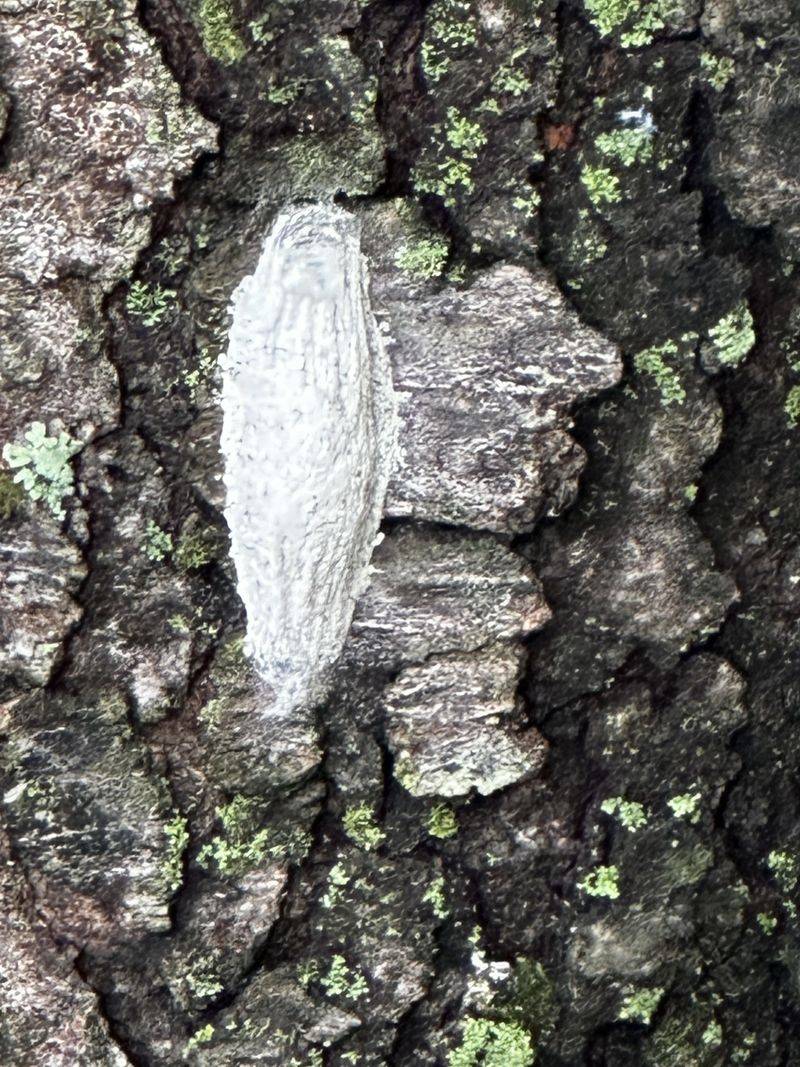
Autumn is quietly the most important season in this whole fight. Every egg mass you find in fall represents dozens of nymphs that will not hatch next spring.
Females lay eggs from late summer into early winter. October is the busy month, and laying continues until a hard freeze finally shuts things down.
Each mass runs about one to one and a half inches long and holds roughly 30 to 60 eggs arranged in tidy rows.
Fresh masses look creamy white and putty-like with a glossy, waxy coat. Within days they dull down to brownish gray and start resembling a splash of dried mud or cement.
Older coverings crack and flake away over winter, exposing rows of small, seed-like eggs underneath. That texture is a clear giveaway once you know it.
Search smooth, hard surfaces rather than rough ones. Tree trunks, rocks, deck railings, fence boards, grills, outdoor furniture, trailers, vehicles, and stacked firewood all qualify.
Bring a flashlight and hold it at a low angle. Side lighting throws shadows that make flat, camouflaged masses pop right out.
Do not skip the undersides. Masses hide beneath branches, under lawn chairs, behind wheel wells, and along the shaded faces of stone walls.
Homeowners who make one thorough October walk around the property often find more than they expected sitting in plain sight.
Remove Egg Masses From Outdoor Surfaces
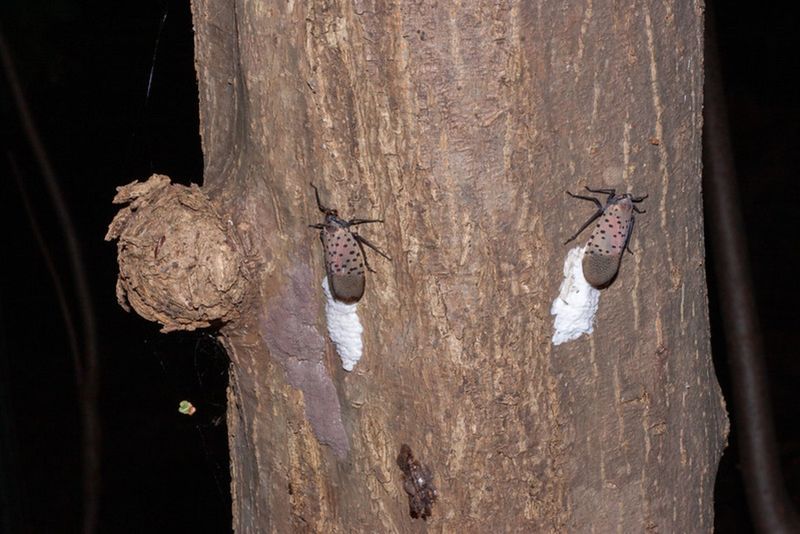
Scraping eggs is oddly satisfying work, and it is arguably the highest-value thing a homeowner can do. Each mass removed is a small population wiped off next year’s map.
Timing is generous here. Egg masses can survive through winter and hatch in spring, with timing depending on weather conditions.
Grab a stiff tool: an old credit card, a putty knife, or a flathead screwdriver all work. Press firmly and lift the entire mass off in one pass.
Hold a re-sealable bag or cup of rubbing alcohol or hand sanitizer right underneath. The eggs need to land in the liquid and stay submerged to be rendered non-viable.
Scraping eggs onto the ground without destroying or disposing of them properly may allow some eggs to survive.
Crushing works as an alternative. Press hard across the whole mass until you hear faint popping, which tells you the individual eggs actually burst.
Check the surface afterward for stragglers, since masses often sit in clusters. One patch of bark can hold several within a few inches.
Skip the ladder gymnastics. Plenty of masses sit high in canopies, and a fall is far worse than a few missed eggs.
Neighbors in New York who coordinate a weekend scraping session across adjoining yards tend to see noticeably fewer nymphs by June.
Protect Grapes And Other Vulnerable Plants
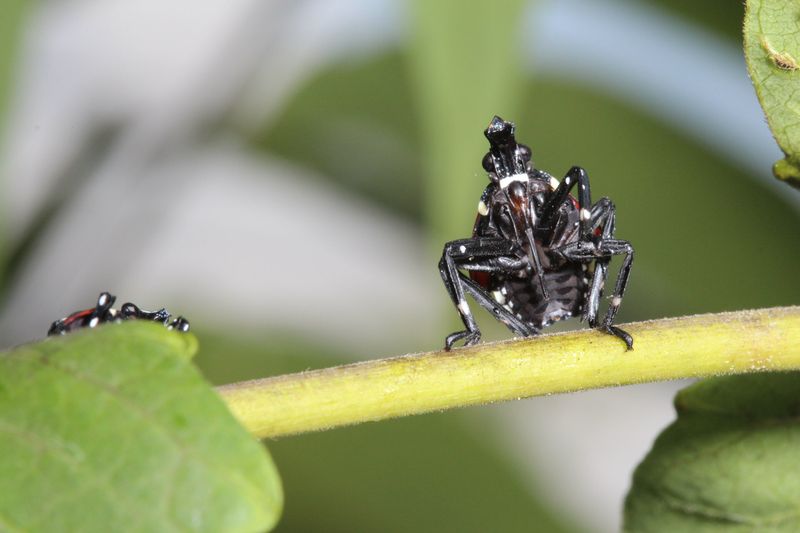
Ask any Finger Lakes grower what keeps them up at night and lanternflies rank high. Grapevines take the worst beating, losing sugar, yield, and winter hardiness after heavy feeding.
Home gardens face the same pressure on a smaller scale. Hops, apples, blueberries, plums, cherries, peaches, maples, and black walnut all rank among favored targets.
Handpicking remains underrated. Nymphs are slow in cool morning hours, and a gloved sweep into a jar of soapy water clears a vine fast.
Insecticidal soaps labeled for use on plants can work on contact when applied directly to the insects. It does nothing as a preventive coating, so aim carefully.
Netting gives real protection for high-value plants. Draping fine mesh over grapevines and berry bushes blocks access while still letting light and air through.
Inspect fruit clusters weekly through late summer. Sticky honeydew on the fruit invites sooty mold that ruins the harvest even when the vine survives.
Healthy plants tolerate feeding better, so keep up with watering and mulching during dry stretches. Stressed vines struggle far more.
For serious infestations or prized trees, a certified pesticide applicator can apply systemic products or targeted bark sprays with proper equipment.
Whatever route you choose, hold off on spraying anything while plants are blooming. Pollinators visiting your garden deserve protection too, and timing applications thoughtfully keeps them safe.
Monitor Tree Of Heaven And Other Preferred Hosts
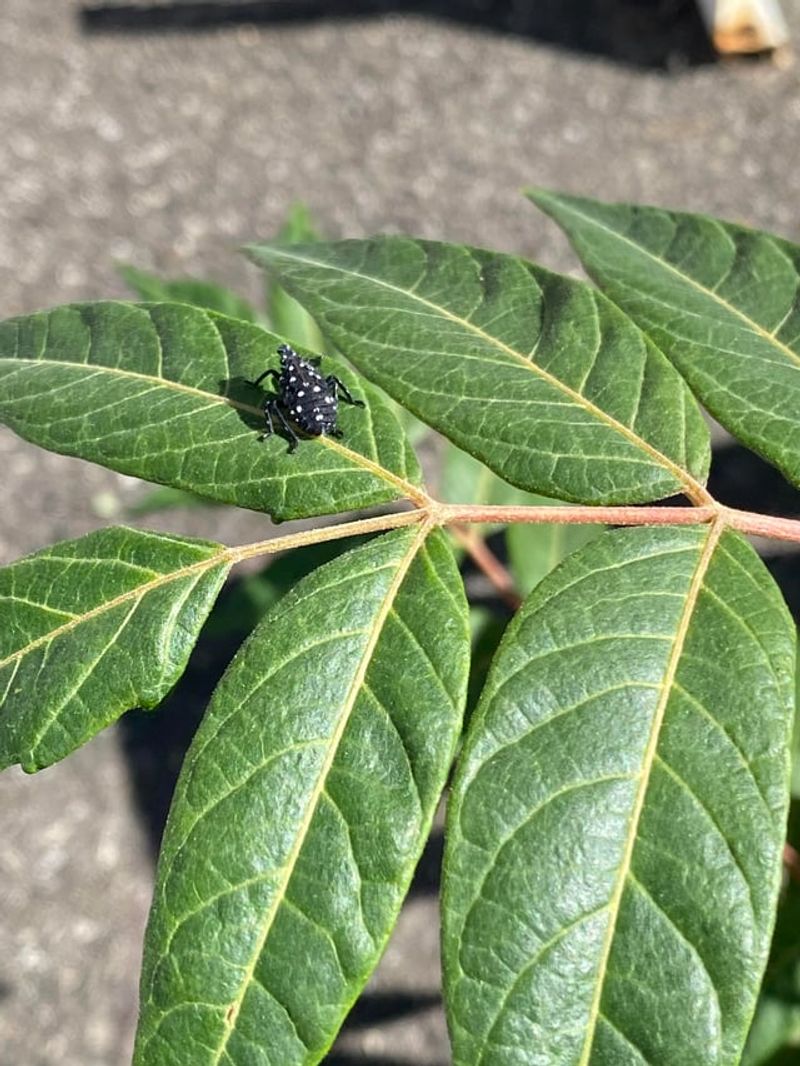
Both the Tree of Heaven and the spotted lanternfly are native to Asia, and this tree is one of the plants spotted lanternflies commonly use. Where one shows up, the other usually is not far behind.
Adults and late-stage nymphs pile onto these trees in remarkable numbers. Finding one on your property tells you where to focus attention.
Identification takes practice. Look for very long compound leaves carrying anywhere from 10 to 40 leaflets, each with a rounded, gland-tipped tooth near its base.
Crush a leaf and sniff. The smell is often compared to rancid peanut butter and can be a helpful clue alongside the leaf shape and bark.
Bark offers another clue, staying smooth and pale gray with faint lighter streaks on younger trunks. The tree spreads aggressively along fence lines, alleys, and disturbed ground.
Other hosts deserve regular checks, especially grapevines, red and silver maples, willows, and black walnut.
Walk those plants every week or two through summer. You are watching for clustered insects, sticky residue, and creeping black mold on bark.
Removing Tree of Heaven can help, though cutting alone triggers vigorous resprouting from the roots. Proper treatment usually requires herbicide applied by someone experienced.
Some property managers intentionally leave a single tree as a monitoring station, checking it often to gauge how local numbers are trending.
Use Targeted Control Methods When Populations Grow
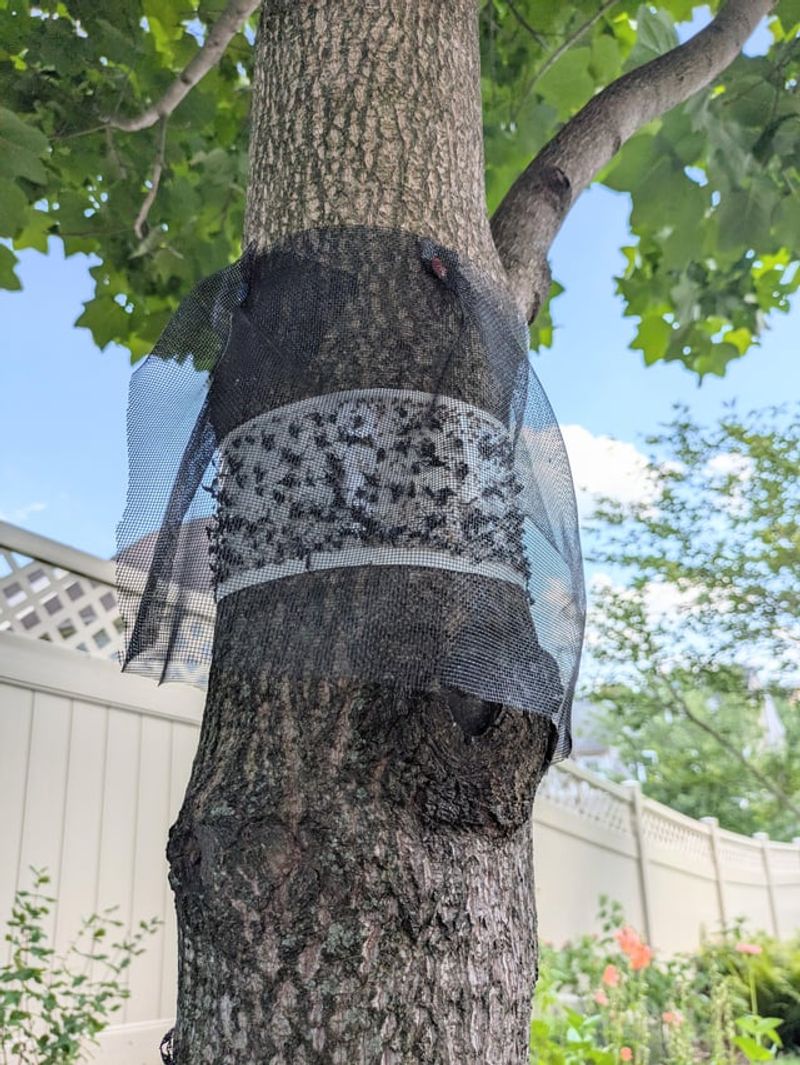
A handful of bugs calls for a shoe. A trunk crawling with dozens calls for a plan.
Stomping stays effective because these insects are clumsy flyers. Approach from behind and low, since they tend to hop forward and upward when startled.
Shop vacuums handle big clusters efficiently. Suck them up, then keep the canister sealed for at least 48 hours so nothing crawls back out.
Circle traps ring the trunk and funnel climbing nymphs into a collection bag. They catch steadily and require little maintenance beyond emptying.
Sticky bands also work, but they need a wildlife barrier such as vinyl mesh screening wrapped around the outside. Without it, birds, squirrels, and beneficial insects get caught by accident.
Insecticidal soaps and horticultural oils act on contact and break down quickly. Spray visible nymphs and adults directly, and hold off on any plant currently in bloom.
Skip broad-spectrum products applied across the whole yard. Those harm far more beneficial insects than lanternflies and rarely solve the problem.
Check traps and treated trees weekly so you can see whether numbers are dropping. Adjust your approach based on what you actually observe.
For stubborn infestations or valuable shade trees, a certified pest control professional working in New York can apply systemic treatments with equipment homeowners simply do not have.
Patience pays off, since steady pressure across seasons beats one dramatic effort.