The Invasive Moth That Can Leave Pennsylvania Oaks Nearly Leafless
Walk under a Pennsylvania oak in early summer and you expect cool shade and deep green quiet. Some years, though, the sunlight pours straight through, as if someone forgot to put the roof on.
The ground crunches underfoot, and a soft steady patter keeps falling from above on a rainless afternoon. Look up, and the branches resemble bare winter sticks stuck in the middle of July.
Something small has been very busy up there, chewing through leaves with an appetite nobody invited. Most homeowners notice the crunchy mess on the driveway long before they ever spot the actual culprit.
By September, the leftover evidence sits in plain sight on oak trunks, fences, and shed walls. Bare oaks in July are odd, though shade that arrives in October is honestly odder.
The Spongy Moth Behind Pennsylvania’s Bare Oak Branches
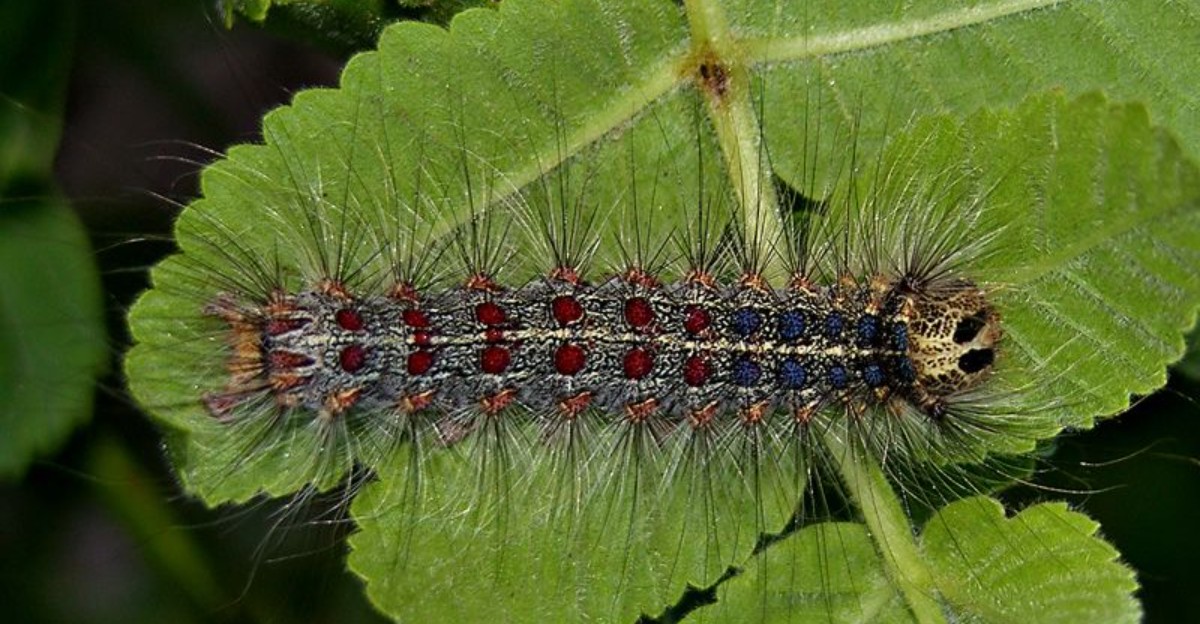
Lymantria dispar, known today as the spongy moth, escaped a Massachusetts silk experiment way back in 1869. It spread west and reached Pennsylvania forests by the 1930s, and it settled in like a houseguest.
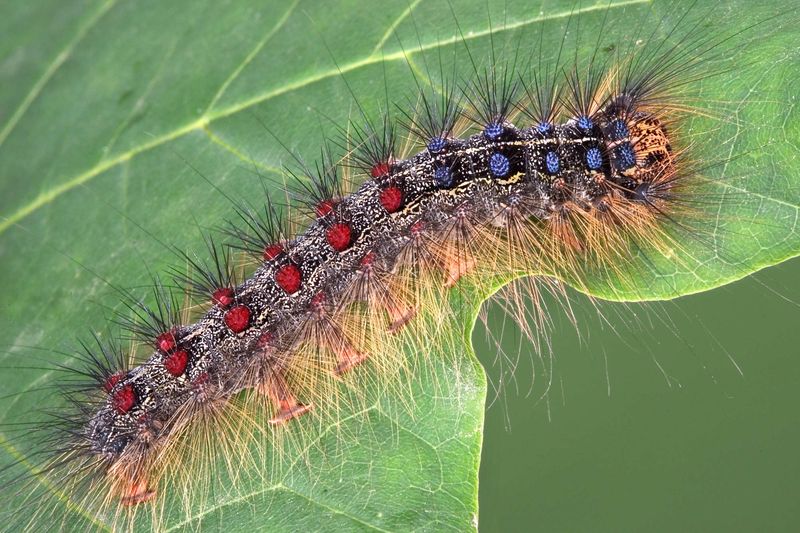
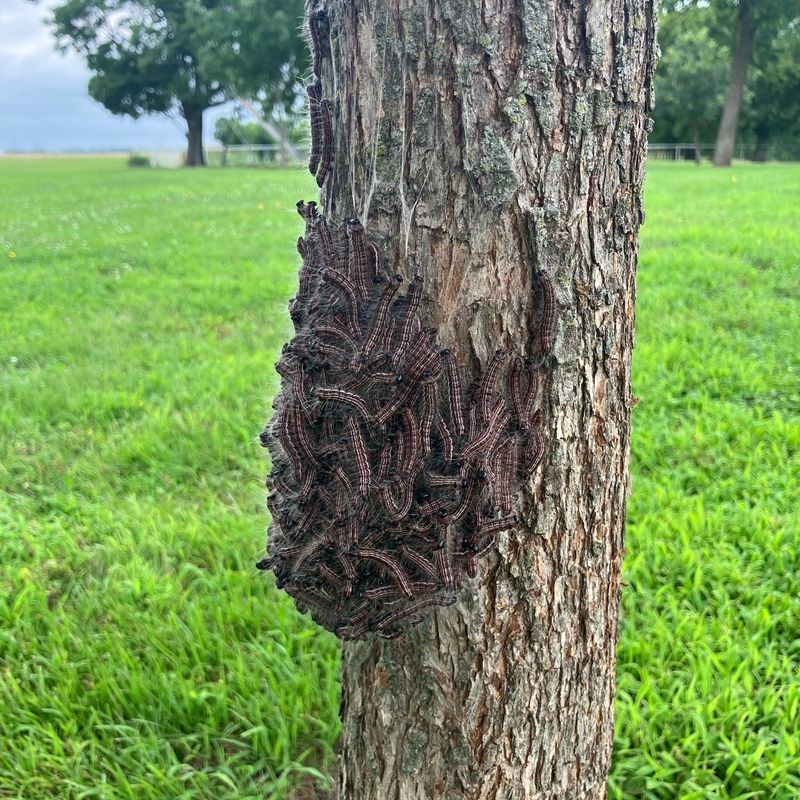
Caterpillars hatch in spring and feed mostly at night, though big populations chew around the clock. Oaks sit at the very top of their favorite menu, especially white and chestnut oaks.
A single caterpillar can eat roughly a square foot of leaf surface before it matures. Multiply that by thousands per tree and an entire ridge can look stripped by early July.
Pennsylvania has seen outbreak cycles roughly every eight to twelve years since the pest arrived. During bad years, the state has treated hundreds of thousands of forested acres from the air.
The name changed from an older term in 2022 because the old one carried an ethnic slur. Spongy refers to the tan, sponge-like egg masses the female glues onto bark.
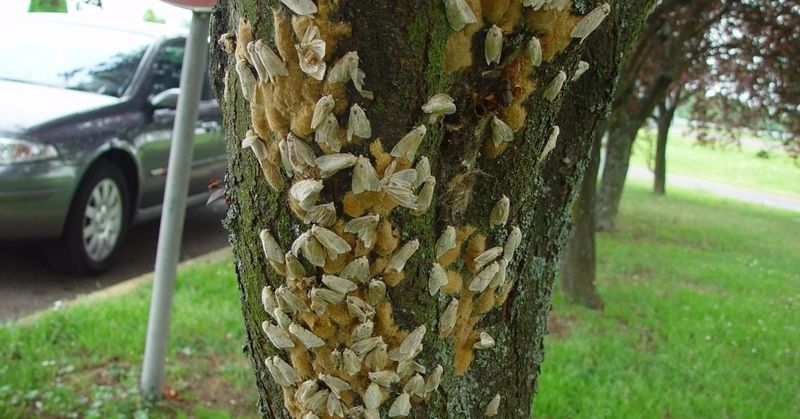
Adult moths appear in July and August, and the females are creamy white with dark zigzag marks. Females of this species cannot fly, so the caterpillars do most of the traveling.
Tiny hatchlings spin silk threads and balloon on the wind, sometimes drifting a mile or more. That free ride explains how one infested woodlot becomes a neighborhood problem fast.
Knowing the basic life cycle makes control much easier, since each stage has a weak point. Timing matters more than any product you can buy at the garden center.
Caterpillar Season And The Timing Of Heavy Feeding
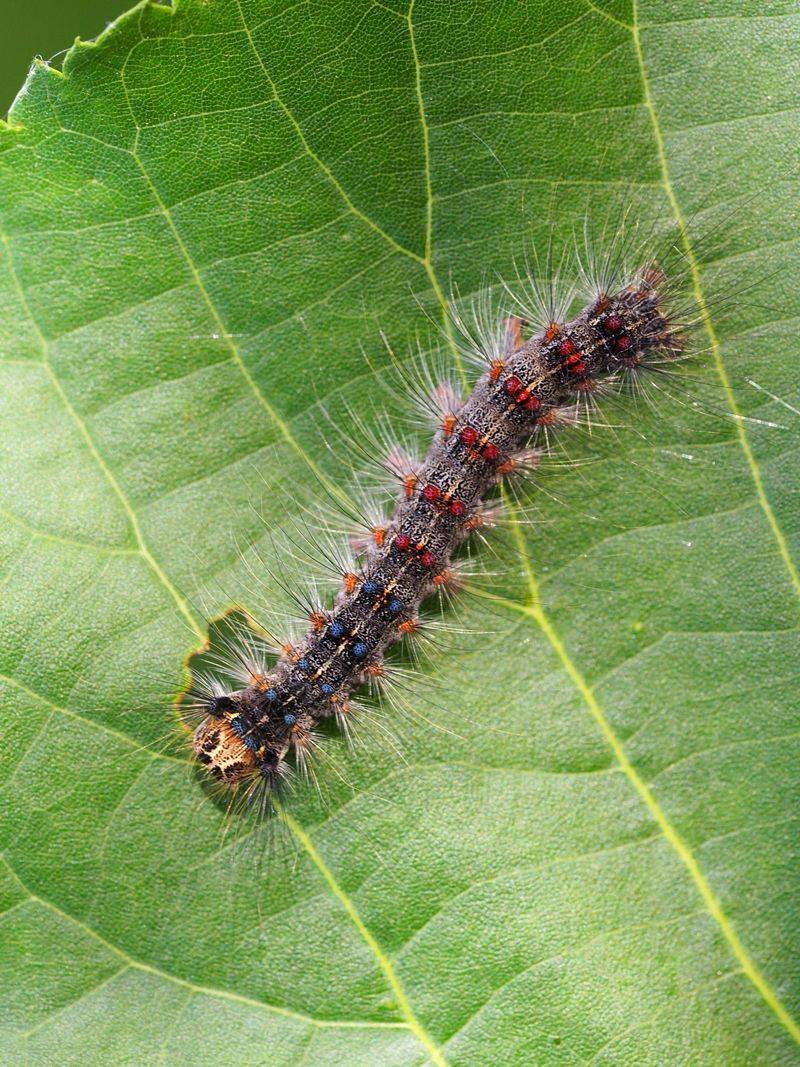
Eggs hatch in Pennsylvania around late April, usually when serviceberry blooms and oak buds start breaking. Those first caterpillars are barely a quarter inch long and very easy to overlook.
Feeding stays light through May, then explodes in June when the caterpillars reach their final stages. Roughly eighty percent of the season’s damage happens during those final two weeks.
Homeowners often hear the damage before seeing it, since frass pellets tick against leaves below. People often describe the sound as light rain falling on a perfectly clear summer afternoon.
By the Fourth of July, most caterpillars have stopped eating and moved into the pupal stage. Any spray applied after that point is basically money poured straight onto the driveway.
Your Pennsylvania Garden Changes Every Week. Your Plan Should Too.
Gardening in Pennsylvania changes quickly throughout the season. Every Friday you’ll receive a simple weekly plan showing exactly what to plant, prune, fertilize, harvest, and protect so you never miss the right timing.
Treatment windows stay narrow, so mark your calendar when oak leaves are about half expanded. Btk works best on small caterpillars, which means mid to late May in most counties.
Weather shifts the schedule, and a warm March can pull hatching forward by ten full days. Watching your own trees beats trusting a calendar date printed somewhere generic.
Around mid-July, adults emerge, mate, and females lay egg masses within a few feet of where they fed. The whole cycle runs just once each year, which gives you one clear shot annually.
September is a fine time to walk your property and count what next spring holds. Egg masses laid this summer sit there quietly, waiting for the following April.
Egg Masses On Bark, Firewood, And Lawn Furniture
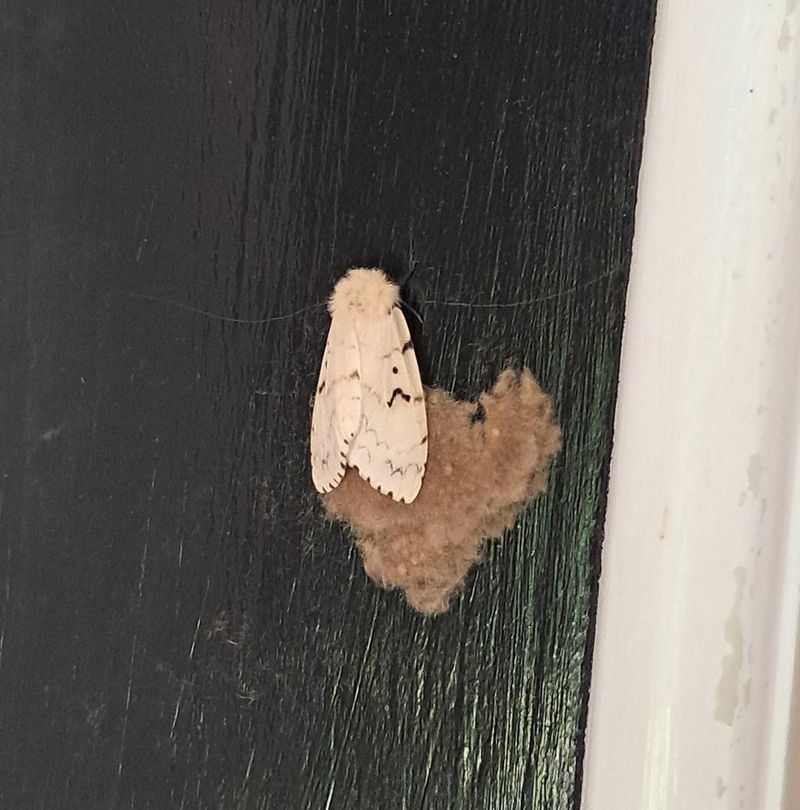
Each tan, fuzzy egg mass is about the size of a nickel or quarter. Inside sit anywhere from 500 to 1,000 eggs, all waiting quietly for spring.
Females glue them to oak bark, stone walls, woodpiles, grills, and the underside of patio chairs. Anything that sits still long enough during late July can become a nursery.
Scraping them off is satisfying, but doing it wrong just plants them in your soil. Scrape masses into a container of soapy water and let them soak overnight.
Firewood moves the pest farther in one afternoon than caterpillars manage in a year. Buy wood where you burn it, and check camper roofs before leaving a state park.
Horticultural oil labeled for egg masses can smother them, though coverage has to be thorough. Apply during a mild fall or early spring day when temperatures stay above freezing.
Counting masses gives a rough forecast for next season, and foresters use that trick constantly. More than 250 masses per acre usually signals visible defoliation the following June.
Old, faded masses from previous years look bleached and crumbly, and those are empty. Fresh ones feel firm and tan, like a piece of dense felt.
A headlamp helps, since masses often hide in bark furrows on the shaded north side. Check the first fifteen feet of trunk, then look up with binoculars.
Neighbors who scrape together get better results, because those hatchlings drift across property lines. Make it a fall chore, right alongside gutter cleaning and hose draining.
Oak Trees Under Stress After Repeated Defoliation
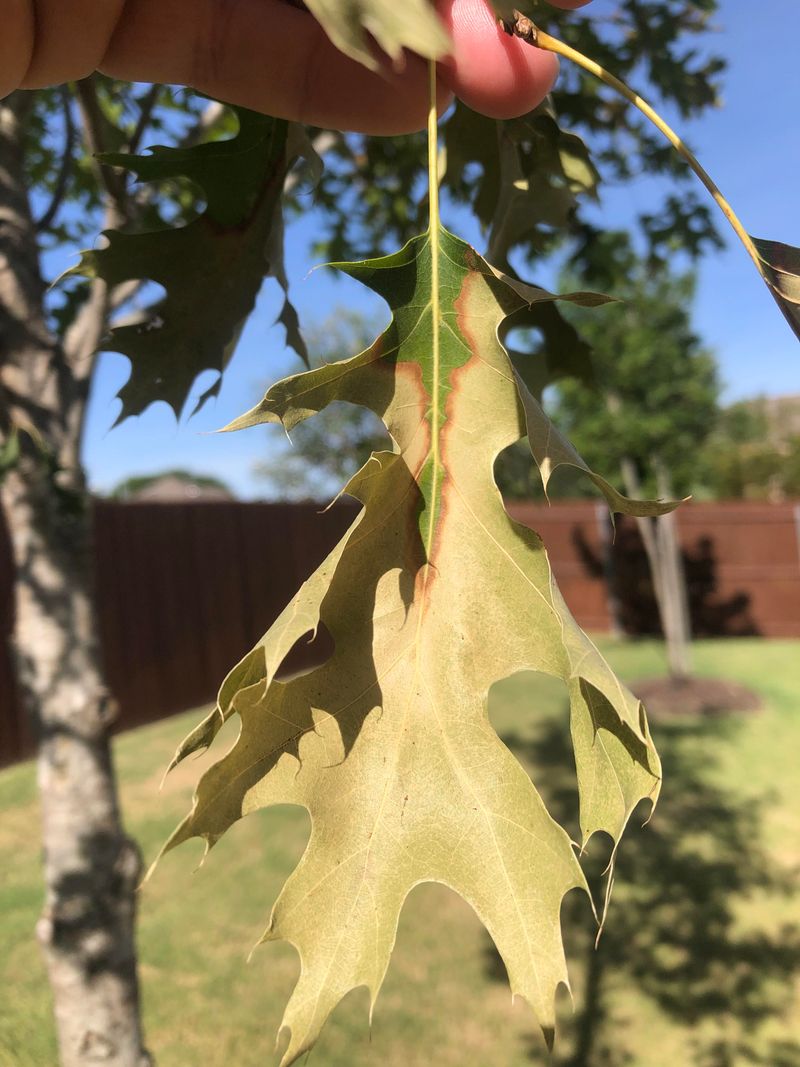
One summer stripped bare rarely finishes a healthy oak, and most trees pull through fine. Most trees push out a second set of leaves by August, called refoliation.
Growing a whole new canopy burns through stored sugars the tree saved for winter. Do that two or three years running, and the reserves run dangerously low.
Weakened oaks then attract secondary pests like the two-lined chestnut borer and armillaria root rot. Those opportunists finish what the caterpillars started, often within two seasons.
Oaks in dry, rocky ridge soil struggle far more than trees in deep valley loam. Drought stacked on defoliation is the combination foresters worry about most.
Watering matters here, and a slow soaking once a week during dry spells helps enormously. Aim for an inch of water spread across the root zone, not the trunk.
Skip heavy nitrogen fertilizer on a stressed oak, since it pushes soft growth the tree cannot support. Mulch, water, and patience beat any quick fix sold in a bag.
Acorn production drops sharply after defoliation, which ripples out to turkeys, deer, and bears. Pennsylvania’s wildlife depends on oak mast more than most people realize.
Signs of real trouble include sparse canopy, small leaves, and branches thinning from the top. Call a certified arborist before removing anything, because many oaks bounce back.
Give a defoliated oak two or three growing seasons before judging its long-term future. Trees keep surprises in reserve, and plenty of them recover their full canopy.
Common Mistakes Homeowners Make With Home Remedies
Duct tape wrapped sticky side out sounds clever, and it traps plenty of caterpillars. Unfortunately, it also catches birds, bats, and lizards that would happily eat those caterpillars.
Sticky bands cause real harm to wildlife, so cover the adhesive with window screen. Better yet, switch to a burlap skirt, which sorts insects without trapping songbirds.
Spraying bleach, gasoline, or dish soap onto bark damages the tree more than the pest. Bark is living tissue, and harsh chemicals cook it right along with the eggs.
Timing errors waste the most money, and Btk sprayed in July accomplishes almost nothing. The product only works when small caterpillars actively chew on freshly treated leaves.
Some folks power wash egg masses off siding and call the job finished. Blasted eggs land in mulch, hatch normally, and climb right back up in April.
Hiring the cheapest sprayer without checking credentials can backfire in a serious way. Pennsylvania requires pesticide applicators to be licensed, and asking for that number is fair.
Panic removal is another regret, since homeowners cut healthy oaks after one rough summer. Bare branches in July often leaf out again before Labor Day weekend.
Skipping the fall check is the quiet mistake that costs you the following spring. Twenty minutes with a scraper in September beats a miserable June.
Ignoring neighbors rarely works, because the caterpillars treat fence lines as suggestions. A shared weekend of scraping outperforms one heroic effort on a single lot.
Burlap Bands, Tree Wraps, And Practical Backyard Fixes
Burlap banding is the cheapest trick that actually works, and kids genuinely enjoy helping. Wrap a foot-wide strip around the trunk at chest height, then fold it over.
Caterpillars climb down each morning to hide from heat and predators, tucking under the flap. Check the band midday, sweep them into soapy water, and repeat all week.
Btk, a soil bacterium sold as Bacillus thuringiensis kurstaki, targets caterpillars and spares bees. Timing is the catch, since it works only on young larvae in May.
Hiring a professional for tall oaks makes sense, because backpack sprayers cannot reach eighty feet. Licensed applicators use high-pressure equipment and know the correct rate per acre.
Nature helps more than people expect, thanks to a fungus called Entomophaga maimaiga. Wet springs let that fungus collapse huge caterpillar populations without any help.
A nucleopolyhedrosis virus also crashes outbreaks once caterpillar numbers climb too high. Those natural controls explain why local outbreaks usually fade after two or three seasons.
Encourage birds by leaving brush piles, adding water, and planting native shrubs nearby. Cuckoos, blue jays, and chickadees all eat these caterpillars with real enthusiasm.
Tree bands sold commercially work fine, but plain burlap and twine cost almost nothing. Save the money for a soaker hose, which your oak will appreciate more.
Mark treatment dates on the fridge calendar so next spring does not sneak past. Consistency, not intensity, is what protects a backyard oak over many years.