Most Arizona Homeowners Are Clueless About This Desert Native’s Power — It’s More Than Just A Plant
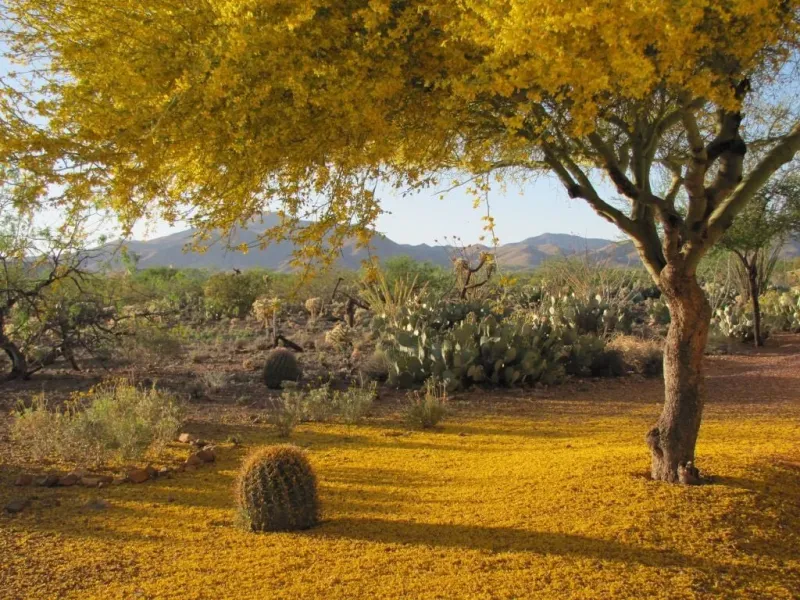
Walk past a palo verde in a Phoenix or Tucson yard and you might just see a spindly tree with tiny leaves. Look closer, though, and you are looking at one of the Sonoran Desert’s hardest-working native trees.
A well-placed palo verde can deliver filtered shade, spring nectar, wildlife shelter, and comparatively low water demand in one package. Understanding what it actually does, and what it cannot do, makes the difference between a tree that thrives and one that disappoints.
Palo verde is the strongest fit for the unnamed desert native
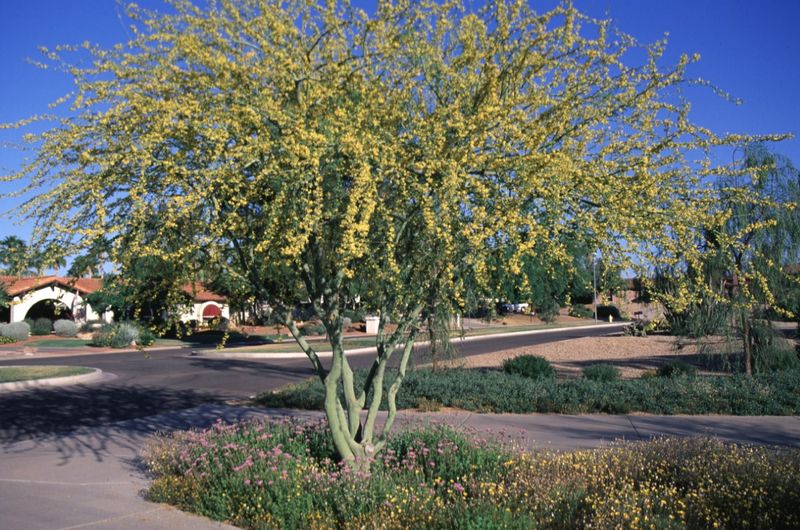
When people talk about a desert native that does more than most homeowners expect, palo verde is the tree that fits the description best. Two species stand out in low-desert Arizona: blue palo verde (Parkinsonia floridaP. microphylla) and foothill, or little-leaf, palo verde ().
Both are native to the Sonoran Desert and well-suited to the extreme heat, alkaline soils, and intense sun found in Phoenix, Tucson, and similar low-elevation areas.
The identification here is a strong, evidence-based fit rather than a certainty, because the original description of this unnamed plant did not specify a species. What University of Arizona Cooperative Extension guidance on palo verde and mesquite does confirm is that palo verde functions as more than a decorative tree.
It provides filtered shade, produces seasonal nectar, offers food resources through its seed pods, and can shelter smaller desert plants beneath its canopy.
The corrected premise here is straightforward: a well-placed palo verde can combine practical shade, habitat value, pollinator resources, and comparatively low water demand in a single low-desert yard tree. That is a meaningful combination for Arizona homeowners who want a functional landscape without the water bills of a dense, high-canopy species.
The tree earns its place through specific, measurable contributions rather than through novelty or secrecy.
Green stems help palo verde handle desert conditions
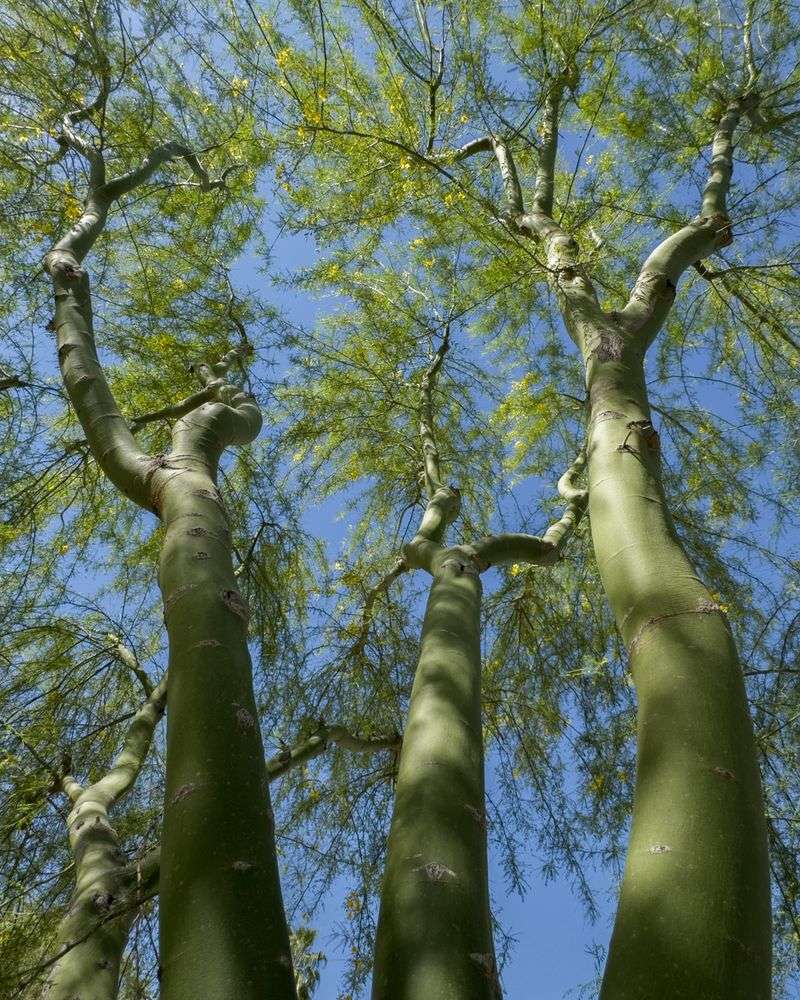
Most trees depend almost entirely on their leaves for photosynthesis. Palo verde takes a different approach.
Its stems and branches are green because they contain chlorophyll, which means the tree can keep producing energy even when it drops most or all of its leaves during drought or extreme heat. That is where the name comes from: “palo verde” translates from Spanish as “green stick,” and the name describes exactly what you see.
UA Extension’s overview of Parkinsonia trees explains that this stem photosynthesis is a genuine desert adaptation, not just a cosmetic trait. By keeping the bark green and metabolically active, the tree reduces its dependence on a full leaf canopy during the hottest and driest months.
When monsoon rains arrive or temperatures ease, the tree leafs out more fully again.
That said, green bark does not make palo verde invincible. A tree planted in the wrong spot, watered incorrectly during establishment, or left without structural pruning after storm damage can still struggle or fail.
The green stems are an advantage specific to desert conditions, not a substitute for good planting and ongoing care. Compacted soil, poor drainage, or repeated physical injury to the bark can undermine even a well-adapted tree.
Your Arizona Garden Changes Every Week. Your Plan Should Too.
Gardening in Arizona changes quickly throughout the season. Every Friday you’ll receive a simple weekly plan showing exactly what to plant, prune, fertilize, harvest, and protect so you never miss the right timing.
Think of this feature as one tool in the tree’s survival kit, not a guarantee of zero maintenance.
The open canopy offers useful shade without promising deep cooling
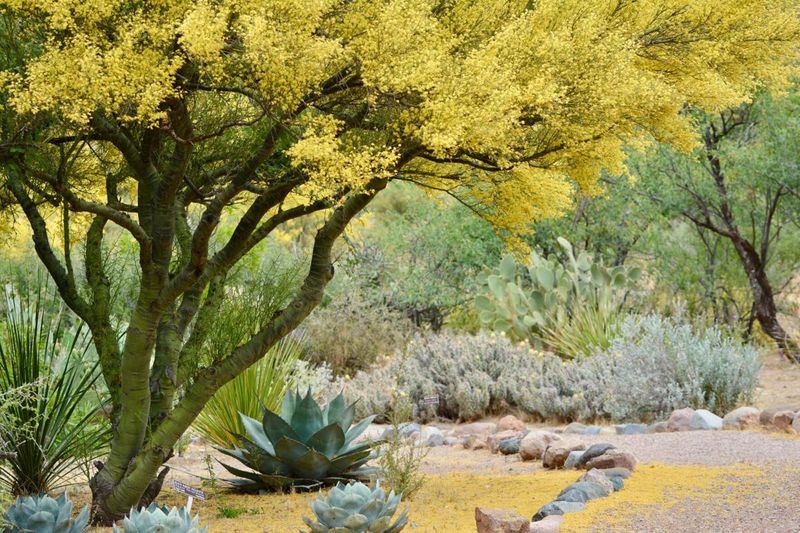
Shade matters enormously in low-desert Arizona, where summer temperatures routinely exceed 110 degrees Fahrenheit in Phoenix and surrounding areas. Palo verde can reduce direct sun exposure on soil, patios, and nearby plants, which helps lower surface temperatures during the hottest part of the day.
That is a real and measurable benefit for a low-desert yard.
The canopy, though, is open and airy rather than dense. Sunlight filters through rather than being fully blocked, so the shade palo verde casts is more like dappled light than the solid shadow you get under a large ash or ficus.
For desert-adapted understory plants, agaves, or ground covers that tolerate partial sun, that filtered light pattern works well. For a homeowner hoping to sit in deep shade on a 108-degree afternoon, it will fall short of expectations.
Low-elevation Arizona cities like Phoenix and Tucson experience some of the most intense solar radiation in the country, and UA Extension’s Arizona climate zone guidance makes clear that plant selection needs to match those extremes. Palo verde is a strong fit for that climate, but its open structure is a design feature as much as a limitation.
Pair it with desert-adapted companions rather than expecting it to duplicate the cooling effect of a high-water tree with a thick, closed canopy. Placed on the west or south side of a patio, it can still meaningfully reduce afternoon heat load on a structure or seating area.
Flowers, pods, and shelter add specific wildlife value
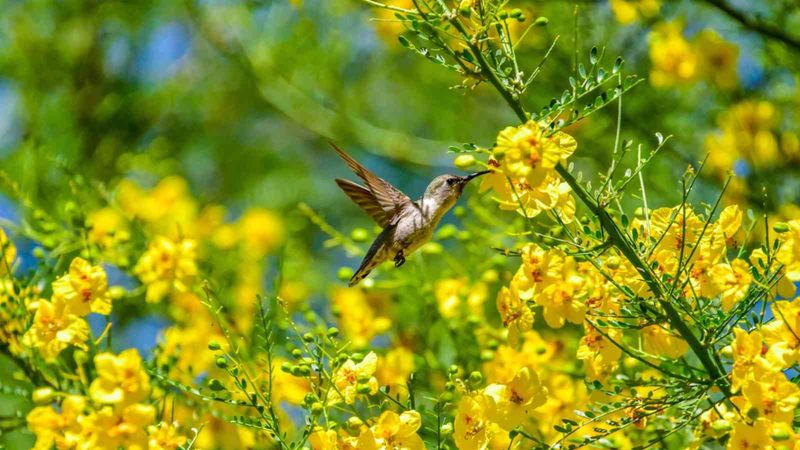
Spring in the Sonoran Desert brings one of palo verde’s most visible contributions: a heavy flush of small yellow flowers that cover the canopy for several weeks. Those flowers produce nectar, drawing native bees, butterflies, and other pollinators.
For low-desert homeowners trying to support pollinator activity in the yard, that seasonal bloom is a practical asset.
After flowering, palo verde produces seed pods that wildlife and livestock use as a food source. The canopy also provides structure and shade that smaller desert plants, including young cacti, can use as a nurse-plant shelter.
That nurse-plant relationship is documented in Sonoran Desert ecology: the tree’s shade and reduced evaporation can improve establishment conditions for seedlings that would otherwise struggle in exposed, baked soil.
Those are real contributions, but they come with limits worth understanding. According to UA Extension’s pollinator planting guide for low-desert Arizona, pollinators need a succession of flowering plants that provide resources across the full growing season.
Palo verde contributes a spring pulse of nectar, but a single tree cannot carry the entire pollinator workload through summer, fall, and winter. Pair it with other low-desert bloomers like desert willow, brittlebush, or penstemons to fill in the calendar.
Wildlife response to any single tree also depends on the surrounding yard, available water, pesticide use, and nesting cover, so one palo verde is a useful piece of a broader habitat plan rather than a complete solution on its own.
Species, soil, and placement determine whether the tree fits
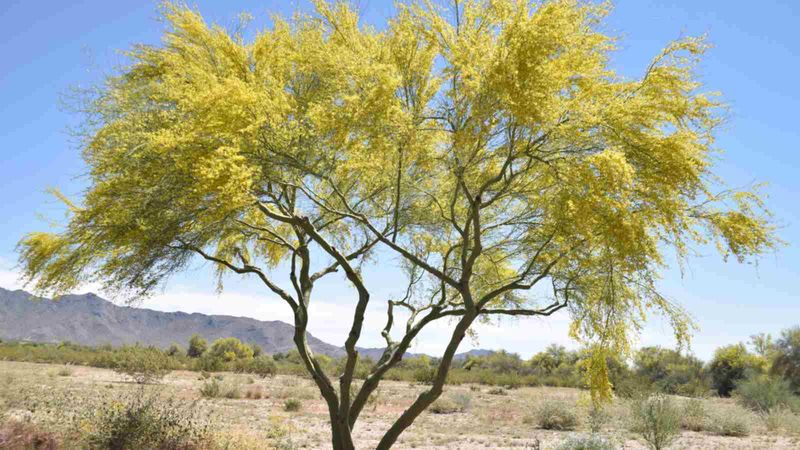
Not all palo verdes behave the same way, and picking the right one for a specific yard matters. Blue palo verde naturally grows along washes and in areas with deeper, moister soils.
That origin means it can handle more water and often grows larger, but it may also need supplemental irrigation during prolonged dry periods in a typical residential lot. Foothill palo verde, by contrast, is associated with rocky hillsides and is notably more drought tolerant once established, making it a practical choice for drier, shallower soil conditions common in many Phoenix and Tucson neighborhoods.
Site selection shapes the outcome as much as species choice. Palo verde needs full sun and well-drained soil.
Before planting, check for caliche layers or compacted subsoil that can block roots and trap water. A simple drainage test, filling a hole with water and watching how fast it drains, can save a lot of trouble later.
The trunk flare should sit at or slightly above grade, never buried, because planting too deep invites rot and instability.
Mature canopy spread also deserves attention up front. Some palo verde trees reach 25 to 30 feet wide at maturity, and thorny shoots can become a problem near walkways, driveways, or play areas.
Keep the tree clear of overhead utilities, rooflines, and structures. Falling pods can be a nuisance around pools or patios.
UA Extension’s right-plant guidance consistently emphasizes matching mature size and growth habits to the space before planting, not after. A few minutes of planning at the nursery prevents years of corrective pruning.
Water the expanding root zone, not the trunk
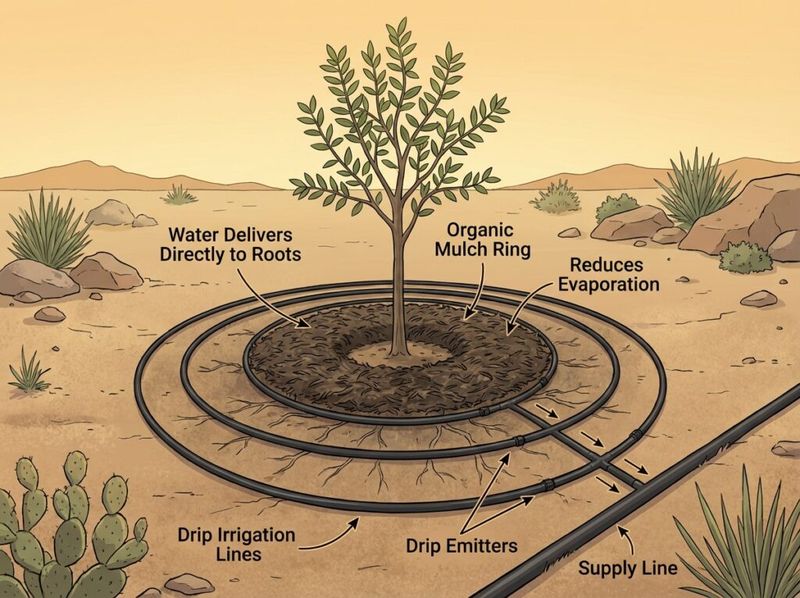
Palo verde’s reputation as a drought-tolerant tree is well-earned, but it comes with a timeline. A newly planted tree is not yet established and needs more frequent irrigation than a mature specimen.
During the first one to two summers, regular deep watering gives the root system time to spread into surrounding soil. Cutting back too fast during that window stresses the tree at the worst possible time of year.
Where the water lands matters as much as how often you apply it. UA Extension’s tree and shrub watering guidance explains that the most active absorbing roots are located around and beyond the canopy edge, not near the trunk.
Placing emitters directly against the trunk wastes water and can promote rot. As the canopy grows outward, move or add emitters to keep pace with the expanding root zone.
Established trees can handle longer intervals between waterings, but “established” does not mean “never water.” During an extended stretch of triple-digit heat with no monsoon rain, even a mature palo verde can benefit from a deep soak at the drip line. Blue palo verde, in particular, may need more supplemental irrigation than foothill palo verde because of its natural affinity for wetter sites.
Late fall is generally the preferred planting window in low-desert Arizona because soil stays warm while air temperatures cool, giving roots time to establish before summer. Early spring can also work, though summer heat arrives faster and establishment may be harder.
Match the watering schedule to the species, soil type, and actual weather conditions rather than following a fixed calendar.
Thorns, litter, and maintenance shape the real tradeoff
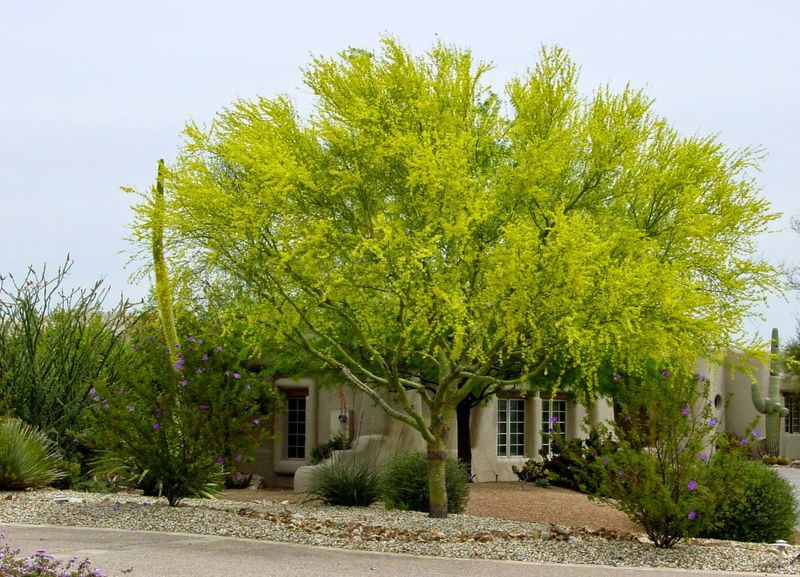
A palo verde is not a set-it-and-forget-it tree. Young shoots can carry small thorns that become a real inconvenience near foot traffic areas, and the spring bloom drops a heavy layer of tiny yellow petals that coat patios, pool decks, and walkways for weeks.
Seed pods follow later in the season and can be equally messy. For homeowners with pools or children’s play areas directly beneath the canopy, that litter cycle is worth factoring in before the tree goes in the ground.
Native status does not eliminate the need for structural pruning, especially after monsoon storms. Palo verde can suffer branch failure during high winds, and removing crossing or weak branches before storm season reduces that risk.
Palo verde borers, mistletoe, and witches’ broom are all documented issues that may require monitoring or professional attention. Overwatering compounds many of these problems: frequent shallow irrigation encourages surface rooting, which makes trees less stable and more vulnerable to wind throw.
On the question of water use relative to other trees, palo verde generally needs less irrigation than many conventional shade trees planted in low-desert Arizona yards. That comparison holds up, but it does not extend to all native trees equally.
Mesquite, for example, is drought tolerant and valuable for shade and wildlife, but UA Extension notes that low-desert mesquite typically requires more water than palo verde or ironwood, particularly during drought. Knowing that distinction helps homeowners make accurate comparisons rather than assuming all native trees carry identical water demands.
Choose palo verde for its real benefits, not a pest-control promise
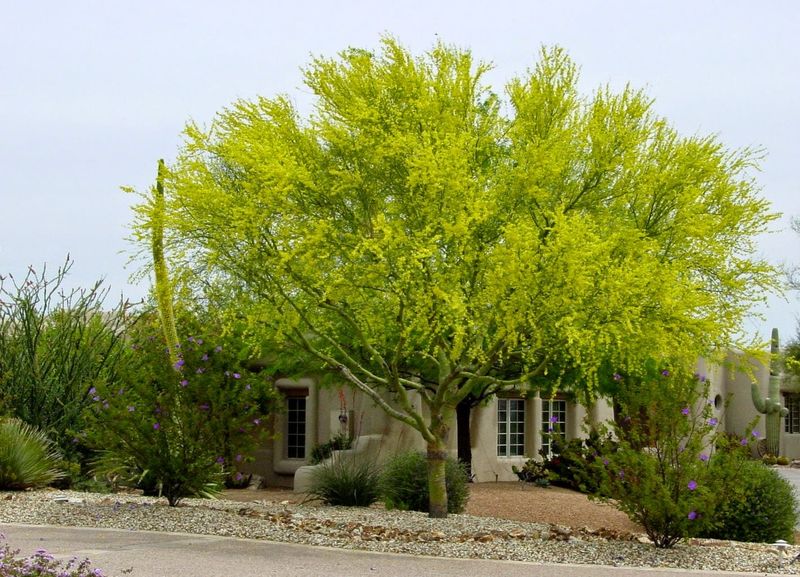
A well-sited palo verde can deliver filtered shade, spring nectar, seed pod resources for wildlife, nurse-plant shelter for smaller desert plants, and comparatively low water demand once established. Those are concrete, documented benefits that make it a practical choice for low-desert Arizona homeowners in Phoenix, Tucson, and similar areas.
Judge the tree on species selection, mature placement, establishment care, and your own tolerance for seasonal litter and thorns.
One claim that does not hold up is the idea that planting a palo verde will repel or reduce scorpions, mosquitoes, ticks, or other household pests. No reliable source supports that outcome.
UA Extension’s guidance on scorpions focuses on exclusion, habitat management around the home, and professional advice, not on tree selection as a control strategy. Adding a palo verde to your yard will not make it less inviting to scorpions.
The stronger case for palo verde is the one grounded in what the tree actually does: it handles Sonoran Desert heat and alkaline soil without demanding the water a dense-canopy shade tree requires, and it adds seasonal ecological value that a gravel yard or non-native ornamental cannot match. Plant it in the right spot, water the root zone correctly during establishment, and keep realistic expectations about shade density and cleanup.
That is a tree worth having in a low-desert Arizona yard.