The Ohio Landscape Plant People Loved For Fall Color Before We Understood Its Invasive Side
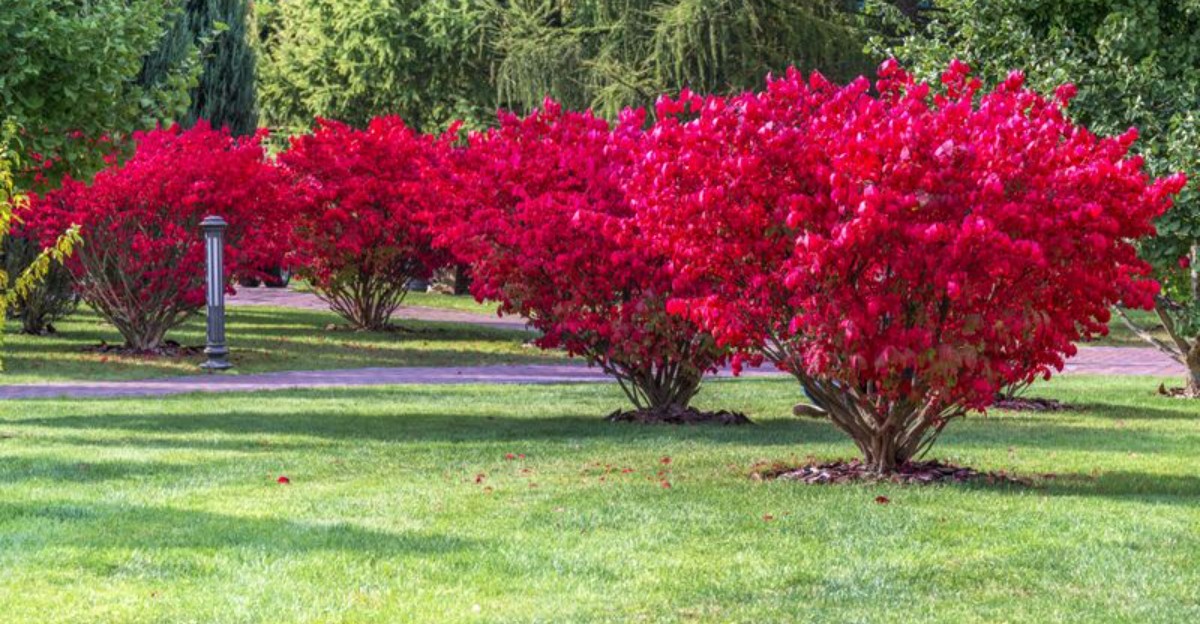
Ohio yards used to glow every October thanks to one shrub that turned entire front lines into a wall of deep red.
Nurseries sold it for decades as the easy fix for boring fall color. Homeowners planted it near driveways, fences, and property lines without a second thought.
Birds eat the berries, then carry seeds far past the original yard. That shrub takes root in forests and roadsides, crowding out native plants that provide important food and habitat for local wildlife.
Ohio now lists it among the species land managers work to remove from wild spaces. Most homeowners never saw that coming from something that once felt like a harmless landscape staple.
That bright red hedge might still be standing in your yard, admired for the same reason it caused trouble everywhere else.
Look twice at what’s lining your property this fall. Popularity never guaranteed it belonged there in the first place.
1. Meet Burning Bush, The Once-Popular Fall Favorite
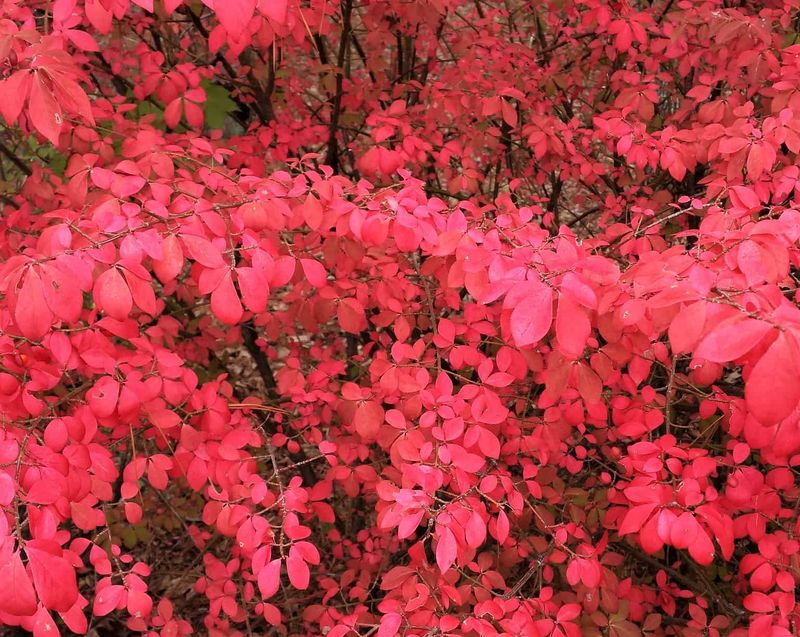
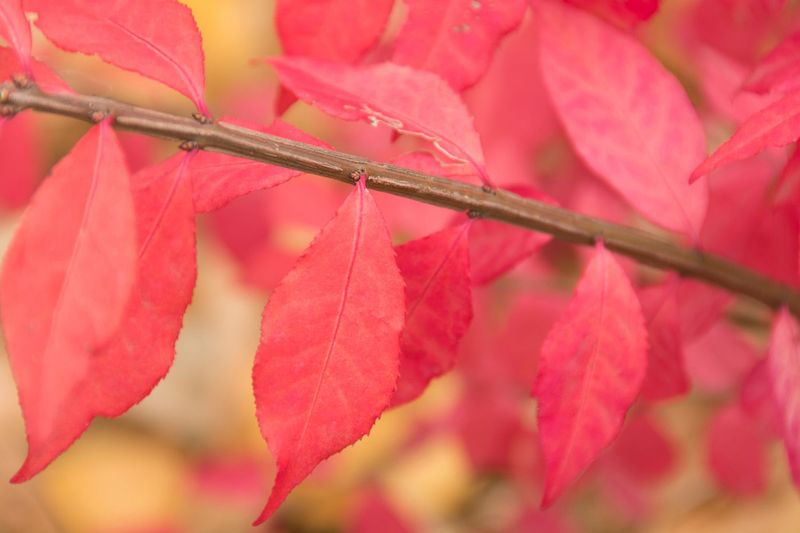
Picture a shrub so bright in October that neighbors slow their cars down. That plant is Euonymus alatus, sold for generations under the name burning bush.
Gardeners also call it winged burning bush, winged euonymus, or winged spindle tree. The wing part is literal: young green-to-brown twigs grow two to four corky ridges that stick out like tiny fins.
Its home range is northeastern Asia, mainly central China, Japan, and Korea. Nurserymen brought it to the United States in the mid-1800s, around the 1860s, purely as an ornamental.
Leaves are dark green through summer, elliptical, finely toothed along the edges, and set opposite each other on the stem. That tidy, dense look is part of why designers reached for it so often.
Size is where many homeowners get surprised. Catalog tags often say 8 to 10 feet tall, but older specimens can stretch 12 to 20 feet and spread just as wide.
Anyone who has tried to keep one pruned beside a porch window knows the struggle. The shrub simply wants to be bigger than the spot it was given.
Knowing the plant by sight matters before you make any decisions. Once you can spot those winged twigs, you will start noticing this shrub everywhere, including places nobody planted it.
2. Understand Why Its Red Color Won Homeowners Over
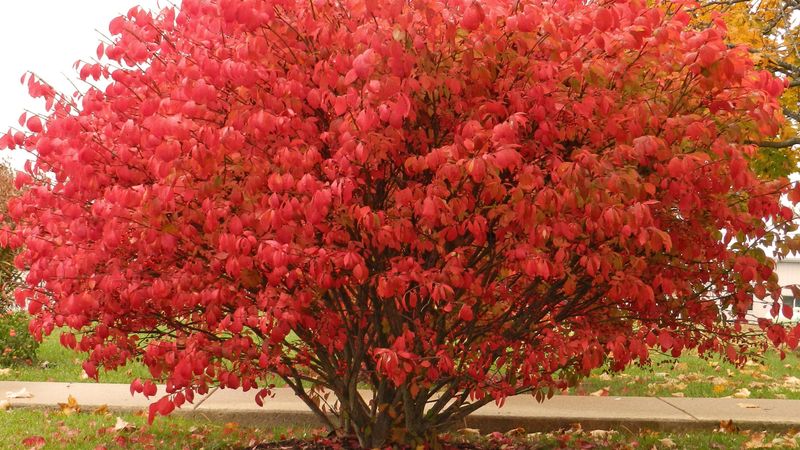
Few shrubs have ever marketed themselves this well. One October afternoon with sunlight behind those leaves and the sale was basically made.
The fall show runs from brilliant crimson to bright red, sometimes shading into fiery reds and purples. Plants grown in full sun tend toward vivid scarlet, while ones tucked in partial shade lean pinker.
There is a small physical quirk that boosts the effect. Leaves hang with a slight droop, so the colored surfaces catch light from more angles and the whole shrub seems lit from within.
Curb appeal explains a lot of its spread through Ohio subdivisions. Builders wanted something that looked finished fast, and this shrub delivered without much fuss.
Easy care sealed the deal. It shrugged off fertile soil, poor soil, a wide swing of pH levels, and both sunny and shady spots.
Your Ohio Garden Changes Every Week. Your Plan Should Too.
Gardening in Ohio changes quickly throughout the season. Every Friday you’ll receive a simple weekly plan showing exactly what to plant, prune, fertilize, harvest, and protect so you never miss the right timing.
Low maintenance means different things to different gardeners, but here it meant almost no babying. Water it the first season, and it mostly handled itself after that.
Adaptability is exactly the trait that later became a problem, though nobody connected those dots at first. A plant that grows happily in nearly any soil and light level in your yard will do the same thing in a woodland.
The beauty was real. The full picture just took longer to appear.
3. See How Birds Help Spread Its Seeds
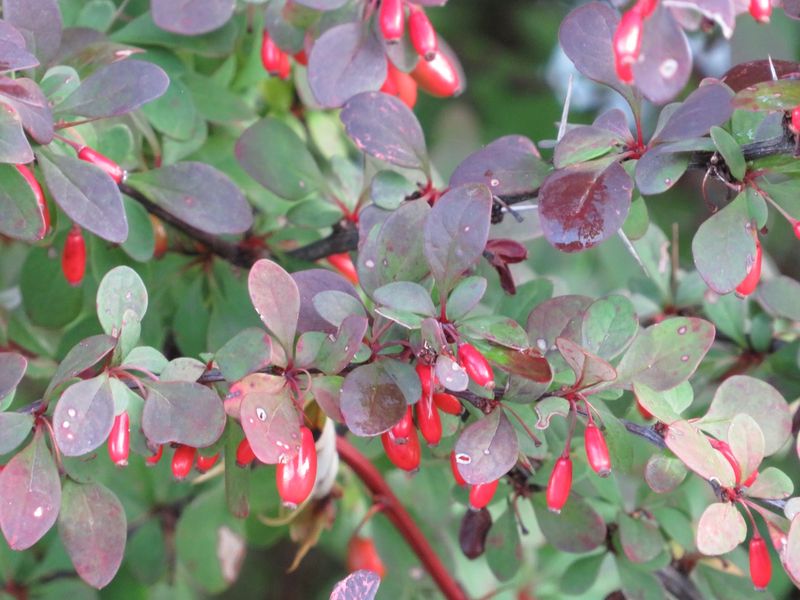
Here is the twist most homeowners never saw coming: the shrub had help.
Small yellow flowers appear in spring and are easy to miss entirely. What follows in early fall are little red, berry-like fruits called arils, each holding one or two seeds.
Those fruits hang on the branches well into winter, staying bright and visible when other food gets scarce. Hungry birds notice.
Robins, starlings, and cedar waxwings are especially good at moving these seeds around. A bird eats the fruit in your yard, flies off, and can drop the undigested seed in a nearby woodlot or natural area.
Quantity matters too. Burning bush is described as a prodigious seed producer, meaning a single mature shrub can send out an enormous number of potential new plants each year.
Multiply that by decades of plantings across neighborhoods and the math gets startling fast. No single gardener caused the spread, yet the whole landscape added up.
Deer add another wrinkle. White-tailed deer generally find the seeds and seedlings unappealing, so in areas with heavy deer pressure this shrub gets a competitive edge while native seedlings get browsed.
None of this makes birds the villains. They are doing exactly what birds do, just with the wrong menu item.
4. Recognize Where Burning Bush Escapes Landscapes
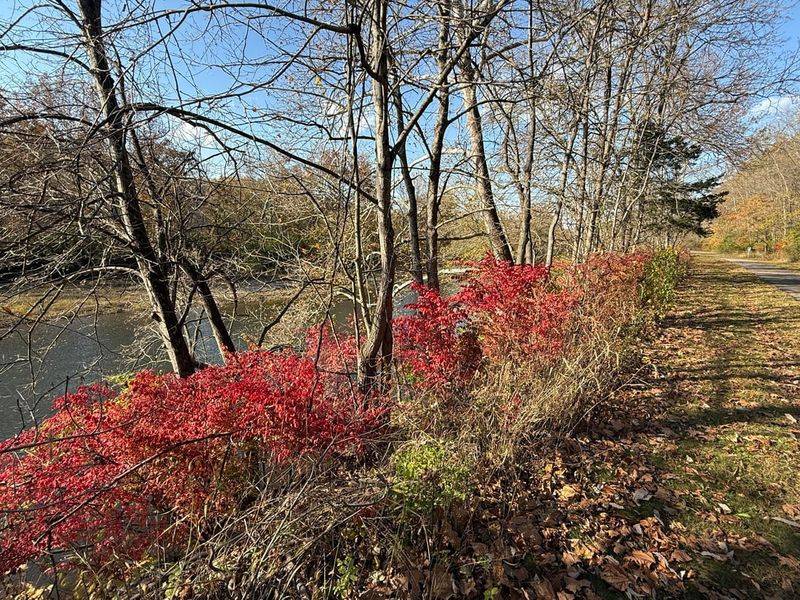
Take a walk on an Ohio woodland trail in late October and you might spot an odd red haze near the ground. That glow is usually escaped burning bush, seeded in by birds.
It turns up in high-quality woodlands, forest edges, open woods, pastures, roadsides, wetlands, prairies, and neglected lots in both cities and rural townships. Disturbed ground and untouched ground both work for it.
Once settled in, plants can knit together into dense thickets across the forest understory. Very little grows underneath them.
Two traits give it an unfair head start. It handles deep shade unusually well, and it leafs out earlier in spring and holds leaves later in fall than many native neighbors.
Extra weeks of sunlight each year add up to a real advantage. Spring wildflowers, young native shrubs, and tree seedlings lose the light and space they depend on.
Ohio invasive plant organizations identify burning bush as an invasive concern. Even so, as of 2025 its sale is not legally regulated in the state, so you can still find it for sale at some garden centers.
That gap between science and store shelves is why gardeners have so much influence here. Choosing what not to buy is a quiet but meaningful form of conservation.
5. Replace It With Better Ohio Native Shrubs
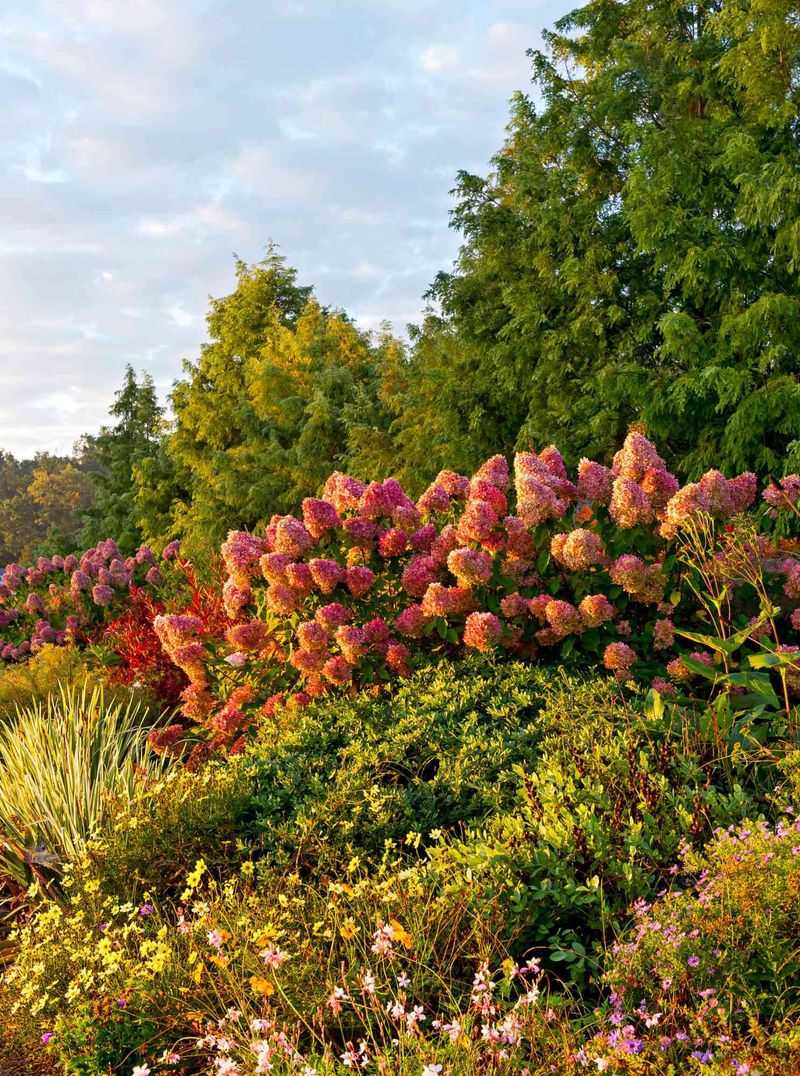
Swapping plants sounds like a sacrifice until you see what you gain. Native shrubs bring color plus a whole cast of visitors.
Our native plants evolved alongside local bees, butterflies, birds, and countless insects. That shared history means they supply food and shelter at exactly the right times of year.
Caterpillars are the part most people overlook. Native shrubs host native caterpillars, and those soft, protein-packed insects are what parent birds stuff into nestling beaks all spring.
Burning bush provides fewer ecological benefits than many native alternatives because it supports fewer native insects and does not offer the same habitat value.
There is a practical payoff for you as well. Plants suited to Ohio’s clay, rainfall patterns, and temperature swings usually need less watering and less fertilizer once their roots settle in.
Fewer inputs means fewer chores. Your hose and your wallet both get a break after the first year or two.
Start small if the idea feels overwhelming. Replace one shrub this season, watch what shows up, and let curiosity do the rest.
Many gardeners report that the bird activity alone convinced them. A yard that hums and chirps feels different from one that simply looks tidy.
6. Choose Native Plants With Similar Fall Color
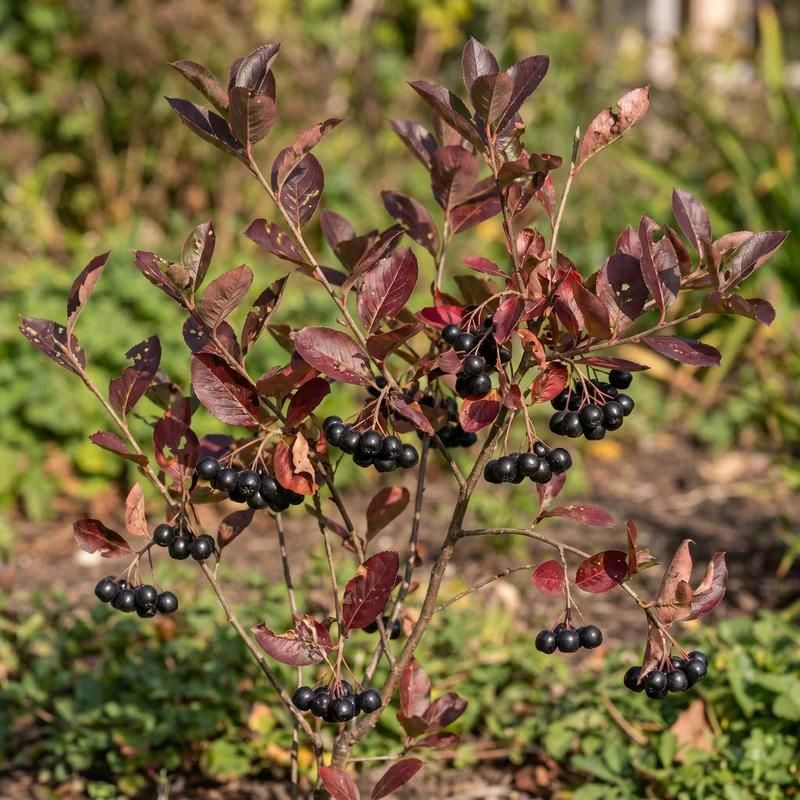
Good news for color chasers: Ohio natives can absolutely compete with that famous red.
Virginia sweetspire (Itea virginica) turns deep red to orange, and compact cultivars like Little Henry fit tight spaces. Chokeberry (Aronia species) glows brilliant red and drops dark berries that birds actually use, with Brilliantissima a standout selection.
Viburnums deserve their own paragraph. Arrowwood viburnum (Viburnum dentatum) has handsome fall foliage, nannyberry (V. lentago) grows large with purple-red tones, and mapleleaf viburnum (V. acerifolium) pairs purple-red leaves with blue-black fruit.
Sumacs bring the drama. Smooth sumac and fragrant sumac both turn purple to red, and fragrant sumac works nicely as a sprawling groundcover on slopes.
Fothergilla offers white bottlebrush flowers in spring plus a mix of autumn shades, and the dwarf form suits smaller beds. Highbush blueberry (Vaccinium corymbosum) gives red foliage and fruit you can share with the robins.
Here is a fun one: eastern wahoo (Euonymus atropurpureus) is a native cousin found statewide that can look remarkably similar to burning bush.
For larger spaces, bottlebrush buckeye (Aesculus parviflora) and oakleaf hydrangea (Hydrangea quercifolia) both finish the season strong. Mix two or three and your October view gets richer than any single-species hedge.
7. Remove Established Shrubs With A Plan
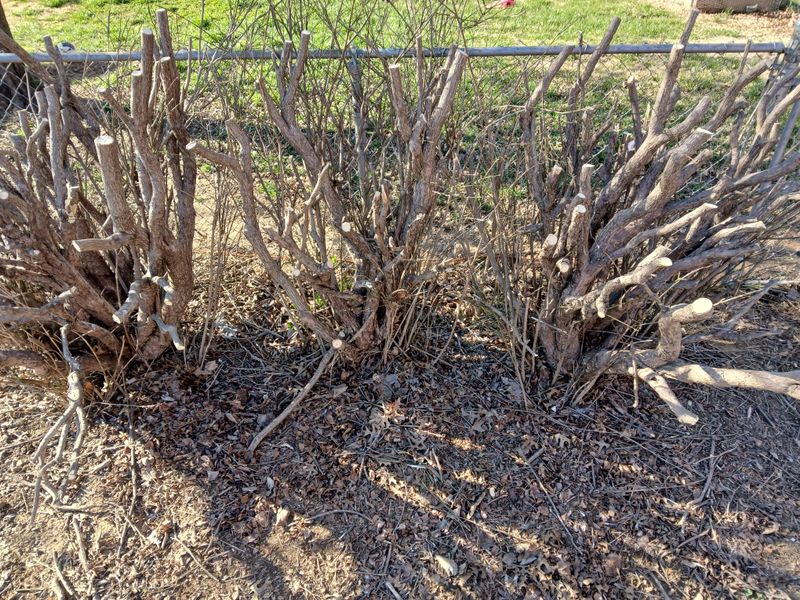
Grabbing loppers and going to town feels satisfying, and it also backfires. Cut a burning bush and leave the stump untreated, and it tends to resprout thicker than before.
Timing helps. Removing plants before fruits develop limits new seeds, and fall is a strong window for cut-stump herbicide work because plants are moving energy down to their roots.
Seedlings under about two feet come out by hand, especially after rain when soil releases roots easily. Bigger plants in scattered patches respond well to a root-wrenching tool or a sturdy hoe that lifts most of the root mass.
Mowing or brush-hogging a large patch clears the view but guarantees regrowth, so plan a follow-up treatment.
For cut-stump work, saw stems close to the soil and treat the fresh surface right away. Some labeled herbicide treatments may be used for persistent regrowth, following product directions and local recommendations.
Foliar spraying suits short plants after leaves fully expand and before fall color, with care to avoid drift. Basal bark treatment applies oil-based herbicide to lower bark on intact stems, and stump or basal work is possible year-round on dry, unfrozen wood.
Identify carefully first so native euonymus species stay put, then replant with natives.
8. Avoid New Invasive Plant Problems
Ever bought a shrub simply because it looked great in the parking lot display? Most of us have, and that is exactly how invasive plants keep moving.
A quick search before checkout changes everything. Plenty of widely sold ornamentals are documented invasives, and a tag saying vigorous or fast-growing rarely tells you the whole story.
Invasive means something specific in science. Non-native plants that spread aggressively, crowd out local flora, change habitats, and lower biodiversity earn that label, no matter how polite they behave inside a fenced yard.
Part of their success comes from missing checks and balances. The insects, diseases, and grazers that kept them in line back home simply are not here.
Some go further than crowding. Certain species shift soil chemistry, alter water conditions, or release compounds that make it harder for neighboring plants to grow.
Worth memorizing before your next nursery trip: bush honeysuckle, Callery or Bradford pear, multiflora rose, tree of heaven, wintercreeper, Japanese barberry, autumn olive, and dame’s rocket all cause trouble in Ohio.
Also worth doing is talking to the staff. Nurseries respond to demand, and repeated questions about native options genuinely shift what gets stocked.
One thoughtful purchase will not fix a statewide issue. Thousands of them, made yard by yard, absolutely add up.
9. Build A Fall Landscape That Supports Wildlife
A yard can look beautiful and be useful at the same time. Autumn is when that combination really shines.
Native plantings feed and shelter a long guest list: bees, butterflies, moths, songbirds, amphibians, small mammals, and reptiles all find something they need. Nectar, pollen, seeds, berries, and caterpillar host leaves cover most of the bases.
Fruit quality matters more than quantity. Native berries carry the fats and energy birds burn during migration and cold snaps, while fruits from invasive shrubs tend to fall short nutritionally.
Bigger benefits ride along too. Layered native plantings create habitat for wildlife populations in decline, soften urban heat, and soak up stormwater that would otherwise rush toward storm drains.
Fall happens to be a great planting season in Ohio. Cool nights, mild days, and steadier moisture let roots settle in before the ground freezes.
Resist the urge to tidy everything in November. Leaving ornamental grasses and sturdy stems standing through winter gives insects and birds cover plus a little food, and frost on those seed heads looks wonderful.
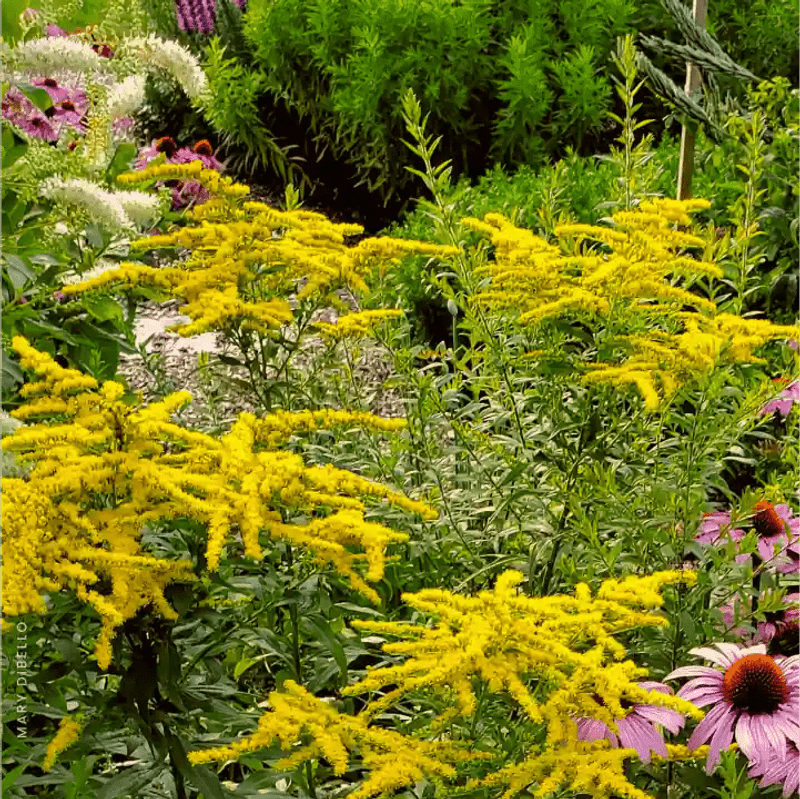
For maximum impact, lean on keystone plants. Goldenrod, coneflower, tickseed, and black-eyed Susan attract and support an impressive range of native insects.
Pair those with a native shrub or two, and your October view earns its glow honestly.