Ravens In Your Arizona Yard: The Wolf-Call Trick Is Unproven, But Their Real Intelligence Is Fascinating
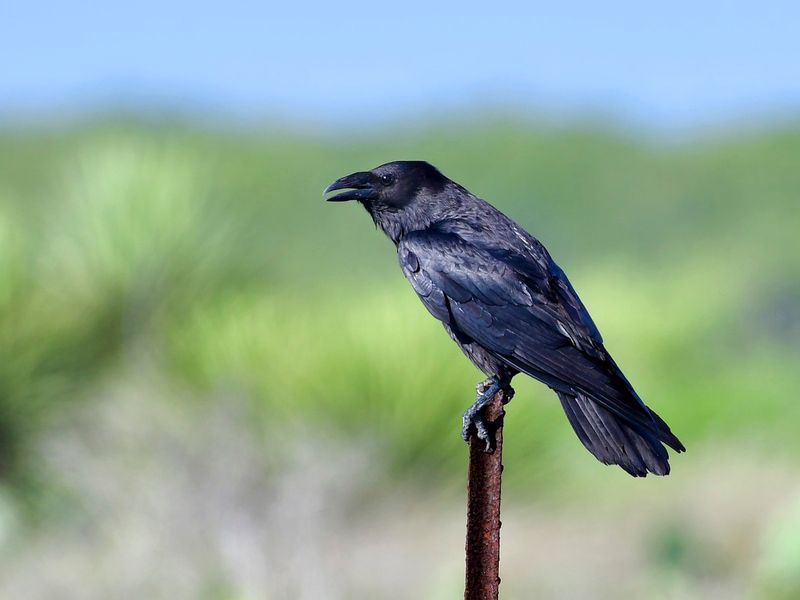
A large black bird lands on your block wall, tilts its head, and makes a sound you have never heard before. Ravens are showing up in more Phoenix and Tucson neighborhoods, and a popular story claims they mimic wolf howls to trick predators into making a kill they can then steal.
That story is far more dramatic than what the research actually supports, and understanding what ravens really do is both more accurate and more useful for any homeowner who wants a wildlife-friendly yard.
The wolf connection is real—but the wolf-call trick is unproven
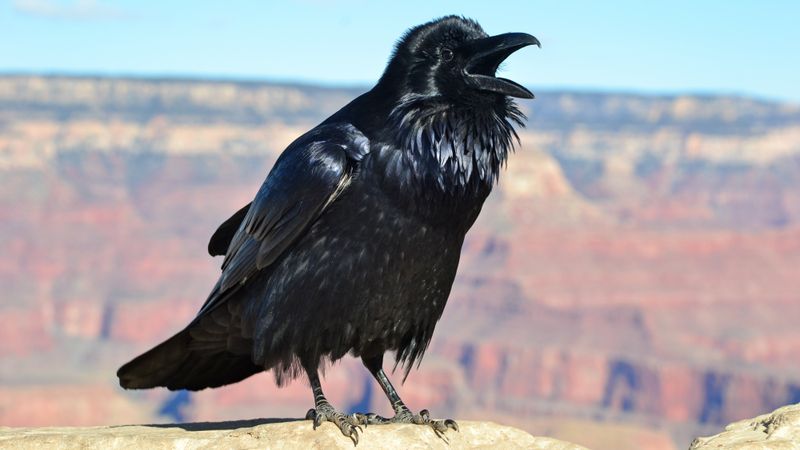
Few wildlife stories spread as fast as the idea that ravens mimic wolf howls to summon a predator, wait for the kill, then swoop in for a free meal. The raven-wolf connection is genuinely documented, but the specific claim about wolf-call mimicry recruiting wolves to food has no reliable primary evidence behind it.
Researchers have confirmed that ravens locate wolf-killed carcasses, feed near wolves, and benefit when a pack opens the tough hide of a large animal. That association is real.
The dramatic deception story layered on top of it is not.
A published study on raven scavenging at wolf kills shows that ravens do exploit wolf-killed prey and that their presence can actually push wolves toward larger group sizes to reduce per-wolf food loss. The relationship is real, but it is one of opportunism and competition, not a coordinated hunting partnership driven by raven vocal tricks.
A GPS-tracking study from Yellowstone tracked 69 ravens and 20 wolves over two and a half years and found only one clear instance of a raven following a wolf for more than one kilometer or one hour. That single data point makes continuous wolf-shadowing look like the exception, not the rule.
Whatever a raven in your Arizona yard is doing, a wolf-recruitment strategy is almost certainly not part of it.
Ravens use opportunity and memory around wolf kills
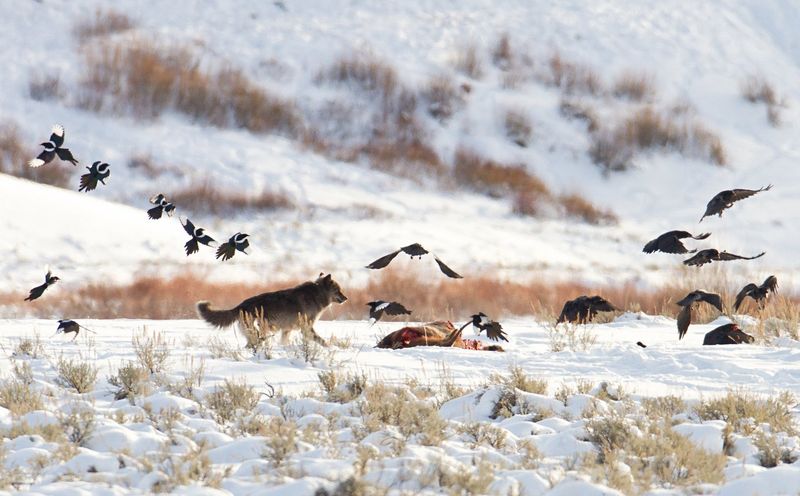
When a wolf pack makes a kill, ravens gain access to food they could not easily reach on their own. Wolf teeth and jaw strength open thick hides that a raven’s beak cannot easily penetrate, exposing meat and organs.
Ravens have been observed waiting near hunting wolves and arriving at carcasses quickly after a kill, suggesting they track wolf activity with some regularity in ecosystems where the two species overlap.
The key word is memory. Rather than shadowing wolves step by step across a landscape, ravens appear to learn where wolves hunt successfully and return to those areas.
Research summarized by the Max Planck Society on how wolves kill and ravens remember productive locations supports spatial memory as a primary explanation for how ravens find food efficiently. This is a cognitive skill, not a vocal trick.
The relationship also carries risk. Wolves can and do compete with ravens at carcasses, and research on the costs and benefits of dining near wolves shows the interaction is not always safe or mutually rewarding for ravens.
A raven feeding at a wolf kill is taking a calculated gamble, not collecting a guaranteed reward from a cooperative partner. This context matters when evaluating any claim that ravens have evolved a reliable system for outsourcing their meals through predator manipulation.
Your Arizona Garden Changes Every Week. Your Plan Should Too.
Gardening in Arizona changes quickly throughout the season. Every Friday you’ll receive a simple weekly plan showing exactly what to plant, prune, fertilize, harvest, and protect so you never miss the right timing.
What does “30 sounds” actually describe?
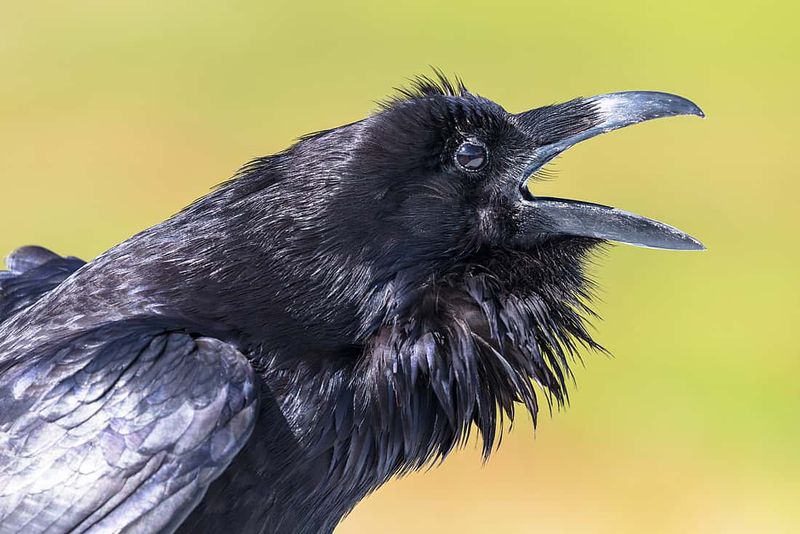
Raven vocal ability is genuinely impressive, but a number like “30 mimicked sounds” needs some unpacking before it tells you anything useful. Cornell Lab of Ornithology notes that scientists have placed Common Raven vocalizations into as many as 33 categories based on sound and context.
Those are categories of raven-produced calls, not a catalog of 33 sounds the birds have copied from other species or machines.
According to Cornell’s guide to Common Raven sounds, ravens produce a range of deep croaks, gurgles, grating calls, knocking sounds, and alarm calls used in different social and environmental contexts. Some calls are associated with distance communication, others with predator warnings or nest disturbance.
The meaning and function of many individual call types remain incompletely understood even by researchers who study them closely.
Ravens do engage in vocal mimicry. A 2025 review found evidence of mimicry across 39 of 128 corvid species, covering bird, mammal, amphibian, insect, and mechanical sounds.
Ravens in captivity have been documented imitating human words. What the available sources do not establish is that Common Ravens routinely imitate wolf calls or that any such imitation functions to recruit wolves to a food source.
Vocal flexibility is real; the wolf-summoning application of that flexibility remains unproven.
An Arizona yard is not a Yellowstone carcass site
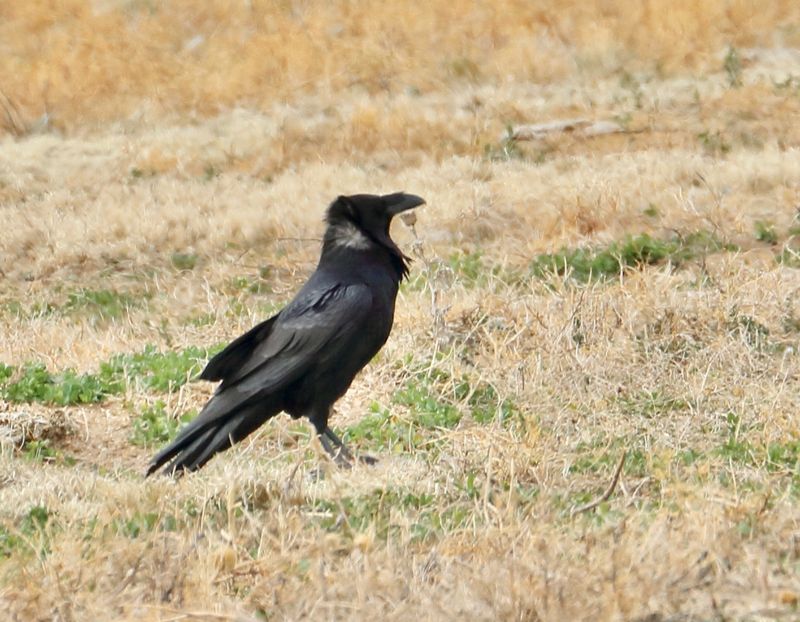
Most of the science behind raven-wolf interactions comes from Yellowstone, Scandinavia, and other northern ecosystems where gray wolves, elk, bison, and large ungulate carcasses are part of the daily landscape. A Phoenix or Tucson backyard contains none of those elements.
Transplanting wolf-country behavioral ecology directly onto a low-desert neighborhood bird sighting skips several important steps.
Arizona ravens are adaptable omnivores. According to the University of Arizona Cooperative Extension’s raven resource, their diet includes carrion, insects, rodents, lizards, eggs, nestlings, grain, and garbage.
A raven landing in your yard is most plausibly responding to something available there: an accessible food source, a water feature, a tall perch, nearby open desert, or a combination of those factors. No Arizona urban-raven study has established which factor most often drives a visit to a specific yard.
Ravens are also not reliable pest-control agents. Their broad diet means they consume some insects and small animals, but they also eat eggs and nestlings.
Expecting a raven to systematically work through your scorpion population the way a roadrunner might is not a reasonable outcome to plan around. The bird is an opportunist, and what it opportunistically takes from your yard may not align with your pest-control priorities.
First identify which Arizona raven you are watching
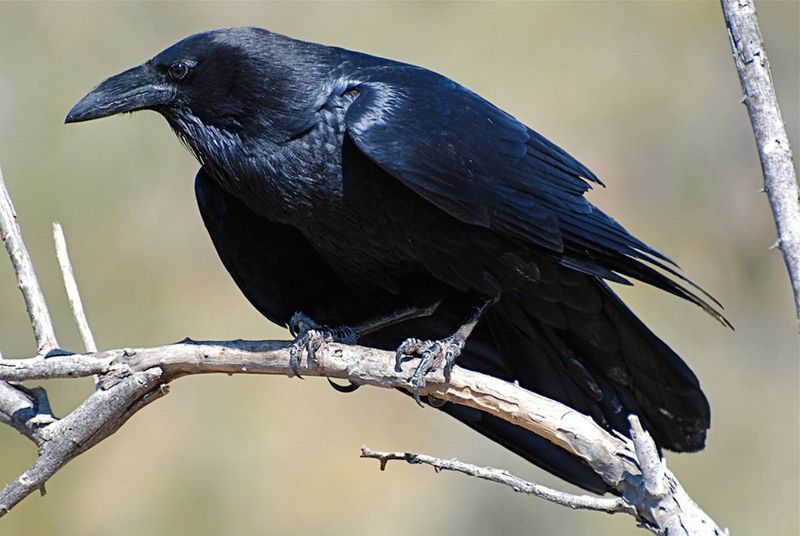
Before drawing any conclusions about a large black bird in your yard, confirm what species you are actually looking at. Arizona is home to two raven species, and they are not found in the same places or under the same ecological conditions.
Assuming every raven-like bird is a Common Raven can lead to mistaken identifications and misapplied information.
Common Ravens are large, with a heavy wedge-shaped bill, a diamond-shaped tail in flight, and a deep, resonant croak. Chihuahuan Ravens are smaller, occur mainly in the grasslands and open terrain of southeastern Arizona, and have white feather bases visible around the neck and body when wind ruffles their plumage.
The University of Arizona Cooperative Extension notes these distinctions and points out that the two species occupy different habitats within the state.
Ravens and crows are also frequently confused. According to Cornell Lab’s guide to telling crows and ravens apart, ravens are noticeably larger, have a deeper voice, soar more frequently, and show that distinctive wedge tail rather than a rounded one.
Getting the identification right matters because the behavioral research, the ecological context, and even the legal protections may differ between species. Not every black bird in your yard is carrying the same story.
Build habitat without turning your yard into a feeding station

Supporting wildlife in a low-desert yard works best when it is built around habitat rather than handouts. Native and desert-adapted plants provide food, cover, shade, and insect habitat without requiring you to put out meat or scraps that attract conflicts.
Ironwood, palo verde, desert willow, and native shrubs listed by Audubon Arizona for central Arizona landscapes offer resources that benefit a range of birds, including ravens, without baiting them or making them dependent on your yard specifically.
Securing attractants is just as important as adding habitat. The Arizona Game and Fish Department advises homeowners to keep garbage in sealed containers, remove fallen fruit promptly, store pet food indoors, and minimize spilled seed under feeders.
These steps reduce the chances of ravens, as well as javelina, coyotes, and other wildlife, developing a habit of visiting your property for easy food.
Water features deserve special caution. A shallow birdbath can support wildlife in the desert heat, but Arizona Game and Fish also notes that water sources attract predators and other animals that can create neighborhood conflicts.
If you add a water feature, keep it clean, place it where you can monitor it, and be prepared for a wider range of visitors than just songbirds. Feeders should be managed carefully too: keep seed accessible only to birds, minimize spillage, and monitor whether any feeder setup is drawing unwanted attention from larger or more aggressive wildlife.
The clever scavenger still comes with tradeoffs and legal limits
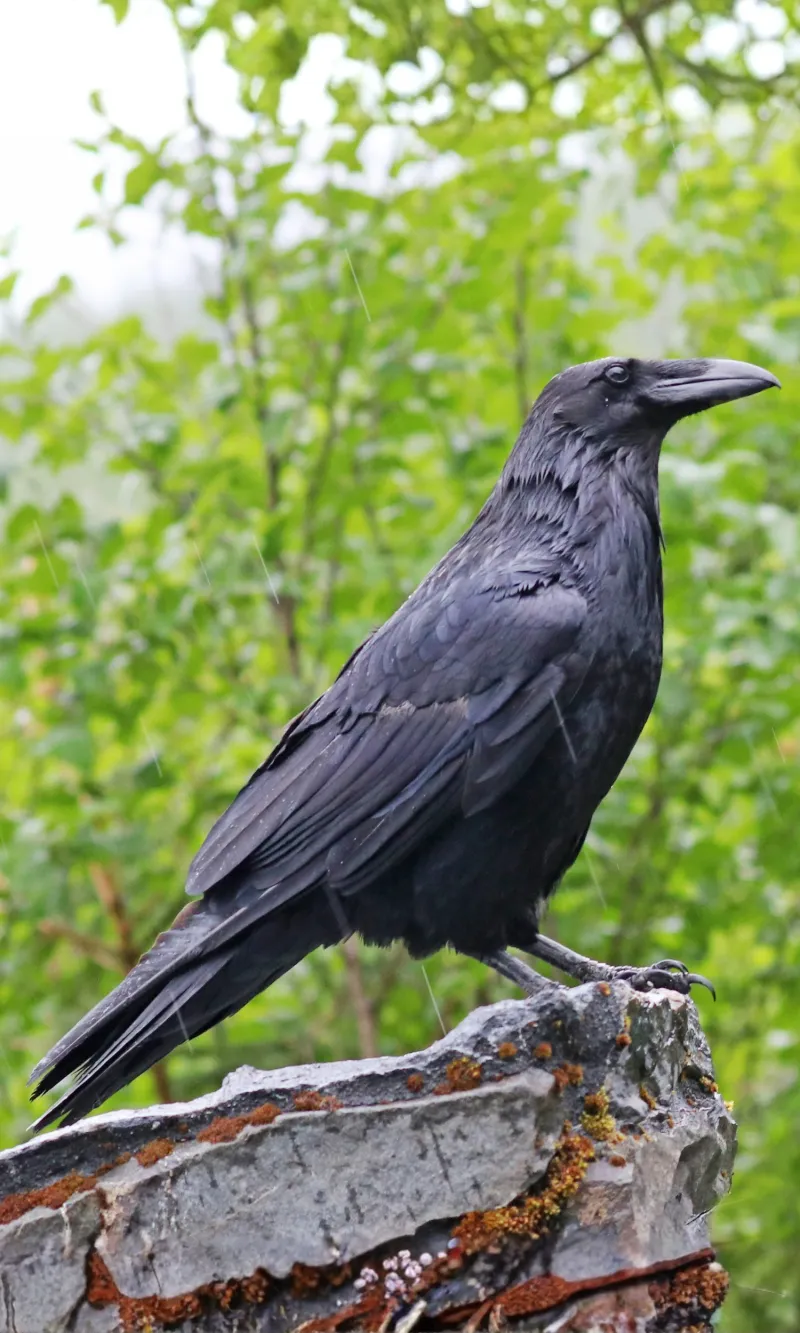
Ravens are intelligent, adaptable birds, and that adaptability cuts in multiple directions. Their diet includes insects and small animals that some homeowners would rather not have around, but it also includes eggs and the nestlings of smaller birds.
Research published by the U.S. Geological Survey on raven nest predation impacts documents their role as significant predators of eggs and chicks of sensitive bird species.
Attracting more ravens to a yard is not a neutral act for the other birds already using that habitat.
Expecting ravens to solve a scorpion, mosquito, tick, or rodent problem is also not well-supported. The University of Arizona Cooperative Extension’s raven resource describes an opportunistic feeder whose diet shifts with availability.
Ravens will eat what is easiest and most rewarding in a given moment, and that may have nothing to do with the pest species you want controlled.
On the legal side, Common Ravens receive protection under applicable migratory bird rules. The U.S.
Fish and Wildlife Service’s guidance on managing conflicts associated with Common Ravens makes clear that killing, capturing, poisoning, or otherwise controlling ravens may require authorization or permits depending on the action and circumstances. If a raven is causing a genuine conflict at your property, contact Arizona Game and Fish or the U.S.
Fish and Wildlife Service rather than attempting to handle the situation independently.
The real raven trick is intelligence, not wolf-call deception
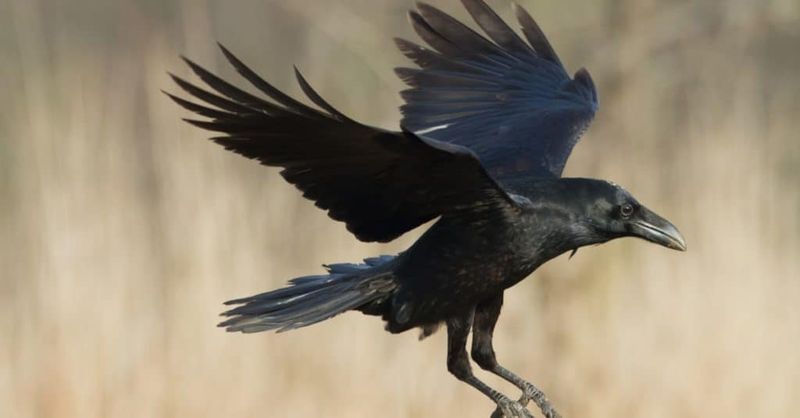
Strip away the wolf-summoning story, and what remains is still genuinely remarkable. Ravens navigate complex environments using spatial memory, learn from watching other ravens, adjust their vocalizations based on social context, and exploit a wide range of food sources across very different habitats.
Memory and observation, not vocal deception, are the tools that make them successful.
A raven visiting your Arizona yard is most likely responding to something concrete and available: food, water, a useful perch, or proximity to open habitat. The specific reason varies by yard and by bird, and no single study pins down the usual cause for urban low-desert visits.
What you can do is create habitat thoughtfully, secure attractants, and watch the bird on its own terms rather than through the lens of a story the evidence does not support.
The most honest thing you can say about a raven in your yard is that it noticed something worth checking out. That, in the end, is the real trick.