What It Means When Monarchs Stop In Your Alabama Garden On Their Way South
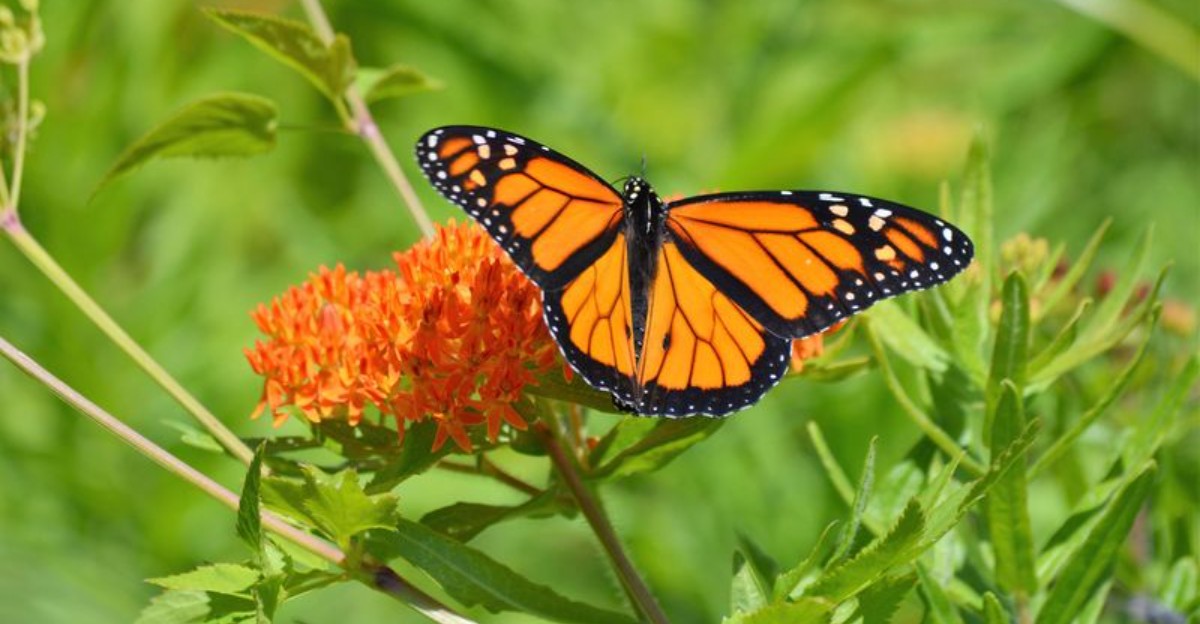
September gives no warning before wings appear. Orange wings drop from nowhere onto your porch rail. Seconds later, several more arrive and settle on your bloom. Alabama sits along a route older than your hometown.
Monarchs crossing that route treat your garden like a fuel stop. Scouts test your nectar before the rest commit to landing. Soil chemistry, bloom color, wind direction shape that choice.
Your yard passed inspection before that wing ever appeared. This corridor cuts straight through Alabama, and few states share it. Momentum carries these travelers north, then south, without pause.
Distance like that demands precision, not luck. Nectar quality here outshines plenty of neighboring states. Each visitor senses that difference within your garden fast.
Fuel matters more than distance on a trip like this. Effort adds up fast when your yard sits far south. What lands in your garden next could change how you see it.
Your Yard Landed On An Ancient Travel Route
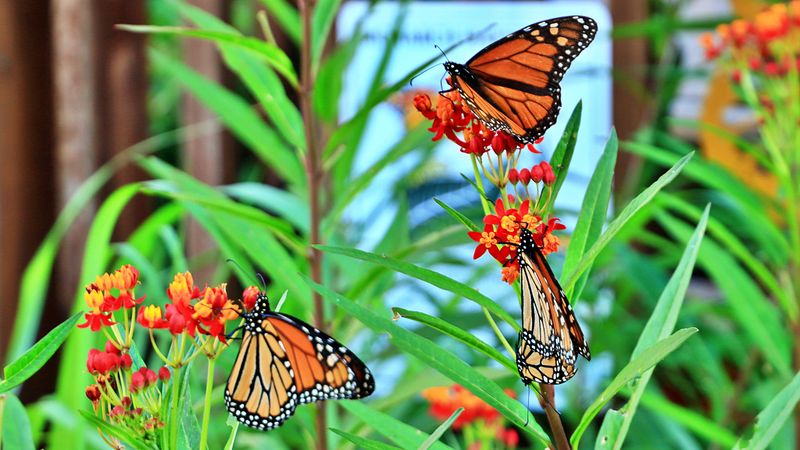
Long before anyone drew a state line around Alabama, monarchs were already flying this exact corridor. Their route funnels millions of butterflies out of the northern states, down through the Southeast, and toward the mountains of central Mexico.
Alabama sits in a useful spot along that path. Monarchs riding cold fronts southward tend to move through the Southeast on paths that shift with wind and weather each year.
When they pause in your yard, it means your garden happens to sit inside a flight lane that has been used for many generations. Scientists track these movements with tagged butterflies, and tags placed in Canada have turned up in Mexican forests months later.
Peak movement through much of Alabama tends to land in the weeks surrounding early to mid-October. Cool, clear days right after a front sweeps through usually bring the biggest numbers.
Here is a detail worth knowing. The monarchs stopping by in fall are a special generation, sometimes called the super generation, and they live far longer than their parents did.
Earlier summer monarchs survive only a few weeks. Fall migrants can hang on for eight months or more, saving their energy for travel instead of egg laying.
So a butterfly resting on your lantana may have hatched in Ohio or Michigan. Your garden became one stop on a journey that spans an entire continent. Step outside and watch the direction they leave. Southwest is the usual heading.
Nectar Quality In Your Beds Passed The Test
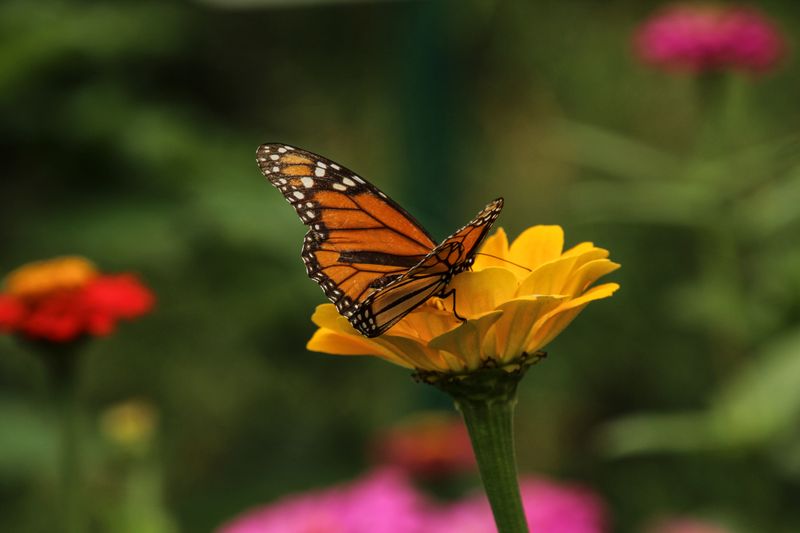
Butterflies are picky customers, and they do not linger where the menu disappoints. A monarch touching down and staying put for several minutes is giving your flowers a five-star review.
Fall migrants burn enormous amounts of fuel. They need sugar-rich nectar to build fat reserves that must last through winter in the Mexican oyamel forests.
Goldenrod, ironweed, frostweed, blue mistflower, and aromatic aster are the heavy hitters blooming across Alabama right now. Garden favorites like zinnias, lantana, tithonia, and pentas pull their weight too.
The trick is having something open in September and October, not just in June. Many yards go quiet after summer annuals fade, and a quiet yard gets skipped.
Your Alabama Garden Changes Every Week. Your Plan Should Too.
Gardening in Alabama changes quickly throughout the season. Every Friday you’ll receive a simple weekly plan showing exactly what to plant, prune, fertilize, harvest, and protect so you never miss the right timing.
Plant in clumps rather than singles. A wide patch of color reads like a billboard from the air, while one lonely bloom barely registers.
Watch how long visitors stay. A quick touch and takeoff suggests thin nectar, but a butterfly that works flower after flower for ten minutes found something worth the stop.
Sunny, sheltered spots warm faster and produce more nectar. Tuck your fall bloomers along a south-facing fence or wall if you can.
Skip the pesticides during migration season. Even products labeled gentle can leave residue that weakens a traveler with a long road ahead.
A shallow dish of wet sand offers minerals alongside the sugar. Small touches like that turn a rest stop into a favorite one.
Weather Fronts Pushed Them Right To You
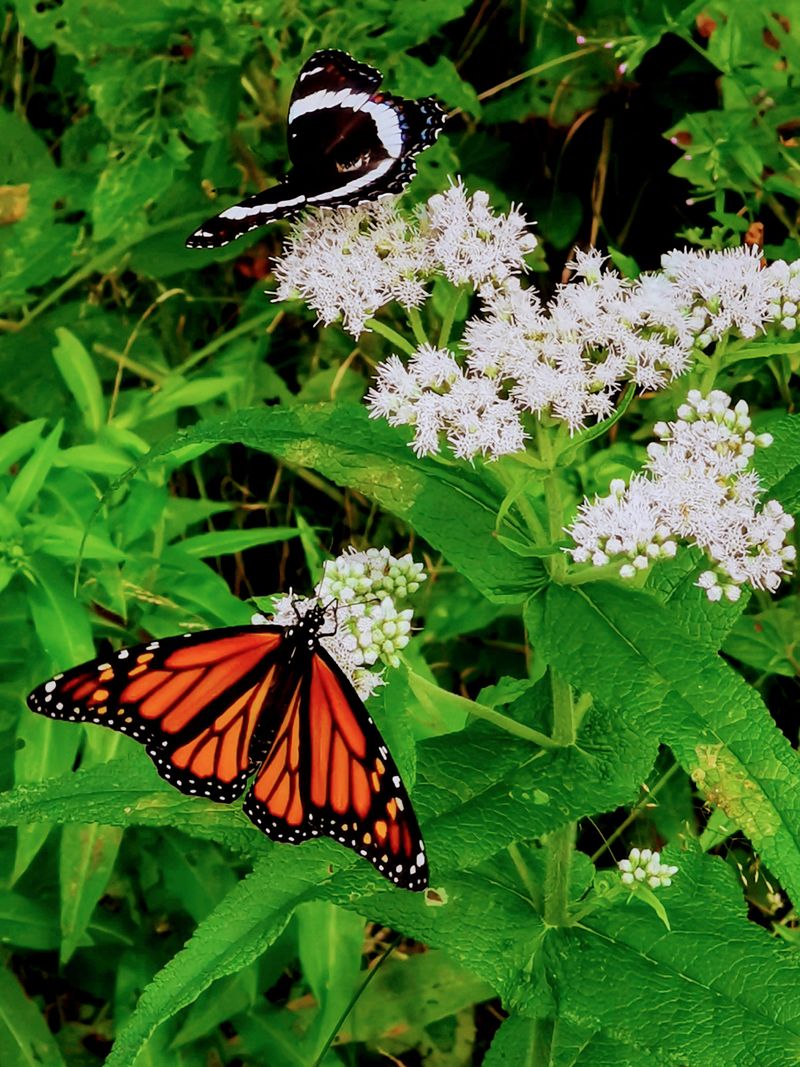
Ever notice how a cluster of orange wings shows up the same week the air finally turns crisp? That is not chance at all.
Monarchs are gliders at heart. They ride tailwinds from passing cold fronts, riding northerly breezes southward and saving precious muscle energy.
When a front stalls or the wind shifts against them, they drop out of the sky and wait. Your garden becomes the waiting room.
Rain grounds them too. Wet wings cannot generate enough lift, so a soggy September afternoon can park dozens of butterflies in shrubs and low branches.
Check the forecast if you want to predict arrivals. A strong north wind following a cool snap often means monarchs the next morning.
Evening roosts are the real prize. Groups gather on pine boughs, cedar branches, or even a backyard oak, hanging together with wings folded until the sun warms them.
Roosting sites tend to be sheltered from wind and slightly elevated. If your property has a windbreak or a line of evergreens, you might host a roost without realizing it.
Go out around dusk and look up. Folded monarchs resemble pale leaves, which makes them easy to overlook until one shifts.
Leave those branches undisturbed until midmorning. Butterflies need sun on their wings before they can lift off safely.
Temperature matters more than daylight. Once temperatures drop into the 50s, flight muscles struggle to fire, so they stay put and wait for warmth.
Milkweed Choices Matter More Than You Think
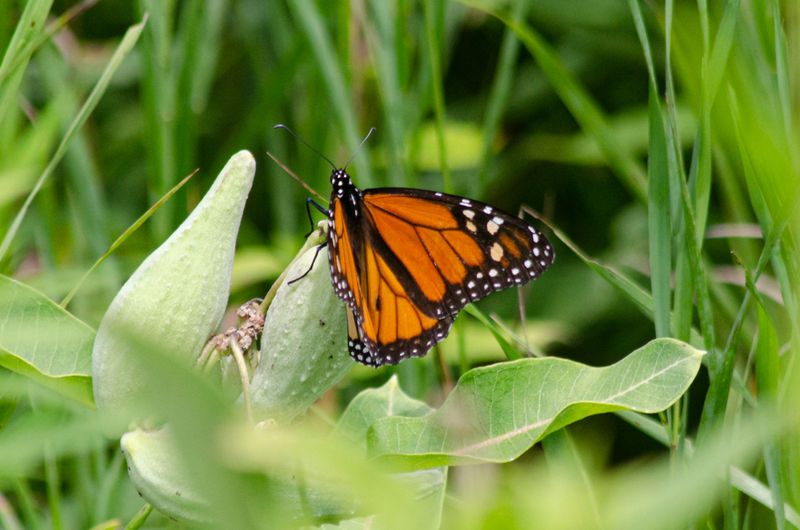
This is one area where common gardening advice can cause an unintended problem. Tropical milkweed, the showy red-and-yellow one sold at nearly every garden center, stays green and blooming in Alabama well past frost.
Monarchs read those fresh leaves as a signal to stay and lay eggs. Instead of continuing south, some linger and start families that cannot finish developing before cold weather settles in.
There is a second wrinkle. A parasite called OE builds up on milkweed that never goes dormant, and heavy loads leave butterflies weak and small.
The fix is straightforward. Cut tropical milkweed back close to the ground in late September or early October, and repeat through the season.
Better yet, shift toward natives. Butterfly weed, swamp milkweed, and green antelopehorn all grow well in Alabama conditions and naturally fade as autumn deepens.
Native varieties fade back on schedule, which keeps the migration clock running properly. They also handle our humidity and clay soils with less fuss.
Fall is a fine planting window for perennials here. Roots establish through winter and plants surge in spring right when returning monarchs need them.
Seeds of native milkweed usually require cold stratification. Sowing in autumn lets nature handle that step for you.
If you spot caterpillars in October on your milkweed, that is a sign worth noting. Trimming the plants gently nudges the adults back onto the southbound path where they belong. Small adjustments in your garden can offer a meaningful benefit to local monarchs.
A Sign Your Habitat Is Actually Working
Gardeners chase all kinds of feedback. Blue ribbons, compliments from neighbors, tomatoes that actually ripen before the squirrels get them.
A monarch stopping by is a different sort of report card. It means your patch offers something the surrounding landscape does not.
Across much of the Southeast, mowed lawns, pavement, and herbicide-treated roadsides have thinned out the flowers migrants depend on. Gaps in that chain force butterflies to fly farther between meals.
Your garden fills one of those gaps. Conservation groups call these stepping stones, and they work best when neighbors create them within a few miles of each other.
Diversity strengthens the effect. Mixing bloom shapes, heights, and colors draws in a wider range of visitors, from swallowtails to bumblebees to hummingbirds fueling up for their own trip.
Shelter counts as much as food. Shrubs, tall grasses, and a few undisturbed corners give butterflies protection from wind and predators overnight.
Let some leaves stay where they fall this autumn. That layer shelters other insects through winter and keeps the whole system humming.
Water helps too. A damp patch of soil or a shallow saucer with pebbles gives butterflies a safe place to drink.
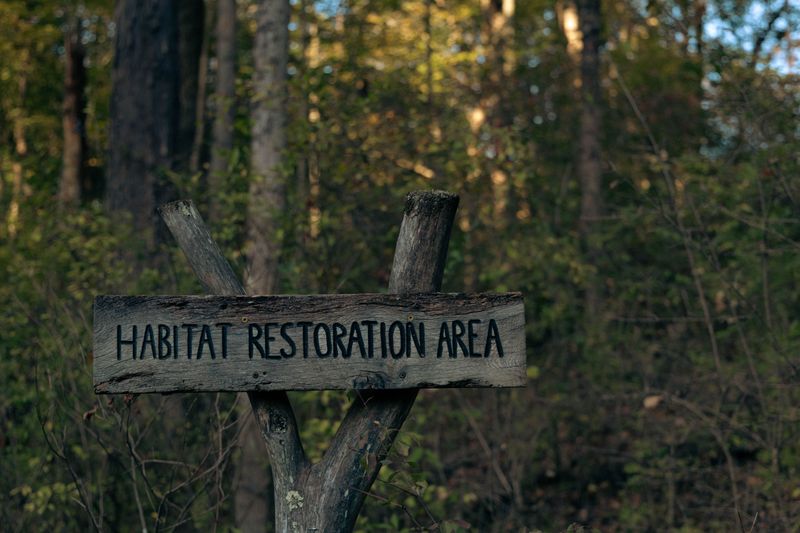
Consider certifying your space through a monarch or pollinator program. The sign in your yard often sparks conversations that turn into three more gardens on your street. Habitat improvements can add up when neighboring yards do the same.
An Invitation To Join The Tagging Effort
Ready to turn butterfly watching into a contribution to real research? Thousands of volunteers across the country tag monarchs each fall, and Alabama gardeners are welcome in that crowd.
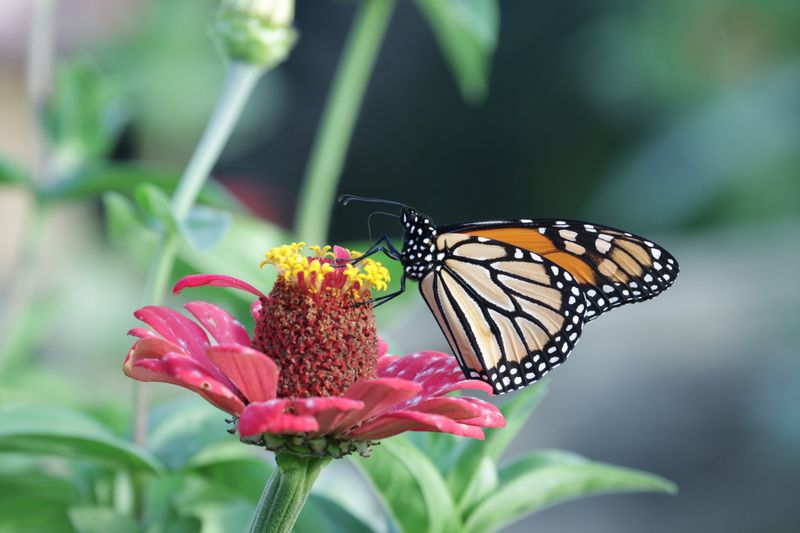
Tagging involves a tiny, lightweight sticker placed on a specific spot on the hindwing. The butterfly flies off unbothered and carries a unique code.
If that same butterfly turns up at the overwintering sites in Mexico, researchers match the code back to your yard. Recovery rates are modest, but each match adds a data point to a map that spans a continent.
Kits are available from organizations like Monarch Watch each fall. Ordering ahead of peak migration is worth doing, since availability can tighten as the season progresses.
Catching requires patience and a soft net. Early morning, when butterflies are cool and slow, tends to work better than midday chases.
Record the date, location, and whether the butterfly is male or female. Males carry two small black dots on their hindwings, which makes sorting easy.
Not into handling wildlife? Reporting sightings through Journey North or iNaturalist gives researchers valuable timing information without touching a single wing.
Kids take to this project quickly. Few science lessons beat watching a tagged butterfly lift off toward Mexico from your own backyard.
Your observations help track how migration timing shifts from year to year. That information shapes real conservation decisions.