Why Dragonflies Are Suddenly Swarming Arizona Yards Right Now — And What It Says About Yours
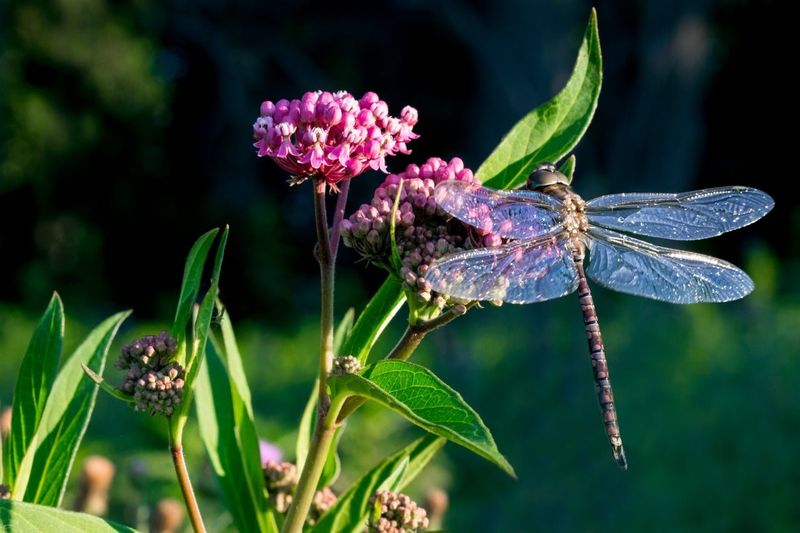
A handful of dragonflies darting across your Phoenix or Tucson yard can stop you mid-step and make you wonder what changed. The honest answer is that several things could be going on at once, and no single sighting settles the question.
What the science does tell us is worth knowing, because the real story is more interesting than a simple report card.
Start with the observation, not an Arizona-wide trend
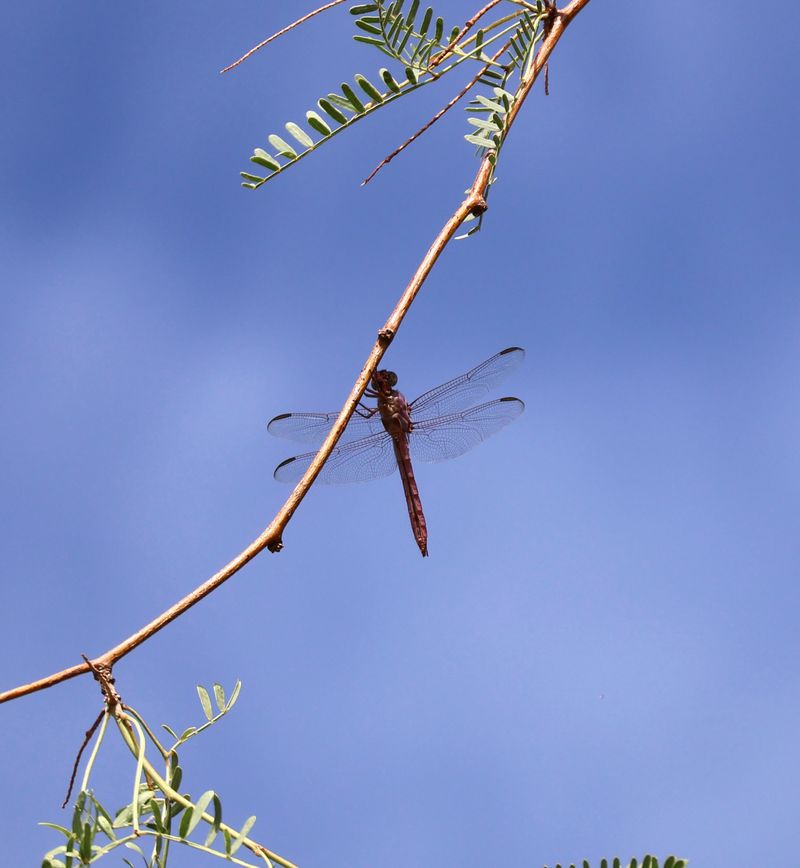
Spotted a cluster of dragonflies working the airspace above your yard? Before assuming Arizona is in the middle of a documented region-wide surge, consider that the available evidence does not support that conclusion.
No authoritative source has confirmed a statewide or metro-wide dragonfly outbreak in Phoenix or Tucson, so the more useful question is: what might bring adults into your yard specifically?
Adults can appear for several reasons that have nothing to do with a broad regional event. They may be hunting flying insects concentrated in your yard, moving through on a broader migration, dispersing from a nearby water source, or responding to local temperature and wind conditions.
USGS research on Southwest odonates confirms that some species are capable of rapid, widespread movement and can colonize newly available freshwater habitats quickly, making a localized appearance entirely plausible without any yard-wide ecological shift.
If you are reading this during late summer or early fall, a seasonal angle is worth considering. Arizona’s official monsoon season runs from June 15 through September 30, and the National Weather Service describes late August through September as the monsoon’s decay phase, a period when returning moisture and renewed thunderstorm activity can temporarily change insect populations and dragonfly behavior.
That is a possible mechanism, not a confirmed cause for any individual sighting. Pinning down the actual reason would require knowing the species, recent rainfall totals, nearby water sources, and local wind patterns.
Several conditions can concentrate dragonflies in one yard
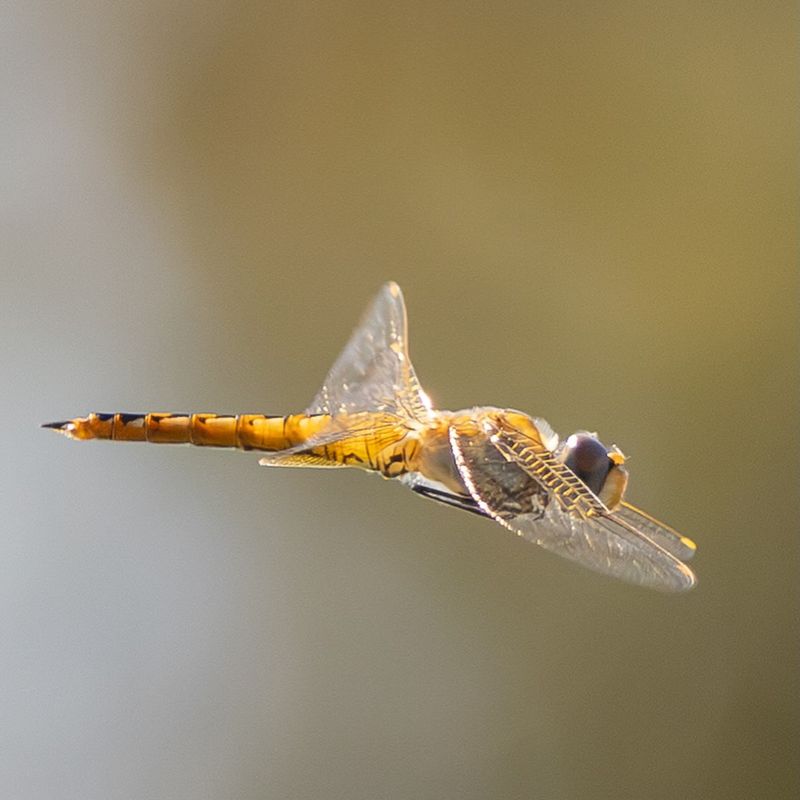
Adult dragonflies are aerial hunters, and they go where the hunting is good. If your yard happens to hold a temporary concentration of small flying insects, gnats, midges, or mosquitoes, a dragonfly or several will notice.
That feeding efficiency is one of the simplest explanations for a short-term aggregation, and it requires no pond, no native garden, and no special yard design on your part.
Migration and broad movement add another layer. Research on common green darners found that migration timing and direction are influenced by temperature and wind shifts, and a major review documented large dragonfly movements following weather fronts during late-summer and autumn periods.
Your yard may simply be underneath a flyway on a day when conditions favor movement.
Dispersal from nearby freshwater is a third possibility. A retention basin, irrigation canal, neighborhood pond, or even a flooded wash within a mile or two can produce adults that then range widely in search of food.
Adults may forage far from the water where they developed, so the absence of a pond in your yard does not rule out this explanation at all.
During the late-monsoon window, temporary water from storm runoff and a flush of newly hatched insects could combine to make certain yards briefly attractive. That chain of events is plausible, but confirming it would require local observations of rainfall totals, standing water locations, prey species, and dragonfly behavior, not just a glance at the sky.
Your Arizona Garden Changes Every Week. Your Plan Should Too.
Gardening in Arizona changes quickly throughout the season. Every Friday you’ll receive a simple weekly plan showing exactly what to plant, prune, fertilize, harvest, and protect so you never miss the right timing.
A dragonfly sighting is not a yard-quality score
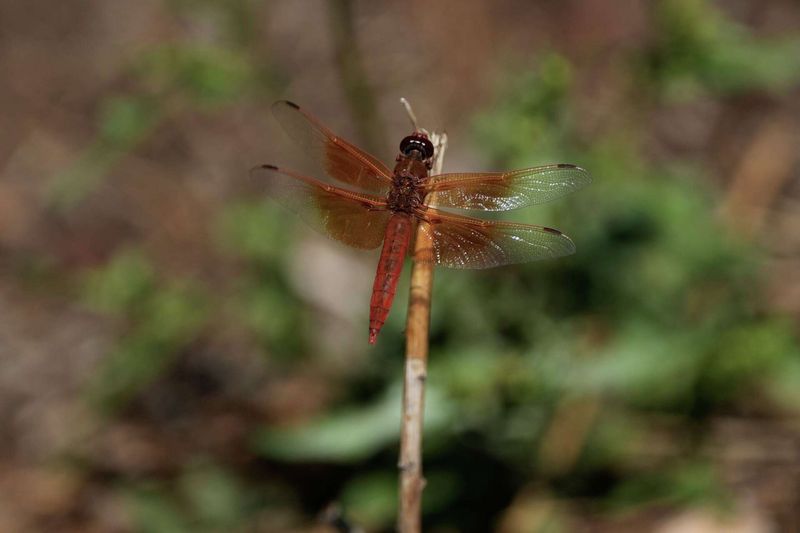
Watching dragonflies work your yard feels like validation, and the instinct to read it as a sign of ecological health is understandable. What the observation can reasonably suggest is narrower than that: there are flying insects nearby worth chasing, the flight conditions are usable, there may be a water source within range, or mobile adults are passing through.
Those are real signals, just not a report card.
The idea that dragonflies indicate environmental quality comes from aquatic monitoring, where scientists use larval communities and species diversity across multiple sites to assess waterbody health. The logic works because larvae spend months or years in the water and cannot easily escape degraded conditions.
EPA guidance on benthic macroinvertebrates explains that aquatic invertebrates are useful indicators precisely because of their limited mobility and long residency in the water column. A flying adult over a suburban yard does not carry that same weight of evidence.
Species variation matters here too. Urban odonate research finds that some dragonfly species tolerate or even thrive in altered habitats, including fragmented urban landscapes with modified hydrology and reduced native vegetation.
Others are genuinely sensitive to pollution, habitat loss, and water-quality changes. Presence alone does not tell you which category you are dealing with, or whether the species visiting your yard would appear in a healthy riparian corridor or a concrete drainage channel with equal frequency.
One aggregation, however dramatic it looks, provides a much weaker ecological signal than a multi-site larval survey. Enjoy the observation for what it is, and resist the urge to upgrade it into a verdict.
Dragonflies may eat mosquitoes without reducing your mosquito risk
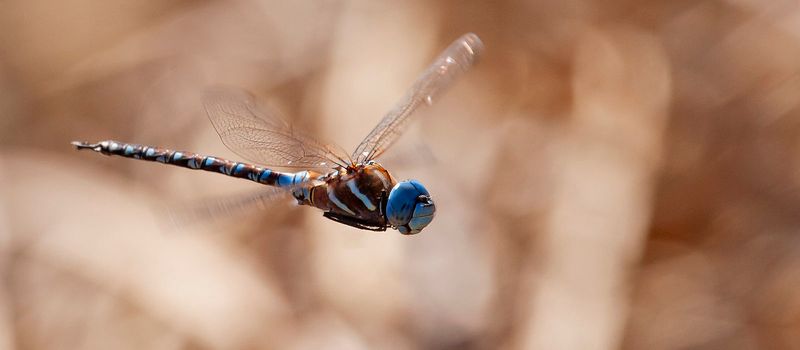
Dragonflies genuinely do eat adult mosquitoes. They are fast, precise aerial hunters, and mosquitoes are well within their size range.
Calling them helpful predators is accurate. Calling them a mosquito-control program is not, and that distinction matters if you are making decisions about your yard.
Mosquito populations are driven primarily by breeding water, not by how many adults get eaten in the air. A dragonfly visiting your yard has no effect on the larvae developing in a forgotten pot saucer, a clogged gutter, or a low spot in the lawn that holds water after irrigation.
Arizona Cooperative Extension mosquito guidance is direct on this point: source reduction, draining or changing small containers, fixing irrigation leaks, and eliminating pooling are the dependable tools. Predators in the air are a bonus, not a substitute.
A water feature complicates this picture further. A pond that supports dragonfly larvae can also support mosquito larvae if it is stagnant, poorly aerated, or surrounded by untreated containers.
Adding a pond does not automatically tip the balance toward dragonflies. The design, maintenance, and surrounding yard conditions all matter, and a poorly managed feature can produce more mosquitoes than it ever helps control.
The practical takeaway is straightforward: appreciate the dragonflies for the hunting they do, and handle mosquito risk through the methods that actually address the breeding cycle, not through hoping that predators overhead will compensate for standing water at ground level.
Maintain an intentional pond as habitat, not as a mosquito trap
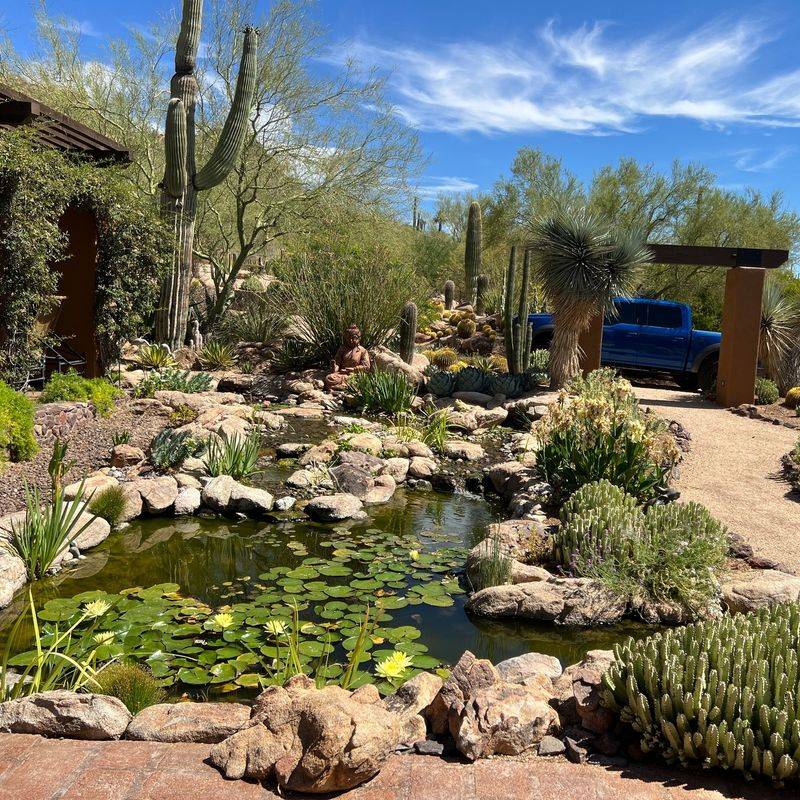
Homeowners who already maintain a pond or water garden, or who are deliberately planning one, have a real opportunity to support dragonfly and damselfly larvae. The key word is deliberate.
A properly designed and maintained water feature behaves very differently from a neglected container, and the difference shows up in what actually lives there.
Arizona Cooperative Extension guidance on dragonflies and damselflies recommends aquatic plants rooted in the shallows, sticks and rocks placed at the water’s edge for perching and emergence, appropriate aeration where the pond size and design call for it, and leaving some bottom sediment undisturbed because larvae and their invertebrate prey depend on it. These are not decorative choices.
Each one addresses a specific need in the larval life cycle.
Escape routes matter too. Where water is deeper than roughly one to two inches, a gently sloping rock, a brick ledge, or a simple ramp allows small animals, including frogs, lizards, and birds, to get out if they fall in.
Arizona Extension wildlife habitat guidance recommends this feature for any backyard water feature, and it is easy to build in from the start.
Pesticide and fertilizer runoff is a serious threat to aquatic larvae and their food sources. Both can reach a pond through irrigation overspray, slope drainage, or foot traffic near the water edge.
Keep application zones well away from the feature, and avoid spraying on windy days. The EPA notes that pesticides can harm aquatic invertebrates and other non-target wildlife, so the buffer zone around a pond is not optional if you want larvae to survive.
Do not create stagnant water or spray for the effect
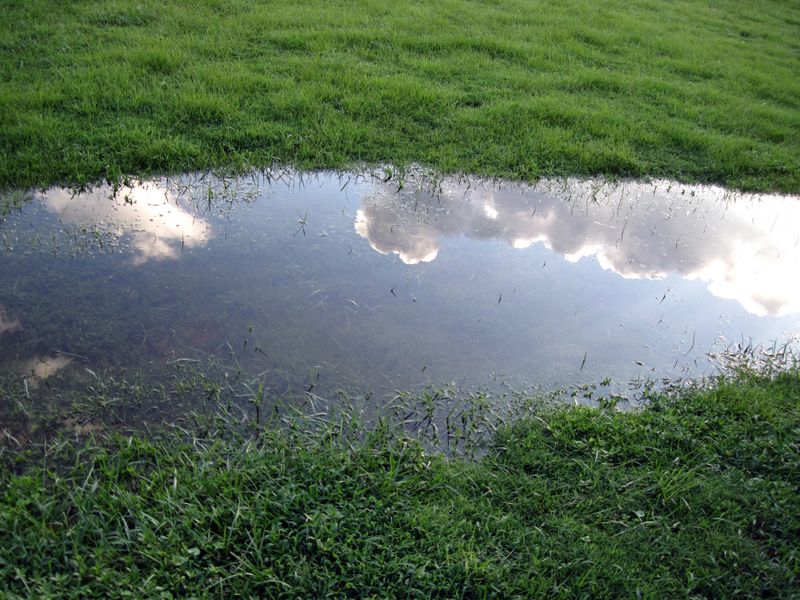
Seeing dragonflies overhead can create a tempting impulse: add more water to bring in more dragonflies. Resist it.
Buckets, neglected birdbaths, tire planters, pot saucers, and any other container that holds stagnant water are mosquito nurseries first and dragonfly attractors a distant second, if at all. Arizona Cooperative Extension warns that standing water in containers, irrigation catchments, and low-lying spots can support mosquito development rapidly after monsoon rain, and the problem compounds when those sources are scattered across a yard and forgotten.
The monsoon season brings this risk into sharp focus. Arizona Extension monsoon pest guidance specifically calls out pots, birdbaths, and containers as sites that need regular attention after storms.
Adding more of them in hopes of attracting dragonflies trades a brief visual reward for a sustained mosquito problem.
Broad-spectrum insecticides and residential mosquito-misting systems are equally counterproductive. Spraying to kill mosquitoes in a yard where you want dragonflies removes the prey that drew them there, and the chemicals do not distinguish between target and non-target insects.
The CDC does not recommend residential mosquito-misting systems, noting risks to beneficial insects, people, pets, and the broader environment. Any water feature worth maintaining for wildlife should be designed intentionally and kept up consistently, not improvised and then chemically managed after the fact.
Use the sighting as a reason to observe, not to issue a verdict
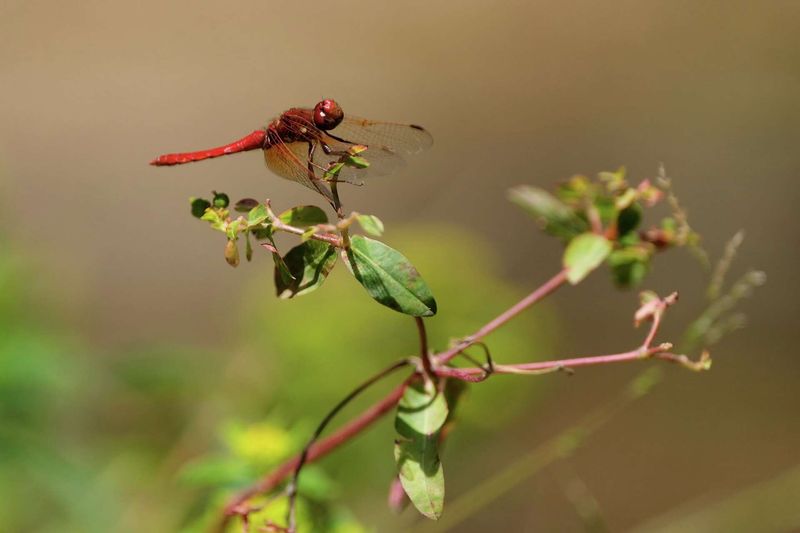
A dragonfly aggregation is a genuinely interesting yard event, and the best first response is to watch it rather than explain it. Note whether the activity picks up after a storm or when flying insects are most visible in the evening.
Check whether the same spot draws them repeatedly, which might point toward a consistent prey source or a favorable thermal. Those observations build a real picture that a single glance cannot provide.
While watching, take stock of nearby water. A well-maintained pond is a feature worth keeping up carefully.
Any container, low spot, or neglected water source nearby is a mosquito risk worth addressing regardless of what the dragonflies are doing overhead. Arizona Cooperative Extension mosquito management guidance and USGS odonate research both point toward the same practical conclusion: managing water sources responsibly matters more than trying to attract or retain any particular flying predator.
Stronger ecological conclusions about dragonfly communities require species identification, larval surveys, and habitat data collected across multiple sites, the kind of work that professional surveys do. A backyard aggregation cannot carry that interpretive load on its own.
What it can do is remind you that the landscape around a low-desert yard is more active and more connected than it looks on a quiet morning. That is worth paying attention to, even if it does not rewrite the story of your yard’s health.