Only One Bee Can Shake Your Arizona Tomatoes Into Fruit — Here’s How To Draw It In
Growing tomatoes in Arizona’s low desert is already a challenge, and getting a good harvest means understanding how your flowers actually turn into fruit. A popular idea says only one special bee can vibrate tomato blossoms at the perfect frequency, but that story leaves out a lot of useful truth.
Several types of native bees can help, tomatoes can even pollinate themselves, and the heat outside your door may matter more than any single bee on the block.
Tomato flowers can pollinate themselves
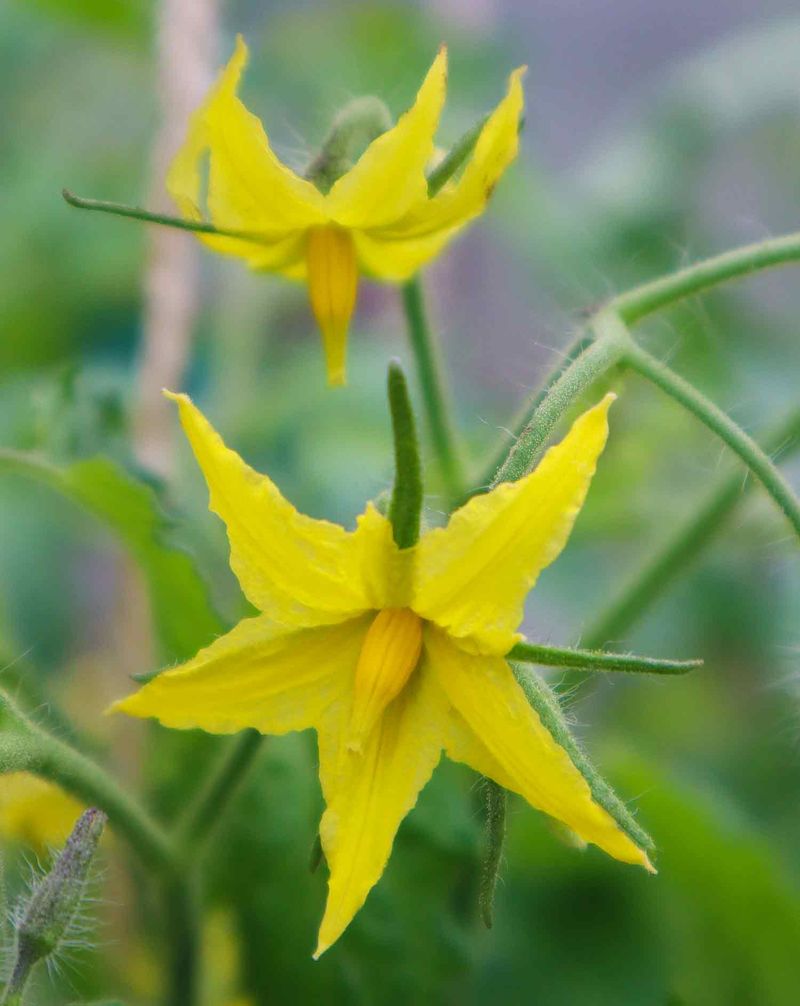
Each tomato flower is built to handle its own reproduction. The male anther and the female stigma sit inside the same blossom, so pollen can fall from one onto the other without any insect help at all.
Wind, a brushing hand, or even the weight of a passing garden hose can trigger that transfer.
The catch is in the flower’s design. Tomato anthers are shaped like hollow tubes with tiny pores at the tip, a structure called poricidal anthers.
Pollen stays packed inside unless something shakes it loose. University of Arizona Cooperative Extension guidance on growing tomatoes confirms that while tomatoes can self-pollinate, vibration from insects or other movement helps release pollen more effectively from those enclosed anthers.
That distinction matters for how you think about your garden. You are not waiting for one specific bee to rescue your crop.
You are looking for anything that moves the flower enough to shake pollen free, whether that is a native bee, a gentle breeze, or your own hand. Bees that vibrate flowers can improve the process, but they are helping a system that already works on its own.
Buzz pollination helps release enclosed pollen
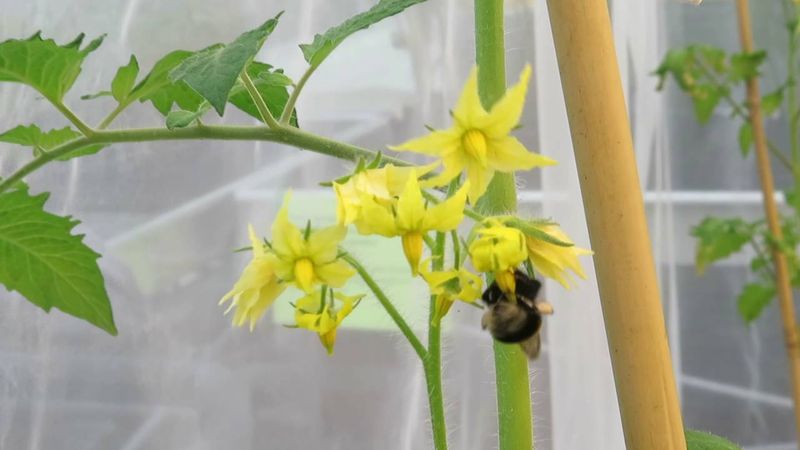
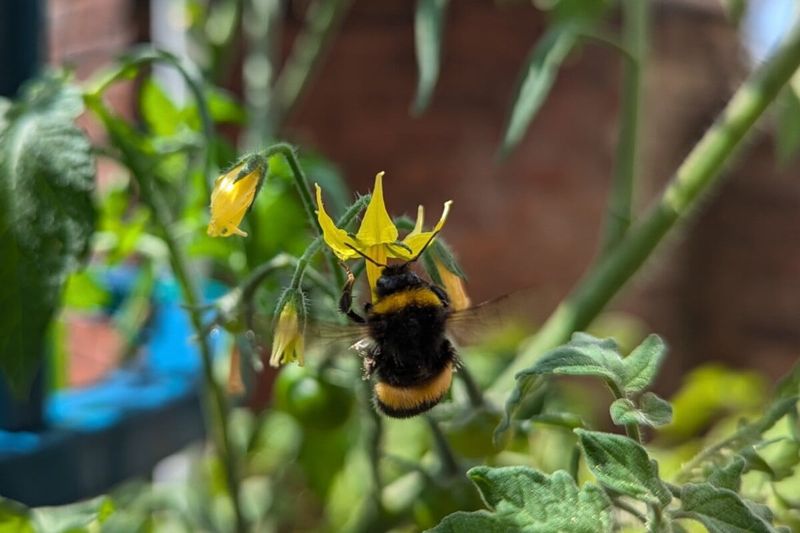
When a bee grips a tomato flower and rapidly contracts its flight muscles without moving its wings, the resulting vibration shakes pollen out of the anther pores. That behavior is called buzz pollination, or sonication, and it is noticeably more efficient at releasing tomato pollen than a simple flower visit.
Bumblebees are the most familiar buzz pollinators, and they are genuinely good at this job. Their body size and muscle power make the vibration strong enough to dislodge pollen quickly.
A global review and meta-analysis of buzz-pollinated crops found that supplemental bee pollination increased tomato fruit weight compared with no-pollination controls, though the effect was not a guaranteed outcome in every garden or climate.
Bumblebees are not alone in this ability. Carpenter bees, certain sweat bees, and other solitary bee species can also perform sonication.
Honeybees, by contrast, generally do not produce the kind of vibration needed to extract tomato pollen efficiently. They are not useless visitors since tomatoes can still self-pollinate, and honeybees may provide incidental movement, but they are simply less effective at the specific task of shaking pollen from enclosed anthers.
Research does not support one magic frequency
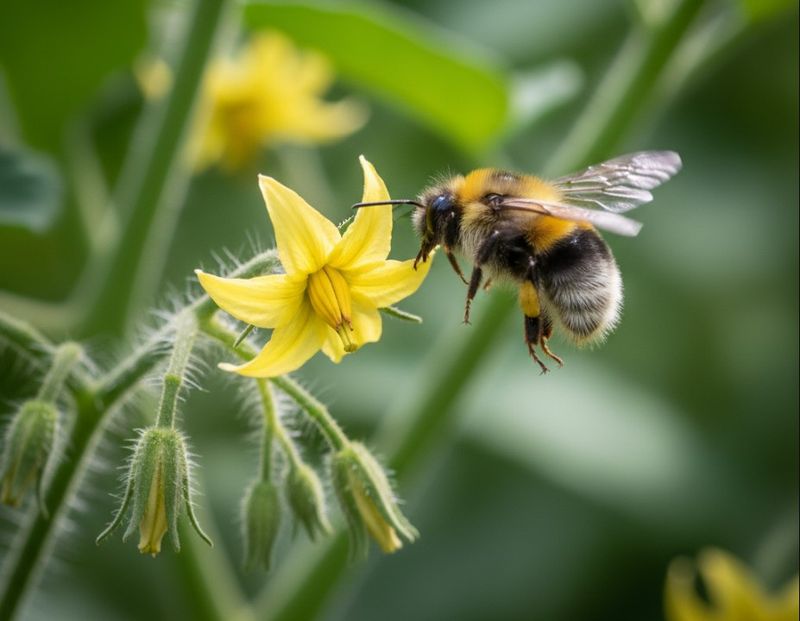
The idea that tomato flowers open only at one precise vibration frequency, matched by a single bee species, makes for a compelling headline. The actual research tells a more complicated and more useful story.
Your Arizona Garden Changes Every Week. Your Plan Should Too.
Gardening in Arizona changes quickly throughout the season. Every Friday you’ll receive a simple weekly plan showing exactly what to plant, prune, fertilize, harvest, and protect so you never miss the right timing.
A peer-reviewed study, Rosi-Denadai et al. on buzz-pollination frequencies in Neotropical bees, found that different bee species produce different vibration characteristics and that no single universal optimal frequency for releasing tomato pollen could be identified. Factors including bee species, body size, vibration amplitude, flower structure, and the condition of the flower at the time of the visit all affect how much pollen is released.
What this means practically is that the question is not which one bee to attract. Multiple bee groups can perform buzz pollination on tomatoes, and a yard with a variety of native bee visitors is more resilient than a yard banking on one species showing up.
Carpenter bees, sweat bees, and bumblebees all bring something useful. Supporting a diverse bee community, rather than chasing a single pollinator, gives Arizona gardeners a better foundation for consistent fruit set across both the spring and fall growing windows.
Low-desert heat can outweigh pollinator activity
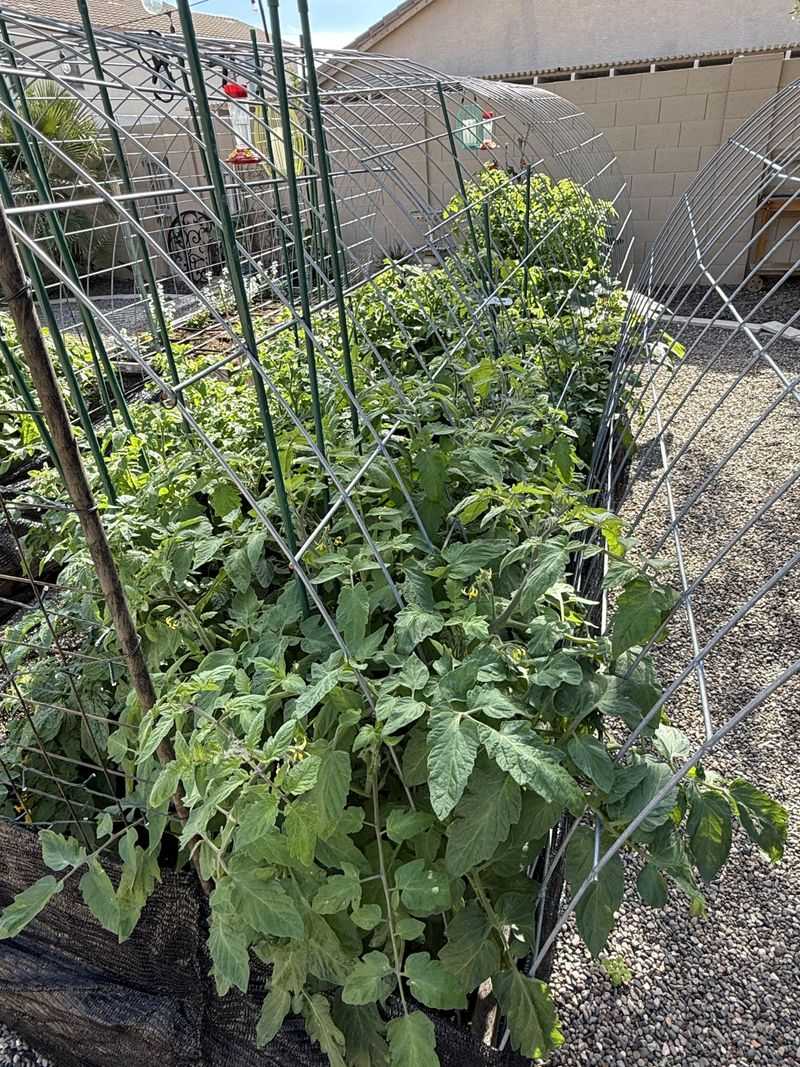
Bee activity is only one piece of the fruit-set puzzle in Phoenix or Tucson. Arizona’s summer heat can shut down tomato production entirely, and no amount of pollinator activity reverses that.
Daytime temperatures around 90 degrees Fahrenheit begin to slow fruit set noticeably. Once daytime highs reach roughly 94 degrees, fruit set may stop altogether.
Nighttime heat adds another layer of difficulty: when overnight lows stay above 75 degrees, pollen viability drops and flowers may not develop properly even if bees are working the blossoms. Both the UA Cooperative Extension guide on tomato challenges and its companion growing guide identify these temperature thresholds as primary reasons for blossom drop and poor summer fruit development in the low desert.
Spring and fall are the two productive windows for southern Arizona tomato growers. A spring planting that goes in around late January or February can produce fruit before summer heat peaks.
A fall crop started around late July or August can carry through September and October as temperatures decline. Trying to push tomatoes through July and August in Phoenix or Tucson almost always ends in blossom drop, no matter how many bees are visiting.
Consistent irrigation and healthy plants matter too. Drought stress, irregular watering, and nutrient deficiencies can reduce fruit set even when temperatures are favorable and pollinators are active.
Heat management, moisture, and timing work together.
Gently move flowers when conditions allow
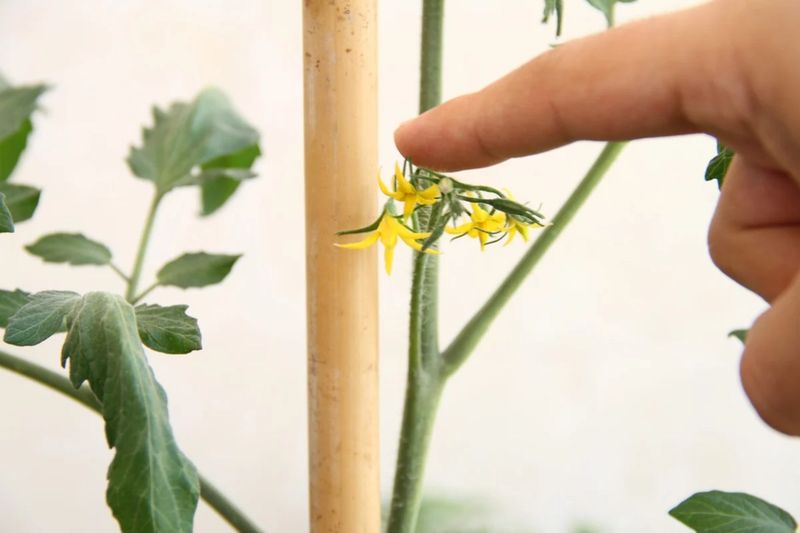
When native bees are scarce or weather has been unusually still, a little manual help can move pollen without much effort or equipment. Gently shaking the tomato plant or lightly tapping a flower cluster with a finger during the cooler morning hours is enough to trigger the same basic pollen release that a buzzing bee would cause.
An electric toothbrush held near the base of a flower cluster is another option mentioned in UA Cooperative Extension’s tomato challenges publication, but it is not necessary. Simple plant movement works well and carries less risk of bruising delicate flowers.
Either way, doing this early in the day, before temperatures climb, gives released pollen the best chance of reaching a viable stigma before heat stress sets in.
Manual vibration is a low-risk supplement, not a replacement for good growing conditions. If daytime highs are already above 94 degrees, if the plant is drought-stressed, or if pollen viability is already compromised by heat, no amount of shaking will produce fruit.
The technique works best as a helpful nudge during the spring or fall window when plants are healthy, moisture is consistent, and temperatures are still within the productive range.
Create habitat for many useful bees
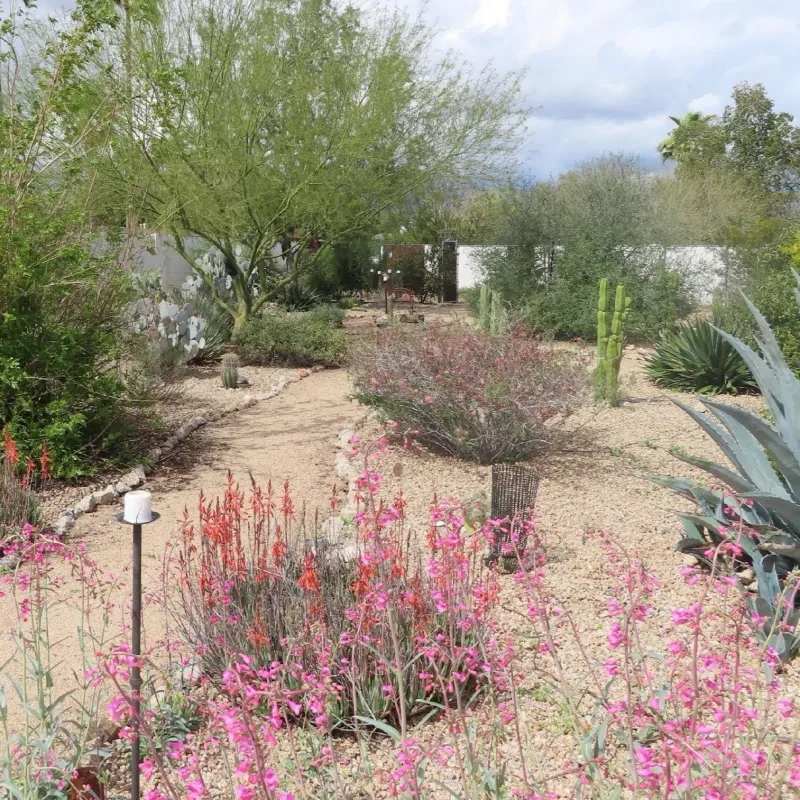
Attracting a range of native bees starts with giving them something to come back to across the whole season. A single flowering plant blooming for three weeks in spring does not sustain a bee community through Arizona’s long growing calendar.
A layered succession of desert-adapted plants, chosen to bloom from late winter through fall, keeps native bees foraging near your garden when tomatoes need them most.
The UA Cooperative Extension list of plants for pollinators in the low desert recommends selecting species suited to your specific site, including its elevation, sun exposure, reflected heat from walls or pavement, frost risk, and irrigation access. Phoenix and Tucson yards differ meaningfully from higher-elevation Arizona gardens, and what thrives in one location may struggle in another.
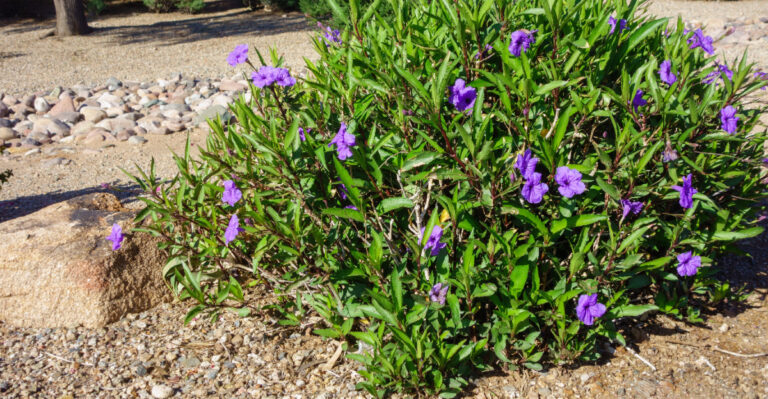
Native penstemons, desert willow, and other regionally adapted species tend to support a broader range of native bee visitors than non-native ornamentals.
Ground-nesting bees, which include many solitary species capable of buzz pollination, need patches of bare undisturbed soil. Leaving a section of ground uncovered and uncompacted gives them nesting space.
Retaining some hollow stems or woody organic material in a corner of the yard supports cavity-nesting species as well.
Wild bumblebee colonies deserve to be left alone. Moving, capturing, or purchasing outdoor bumblebee colonies raises serious ecological and disease concerns, as noted in USDA research on managed bee species.
Observe any colonies you find and give them space to do their work undisturbed.
Protect pollinators around blooming tomatoes
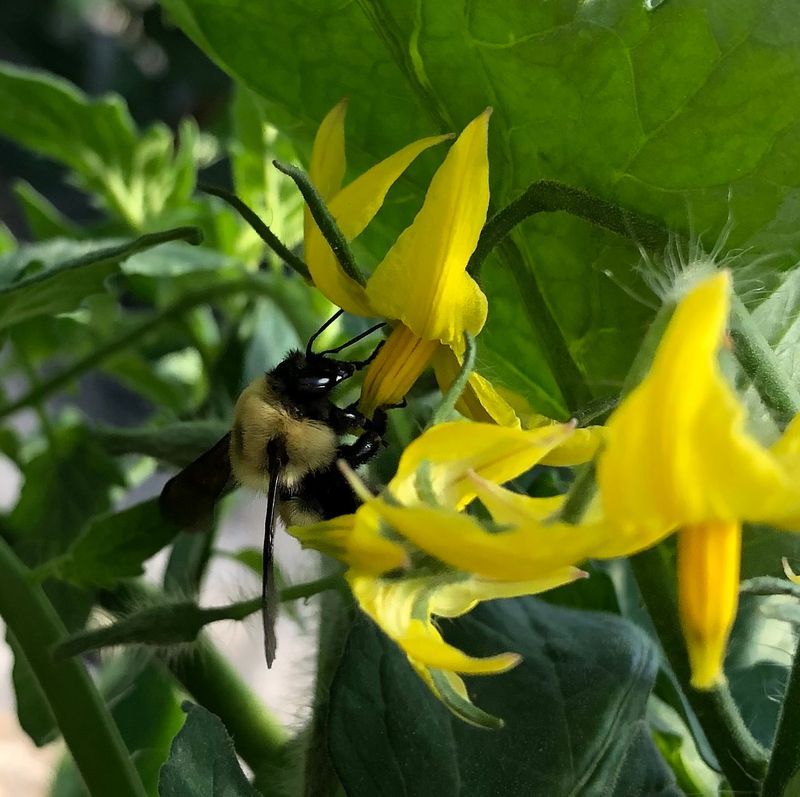
Pesticide use is one of the fastest ways to undo the habitat work you have done. Broad-spectrum insecticides applied around blooming tomatoes or nearby pollinator plants can harm or reduce the native bees you are counting on for better fruit set.
The best approach is to avoid routine insecticide use in and around the tomato bed during the growing season. When a pest problem genuinely requires treatment, read the product label carefully and follow it completely.
EPA guidance on pollinator protection emphasizes four key practices: apply only when the label permits, avoid spraying open flowers or areas where bees are actively foraging, reduce drift by spraying close to the target plant in calm conditions, and use targeted applications rather than broadcasting a product across the whole garden.
Timing matters as much as product choice. Evening applications after bees have returned to their nests reduce direct contact.
Choosing the most targeted product available for the specific pest, rather than a broad-spectrum option, limits unintended exposure to beneficial insects.
Shallow water with escape surfaces, such as a dish filled with pebbles and clean water, is a general habitat support measure worth adding to the yard. Bees and other beneficial insects need water, especially during Arizona’s dry spring and pre-monsoon weeks.
Refresh the water every few days so the dish does not become a mosquito breeding site. Water alone will not guarantee pollinator visits to your tomatoes, but it makes the yard more hospitable to the native bee community you are trying to support.
Combine pollinator support with seasonal timing
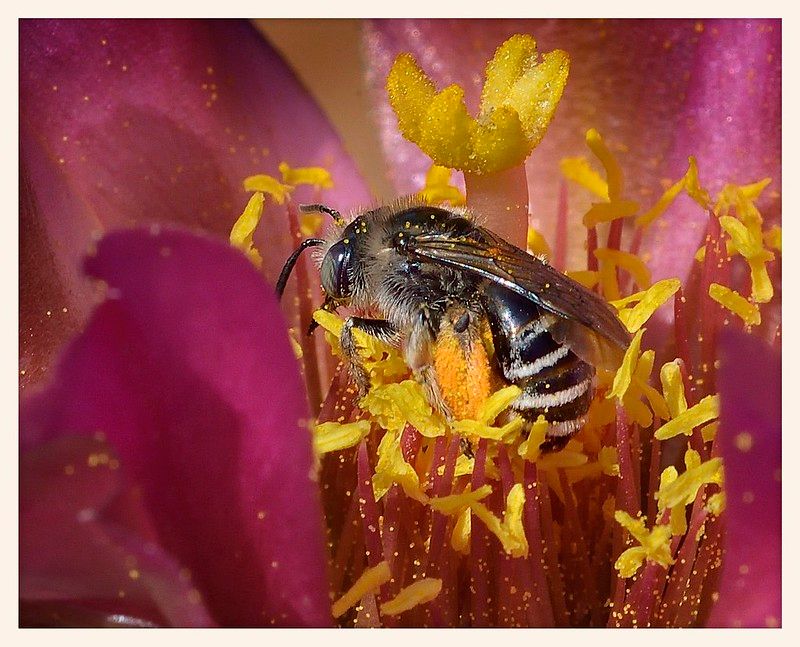
Buzz-pollinating bees genuinely can improve how much pollen your tomato flowers release, and supporting a diverse native bee community is a worthwhile goal for any low-desert Arizona gardener. Getting a good harvest, though, requires more than one piece of the puzzle falling into place.
The sequence that matters most starts with timing. Plant tomatoes to mature during the spring or fall window, when daytime temperatures stay below the threshold where fruit set slows or stops.
Water consistently, since drought stress can reduce fruit set even when pollinators are present and temperatures are manageable. Keep plants healthy through appropriate fertilization and pest management that does not harm the bees you are trying to attract.
Layer in the habitat work across the season: a succession of desert-adapted flowering plants, some undisturbed bare ground, and a shallow water source refreshed regularly. Gently shake or tap flower clusters on cool mornings when bee activity seems low.
Skip the broad-spectrum pesticides around blooming plants, and follow label guidance carefully when treatment is truly necessary.
No single technique, whether it is a particular bee species, a specific vibration method, or one flowering companion plant, guarantees a full basket of tomatoes. A garden that combines the right planting window with good plant care and a welcoming habitat for diverse native bees simply gives every flower its best realistic shot at becoming fruit.