8 Flowers That Keep Blooming Into October When Most Gardens Fade
September tempts you to pack up too early. Tired petunias and drooping impatiens make a persuasive case for stopping. Resist it. Asters, sedum, and Japanese anemones save their loudest show for cooler weeks.
Monarchs heading to Mexico refuel on aster nectar during their long migration. Salvia feeds ruby-throated hummingbirds fattening up for their big trip south.
Meanwhile, sedum turns copper red while asking you for almost no water. Zinnias push out new side shoots whenever you snip a generous bouquet.
Cosmos sway above feathery leaves right when you expect the color to soften. You can stretch bold color into October if you choose smartly now. Timing matters, though.
Wait too long, and garden centers clear out the best plants. Choose wisely, and you capture a season of prime pollinator traffic. Here are the bloomers worth choosing before your window closes.
1. Asters For A Butterfly Buffet
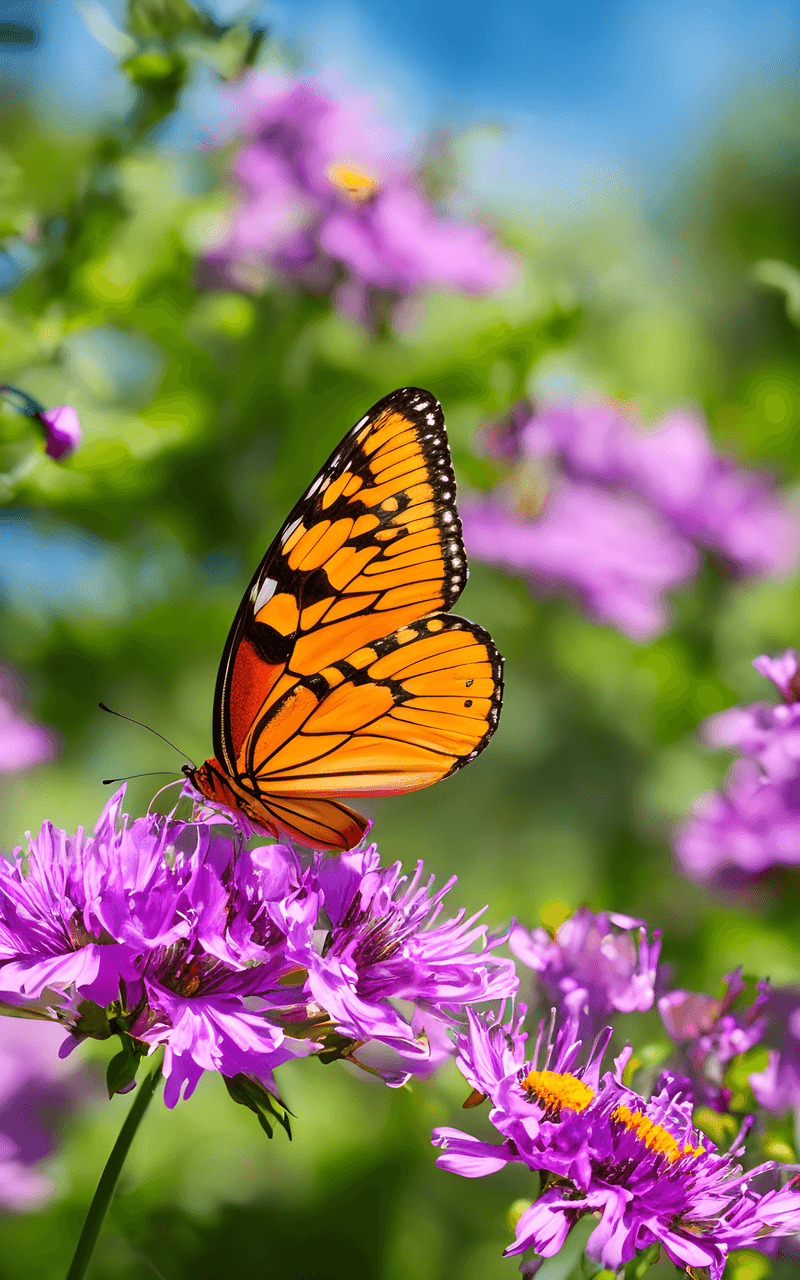
Monarch butterflies heading to Mexico need fuel, and asters serve it up like a roadside diner. Their starry purple, pink, and blue flowers open just as most summer plants start fading.
Asters are native perennials across much of North America, so they come back every year. Popular picks include New England asters, aromatic asters, and the compact variety called Purple Dome.
Since this post lands in September, you might spot potted asters at garden centers right now. Grab them while they are budded but not fully open for the longest possible show.
Plant them in full sun, meaning at least six hours of direct light each day. They handle regular garden soil just fine and do not need any fancy fertilizer or extra fuss.
Tall types can flop over by fall, which looks a bit messy. Try pinching the stem tips back by a few inches in early summer next year for sturdier plants.
Water new plants deeply once or twice a week until the ground freezes solid in winter. Good airflow between plants helps prevent powdery mildew, a white dusty coating that asters sometimes get.
Here is a fun bit of flower history to share at dinner tonight. The name aster comes from the Greek word for star, which perfectly fits those pointy little petals.
Leave the stems standing after blooming ends instead of cutting everything down right away. Birds snack on the fluffy seeds, and your garden gets a little winter texture too.
2. Chrysanthemums For Classic Fall Color
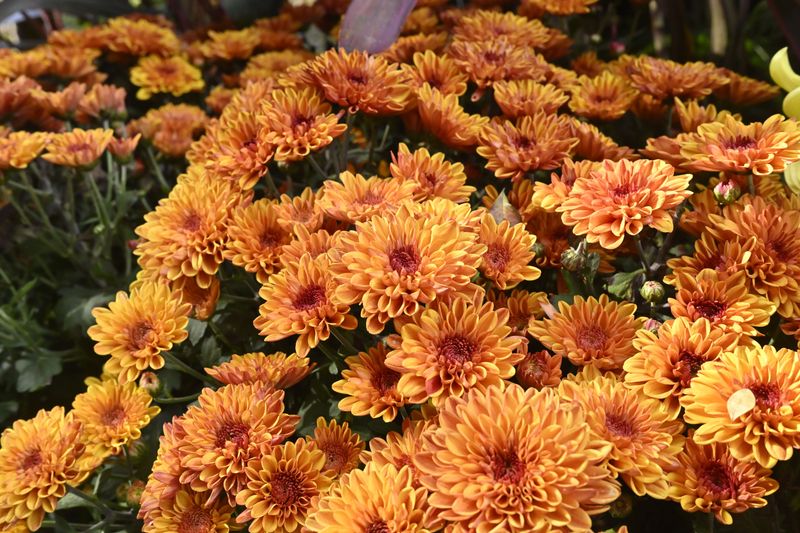
Many front porches in autumn feature a big pot of mums sitting by the steps. Chrysanthemums have been the unofficial mascot of fall for generations, and for good reason.
Their blooms come in rusty orange, deep burgundy, buttery yellow, soft lavender, and snowy white. Some look like tiny buttons, while others resemble fluffy pom-poms or spidery little fireworks.
Mums react to shorter days, which is why they wait until late summer to bloom. A single healthy plant can stay colorful for three to six weeks, and even longer in cool weather.
September is the perfect month to shop, since stores and farm stands overflow with them. Choose plants with lots of tight buds and only a few open flowers showing color.
Potted mums dry out fast because their roots are packed so tightly inside the container. Check the soil daily, and water at the base whenever the top inch feels dry.
Hoping your porch mums will come back and bloom again next year? Plant hardy garden mums in the ground by mid-September so their roots can settle before the first hard frost.
Florist mums, the kind sold in foil-wrapped pots, are mostly meant for one season of indoor beauty. Enjoy them for a few weeks, then toss them in the compost bin without any guilt.
Fun fact: in Japan, the chrysanthemum is a symbol of the emperor and appears on the imperial seal. There is even a yearly festival in Japan celebrating these royal blossoms each autumn.
3. Sedum For Easy Drought-Tolerant Blooms
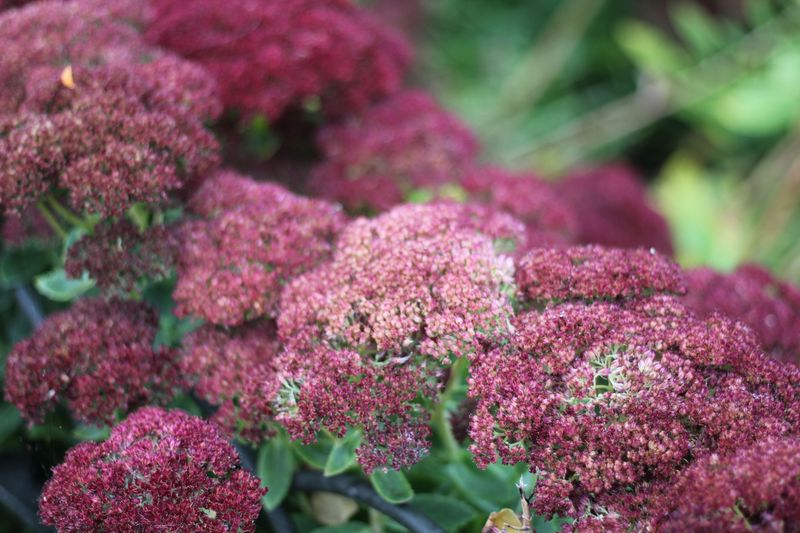
Some plants demand constant attention, but sedum is the couch potato of the flower bed. It thrives on neglect and still puts on a gorgeous show just as fall arrives.
The most famous variety, Autumn Joy, starts with pale green buds that look a bit like broccoli. By September, those clusters blush pink, then deepen to a rich copper red in October.
Sedum is a succulent, so its thick, rubbery leaves store water like tiny canteens. That makes it a champ during long dry spells when other flowers slow down in the heat.
Give it a sunny spot with soil that drains quickly after a heavy rain. Soggy ground is the one condition sedum can’t handle, since wet roots struggle.
Skip the fertilizer, too, because rich soil makes the stems grow floppy and weak. Poor, rocky, or sandy soil actually keeps the plants sturdy, upright, and looking neat all season.
Bees and butterflies crowd onto the flat flower heads on warm, sunny autumn afternoons. Sit nearby with a snack, and you might count a dozen visitors in just minutes.
Want a bunch of extra plants without spending a single penny? Snap off a stem, let it dry for a day, and poke it into soil to grow roots.
Once the flowers fade to brown in late fall, leave them standing through winter for extra interest. Frost and snow look magical sitting on top of those dried, rusty brown flower heads.
4. Japanese Anemones For Shady Corners
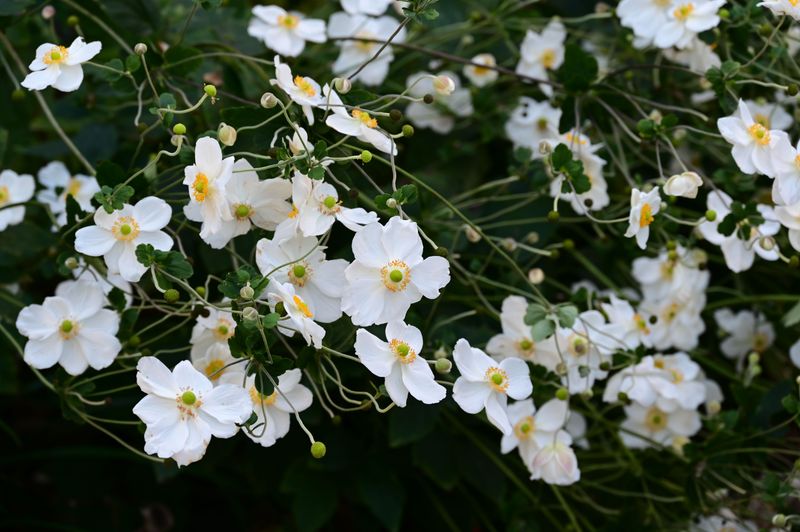
Imagine a flower that dances on stems so tall and thin they seem to float. Japanese anemones sway in the lightest breeze, like ballerinas taking a slow bow.
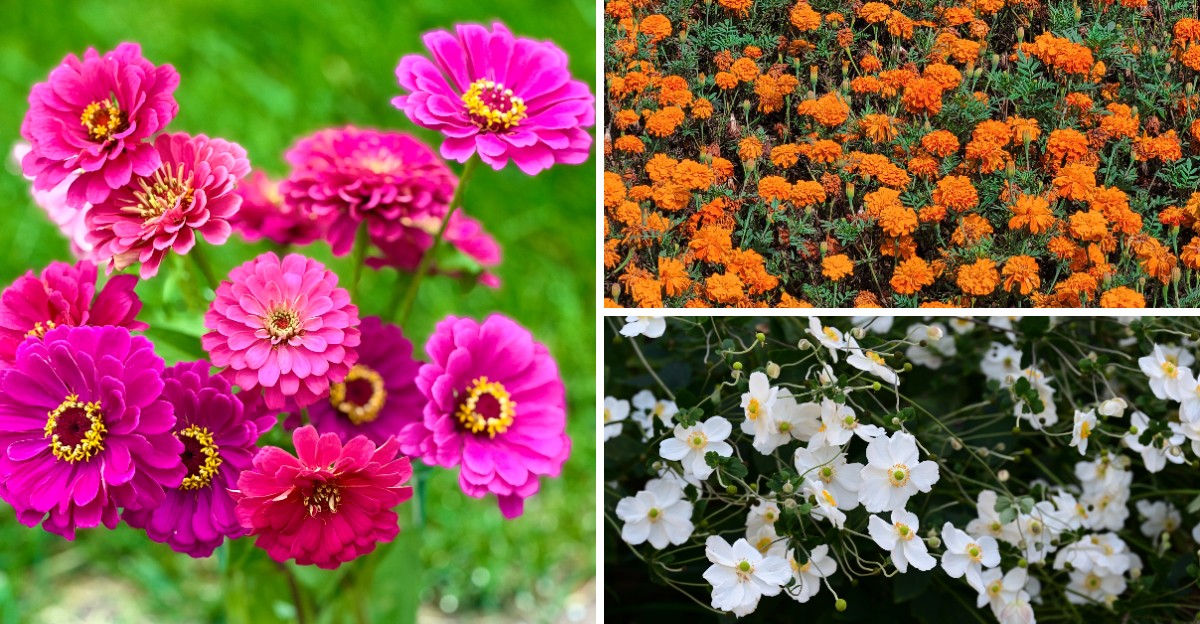
Their simple, saucer-shaped petals come in soft pink or crisp white. Each one has a bright green center ringed with golden stamens that catch the autumn light.
Most fall flowers crave blazing sunshine, but anemones happily settle into partial shade. They are a great fit for dappled spots under trees or beside the house.
Blooming usually begins in late August and keeps going through October in many regions. Some years, the flowers hang on until a hard frost finally arrives.
Anemones like moist, rich soil, so mix in some compost before planting. Water them during dry weather, especially in their first year while roots get established.
A word of warning, though, since these beauties have a sneaky side. Once happy, they spread by underground roots and can wander into nearby beds.
Plant them where they have room to roam, or tuck them in a large container. Popular varieties include Honorine Jobert, a pure white classic, and September Charm in rosy pink.
Cut the stems back to the ground after frost turns the leaves black and mushy. A light layer of shredded leaves on top helps protect the roots in cold winter areas.
Your friends might enjoy this quirky bit of plant trivia. Despite the name, Japanese anemones actually came from China, where they grew wild for centuries before reaching Japan.
5. Zinnias For Nonstop Cutting Bouquets
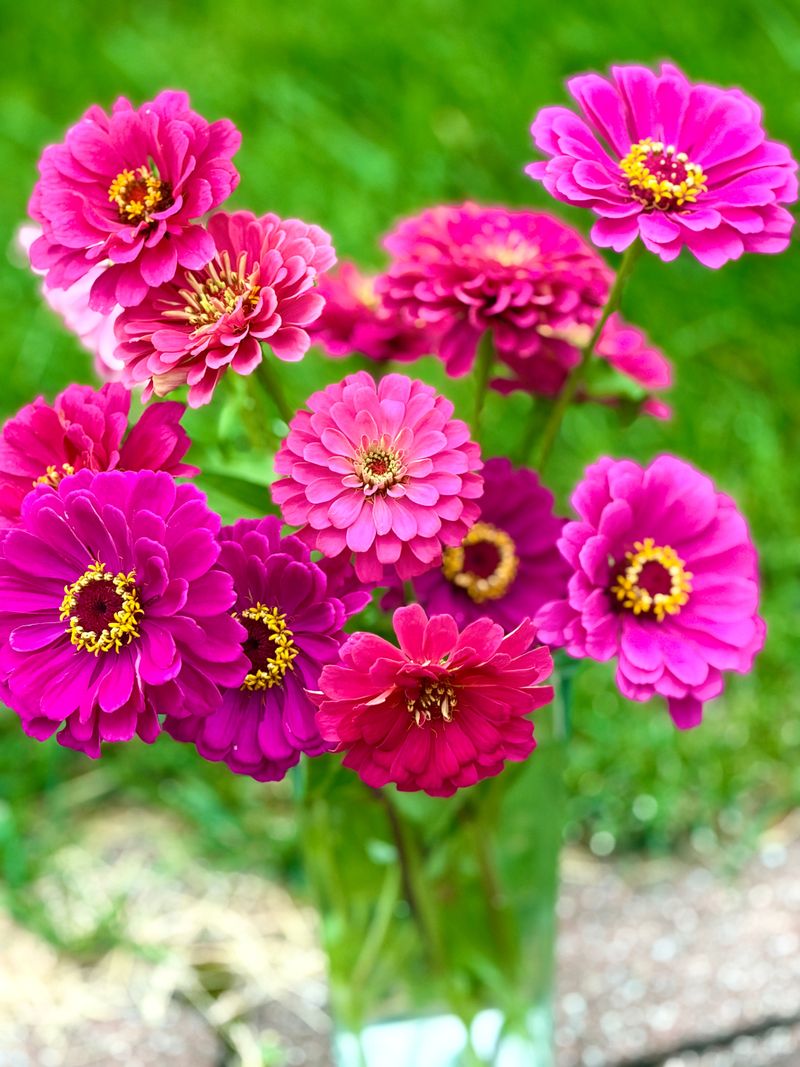
The more you cut zinnias, the more flowers they make, which feels a little like magic. Snip a handful for the kitchen table, and new side shoots soon grow to replace them.
Zinnias are warm-weather annuals, so they bloom from midsummer right up until the first frost. In many areas, that means cheerful, eye-popping color well into the middle of October.
The color choices are wild, from hot pink and lime green to tangerine and candy-striped mixes. Benary’s Giant and State Fair types produce big, sturdy flowers perfect for tall vases.
When cutting, choose flowers that feel stiff when you gently wiggle the stem just below the bloom. Floppy stems mean the flower is not ready yet and will droop in water.
Water zinnias at the soil line with a hose instead of spraying the leaves from above. Wet leaves invite powdery mildew, a dusty white fungus, especially as nights turn cool and damp in September.
Snip off any faded flowers you missed, too, because the plant secretly wants to make seeds. Removing old blooms tricks it into producing fresh ones instead of calling it quits early.
Butterflies adore zinnias, especially the single and semi-double kinds with wide, easy-to-reach centers. Swallowtails and painted ladies often stop by for a long sip on sunny fall afternoons.
Before frost hits, let a few flower heads dry right on the plant. Crumble them in your hand, save the arrow-shaped seeds in an envelope, and plant them next spring.
6. Cosmos For Airy Late-Season Charm
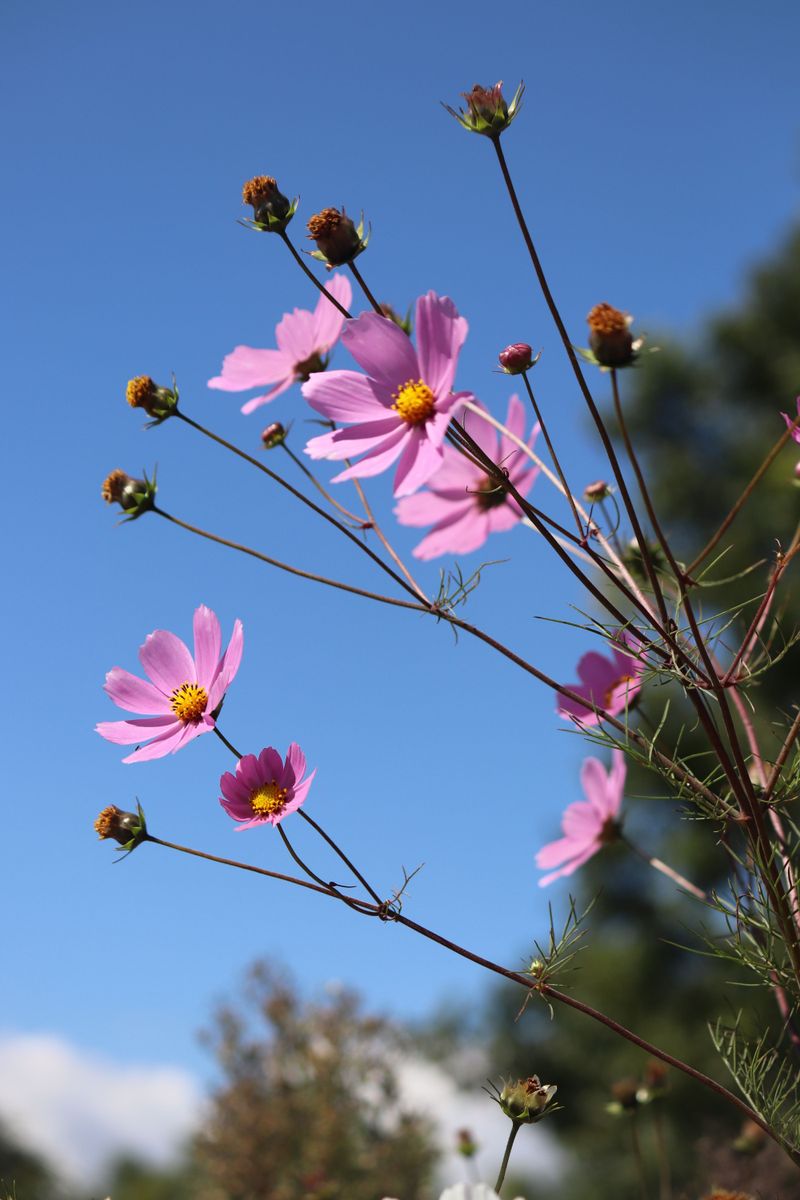
Ever seen a flower that looks like it was drawn by a kid with a happy crayon? Cosmos have simple, daisy-like petals that flutter above feathery leaves on tall, swaying stems.
They grow fast, reaching three to six feet tall, and keep flowering until frost. Late-season cosmos often look even better in October than they did in July.
Colors range from classic pink, white, and magenta to sunny orange and yellow. The Sensation mix is a garden favorite, while Cupcakes has petals fused into cute little cups.
Busy families will love the next part most of all. Cosmos actually bloom better in thin, poor soil, so you can forget about plant food.
Too much nitrogen makes them grow huge leaves and very few flowers. A sunny spot and an occasional drink during dry weeks are all they really need.
Tall plants can tip over in autumn winds, especially after a heavy rain. Push a few bamboo stakes nearby, or let them lean on sturdier neighbors for support.
Goldfinches go crazy for cosmos seeds once the petals drop. Leaving some faded heads on the plants turns your garden into a bird cafe by late fall.
Cosmos also reseed themselves, so a few plants this year can become a whole patch next summer. Pull up extra seedlings in spring if they pop up where you do not want them.
In the 1790s, Spanish priest and botanist Antonio José Cavanilles named these flowers after the Greek word kosmos, meaning harmony. He thought the evenly spaced petals looked beautifully balanced and orderly.
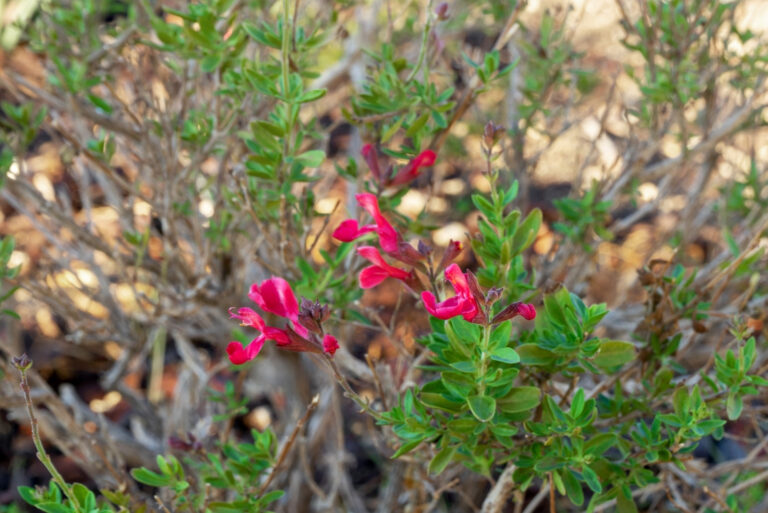
7. Salvia For Hummingbird Traffic
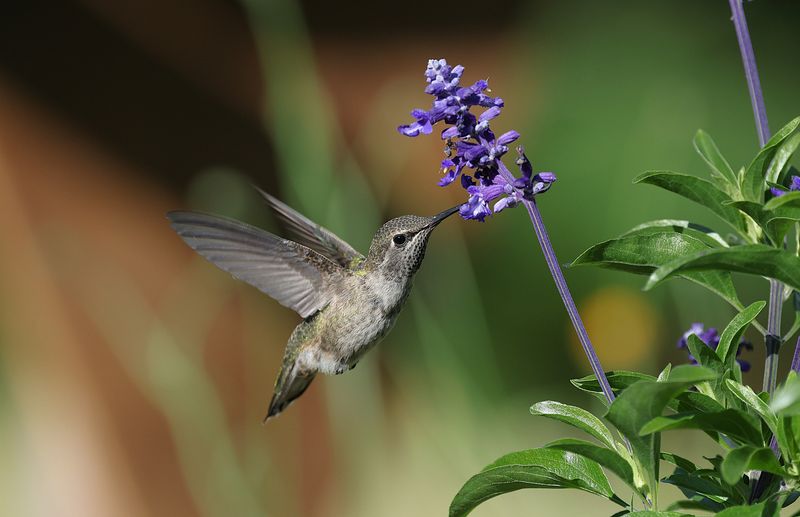
A ruby-throated hummingbird’s heart can beat over 1,200 times per minute, so it needs lots of nectar. Salvias are a key nectar source for these tiny birds before they migrate south.
Their long, tube-shaped flowers fit a hummingbird’s slender beak like a key in a lock. Many types keep blooming from summer through October, and some stretch all the way to the first freeze.
Salvia is a huge genus in the mint family, with nearly a thousand species, including the sage in your kitchen. For fall color, look for Black and Blue, Mexican bush sage, or scarlet sage.
Mexican bush sage is a real showstopper, with fuzzy purple spikes that peak in October. It can grow into a shrub-sized mound, so give it plenty of elbow room in the bed.
Most salvias love full sun and loose soil that drains well after watering. Once established, they shrug off heat and dry spells better than many fussier garden flowers.
Deer and rabbits usually leave them alone, thanks to the strong scent of their leaves. Rub a leaf between your fingers and you will smell something minty, fruity, or spicy.
Trim off faded flower spikes to encourage a fresh round of blooms. A quick haircut in late summer can keep the plant going strong for several more weeks.
In colder areas, many salvias grow as annuals, while warmer regions can keep them for years. Either way, you will get a front-row seat to the best hummingbird show in town.
8. Marigolds For Bright, Hardworking Borders
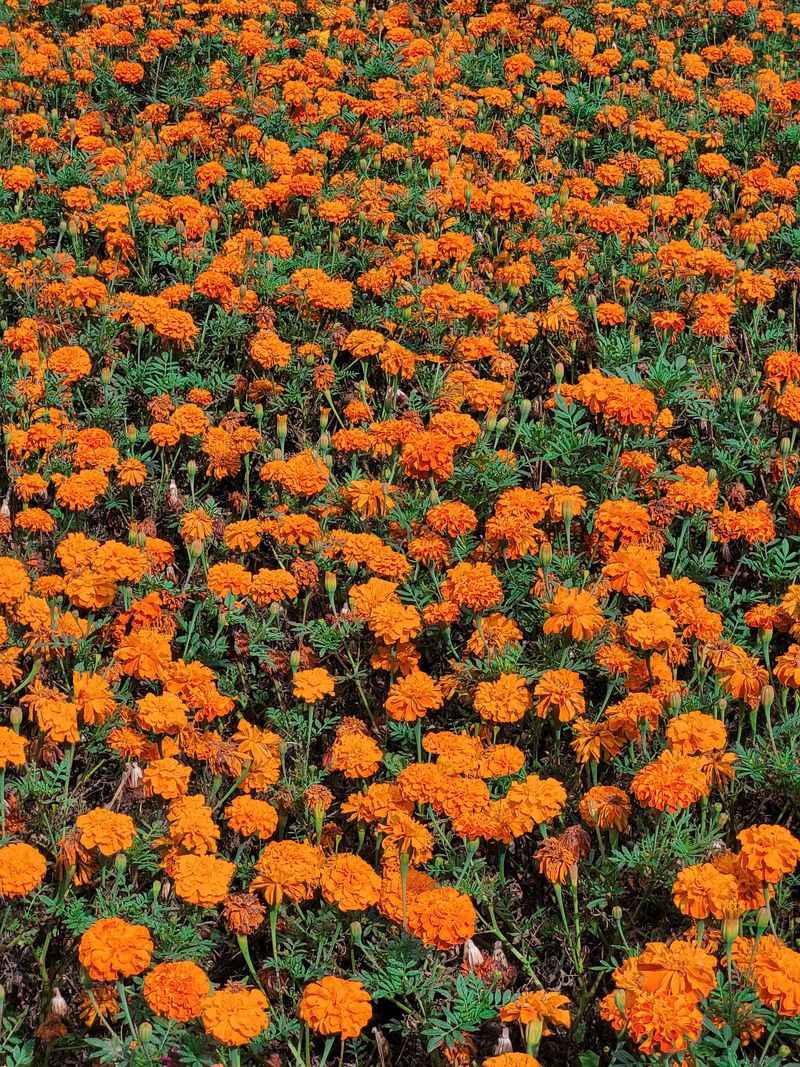
Squeeze a sunset into a tiny ruffled ball, and you get a marigold. Their golden, orange, and deep mahogany blooms glow like little lanterns as the days grow shorter.
Marigolds are tough annuals that bloom from late spring until frost with very little help. In many gardens, they keep glowing right through October, even after a few chilly autumn nights.
French marigolds stay short and bushy, which makes them perfect for edging paths and filling pots. African marigolds grow taller, with huge blooms that can reach the size of a softball.
Gardeners have tucked marigolds between vegetables for hundreds of years to help protect their crops. When planted densely for a full season, their roots release a natural chemical that can discourage tiny soil worms called root-knot nematodes.
Their strong smell may also confuse some pests searching for your tomatoes or beans. Scientists are still studying how well this works, and marigolds can attract slugs and spider mites, so keep an eye on them.
Plant marigolds in full sun, and let the soil dry out slightly between waterings. Pinch off spent flowers every few days with your fingers to keep fresh buds forming all autumn.
Found a tray of tired-looking marigolds on the clearance rack in September? Buy them anyway, trim off the brown bits, and give them a sunny spot to bounce back.
In India, marigolds are strung into bright garlands for weddings, festivals, holidays, and temple offerings. Their cheerful color is thought to bring good luck and happy energy wherever they hang.