Plant These 10 Flowers In Fall And Enjoy Color Before Winter Even Ends
You can plant February now, and September gives you the head start. Bulbs you plant now need cool, unfrozen soil to push roots before winter. Wait too long, and your bulbs may bloom late and sparse.
Timing is leverage, and you control the clock. Snowdrops, crocuses, and winter aconite give you white, purple, and gold against bare mud.
Each rewards a clever trick you probably haven’t heard. Aconite tubers arrive dry and knobby, so you soak them overnight before planting.
Squirrels love crocus corms, yet they usually ignore tommasinianus, the species you want. Galantamine, a compound doctors prescribe for Alzheimer’s, hides inside the snowdrops you plant.
Depth outsmarts instinct, so you dig deeper than feels reasonable. Drainage matters too, since soggy clay spoils bulbs you paid good money for. Here’s how you plant them now, before that window quietly closes.
1. Snowdrops Ring In The Thaw With Tiny White Bells
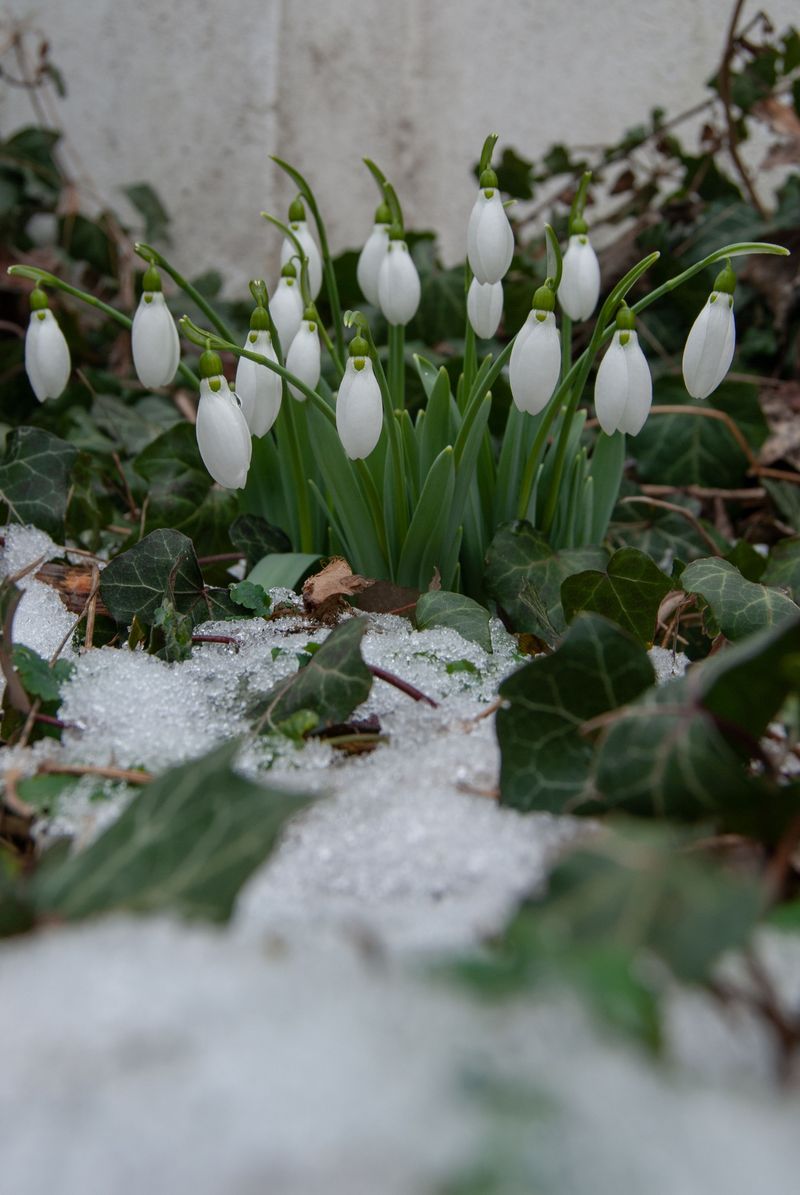
Some flowers wait politely for spring, but snowdrops push right through the snow like tiny, stubborn soldiers. Their white, nodding heads often appear in January or February, before most gardens show any color.
Plant the small bulbs from September through November, about three inches deep and three inches apart. Pointy end up is the golden rule, though they usually figure it out if you guess wrong.
Snowdrops love spots with morning sun and a little shade later in the day. Under deciduous trees works great, since the branches are bare when the flowers need light most.
Plant them in clumps of ten or more for the best show. A single snowdrop looks lonely, but a crowd resembles fresh snow that refuses to melt.
Tuck a few near your front door so you notice them. Spotting the first white bloom on a cold morning feels like finding money in an old coat.
Snowdrop superfans even have a fancy name, galanthophiles. Some of them pay hundreds of dollars for a single rare bulb at auction.
Once planted, these little bells ask for almost nothing from you. Squirrels and deer usually leave them alone, and each year the clumps slowly grow bigger on their own.
2. Winter Aconite Shines Golden Through The Frost
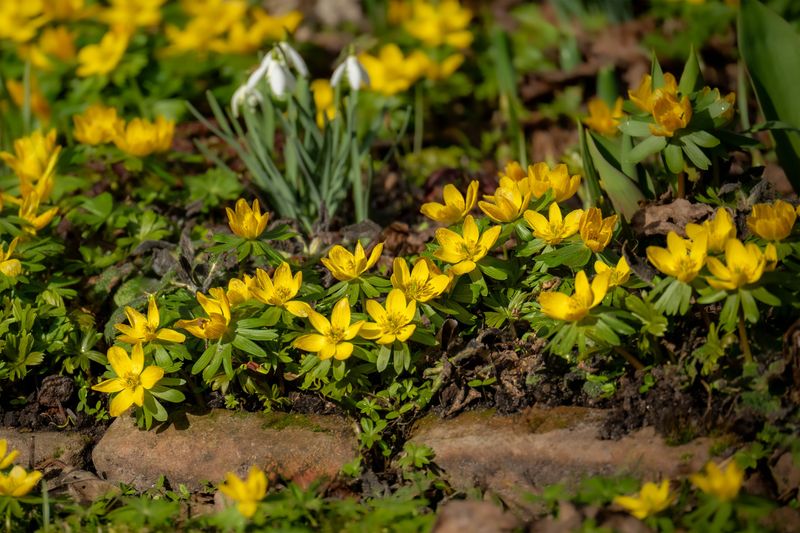
Imagine tiny buttercups wearing green ruffled collars, glowing like little suns in the middle of February. That is winter aconite, one of the brightest early surprises you can plant this fall.
These flowers grow from knobby little tubers that look a lot like dried pebbles. Soak them in warm water overnight before planting, because it helps them wake up and sprout.
Get them in the ground in September or early October, about two inches deep. Space them roughly three inches apart in soil that drains well but stays a bit moist.
Winter aconite stays short, usually only three or four inches tall. It looks amazing edging a path or spreading like a golden carpet under shrubs.
Bees adore them, too, which is a big deal in late winter. Few other flowers offer food when those fuzzy pollinators first buzz out on a warm afternoon.
One quick warning: every part of this plant is toxic if eaten. Keep curious pets and toddlers away, and wear gloves if your skin is sensitive.
Give them a few years, and they will seed themselves around your yard. Pretty soon, your neighbors will ask where all that sunshine came from.
3. Crocus Brings Bright Color Before Spring Arrives
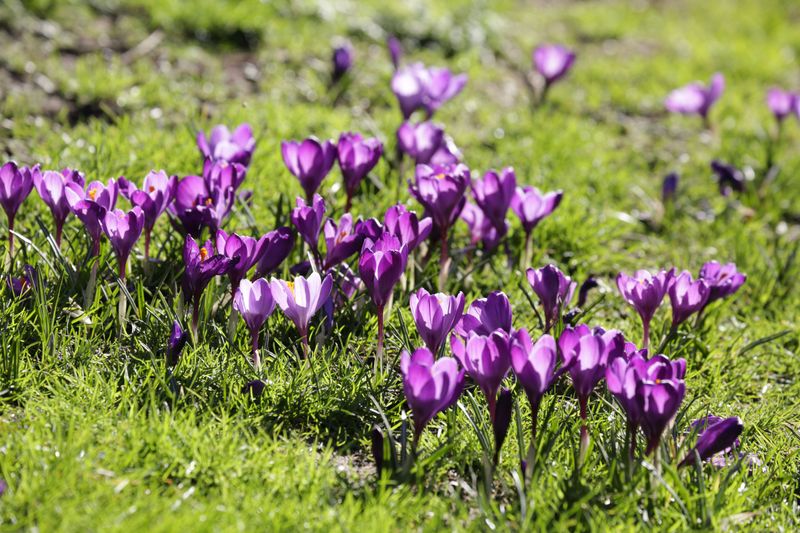
Ever seen a squirrel dig up something you just planted and run off grinning? Crocus bulbs are a favorite snack, so a little planning goes a long way.
Plant them three to four inches deep from late September through October. Laying chicken wire over the spot for a few weeks keeps furry thieves from stealing your treasure.
The payoff is worth every bit of the effort. By late February, purple, yellow, white, and striped cups open wide whenever the sun peeks out.
Early types called snow crocuses bloom first, sometimes poking through a crust of snow. Look for Crocus tommasinianus, a species that hungry squirrels tend to ignore.
Crocuses are great for lawns, too, if you like a little chaos. Tuck them right into the grass, and they will bloom before your first mow. Wait about six weeks after flowering before mowing, so the leaves can feed the corms.
Here is a tasty fact to share at your next trivia night. Saffron, the priciest spice on Earth, comes from the tiny threads inside a fall-blooming crocus.
Plant them in groups of twenty or more for a real wow moment. A big splash of crocuses looks like someone spilled a box of crayons across the yard.
4. Hellebores Bloom Boldly Through Winter Snow
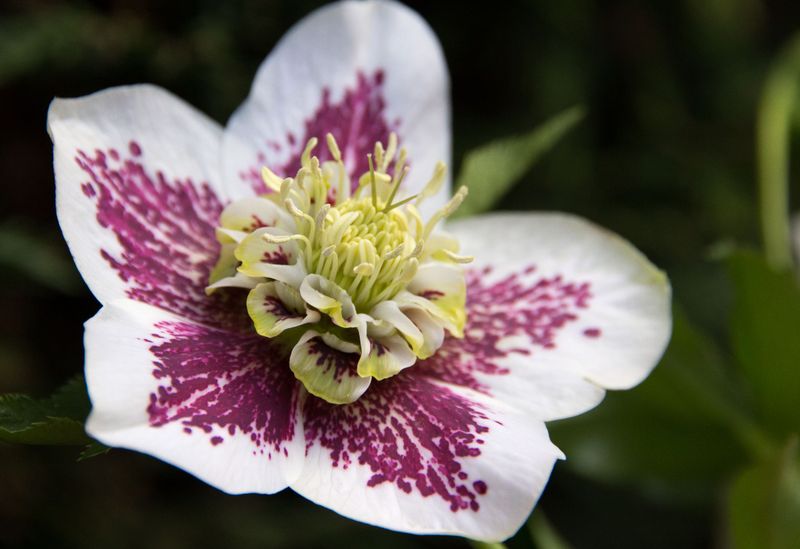
Gardeners call Helleborus niger the Christmas rose and Helleborus × hybridus the Lenten rose, though neither is a true rose. These tough plants open elegant, cup-shaped blooms while frost still sparkles on the ground.
Unlike bulbs, hellebores are perennials sold as potted plants at garden centers each fall. September is a perfect time to plant, since warm soil helps roots settle before winter.
Pick a shady or partly shady spot with rich, crumbly soil. Dig a hole twice as wide as the pot, and keep the crown level with the ground.
Their flowers come in dreamy shades like plum, blush pink, creamy white, and even speckled green. Many blooms face downward, so plant them on a slope or near a raised bed.
Once settled, hellebores can live for twenty years or more in the same spot. Deer and rabbits usually skip them because all parts are toxic, so wear gloves and keep pets away.
In late winter, snip off the old, tattered leaves before new flowers rise. The fresh blooms will stand out beautifully without last year’s scruffy foliage hanging around.
A cut hellebore floating in a bowl of water makes a lovely table decoration. It feels a bit like bringing a quiet piece of spring indoors during a snowstorm.
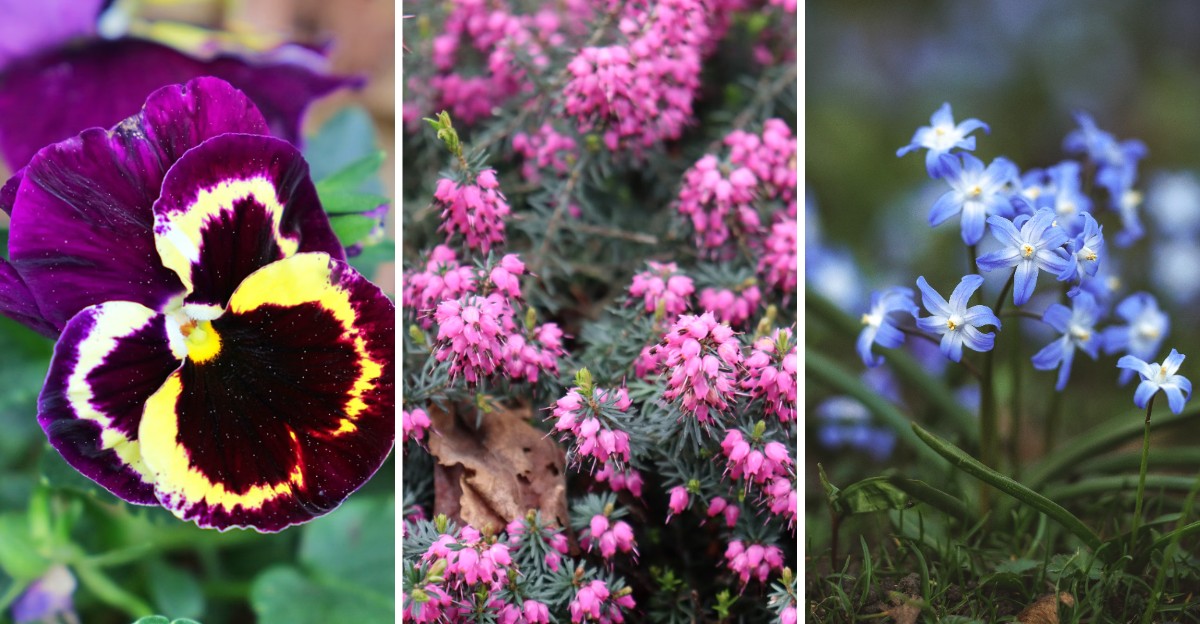
5. Pansies Show Cheerful Faces Through Chilly Weather
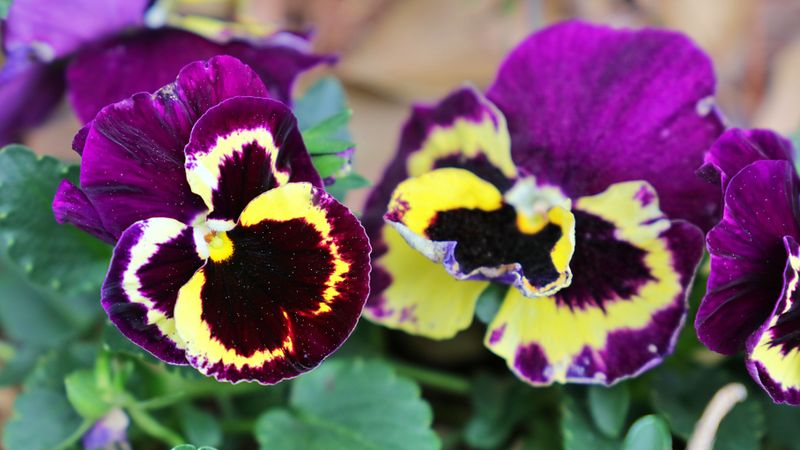
Look closely at a pansy, and you might swear it is smiling back at you. Those little faces are tougher than they look, handling frost and even light snow.
Buy young plants in September or October, when garden centers overflow with trays of them. Planting early gives roots about six weeks to grow strong before the ground turns icy.
Space them about six to eight inches apart in a sunny bed or container. A layer of mulch around their stems works like a cozy blanket on frosty nights.
In mild regions, pansies bloom on and off all winter long. In colder places, they pause during deep freezes, then bounce back with fresh flowers as days get longer.
Pinching off faded blooms keeps new ones coming. It takes seconds, and it stops the plant from wasting energy on making seeds.
Want a fun kitchen trick for a birthday party? Pansy petals are edible if grown without pesticides, so use flowers you raised yourself, not plants straight from the garden center.
Colors range from deep purple and sunny yellow to near-black and ruffled orange. Mix a few shades in a window box, and your porch will look happy even in January.
6. Dwarf Iris Adds Jewel Tones To Late Winter
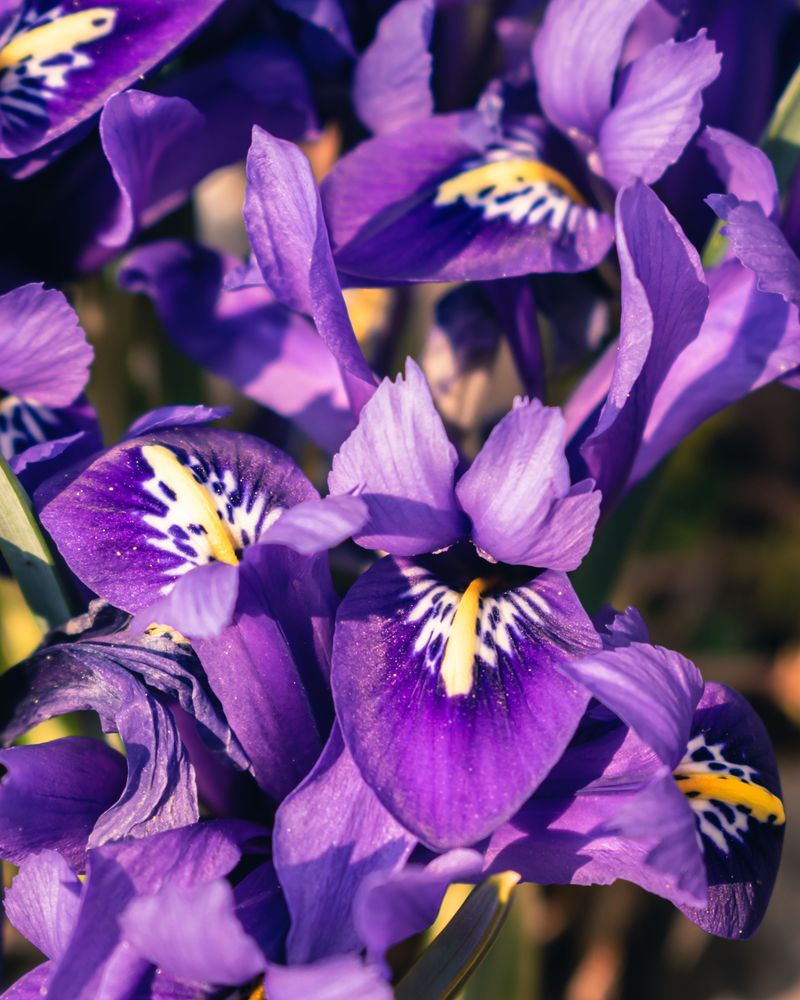
Blink, and you might miss them, but you would regret it. Dwarf irises rise just four to six inches tall, yet their colors hit like a fireworks finale.
Look for names like Iris reticulata or Iris histrioides at garden shops this fall. Their petals come in rich royal blue, velvety violet, and soft sky shades with golden markings.
Plant the bulbs about four inches deep between September and November. They need full sun and soil that drains fast, because soggy ground makes them rot.
Rock gardens, raised beds, and the edges of sunny walkways are ideal homes. Since the flowers are so small, place them where you can admire them up close.
Some gardeners grow a few in pots by the front steps. Every visitor stops to lean in, and many notice a light, sweet scent on sunny days.
Dwarf irises usually bloom in February or March, often right alongside snowdrops and crocuses. Together, they create a mini rainbow at a time when most yards look brown and tired.
The name iris comes from the Greek goddess of the rainbow. With colors this bold, it seems she picked the perfect flower to share her name.
7. Glory-Of-The-Snow Scatters Starry Blue Blossoms
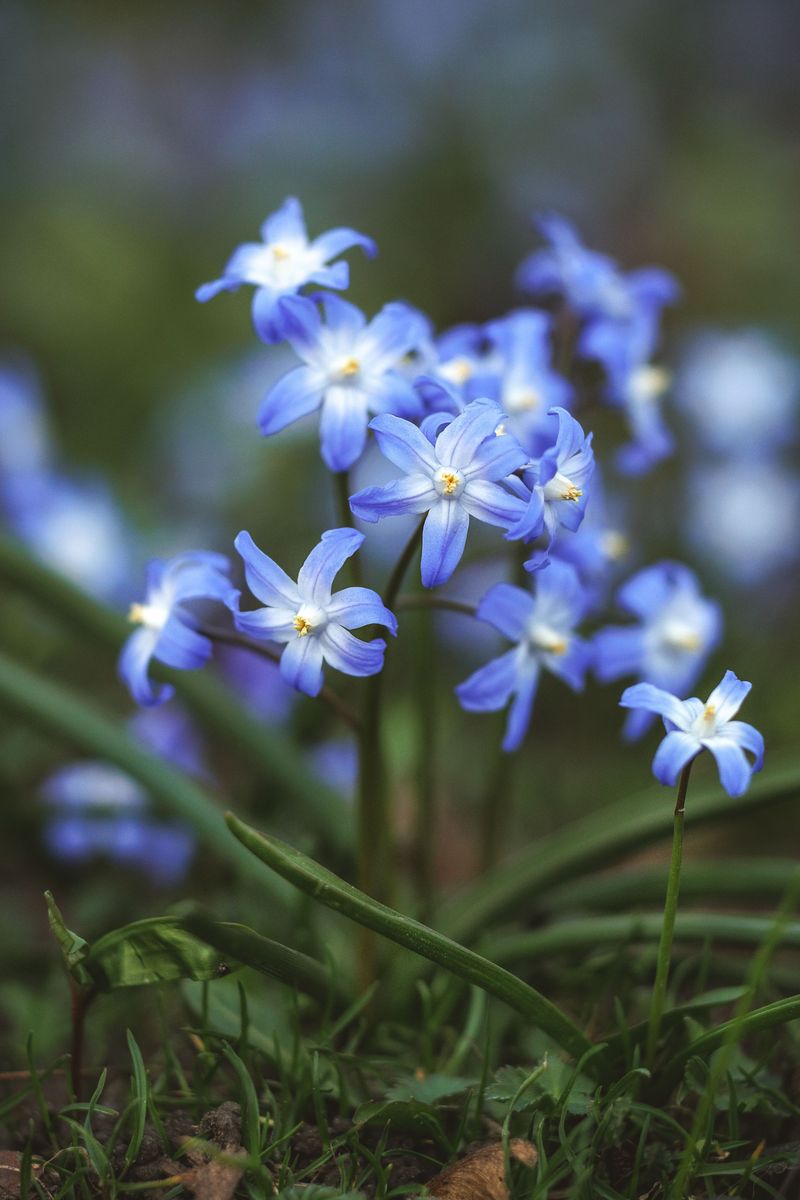
The name comes from its mountain home in Turkey, where it blooms as the snow melts. Its official name, Chionodoxa, comes from Greek words meaning snow and glory.
Each stem holds several star-shaped flowers, usually bright blue with a crisp white center. Pink and white types exist too, but the blue ones glow like a clear winter sky.
Plant the small bulbs about three inches deep in September or October. Tuck them in groups of at least twenty, since one or two get lost in the yard.
Full sun or light shade both work fine for these easygoing bloomers. They handle clay, sand, and everything between, as long as water does not puddle around them.
Here is the best part about this little charmer. Glory-of-the-snow spreads on its own, turning a small patch into a sea of blue.
Try planting them under shrubs or around the base of a tree. The blue flowers look stunning against brown mulch and bare branches in early March.
Early bees love them, and deer tend to walk right past. For a flower that costs so little and asks for so little care, that is quite a bargain.
8. Hardy Cyclamen Brightens Shady Corners With Swept-Back Petals
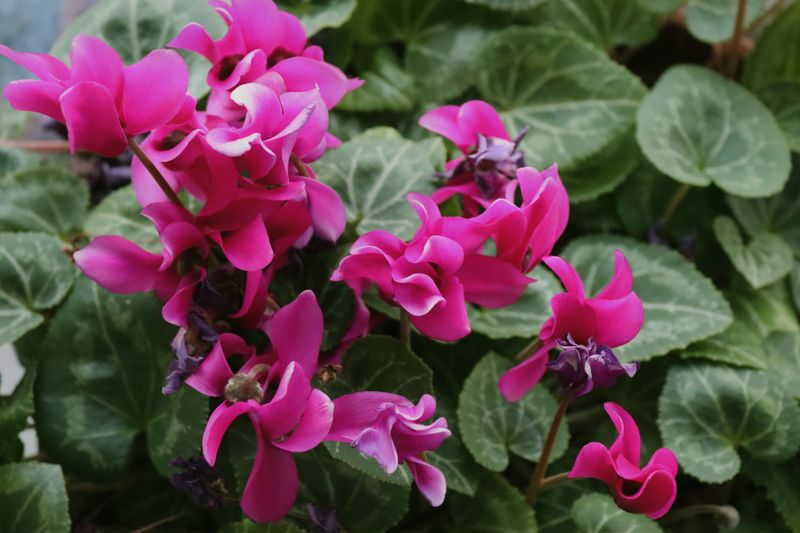
Think of a flock of tiny pink butterflies landing in the shade under a tree. Cyclamen coum looks just like that, with swept-back petals that seem ready to take flight.
This little plant is not the same as the fussy cyclamen sold as a houseplant. Hardy types grow outdoors and bloom from about January through March in many regions.
Plant the round tubers in early fall, just one or two inches deep. Keep the smooth, rounded side down and the slightly dented side facing up toward the sky.
Shady spots under trees make a snug home, especially where grass struggles to grow. Loose soil mixed with leaf mold or compost keeps them happy for many years.
The leaves are almost as pretty as the flowers. Many have silver swirls and marbled patterns, giving you something lovely to look at even before buds appear.
Ready for a strange fact that sounds made up? After blooming, the flower stems curl up like springs, pulling seed pods down toward the soil.
Ants then carry the sticky seeds away and plant new cyclamen for free. Talk about a hard-working garden crew that happily works for sugar instead of a paycheck.
9. Winter Heath Blooms For Months On Evergreen Mounds
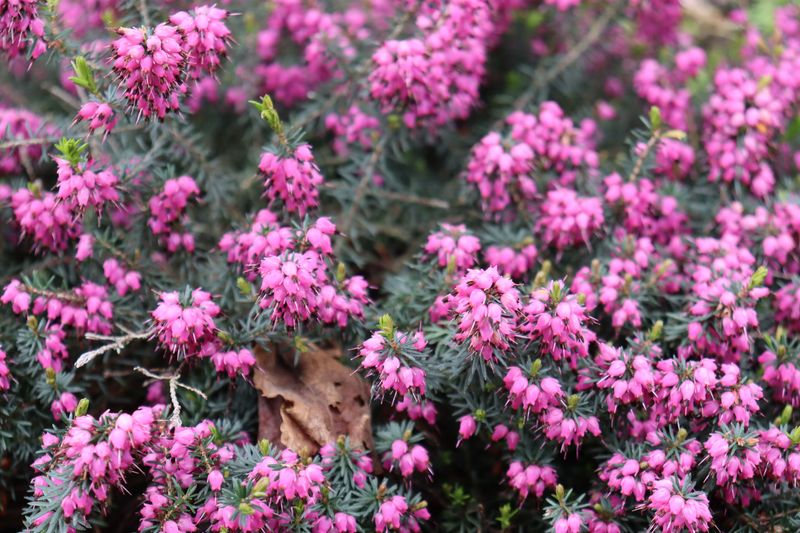
Few plants can bloom for four or five months straight, especially in the coldest part of the year. Winter heath pulls off that trick with ease, covering itself in tiny pink, white, or purple bells.
Its botanical name is Erica carnea, and it grows into low, spreading mounds about a foot tall. The needle-like leaves stay green all winter, so the plant looks tidy even without blooms.
Early fall is a great time to plant it from a nursery pot. Choose a sunny location with soil that drains well, since wet roots cause trouble.
Unlike many of its cousins, winter heath does not demand acidic soil. It grows happily in ordinary garden dirt, which makes it much easier for beginners.
Water it well during the first fall so roots spread before the ground freezes. After that, a yearly trim right after flowering keeps the mound thick and neat.
Winter heath makes a wonderful ground cover along slopes, paths, and rock walls. It also pairs nicely with early bulbs, giving them a green backdrop to shine against.
Honeybees often visit on mild winter afternoons, grateful for any snack they can find. Watching them buzz around a blooming shrub in February feels like a sneak peek of spring.
10. Siberian Squill Brings Electric Blue To Early Spring
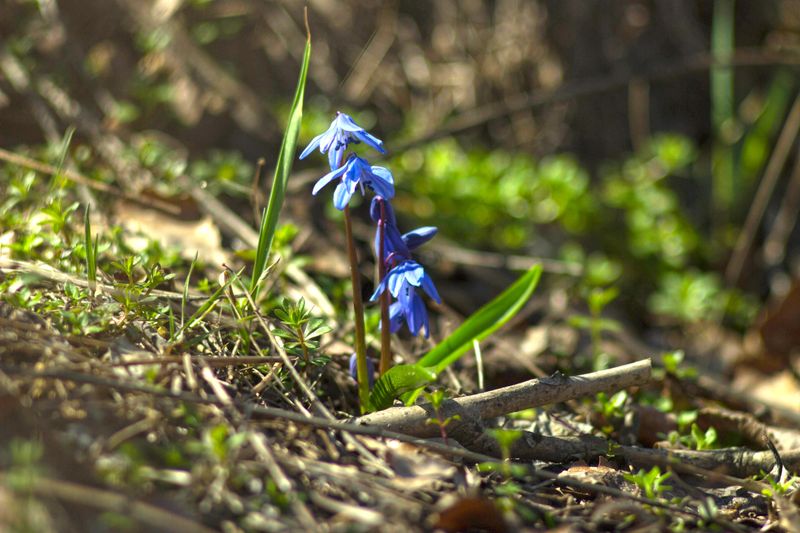
Walk past an old farmhouse in March, and you might spot a lawn washed in electric blue. Chances are, someone planted a handful of Siberian squill decades ago and let nature take over.
The nodding, bell-shaped flowers are a deep, glowing blue that almost looks unreal. Each bulb sends up several short stems, usually around four to six inches tall.
Plant the bulbs about four inches deep from September until the ground freezes. They are inexpensive, so buying a bag of fifty or a hundred will not break the bank.
Sun or partial shade works well, and they are not picky about soil. Scattering bulbs across a lawn and planting them where they land creates a natural look, but only where spreading is welcome.
Siberian squill seeds itself freely and multiplies underground each year. In parts of North America it is considered invasive, so check your local invasive species list before planting, especially near woodlands.
Pair these blue beauties with yellow crocuses or early daffodils for a bold color combo. The contrast pops so brightly that people passing by may slow down for a second look.
Squirrels and deer mostly ignore them because the bulbs are toxic, so plant them where pets don’t dig.