What To Plant Instead Of Invasive Periwinkle In Oregon Shade Gardens
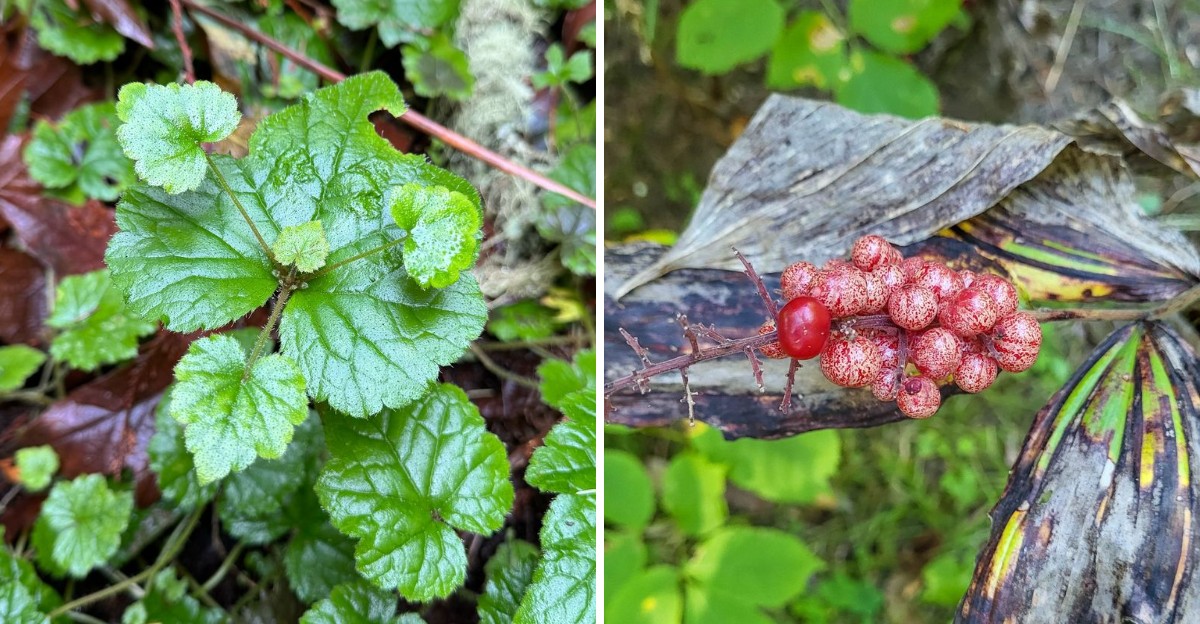
A small patch of periwinkle went into an Oregon flower bed sometime back in the 1970s.
Fifty years later, its glossy vines have crept past the fence, down the slope, and deep into the woods behind the house.
Periwinkle is considered invasive in Oregon, and it quietly smothers the native plants that forests actually need to survive.
Here’s the good news, though. Oregon has beautiful native groundcovers that love shade just as much, without any of that runaway behavior.
Six native plants explain exactly what to swap in, and why each one stays put instead of colonizing the entire hillside.
Curious which native smells like lemony ginger the moment you touch a leaf? It starts in the deep shade under old-growth trees.
1. Periwinkle Escapes Into Wild Forest Areas
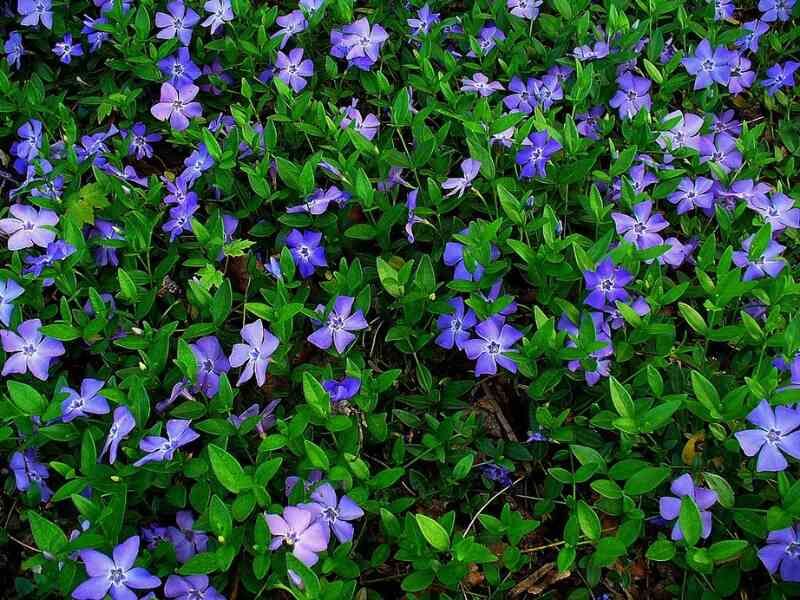
Blue flowers and shiny leaves make periwinkle look harmless, which is exactly how it ended up in so many Oregon yards.
Both common periwinkle and bigleaf periwinkle are flagged as invasive by Oregon invasive species experts and OSU Extension.
That label has nothing to do with style and everything to do with behavior.
Periwinkle spreads mostly by long, trailing stems that touch the ground and grow new roots wherever they land.
One plant can slowly turn into a carpet that covers a whole hillside.
In western Oregon, it rarely spreads by seed, so most new patches start from stem pieces moved by people.
Dumped yard waste is a big culprit here.
When someone tosses periwinkle clippings over the back fence or into a ravine, those scraps can root and begin a fresh invasion in the forest.
Once it reaches wild areas, periwinkle forms dense mats across the forest floor.
Those mats crowd out native wildflowers, ferns, and young tree seedlings that insects, birds, and other wildlife depend on.
Pulling it out takes patience, since tiny root pieces left behind can sprout again.
Many gardeners have success by raking up the vines, digging out roots, and covering the area with thick mulch for a season.
Bag the debris instead of composting it, then fill the gap with natives like the ones below.
2. Wild Ginger Forms A Native Groundcover
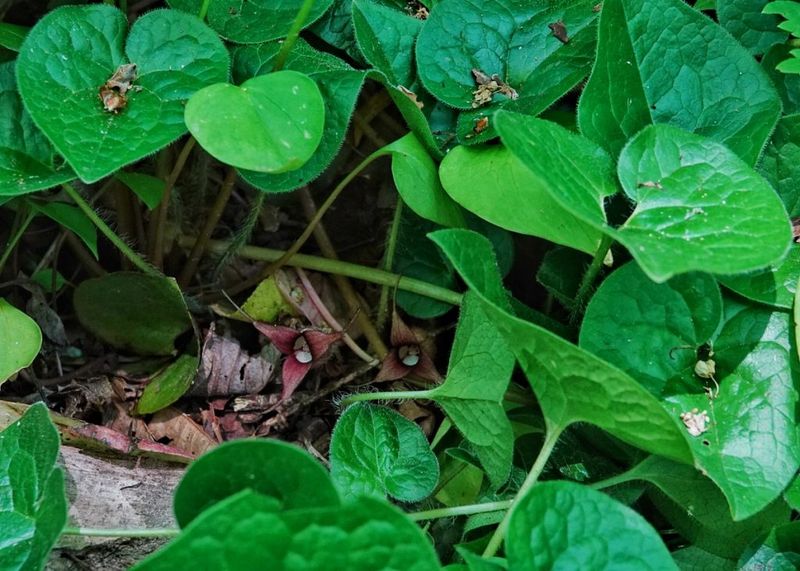
Rub a leaf of western wild ginger between your fingers, and you’ll catch a spicy, lemony scent drifting up.
Asarum caudatum is a true Oregon native, found naturally in moist, shady forests from the coast to the Cascades.
It’s not related to the ginger you buy at the grocery store, and it should not be eaten, but its smell is a fun surprise.
The leaves are the real stars here.
They’re glossy, deep green, and shaped like hearts, forming a low, evergreen carpet only a few inches tall.
Hidden under that leafy blanket are odd little flowers.
They’re brownish-purple, shaped like tiny jugs with three long, pointed tails, and they sit right at ground level.
Some gardeners never notice them unless they get down on their knees and peek.
Wild ginger spreads by creeping underground stems called rhizomes, but it moves at a relaxed pace.
Your Oregon Garden Changes Every Week. Your Plan Should Too.
Gardening in Oregon changes quickly throughout the season. Every Friday you’ll receive a simple weekly plan showing exactly what to plant, prune, fertilize, harvest, and protect so you never miss the right timing.
You get a steady, filling carpet without a plant that races off into the woods.
For best results, plant it in rich soil with plenty of leaf litter or compost.
It likes steady moisture, so water during dry Oregon summers, especially the first year.
Space plants about a foot apart, and they’ll knit together in a few seasons, replacing a periwinkle patch with something that belongs here.
3. Inside Out Flower Suits Deep Shade
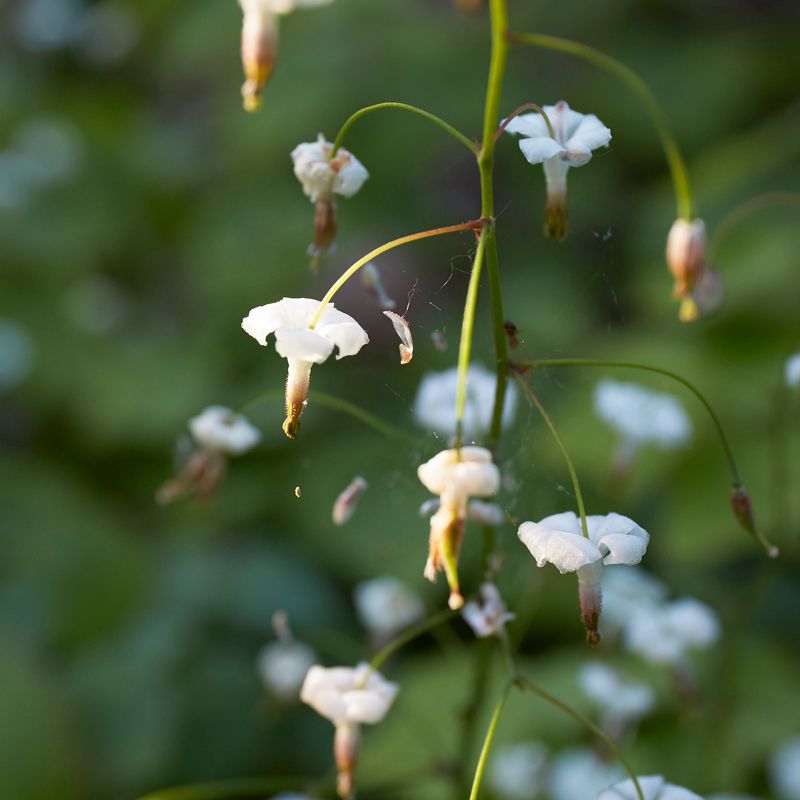
Consider a tiny white flower that looks like a strong gust flipped its petals backward.
That’s the charm of inside-out flower, Vancouveria hexandra, a native of Oregon and northern California forests.
Its petals and sepals bend back sharply, making each bloom look like a little shuttlecock or a dancer mid-spin.
The flowers dangle on thin stems in late spring and early summer.
They’re small, but a patch in full bloom looks like a cloud of floating sparkles above the leaves.
Those leaves are worth talking about too.
Each one is split into several soft, three-lobed leaflets that some people compare to duck feet or tiny maple leaves.
The foliage forms a light, airy groundcover about a foot tall.
Here’s where inside-out flower really shines.
It handles deep shade under trees, the kind of dark corner where many plants give up entirely.
Once established, it can put up with drier shade too, which makes it handy under big conifers that soak up water.
Like wild ginger, it spreads through underground rhizomes, slowly widening into a patch over time.
In colder spots, the leaves may go dormant in winter, so don’t worry if the patch looks bare in January.
Fresh growth returns in spring. Add some compost at planting time, water it through its first summer, and then mostly leave it alone.
4. Fringecup Adds Texture Without The Risk
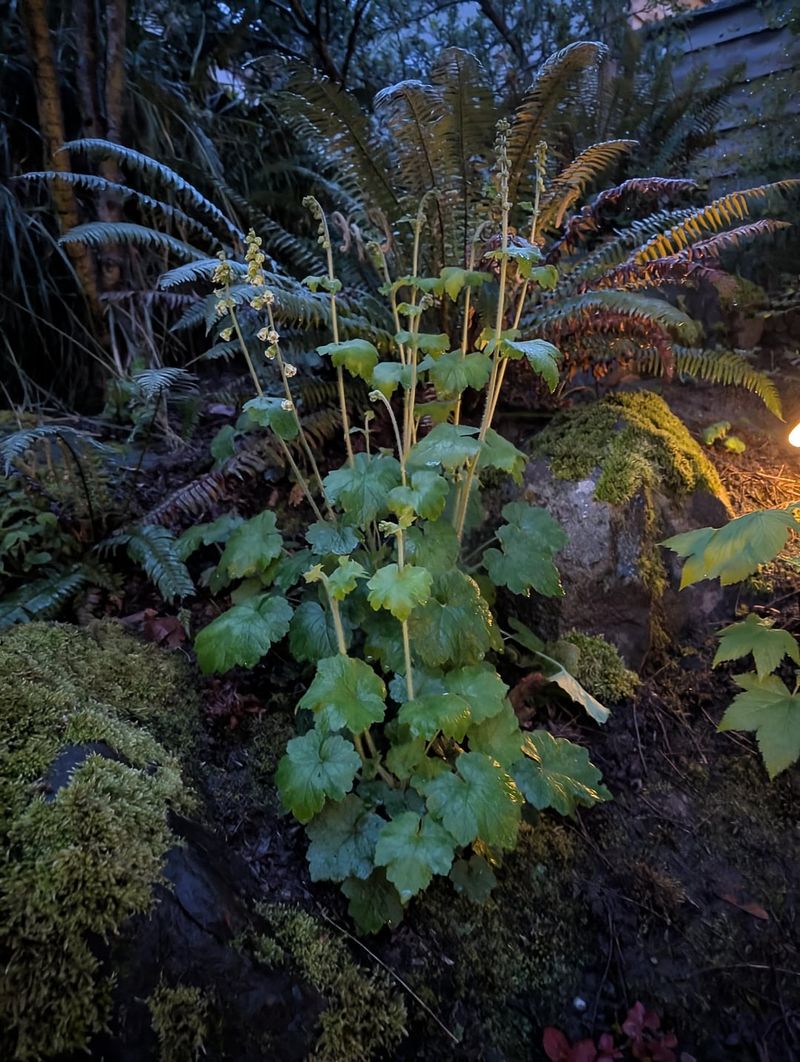
Walk through an Oregon forest in April, and you may spot tall, slender stalks lined with tiny green cups that look like they’ve been trimmed with lace.
Meet fringecup, Tellima grandiflora, one of the easiest native perennials for a shady yard.
Its name comes from the frilly, fringed edges on each little bell-shaped flower.
The flowers open greenish-white and often blush pink as they age.
Spikes can reach two feet tall, giving your shade garden height that a flat periwinkle carpet never could.
Down low, the leaves form a soft mound.
They’re round, scalloped, and fuzzy, a bit like a coral bells plant, which makes sense since the two are cousins in the saxifrage family.
Texture is where fringecup really earns its spot.
Pair its hairy leaves with glossy wild ginger or feathery ferns, and suddenly a plain shady bed looks planned and full of contrast.
Fringecup forms clumps instead of running vines, and it spreads mainly by dropping seeds.
New seedlings pop up near the parent plant, and they’re easy to pull or move if they land somewhere you don’t want them.
That’s a big difference from periwinkle, which roots along every stem.
It grows well in part to full shade and tolerates many soil types. Give it some water in summer, and trim old flower stalks for a tidier look.
5. Piggyback Plant Spreads In A Controlled Way
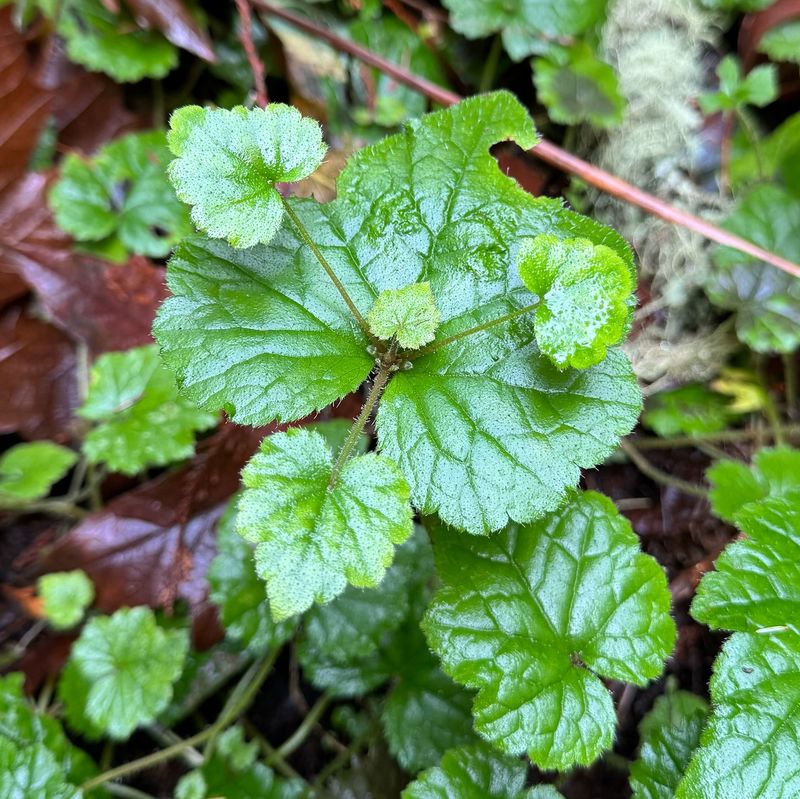
Some plants carry their babies piggyback style, and this Oregon native is the champion.
Tolmiea menziesii grows tiny new plantlets right where each leaf meets its stem.
Flip a mature leaf over, and you might find a little baby plant perched on top, ready to hop off and grow.
When those older leaves droop and touch damp soil, the plantlets can root and start new plants.
The piggyback plant also creeps slowly through short underground stems.
So why is this better than periwinkle? The difference is speed and control.
Piggyback plant stays in fairly compact clumps near where it touches the ground, and extra plants are easy to lift out by hand.
Periwinkle, by contrast, sends out long runners that keep rooting and rooting across the landscape.
Here’s a fun fact worth knowing. The same plant is often sold as a houseplant in grocery stores and garden centers.
Outdoors, it forms lush mounds of fuzzy, maple-like leaves about a foot tall.
In spring, it sends up thin spikes of small, brownish-purple flowers with thread-like petals.
Piggyback plant loves moisture and does best in shady, damp spots near streams, downspouts, or low areas where soil stays cool. In dry ground it may sulk.
6. Sword Fern Fills Space Reliably
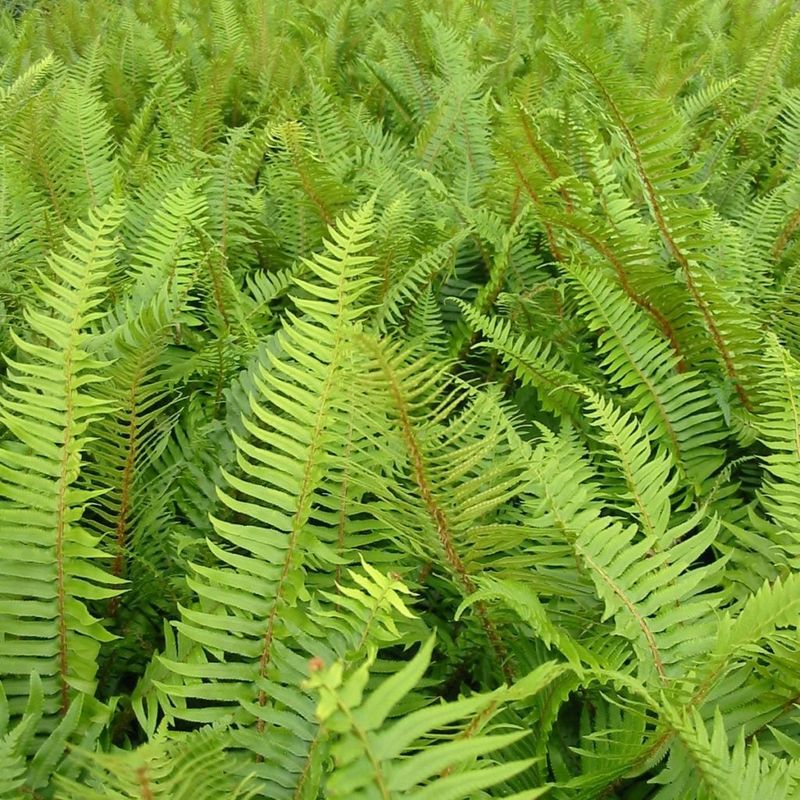
Long before anyone planted periwinkle in Oregon, western sword fern was already filling the forest floor.
Polystichum munitum is one of the most common native plants in the region’s woods, and for good reason. It’s tough, evergreen, and nearly impossible to mess up.
Look closely at a frond, and you’ll see where the name comes from.
Each small leaflet has a tiny bump near its base that looks like the handle of a sword.
Mature clumps can grow two to four feet tall and just as wide, so a few plants cover a lot of ground.
That makes sword fern a smart pick for filling the big gaps left behind after you tear out periwinkle.
Once its roots settle in, sword fern handles dry summer shade better than many ferns.
It grows in clumps from a central crown and does not send runners across the yard. You always know where it is, and it stays there.
Care is simple.
In late winter, before new fiddleheads uncurl, some gardeners snip off the old, tattered fronds for a fresh look. You can also leave them alone, since the forest never trims its ferns.
Plant ferns about three feet apart and tuck smaller natives like wild ginger or inside-out flower between them.
7. Native Roots Behave Better Than Periwinkle
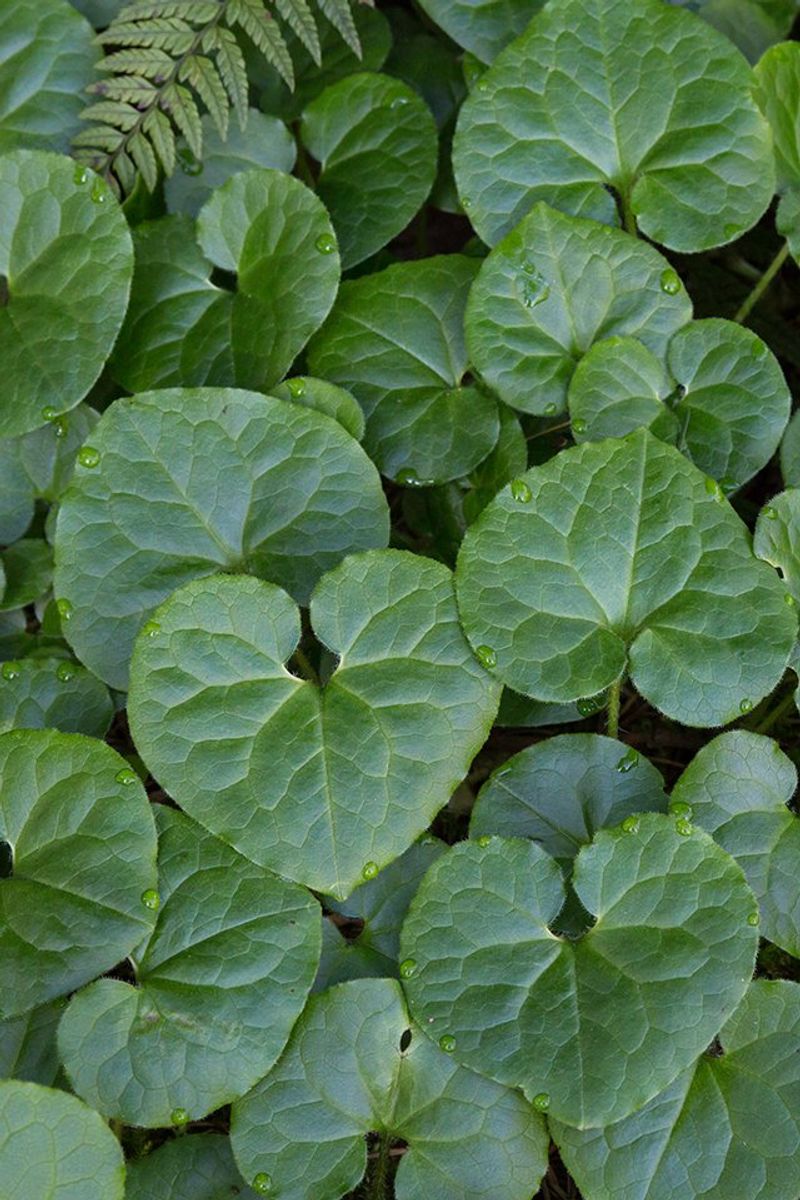
Consider your shade garden as a neighborhood. Native plants are the neighbors who stay in their own yard, while periwinkle is the one who keeps building fences on everybody else’s land.
Wild ginger and inside-out flower creep slowly through rhizomes.
Fringecup and sword fern grow in clumps, and piggyback plant drops its babies close to home.
Each one fills space at a pace you can manage with a trowel and a free afternoon.
Periwinkle plays by different rules entirely.
Its trailing stems root wherever they touch soil, and scraps tossed into the woods can start new patches.
Natives also bring partners with them.
Local bees, butterflies, moths, and birds evolved alongside these plants, so they use them for food and shelter in ways they cannot with a foreign groundcover.
Starting the switch can feel big, so try a small section first.
Clear one bed of periwinkle, add compost, and plant a mix of ferns and flowering groundcovers. Watch for returning vines and pull them quickly.
Look for these plants at native plant sales run by conservation districts or native plant society chapters.
Always check that nursery plants were grown, not dug from the wild. Your shady yard can then become part of the forest instead of a threat to it.
8. False Solomon’s Seal Brings Height And Berries
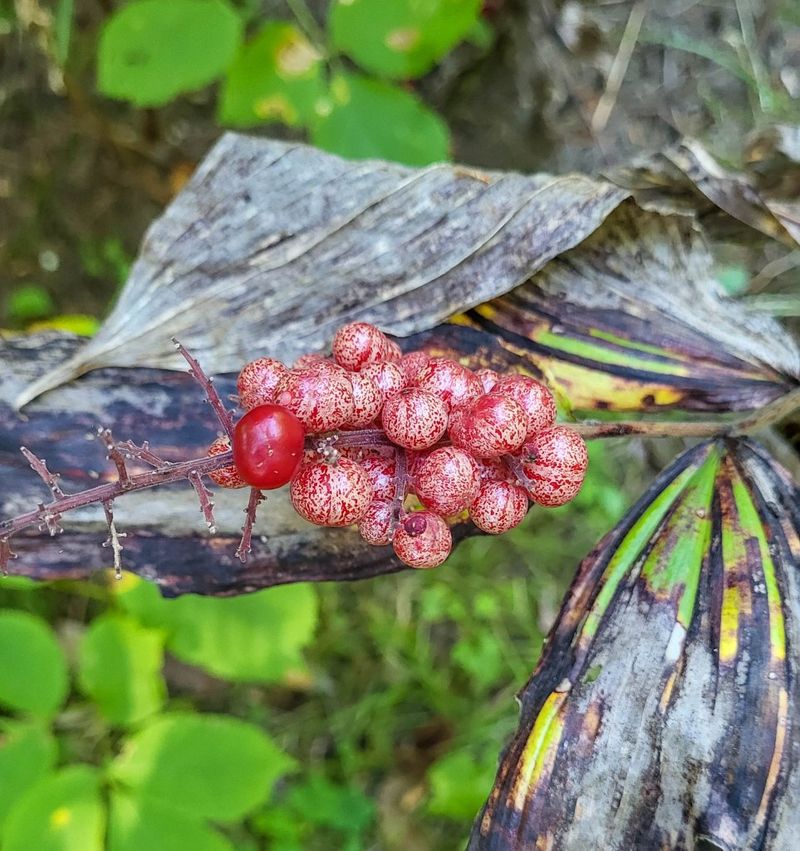
Arching gently over a shady bed, false Solomon’s seal adds a graceful shape that low groundcovers can’t quite match on their own.
Maianthemum racemosum is native to Oregon’s forests, sending up curved stems lined with broad, ribbed leaves that catch light beautifully even in dim corners.
In late spring, feathery plumes of small white flowers cluster at the tip of each stem, giving the plant a soft, almost fern-like presence.
Those flowers eventually turn into clusters of red berries by late summer, adding color right as many other shade plants start winding down for the year.
Birds enjoy the berries too, which makes this plant a small wildlife draw as well as a garden addition.
False Solomon’s seal spreads slowly through underground rhizomes, similar to wild ginger, staying in a manageable clump rather than racing across the bed.
It handles part to full shade well and prefers soil that stays consistently moist, especially through its first couple of summers while getting established.
Pair it with sword fern or fringecup for a layered look, since its upright stems contrast nicely with lower, mounding neighbors.
Once settled, it needs little attention beyond an occasional summer watering during long dry stretches. Old stems can be cut back in late fall once they’ve yellowed and finished for the season.
9. Oregon Oxalis Carpets The Ground Densely
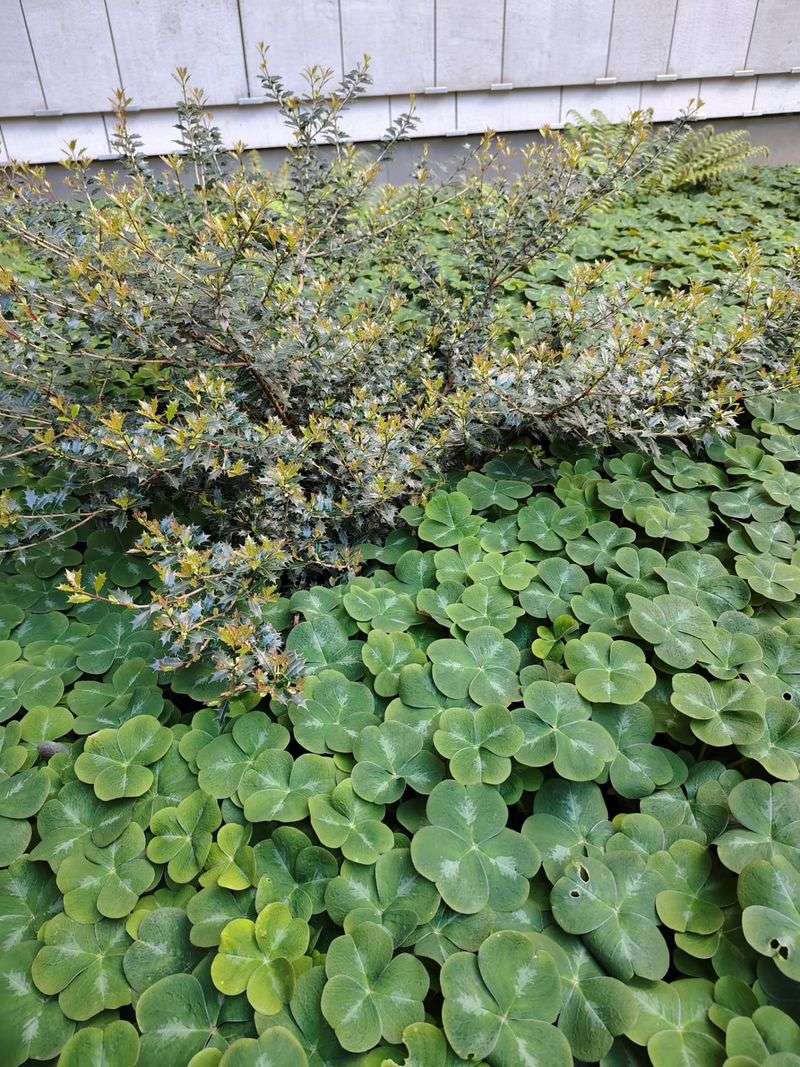
Few native groundcovers fill a shady patch as thoroughly and as quickly as Oregon oxalis, while still staying perfectly well-behaved.
Oxalis oregana, sometimes called redwood sorrel, forms a dense, low carpet of clover-shaped leaves that fold up slightly at night and on hot days, a small movement that surprises people who watch closely.
Delicate pink to white flowers appear in spring, held just above the foliage on thin stems, adding a light touch of color without overwhelming the leaves below.
This plant thrives in the deep, damp shade found under conifer forests, making it a natural fit for the same dark corners where inside-out flower and piggyback plant do well.
It spreads through rhizomes at a gentle pace, filling in bare ground steadily without the aggressive reach that made periwinkle such a problem in the first place.
Soil rich in organic matter suits it best, so working in compost or leaf mold before planting helps it settle in faster.
Keep the ground consistently moist, since Oregon oxalis struggles in dry conditions and may thin out if summer watering gets skipped for too long.
Once established, it forms one of the most complete groundcovers on this list, often outcompeting weeds simply by covering the soil so thoroughly.
Tuck it beneath ferns or taller natives like false Solomon’s seal for a woodland floor that looks like it’s always been there.