8 Native Oregon Shrubs To Plant Instead Of Nandina
Some popular garden shrubs come with a hidden catch. They look tidy, glow with seasonal color, and seem like perfect low-maintenance choices, yet their story grows more complicated on closer inspection.
One familiar favorite has drawn growing concern from experts, both for its behavior beyond the garden and for the effect its fruit can have on certain birds.
Oregon happens to offer plenty of homegrown alternatives that deliver similar structure, color, and berries.
Timing and sourcing both matter, and they vary depending on which side of the mountains a garden sits.
With the right swaps, a single shrub replacement can turn an ordinary yard into a richer, livelier home for birds and bees.
1. Tall Oregon Grape Echoes Nandina’s Winter Color
Spiny, glossy, and tinged with bronze when frost arrives, tall Oregon grape could almost pass for a cousin of nandina. That resemblance makes it an ideal first swap.
Nandina, often called heavenly bamboo, isn’t native to Oregon, and the OSU Landscape Plants database notes that it’s considered invasive in the Southeast.
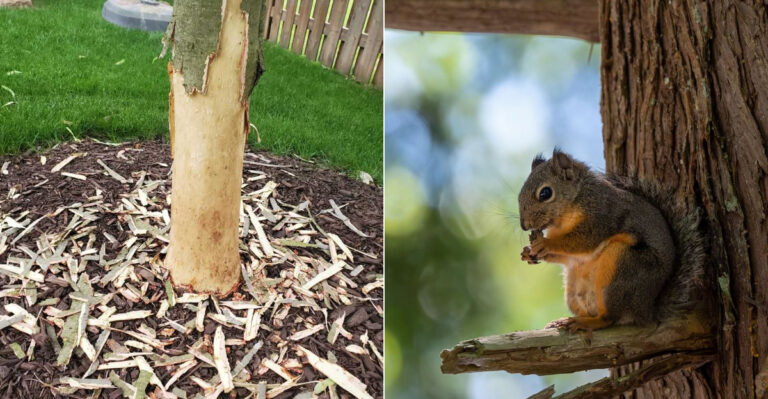
OSU also advises against fruiting selections, since the red berries release cyanide when eaten, and birds that gulp large amounts quickly, such as cedar waxwings, can be poisoned.
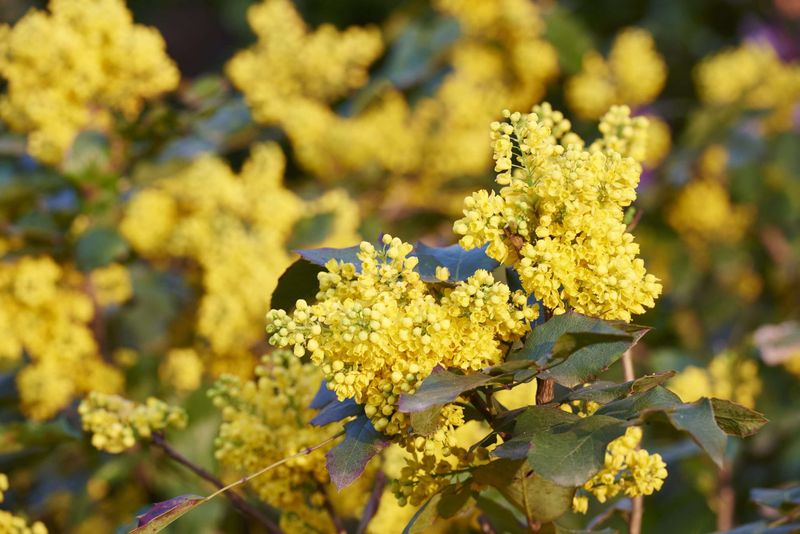
Berberis aquifolium, once called Mahonia aquifolium, offers a homegrown answer and even serves as Oregon’s state flower. Holly-like leaves carry sharp points, and cold weather in sunny spots paints them purple, red, and bronze.
Late winter into spring brings bright yellow flower clusters that hum with early bees. By summer, dusty blue berries hang like tiny grape bunches, and birds pick them clean.
Mature plants reach roughly 6 to 10 feet tall and about 5 feet wide, though many stay shorter. Full sun to part shade works, and established plants handle dry summers with little extra water.
Shopping calls for a careful eye. Leatherleaf mahonia and other non-native look-alikes are invasive in some states, so a native plant nursery and a tag reading Berberis aquifolium help.
Gloves protect hands during planting, since the leaves bite back. West of the Cascades, fall planting lets winter rain settle roots, while early spring often works better east of the mountains.
2. Evergreen Huckleberry Brings Glossy Leaves And Berries
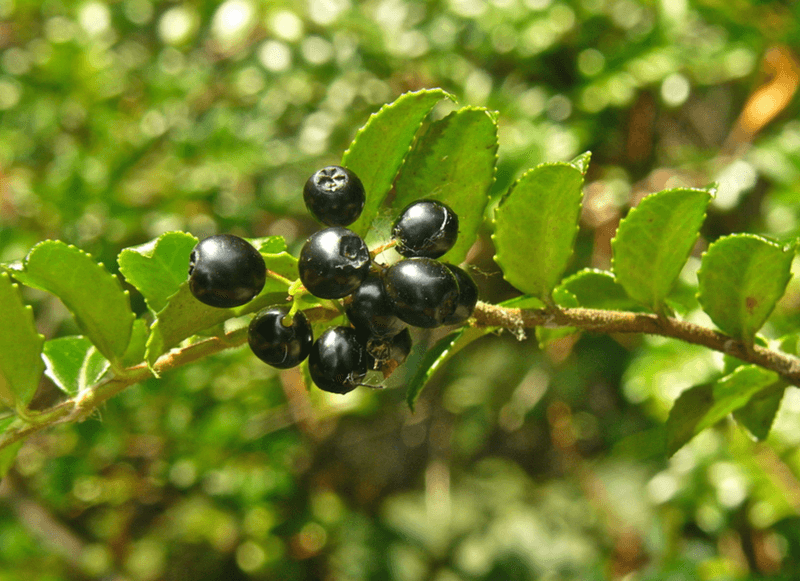
A shrub that sparkles in the shade and offers a snack in late summer sounds almost too good to be true. Evergreen huckleberry, Vaccinium ovatum, delivers both, growing natively along the Oregon coast and west of the Cascades.
It shines in woodland gardens where nandina once languished.
Small, shiny leaves line every branch, giving the plant a neat, polished look all year. Fresh spring growth flushes bronze to coppery red, a color trick that rivals nandina’s best moments.
Tiny pink, bell-shaped flowers dangle in spring and draw bumblebees. Shiny black berries ripen from late summer into fall and taste wonderful in pancakes, jam, or straight off the branch, while birds and small mammals enjoy them just as much.
Site choice matters most. Evergreen huckleberry wants acidic, well-drained soil rich in organic matter, with part shade such as the dappled light beneath conifers.
Your Oregon Garden Changes Every Week. Your Plan Should Too.
Gardening in Oregon changes quickly throughout the season. Every Friday you’ll receive a simple weekly plan showing exactly what to plant, prune, fertilize, harvest, and protect so you never miss the right timing.
Hot afternoon sun can scorch the leaves, while deep shade means fewer berries.
Growth runs slow, so patience pays off. Plants often reach 3 to 6 feet tall in gardens and can grow taller in shady forests.
Spacing of about 3 to 4 feet creates a loose hedge. Mulch made from fir bark or leaf litter keeps roots cool and soil acidic.
Regular water through the first two summers helps plants establish. After that, the shrub becomes a quiet, berry-loaded neighbor that looks dressed up even in January.
Fall planting west of the Cascades gives it the best start.
3. Dull Oregon Grape Fills Shady Spots
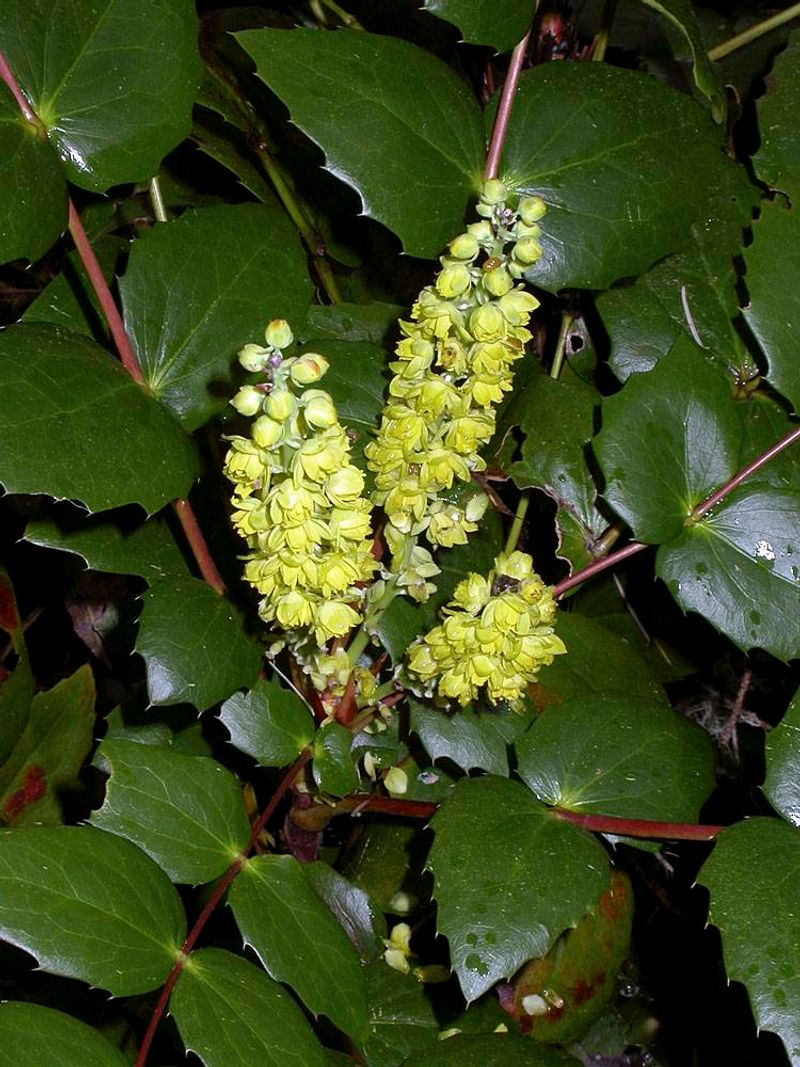
Plenty of yards have a gloomy strip along the north side of the house. Nandina often ends up there, looking leggy and thin, while dull Oregon grape, Berberis nervosa, thrives in exactly that kind of spot.
The name undersells it. Leaves shine a little less than those of its tall cousin, yet they look anything but boring.
Each long leaf holds many spiny leaflets arranged like a fern frond, creating a layered, textured effect. Spring brings upright spikes of yellow flowers poking through the foliage.
Blue berries follow in summer, feeding birds that forage close to the ground.
Size stays modest, usually 1 to 2 feet tall. Plants slowly spread by underground stems, forming a loose evergreen patch over time.
Shade to part shade suits it best, and the shrub grows naturally beneath Douglas fir and western redcedar forests west of the Cascades. Rich soil with leaf litter or compost keeps it happiest.
Once established, it tolerates dry summer shade, a spot where many plants struggle.
Plants spaced about 2 to 3 feet apart create a full look. Sword fern, salal, and wild ginger make natural partners for a woodland scene that needs little care.
Heavy pruning is unnecessary, with only an occasional tired stem removed. As with its taller relative, a quick tag check at the nursery confirms the true native.
Fall planting gives it a strong start in western Oregon.
4. Salal Carpets Shade With Evergreen Leaves
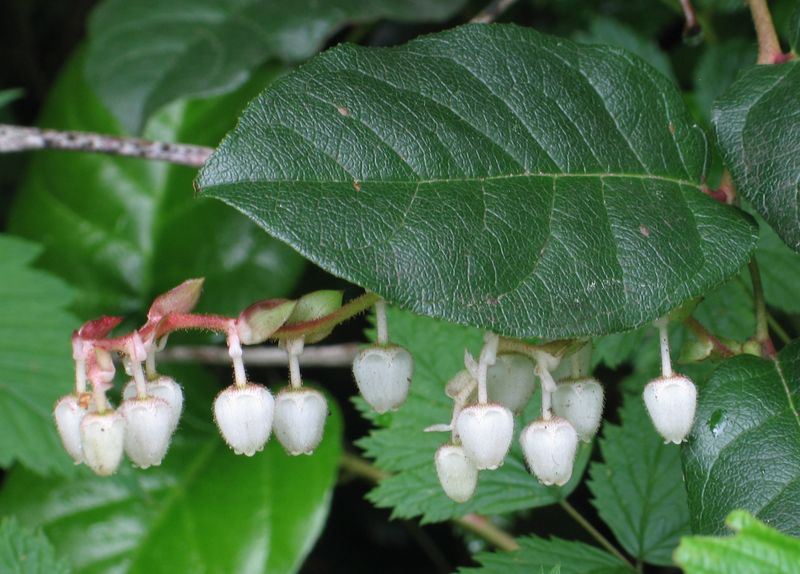
Hikers on almost any Oregon coast trail brush past salal within minutes. That thick wall of leathery green is Gaultheria shallon, one of the toughest native shrubs west of the Cascades, and gardeners can borrow the same lush look for shady yards.
Leaves are broad, oval, and thick, staying deep green through winter storms. Florists even use the foliage in bouquets because it lasts so long after cutting.
In late spring and early summer, pink and white flowers hang in rows like tiny lanterns.
Dark purple to nearly black berries follow, feeding birds, chipmunks, and other wildlife. People have eaten them for generations, too, often dried or cooked into jam.
Height varies with conditions. In shady gardens, plants often stay 2 to 4 feet tall, while coastal sites can push them much higher.
Salal spreads by underground stems, filling space and holding slopes nicely. Part shade to full shade suits it, along with acidic soil rich in organic matter.
Getting started takes a little patience. Young plants may linger for a year or two before taking off, so fall planting and watering through the first dry summers help.
After that, they handle drought in the shade quite well. Plants spaced about 3 feet apart form a solid carpet, while hot, open spots where leaves may yellow are best avoided.
A trim of stray stems in early spring keeps the patch neat. Before long, a shady corner can resemble a slice of the Coast Range.
5. Red-Flowering Currant Brings Spring Hummingbirds
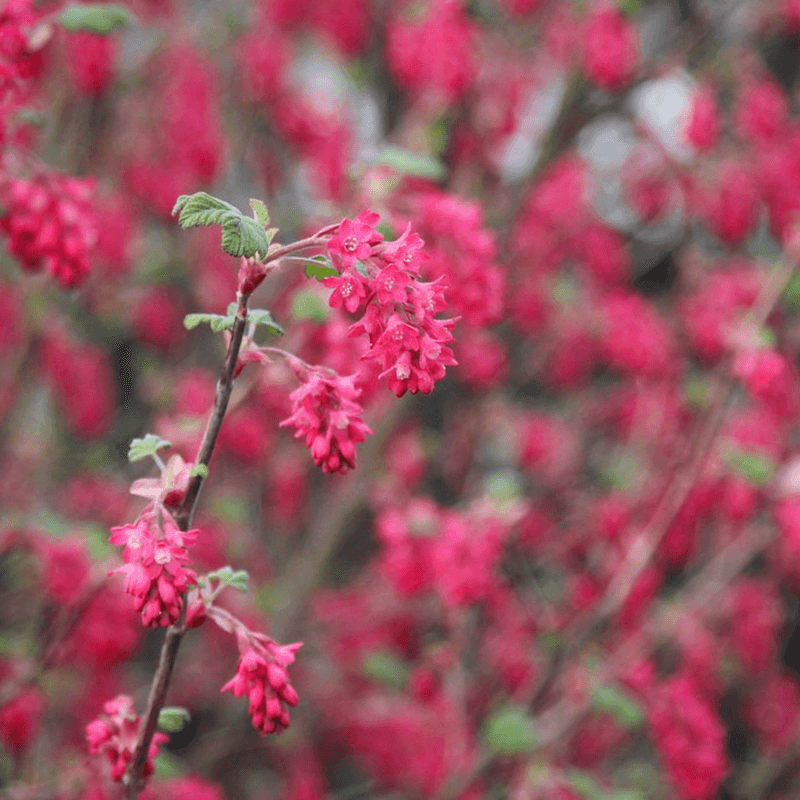
A buzzing whir cuts through cold March air, and suddenly a hummingbird hovers at the shrub. That bright magnet is red-flowering currant, Ribes sanguineum, native across much of western Oregon and an early herald of spring.
Flowers appear from late winter into early spring, often before leaves fully open. Drooping clusters range from soft pink to deep red, depending on the plant.
Anna’s hummingbirds and returning rufous hummingbirds rely on these early blooms when little else is open. Bees love them, too.
By summer, round blue-black berries with a dusty coating ripen, and birds snatch them up.
Unlike nandina, this shrub drops its leaves in fall, making it more of a seasonal swap than a twin. Paired with an evergreen such as tall Oregon grape, the duo covers both winter structure and spring fireworks.
Mature plants reach about 5 to 10 feet tall and nearly as wide. Full sun to part shade works, with more flowers in brighter spots.
Well-drained soil is essential, and established shrubs need little summer water. Plants spaced about 5 to 6 feet apart create a loose, natural hedge.
Shaping works best right after flowering, since next year’s buds form soon after. Named cultivars offer deeper colors, and a native nursery can point toward forms that bloom well locally.
Fall planting west of the Cascades lets roots settle before those first spring blooms. Few shrubs announce the season quite so loudly.
6. Red-Osier Dogwood Lights Up Winter With Red Stems
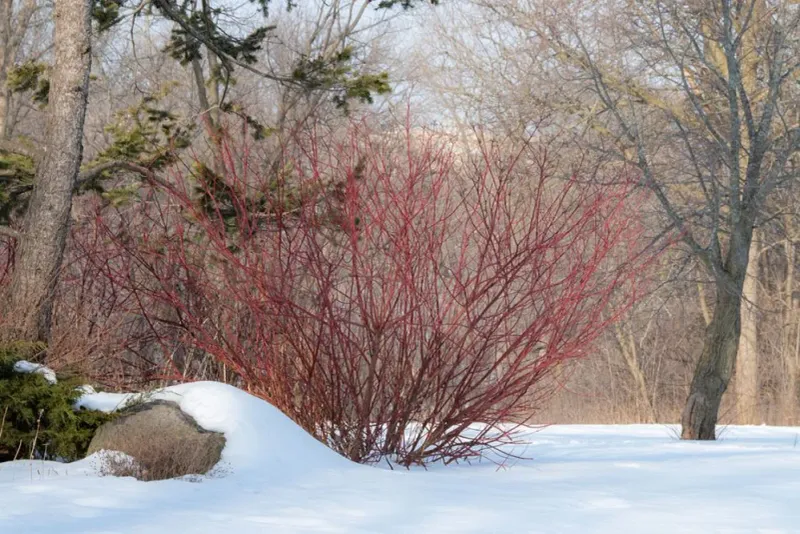
Once the leaves drop in November, a red-osier dogwood suddenly turns heads. Bare stems glow bright red against gray skies, as though someone dipped the whole shrub in paint, a winter show that outshines nandina’s color.
Cornus sericea grows natively across Oregon, both west and east of the Cascades. In the wild, it lines creeks, ditches, and wet meadows.
That habitat offers the best clue for placement. Moist sites, rain gardens, and low spots that stay soggy in winter suit it well, while dry, hot corners leave it stressed and spindly.
Spring brings flat clusters of small white flowers that attract bees, butterflies, and other pollinators. Late summer follows with white to bluish berries.
Robins, thrushes, and waxwings eat them eagerly, so the fruit disappears fast. Leaves often turn reddish purple before falling, adding a bonus act in autumn.
Size runs generous, usually 6 to 12 feet tall and spreading wider over time. Stems touching the ground can root, slowly forming a thicket.
Spacing of 6 to 8 feet per plant works well, or a group can fill a large wet area. Full sun to part shade delivers the best stem color.
Young growth glows reddest, which makes stem renewal worthwhile. Removing about a third of the oldest, dullest stems each late winter encourages new shoots that replace them by the next season.
That simple routine keeps the winter fireworks fresh year after year, and fall planting gives roots a full rainy season to settle.
7. Vine Maple Delivers Fiery Fall Color
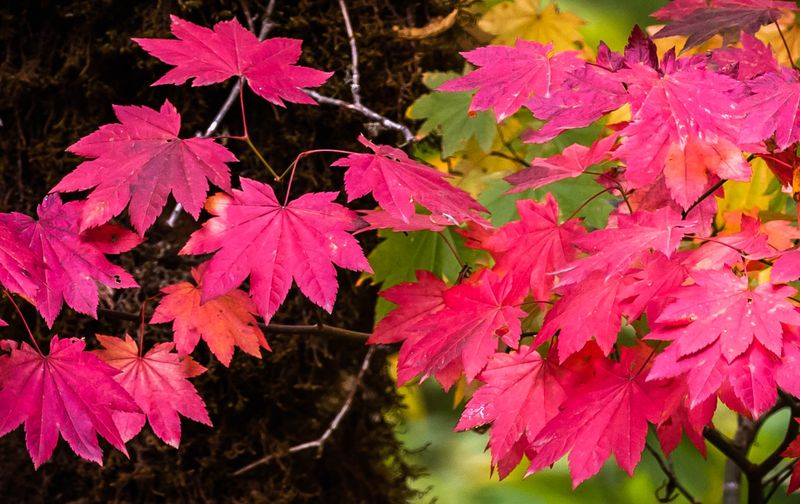
October in a western Oregon forest often looks as though it caught fire, and vine maple usually deserves the credit. Its leaves blaze orange, scarlet, and gold beneath dark firs, and that same spark can come home to the garden.
Acer circinatum grows natively west of the Cascades and in some spots east of them. Despite the name, it isn’t a true vine.
Instead, it forms a large, multi-stemmed shrub or small tree with arching, graceful branches. It can fill the space nandina once held, though on a bigger scale and with far more drama.
Size deserves planning. Vine maple usually reaches 10 to 20 feet tall, sometimes more, and spreads about as wide, so a spot at least 10 feet from walls and other large shrubs works best.
Round leaves carry seven to nine pointed lobes, a bit like a fringed fan.
Light shapes the plant’s personality. In shade, it grows loose and airy with softer yellow fall color.
In more sun, it stays fuller and turns brighter reds and oranges, though afternoon protection helps on hot sites. Moist, well-drained soil keeps it content.
Wildlife benefits, too. Small purple-and-white spring flowers feed bees, and winged seeds called samaras follow, feeding birds and squirrels, while the branches offer cover and nesting spots.
Leaves drop in winter, so nearby evergreens provide year-round structure. Fall planting, right as the leaves blaze, gives roots a head start, and few natives move through autumn with more style.
8. Snowberry Adds Winter Berries For Birds
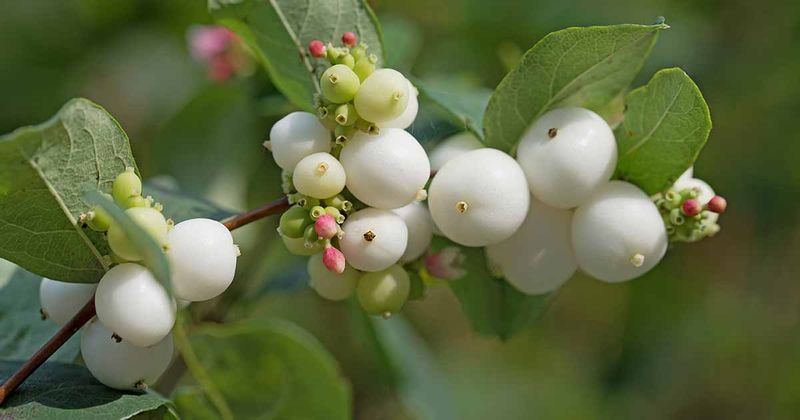
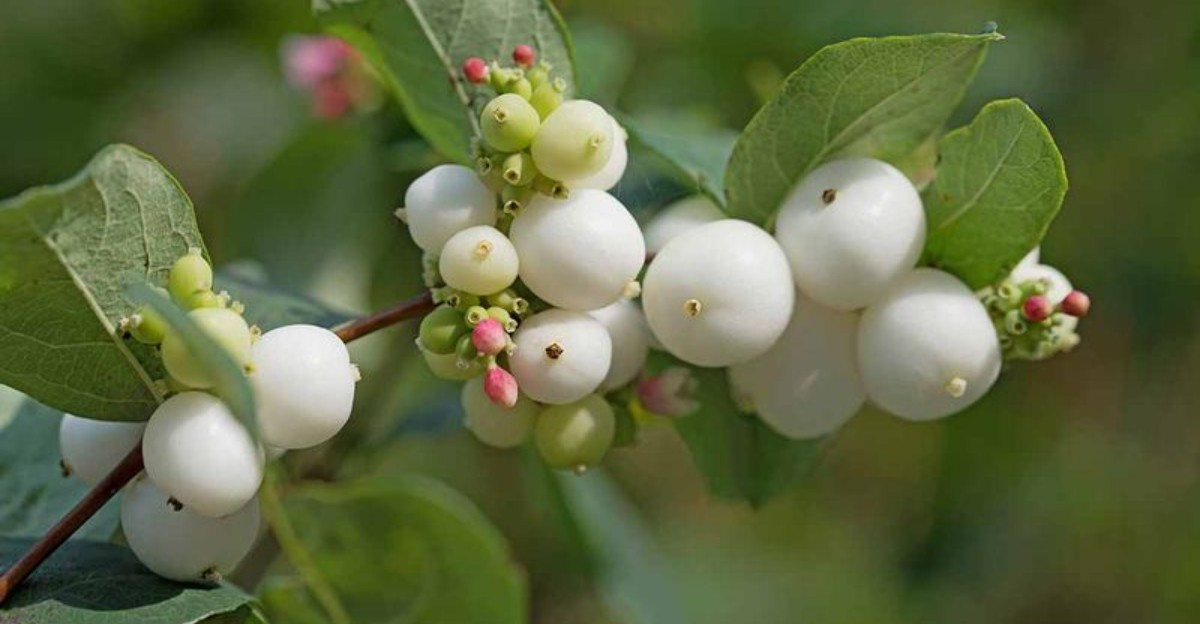
Long after other shrubs look bare, snowberry still wears clusters of round white berries, hanging on twigs like tiny snowballs through much of winter. For anyone missing nandina’s berries, it keeps the fruit display going.
Common snowberry, Symphoricarpos albus, grows naturally across Oregon on both sides of the Cascades. Toughness serves as its calling card.
It handles sun or shade, clay or rocky soil, wet winters, and dry summers. Plants spread by suckers, making them handy for slopes, hedgerows, and hard-to-fill spaces.
Mature plants reach about 3 to 6 feet tall with a similar spread. Spacing of roughly 3 to 4 feet creates a thicket.
Small pink, bell-shaped flowers appear from late spring into summer. Hummingbirds, bees, and other pollinators visit, and the leaves host caterpillars of some native moths.
Birds enjoy the fruit later in the season, when food grows scarce. Robins, thrushes, and grouse may snack on the berries through winter.
Those berries are meant for wildlife rather than people. They contain compounds that can upset the stomach and cause vomiting if eaten, so children are best taught to look without tasting.
Pulling or cutting unwanted suckers each spring keeps the shrub in check, and light pruning maintains a tidy shape.
Planted alongside evergreens like salal or tall Oregon grape, it brings winter berries, summer flowers, and a steady stream of feathered visitors. West of the Cascades, fall planting suits it well, while early spring often works better east of the mountains.