The Forgotten California Fruit Tree More Backyard Gardeners Are Planting
Behind a crumbling adobe wall in California, a gnarled fruit tree still hangs heavy with color every fall, though nobody has pruned it in decades.
A few blocks away, a young family is planting the very same tree on purpose.
This one has a strange history. It arrived here centuries ago, quietly vanished from most yards for a generation, and now it’s showing up in nurseries again for reasons that have nothing to do with nostalgia.
Something about rising water bills and warmer winters keeps pulling gardeners back toward this old, half-forgotten favorite.
Curious what’s actually driving people back to a tree their grandparents grew without a second thought? The answer starts behind a Spanish mission wall, long before California had freeways.
Meet The Pomegranate Missions Brought To California
Long before freeways or suburbs, Spanish settlers were tucking fruit cuttings into the dry soil near San Diego.
The year was 1769, and the pomegranate came along for the ride. The fruit was already ancient by then.
People had grown it across Iran, the Mediterranean, and North Africa for thousands of years. Spain treasured it so much that a pomegranate appears on the Spanish coat of arms, and the word granada means pomegranate in Spanish.
Mission gardens needed plants that could handle long, rainless summers. Pomegranates fit the job, shrugging off heat and growing easily from simple cuttings.
Their thick-skinned fruit also stored well into winter, which mattered a lot before refrigerators existed.
As ranches and towns spread, settlers carried cuttings from yard to yard. Over the next century, the shrubby trees became a quiet fixture of California homes.
Many families grew one simply because Grandma had one. Some of those old plantings still stand today, often ignored and somehow still fruiting.
Want to recognize a veteran tree? Look for a many-stemmed plant with twisted gray trunks and glossy, narrow leaves.
Most stay around 12 to 15 feet tall, though a few old-timers stretch closer to 20.
Backyard Plantings Declined For Decades
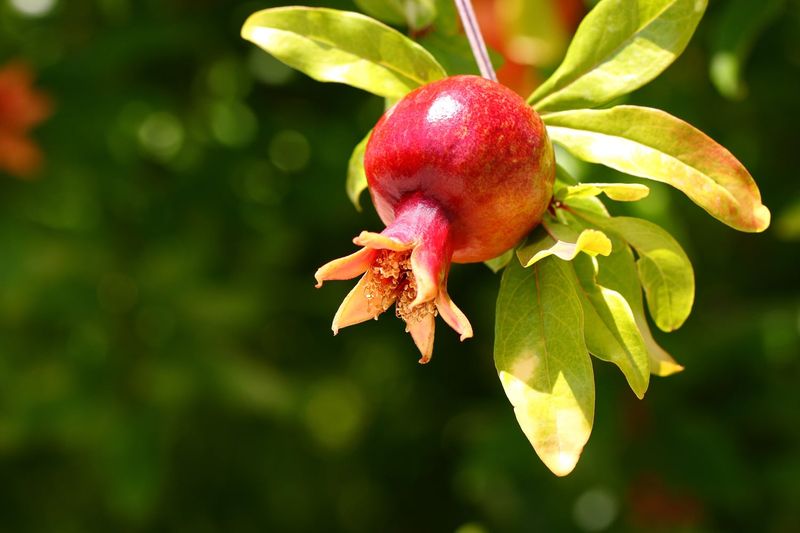
Numbers tell this story better than nostalgia ever could.
California had roughly 1,850 acres of pomegranates in 1927. By 1952, that total had shrunk to as few as 522 acres.
A drop of more than two-thirds in about 25 years is hard to ignore.
Tastes were shifting, and farmers chased crops that shipped easily and sold fast. Oranges, peaches, and almonds grabbed the spotlight, while pomegranates started to look old-fashioned and messy to eat.
A quick honesty check helps here.
Acreage counts track farms rather than home yards, so backyard trees were never officially tallied. Still, the commercial slump lines up with what many older gardeners remember: fewer new pomegranates going into the ground at home.
Postwar suburbs filled up with lawns, roses, and citrus. Few nurseries pushed a fruit that stains your shirt and takes patience to open.
Slowly, the tide turned.
Acreage began climbing again in the 1960s and 1970s, helped by the Wonderful variety and its big, deep red fruit.
So calling the pomegranate forgotten is not just a catchy label. For roughly a generation, the tree really did slip off the radar.
Your California Garden Changes Every Week. Your Plan Should Too.
Gardening in California changes quickly throughout the season. Every Friday you’ll receive a simple weekly plan showing exactly what to plant, prune, fertilize, harvest, and protect so you never miss the right timing.
Drought Tolerance Is Bringing It Back
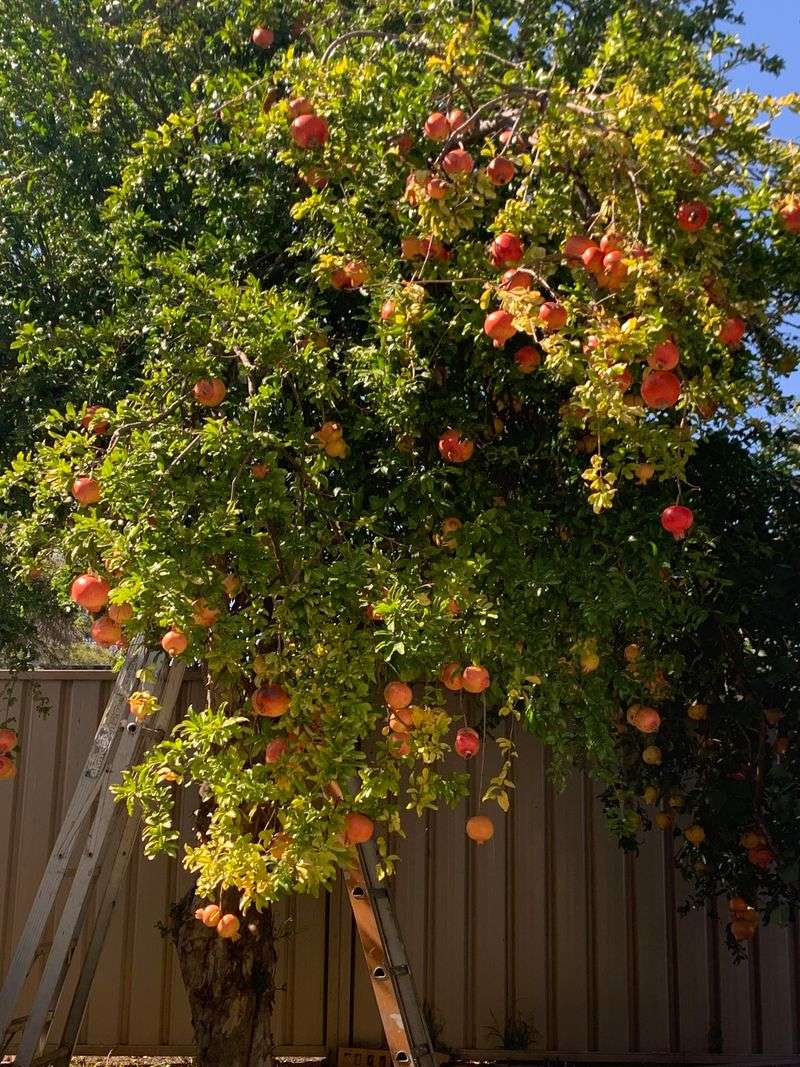
A crispy brown lawn and a shocking water bill have pushed plenty of Californians to rethink their yards.
Many are swapping thirsty plants for tough ones, and pomegranates keep landing on the shortlist. The tree is genuinely drought tolerant, able to survive on surprisingly little water once its roots settle in.
Surviving and thriving are two different things, though.
A stressed pomegranate may hang on through a dry summer, yet produce only a handful of small, disappointing fruit. Plenty of neglected mission-era trees prove the point, living on for years with sparse crops.
Good harvests come from steady moisture instead.
Deep watering every week or two during the growing season works better than quick daily sprinkles. Drip lines or a soaker hose under the outer edge of the canopy deliver water right where feeder roots live.
Pay extra attention as summer turns to fall.
Fruit swells fast in the final weeks, and consistent water now pays off in size, juice, and fewer cracks.
Warming winters help too.
Pomegranates need only about 100 to 250 chill hours, far fewer than most apples or cherries. Mild coastal and valley winters usually cover that easily, making the tree a smart match for California’s changing climate.
Hummingbirds Flock To Its Summer Blooms
Zip, hover, dart, repeat.
Anyone standing near a blooming pomegranate in late spring will likely spot a hummingbird working the flowers like a tiny delivery driver.
Those blossoms look almost custom-made for the birds.
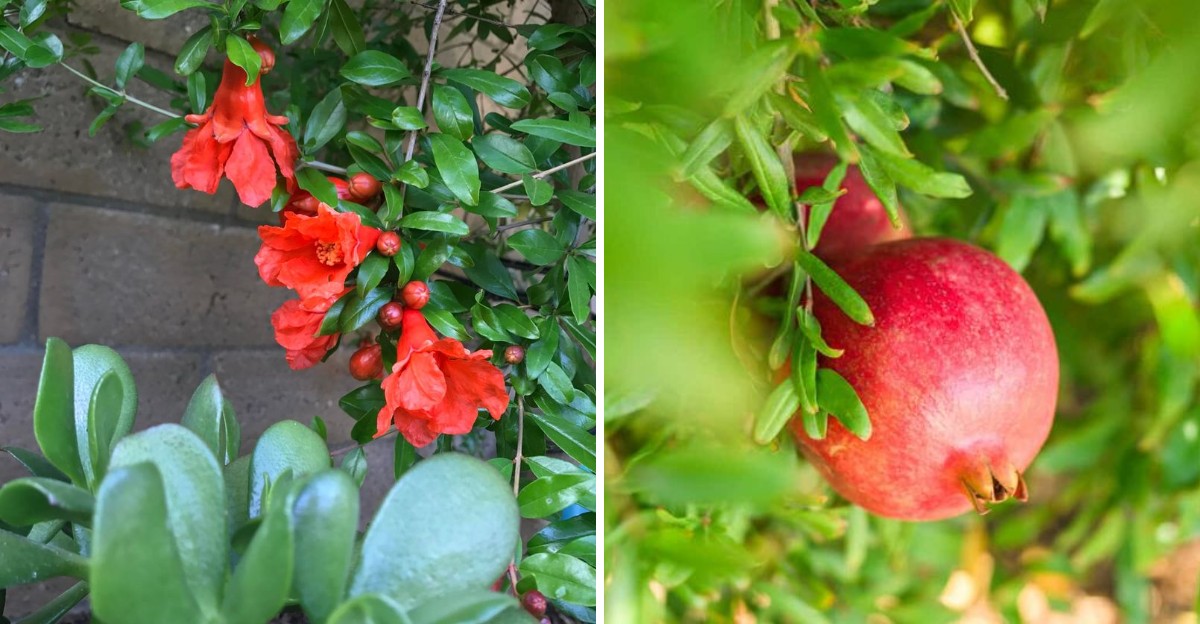
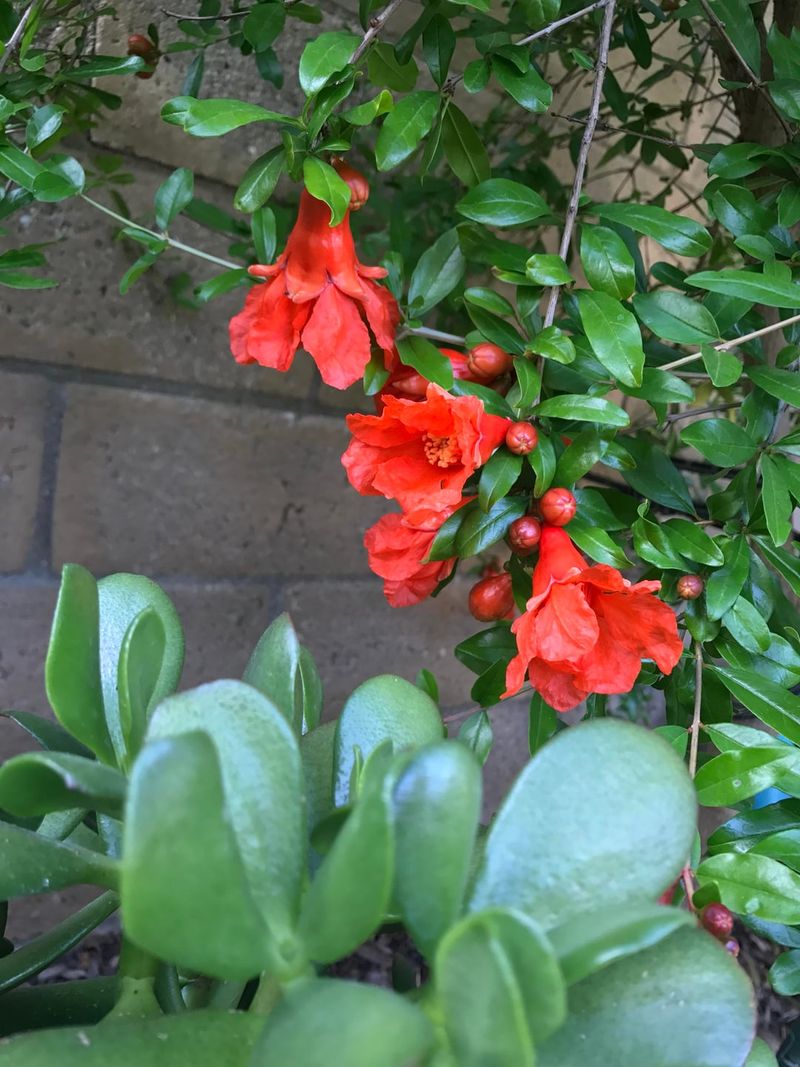
Each flower is bright orange-red, waxy, and shaped like a little trumpet or tube. Hummingbirds are drawn to warm red shades and tubular shapes that hold nectar deep inside, so the match is hard to beat.
Blooming usually starts in spring and can continue into summer, with new buds opening over time.
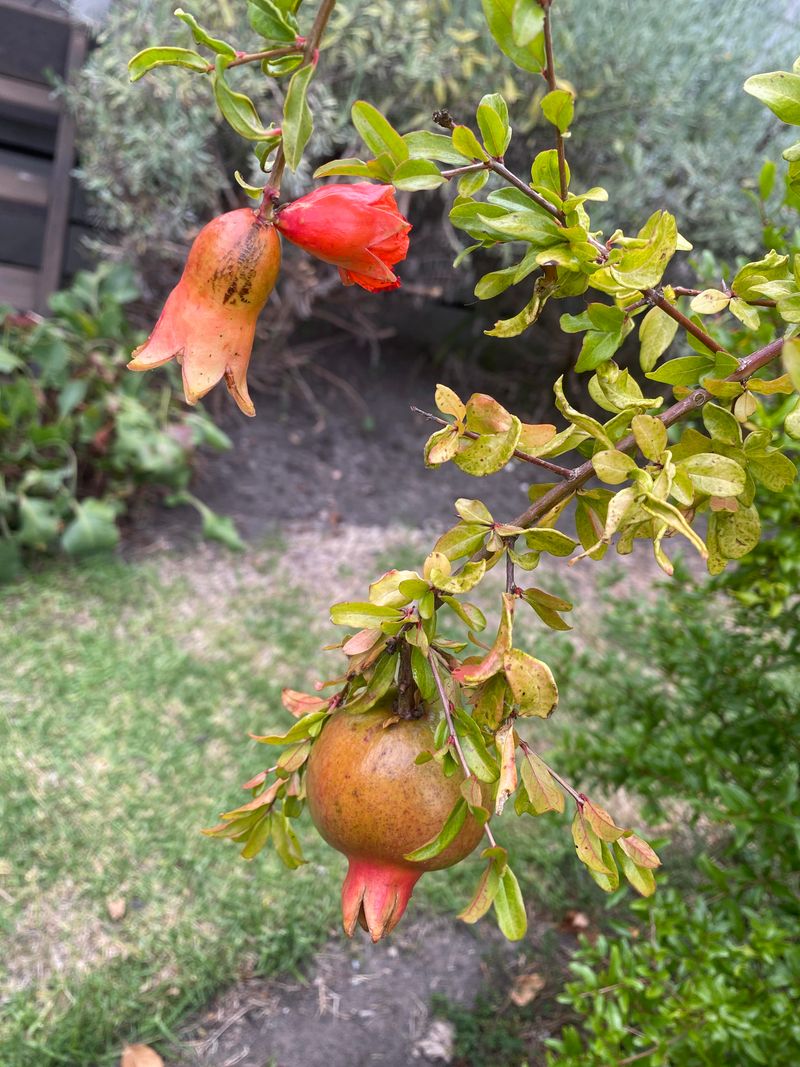
Some bell-shaped flowers drop off without forming fruit, which worries new growers. Relax, because the vase-shaped flowers with a swollen base are the ones that turn into pomegranates.
Bees stop by as well, helping with pollination along the way. Most pomegranates are self-fruitful, so a single tree can set a crop.
Want even more wings in the yard? Plant salvias or California fuchsia nearby to keep nectar flowing after the pomegranate finishes its show.
Skip broad pesticide sprays during bloom, since they can harm the very visitors you hope to attract.
Fruit Splits Without Consistent Moisture
Plenty of first-time growers know this heartbreak well.
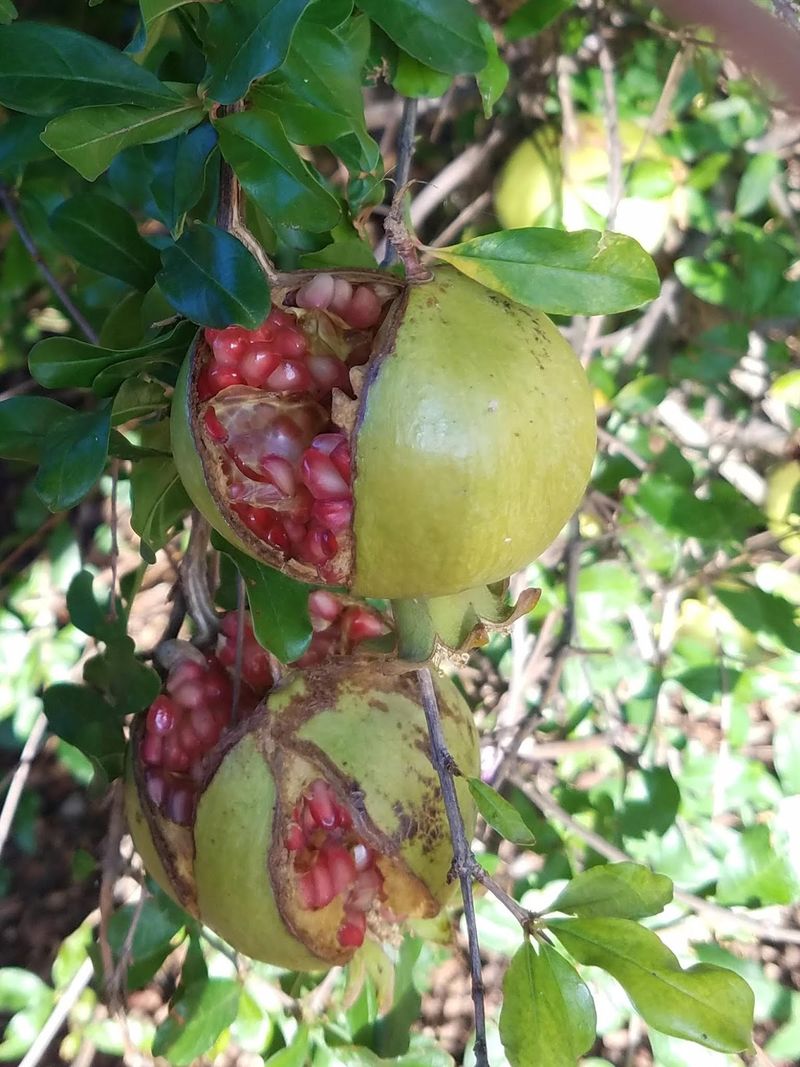
You wait all season, and then your best pomegranates crack open like overstuffed suitcases right before picking.
Splitting has a simple cause.
The rind firms up as fruit matures, but the juicy seeds inside keep growing whenever water arrives. A sudden flood of moisture after a dry spell makes the inside swell faster than the skin can stretch, and pop goes the pomegranate.
Two main triggers cause most of the trouble.
One is uneven irrigation, such as letting soil dry out completely and then soaking it. The other is heavy rain as harvest approaches, which you cannot control but can plan around.
Steady, predictable water solves most of the problem.
Keep soil evenly moist, not soggy, through late summer and early fall. A drip system on a timer takes the guesswork out, and mulch smooths out wild swings between wet and dry.
Variety choice can matter a bit as well.
Some types seem to crack less than others, so ask a local nursery which ones hold up in your area.
Remember, a few split fruits are normal, even for experienced growers. The seeds inside are still tasty if you pick them quickly.
Just toss any fruit that smells sour or shows mold.
Harvest Before Fall Rain Arrives
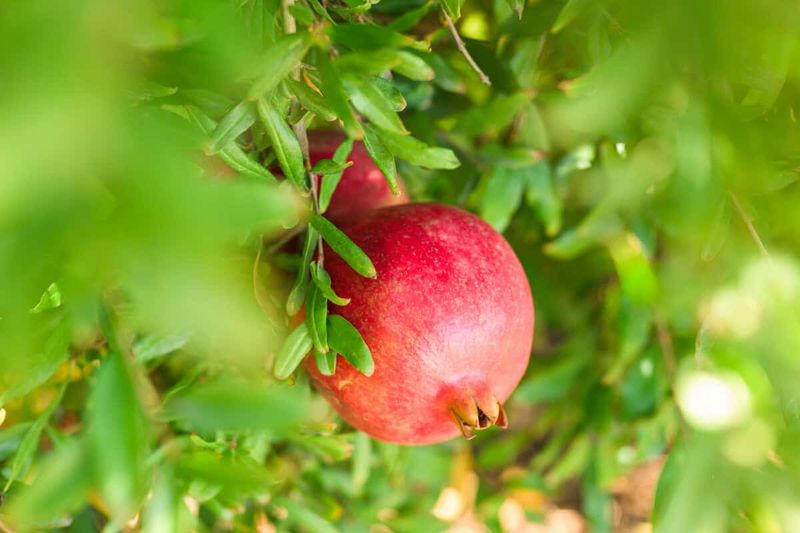
Autumn in California brings a gamble.
The first big storm can roll in anytime from October on, and ripe pomegranates on the tree are exactly what it threatens.
Unlike bananas or pears, pomegranates do not keep ripening after they leave the branch. Pull one too early and it stays sour forever.
Timing matters, so you need clues beyond the calendar.
Look for deep color that matches your variety and a rind that feels slightly leathery. Ripe fruit often looks a bit squared off rather than perfectly round.
Many growers also tap the fruit, listening for a metallic sound that hints at full juice.
Most popular types, like Wonderful, ripen from about September into November. Earlier varieties can be ready in late summer, which helps in areas with early storms.
Watch the forecast closely once fruit looks close.
If heavy rain is predicted, harvest anything ripe or nearly ripe. Chasing perfect sweetness can cost you the whole crop.
Use pruning shears instead of pulling, since tugging can tear branches.
Whole pomegranates can keep for weeks or even months in the refrigerator, so an early harvest does not mean eating them all at once.
Few Pests Bother This Tough Tree
Gophers chew through vegetable beds and young fruit trees across California like tiny bulldozers.
Yet some garden resources list pomegranates among the fruit trees more resistant to gopher damage. Nobody should call them gopher-proof, but they tend to hold up better than many other backyard fruit trees.
Above ground, the list of troublemakers stays fairly short.
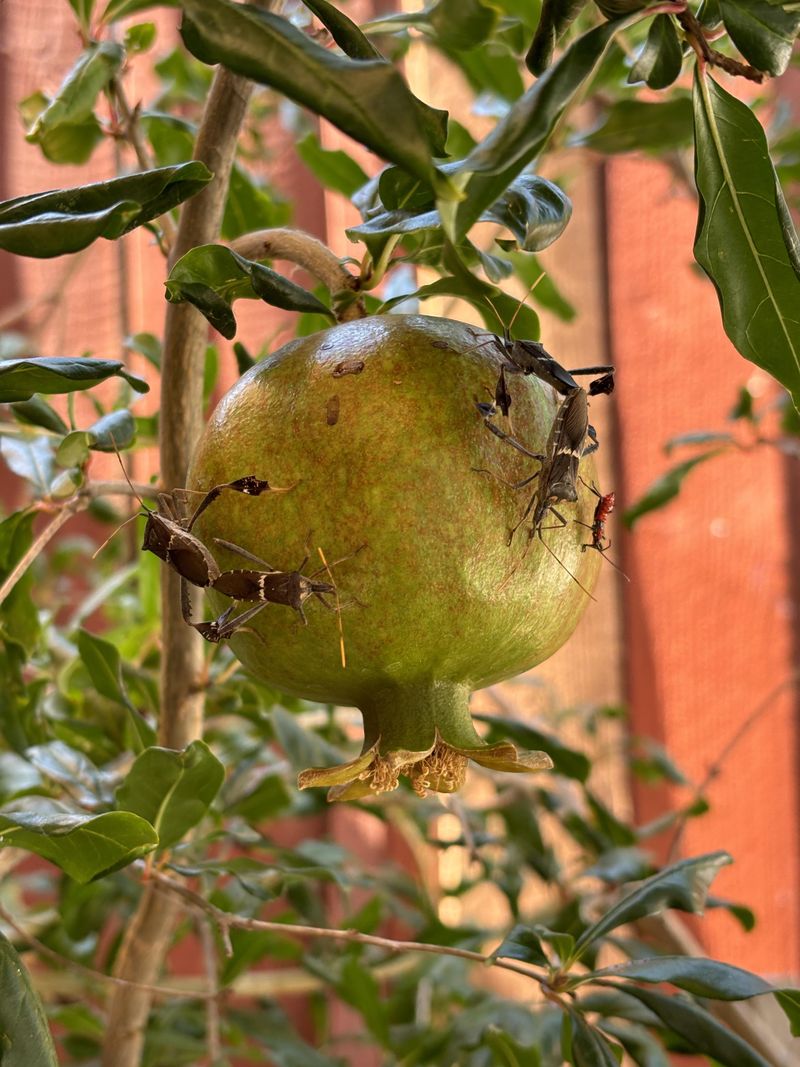
Aphids sometimes cluster on tender new growth, and a strong blast of water usually clears them off. Leaffooted plant bugs may pierce fruit in late summer, so hand-picking or knocking them into soapy water helps.
Diseases are uncommon in dry climates.
The biggest one is heart rot, a fungal problem that spoils fruit from the inside while the skin looks perfectly fine. Rain during bloom can raise the risk, and cleaning up fallen fruit lowers it.
Good habits keep problems small.
Give the tree full sun and soil that drains well, since soggy roots invite rot. Prune out suckers and crowded branches in winter to let air and light reach the center.
Because the tree needs so little spraying, it fits nicely into a pollinator-friendly or kid-friendly yard.