If You See This Fuzzy Caterpillar In Your California Garden, Do Not Touch It
A fuzzy caterpillar crawling across a California leaf can look harmless enough to pick up for a closer look. That is exactly where the trouble can start.
The hairs covering its body may irritate skin on contact, leaving some people with an itchy rash or a more uncomfortable reaction.
Children and pets are especially likely to investigate before anyone realizes there is a risk.
The safest response is simple: admire it without touching it, then give it space to move on. Gloves are a better choice if one must be relocated, and bare-handed handling is best avoided altogether.
Most encounters are minor, but sensitivity varies, which is why this caterpillar deserves more caution than its soft appearance suggests.
Knowing what to watch for can prevent a curious moment in the garden from turning into an unpleasant afternoon.
Those Fluffy Hairs Are Not As Harmless As They Look
At first glance, a fuzzy caterpillar looks like something out of a children’s book. The bright colors and thick tufts of hair make it look almost playful.
But those hairs are actually a defense system, not a decoration.
Many fuzzy caterpillars found in gardens have what are called urticating hairs. These are tiny, hollow bristles that can break off on contact and lodge into your skin.
Once embedded, they release chemicals that cause itching, burning, and redness. Some people react mildly, while others experience stronger symptoms like swelling or hives.
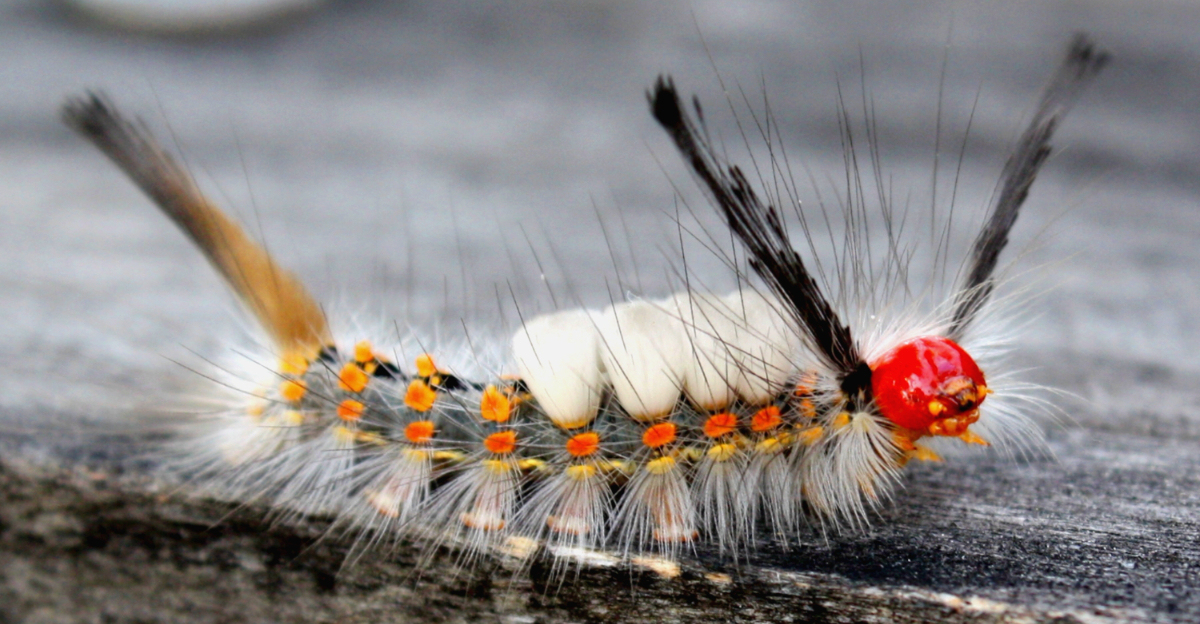
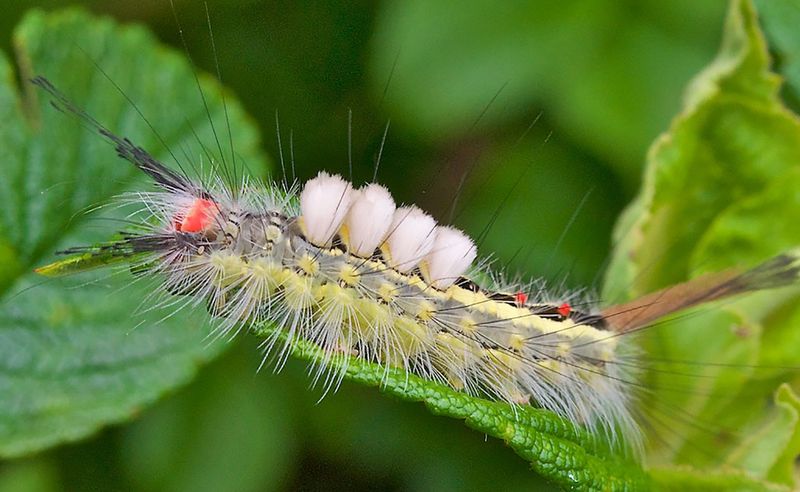
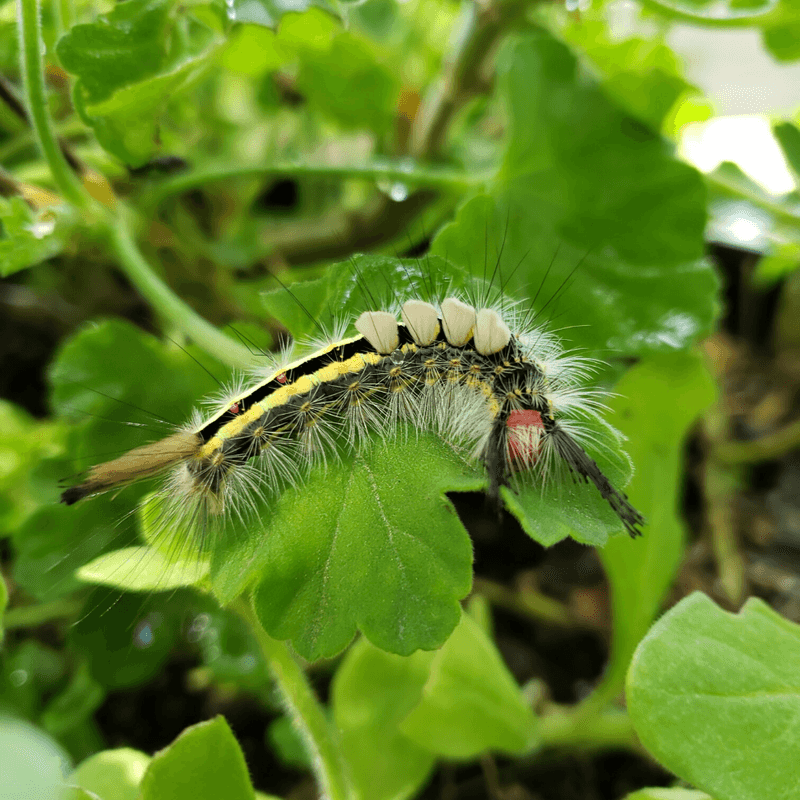
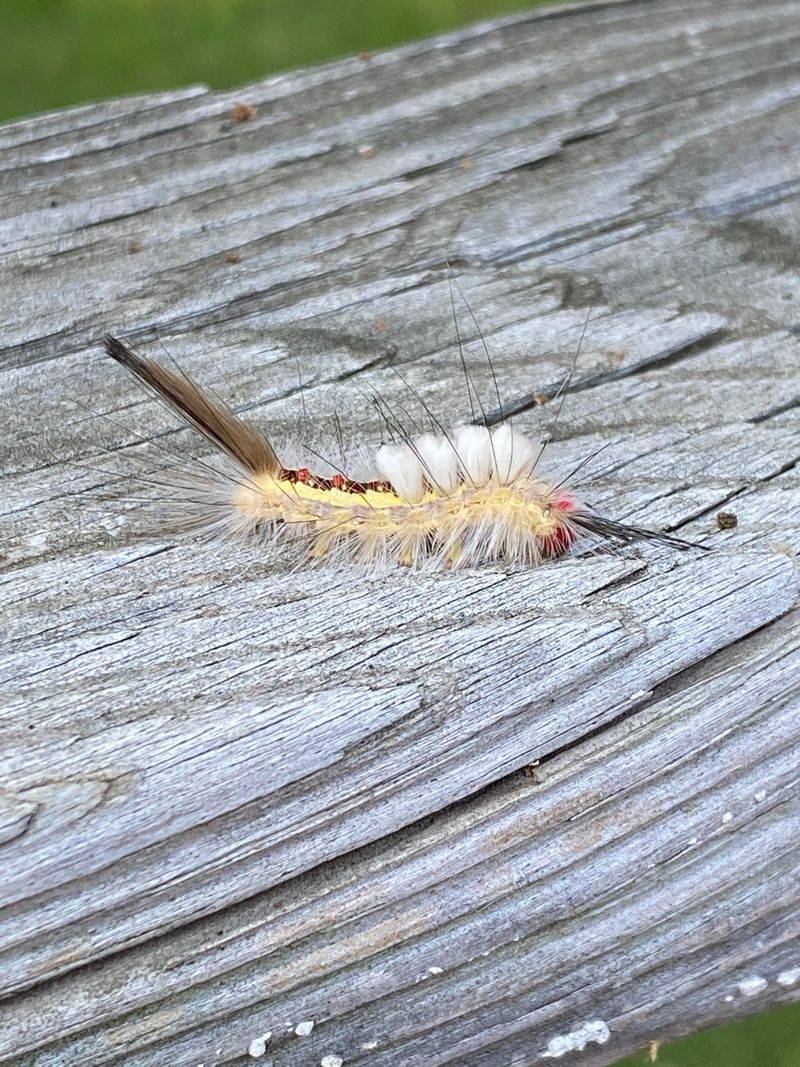
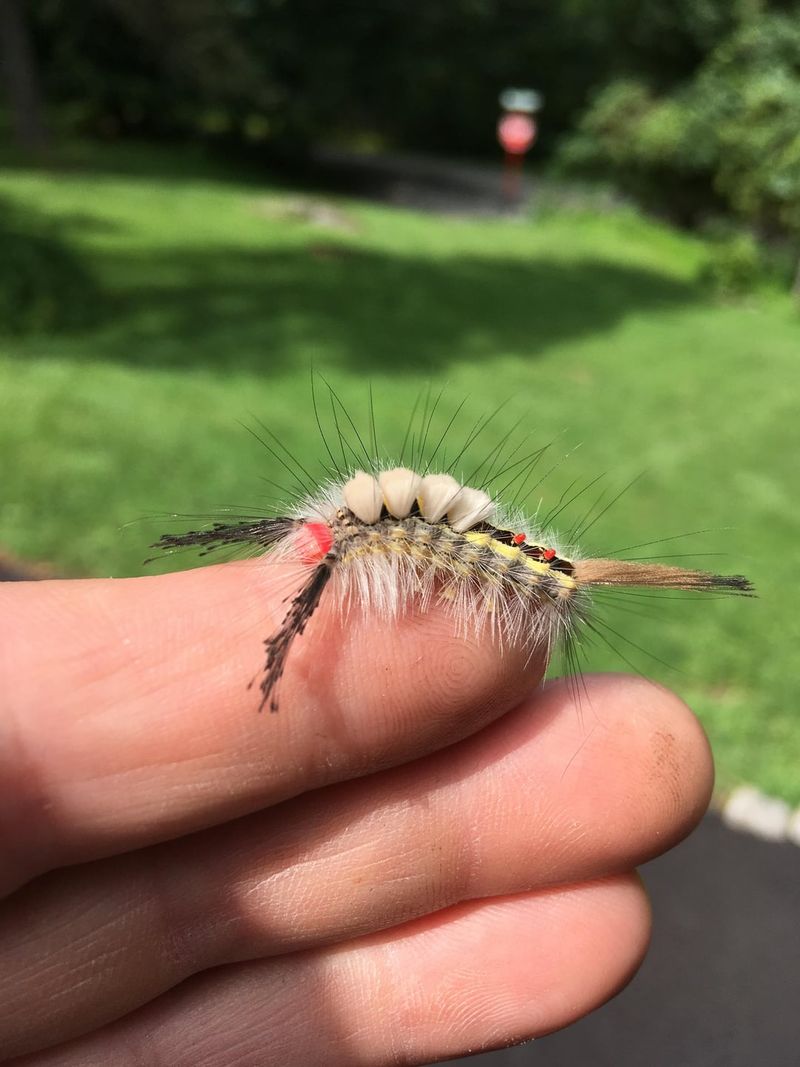
The White-Marked Tussock Moth caterpillar is one of the most common offenders. It has distinctive tufts of white and yellow hair, with a bright red head and small red dots along its body.
It looks striking, which is exactly why people are tempted to pick it up.
Even brushing against one accidentally can transfer those hairs to your skin or clothing. The reaction does not always happen right away, which makes it easy to underestimate the contact.
Understanding that those fluffy hairs serve as a chemical weapon helps explain why these caterpillars should always be admired from a safe distance and never handled with bare hands.
Why Bare Hands Are A Bad Idea
Reaching down to pick up a fuzzy caterpillar with bare hands is one of the quickest ways to ruin your afternoon. The urticating hairs on these caterpillars are designed to detach easily.
The moment your skin makes contact, those tiny bristles can stick and begin to irritate.
What makes it tricky is that the reaction is not always instant. You might pick one up, feel nothing unusual, and walk away thinking everything is fine.
Then, twenty minutes later, your hand starts to itch. A red rash appears, and the burning sensation sets in.
By that point, the hairs are already embedded in your skin.
Washing your hands right away with soap and water can help remove loose hairs before they cause more irritation. Using tape to gently lift embedded hairs out of the skin is also a common recommendation from medical professionals.
Your California Garden Changes Every Week. Your Plan Should Too.
Gardening in California changes quickly throughout the season. Every Friday you’ll receive a simple weekly plan showing exactly what to plant, prune, fertilize, harvest, and protect so you never miss the right timing.
Do not rub the area, as that pushes the hairs in deeper.
Bare hands give you zero protection from this kind of contact. Even people who have handled fuzzy caterpillars before without a reaction can develop sensitivity over time.
Repeated exposure can make the reaction worse, not better. Always treat these caterpillars as something to observe carefully, never something to handle casually or without proper protection.
The Tufts That Can Leave Skin Itchy And Irritated
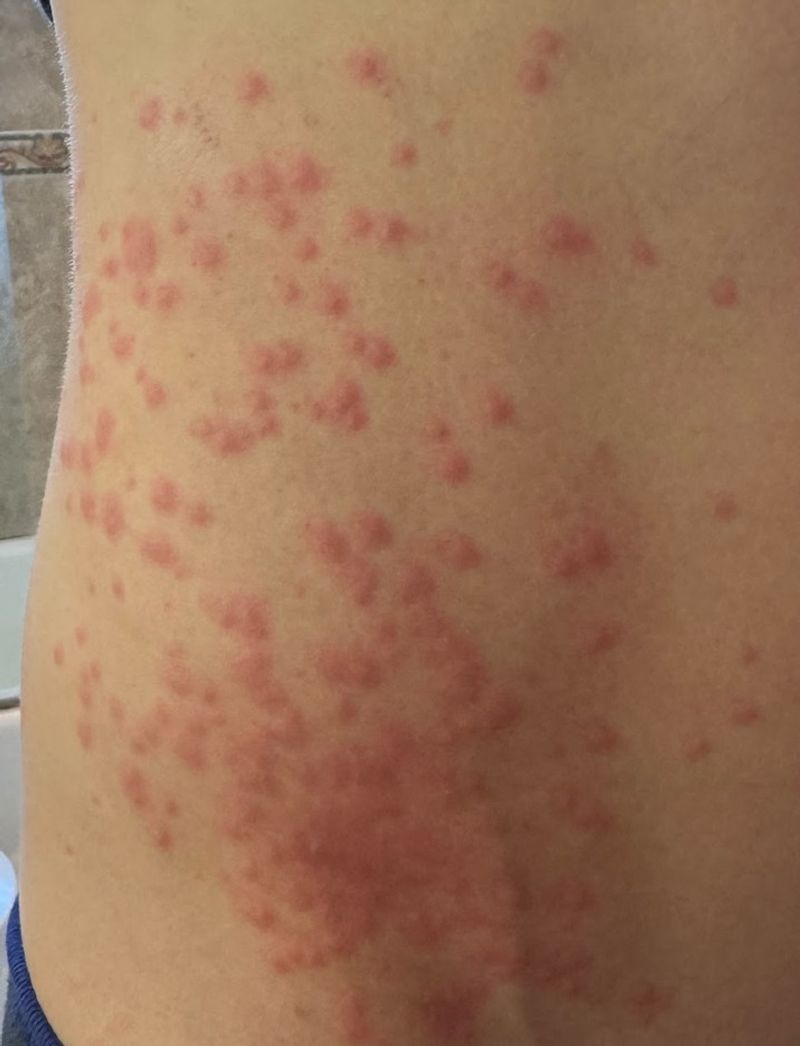
Those colorful tufts on a fuzzy caterpillar are not just for show. Each tuft is packed with hundreds of tiny hairs that serve as the caterpillar’s main line of defense against predators.
For humans, accidental contact with those tufts can mean hours or even days of skin irritation.
The reaction typically starts with itching. Then a rash appears, often with small red bumps or welts.
In more sensitive individuals, the skin can swell and feel warm to the touch. The affected area may also feel like it is burning, similar to a mild sunburn or a nettle sting.
Children tend to have stronger reactions because their skin is more sensitive. Adults with allergies or skin conditions like eczema may also find that the irritation lingers longer than expected.
In rare cases, people have reported eye irritation after accidentally touching their face following contact with a caterpillar.
Treating the rash usually involves removing the hairs carefully, applying hydrocortisone cream, and taking an antihistamine if the itching is severe. Cool compresses can help reduce swelling and bring some relief.
Most reactions clear up within a few days, but it is always smart to contact a healthcare provider if symptoms are severe or spreading beyond the initial contact area.
Kids And Pets Are Most Likely To Get Too Close
Curiosity is a wonderful thing, but it can lead kids and pets straight into trouble when fuzzy caterpillars are nearby. Children are naturally drawn to colorful, moving things in the garden.
A bright, fluffy caterpillar is basically an invitation for small hands to reach out and touch.
Pets face a different kind of risk. Dogs especially tend to sniff and paw at anything unfamiliar on the ground or on plants.
If a dog paws at a fuzzy caterpillar, the hairs can embed in the paw pads, around the nose, or even in the mouth if the dog tries to bite it. This can cause drooling, pawing at the face, and visible discomfort.
Teaching kids early about which garden creatures to avoid is one of the best things a parent can do. Simple rules like “look but don’t touch” go a long way when children understand the reason behind the rule.
Showing them a picture of the caterpillar and explaining what the hairs can do makes the lesson stick.
For pets, keeping them on a leash or supervised during outdoor time in areas where these caterpillars are active helps reduce the risk.
If a pet shows signs of irritation after being near plants, check their paws and face carefully and contact a vet if symptoms seem serious.
Garden Trees Can Hide More Caterpillars Than You Think
Most people look for caterpillars on the ground, but California trees are where they really thrive. Many fuzzy caterpillar species prefer to feed on the leaves of oak, willow, apple, and other common garden trees.
A single tree can host dozens of caterpillars at once without it being obvious from a distance.
The White-Marked Tussock Moth caterpillar is especially fond of deciduous trees. During warmer California months, the caterpillars feed actively on leaves and can defoliate branches if the population is large enough.
As they feed, they also shed hairs, which can fall to the ground or drift in the breeze.
This means you do not even have to touch a caterpillar to be affected. Walking under an infested tree, leaning against the bark, or sitting beneath the branches can all result in contact with shed hairs.
Gardeners who prune trees without checking for caterpillars first are especially at risk.
Before doing any pruning or trimming work on garden trees during spring and summer, take a close look at the leaves and branches. Look for clusters of eggs, silk webbing, or the caterpillars themselves.
If you spot any, put on gloves and long sleeves before proceeding. Being aware of where caterpillars like to hide makes it much easier to avoid an uncomfortable run-in.
Brushing Against One Can Be Enough To Cause Trouble
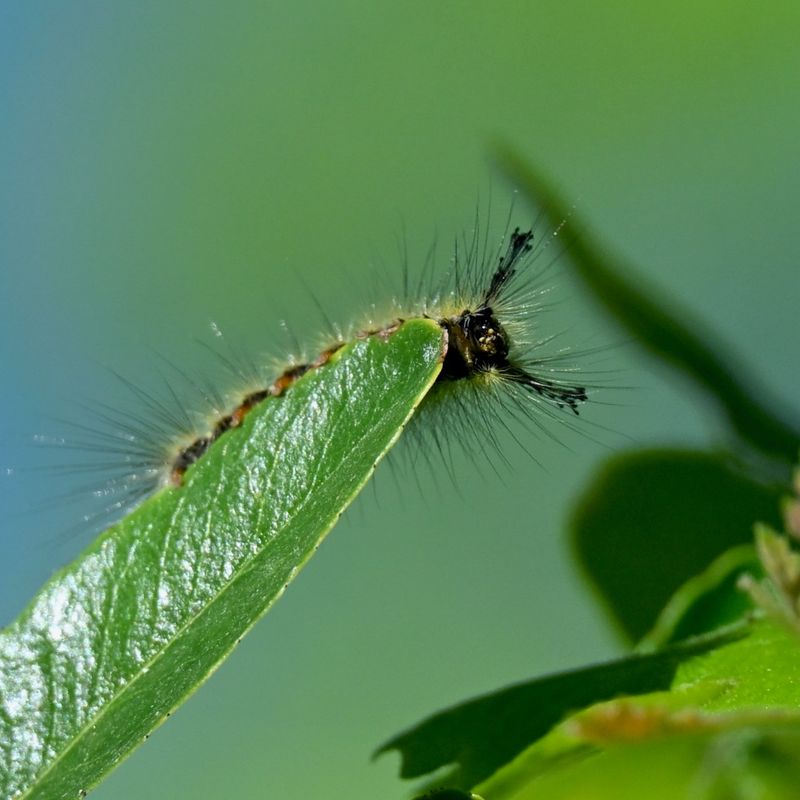
You do not have to pick up a fuzzy caterpillar to end up with an itchy rash. Simply brushing your arm or leg against a plant where one is resting can be enough to transfer those irritating hairs to your skin.
This kind of accidental contact happens more often than most people realize.
California gardeners who work in dense plantings or reach into shrubs without checking first are especially likely to have this experience. T
he caterpillar might be tucked under a leaf or clinging to a stem, completely out of sight until you feel the sudden sting or tickle on your skin.
Wearing long sleeves and pants while gardening during caterpillar season is a simple and effective way to reduce the chance of accidental contact.
Light, breathable fabrics work well in warm weather and still provide a protective layer between your skin and any hidden caterpillars.
If you do brush against one, resist the urge to rub the area. Rubbing spreads the hairs and drives them deeper into the skin.
Instead, use a piece of tape or the sticky side of a bandage to lift the hairs off gently. Then wash the area thoroughly with soap and water.
Acting quickly after contact usually means a milder reaction and faster recovery time overall.
Gloves Matter If You Need To Move One
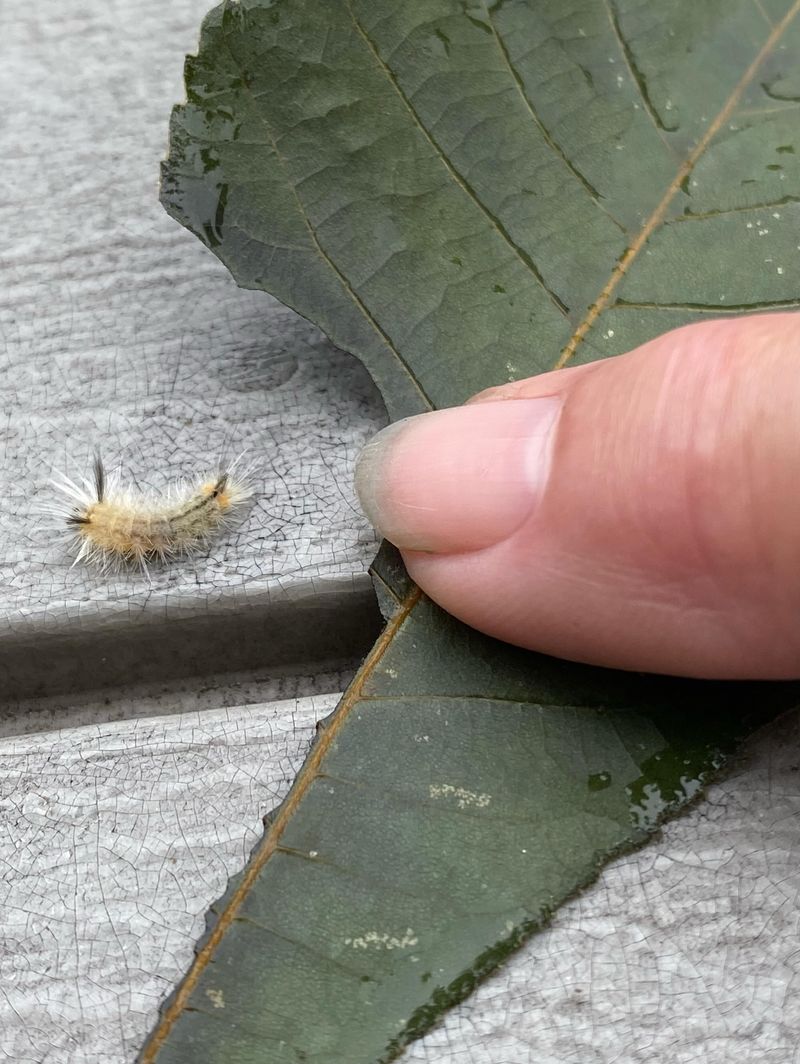
Sometimes a caterpillar ends up somewhere it really should not be, like on a doorstep, a garden chair, or a plant you need to tend to right away.
When moving one becomes necessary, the right gear makes all the difference between a safe experience and an itchy one.
Thick rubber or nitrile gloves are the best choice for this kind of task. Thin gardening gloves may not be enough, since the tiny hairs can sometimes poke through lightweight fabric.
Rubber gloves create a solid barrier that the hairs cannot penetrate, keeping your hands fully protected during the process.
Along with gloves, wear long sleeves to protect your forearms. Even if you are careful, the caterpillar might move unexpectedly and brush against your wrist or arm.
Covering up before you start prevents that kind of surprise.
After moving the caterpillar, remove your gloves carefully by peeling them off inside out. This keeps any hairs that may have transferred to the outside of the glove from touching your skin.
Wash your hands even after removing the gloves, just to be safe. Dispose of the gloves or rinse them thoroughly before storing them.
Having the right equipment on hand before you need it means you are always ready to handle the situation calmly and safely.
Why Crushing Them With Your Hands Makes Things Worse
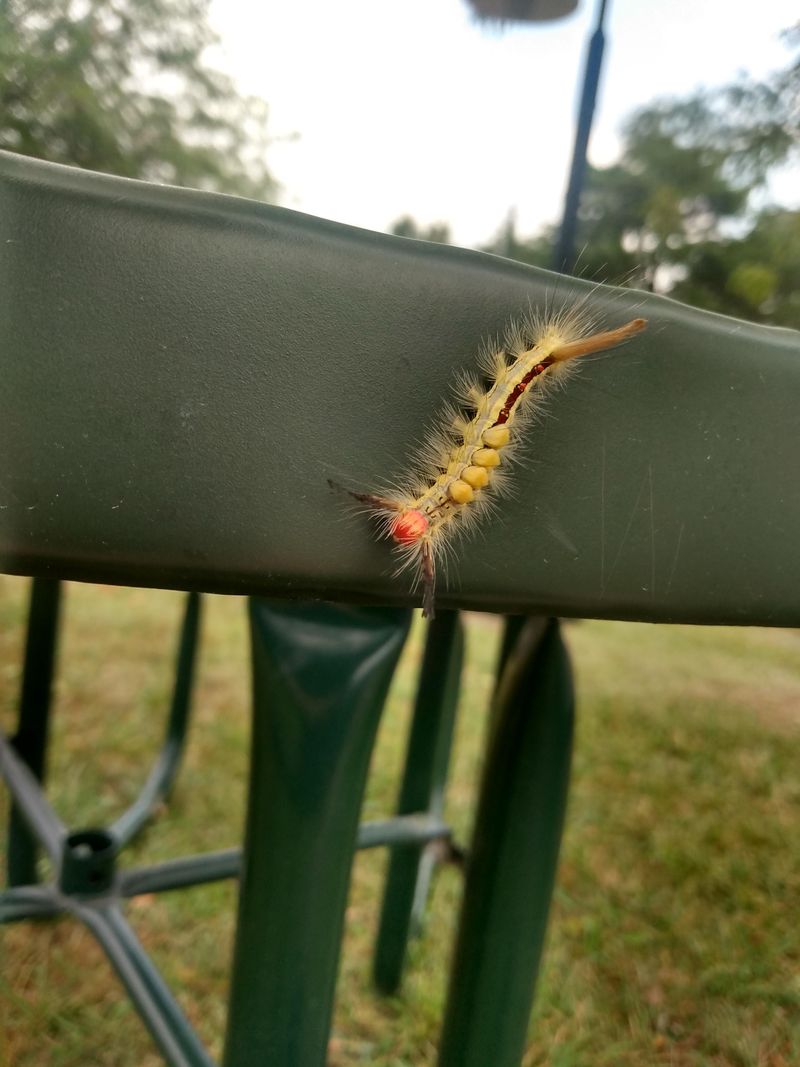
Some people’s first instinct when they see a pest in the garden is to crush it. With fuzzy caterpillars, that instinct can backfire in a big way.
Crushing one with your bare hands releases all of those urticating hairs at once, turning a small problem into a much bigger one.
When the caterpillar’s body is compressed, the hairs burst outward and scatter. They can land on your hands, forearms, and even float into the air where they might be inhaled or land on your face.
Inhaling caterpillar hairs can irritate the throat and nasal passages, causing coughing and discomfort that is much harder to treat than a simple skin rash.
Even stepping on one with a bare foot creates a similar problem. The hairs scatter across the bottom of your foot and can work their way into the skin with every step you take afterward.
Wearing shoes in the garden is always a good habit, especially during the months when caterpillars are most active.
The safest approach is to never crush these caterpillars at all. Instead, use a stick or a tool to scoop them up and relocate them away from high-traffic areas.
Letting them complete their life cycle away from your main garden space is a far better outcome for everyone involved.
The Safe Way To Remove One From A Patio Or Plant
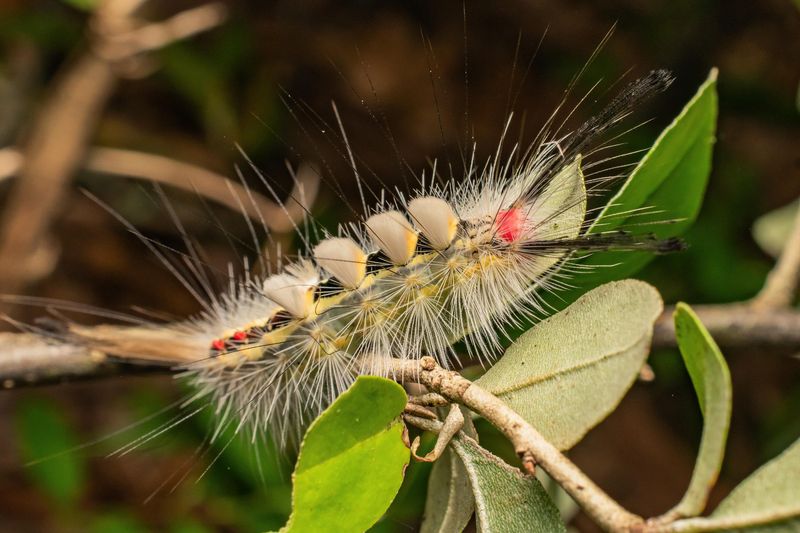
Finding one of these caterpillars on your patio or a plant you need to water does not have to be a stressful situation.
With the right approach, you can move it safely without putting yourself at risk. The key is to avoid direct contact at every step of the process.
Start by putting on thick rubber gloves and long sleeves before you do anything else. Grab a sturdy stick or a plastic spatula to use as a guide tool.
Gently coax the caterpillar onto the tool by nudging it from behind. Move slowly and avoid sudden movements that might cause the caterpillar to curl up or release hairs defensively.
Once it is on the tool, carry it to a nearby shrub or grassy area away from where people and pets spend time. Set it down gently and let it crawl off on its own.
Do not shake or flick the tool, as that can send hairs flying in unexpected directions.
After the caterpillar is relocated, wash the tool with soapy water before putting it away. Remove your gloves carefully and wash your hands thoroughly.
If you want to keep caterpillars off a specific plant going forward, checking it regularly and removing egg masses in early spring can help prevent larger populations from building up later in the season.