How To Repair Drought-Damaged Lawn Spots In Michigan This Fall
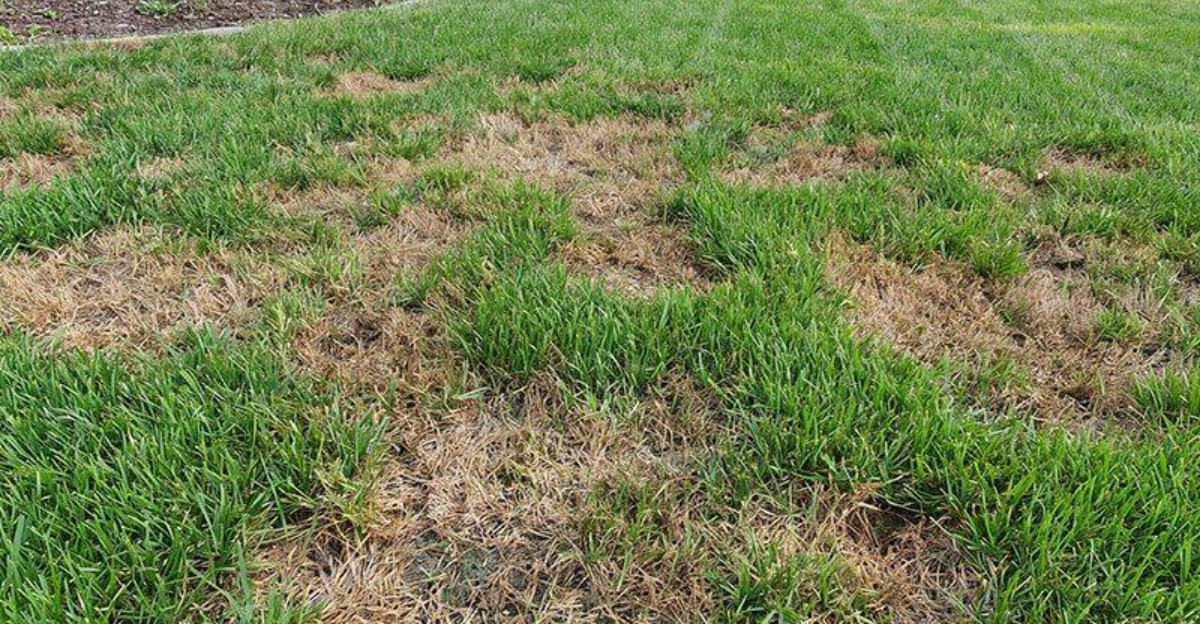
Patches of thin, brown, or bare lawn are a common sight in Michigan yards this fall, often left behind after a particularly dry stretch earlier in the season.
Fall happens to be one of the best times to repair this kind of damage, since cooler temperatures and typically more consistent rainfall create favorable conditions for grass seed to germinate and establish before winter.
Repairing these spots effectively usually involves loosening compacted soil, adding fresh topsoil or compost, and overseeding with a grass type suited to the specific area’s light and moisture conditions.
Because drought stress can weaken grass roots even in areas that look recovered, addressing the underlying soil health matters just as much as simply adding new seed.
Taking advantage of this fall window gives damaged lawn areas a real chance to fully recover before the growing season ends for the year.
1. Check Whether The Grass Is Just Sleeping
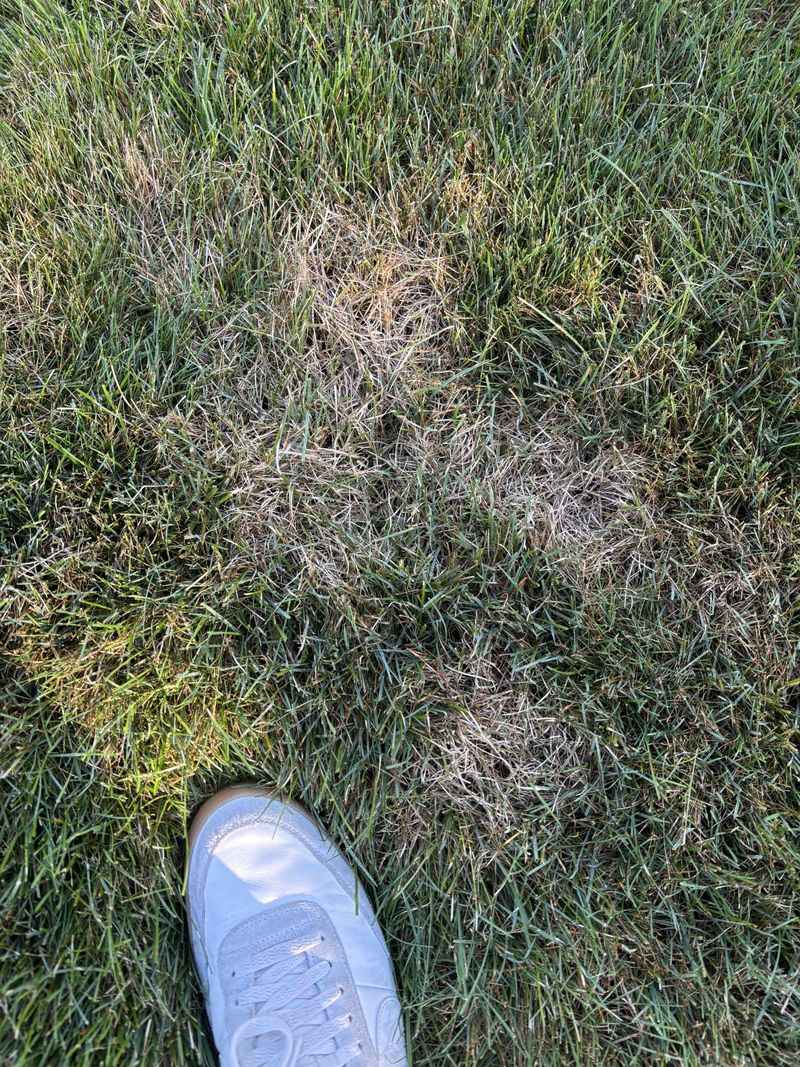
Brown grass in August can fool almost anyone. Many Michigan lawns are filled with cool-season grasses like Kentucky bluegrass and fine fescue, and those types have a clever survival trick.
When hot, dry weather drags on, they shut down and turn tan to save water, a state called dormancy.
Think of it like a bear taking a long nap. The blades look rough, but the crown, which is the small white growing point at the base of each plant, may still be alive and waiting for rain.
Kentucky bluegrass can often stay dormant for several weeks and still recover once cooler temps and steady moisture return.
So before you grab a rake, do a little detective work. Try the tug test by gently pulling on a handful of brown grass.
If it holds tight, the roots are still anchored, but if it slides out with almost no effort, that patch is likely finished.
Next, pull apart a few plants and look at the crowns. Firm, white, or pale green crowns are a great sign, while dry, brittle, or mushy ones usually mean trouble.
You can also water one small test area for about a week and watch for fresh green shoots poking up.
Taking the time to check saves you money, sweat, and seed. Tearing out grass that could have bounced back on its own means extra work for no reason.
Once you know which spots are truly done, you can focus your energy right where the lawn needs it most.
2. Clear Away Turf That Won’t Bounce Back
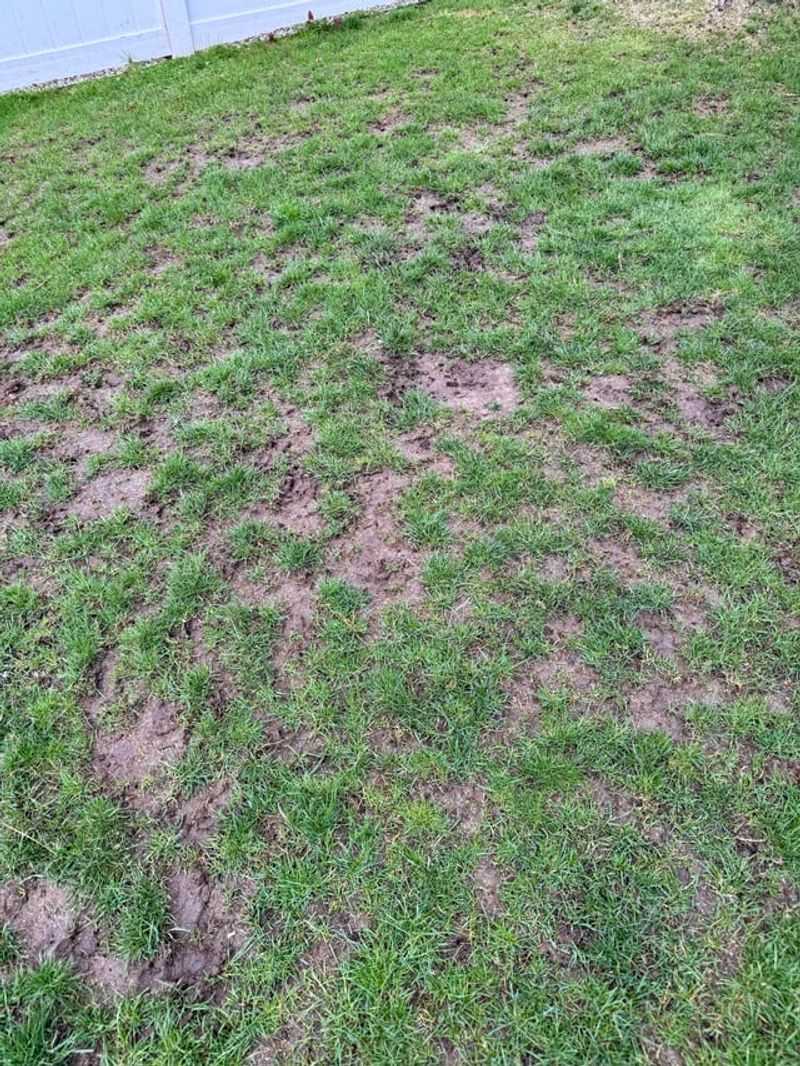
Seeds are a lot like tiny houseguests, and they need a comfy place to land. If you scatter them over a mat of crispy brown thatch and old grass, most will sit on top, dry out, and never take root.
Good seed-to-soil contact is the single biggest key to a successful patch repair. Start by marking the spots that failed your tug test. A small flag or a ring of flour on the grass makes the edges easy to see.
Then use a stiff garden rake or a hand cultivator to pull up the brown turf and any loose roots.
Your Michigan Garden Changes Every Week. Your Plan Should Too.
Gardening in Michigan changes quickly throughout the season. Every Friday you’ll receive a simple weekly plan showing exactly what to plant, prune, fertilize, harvest, and protect so you never miss the right timing.
For larger areas, a flat spade works well to slice under the old sod. Try to remove just the top inch or so, since you want to keep as much good soil in place as possible.
Shake the clumps over the bare spot first so the loose dirt falls back where it belongs. Once the old grass is gone, rake the area until you can see bare soil across the whole patch. Pick out rocks, sticks, and chunks of thatch.
Square up the edges a bit so the new grass blends neatly with the healthy lawn around it. Here is a handy bonus. Toss the old turf into a compost pile instead of the trash, since it breaks down into rich material you can use later.
Taking out the worn-out grass may feel like a step backward, but it clears the stage for a thick, green comeback.
3. Loosen Up Tight, Packed Soil
Ever tried to push a pencil into a hard dirt path? That is what young grass roots face in compacted soil.
Michigan lawns, especially those with heavy clay, can pack down tight from foot traffic, mowers, and years of settling.
Compacted soil causes a chain of problems. Tiny air pockets get squeezed out, so roots struggle to breathe and spread.
Water also has a harder time soaking in, which means rain and sprinkler water often run off before reaching the root zone.
Guess what happens next during a dry summer? Shallow roots can’t reach deeper moisture, and the grass browns out faster than the rest of the yard. Many drought spots start with soil that is simply too tight.
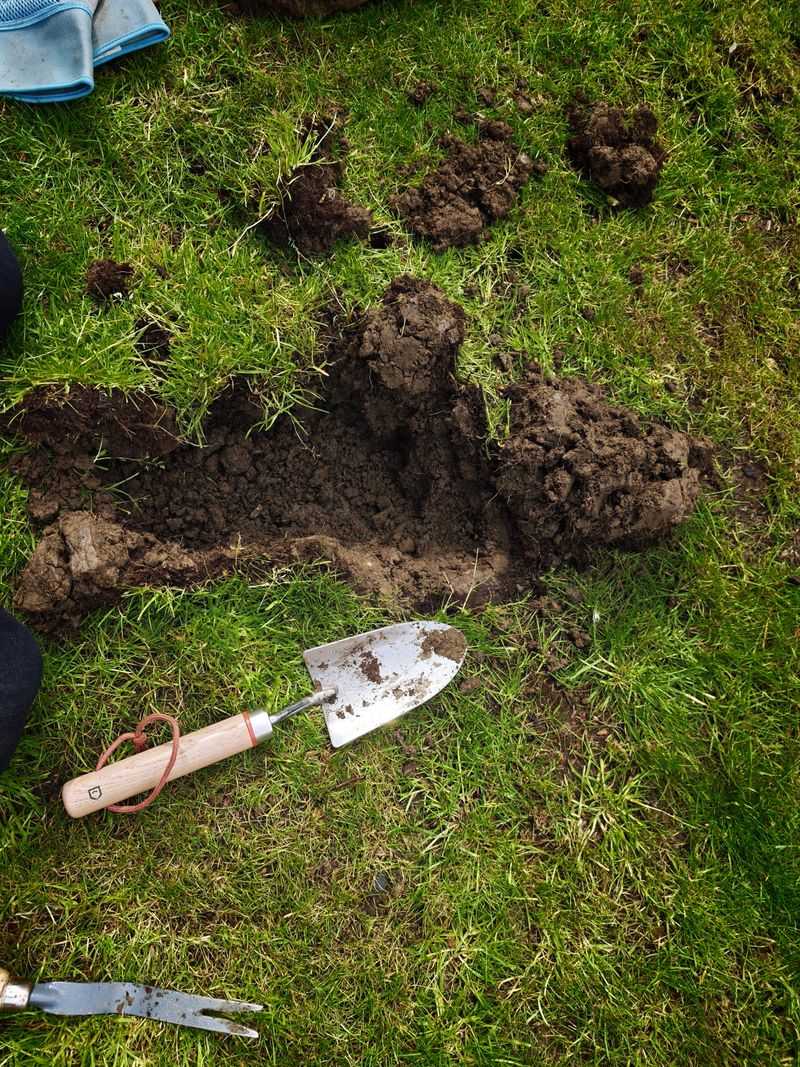
The good news is that small repairs don’t need heavy machinery. After clearing the old turf, use a garden fork, hand cultivator, or stiff rake to break up the top two to three inches of soil.
Rock the fork back and forth to open cracks without flipping huge chunks over. If much of the lawn feels hard, fall is a great time to core aerate. A core aerator pulls out small plugs of soil, letting air, water, and nutrients slip down to the roots.
Many hardware stores rent these machines by the day. One quick tip helps a lot. Work the soil when it is slightly moist, not soggy or bone dry, since wet clay smears and dry clay turns to dust. A crumbly texture, like chocolate cake, tells you the seedbed is ready.
4. Add Soil Only When Your Patch Truly Needs It
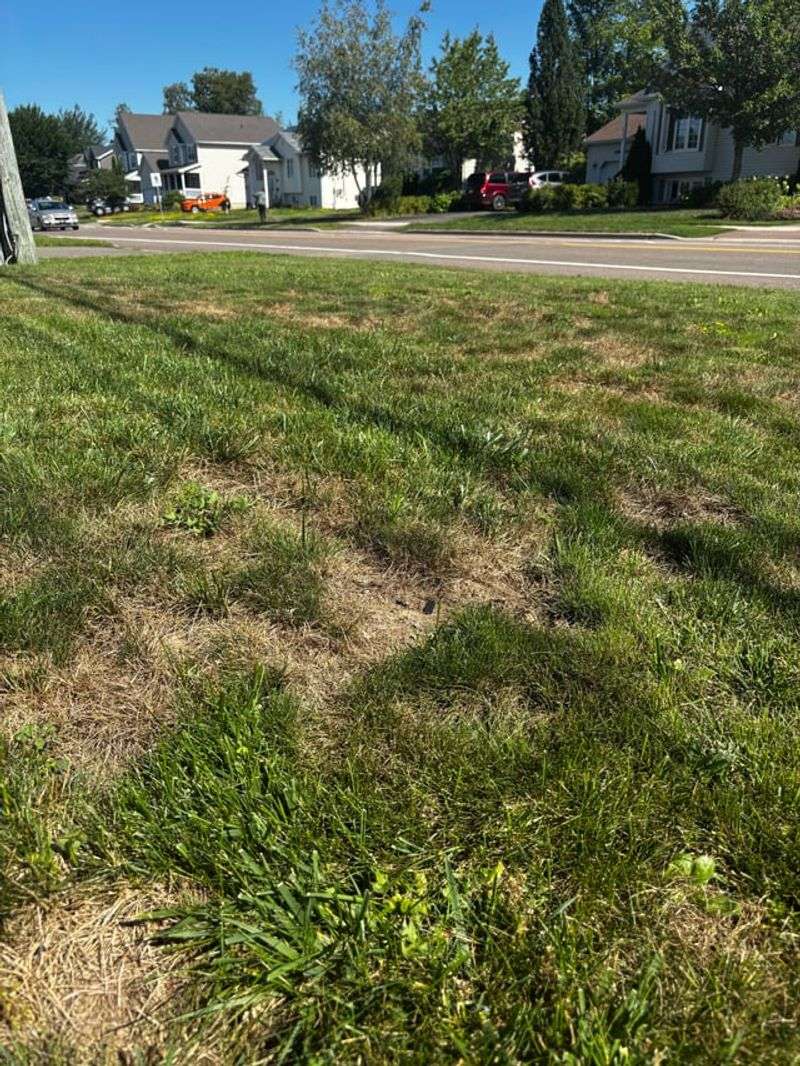
More is not always better when it comes to dirt. Plenty of folks dump a thick pile of topsoil on every bare spot, hoping to give new seed a boost. Sadly, too much soil can cause as many problems as it solves.
So when does adding soil make sense? If a patch sits lower than the lawn around it, water may puddle there after rain and drain away unevenly. Poor, sandy, or rocky ground can also use a little help holding moisture and nutrients.
In those cases, spread a thin layer of quality topsoil or screened compost, about a quarter to half an inch deep. Rake it gently into the loosened soil below so the two layers mix.
Blending them keeps water from getting stuck where two very different soils meet.
For low spots, you can fill a bit deeper, but build it up in stages and let it settle between layers. The goal is a smooth, level surface that matches the height of the nearby grass.
Bumps and dips make mowing tricky and can lead to scalping. Now for the caution part. Avoid piling soil over healthy grass along the edges, because burying living turf can smother it.
As a general rule, keep any layer over existing grass to about a quarter inch so blades can still poke through. Quality matters too. Cheap fill dirt may carry weed seeds, clay clumps, or debris.
Buying screened compost or bagged lawn soil from a trusted garden center gives your seed a clean, healthy start.
5. Pick Seed That Matches Your Lawn
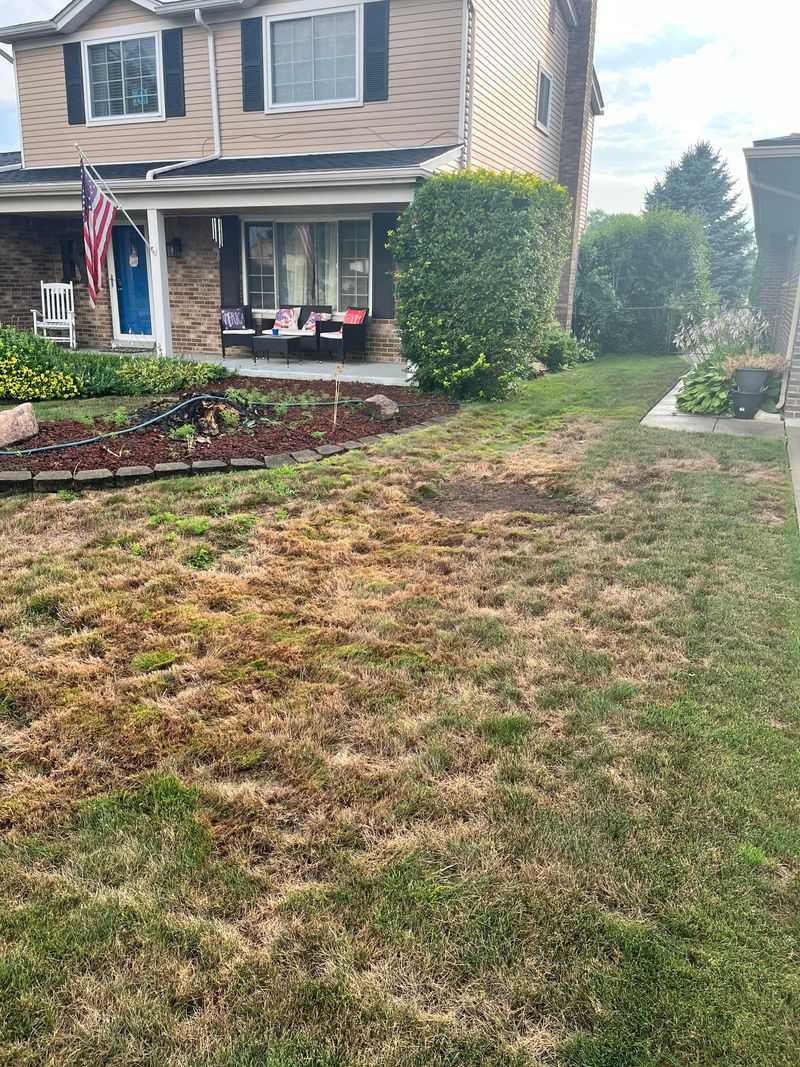
Imagine a brand-new patch of bright, fat-bladed grass sitting in the middle of a fine, deep green lawn. It sticks out like a sneaker in a row of dress shoes.
Choosing seed that blends with what you already have makes repairs almost invisible.
Most Michigan lawns contain a mix of cool-season grasses. Kentucky bluegrass, the grass many people picture as a classic lawn, spreads by underground stems and loves full sun.
Perennial ryegrass sprouts fast and handles wear, while fine fescues do well in shady spots with poor soil.
Tall fescue is another smart pick for dry areas. Its deep roots help it handle drought better than many other lawn grasses, which makes it a strong choice for spots that keep browning out.
Newer turf-type varieties have finer blades that blend better than old pasture types. Before buying, take a close look at your yard. How many hours of sun does the patch get each day?
Is it a play zone for kids and dogs, or a quiet corner no one walks on? Once you know the answers, read the seed label carefully. Look for high germination rates, low weed seed content, and named varieties instead of generic ones.
Skip bags heavy on annual ryegrass, since it only lasts one season. A fun fact for local fans: Michigan State University runs turfgrass research and publishes helpful lawn guides for homeowners.
Their advice can point you toward mixes proven to thrive in Great Lakes weather. Checking their tips takes minutes and could save you a whole season of guesswork.
6. Keep New Seed Moist Every Single Day
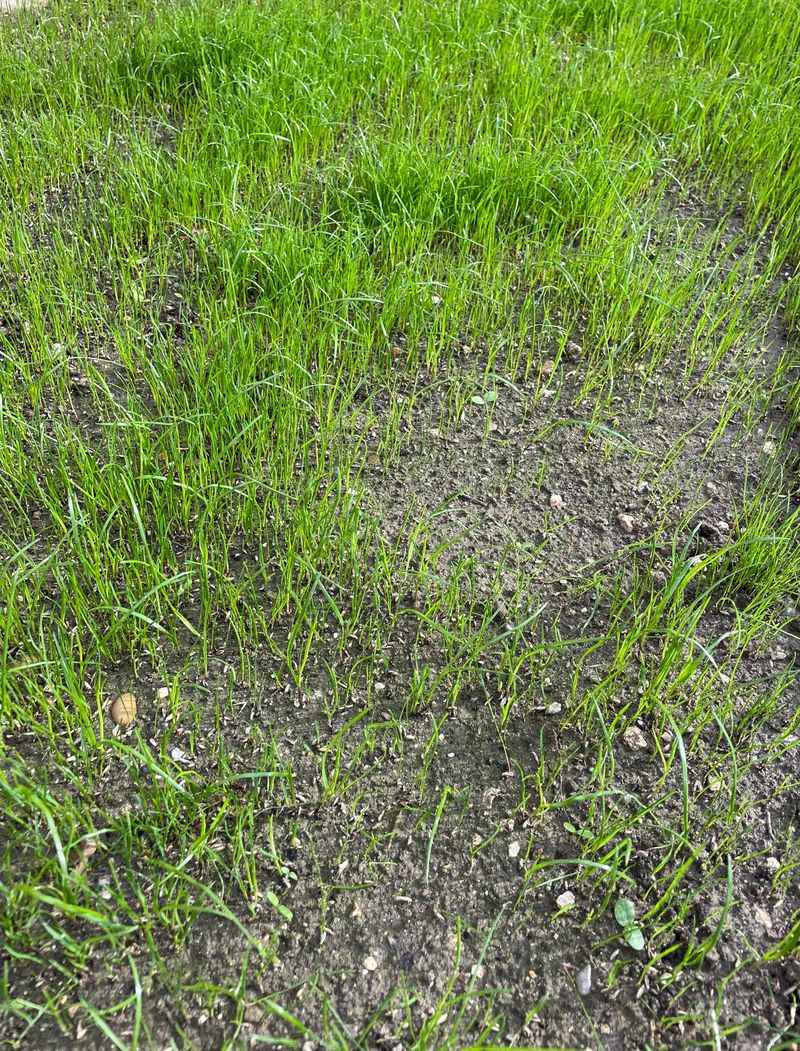
Water is the magic ingredient that wakes up a sleeping seed. Once a grass seed soaks up moisture, it swells, cracks open, and sends out a tiny root. From that moment on, it can’t handle drying out.
That is why steady moisture matters so much. If the seedbed dries out after sprouting begins, the tender baby roots can shrivel before they grab hold.
Repeated wet and dry cycles often lead to thin, patchy results that frustrate even careful gardeners.
The trick is light, frequent watering. For the first couple of weeks, aim to keep the top half inch of soil damp, which may mean misting once or twice a day, or more on warm, windy afternoons.
You are not trying to soak deep yet, just to keep the surface from crusting. Timing depends on your seed.
Perennial ryegrass can sprout in about five to ten days, tall fescue in roughly one to two weeks, and Kentucky bluegrass may take two to three weeks or longer. Patience pays off, so keep watering even if nothing seems to happen at first.
A thin layer of straw or a seed mat can help hold moisture and shade the soil. Choose weed-free straw and spread it lightly so some soil still peeks through. Heavy covering can block light and trap too much heat.
As the grass reaches about two inches tall, slowly shift to deeper, less frequent watering. That change encourages roots to chase moisture downward, building a tougher lawn for next summer.
7. Give Fresh Grass A Break From Foot Traffic
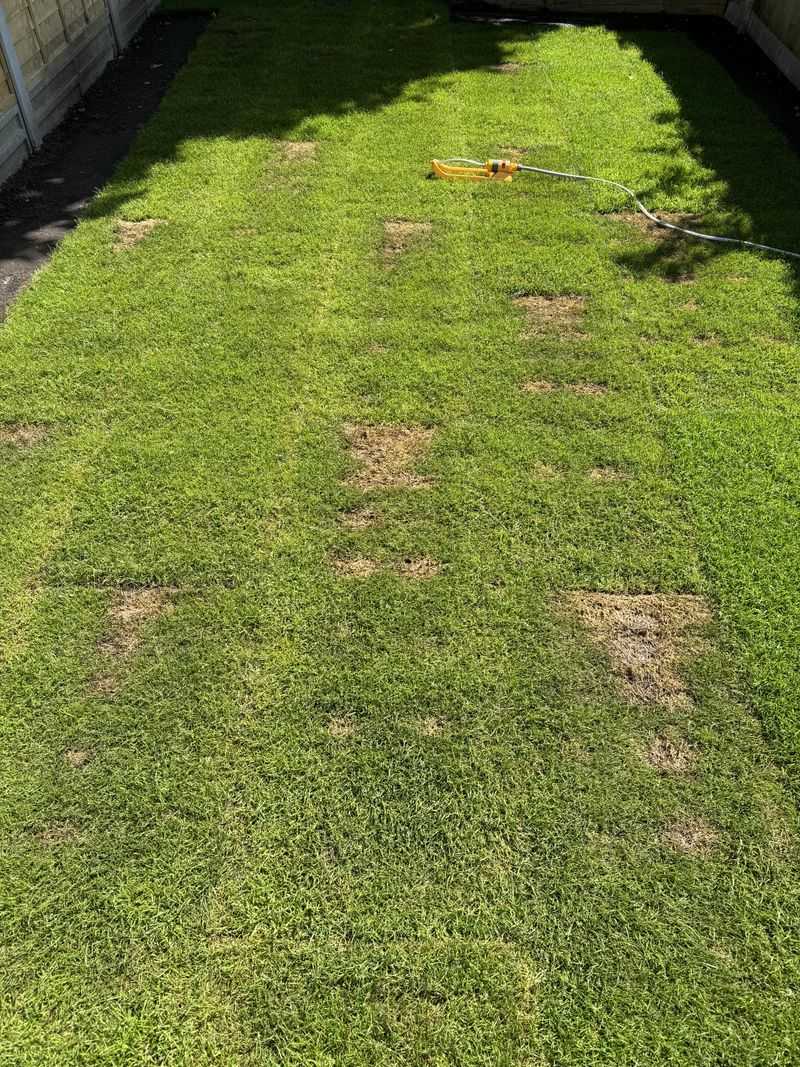
Nothing tests a gardener’s patience like watching the family dog race straight across a freshly seeded patch. Those tiny sprouts are far more fragile than they look.
A single romp, bike ride, or careless footstep can undo days of careful work. Young grass has short, shallow roots that barely grip the soil. Heavy pressure crushes delicate blades and pushes seed deeper than it should go.
Traffic also packs the loosened soil back down, which erases all the effort you put into softening it.
Protecting the area is easier than it sounds. Stake a few garden flags around the patch or run a simple string line to remind everyone to walk around it.
Kids often respond better to a fun sign, like one that reads ‘Grass Growing Zone, Please Tiptoe Around.’
Pets need a bit more planning. A short section of temporary fencing or a portable pet pen can keep curious paws off the spot.
Taking your dog out on a leash for a few weeks also helps guide them to other parts of the yard.
Equipment deserves attention too. Park wheelbarrows, bikes, and lawn chairs elsewhere, and hold off on mowing until the new grass reaches about three to four inches tall. When it is time, use a sharp blade and only trim the top third.
Most repaired spots need roughly four to six weeks before they can handle light use, and full strength often arrives the following spring. Giving the grass that quiet time lets roots spread and knit together into a strong, springy carpet ready for summer fun.
8. Fix What Caused The Brown Spots In The First Place
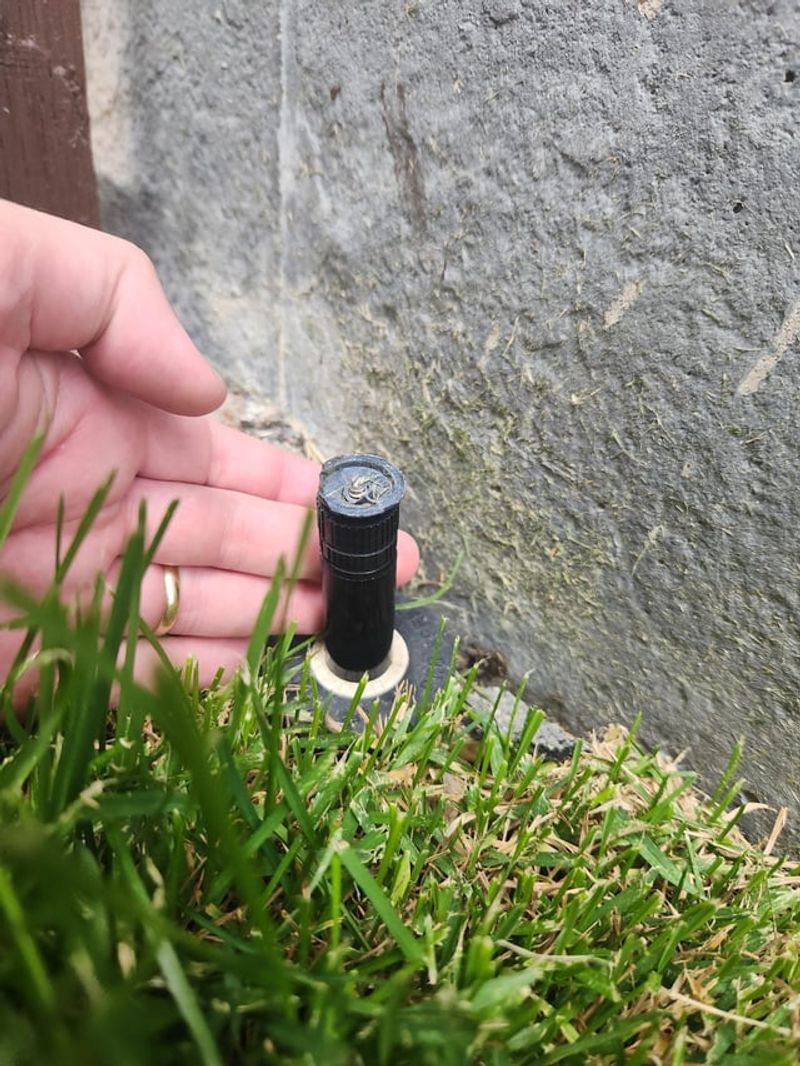
Here is a question worth asking: why did that exact spot brown out while the rest stayed green? Reseeding without an answer is like patching a leaky roof but ignoring the hole. The same patch will likely fade again when the next dry spell hits.
Start with your sprinklers, if you have them. Set a few empty tuna cans or rain gauges around the lawn, run the system for a set time, and compare how much water lands in each.
Dry zones often reveal clogged heads, poor spacing, or spray blocked by shrubs. Soil is the next suspect. Spots near driveways, sidewalks, and foundations tend to heat up and dry out faster, especially if buried gravel or construction debris hides below.
Digging down a few inches can reveal surprises that explain everything. Mowing habits make a huge difference as well. Keeping grass around three to three and a half inches tall shades the soil and supports deeper roots.
Short cuts may look tidy, but they leave turf stressed and thirsty. Watering smart helps too. Most established lawns need about one inch of water per week, including rain, applied in deep, less frequent sessions instead of daily sprinkles.
Early morning watering cuts down on evaporation and disease. Finally, rethink the grass itself in tough areas. Drought-tolerant choices like tall fescue can hold up far better on hot, sunny slopes.
With the root cause handled, your fall repairs can stay green and lush for years. Tackle the cause once, and the whole yard thanks you.