Why Michigan Gardeners Are Pulling Out Their English Ivy And What They’re Covering The Ground With Instead
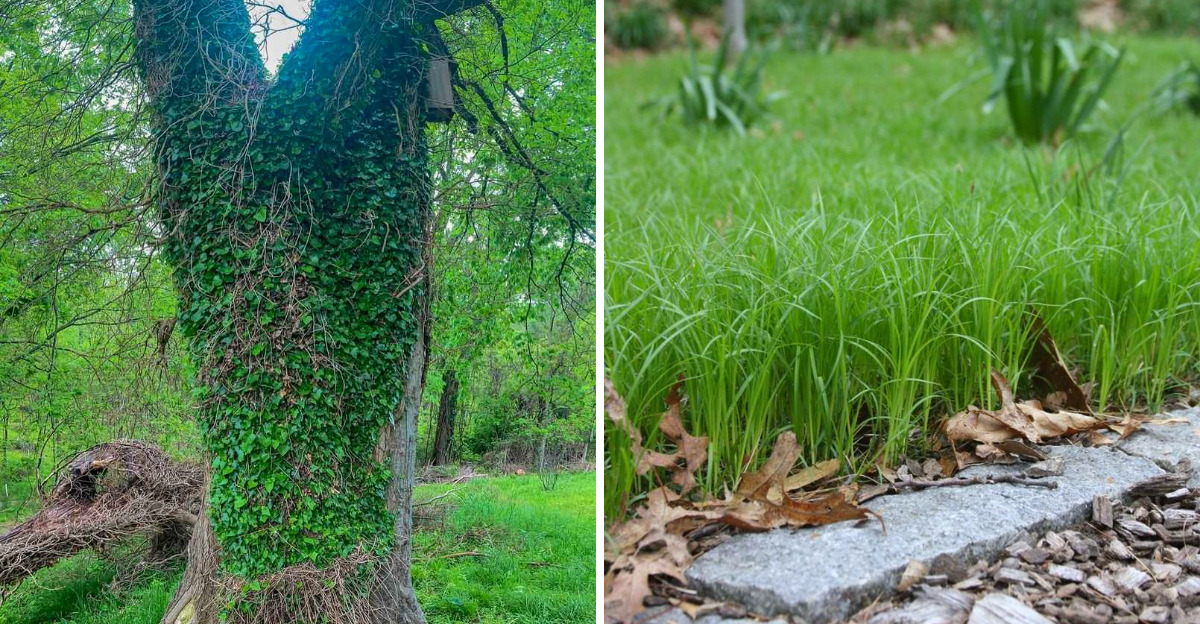
English ivy was supposed to solve the shady bed problem. And for a season or two, it really did look like it was going to work out.
Then it started spreading in directions nobody planned for, rooting as it went, climbing tree trunks, and generally behaving like a plant that did not get the memo about staying in its lane.
Michigan gardeners near wooded areas know this story particularly well.
What started as tidy ground cover has a way of becoming a much larger conversation about removal, replanting, and what should have gone in instead.
Native ground covers are the answer more Michigan gardeners are landing on, and the options are genuinely impressive for shaded spots that need real, lasting coverage without the long-term complications English ivy tends to bring along.
1. English Ivy Can Become A Problem Near Wooded Areas
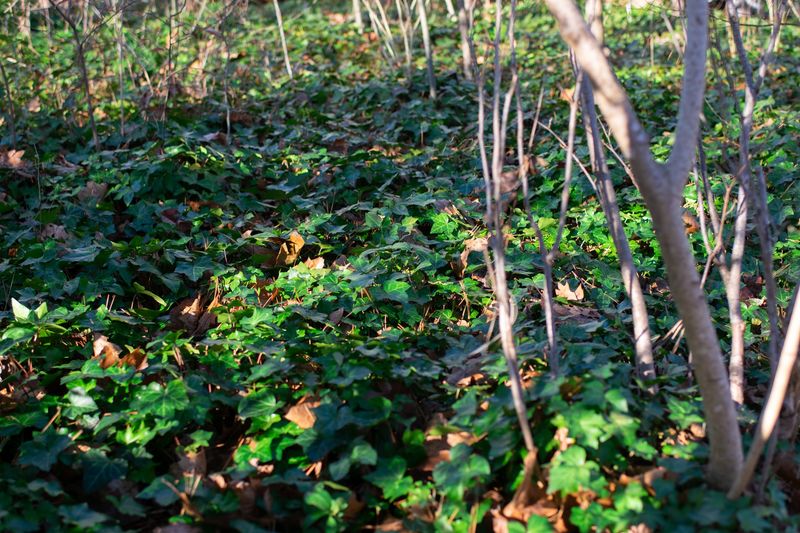
Wooded yard edges in Michigan create a tricky situation for homeowners who planted English ivy years ago thinking it would stay neatly in place. Once established, ivy doesn’t always respect the boundaries of a tidy garden bed.
Near wooded areas, it can gradually move beyond the original planting and spread into the understory, covering ground that might otherwise support native seedlings or low shrubs.
English ivy is a non-native ornamental plant, originally brought from Europe and Asia as a decorative ground cover.
In some Michigan landscapes, especially those bordering natural areas, woodland preserves, or tree-lined ravines, it can become difficult to manage over time.
The plant’s ability to root along its stems as it spreads means a small planting can become a large mat before most homeowners notice.
Not every yard near trees will experience the same level of spread. Soil type, shade level, and how close the bed sits to a natural area all play a role.
Still, Michigan gardeners with properties near wooded edges have good reason to keep an eye on how far their ivy is reaching, and to consider whether a different ground cover might be a more manageable long-term choice for that space.
2. Dense Growth Can Smother Smaller Plants
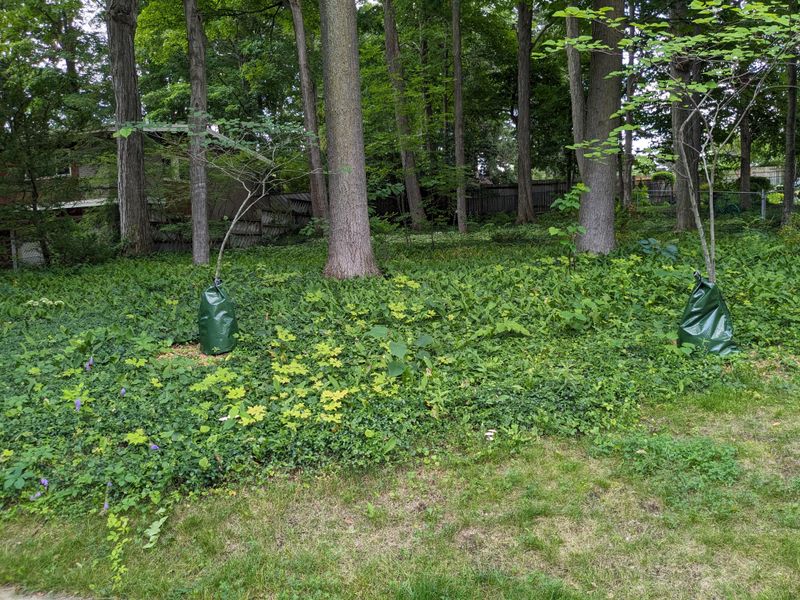
Few things frustrate a Michigan gardener quite like watching a carefully planned mixed bed slowly disappear under a creeping green carpet. English ivy’s dense, layered growth is one of the main reasons gardeners start reconsidering it.
Once the mat thickens, it can block light from reaching the soil surface, making it very hard for smaller perennials, spring bulbs, or seedlings to push through.
Hostas, ferns, and native wildflowers that were once visible in a shaded bed can gradually get crowded out as ivy fills every open inch.
The stems weave together tightly, forming a surface that holds moisture against the soil while also shading out anything trying to grow beneath it.
Over several seasons, a bed that started with variety can end up looking like nothing but ivy.
Removing a thick ivy mat takes real effort. The roots anchor deeply and the stems tangle together, so pulling it out often means multiple rounds of work across more than one season.
Your Michigan Garden Changes Every Week. Your Plan Should Too.
Gardening in Michigan changes quickly throughout the season. Every Friday you’ll receive a simple weekly plan showing exactly what to plant, prune, fertilize, harvest, and protect so you never miss the right timing.
Gardeners who have dealt with this describe it as one of the more stubborn removal jobs in the yard. Knowing this ahead of time helps set realistic expectations for anyone planning to replace their ivy with something new.
3. Climbing Vines Can Move From Ground To Trees
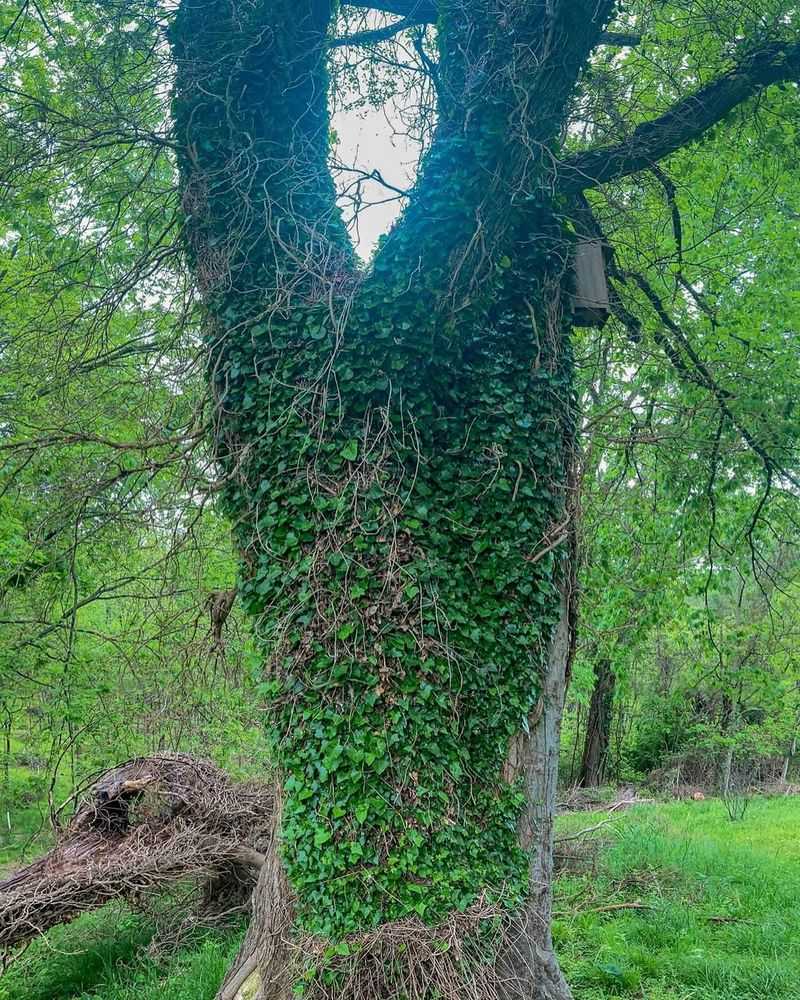
Ground-level ivy doesn’t always stay on the ground. One of the more noticeable things Michigan homeowners discover is that English ivy will eventually find a tree trunk and start climbing.
Once it begins moving upward, it attaches itself to the bark with small rootlike structures and can reach well into the canopy over time.
Ivy climbing a tree doesn’t necessarily cause immediate harm, but it does add weight to branches and can make it harder to spot signs of bark damage or disease on the trunk.
In older trees or trees already under stress from Michigan’s variable winters and wet springs, added vine weight on branches is something worth watching.
The canopy can also become harder to assess when dense foliage covers the lower bark.
Removing ivy from a tree trunk is possible but requires patience. Cutting the stems at the base and allowing the upper portions to dry out before pulling them off is one approach that avoids damaging the bark.
Leaving cut stems attached to the tree while they dry tends to be easier on the bark than pulling live, attached vines. For Michigan gardeners managing older trees in shaded beds, this is a detail that often comes up once removal begins.
4. Shady Beds Can Become Hard To Replant
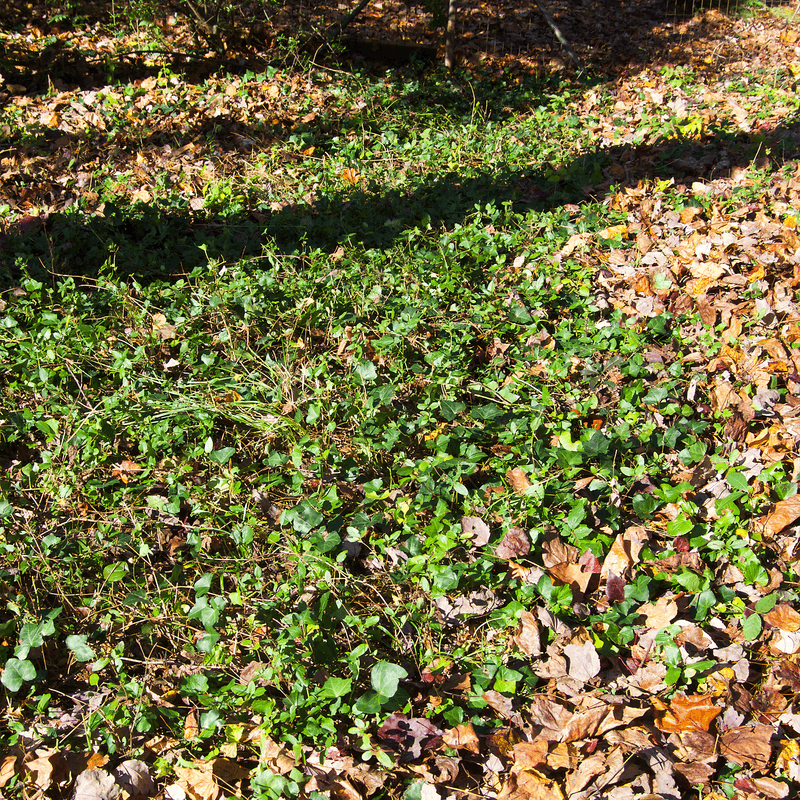
Replacing English ivy sounds straightforward until you’re actually standing in the bed with a shovel.
Dense ivy mats build up over years, and by the time most Michigan gardeners decide to make a change, the roots have woven themselves into the soil in a way that makes clean removal genuinely challenging.
Leftover stem fragments can resprout, which means one round of pulling often isn’t enough.
Shaded beds under large trees add another layer of difficulty. Tree roots compete for space and moisture, and the soil under a mature canopy is often compacted, dry in summer, and slow to warm in spring.
Even after ivy is cleared, getting new plants established in those conditions takes more care than planting in an open sunny bed.
Timing matters too. Many Michigan gardeners find that starting ivy removal in early spring, before new growth kicks in, gives them a head start.
Following up through the season to pull any regrowth keeps the bed from slipping back. Amending the soil lightly and choosing new plants that are genuinely suited to dry or moderately moist shade helps set the replacement planting up for success.
Patience is really the most useful tool in this process.
5. Wild Ginger Creates A Leafy Shade Carpet
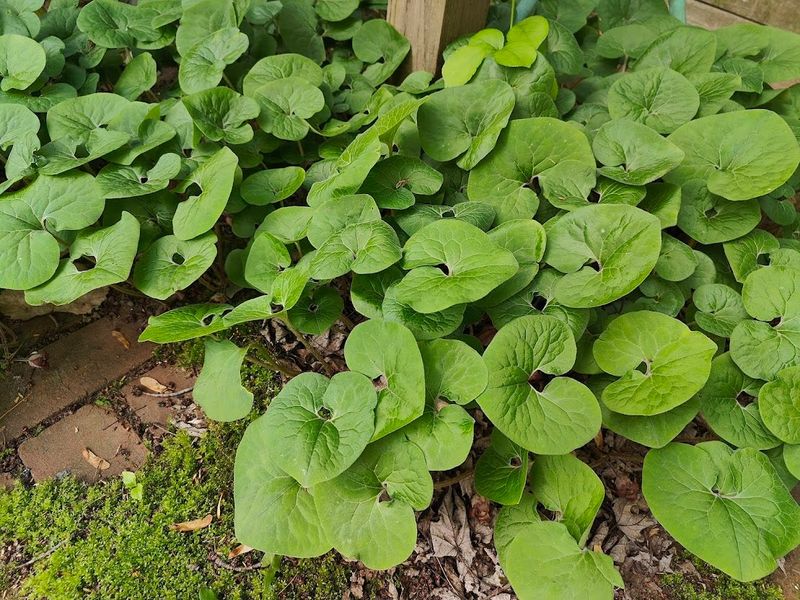
Asarum canadense, commonly called wild ginger, is one of those plants that quietly wins over Michigan gardeners once they see it growing in the right spot.
The broad, heart-shaped leaves overlap and spread at a low height, creating a lush carpet effect that works beautifully under trees and along shaded foundation edges.
It has a soft, woodland quality that feels right at home in a Michigan landscape.
Wild ginger spreads gradually by underground rhizomes rather than fast-running stems or seeds, which means it fills in over time without taking over aggressively.
It’s well-suited to moist, rich woodland soil but can also manage in moderately dry shade once it’s established.
In Michigan, it naturally grows in wooded areas, so it tends to fit well in yards with tree canopies, shaded slopes, or naturalized garden borders.
The plant stays low, typically just a few inches tall, and the leaves hold their color through the growing season before going dormant in fall.
It won’t provide the same year-round green as English ivy, but for gardeners who want a native option with a lush summer look and minimal fuss, wild ginger is worth serious consideration.
It pairs well with ferns and other shade-tolerant natives in mixed woodland beds.
6. Pennsylvania Sedge Softens Dry Shady Ground
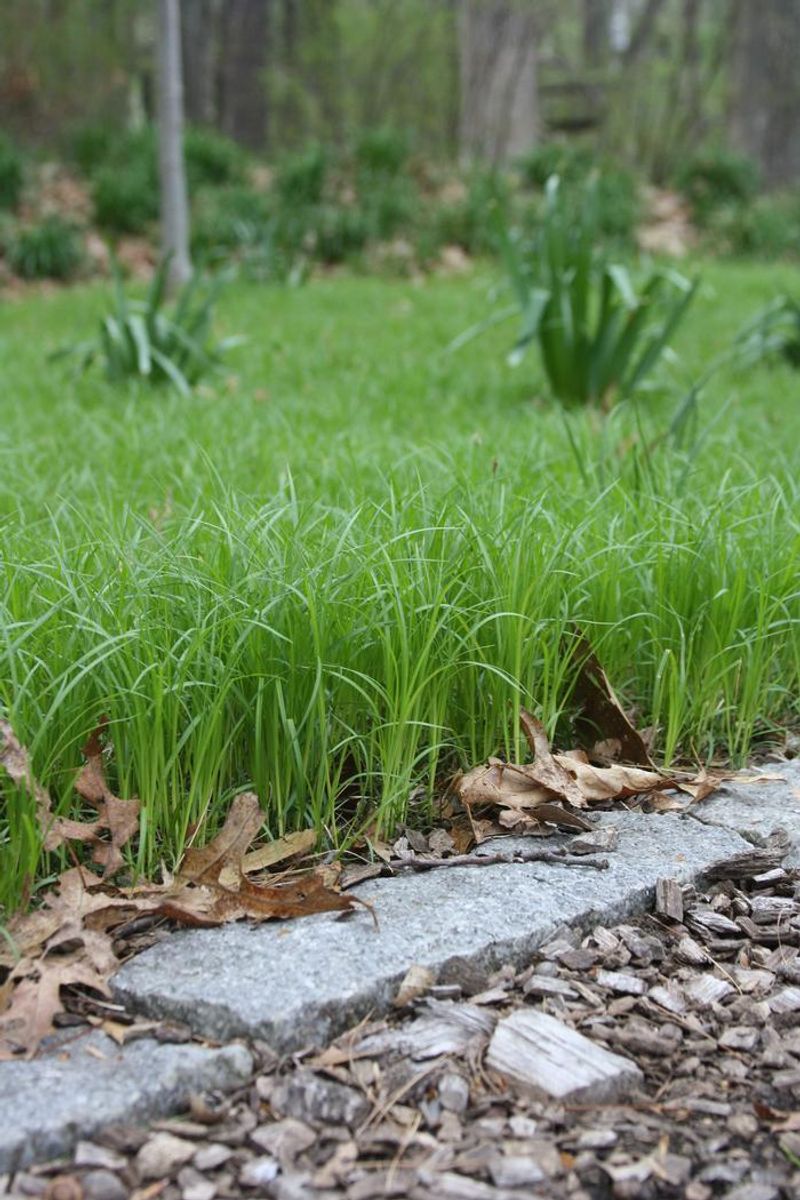
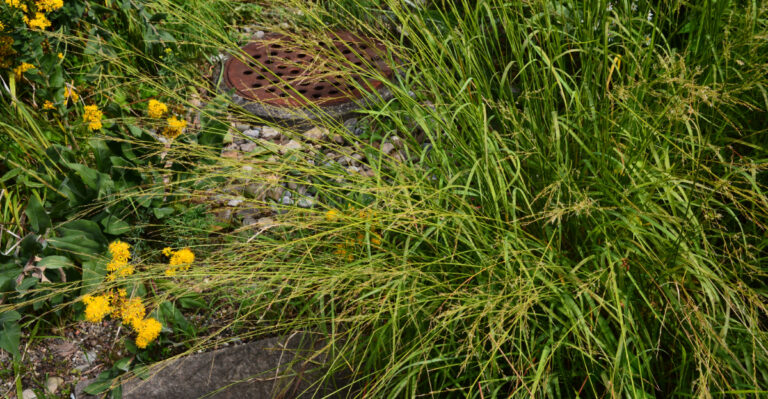
Carex pensylvanica, known as Pennsylvania sedge, has become one of the more talked-about native ground covers among Michigan gardeners dealing with dry shade. It forms low, fine-textured clumps that gradually knit together into a soft, grass-like carpet.
The arching foliage has an easygoing, natural look that suits informal garden spaces, tree beds, and shaded side yards where a manicured appearance isn’t the priority.
Dry shade is one of the toughest conditions in a Michigan yard, especially under shallow-rooted trees like maples where the soil dries out quickly and competes heavily with other plants.
Pennsylvania sedge handles these conditions better than most ground covers.
Once established, it doesn’t need regular watering or heavy maintenance, which makes it a realistic option for spots that are genuinely difficult to keep irrigated.
It spreads slowly by short rhizomes, so it fills in gradually rather than taking over quickly. For gardeners replacing ivy in a large area, this means patience is needed during the first couple of seasons while the sedge establishes itself.
Planting at closer spacing can help speed up coverage. Pennsylvania sedge also stays semi-evergreen in Michigan, holding some color through milder winters and greening up again reliably each spring.
7. Foamflower Brightens Moist Woodland Edges
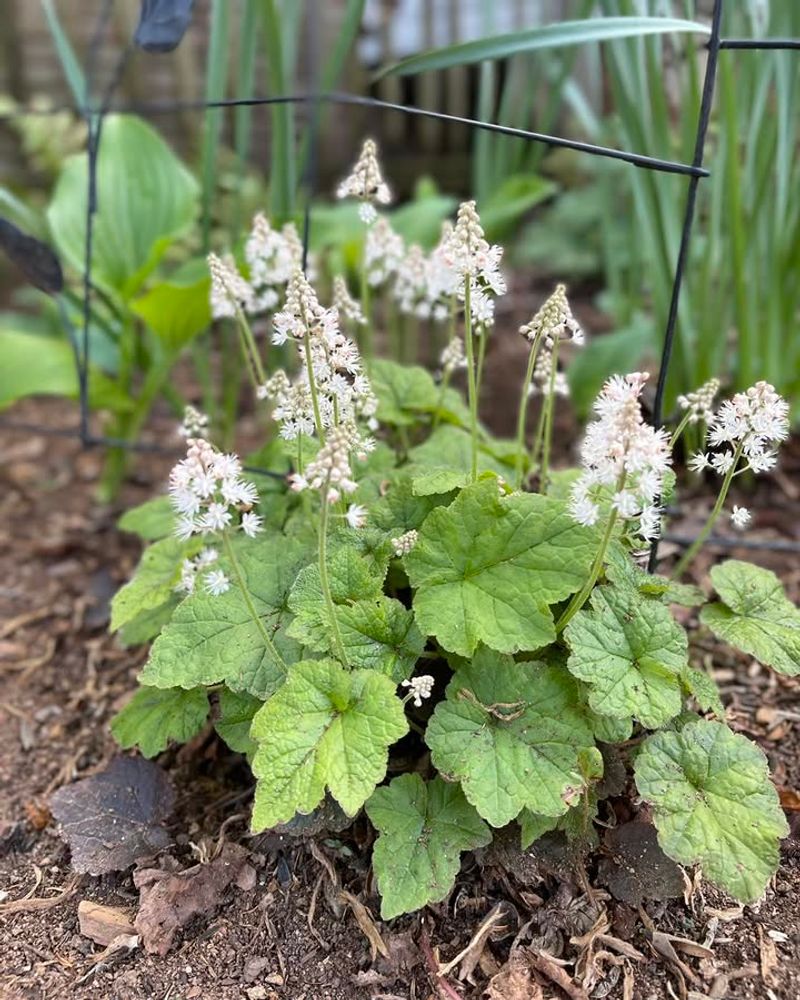
Spring in a Michigan woodland garden gets noticeably more interesting with foamflower in the mix. Tiarella cordifolia sends up airy spikes of small white to pale pink flowers in mid-spring, creating a soft, frothy effect that earned it the name foamflower.
The blooms rise above a low mat of lobed, slightly fuzzy leaves that stay attractive through the growing season even after flowering is done.
Foamflower fits best in moist, humus-rich soil with consistent shade. It’s a natural fit along stream edges, low-lying shaded beds, or anywhere in a Michigan yard where moisture tends to linger.
It spreads by stolons, forming a gradually expanding colony that fills in shaded areas with a layered, woodland feel. It doesn’t spread aggressively, but it does establish well in the right conditions.
One thing that makes foamflower appealing as an ivy replacement is that it brings seasonal interest beyond just coverage.
The spring bloom adds color at a time when shaded beds can feel dull, and some varieties offer interesting leaf markings that add texture through summer.
It works well alongside wild ginger, ferns, and native violets in moist shaded beds. For Michigan gardeners rebuilding a shaded area near a low spot or water feature, foamflower is a rewarding choice.
8. Wild Strawberry Fills Brighter Shade Gaps
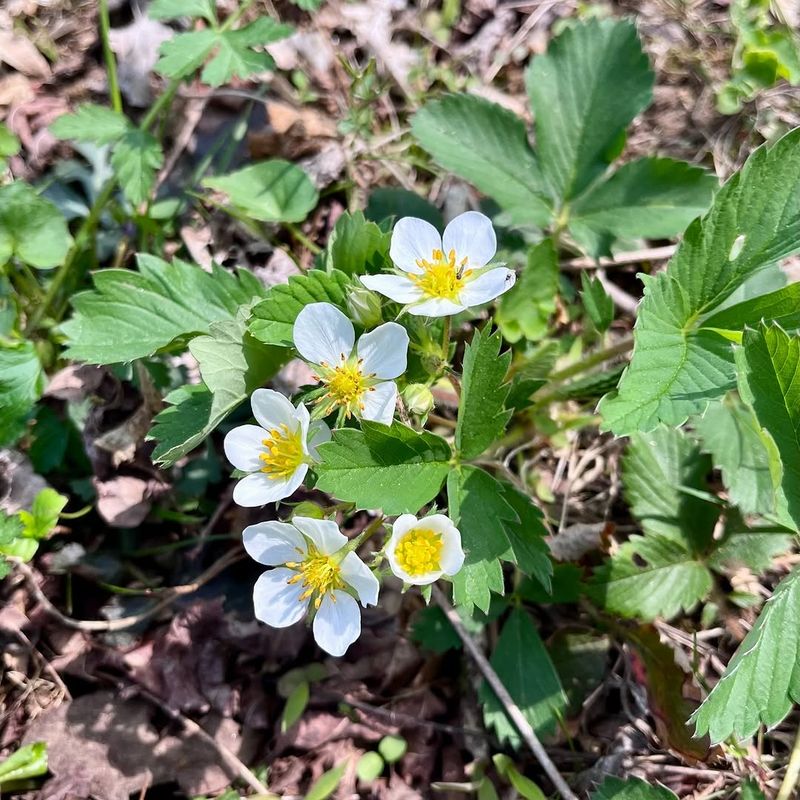
Fragaria virginiana, the wild strawberry, brings a cheerful energy to shaded garden edges that most ground covers simply can’t match. Small white flowers appear in spring, followed by tiny red fruits that attract birds and other wildlife through summer.
The bright green, trifoliate leaves stay low and spread by runners, making it a natural fit for filling gaps in spots that get shifting light rather than deep, consistent shade.
Wild strawberry works best in areas with dappled or brighter shade, such as the outer edges of a tree canopy, open woodland borders, or spots where the sun reaches the ground for part of the day.
It’s less suited to the deep, dense shade directly under a large canopy.
Michigan gardeners often find it thriving along the transition zone between a sunny lawn and a shaded bed, where it can fill in naturally without much encouragement.
The spreading habit is fairly easy to manage compared to English ivy. Runners can be redirected or trimmed back if they move beyond the intended area.
For gardeners who want a ground cover that does more than just cover the ground, wild strawberry adds wildlife value, seasonal color, and a relaxed cottage feel to informal Michigan garden spaces. It pairs nicely with native violets and low ferns.
9. Barren Strawberry Covers Open Woodland Edges
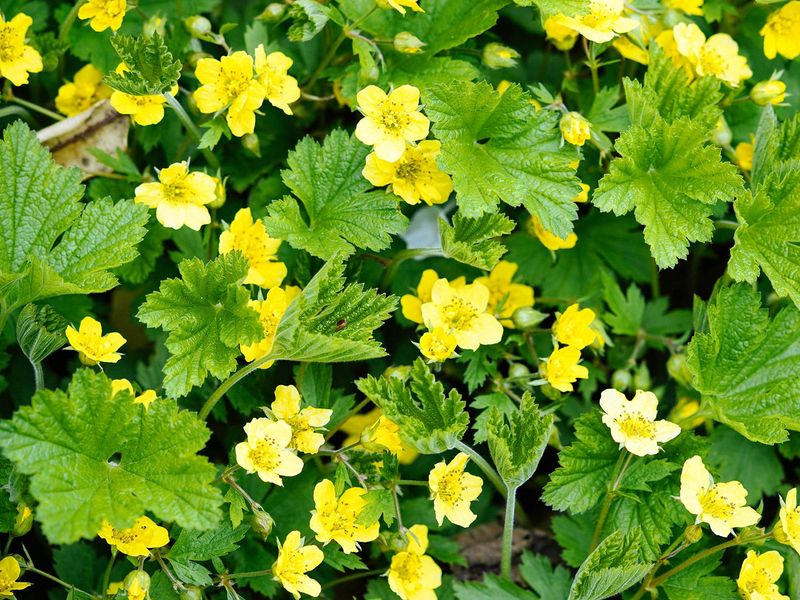
Waldsteinia fragarioides, called barren strawberry, looks enough like wild strawberry to cause a moment of confusion but behaves quite differently in the garden.
Instead of edible fruit, it produces small yellow flowers in spring and holds its shiny, semi-evergreen leaves through much of the year.
The foliage forms a dense, low mat that gives it a tidy appearance suited to more structured garden spaces as well as naturalized edges.
Open woodland edges and spots with partial shade are where barren strawberry tends to perform best in Michigan. It handles a range of soil conditions reasonably well and is more tolerant of dry soil than some other native woodland ground covers.
This flexibility makes it useful in spots where conditions shift between seasons or where tree roots make consistent moisture hard to maintain.
The semi-evergreen quality is a genuine advantage for Michigan gardeners who want some visual interest through late fall and into early winter.
It won’t look as full in January as English ivy does, but it holds on longer than many perennial ground covers before going dormant for winter.
For yards with open shade, mixed tree canopies, or sloped woodland edges where coverage and low maintenance are both priorities, barren strawberry is a practical and attractive native option worth considering.
10. Virginia Waterleaf Works In Moist Naturalized Shade
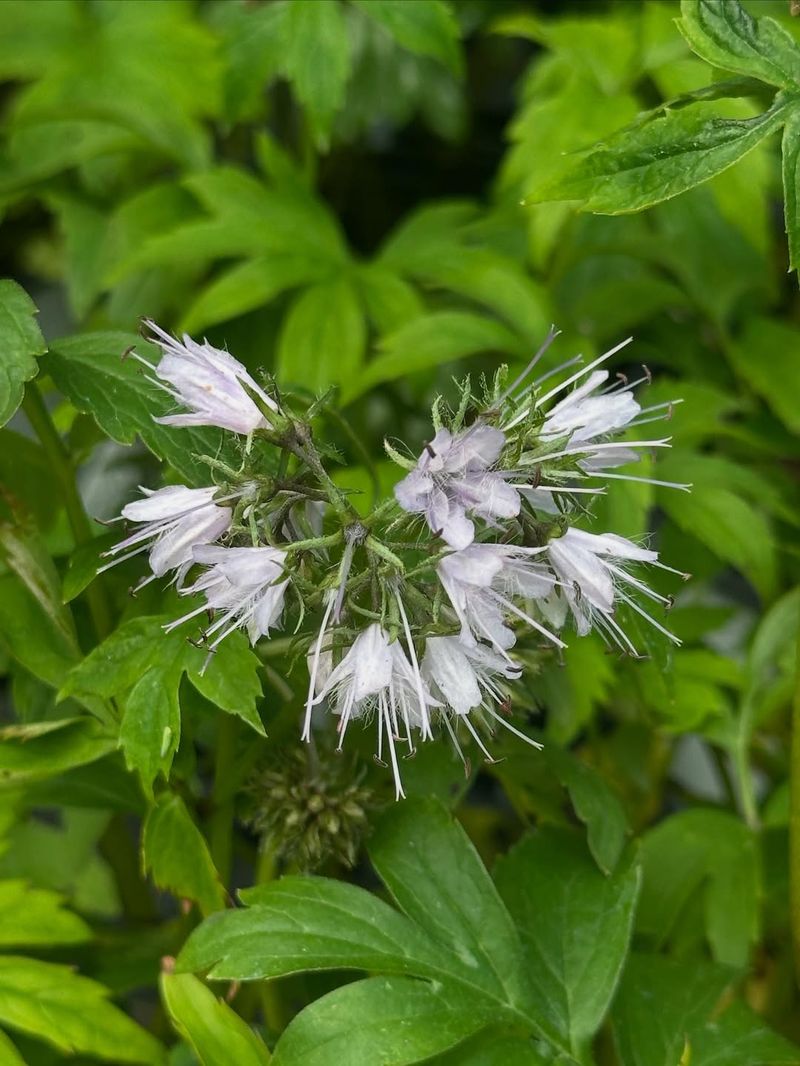
Hydrophyllum virginianum, known as Virginia waterleaf, is a native plant that genuinely thrives in the kind of moist, deeply shaded conditions that challenge most ground covers.
The leaves are broadly lobed and have a distinctive mottled look early in the season that gives the plant an interesting texture.
Pale lavender to white flower clusters appear in late spring, adding subtle color before summer foliage takes over.
Virginia waterleaf spreads by rhizomes and self-seeding in favorable spots, which means it can fill in a naturalized area over time without requiring much intervention. It’s best suited to informal, naturalized garden spaces rather than tightly managed beds.
Michigan yards with moist low areas, shaded ravines, or naturalized back borders near wooded edges tend to be the settings where it does well and looks most at home.
One thing to keep in mind is that Virginia waterleaf goes dormant by midsummer in drier conditions, which can leave gaps in the planting.
Pairing it with other native shade plants that hold their foliage longer, such as ferns or wild ginger, helps maintain coverage through the season.
For gardeners willing to embrace a more naturalistic planting style, Virginia waterleaf adds ecological value and a genuine sense of place to moist Michigan shade gardens.