Don’t Take Down Your Florida Hummingbird Feeder Just Because Summer Is Ending
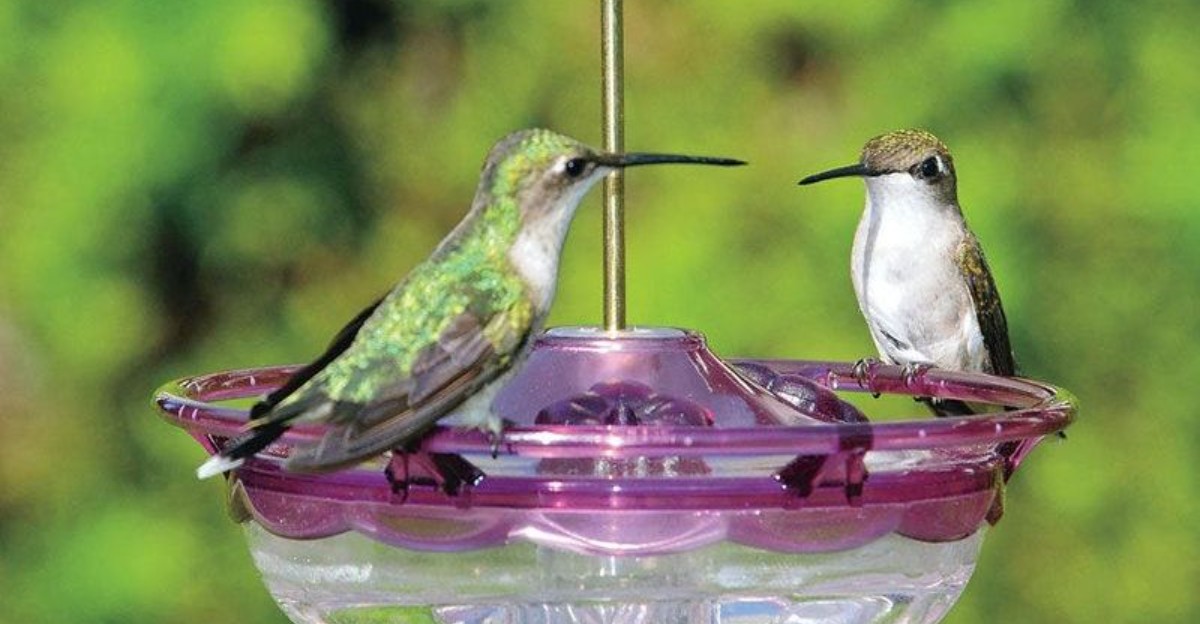
Pack away that hummingbird feeder because summer’s winding down, and you might be shutting the door on visitors who haven’t even shown up yet.
Florida sits on a migration route that keeps hummingbirds passing through well past when other states see them disappear for the season.
Homeowners who take feeders down out of habit end up missing an entire wave of birds relying on that stop to refuel before continuing south.
Timing your feeder removal by the calendar instead of by what’s actually happening in your yard costs these birds a resource they’re counting on, sometimes at the exact moment they need it most.
Leave that feeder up a while longer this year. What shows up next might be the reason you’re glad you didn’t put it away early.
1. Keep Feeders Up As Ruby-Throated Hummingbirds Move Through
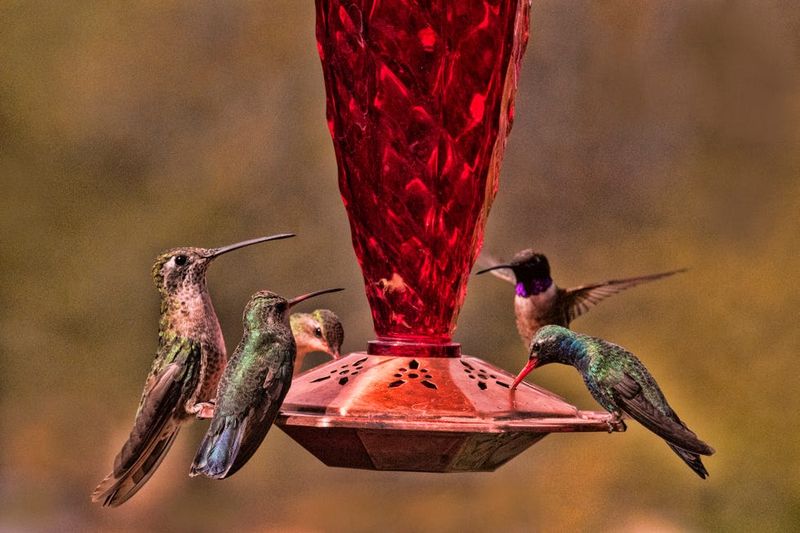
Last September, a neighbor of mine counted six ruby-throats fighting over one feeder before breakfast. She had planned to store it that week, and she was glad she waited.
Ruby-throated hummingbirds start heading south in August and September. Many pass through the state during September and October, stopping to rest and eat before the long trip ahead.
Some birds fly straight across the Gulf of Mexico, while others take a land route through Texas and Mexico. Either way, they need plenty of fuel before they leave the coast.
Our state also has a special twist on this story. In South Florida and the Keys, some ruby-throats stay through the winter, and their numbers climb each fall until they peak in October.
Taking your feeder down too early means these travelers lose an easy, reliable meal right when it matters most. A single feeder can serve dozens of passing birds over a few busy weeks.
Keep it filled with a simple mix of one part white sugar to four parts water. Skip the red dye, since the feeder itself gives plenty of color to catch their eye.
Think of your yard as a friendly gas station on a busy highway. The more stations along the route, the better the odds these tiny pilots reach their winter homes safe and strong.
2. September Can Bring New Migrants To Florida Yards
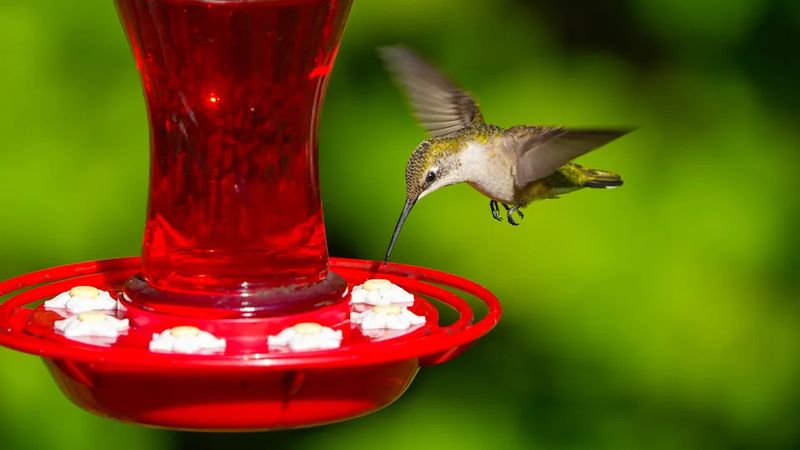
Surprise guests are part of the fun of fall feeding. You might look out the window one morning and spot a bird that does not match anything you saw all summer.
Our state is a winter stop for a few western species that wander far from home. Rufous, Black-chinned, and Buff-bellied hummingbirds show up regularly, especially in the Panhandle.
Birders often call these visitors western rarities, and they cause a lot of excitement. Most appear at North Florida feeders between November and February, so the season stretches longer than many people expect.
Rufous hummingbirds are easy to notice because of their rusty orange color. They are also famous for being feisty and chasing other birds, even bigger ones, away from the best feeding spots.
Meanwhile, South Florida sees its busiest ruby-throat activity in October. Many of those birds settle in, claim a favorite perch, and stick around through the cooler months.
Your Florida Garden Changes Every Week. Your Plan Should Too.
Gardening in Florida changes quickly throughout the season. Every Friday you’ll receive a simple weekly plan showing exactly what to plant, prune, fertilize, harvest, and protect so you never miss the right timing.
Keeping a feeder up gives you a real chance to meet one of these unusual travelers. Snap a photo if you can, since it helps you and local experts identify the species.
Fun fact: a Rufous hummingbird can travel close to 4,000 miles on its yearly journey. For its tiny body size, that is one of the longest migrations of any bird.
3. Change Nectar Before It Starts Spoiling
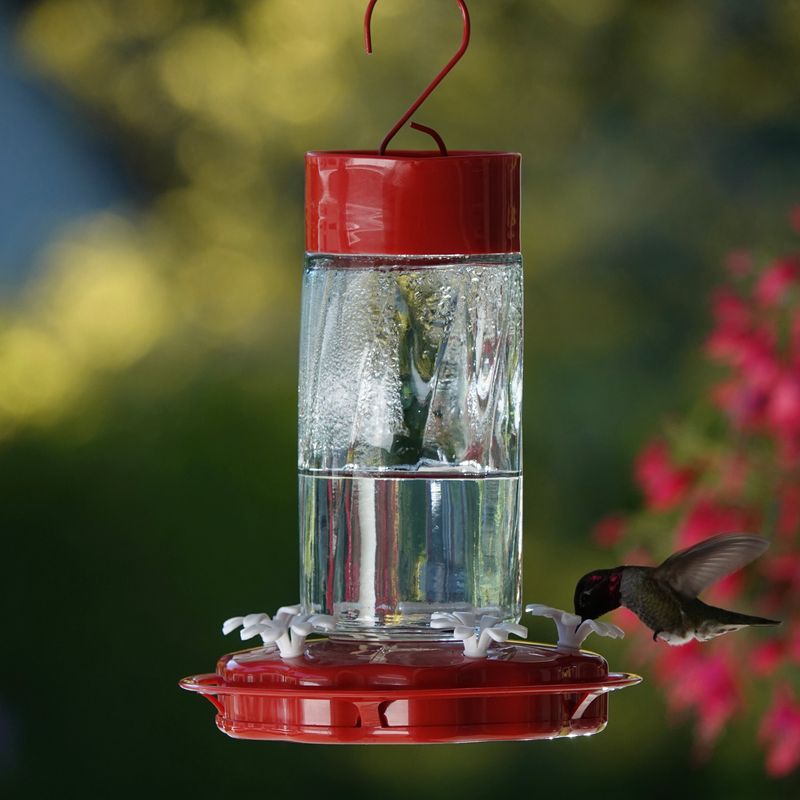
You would not drink milk that sat on the counter all afternoon, and hummingbirds feel the same about old nectar. Florida heat in September can turn sweet water sour faster than you might think.
In mild weather, swap the nectar every two to three days. Once temperatures reach 90 degrees or higher, change it every day or two, and daily during a true heat wave.
Warm temperatures speed up fermentation and help mold grow. Spoiled nectar can make birds sick and may lead to a fungal infection that causes their tongues to swell.
A swollen tongue makes feeding very hard for a bird that needs to eat many times an hour. That is why fresh nectar matters so much during migration season.
Learn the warning signs so you can act fast. Watch for cloudy liquid, a yellow or darker tint, black spots near the ports, or white stringy bits floating inside.
A sour or yeasty smell is another clue that something went wrong. If birds start skipping your feeder, that is often their way of telling you the nectar has turned.
Here is a handy trick for busy families. Fill the feeder only halfway during hot spells, so you waste less sugar when it is time for a fresh batch.
4. Keep Feeders Shaded During Hot September Days
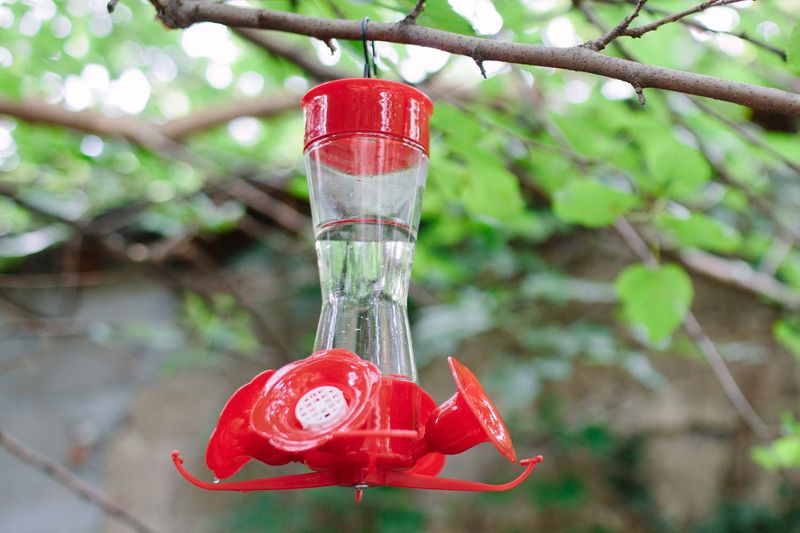
Florida sunshine is great for beach days, but it is rough on a feeder full of sugar water. Direct sun can heat nectar so quickly that it spoils within a few hours.
Moving your feeder into the shade is one of the easiest fixes around. Cooler nectar ferments more slowly, which means fresher food for the birds and fewer refills for you.
The sweet spot is a place that gets morning light but stays shaded during the hottest part of the day. Aim for cover from about noon until 4 p.m.
Look for the east side of your house, a spot under a tree branch, or a covered porch edge. Just make sure birds can still see the feeder from the air.
Color matters too, and it is an easy detail to overlook. A light-colored feeder soaks up less heat than a dark one, so it helps keep the liquid inside a bit cooler.
Some bird lovers clip a small umbrella or a feeder shade dome above the nectar. These little covers block harsh rays and also help keep rain from watering down the mix.
If your only good viewing spot sits in full sun, plan on daily nectar changes. During heat waves, you may need to check it twice a day, especially in the late afternoon.
5. Clean Ports Before Mold Takes Hold
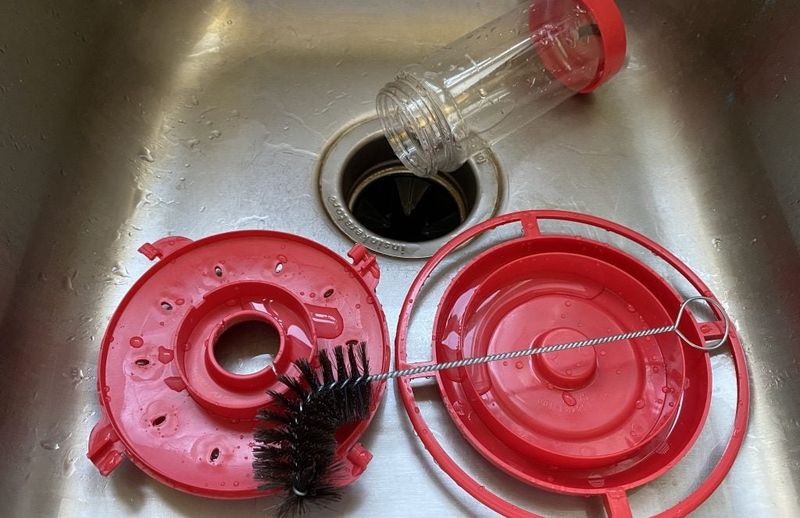
Mold is sneaky, and feeder ports are its favorite hiding place. Those tiny holes stay sticky and damp, which makes them perfect little homes for black gunk and bacteria.
Clean your feeder every single time you change the nectar. Take it fully apart, because mold loves to tuck itself into seams, cracks, and the underside of flower-shaped ports.
For regular cleaning, hot water and a bottle brush do the job well. A small pipe cleaner or thin port brush, sold at most garden centers, helps you reach inside each opening.
Spot visible mold? Soak the parts for one to two hours in a mix of one part white vinegar to two to four parts water.
Another choice is 3 percent hydrogen peroxide for 10 to 30 minutes. After soaking, scrub every surface and rinse with plenty of clean water.
Some people prefer a weak bleach solution of one part bleach to nine parts water. If you go that route, rinse thoroughly and let everything air dry before refilling.
One safety rule matters more than the rest. Do not mix bleach and vinegar, since together they can release harmful fumes that irritate your lungs.
Mild, unscented dish soap is fine for some feeders if you rinse carefully. A spotless feeder keeps birds healthy, happy, and coming back for more.
6. Add Firebush For Natural Fall Nectar
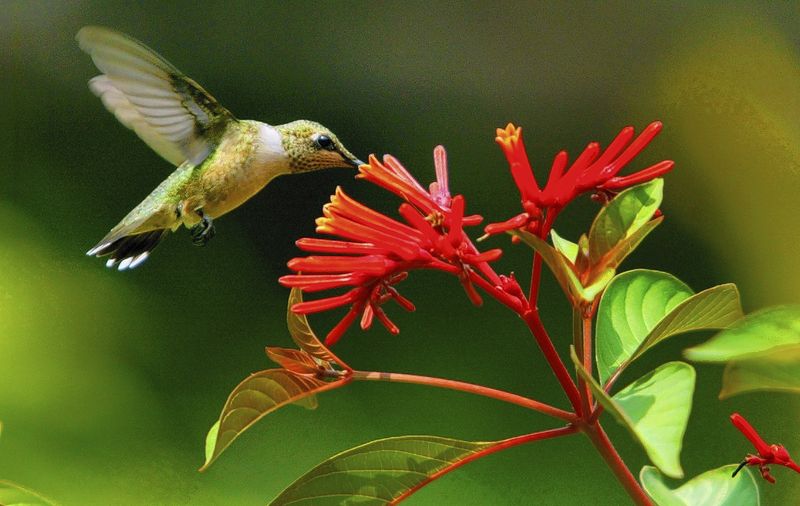
Imagine a shrub that looks like it caught on fire in the best possible way. Firebush, known to scientists as Hamelia patens, glows with clusters of red and orange tubular flowers.
This plant is a true native, so it already knows how to handle local weather. It blooms from spring through fall, and in warmer parts of the state it can flower all year.
Hummingbirds adore those long, skinny blooms because their beaks fit right inside. Butterflies love firebush too, so you get a double show in your garden.
Planting it takes very little fuss. Firebush grows in full sun or partial shade and handles heat and dry spells like a champ.
Put it near a window or patio so you can enjoy the action up close. Placing it a short distance from your feeder also gives birds a natural backup menu.
Real flowers offer something a feeder cannot, since blooms attract tiny insects that hummingbirds eat for protein. Migrating birds need that protein as much as they need sugar.
Skip pesticides around firebush so those helpful bugs stay put. Your birds will thank you with more visits and flashy aerial tricks.
In North Florida, a cold snap may knock the plant back to the ground. Most of the time it sprouts again in spring, bigger and bolder than before.
7. Coral Honeysuckle Gives Passing Hummingbirds Another Food Source
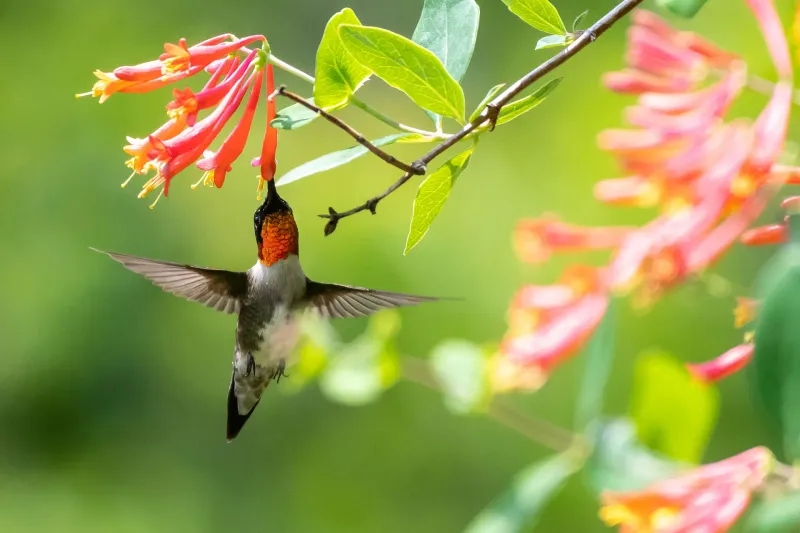
Every garden needs at least one polite climber, and coral honeysuckle fits that role nicely. Its scientific name is Lonicera sempervirens, and it is a Florida native with lovely manners.
Unlike Japanese honeysuckle, which spreads wildly and chokes out other plants, this vine stays well-behaved. You get beauty without the headache of it taking over your whole yard.
Its coral and orange-red tubular flowers are shaped just right for a hummingbird beak. In warm weather, the vine can bloom through much of the year.
Coral honeysuckle is evergreen, so it keeps its leaves when many plants look bare. It grows happily in sun or partial shade.
The flowers do not have a strong scent, and that surprises some gardeners. Hummingbirds do not mind one bit, since they find food by sight and the nectar is plenty sweet.
Train it up a trellis, fence, or mailbox post for an easy vertical display. A vine near your feeder creates a mini food court for birds passing through.
Pair it with firebush and you cover more of the year with natural nectar. Passing hummingbirds get variety, and you get more chances to watch them feed.
After blooming, the vine often forms small red berries. Songbirds like to snack on them, so the plant keeps giving long after the flowers fade.
8. Watch For Hummingbirds Refueling Before Migration
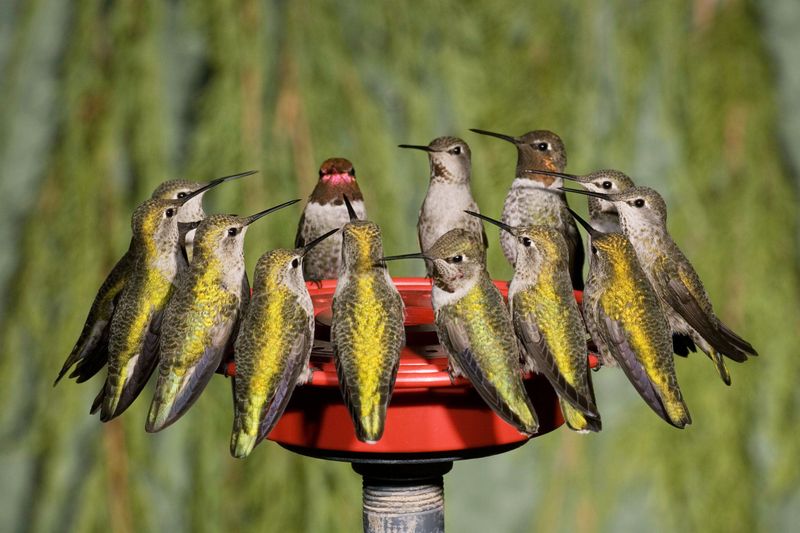
Five hundred miles, nonstop, over open water. That is the trip many ruby-throated hummingbirds make across the Gulf of Mexico, and it can take 18 to 22 hours.
To pull off that amazing flight, these birds go into an eating frenzy called hyperphagia. It sounds like a big science word, but it simply means eating much more than usual.
During this time, a hummingbird can boost its body weight by 25 to 40 percent. Some even double their weight before leaving, packing on fat as fuel.
That fat works like a battery pack for the long journey. Without it, a small bird would run out of energy far from land.
You may notice more activity at your feeder in early morning and late afternoon. Migrating hummingbirds often eat at dawn, travel during midday, and feed again before sunset.
Grab a chair and a cold drink and watch for a while. You might see birds visiting every few minutes, looking a little chubbier than they did in July.
Your feeder acts as a refueling station during this critical stretch. Keeping it fresh and full gives these tiny athletes a better shot at a safe crossing.
Try keeping a simple journal of visit times and bird counts. Kids love this project, and it turns backyard watching into real science.
9. Leave Feeders Ready For Late-Season Visitors
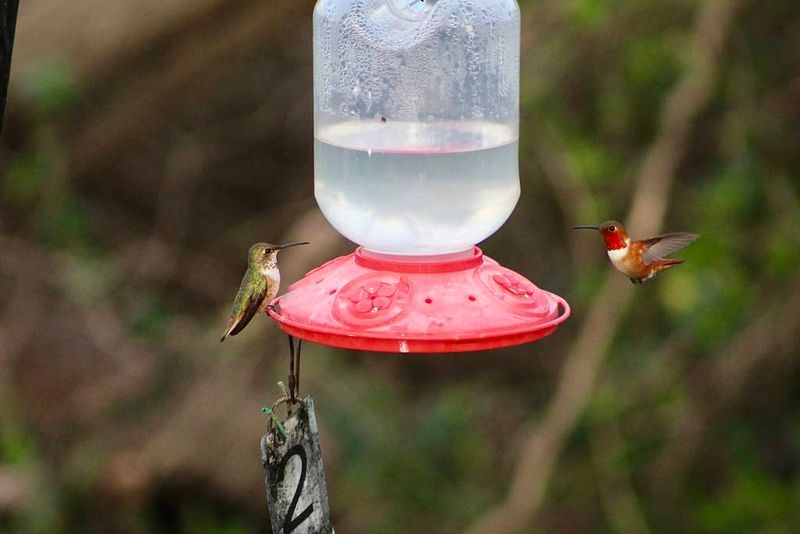
Patience pays off for Florida bird watchers. Just when you think the season is over, a late traveler may zip in for a quick sip.
Florida’s nesting ruby-throats start leaving in late August, while migrants from farther north keep passing through, and most are gone by late October. Stragglers still show up, so keep feeders available at least through October.
Your location in the state makes a big difference. In Central region, many experts suggest keeping a feeder up all year long.
South Florida has a year-round group of ruby-throats, and its busiest season runs from October through April. Feeders there stay useful for months after summer ends.
North Florida and the Panhandle offer a different kind of reward. Rufous, Black-chinned, and Buff-bellied hummingbirds visit from November through February, so a winter feeder could attract a rare guest.
Keeping a feeder ready during cooler months takes less work than in summer. Nectar lasts longer when temperatures drop, so weekly changes often work fine in chilly weather.
On rare frosty nights, bring the feeder inside and hang it back out at dawn. Early morning is when hungry birds look for their first meal of the day.
A little effort now can lead to a surprise visit later. That flash of color on a gray winter morning makes the whole wait worth it.