The Fastest-Filling Arizona Native Groundcovers to Plant This Fall Before Winter Rains
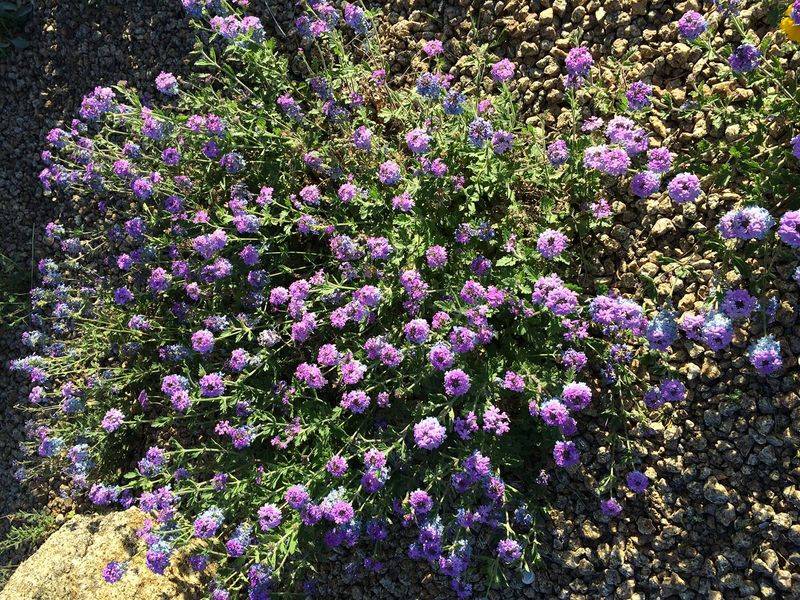
Bare dirt in an Arizona yard bakes all summer, blows around in dust storms, and does nothing for birds or bees. The good news is that fall is the best time to fix it, because cool weather and winter rains help new plants grow strong roots before the heat comes back.
The native groundcovers below spread fast, sip very little water, and bring pollinators and birds to your yard. Plant them in October or November, and you could have a full, colorful carpet by spring.
1. Lemon Dalea
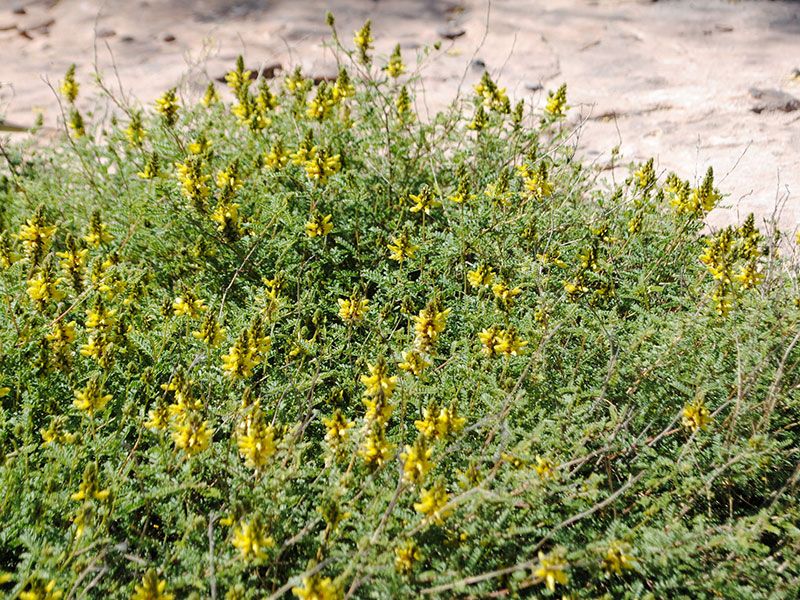
Brush your hand across a patch of lemon dalea and you will catch a bright citrus scent that clings to your fingers. That smell is more than a fun bonus, since rabbits tend to steer clear of the aromatic leaves.
For desert yards where bunnies mow down every new planting, that alone earns it a top spot.
Speed is where this plant really shines. A single one-gallon plant can reach about 8 inches tall and 3 feet wide in a short time, knitting into a soft, fine-textured mat of light green.
The Sierra Gold selection is the one you will spot most often at Phoenix and Tucson nurseries.
It handles reflected heat off driveways, block walls, and gravel without sulking. Water deeply every week or two through the first winter and spring, then cut back to occasional summer drinks once roots settle in.
Low to moderate water needs keep your bill in check.
Small yellow pea-shaped flowers pop in spring and again in fall, pulling in bees and butterflies when little else is blooming. Give it a light trim in late winter to keep it tidy.
Plant it a few feet from your foundation so the dense foliage does not give scorpions a shady hideout near the house.
2. Blackfoot Daisy
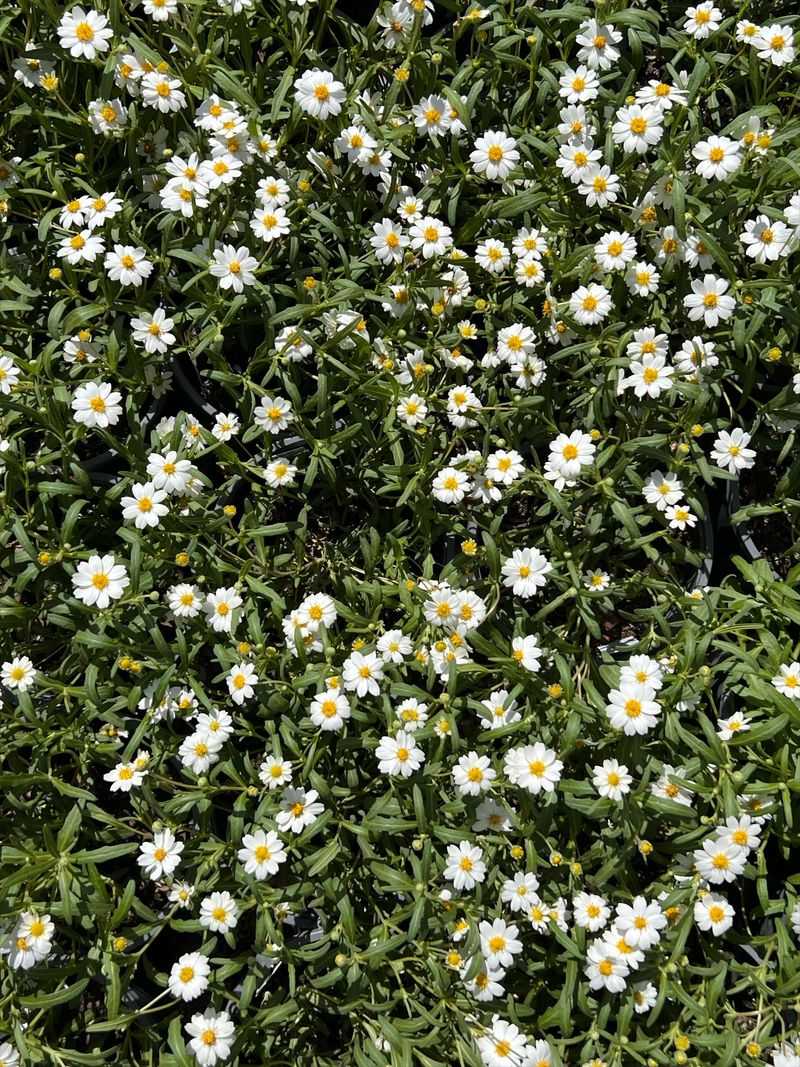
Some plants demand attention. Blackfoot daisy just quietly covers rocky ground in a haze of white flowers and asks for almost nothing in return.
Picture a low mound 6 to 12 inches tall and up to 2 feet wide, dotted with honey-scented white petals around sunny yellow centers. Blooms can show up from early spring into mid-fall, with the heaviest flushes in spring and autumn.
Bees, butterflies, and small birds all make regular visits.
Its secret is loving the conditions most plants hate. Lean, rocky, fast-draining soil and full sun are exactly what it wants, which makes it a natural fit for decomposed granite yards across the Valley.
Rich soil and too much water are the fastest way to lose one, so skip the fertilizer and resist overwatering.
Fall planting gives roots months of mild weather to dig deep before June heat arrives. Water every week or so through winter if rains are light, then taper off.
After that, rainfall plus an occasional summer soak is usually plenty.
Care is refreshingly simple. You do not need to snip off spent flowers, and a light shearing every year or two keeps plants compact.
Tuck several along a path edge or between boulders for a tidy, bright border that stays low.
Your Arizona Garden Changes Every Week. Your Plan Should Too.
Gardening in Arizona changes quickly throughout the season. Every Friday you’ll receive a simple weekly plan showing exactly what to plant, prune, fertilize, harvest, and protect so you never miss the right timing.
3. Goodding’s Verbena
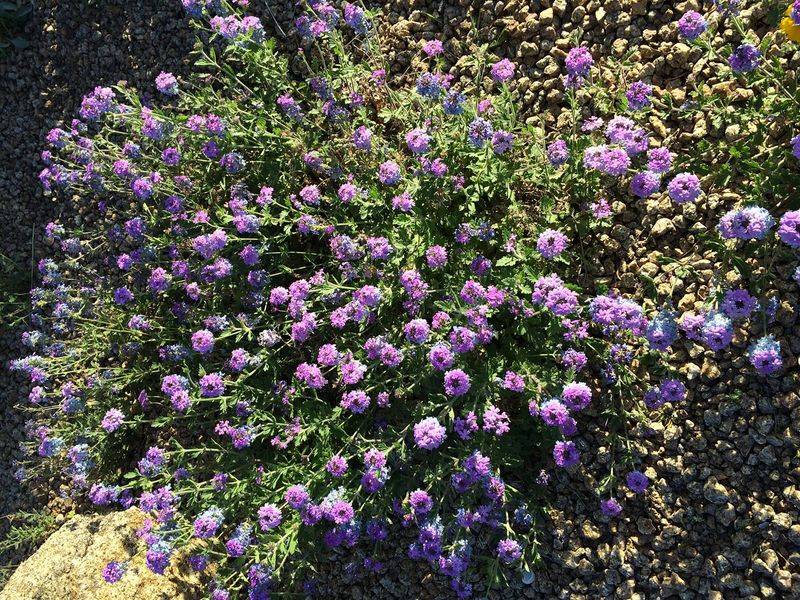
Hummingbirds seem to have a map with every patch of Goodding’s verbena marked on it. Plant a few in October, and by spring you may catch them zipping between lavender-pink flower clusters while butterflies drift over the same blooms.
Native to the desert Southwest, it grows naturally on dry slopes below 5,000 feet, so it already knows how to handle Arizona. It fills fast, forming soft mounds 8 to 12 inches tall and 2 to 4 feet wide.
Individual plants are short-lived, but they reseed readily, so a patch tends to stick around for years on its own.
Why fall? Planting in October or November lets roots spread through cool months, and winter rains do much of the watering for you.
You can also scatter seeds in fall for a looser, wildflower look.
Once settled, it can often get by on seasonal rainfall alone in most years, which makes it one of the thriftiest choices here. Full sun, reflected heat, and rocky soil suit it just fine.
Rabbits usually leave it alone too.
Let a few flower heads go to seed before cleanup. Those seedlings are free plants, and they fill bare gaps faster than anything you could buy at the nursery.
4. Globe Mallow
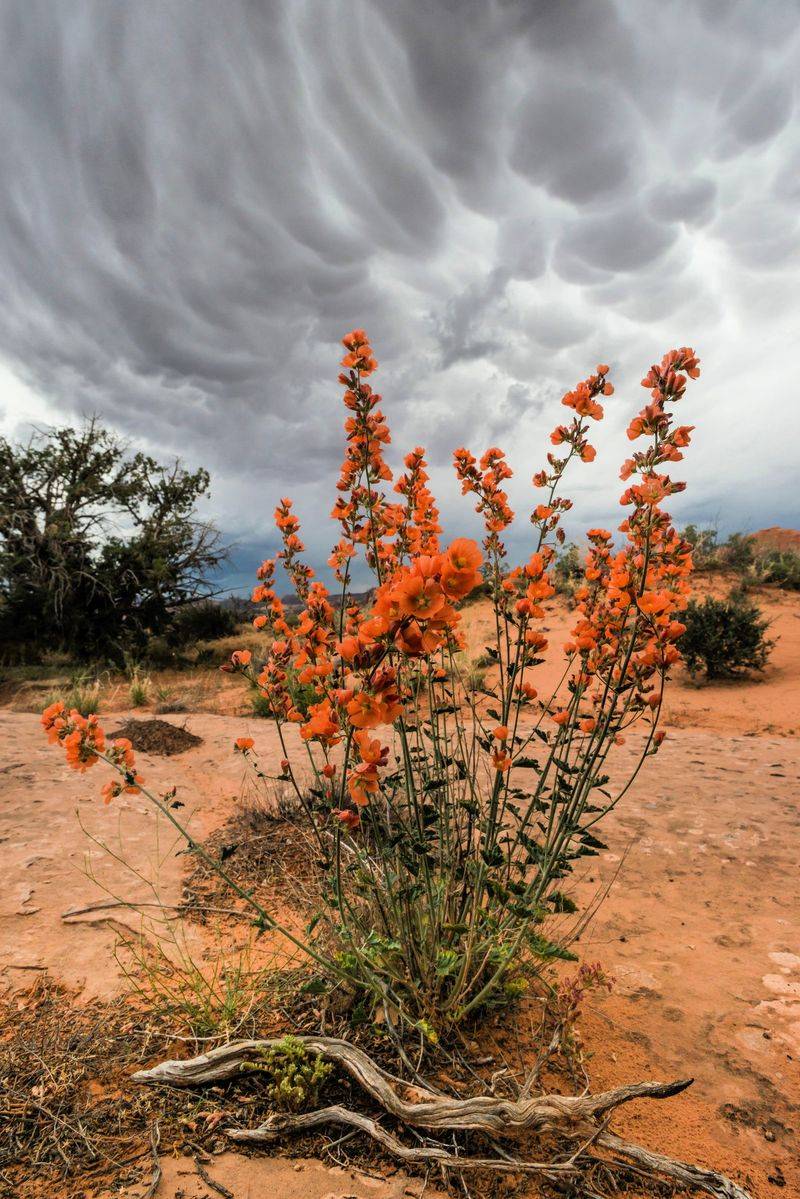
Drive past almost any vacant lot in the Phoenix basin in March and you will likely see bursts of apricot-orange flowers waving in the breeze. That is globe mallow, and it grows so well here that it practically plants itself.
Technically it is larger than a classic groundcover, reaching 2 to 4 feet tall and wide at a rapid clip. That size is useful for filling big, bare slopes or the back of a wide bed where smaller plants would take years to cover.
Flowers also come in pink, red, lavender, and white.
The wildlife payoff is huge. Native bees love the cup-shaped blooms, and the leaves host caterpillars of several butterfly species, so your yard becomes a nursery and not just a snack bar.
Deer typically pass it by.
Plant in fall or late winter, water through the first season, then let rainfall take over most years. Caliche, sand, heat, and cold rarely faze it.
One practical note: fine hairs on the leaves can irritate eyes and skin, so wear gloves and avoid rubbing your face while working around it. When plants turn leggy after blooming, cut them back to about 6 inches for a fresh flush of growth and more color.
5. Pink Fairy Duster
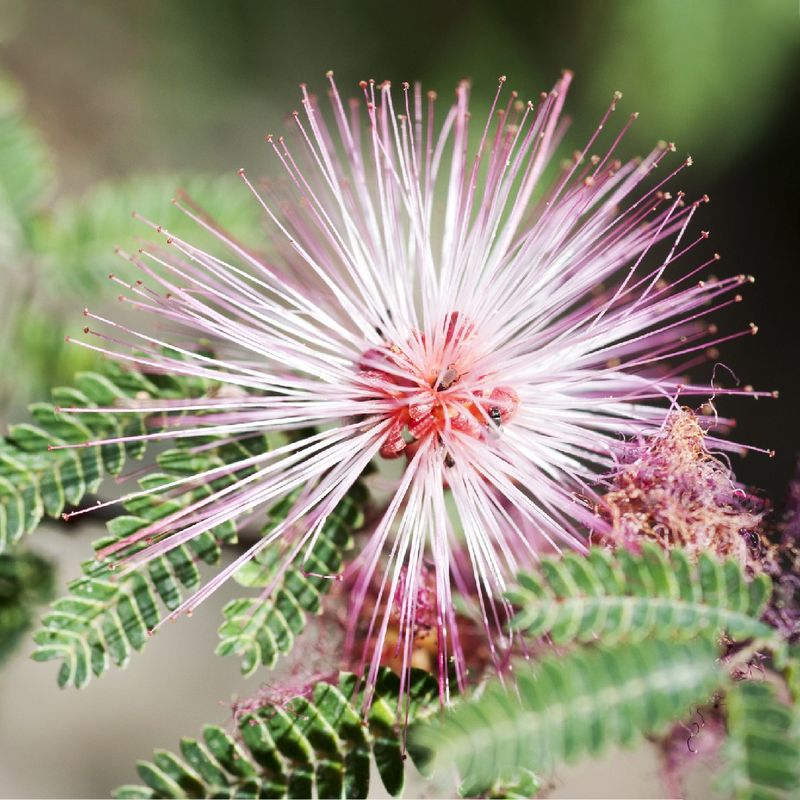
Tiny pink powder puffs sitting on feathery foliage give this shrub a look that feels almost too delicate for the desert. Don’t let that fool you.
Pink fairy duster grows wild on poor, rocky hillsides across southern Arizona and shrugs off heat that would flatten softer plants.
Among the picks on this list, it plays the role of the low, spreading anchor. Plants settle into mounds 1 to 3 feet tall and 3 to 5 feet wide, and their roots help bind soil on gentle slopes and flat areas prone to washing out.
If monsoon storms carve little gullies through your yard, it may help hold that ground in place.
Growth is moderate compared with verbena or primrose, so pair it with a faster filler while it matures. Fall is the ideal time to plant, giving it a full cool season to root in.
Hummingbirds and bees visit the fluffy blooms from spring into early fall. Later, seedpods pop open and scatter food that quail and other ground-feeding birds happily scratch up.
With no thorns at all, it stays friendly along walkways and patios. A little tip-pruning encourages thicker branching, and once established it needs only occasional deep water during long dry spells.
6. Mexican Evening Primrose
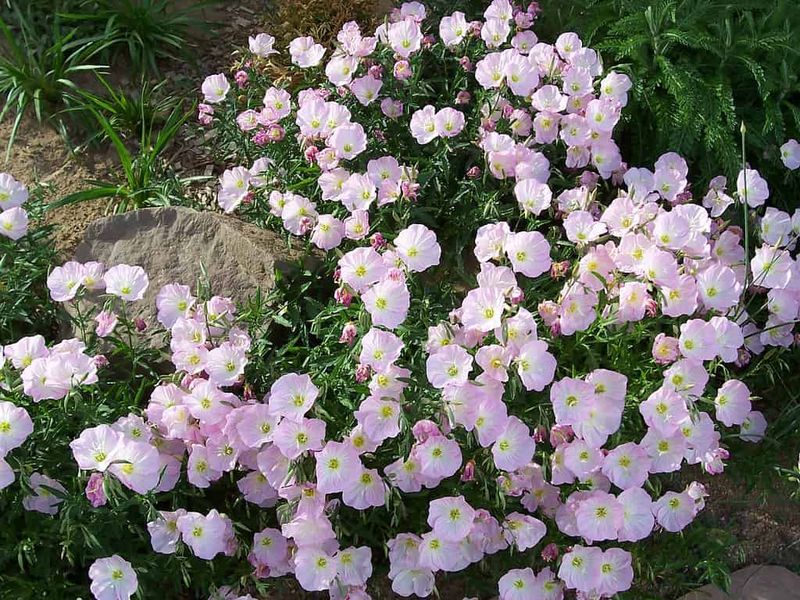
Fair warning: this one does not know when to stop. Mexican evening primrose spreads by underground runners and self-seeds freely, so a few small plants can blanket a bare area in a single season.
That enthusiasm is exactly why it earns a spot here. For a rocky slope, a narrow strip between sidewalk and wall, or a spot where nothing else will take, few plants cover ground faster.
Just keep it away from neat perennial beds, where it may muscle out neighbors.
Soft pink to white cup-shaped flowers open from spring into fall depending on rainfall. Bees and night-flying moths visit the blooms, and birds pick at the seeds later in the year.
A clever trick helps keep it in check. Plant it in poor, rocky, unamended soil, which tends to keep it in tighter clumps.
Edging, gravel paths, or block borders also help contain the runners.
In peak summer heat it may go dormant and look scruffy, then bounce back after monsoon rains. Expect to water once or twice a month through the hottest stretch to keep it greener.
In fall, shear or mow the whole patch to the ground for fresh growth by spring.
7. Desert Marigold
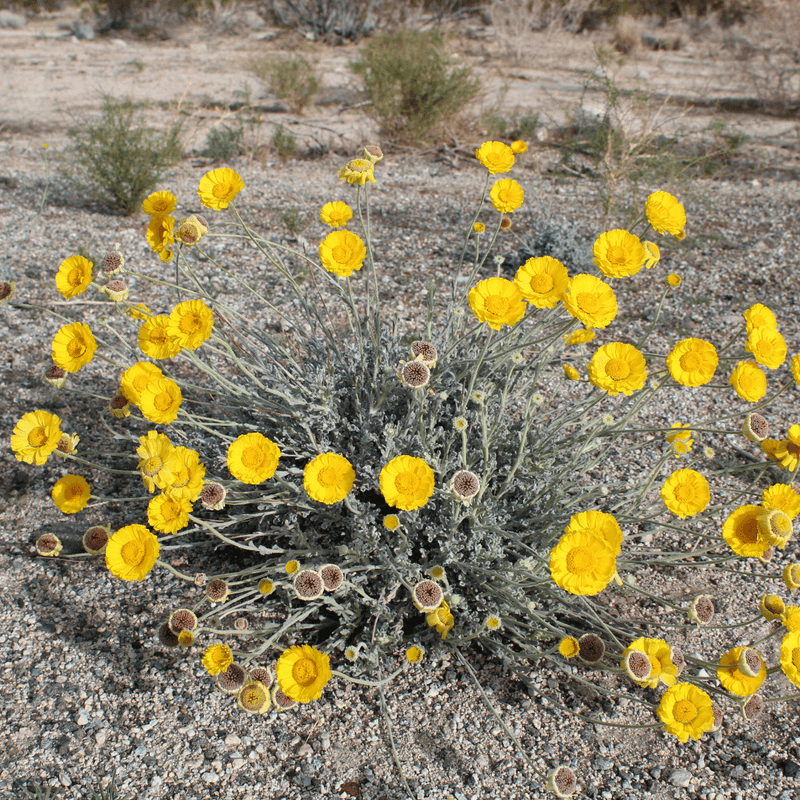
Ask longtime desert gardeners which wildflower they could never do without, and desert marigold comes up again and again. Its lemon-yellow blooms sit on tall stems above woolly silver leaves, and in a good year they seem to bloom almost nonstop.
Plants form low clumps about a foot tall and wide, with flower stalks rising a bit higher. The real speed comes from reseeding.
Each plant drops plenty of seed, and after a wet winter you may find a whole sweep of new seedlings filling open spaces between rocks and shrubs.
Fall is prime time to plant from nursery pots or to scatter seed right before winter storms roll in. Cool weather and rain give young plants a head start, and by March the show usually begins.
Blooms can continue into fall, especially with an occasional summer soak.
The silvery fuzz on the leaves helps reflect harsh sun, one reason this native handles low-desert heat so well. Native bees and butterflies are frequent visitors, and seed-eating birds like finches often forage around mature plants.
Keep water light and soil lean, since soggy ground can shorten its life. Let some flowers set seed before tidying up, and nature handles the replanting for you.
8. Angelita Daisy
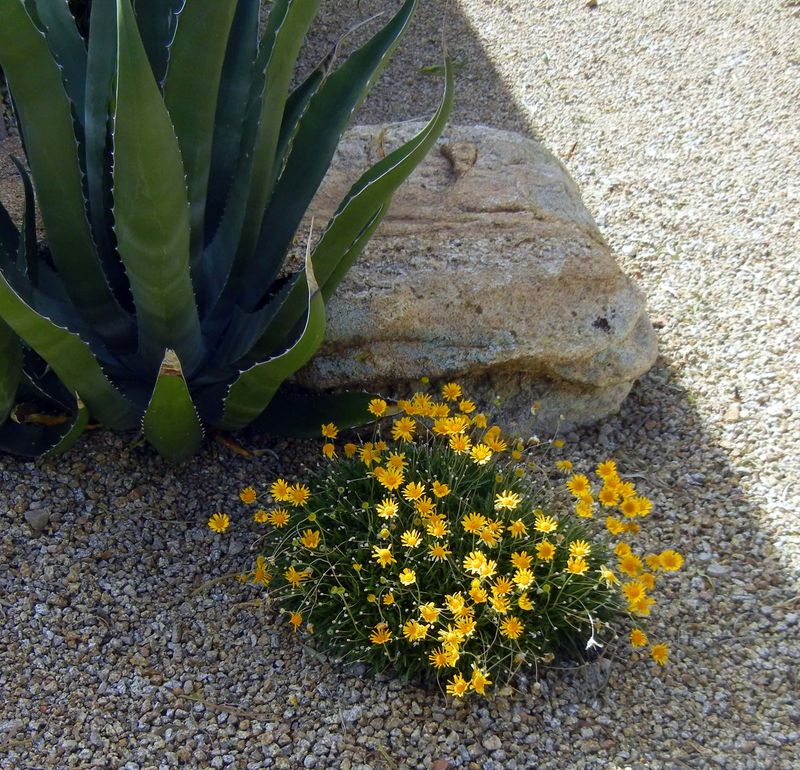
Tough as nails but cheerful as a sunflower, angelita daisy might be the most forgiving plant on this list. It stays green year-round, hugs the ground in tidy tufts, and keeps tossing up small yellow daisies for months.
Clumps grow roughly 8 to 12 inches tall and a bit wider, with narrow, grass-like leaves that give a fine texture. On its own it is not a sprawler, but plant several about 18 inches apart and they knit into a soft, continuous carpet by the following summer.
Native to Arizona’s higher deserts and grasslands, it handles winter frost and summer sun alike. In the low desert it performs best with full sun or a touch of afternoon shade in the harshest spots.
Fall planting lets it root in while temperatures are mild.
Watering is easy to manage. Deep drinks every week or two during the first cool season, then less once established, with extra help during long, rainless summer stretches.
Bees and small butterflies visit the flowers, and its compact size makes it great for lining paths or tucking around boulders. A quick trim of old flower stems keeps it looking fresh, but even skipping that chore rarely hurts the plant.
9. Desert Zinnia
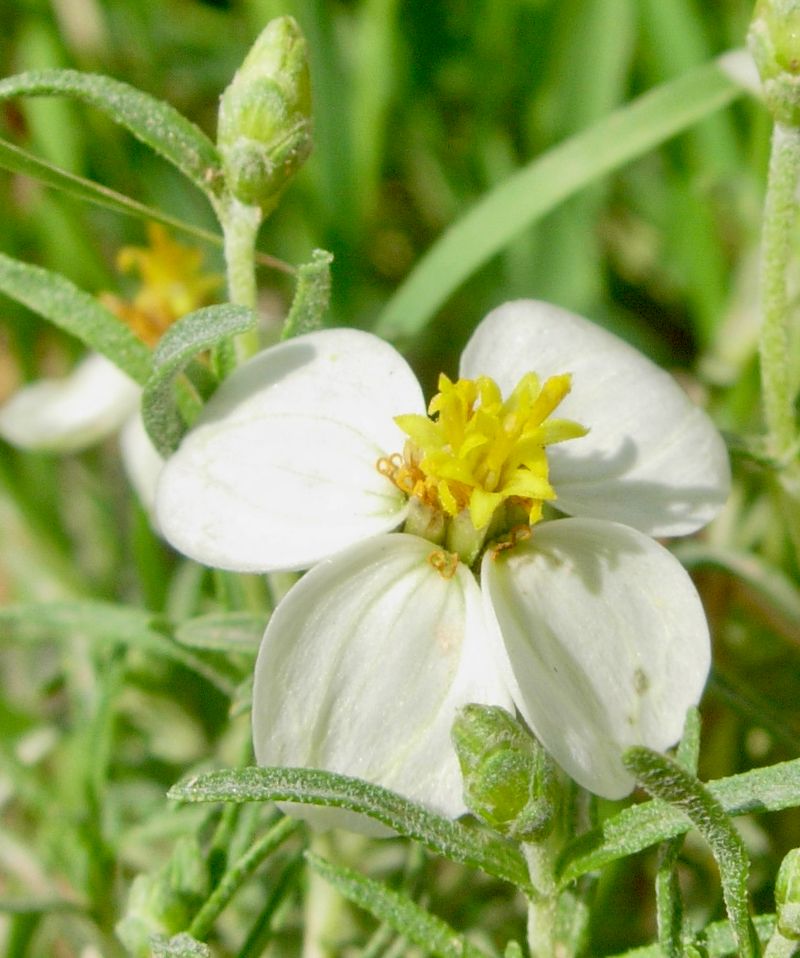
Here is a plant that looks humble for most of the year, then surprises everyone. Desert zinnia forms a low, woody mat of tiny needle-like leaves, and from spring through fall it scatters small white flowers with golden centers across the top.
Native to southern Arizona’s rocky slopes and limestone ridges, it treats alkaline soil and caliche as home turf. Plants usually stay 4 to 10 inches tall and spread a foot or more, creeping outward to cover open ground between cacti, agaves, and boulders.
Compared with the speed demons earlier on this list, desert zinnia fills at a steadier pace. What it offers instead is longevity and toughness, and it pairs beautifully with faster fillers like verbena that can cover gaps while it settles in.
Plant in fall and give regular water through the first winter and spring. After that, it needs very little, making it one of the most water-thrifty groundcovers you can grow in Phoenix or Tucson.
Butterflies and small native bees stop by the flowers. Keep it clear of dense, shady mulch piles near the house, and its open, airy growth tends to be less inviting to scorpions than thick leaf litter.