8 Vines That Won’t Damage Fences Or Walls In California
A homeowner in Sacramento yanks a thick vine off a fence, only to find cracked boards, peeling paint, and brown stains left behind where it had clung for years.
It looked lovely the whole time. Nobody noticed it was quietly working its way into every gap and seam while everyone admired the flowers.
How a vine actually holds on matters far more than how pretty it looks in bloom, and that difference decides whether a fence survives a decade or needs replacing.
Some vines wrap gently around whatever support you give them. Others send out sticky roots that fuse straight into wood and stucco, and by the time you notice, the damage is done.
Curious which vines climb beautifully without ever gripping the fence itself? The answer starts with a scent most people notice before they spot the plant.
1. Star Jasmine Twines Without Gripping Surfaces
Walk past almost any front yard in Los Angeles in late spring, and you’ll smell it before you see it.
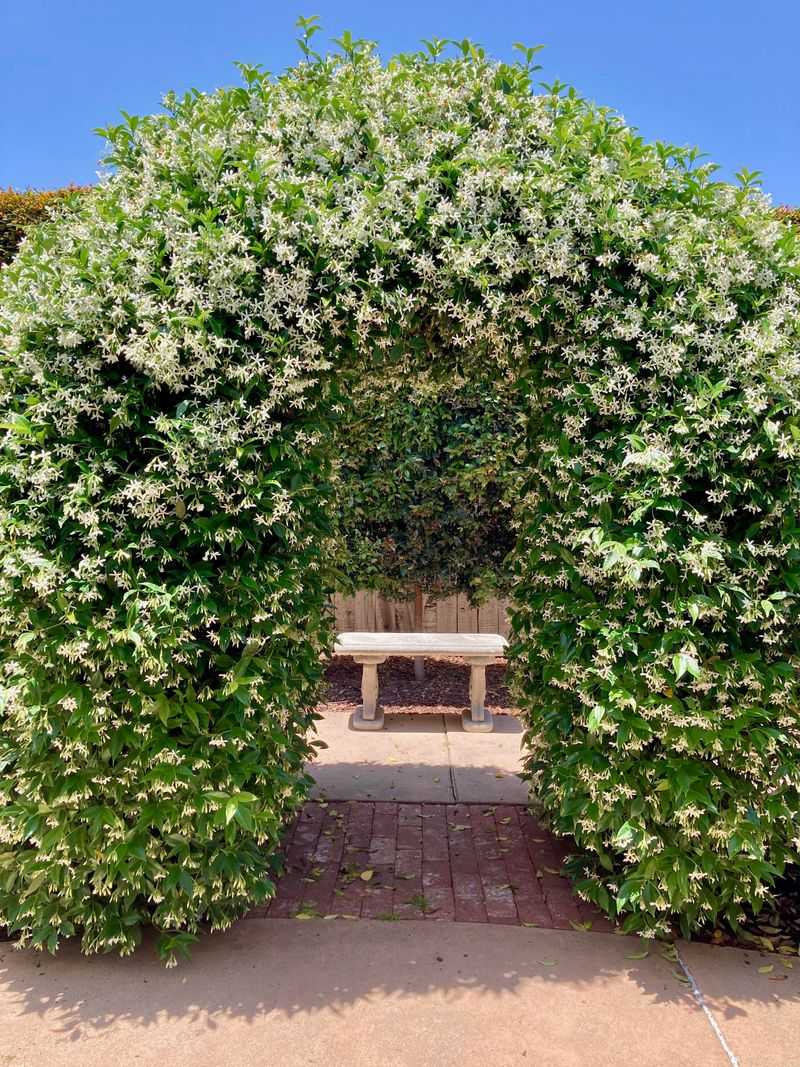
Star jasmine, known to botanists as Trachelospermum jasminoides, fills the air with a sweet scent from tiny white, pinwheel-shaped flowers.
The way it climbs is what makes it so friendly to fences.
Star jasmine is a twining vine, which means its stems slowly wrap around whatever support they touch. It does not grow sticky pads or little roots that dig into wood, stucco, or paint.
Because of this, star jasmine cannot climb a flat, smooth fence board all by itself.
You’ll need to give it something to wrap around, like a wire grid, a wooden trellis, or sturdy eye hooks with cable. Early on, you may have to gently tie the young stems to guide them upward.
That extra step is actually a gift.
Since the vine hangs onto the support and not the fence face, you can pull it back later to paint or repair boards without scraping off stuck roots.
Star jasmine handles full sun near the coast and prefers some afternoon shade in hot inland valleys. Trim it after it blooms to keep it neat.
2. Clematis Climbs With Gentle Tendrils
Here’s a fun twist that surprises many gardeners. Clematis does not actually have true tendrils like a pea plant.
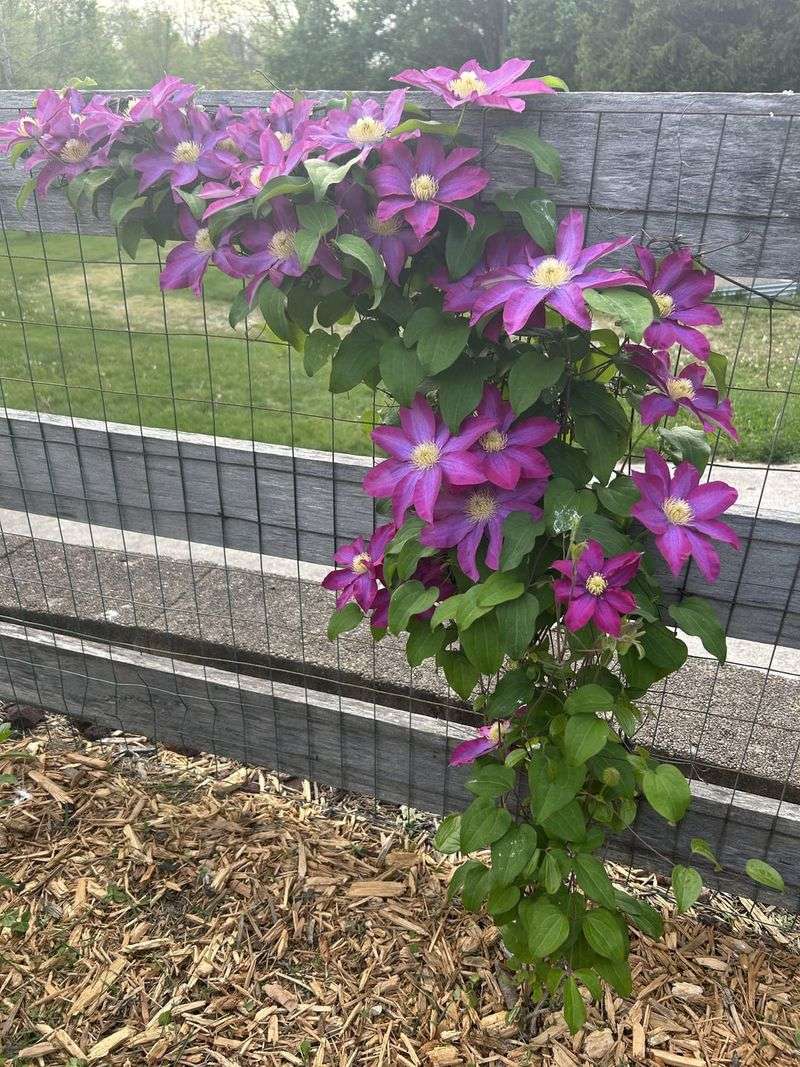
Instead, its leaf stalks act like little curling fingers that bend and wrap around thin supports.
This habit is about as light a touch as a vine can have.
The leaf stalks can only grip things that are skinny, usually about the thickness of a pencil or less. A wide fence post or a flat wall gives them nothing to hold, so the plant simply leans against it without leaving marks.
For that reason, clematis needs help from you.
Stretch garden twine, plastic netting, or thin wire across your fence, and the vine will happily climb it. Some people even let clematis scramble up through a rose bush for a natural look.
Many clematis types stay fairly small and weigh very little, so they put almost no strain on a fence.
Your California Garden Changes Every Week. Your Plan Should Too.
Gardening in California changes quickly throughout the season. Every Friday you’ll receive a simple weekly plan showing exactly what to plant, prune, fertilize, harvest, and protect so you never miss the right timing.
Large-flowered hybrids bloom in bold purples, pinks, and whites, while Clematis armandii is an evergreen choice that does well in many California gardens.
Clematis likes a simple rule: head in the sun, feet in the shade. Keep its roots cool with mulch or low plants around the base.
3. Mandevilla Wraps Rather Than Clings
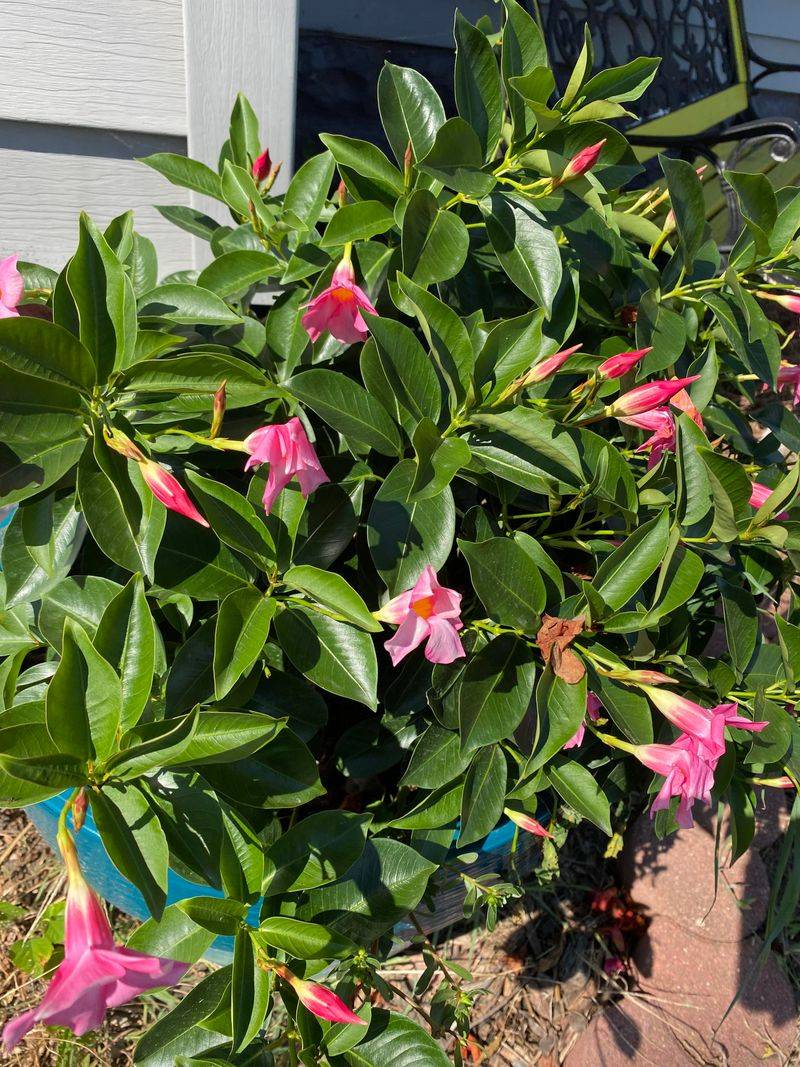
Mandevilla shows up with huge trumpet flowers in hot pink, red, or white, and it brightens a patio all summer long.
Best of all, it behaves politely around fences and walls.
Mandevilla is a twining vine, much like star jasmine.
Its soft stems spiral around poles, strings, and trellis slats as they grow. There are no clinging roots or sticky pads, so it cannot glue itself to stucco, wood, or brick.
That means your wall stays clean, but the plant does need something to climb.
A simple fan trellis set a few inches away from a wall works well. The small gap also lets air flow behind the vine, which helps keep moisture off painted or stucco surfaces.
There is one catch for California gardeners.
Mandevilla comes from warm parts of the Americas and does not like frost. It stays outdoors year-round mainly in mild coastal areas of Southern California, while folks in colder valleys often grow it in a large pot.
Growing it in a container has a bonus. You can lift the whole setup away without ever touching the fence at all.
4. Passion Vine Grabs With Coiling Tendrils
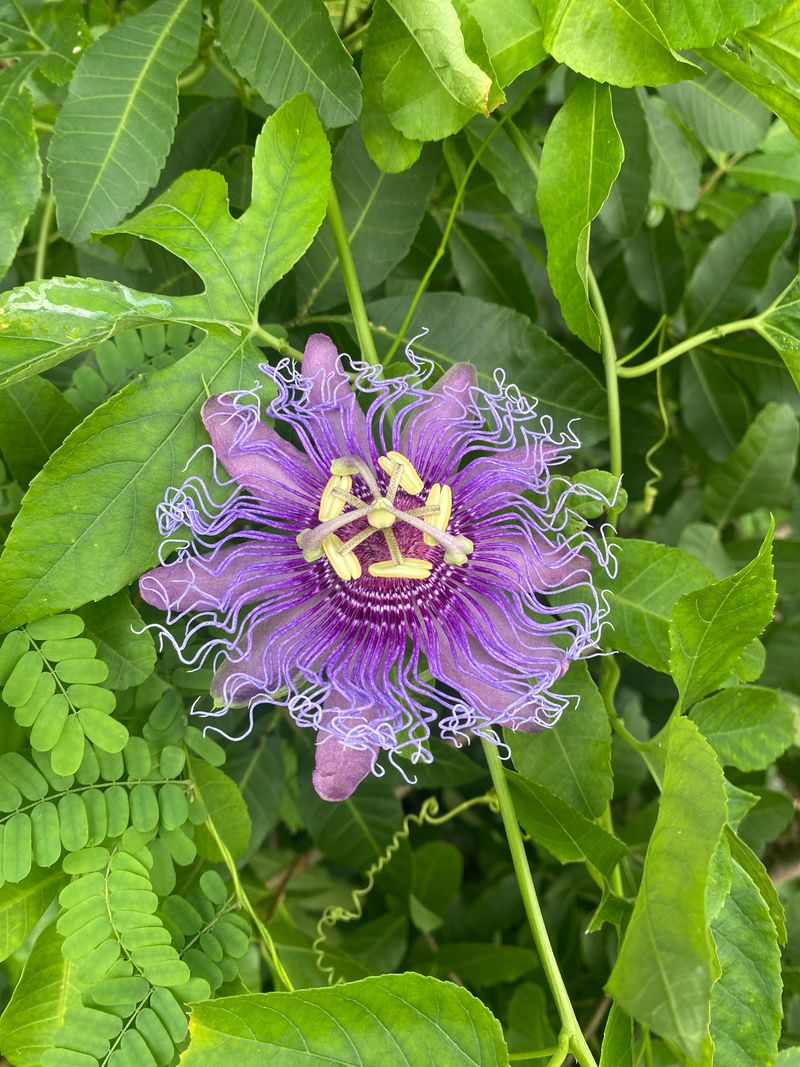
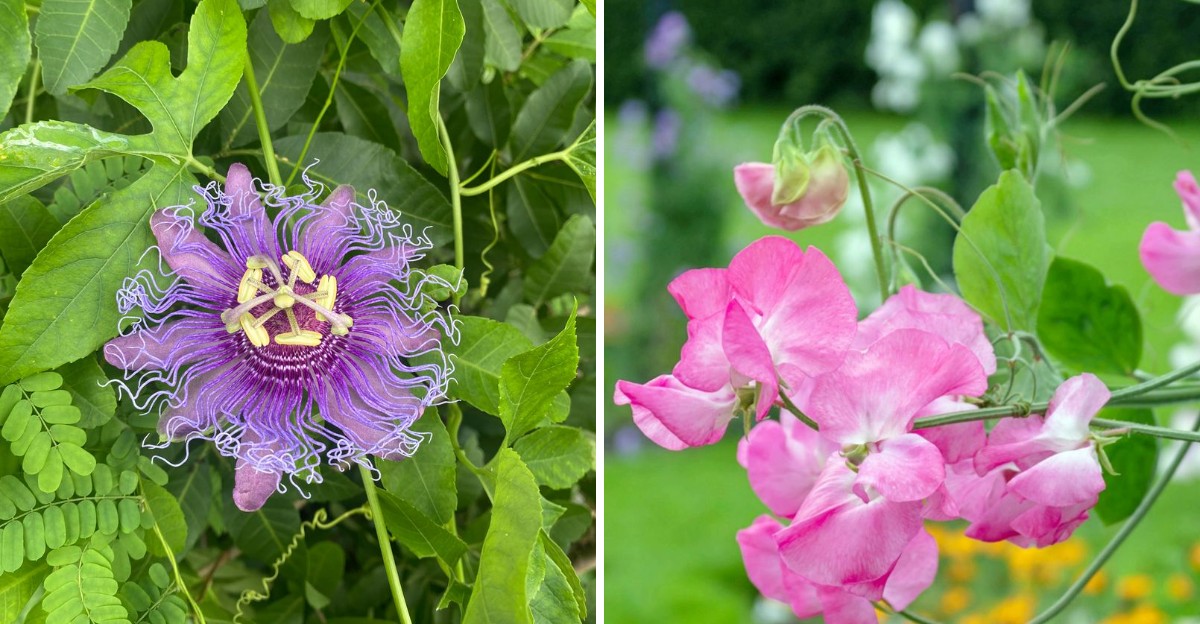
Passion vine turns a fence into a real spectacle once it settles in, with intricate purple and white flowers that look almost too complicated to be real.
Its grip comes from thin, curling tendrils rather than any kind of root or pad.
Those tendrils reach out, touch a support, and coil around it within hours, holding on tightly without ever pressing into wood or siding underneath.
Because the tendrils are thin, they need something narrow to grab, much like clematis. A wire grid, netting, or thin cable strung across a fence gives passion vine plenty to hold onto.
Left without support, the vine simply sprawls and tangles rather than climbing at all, so setting up a grid before planting saves a lot of frustration later.
Passion vine grows fast in warm California climates, sometimes covering a large trellis within a single season.
That speed means regular trimming matters more here than with slower vines, since an untended plant can quickly overwhelm a small fence and shade out everything nearby.
Give it full sun, occasional deep watering, and a firm support structure, and it repays the effort with fruit and flowers that draw butterflies all summer long.
5. Trumpet Honeysuckle Twines Gently Upward
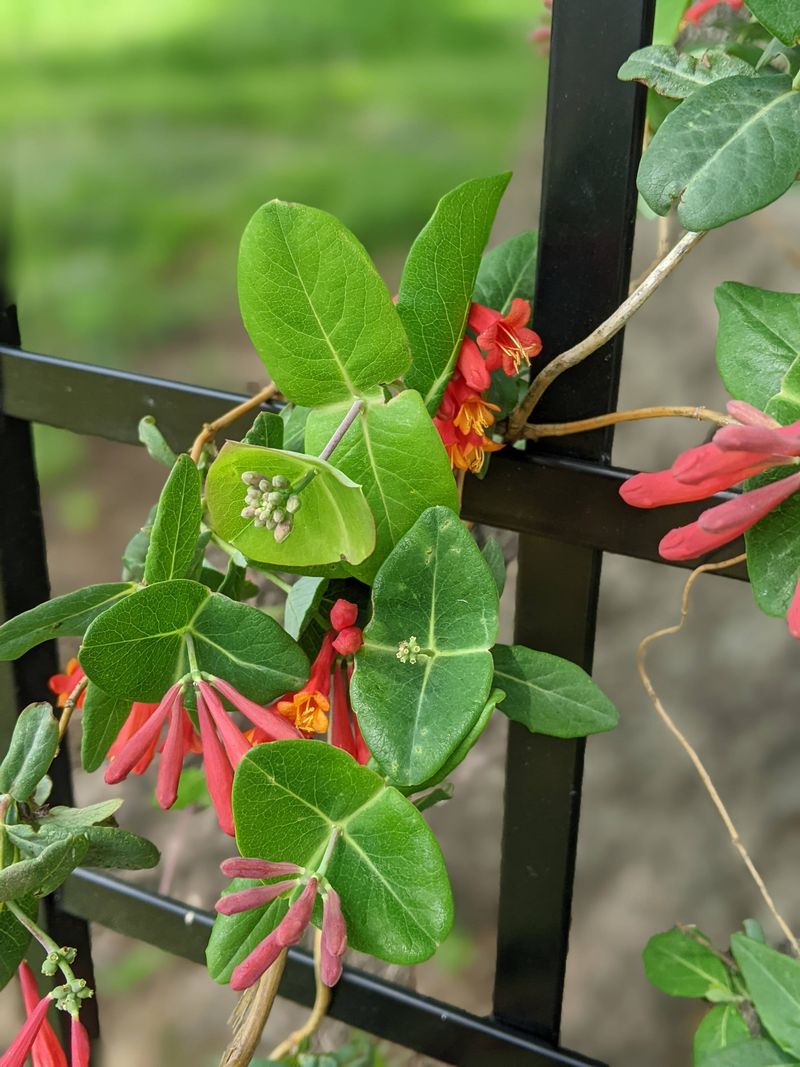
Trumpet honeysuckle brings hummingbirds to a fence the way few other vines can, with clusters of tubular orange and red flowers blooming through much of the warm season.
Like jasmine and mandevilla, it climbs by twining its stems around a support rather than clinging or rooting into the surface itself.
That twining habit keeps it gentle on wood and stucco, since the plant wraps loosely rather than fusing itself to whatever it touches.
A simple wire trellis or lattice gives trumpet honeysuckle everything it needs. The stems wrap around each opening as they grow, filling in steadily without any aggressive gripping behavior.
California native varieties handle both coastal fog and inland heat reasonably well, making this one of the more adaptable vines on this list for different climate zones.
Growth stays moderate compared to something like wisteria, so a standard wooden or vinyl fence rarely feels strained even after several seasons of unchecked growth.
An occasional trim after the main bloom keeps the vine from getting leggy or top-heavy, and cutting it back also encourages a fuller second flush of flowers later in the season.
Full sun brings the heaviest bloom, though the plant tolerates a bit of afternoon shade in the hottest inland valleys without much complaint.
6. Black-Eyed Susan Vine Climbs Without Any Grip Damage
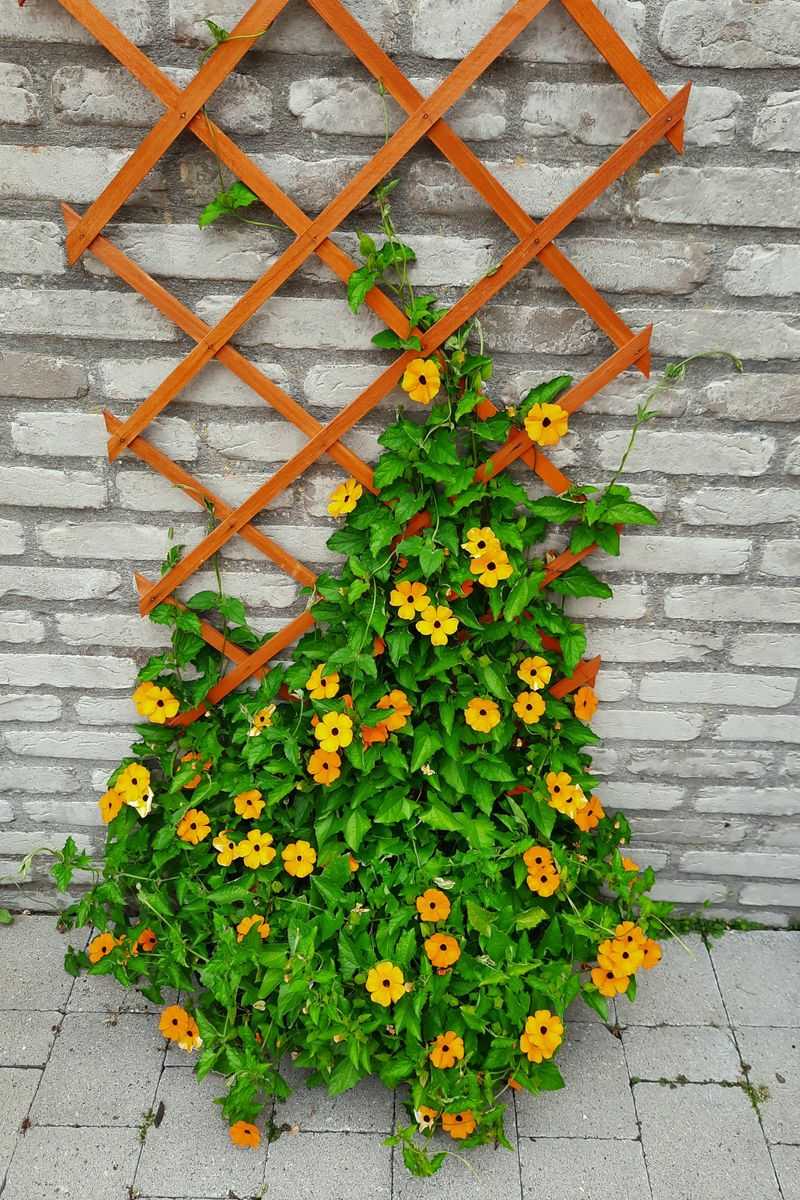
Black-eyed Susan vine covers a fence quickly with cheerful yellow or orange flowers, each one marked with a dark center that gives the plant its common name.
This fast-growing annual climbs by twining its thin stems around whatever support it can find, never developing the aerial roots or sticky pads that damage surfaces.
Because the stems stay thin and soft throughout the plant’s life, even a season of vigorous growth adds very little weight or pressure to a fence.
A basic trellis, netting, or even garden twine gives this vine plenty to wrap around. It tends to fill in a support structure within just a few weeks once the weather warms up.
Treated as an annual in most of California, black-eyed Susan vine dies back each winter, meaning any fence it covered gets a completely clean slate to inspect come spring.
That short lifespan makes it a low-commitment option for anyone testing out a new trellis design or unsure whether they want a permanent vine in a particular spot.
Full sun and regular watering keep the blooms coming steadily from late spring through the first cool nights of fall in most regions of the state.
Removing spent vines at season’s end takes only minutes, since the thin stems pull away from netting or wire without leaving any residue or damage behind.
7. Sweet Pea Uses Delicate Tendrils To Climb
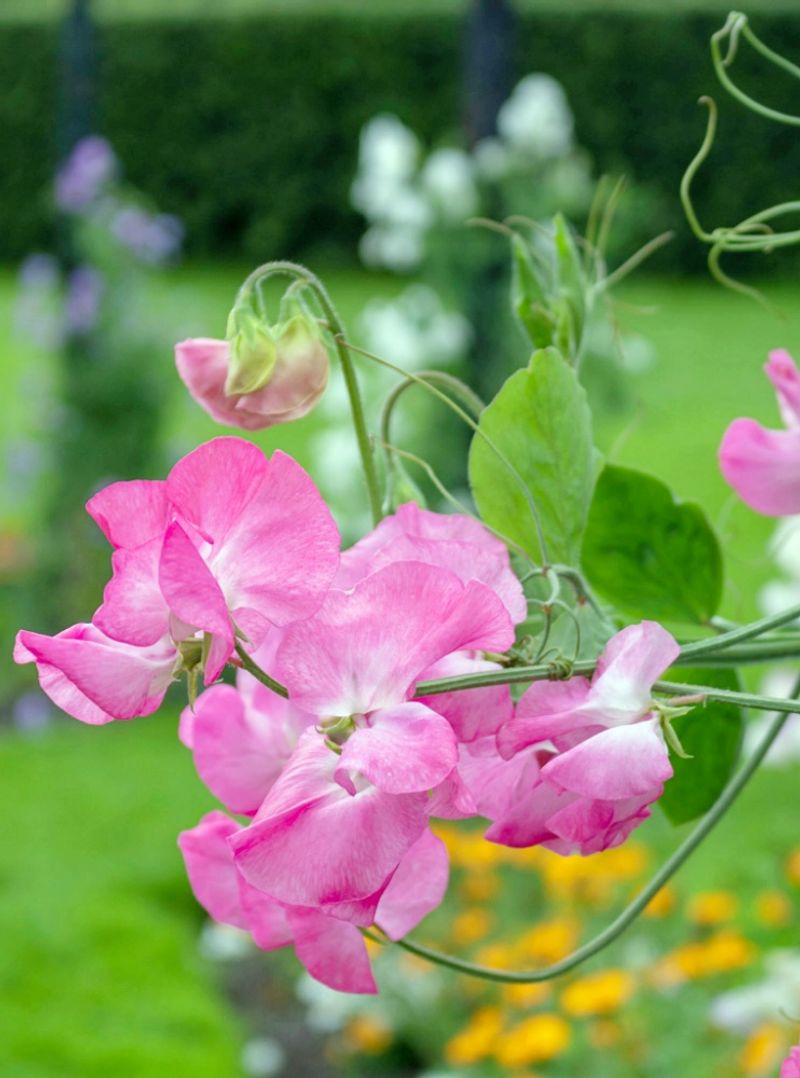
Sweet pea fills a fence with ruffled, fragrant flowers in shades of pink, purple, and white, blooming heavily through spring before fading as summer heat arrives.
Like garden peas, it climbs using thin curling tendrils that reach out from the stem and wrap around anything narrow enough to grab.
Those tendrils are delicate by nature, which means they need fine supports like wire mesh, netting, or string rather than a solid wooden board.
A section of chicken wire attached a few inches off a fence gives sweet pea exactly the grip it needs while keeping the actual fence surface untouched and unmarked.
As an annual in most California climates, sweet pea completes its whole life cycle in one growing season, climbing, blooming, and finally fading without ever building up woody, heavy stems.
That light annual growth means the plant adds essentially no long-term strain to whatever it climbs, unlike perennial vines that thicken year after year.
Cool coastal areas often get the longest bloom season, while inland gardeners may see flowering wrap up faster once summer heat settles in for good.
Sowing seeds directly in fall or very early spring, then providing that fine mesh support right from the start, sets sweet pea up for its fullest possible display.
8. Climbing Rose Leans Rather Than Clings
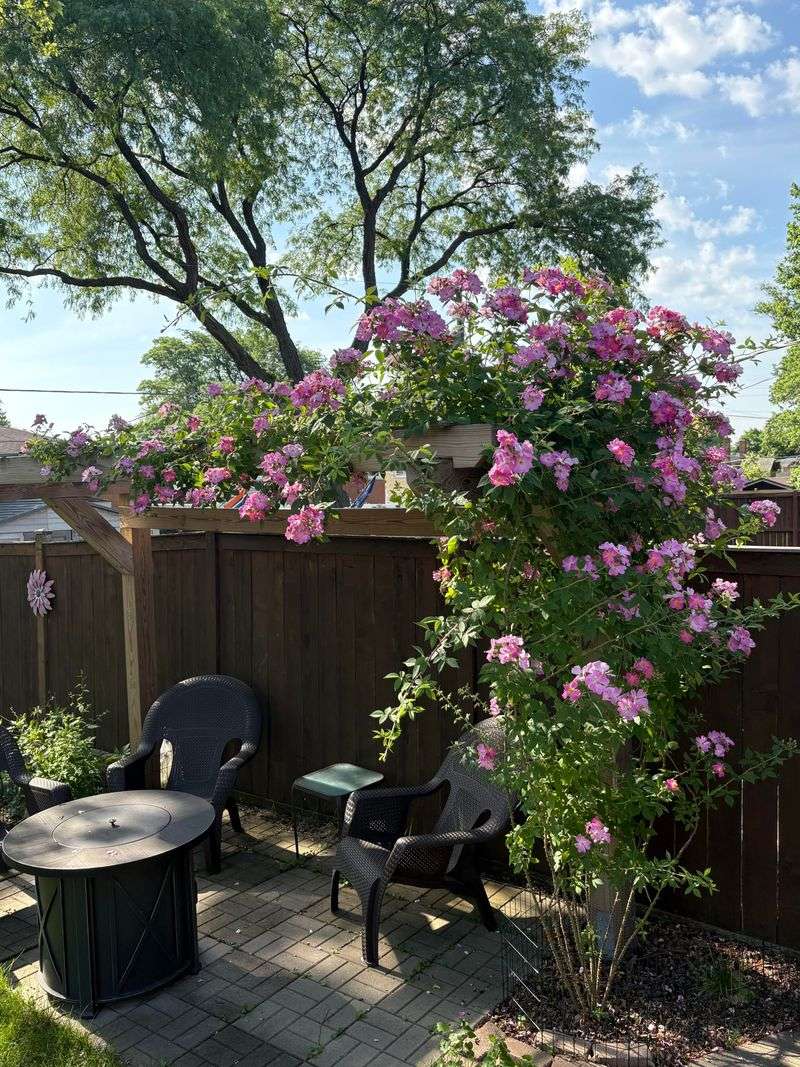
Climbing rose covers a fence in dramatic color, but unlike the true climbers on this list, it does not grip or twine on its own at all.
Instead, it produces long, flexible canes that lean against a support, and a gardener ties those canes in place by hand as the plant grows.
That hands-on approach turns out to be exactly why climbing roses are so gentle on fences. Since nothing clings or wraps into gaps, the plant places no direct pressure on wood, paint, or siding underneath.
Soft garden twine or plant ties, checked and loosened periodically as canes thicken, hold the rose in place without ever restricting its growth or damaging bark.
Because you control exactly where each cane goes, climbing roses can be trained around gates, along horizontal rails, or up a narrow post with far more precision than a self-clinging vine allows.
Canes do thicken with age, though nowhere near the scale of wisteria, so an established climbing rose still asks for a reasonably sturdy trellis or fence section over the years.
Full sun and regular pruning after the main bloom cycle keep the plant productive and prevent canes from piling into an unmanageable tangle at the top of the support.
Repositioning or removing a climbing rose later is refreshingly simple too, since untying the canes leaves the fence exactly as it was before the rose ever arrived.