Succulents That Are Nearly Impossible To Harm In California Homes
Some houseplants punish every missed watering with drooping leaves and a slow decline that leaves you feeling guilty every time life gets busy.
A specific group of plants works the opposite way entirely, thriving precisely because nobody remembers to fuss over them on any kind of schedule.
Something about how these particular plants evolved, storing water in thick leaves, swollen stems, or tiny beaded reserves, means neglect actually suits them better than careful attention ever could.
The real danger with this whole category isn’t underwatering at all, despite what most beginners assume walking into a nursery.
It’s overwatering, and that single misunderstanding claims more of these plants than forgotten weeks ever will.
Curious which specific plants forgive a missed watering, a dim corner, or an entire forgotten month without complaint?
The answer starts with a plant tough enough to survive a two-week vacation without a single drop.
1. Snake Plant Handles Serious Neglect
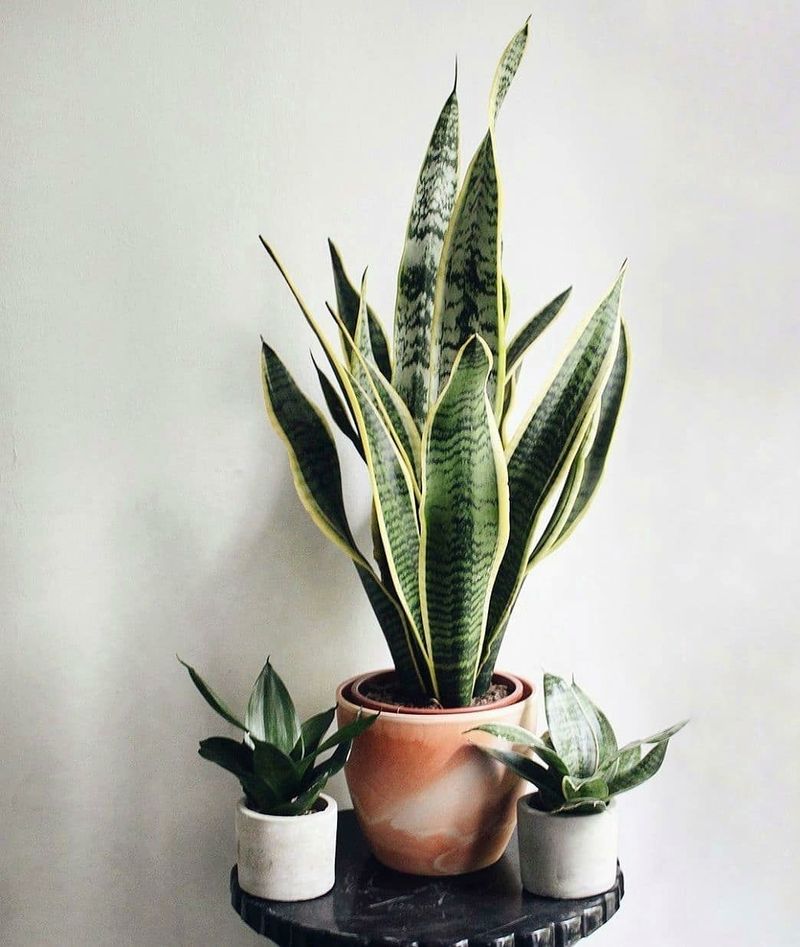
A plant that shrugs off a two-week vacation with no water at all sounds like a myth, but snake plant lives up to it easily.
Long sold as Sansevieria and now often listed as Dracaena trifasciata, it has earned a spot as one of the toughest choices for any California living room. Its stiff, upright leaves hold water, so it can often go two to four weeks between drinks.
Here’s a small botanical twist worth knowing.
Snake plant belongs to the Asparagaceae family, and while many people casually call it a succulent, it is not a true succulent in the strictest sense. Still, its thick, water-storing leaves mean you care for it almost exactly the same way.
Light needs are flexible, too.
It grows fastest in bright, indirect light near a window, but it will survive in a dim hallway or office corner, just growing more slowly. Warm inland summers in places like Sacramento rarely bother it indoors.
The one real danger is too much love.
Overwatering can cause root rot, which turns the base of the leaves soft and mushy. Let the soil dry out completely before watering, and choose a pot with a drainage hole and a fast-draining cactus mix.
During winter, when growth slows way down, you might water only once a month or even less.
2. Aloe Vera Forgives Missed Waterings
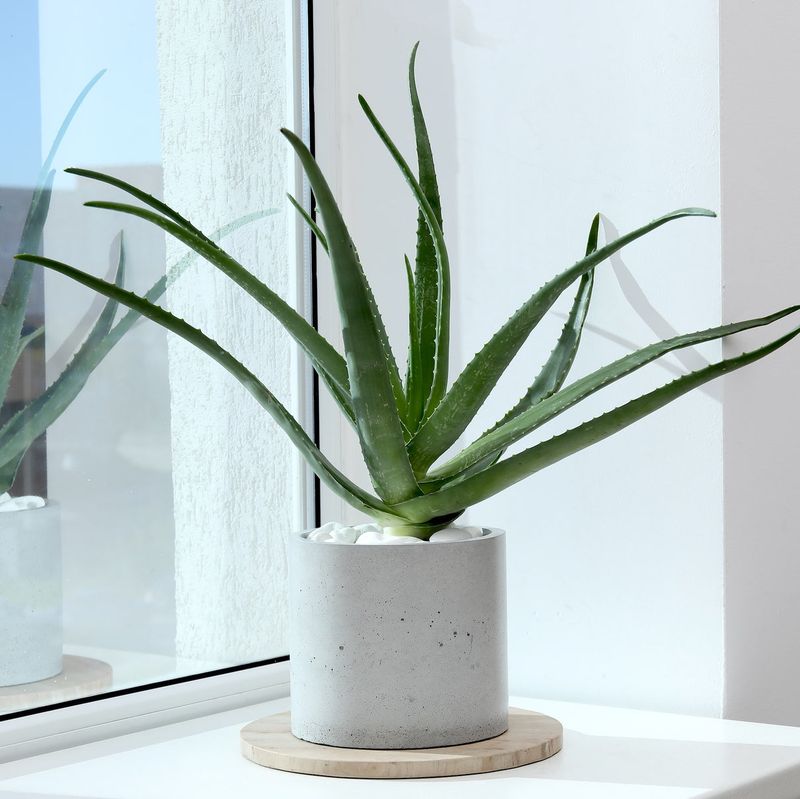
Forgot to water again? Aloe vera probably did not even notice the delay.
Native to dry regions of the Arabian Peninsula, this plant is built for long stretches without rain, which makes it a natural fit for California’s sunny, dry climate.
Aloe stores water in its plump, gel-filled leaves.
When you skip a watering or three, the plant quietly draws on those reserves. You might see the leaves thin out or curl slightly, and that’s your gentle signal that it’s finally thirsty.
Once you give it a deep drink, the leaves usually fill back out within a few days.
A good rule is to water thoroughly, let the extra drain away, and then wait until the soil is dry a couple of inches down. For many homes, that works out to every two to three weeks in summer.
Your California Garden Changes Every Week. Your Plan Should Too.
Gardening in California changes quickly throughout the season. Every Friday you’ll receive a simple weekly plan showing exactly what to plant, prune, fertilize, harvest, and protect so you never miss the right timing.
Aloe does want plenty of light.
A south or west-facing window is ideal, though sudden harsh afternoon sun can scorch leaves that are not used to it. If the plant starts stretching or leaning, it’s asking for a brighter spot.
The gel inside has been used for centuries on minor burns, which is part of its charm.
Just remember the plant is mildly toxic to pets if eaten. Use a heavy terracotta pot, because top-heavy aloes love to tip over as they grow.
3. Jade Plant Thrives On Benign Neglect
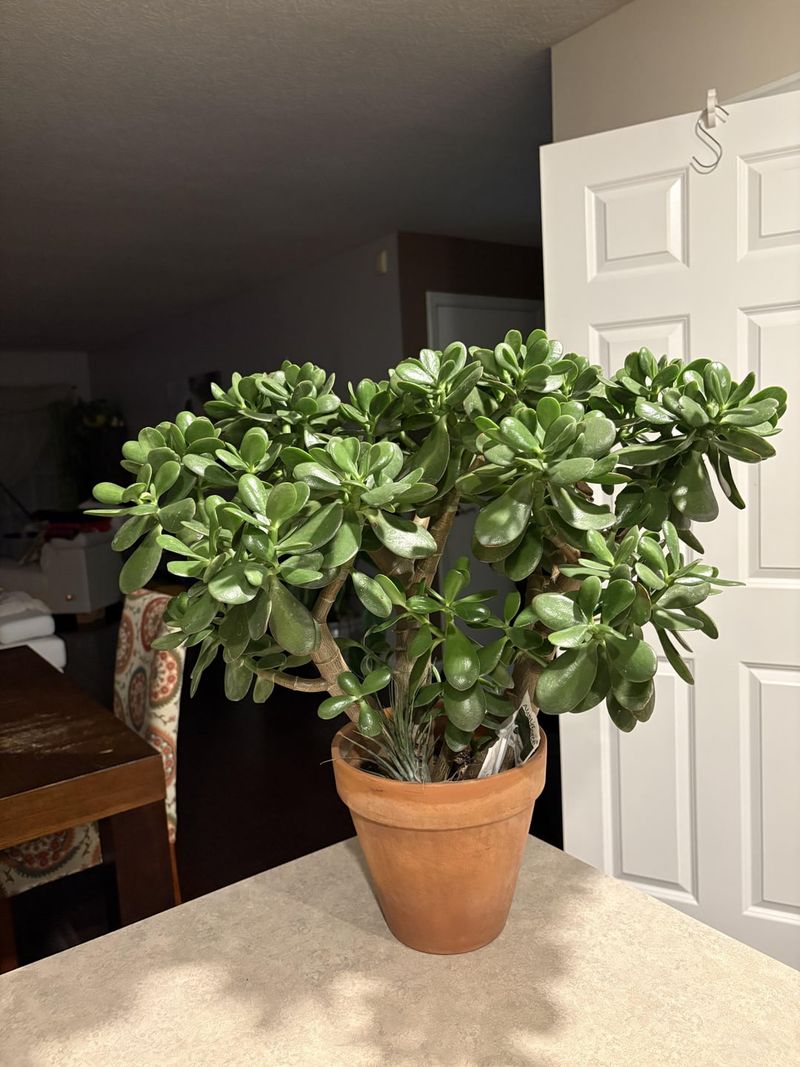
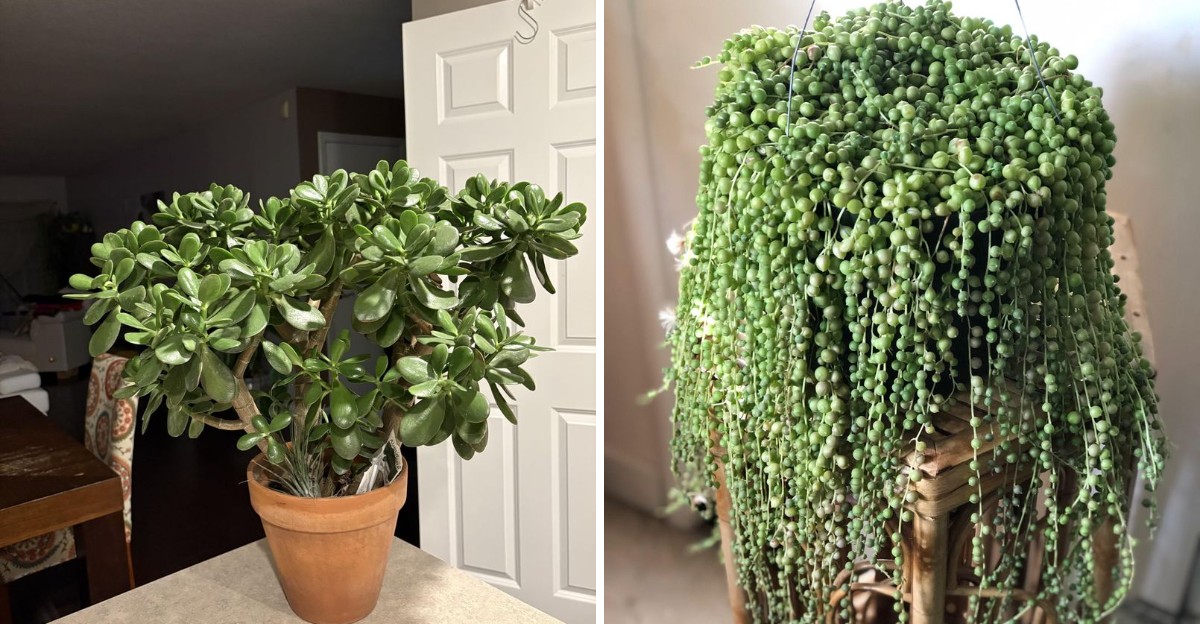
Some grandparents pass down recipes. Others pass down jade plants, and it’s not unusual to hear about one that has lived in the same family for thirty or forty years.
Crassula ovata, the jade plant, is famous for growing slowly, steadily, and with very little fuss.
Jade comes from South Africa, where it deals with dry spells and bright sun.
Its round, fleshy leaves act like tiny water tanks. That means the biggest favor you can do for a jade is simply to leave it alone for a while between waterings.
Wait until the soil is completely dry before adding water, then soak it well and let it drain.
In cooler months, jade needs even less. Wrinkled leaves mean it’s thirsty, while yellow, squishy leaves usually mean it’s been watered too often.
Bright light keeps a jade compact and healthy.
Give it at least four hours of sun near a window, and you may notice the leaf edges blush red, which is a normal response to strong light. Too little light leads to long, floppy stems.
Here’s a fun bonus. A single leaf or snipped stem can root in dry soil and grow into a brand new plant, so one jade can turn into gifts for friends.
4. Haworthia Tolerates Low Light Surprisingly Well
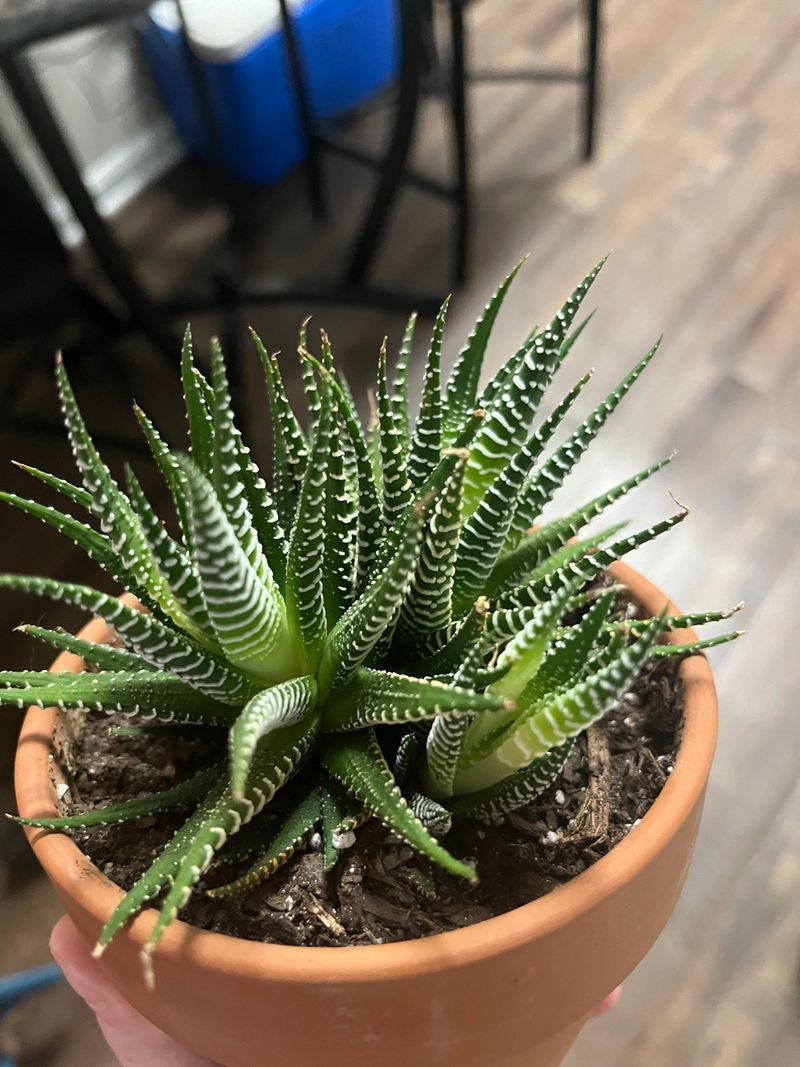
Living in a foggy San Francisco flat or an apartment with just one small window? Haworthia might be your new best friend.
Many succulents sulk without strong sun, but this little South African plant is used to growing in the shade of rocks and shrubs.
In the wild, many haworthias partly tuck themselves into the ground, with only their leaf tips peeking out.
Some types even have clear little windows on their leaf tops that help let light inside. That habit makes them far more comfortable in bright, indirect light than sun-hungry succulents like echeveria.
A spot near a north or east-facing window often works nicely.
Direct afternoon sun can actually turn the leaves reddish or brown, which is the plant’s way of saying it’s getting cooked. Very dark corners are still too much, though.
Watering is easy.
Let the soil dry completely, then water deeply and pour off any extra in the saucer. Many growers water every two to three weeks in warm months, with less in winter.
The zebra haworthia, with its bold white stripes, is one of the most popular kinds.
Its small size makes it perfect for desks, bookshelves, and bathroom counters, and it’s generally considered non-toxic to pets.
5. Echeveria Asks For Little Beyond Sun
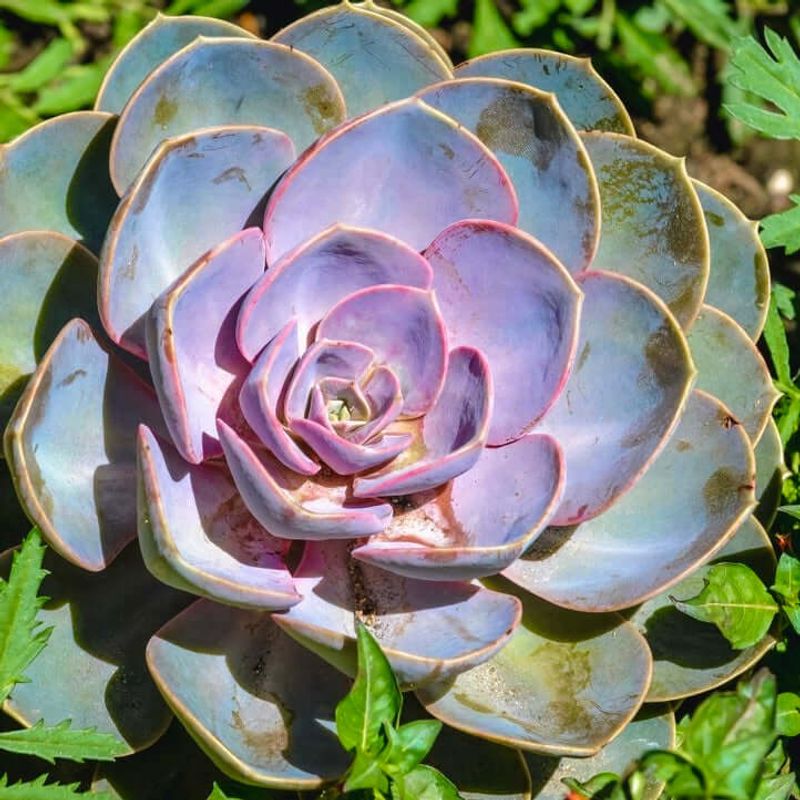
Echeveria works like the sunbather of the succulent world. Give it bright light, and it asks for almost nothing else.
Its rose-shaped clusters of leaves come in soft blues, pinks, purples, and greens, which is why you see them in so many California gardens and window boxes.
Most echeverias come from dry, rocky parts of Mexico and Central America.
Their thick leaves store water, and the tight rosette shape helps them hold onto moisture. So the real secret is not fancy fertilizer or careful misting, it’s sunshine.
Indoors, place it in your sunniest window, ideally one facing south or west.
Without enough light, echeveria stretches upward and its leaves spread apart, a problem gardeners call etiolation. Once that happens, the stretched shape does not reverse.
Watering follows the soak and dry method.
Drench the soil, let it drain fully, and wait until it’s bone dry before watering again. Try to keep water off the center of the rosette, since trapped drops can lead to rot.
Soil matters, too. Use a gritty cactus mix and a pot with a drainage hole, because soggy roots are the fastest way to lose one.
6. Ponytail Palm Stores Its Own Backup Water
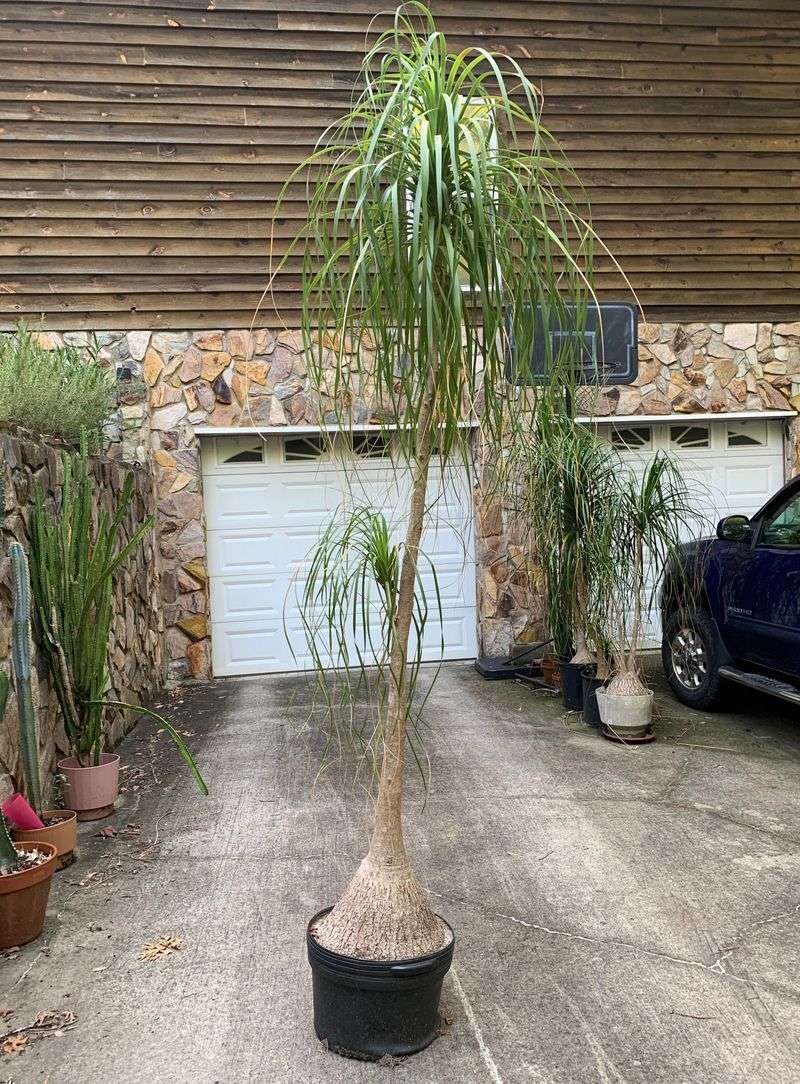
Take a close look at the bottom of a ponytail palm, and you’ll spot its big secret.
That swollen, bulb-like trunk base is basically a built-in water bottle. When you forget to water, the plant quietly sips from its own stored supply.
Despite the name, ponytail palm is not a real palm at all.
Known as Beaucarnea recurvata, it comes from dry areas of eastern Mexico and, like snake plant, belongs to the Asparagaceae family. Its long, curly leaves spilling from the top give it that playful look.
Because of that swollen base, the plant handles drought far better than most houseplants.
Water deeply only when the top couple of inches of soil are dry, which may be every two to four weeks in summer. In winter, you might go a month or longer.
Brown leaf tips are common and usually harmless, often caused by dry air or uneven watering.
A soft, squishy trunk, though, is a warning sign of overwatering and rot. Always use a well-draining mix and a pot with a hole in the bottom.
Bright light keeps it happiest, though it adjusts to medium light indoors. It grows slowly, so a small plant can stay tabletop-sized for years.
7. String Of Pearls Stores Water In Tiny Beads
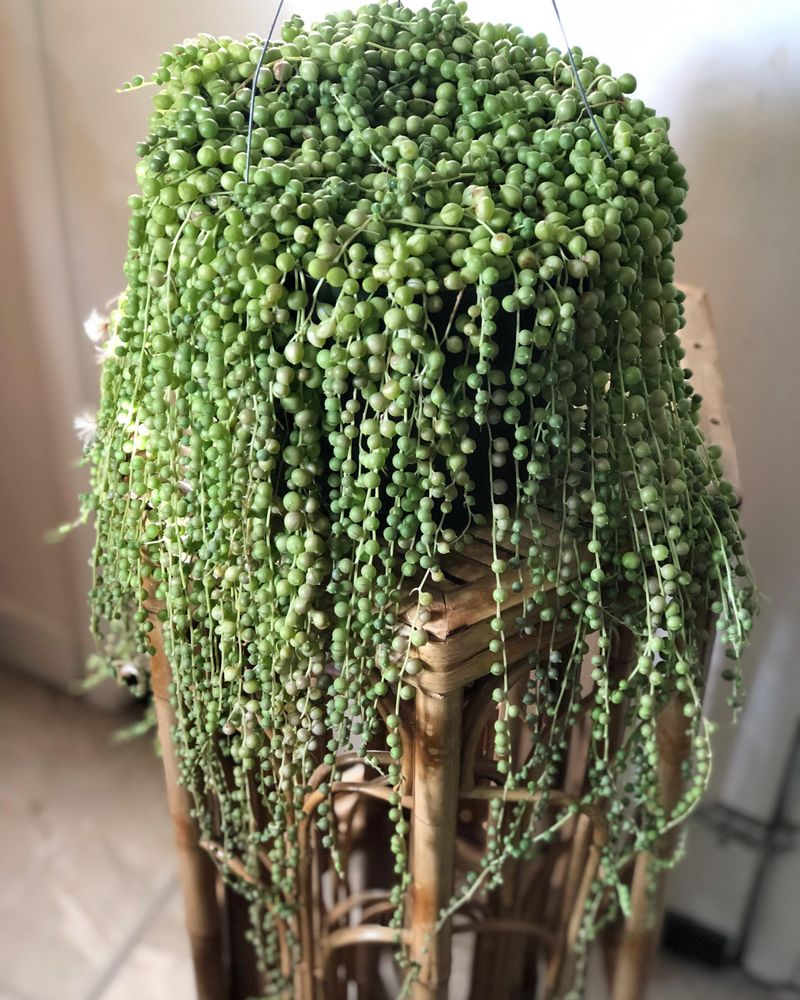
Hanging from a basket, string of pearls looks almost too delicate to survive neglect, yet those tiny round beads are exactly what make it so forgiving.
Senecio rowleyanus, native to dry parts of southwest Africa, packs each pearl-shaped leaf with stored water, letting the whole trailing vine coast through weeks without a drink.
That storage trick means the plant actually prefers being left alone between waterings rather than fussed over constantly.
Soggy soil causes far more trouble than a missed watering ever would, since the thin trailing stems rot quickly if they sit in consistently damp mix.
Bright, indirect light suits it best, ideally near an east or south-facing window where it gets several hours of sun without the harshest midday rays scorching the delicate pearls.
Water only when the soil has dried out completely, then soak thoroughly and let it drain. In summer that might mean every two weeks, stretching to a month or longer in winter.
Trailing stems can grow several feet long over time, making it a favorite for hanging planters, shelves, or anywhere it can spill downward without getting tangled.
One caution worth knowing: string of pearls is toxic to cats and dogs if chewed, so hang it somewhere curious pets cannot easily reach.
8. Consistency Matters Less Than People Assume
Let’s be honest about one thing. No plant is truly indestructible, and even the hardiest succulent will eventually give up without any water or light.
The good news is that these plants give you a huge amount of wiggle room compared to fussy tropical houseplants.
Many new plant owners worry about watering on a strict schedule.
With succulents, a rigid calendar can actually cause trouble, because a plant in a cool, dim room drinks much less than one in a hot, sunny window.
The basic rules are short.
Give them bright or at least indirect light, use fast-draining soil in pots with drainage holes, and water deeply only when the soil is dry. That simple routine covers almost every plant on this list.
Most problems come from too much care, not too little.
Soggy soil and frequent sprinkles cause far more deaths than a missed watering or two. If you’re unsure, waiting a few more days is usually the safer choice.
California’s dry indoor air and generous sunshine already work in your favor. Pick the right plant for your light, skip the guilt when life gets busy, and let these tough growers do what they do best.