Why More Arizonans Are Planting Red Bird Of Paradise Along Their Driveways This Fall
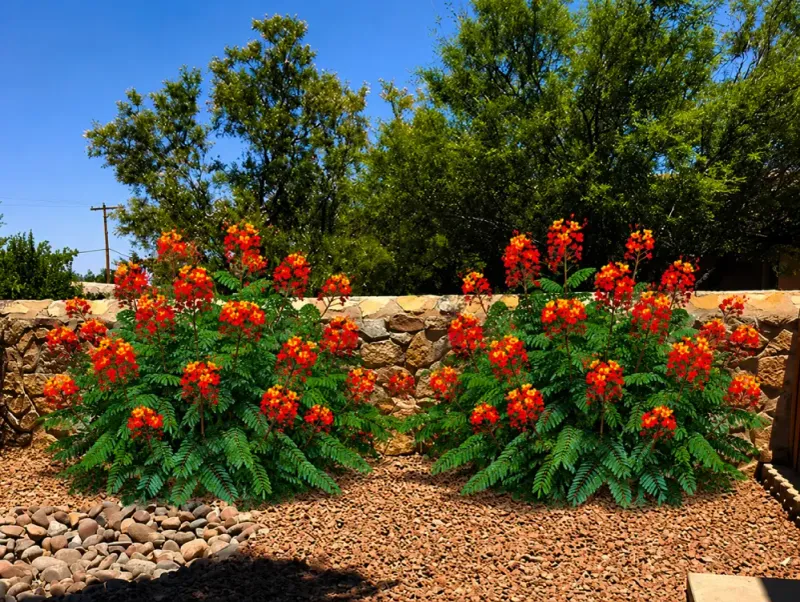
Red bird of paradise is turning heads along driveways across the low desert this fall, and it is easy to see why. The shrub throws out clusters of bright red and orange flowers through the hottest months of the year, then keeps going well into autumn.
If you are thinking about adding one to your property, there is a lot worth knowing before you dig the first hole.
A low-desert fit, not an Arizona native
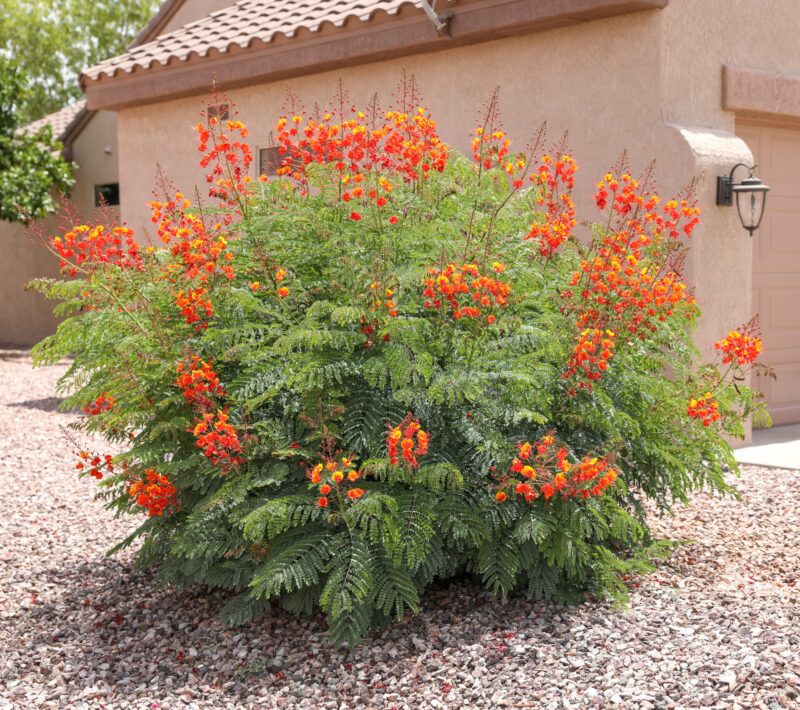
Caesalpinia pulcherrima is the plant most Arizona nurseries sell as red bird of paradise, and getting that name right matters. A completely different plant, the tropical Strelitzia, also goes by “bird of paradise” on store tags, so confirming the Latin name before you buy saves a lot of confusion.
The two plants look nothing alike in flower, and only Caesalpinia pulcherrima is suited to low-desert landscapes.
As University of Arizona Extension guidance on bird-of-paradise shrubs makes clear, this plant is non-native and well adapted to the low desert, not a plant that evolved in Arizona soils. Its original range is uncertain because it has been cultivated so widely across tropical and subtropical regions for centuries.
Calling it a native plant would be inaccurate.
Frost sensitivity is the biggest geographic limitation to keep in mind. The shrub can handle temperatures down into the lower 20s Fahrenheit, but anything below freezing will likely send it to the ground.
It typically regrows from the roots in spring, but that cycle makes it a poor fit for higher-elevation Arizona communities where hard freezes are common. The advice here applies to warmer, low-desert areas like the Phoenix and Tucson metros.
How long does the color last?
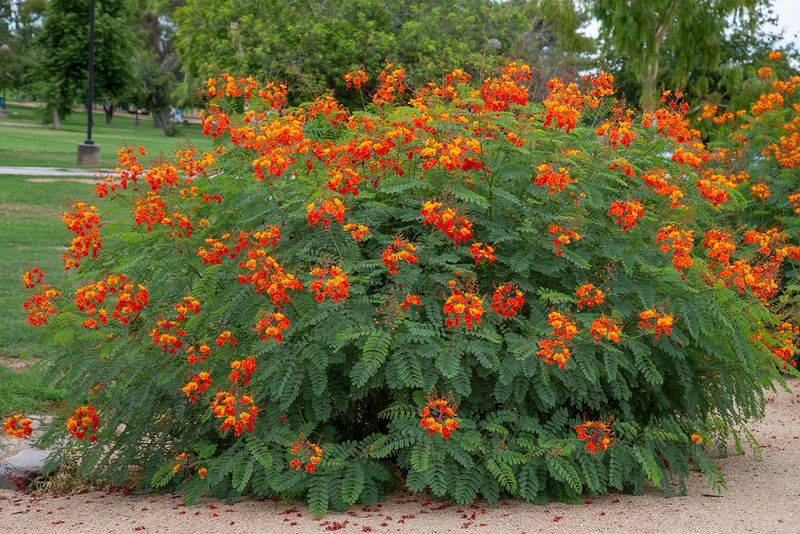
The flowers on red bird of paradise are genuinely striking: loose, ruffled clusters of red and orange with long stamens that catch the light. They appear during warm months, which in the low desert can mean a long run of color compared to plants that bloom only in spring.
The Arizona-Sonora Desert Museum plant-care sheet for Caesalpinia pulcherrima puts the Tucson flowering window from April or early May through November. That is a useful reference point, not a promise that every shrub in every yard will hit exactly those dates.
Weather, sun exposure, irrigation frequency, and the specific microclimate around your driveway all influence when and how heavily the plant blooms in a given year.
Butterflies use the flowers as a nectar source, which adds some wildlife interest to a driveway planting. That is a real tendency of the plant, not a guarantee that your yard will fill with pollinators on any particular day.
Think of the color and the occasional butterfly visit as a seasonal bonus that varies with conditions, rather than a fixed schedule you can count on every spring and fall.
Drought tolerance depends on the display you want

One of the most common misunderstandings about red bird of paradise is that “drought tolerant” means the plant needs almost no water. That is only partly true, and the part that gets left out matters quite a bit when you are deciding how to irrigate.
Your Arizona Garden Changes Every Week. Your Plan Should Too.
Gardening in Arizona changes quickly throughout the season. Every Friday you’ll receive a simple weekly plan showing exactly what to plant, prune, fertilize, harvest, and protect so you never miss the right timing.
An established plant can survive on infrequent irrigation, and University of Arizona Extension notes that monthly watering is possible once the shrub is settled in. However, the same Extension guidance also recommends weekly spring and summer watering if you want continuous blooms rather than occasional ones.
The Desert Museum goes further, suggesting deep warm-season watering roughly every five days for best flowering performance. Those are meaningfully different schedules, and neither one is wrong: they reflect different goals.
If a sparse flush of flowers a few times a season is fine with you, less frequent irrigation may be enough. If you want the shrub to put on a full show through the warm months, plan to water more often and adjust based on how the plant responds.
Soil type, sun exposure, and your irrigation setup will all shift the right answer for your specific driveway location. Arizona Extension establishment watering guidance reinforces that new transplants always need regular irrigation regardless of a plant’s long-term drought tolerance, so do not cut back too soon after planting.
Why fall can be a sensible planting window
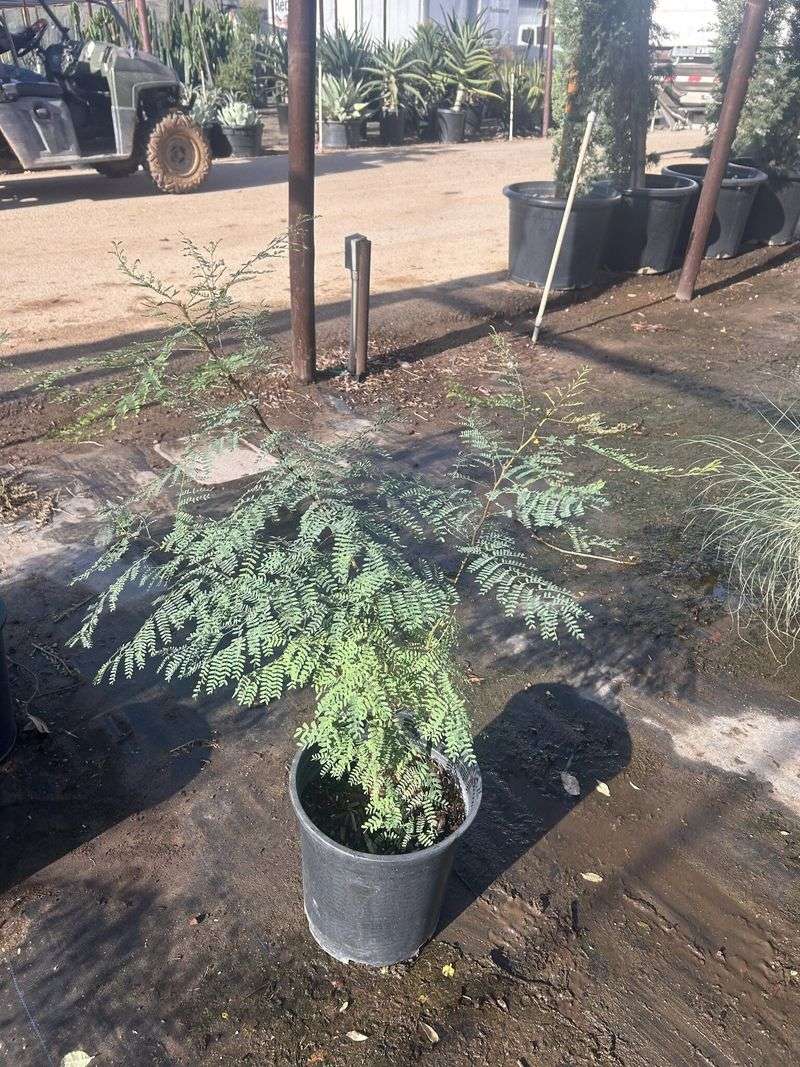
Planting a shrub in fall can feel counterintuitive if you are used to thinking of spring as the universal start of the gardening season. In the low desert, though, the calendar flips.
Summer heat is hard on transplants, and fall brings the combination of cooler air and still-warm soil that gives roots a real chance to spread before the plant faces any stress.
University of Arizona Extension recommends planting container trees and shrubs early in October for the low desert, when that warm-soil, cool-air window is typically open. The October gardening guide for Pima County echoes this timing as a general opportunity for shrubs and trees across the region.
Both sources frame fall as a favorable planting period broadly, not as a guarantee tied to any one species.
For red bird of paradise specifically, fall works when local temperatures have eased off the extreme highs and are not yet dipping below freezing at night. If you are planting later in the season and nighttime lows are starting to drop, hold off until the following spring rather than rushing a transplant into cold soil.
The window is real, but it is conditional on what the weather is actually doing in your neighborhood when you are ready to plant.
Give the transplant a careful start
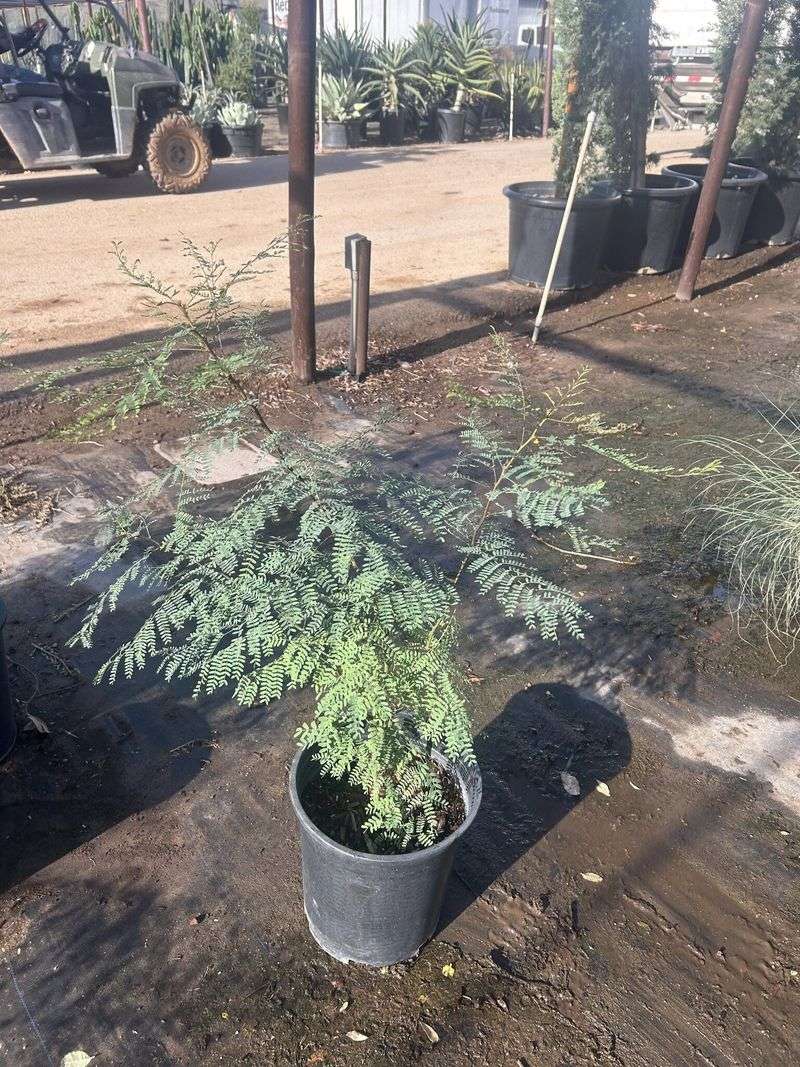
Getting the planting hole right sets up everything that follows. Dig the hole as deep as the root ball and roughly two to three times as wide, then set the shrub so the top of the root ball sits at or just slightly above the surrounding soil grade.
Planting too deep is one of the most common mistakes with container shrubs, and it can slow establishment or cause root problems over time.
Backfill with the native soil you removed, not a mix of compost or potting amendments. In low-desert conditions, University of Arizona Extension planting guidelines for container trees and shrubs advise against adding organic material to the backfill because it can actually discourage roots from moving out into the surrounding soil.
Save any compost for a light top-dressing if you want, but keep the hole itself filled with what came out of it.
Before you plant, check how water moves through the soil at that spot. Compacted or caliche-heavy ground can trap water around roots, which causes more problems than drought does.
Pour water into the empty hole and watch how quickly it drains. If it sits for more than an hour, either improve drainage or choose a different location.
Water thoroughly at planting, and keep a consistent irrigation schedule for the first season, adjusting the amount based on soil moisture, weather, and how the plant looks rather than a fixed number of minutes per week.
Leave room for the shrub beside the driveway
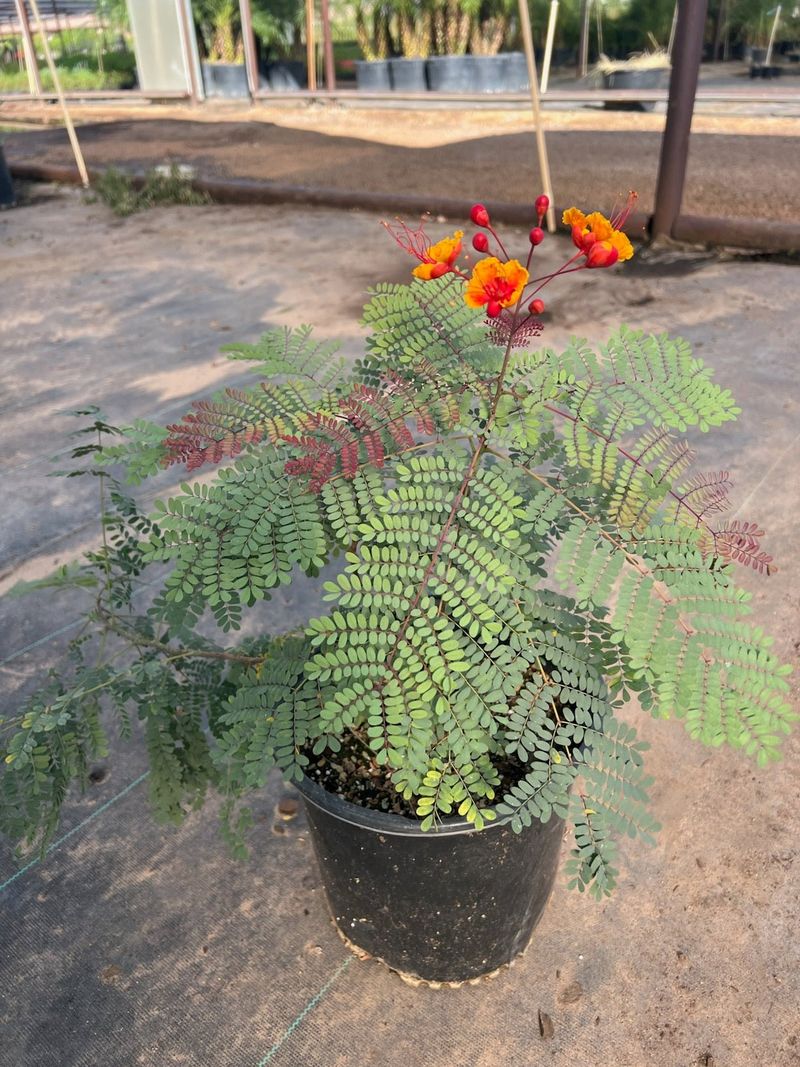
Mature size is the detail that catches people off guard with red bird of paradise. A shrub that looks compact in a one-gallon nursery pot can reach anywhere from 4 to 10 feet tall and 4 to 6 feet wide once it settles in and gets regular water.
That range is wide, and the upper end of it is a substantial plant.
Along a driveway, size matters for safety as much as aesthetics. A shrub positioned where it will eventually block a driver’s view of the street, a sidewalk, or an intersection is a hazard regardless of how good the flowers look.
University of Arizona Extension planting guidelines emphasize matching final plant size to the available space before you put anything in the ground, not after it has outgrown the spot.
The practical approach is to measure the area where you are thinking of planting and picture a shrub that is 6 to 8 feet tall and 5 feet wide in that exact location. If there is enough clearance to maintain open sightlines from the driver’s seat, the spot likely works.
If the space is tight near a corner, a gate, or a street entrance, either choose a smaller plant or move the planting spot further back where growth will not become a visibility problem over time.
Ripe seeds call for a simple safety precaution
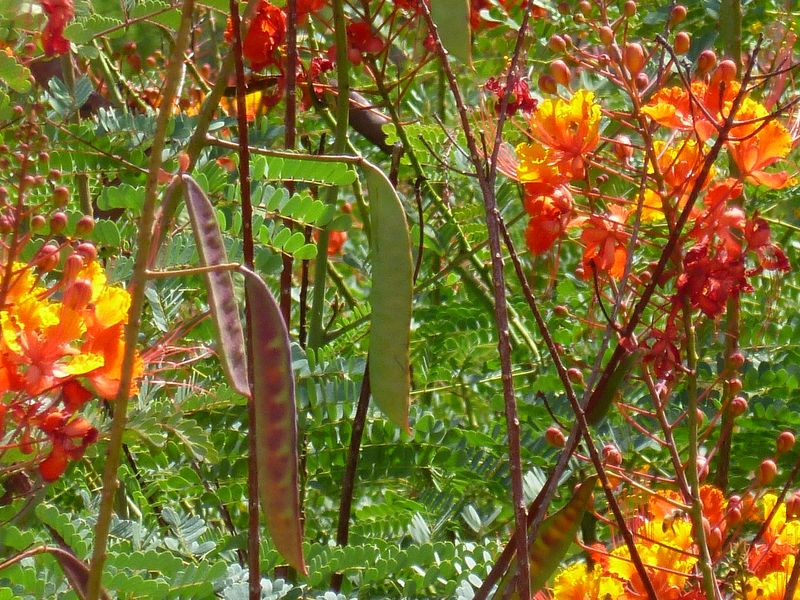
Red bird of paradise produces seedpods as the flowers fade, and those pods are worth paying attention to if you have children or pets in the yard. University of Arizona Extension specifically notes that the ripe seeds are poisonous.
That warning applies to the seeds, not necessarily every part of the plant, but it is reason enough to take a few simple steps.
Removing seedpods before they mature and drop is an easy habit to build into seasonal maintenance. Wear gloves when handling them, and dispose of the pods where children and animals cannot reach them.
If you suspect a child or pet has eaten any part of the plant, contact Poison Control or a veterinarian right away rather than waiting to see whether symptoms develop. Do not assume a small amount is harmless.
The seed-safety issue does not make red bird of paradise an unusually dangerous plant for a typical yard, but it does mean the shrub deserves the same thoughtful placement you would give any plant with a known toxicity concern. A spot that is easy to monitor and maintain is a better choice than one tucked away where seedpods might go unnoticed for weeks at a time.
Choose it for the right reasons
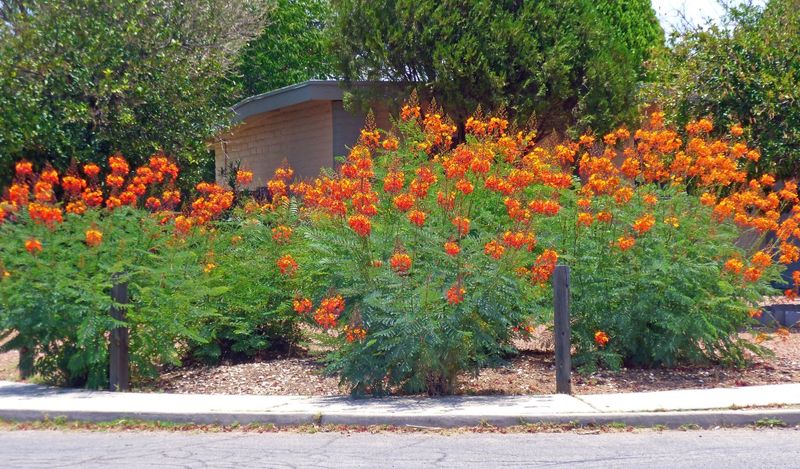
Red bird of paradise can be a genuinely good fit for a sunny, open driveway in the low desert when your expectations match what the plant actually does. It brings warm-season color that few other shrubs can match in triple-digit heat, it tolerates infrequent irrigation once established, and it can attract butterflies during its long flowering window.
Those are real strengths.
What it is not: a native plant, an instant no-water solution, or a shrub suited to every corner of Arizona. A new transplant needs regular water to get established, ongoing irrigation choices will shape how heavily it blooms, and frost-prone locations will send it to the ground each winter.
Fall is a reasonable time to plant one in the low desert, not because a trend says so, but because warm soil and cooling air give roots a solid start before the plant faces any real stress.
Pick it because the site fits, the size works, and you are ready to manage the watering and seasonal maintenance it needs. A plant chosen for the right reasons tends to stay in the ground.