When Arizona Hits 104 Degrees, Honeybees Stop Foraging And Turn Their Hive Into An Air Conditioner
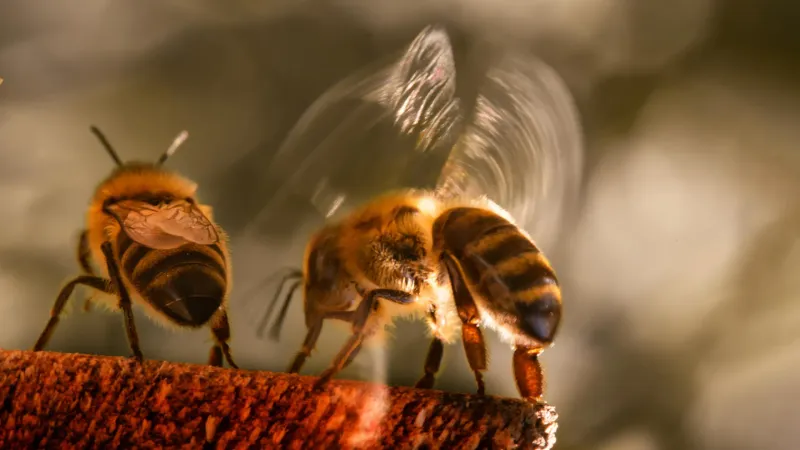
On a blazing Arizona afternoon, the inside of a honeybee hive stays remarkably cool while the desert bakes everything else. Worker bees pull off this feat using nothing but their wings, their bodies, and carefully placed drops of water.
Understanding how they do it reveals one of nature’s most impressive survival tricks, and it also helps Arizona homeowners know when to step back and let the bees handle things on their own.
104°F Is Not a Universal Foraging Cutoff
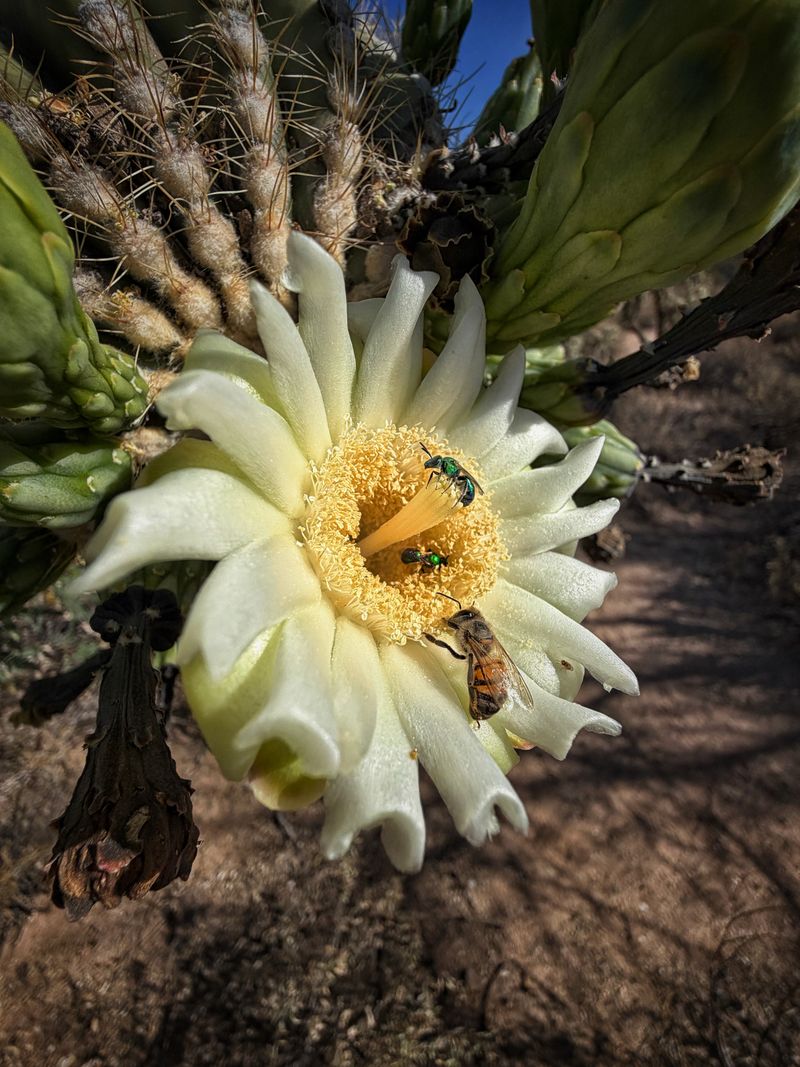
Plenty of people assume that once Arizona’s air temperature hits 104°F, every honeybee in the state parks itself inside the hive and waits for cooler weather. The real picture is more complicated, and more interesting.
A 1985 Sonoran Desert field study recorded bees foraging at shade temperatures above 40°C (104°F), while also noting that pollen collection was curtailed above that threshold. In other words, some foraging continued even when the thermometer crossed that mark, though the bees shifted what they were doing.
That field result does not mean every colony keeps sending workers out regardless of heat. A separate experiment, conducted in a temperature-controlled room, found that nectar-loaded bees could still fly at 104°F under those controlled conditions.
That controlled-room finding is useful, but it does not tell us how often bees forage in full Arizona sun at that temperature, where radiant heat, dry air, and long distances make the situation far more demanding.
Neither result supports a single, universal switch that flips at 104°F for every bee or every colony. Heat clearly affects foraging behavior, including what bees collect and how long they stay out, but the relationship is gradual and variable, not a hard cutoff shared by all colonies in all conditions.
The Brood Nest Is the Temperature Target
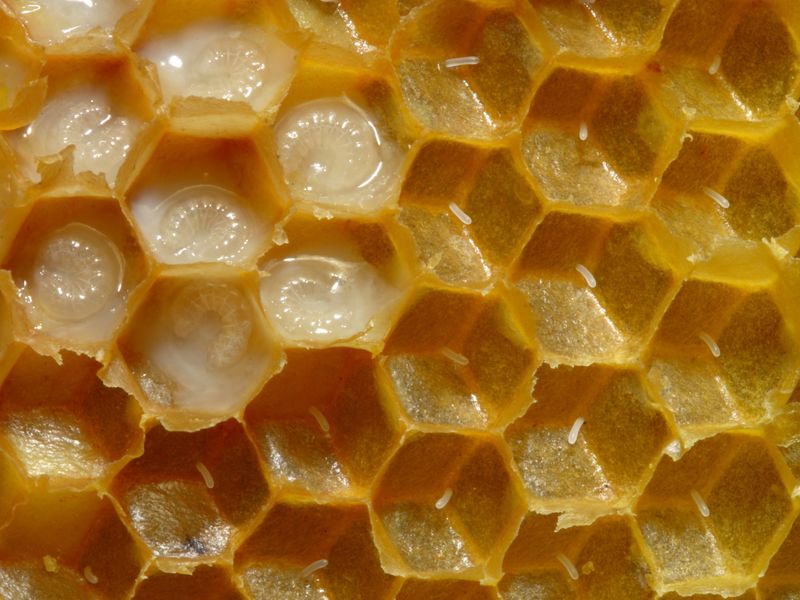
Worker bees do not try to air-condition every corner of the hive equally. Their real priority is the brood nest, the zone where eggs, larvae, and pupae develop into the next generation of workers.
Keeping that area within a narrow temperature band is critical because developing bees are surprisingly sensitive to heat.
Research on honeybee colony thermoregulation found mean capped-brood temperatures falling between roughly 34.8°C and 35.9°C in field conditions, which translates to about 94.6°F to 96.6°F. That is a narrow band, but it is still a range, not a single locked-in number.
University of Arizona Cooperative Extension offers beekeepers a practical target of 93°F to 95°F for the brood nest, which lines up with what field measurements show.
Both figures point to the same takeaway: colonies regulate the brood area within a range, and that range can shift slightly depending on conditions, colony strength, and where exactly in the comb the measurement is taken. Outer edges of the hive, honey storage areas, and the entrance can all run at very different temperatures from the brood core.
Thinking of the hive as one uniformly climate-controlled space misses how targeted and dynamic the bees’ effort actually is.
Water Helps Cool the Comb Through Evaporation
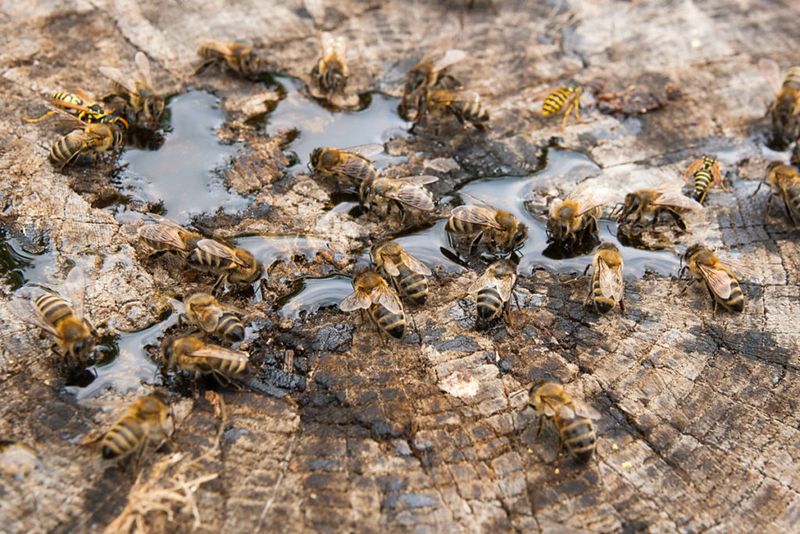
When summer heat builds, water becomes one of the hive’s most important resources. Forager bees leave the hive specifically to collect water, carrying it back in their crops the same way they carry nectar.
Your Arizona Garden Changes Every Week. Your Plan Should Too.
Gardening in Arizona changes quickly throughout the season. Every Friday you’ll receive a simple weekly plan showing exactly what to plant, prune, fertilize, harvest, and protect so you never miss the right timing.
Once inside, workers spread tiny droplets across the surface of the comb, especially near the brood cells that need protection from rising temperatures.
Evaporation does the heavy lifting from there. As each droplet turns to vapor, it carries heat away from the comb, pulling the local temperature down in much the same way sweat cools human skin.
Peer-reviewed research on water-collecting honeybees describes this process in detail, showing how the energetics of water collection and evaporative cooling are tightly linked to the colony’s heat-management effort.
It is worth being precise about what the bees are doing: workers spread water droplets onto the comb surface. They do not spray or mist the interior of the hive the way a garden hose would.
The droplets are placed deliberately, concentrated where cooling is needed most, and the colony’s fanning behavior then accelerates evaporation. Together, water placement and airflow create a localized cooling effect around the brood, not a uniform drop in temperature throughout the whole structure.
Fanning Moves Air for More Than Cooling
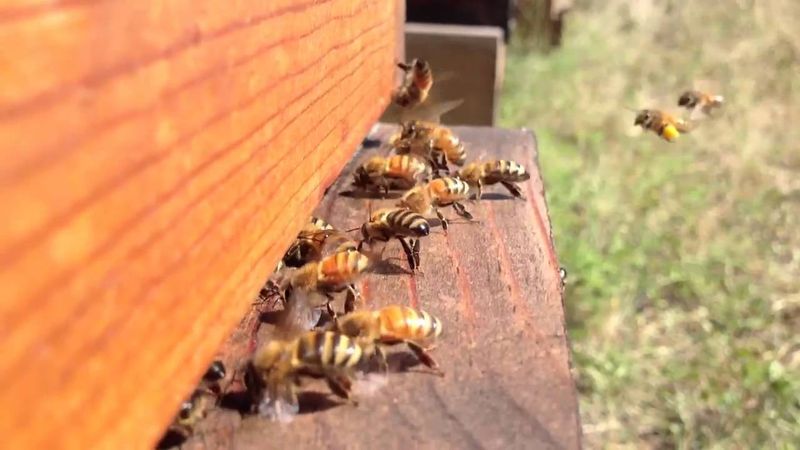
Walk past an active hive on a hot afternoon and you will likely hear a steady hum coming from the entrance. Many of those bees are fanning, beating their wings rapidly to push air through the hive.
During heat stress, fanning intensity increases noticeably, and it works in tandem with the water droplets spread on the comb, speeding up evaporation and helping move cooler air toward the brood area.
Fanning does not exist solely for temperature control, though. The same wing motion that moves heat out also drives fresh air in, supporting gas exchange for the colony.
Bees also fan to evaporate excess water from nectar as it cures into honey, reducing moisture content until the honey is stable enough to store. So when you see a cluster of bees fanning at the entrance, they could be responding to heat, processing a recent nectar haul, or managing carbon dioxide levels inside the hive.
Often they are doing more than one of these things at once.
Recognizing this overlap matters because it means fanning alone is not a reliable signal that a colony is overheating. Context, season, and what else is happening in the hive all factor in.
Beekeepers learn to read fanning alongside other cues, such as bees clustering outside the hive in a behavior sometimes called bearding, to judge whether a colony needs extra support on a hot day.
The Colony’s Cooling Capacity Has Limits
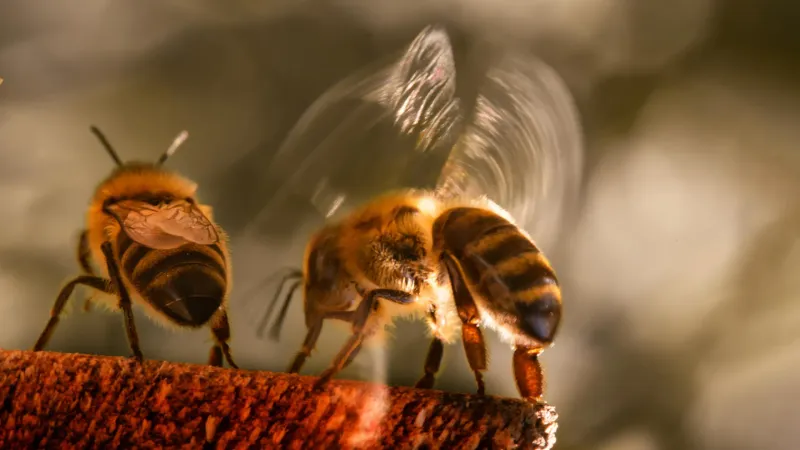
Describing a beehive as nature’s air conditioner makes for a vivid image, but the comparison only holds up to a point. Worker bees are remarkably effective at buffering the brood area against heat, yet the colony’s ability to do so is not unlimited.
Push the ambient temperature high enough, for long enough, and the system starts to strain.
A 2026 study on the limits of honeybee colonial thermoregulation found that extreme heat exposure could push brood temperatures into a range that risks developmental damage. That is not a flaw in the bees’ strategy; it is simply the boundary of what evaporative cooling and fanning can accomplish when ambient heat is severe enough and sustained long enough to overwhelm the colony’s resources.
Several factors can make things harder for a colony in an Arizona summer: a hive positioned in full afternoon sun with no shade, a limited water source nearby, or a small colony that cannot muster enough fanners and water carriers to keep up with demand. Each of these conditions chips away at the margin between a well-regulated brood nest and one that is getting dangerously warm.
The bees work hard, but they are working against real physical constraints, not operating a system with infinite headroom.
Managed Hives Need Care; Wild Colonies Need Distance
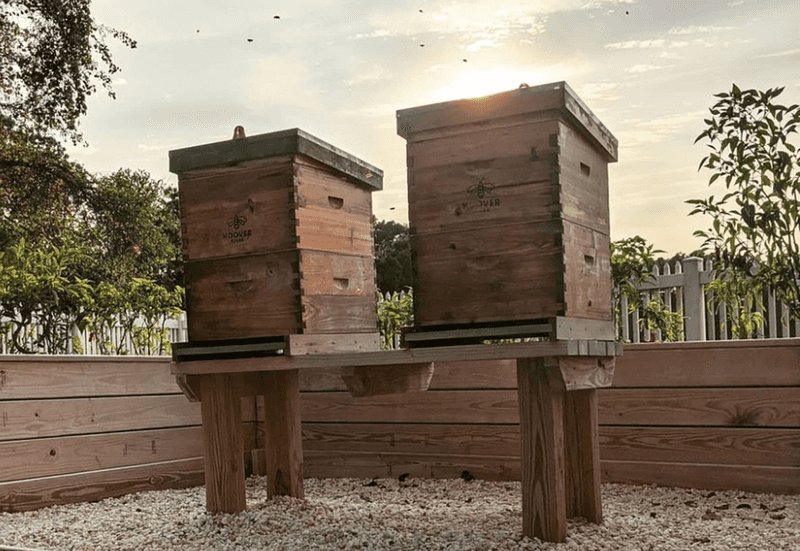
For anyone keeping bees in Arizona, summer management is a genuine responsibility. University of Arizona Cooperative Extension guidance for managed hives recommends placing hives where they receive afternoon shade, ensuring a reliable water source close enough that foragers do not have to travel far under peak heat, and checking that ventilation allows warm air to escape.
These steps reduce the load on the colony’s own cooling system and give workers a better chance of keeping the brood area within a safe range.
Homeowners who spot a wild colony or swarm near their property face a completely different situation. Arizona Extension’s community safety guidance is straightforward: keep people and pets away from the colony and contact a trained professional.
Do not approach the hive, attempt to open it, or spray it with water in an effort to help the bees cool down. Wild colonies can be Africanized honeybees, which respond to disturbance aggressively, and any well-meaning intervention can escalate quickly into a dangerous situation.
Providing a water dish to support pollinators in a managed garden is a reasonable choice, but be aware that water sources can attract bees in numbers that create hazards near high-traffic areas. Placement matters.
The broader takeaway from all of this is that honeybee workers are genuinely capable of buffering brood-area heat through fanning and evaporation, without cooling every corner of the hive uniformly or shutting down all foraging at a fixed air temperature. Their system is impressive precisely because it is targeted, adaptive, and built for the desert.