The Blue-Tailed Lizard Arizona Gardeners Keep Spotting – And Why It Means Fewer Scorpions
Something quick and brilliantly blue-tailed just darted across your Arizona patio, and now you are wondering what it was and whether it is doing anything useful about your scorpion problem. That connection is worth exploring, but the full picture is more complicated than a simple yes.
Not every colorful lizard sighting in Arizona points to the same species, and spotting one does not guarantee your yard has fewer bark scorpions lurking nearby. What follows breaks down the real identification challenges, the documented predator-prey evidence, and the practical steps Arizona homeowners can take to make their homes genuinely less attractive to scorpions.
A Blue Tail Does Not Identify an Arizona Lizard
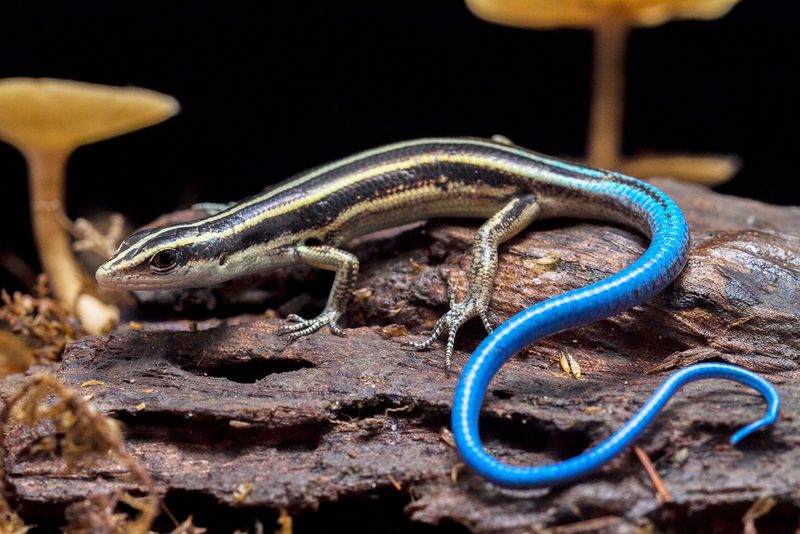
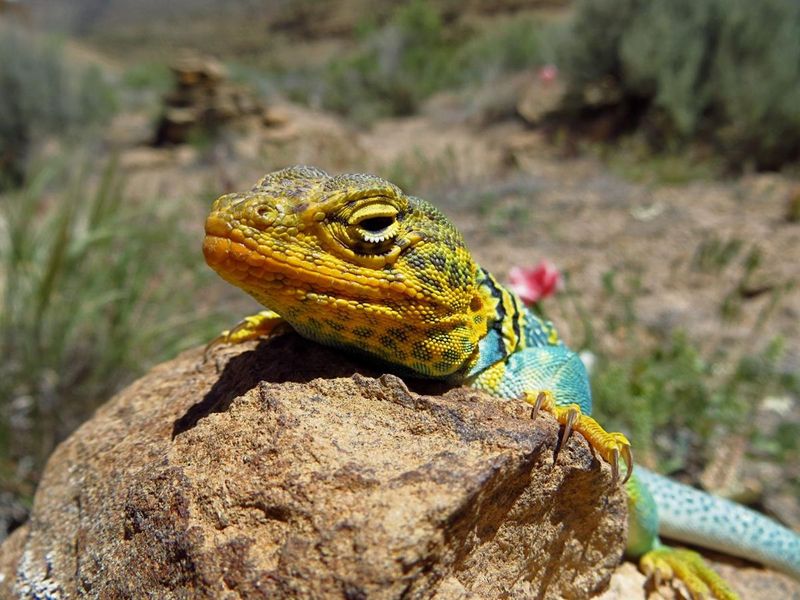
Calling something a “blue-tailed lizard” in Arizona tells you a color, not a species. Several skinks share that feature at certain life stages, and without more information, a blue tail alone cannot tell you which animal you are actually looking at in your Arizona yard.
Juvenile western skinks, many-lined skinks, Great Plains skinks, and mountain skinks can all display bright blue tails. According to the Arizona field guide entry for the mountain skink, the mountain skink is the Arizona skink most likely to retain a blue tail into adulthood, while the others typically fade as they mature.
Geography matters a great deal here. The mountain skink lives mainly in the southeastern Arizona sky-island ranges, typically between 3,500 and 6,500 feet in elevation.
The western skink is associated primarily with the Kaibab Plateau and the higher Arizona Strip, making either species an unlikely resident of a typical low-desert Phoenix or Tucson neighborhood.
Before attempting any species identification, record as much detail as possible. A clear photograph is the starting point, but body shape, stripe pattern, tail length and condition, the specific habitat where you saw the animal, the elevation, and your exact Arizona location all matter.
A blue tail is a clue, not a conclusion.
The Low-Desert Blue Flash May Come From Somewhere Else
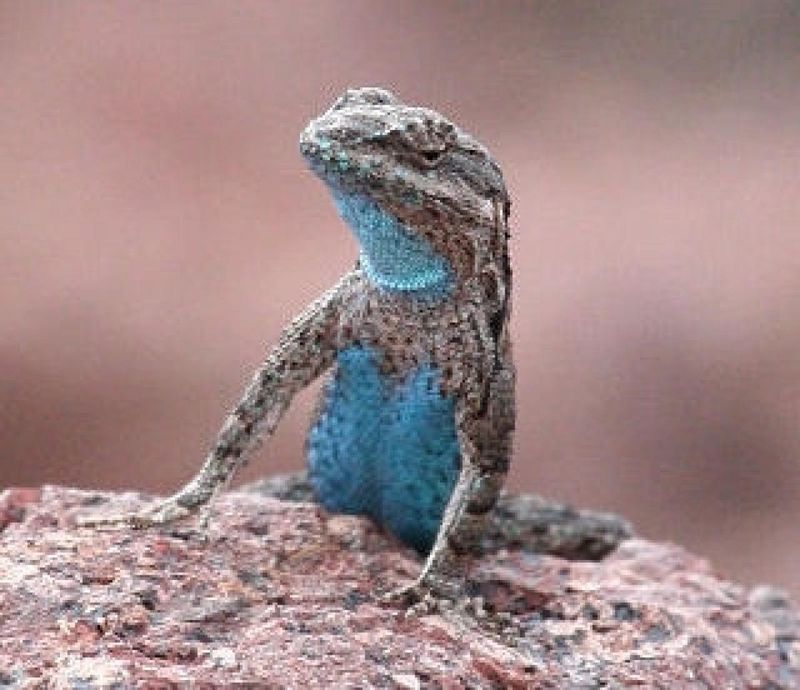
Many Arizona gardeners in the Phoenix and Tucson metro areas see a flash of blue on a lizard and assume it must be a tail. Quite often, the blue is somewhere else entirely.
Two of the most common urban lizards in low-desert Arizona carry striking blue coloring on the throat or belly, not the tail.
The ornate tree lizard is a small, fast climber regularly spotted on walls, fences, and buildings across Arizona. Males can show a vivid blue and orange throat patch that catches the eye in bright sunlight.
According to the Arizona field guide for ornate tree lizards, this species is widespread and diurnal, making it one of the reptiles Arizona residents are most likely to notice during the day.
Desert spiny lizards, documented in southwestern Arizona including Sonoran Desertscrub and Maricopa County habitats, can also display blue coloring on the belly and throat of males. A quick glance at a basking desert spiny lizard could easily register as a “blue lizard” without specifying where that color actually sits on the body.
Your Arizona Garden Changes Every Week. Your Plan Should Too.
Gardening in Arizona changes quickly throughout the season. Every Friday you’ll receive a simple weekly plan showing exactly what to plant, prune, fertilize, harvest, and protect so you never miss the right timing.
Body pattern, behavior, climbing habits, and exact Arizona location matter far more than a single patch of color. A lizard seen running up a stucco wall is behaving very differently from one slipping under a rock, and that behavior is already a meaningful identification clue.
The Sonoran Tiger Whiptail Is a Documented Scorpion Predator
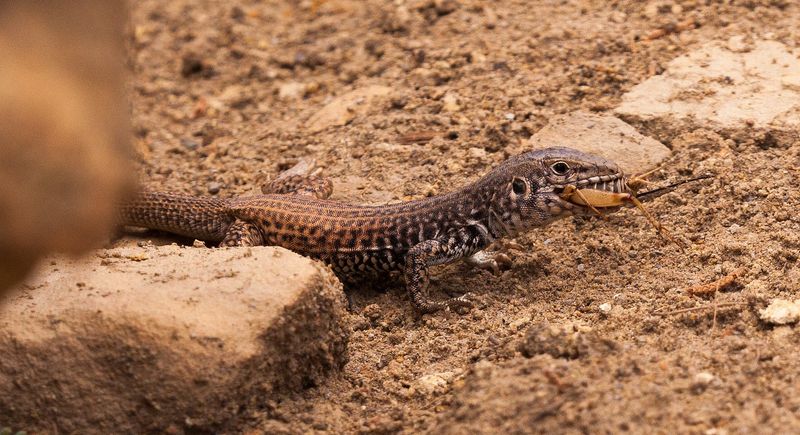
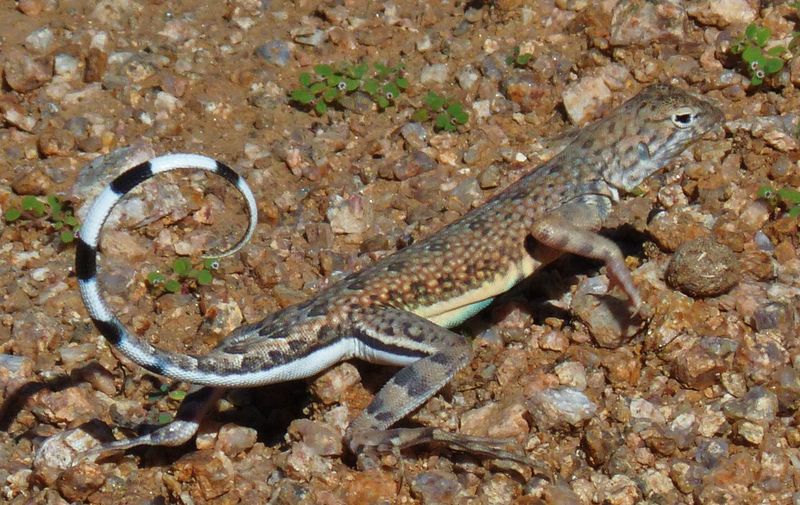
Among all the lizards living in Arizona, one species has the clearest documented connection to scorpion predation. The Sonoran tiger whiptail is a fast, alert, daytime-active lizard found across desert and semiarid Arizona habitats, and it is the animal behind the most credible part of the lizard-scorpion story.
The National Park Service, in its profile of lizards at Saguaro National Park, lists insects, spiders, scorpions, and other lizards among the Sonoran tiger whiptail’s prey. That puts scorpions on the menu for at least one Arizona lizard in a concrete, sourced way.
The Saguaro National Park lizard overview covers several Arizona species and makes clear that the whiptail is an active forager that covers a lot of ground searching for prey.
That evidence supports describing some Arizona lizards as natural scorpion predators. What it does not support is calling every blue-tailed or otherwise colorful lizard a scorpion hunter, or assuming that a whiptail sighting in an Arizona yard will change the number of bark scorpions finding their way into a home.
The Sonoran tiger whiptail is a legitimate part of Arizona’s desert food web. Recognizing it as a scorpion predator is accurate and worth knowing.
Treating it as a pest-control solution is a different claim, and that leap is not supported by what the available evidence actually shows.
Eating a Scorpion Does Not Control a Household Population
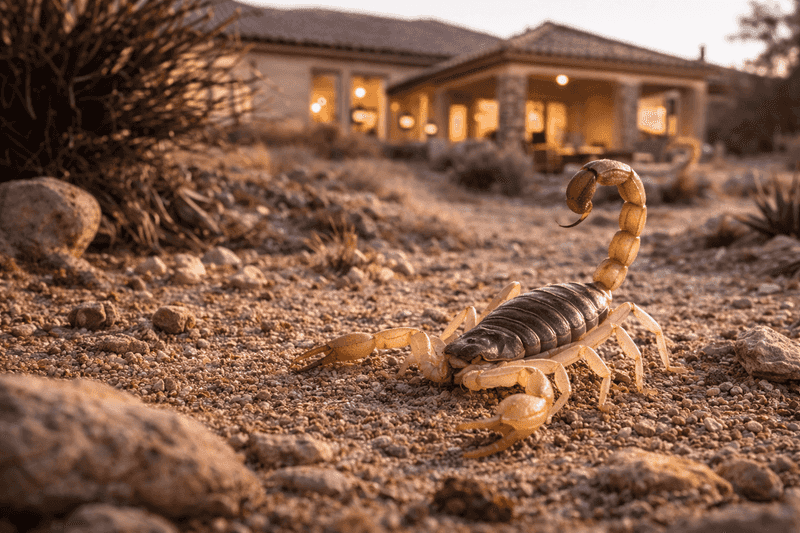
A lizard eating one scorpion is an interesting ecological event. It is not a pest-management strategy.
The gap between those two things is wide, and closing it requires much more than a predator living somewhere in the neighborhood.
Arizona bark scorpions thrive wherever they find shelter, moisture, and insect prey. They can squeeze through gaps as small as a credit card’s thickness and are well-suited to surviving around Arizona homes regardless of what predators are active nearby.
The University of Arizona Cooperative Extension notes in its
scorpion management guide that pesticide treatment alone is not sufficient and that exclusion and habitat modification are essential components of any real control effort.The predator-prey relationship between Arizona lizards and scorpions also runs in both directions. A scorpion can be the prey, but it can also be the predator.
A documented Arizona observation recorded an adult giant hairy scorpion capturing a juvenile desert horned lizard in the Cabeza Prieta National Wildlife Refuge, holding it in its chelicerae and pedipalps for roughly 30 minutes before the lizard broke free. That account, published in herpetological literature and available at a peer-reviewed bibliographic archive, is a useful reminder that small lizards are not invulnerable to scorpions.
Venom tolerance adds another layer of complexity. Some predator species may handle scorpion encounters better than others, but that evidence is species-specific.
Generalizing it to every Arizona lizard as a form of immunity overstates what the science actually shows.
Other Yard Lizards Eat Arthropods Without Proven Pest Reduction
Beyond the Sonoran tiger whiptail, Arizona yards host several other lizard species that consume a wide range of arthropods. Their diets are real, documented, and worth appreciating.
What the field guides do not claim is that any of these animals provide dependable bark-scorpion control or produce measurable reductions in residential pest numbers.
Ornate tree lizards, those small climbers so common on Arizona walls and fences, eat aphids, beetles, flies, ants, wasps, termites, moths, grasshoppers, crickets, and spiders. That is an impressive list of arthropod prey for an animal that fits in your palm.
The Arizona field guide for this species documents the diet thoroughly without suggesting that the lizard’s presence translates into fewer pests in any measurable way around an Arizona home.
Desert spiny lizards add insects, spiders, centipedes, small lizards, and some plant material to the picture. They are opportunistic feeders that respond to what is available in their Arizona territory, which in urban and suburban areas can include a surprising variety of invertebrates.
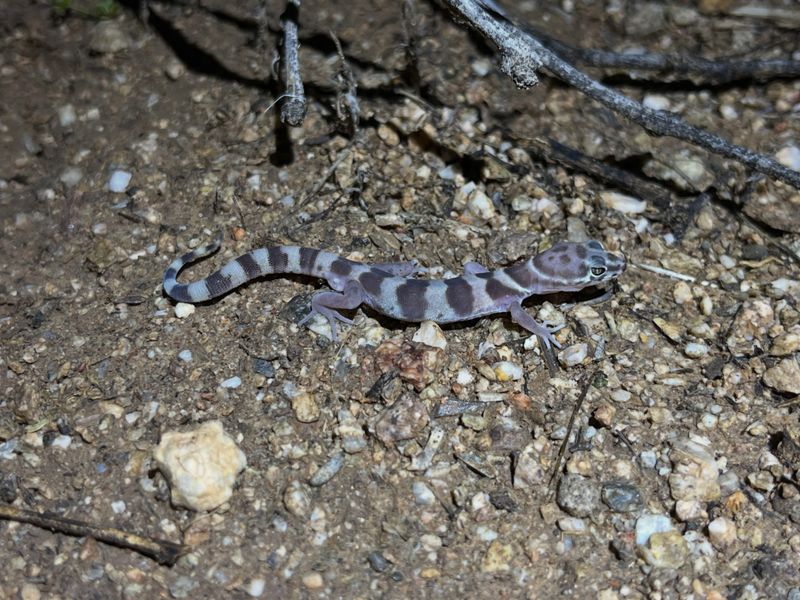
Western banded geckos bring a nocturnal dimension to the story. These pale, large-eyed lizards are active at night in many Arizona desert communities and feed mainly on insects and spiders.
The Arizona field guide for the western banded gecko describes that diet without establishing that the species routinely targets or reduces bark-scorpion populations around buildings.
All three of these Arizona lizards participate in the local food web as arthropod consumers. That role is genuine.
Calling it pest control, however, goes beyond what the sources actually document.
Start Scorpion Management at the Home’s Entry Points
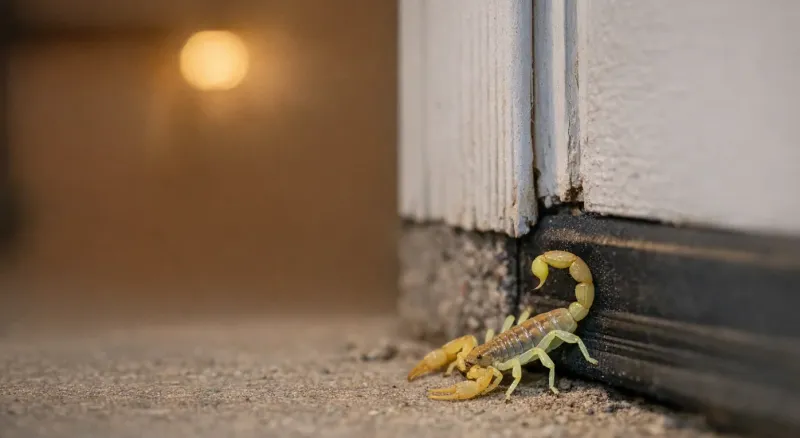
No lizard sighting changes what needs to happen at the foundation, door frames, and utility penetrations of an Arizona home. Physical exclusion is where scorpion management actually begins, and that work requires tools, not wildlife.
University of Arizona Cooperative Extension guidance recommends sealing cracks and gaps in exterior walls, foundations, and around plumbing and electrical penetrations. Door sweeps on all exterior doors, properly fitted window screens, and sealed gaps around garage doors are all part of the same barrier strategy.
These are evidence-informed priorities for Arizona homeowners, not guaranteed fixes, but they address the actual pathways scorpions use to enter structures.
Reducing harborage near the home matters just as much as sealing entry points. Stacked firewood, loose rock piles, cardboard, and dense ground cover placed directly against an Arizona foundation all create shelter that scorpions and their insect prey will use.
Moving those materials away from the building removes the staging area scorpions rely on before entering.
Vegetation management is part of the same approach. Pruning shrubs and trees so that branches do not contact exterior walls removes a travel route that scorpions and other arthropods use to bypass ground-level barriers.
Keeping mulch and organic debris thin near the foundation reduces moisture and shelter at the same time.
Arizona homeowners should not rely on lizards as their primary scorpion-management method. The exclusion and cleanup steps described here are recommended by the University of Arizona because they address the structural and habitat conditions that allow scorpions to thrive near and inside Arizona homes.
Protect Lizards Without Building Scorpion Shelter
Appreciating Arizona’s lizards and keeping scorpions out of the house are not competing goals. With a little thought about placement and design, an Arizona yard can support native wildlife without creating the harborage conditions that make scorpions comfortable close to the home.
The best starting point is observation. Watch lizards from a distance, learn their habits, and resist the urge to feed them or set out water specifically to attract them.
Arizona Game and Fish Department guidance is direct on this point: keeping wildlife wild means avoiding feeding, artificial attractants, and unnecessary handling. AZGFD’s
keep-wildlife-wild guidance applies to lizards just as it does to larger animals, and Arizona regulations govern the taking and possession of reptiles.Natural structure such as rock groupings, native shrubs, and brush piles can benefit wildlife, but placement matters enormously in Arizona. Keep those features away from the foundation rather than directly against the house.
A rock pile twenty feet from the wall provides lizard habitat without serving as a scorpion highway into the home.
Pesticide use deserves careful thought in any Arizona yard where lizards are present. EPA ecological risk guidance recommends using pesticides only when necessary, treating only areas that actually need treatment, and following label directions to reduce risks to non-target wildlife.
Broad-area spraying can affect the insect prey that lizards depend on and may harm the lizards themselves.
The blue flash darting across an Arizona patio is worth a second look and a careful photograph. Pair that curiosity with solid exclusion practices, and you have a genuinely useful approach to both wildlife appreciation and scorpion management in Arizona.