Indiana Maples Turning Red Ahead Of Schedule May Be Trying To Tell You Something
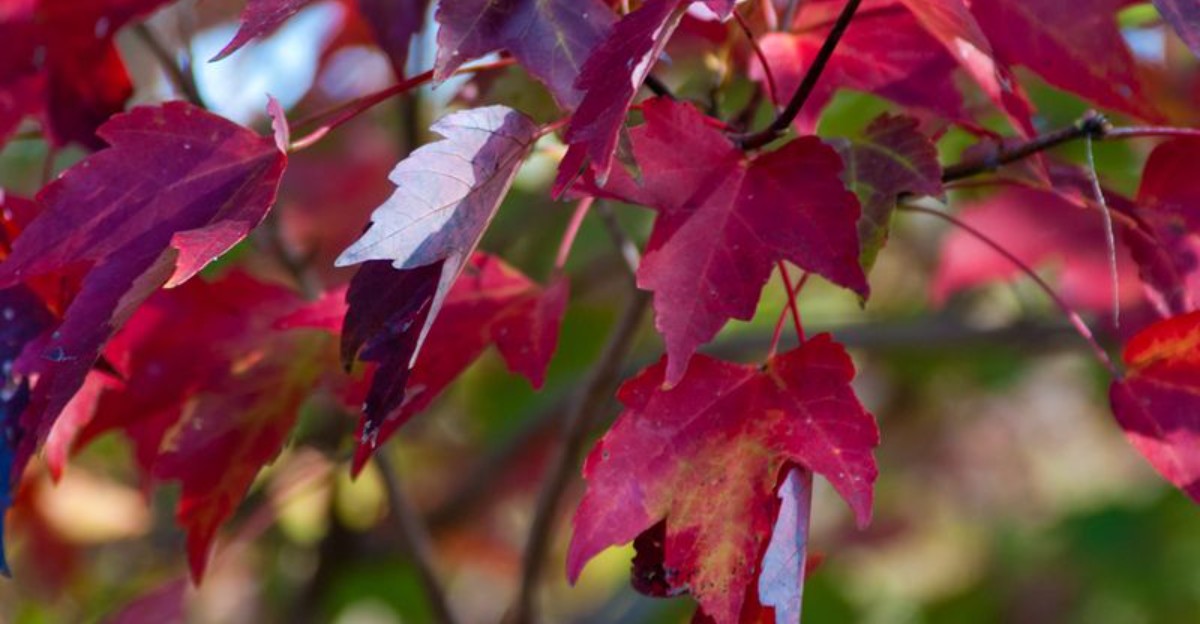
September in Indiana smells like cut grass, apple cider, and the first real hint of woodsmoke drifting in on the evening air. The mornings finally feel crisp, even though the afternoons keep acting like they forgot summer already left.
Then you glance out the kitchen window and spot a bold splash of scarlet somewhere it has no business being yet. It looks gorgeous, almost like the yard decided to get dressed for a party a little too early.
Your neighbor snaps a photo and calls it the prettiest thing on the whole block, phone held up like it’s the main event. You nod along and agree, but a tiny voice in the back of your head quietly asks why now.
Nature around here usually runs on a pretty strict calendar, one that rarely gets thrown off by more than a few days. So when one guest shows up weeks ahead of everyone else, it is worth pausing for a closer look.
Sometimes a bright color is just a cheerful surprise. Other times it is the leafy version of a toddler waving both arms for attention.
Early Color Linked To Tree Stress
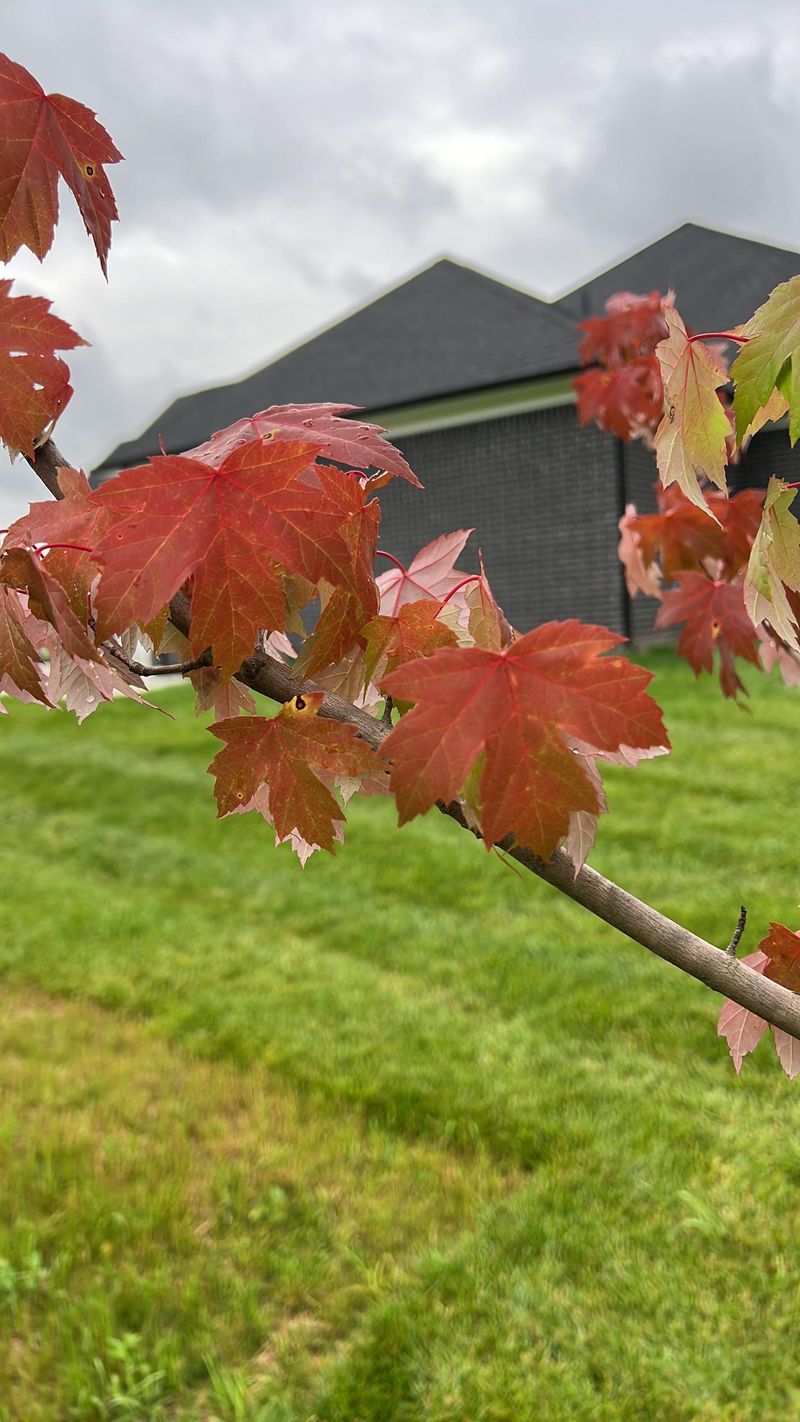
Picture a coworker who arrives at the fall party in mid-September wearing a full pumpkin costume. It is fun to see, but you might wonder what is going on.
A maple that blazes red weeks before its neighbors is acting much the same way. Arborists often read that early color as a sign the tree is under stress.
Here is how it works in simple terms. Leaves make green chlorophyll to turn sunlight into food, and a stressed tree slows that work down early.
Once the green fades, red pigments called anthocyanins take center stage. Red maples and sugar maples are especially quick to show this change when something bothers them.
Stress can come from many places, including heat, drought, pests, or damaged roots. Think of the red leaves as a check engine light rather than a final diagnosis.
Start by comparing your tree to others of the same kind nearby. If yours is the only one glowing, the cause is probably local to your yard.
Snap a dated photo each week through September and October. Those pictures help you, or a certified arborist, spot patterns and decide if action is needed.
Fun fact: scientists think red pigments may work like sunscreen for tired leaves. That means your tree might be protecting itself while it recovers from a tough summer.
Early color does not mean your maple is in serious trouble. It simply means it deserves a little extra attention before winter arrives.
Dry Soil Through Late Summer
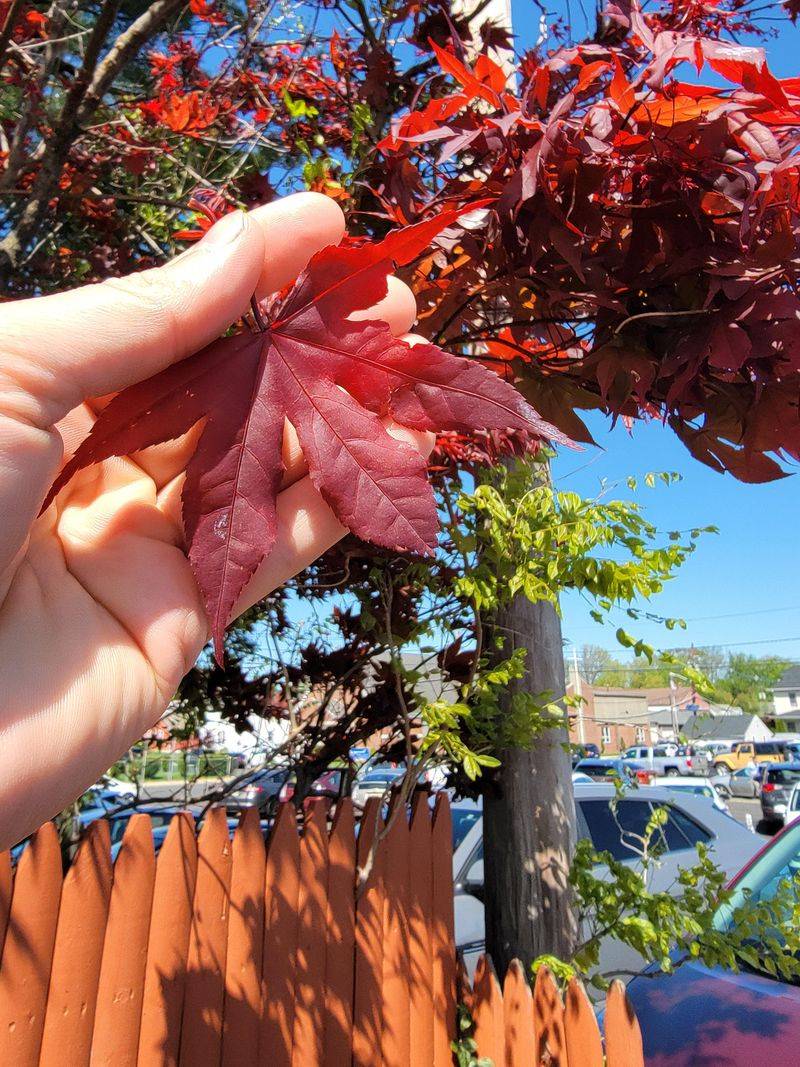
Indiana summers love to tease us with thunderstorms that rumble loudly and drop almost nothing. By late August, many lawns crunch underfoot like breakfast cereal.
Maples have fairly shallow roots, so they feel dry spells quickly. When water runs short, the tree starts shutting down leaves to save moisture.
That shutdown is often the first reason for early red color. Leaves may also curl, scorch brown at the edges, or drop while still partly green.
Your Indiana Garden Changes Every Week. Your Plan Should Too.
Gardening in Indiana changes quickly throughout the season. Every Friday you’ll receive a simple weekly plan showing exactly what to plant, prune, fertilize, harvest, and protect so you never miss the right timing.
Try a simple screwdriver test to check your soil. If a long screwdriver will not slide six inches into the ground easily, the soil is too dry.
Rain gauges are cheap and surprisingly helpful. Most established trees need about one inch of water per week, from rain or from you.
Lawn sprinklers usually are not enough for big trees. They wet the top inch of soil, but tree roots drink from a wider and deeper zone.
Instead, lay a soaker hose in a ring around the drip line. That is the area under the outer tips of the branches, where many feeding roots live.
Let the water run slowly for an hour or two. Aim for moisture that reaches about twelve inches deep, then wait several days before repeating.
A layer of mulch helps hold that moisture in place. Keep it two to three inches deep and spread it wide, like a donut.
Did you know? A large maple can move dozens of gallons of water through its leaves on one hot summer day.
Root Damage From Construction Or Compaction
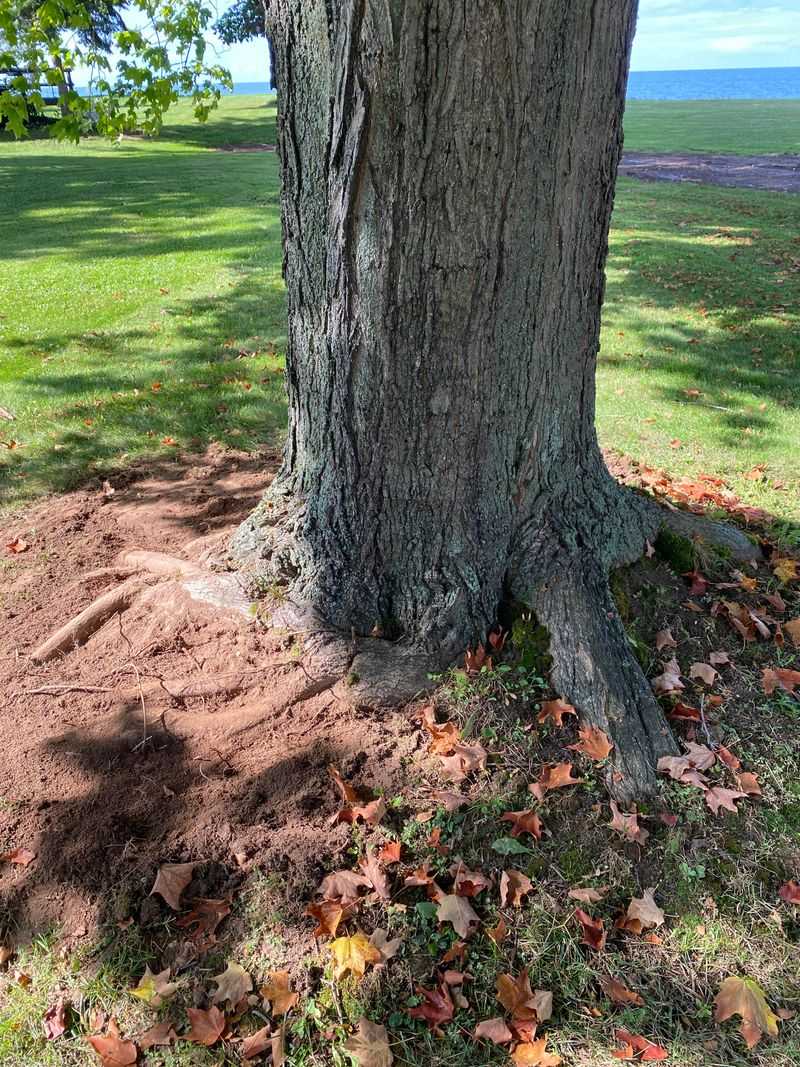
Remember when the new patio went in, or the driveway got widened? Your maple remembers too, even if it took a few years to complain.
Roots spread much wider than most people guess, often two or three times the width of the branches. Most of them live in the top foot of soil.
Heavy trucks, piles of dirt, and trenching can crush or slice those roots. Even foot traffic and parked cars can pack soil tight over time.
Compacted soil acts like a squeezed sponge with no room for air or water. Roots struggle to breathe, so the tree slowly runs low on energy.
Damage from construction can take three to five years to show up. Early red leaves are sometimes the first clue that roots were hurt long ago.
Look for other hints, like thin leaves, small leaves, or bare twigs near the top. Water puddling around the trunk after rain can also signal compaction.
You can help loosen things up without a shovel. Arborists use air spades, which blast soil apart with air while leaving roots mostly unharmed.
Adding compost and a wide ring of mulch also improves soil over time. Earthworms move in and do a lot of free digging for you.
Planning another project this fall? Fence off the area under the branches so no equipment or supplies land on the root zone.
Protecting roots now is much cheaper than replacing a big shade tree later. Your future summer afternoons will thank you.
Girdling Roots Hidden Below The Mulch
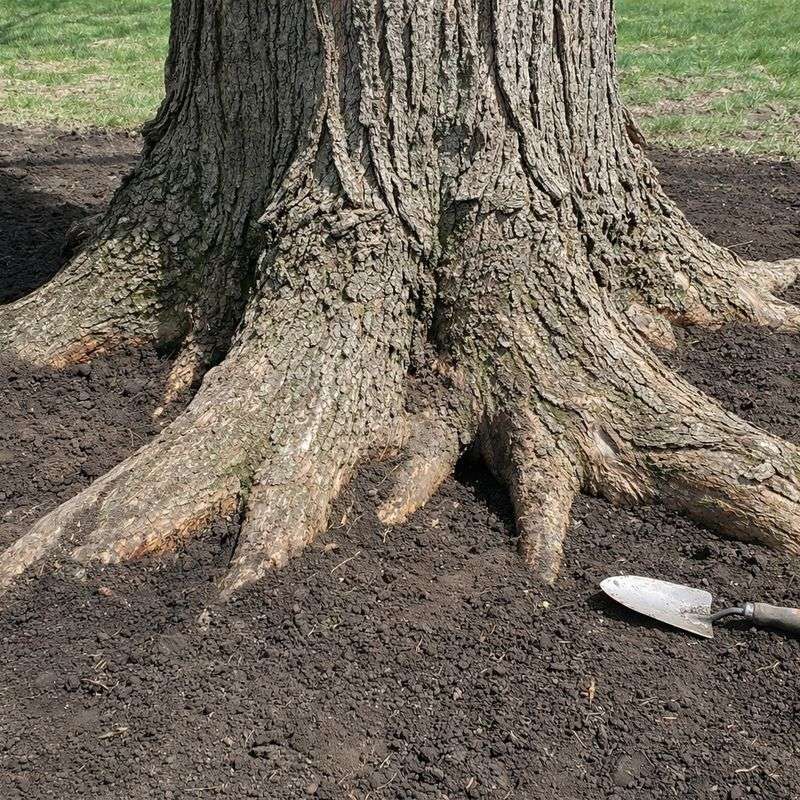
Some tree troubles are sneaky, and girdling roots might be the sneakiest of all. They hide just below the soil or mulch, quietly squeezing the trunk.
A girdling root wraps around the base of the tree instead of growing outward. As both the root and trunk get thicker, the squeeze gets tighter.
That pressure pinches the pathways carrying water and food. The result can be early red color, often on just one side of the canopy.
Maples are famous for this problem, especially ones planted too deep or left in containers too long. Piling mulch against the bark makes it worse.
Take a look at the base of your tree right now. A healthy trunk flares out wide at the ground, a bit like an elephant foot.
If the trunk goes straight into the dirt like a telephone pole, something may be buried. Gently pull back the mulch with your hands to peek.
You might find roots curling across the trunk or pressing into the bark. Small ones can sometimes be cut with clean pruners in fall or early spring.
Larger girdling roots are a job for a certified arborist. Removing too much at once can shock the tree, so pros often work in stages.
Going forward, pull mulch back a few inches from the trunk. Mulch volcanoes may look tidy, but they invite rot and root trouble.
Fun fact: a girdling root can take decades to cause problems. It is like a slow hug that eventually gets way too tight.
Branches Turning Before The Rest Of The Tree
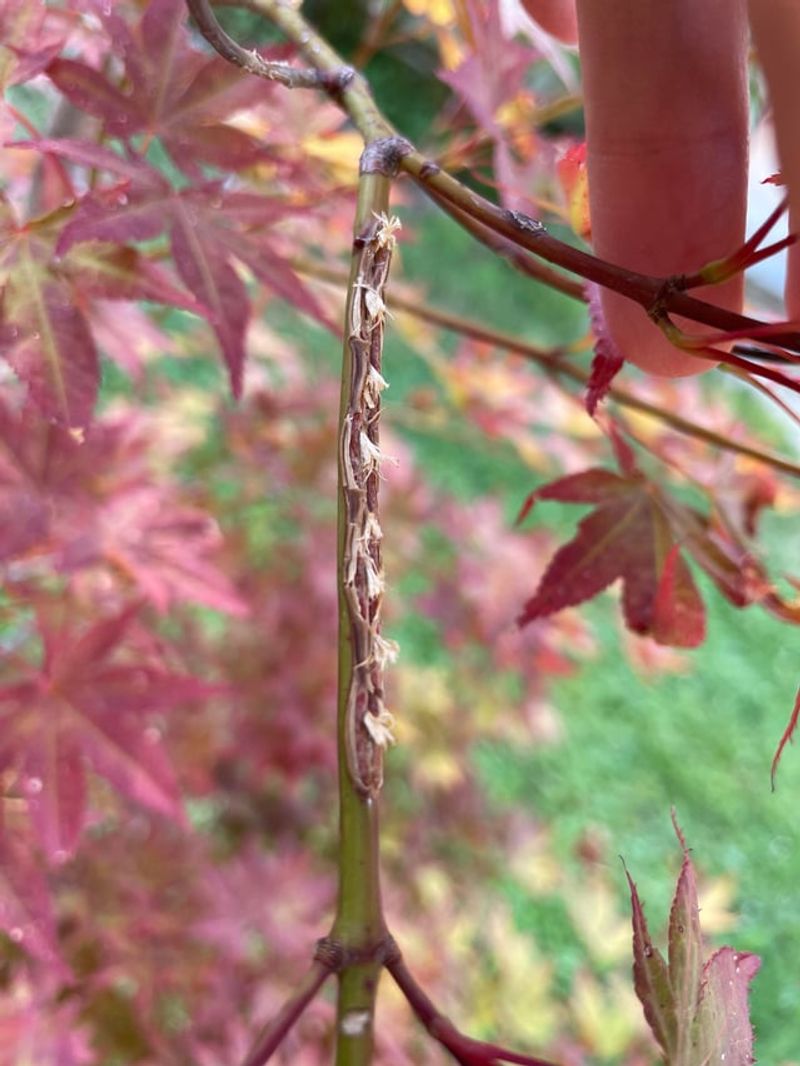
Ever notice one branch lit up like a torch while the rest of the tree stays green? That lone red limb is sending a very specific message.
Color that shows up on a single branch usually points to a problem in that branch. It is different from the whole tree turning early.
One common cause is a canker, a sunken wound in the bark caused by fungi. Cankers block the flow of water, so leaves above them color early.
Verticillium wilt is another suspect that maples often face in Indiana. This soil fungus clogs the wood and causes branches to wilt one at a time.
Grab a pair of pruners and look closely at the affected branch. Check for cracked bark, oozing sap, holes, or patches of odd colored wood.
A small cut on a thin twig can reveal a lot. Greenish or brown streaks inside the wood may suggest wilt and deserve a lab test.
Purdue Extension offers a plant diagnostic lab that can check samples. Contact your county office to learn how to send one in properly.
Branches with no leaves next spring can be removed during late winter. Clean your tools with an isopropyl solution between cuts to avoid spreading germs.
Try not to panic over one colorful limb. Many trees live for years after losing a branch, especially when owners catch problems early.
Keep notes on which branch turned and when. Next September, you will know if the problem is spreading or holding steady.
Deep Watering Before The Ground Freezes
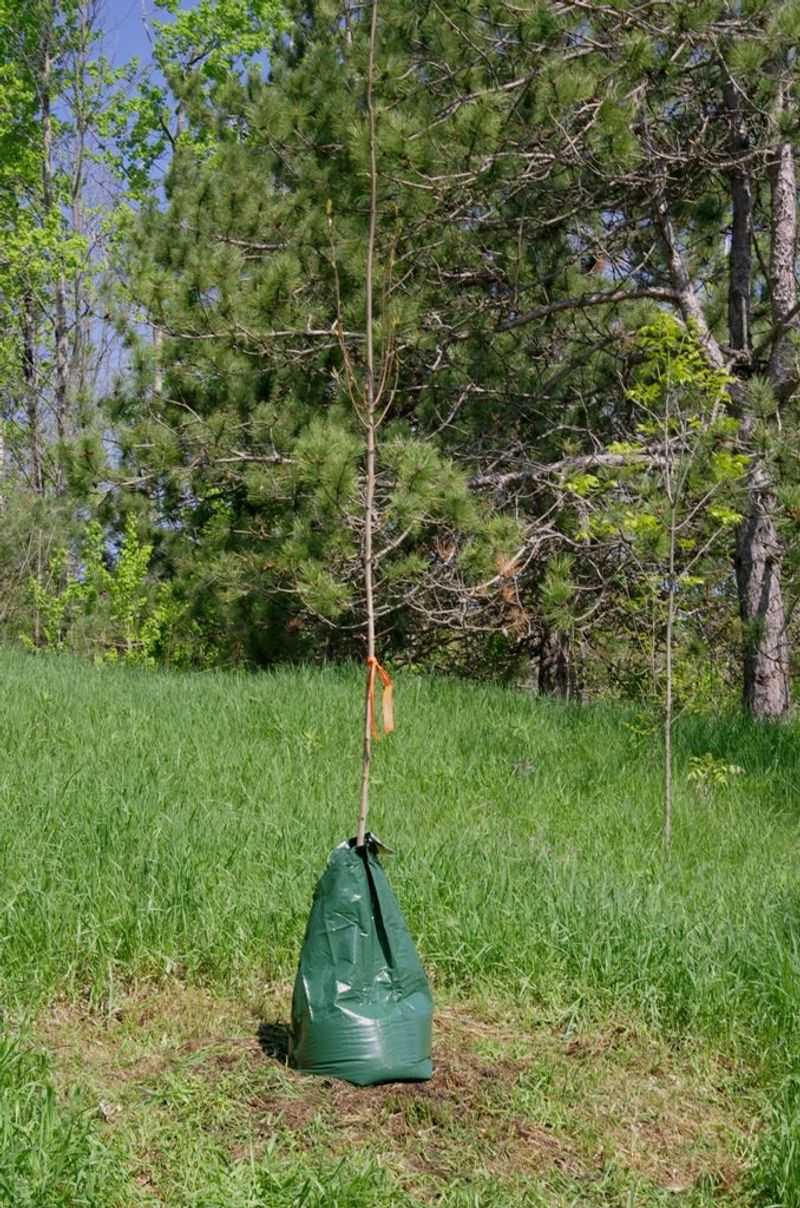
Here is something hopeful to end on. One of the best things you can do for a stressed maple is also one of the simplest.
Deep watering in fall helps trees head into winter with full tanks. Roots keep growing until the soil gets cold, often into November in Indiana.
Dry fall weather is common across the state in September and October. Trees that go into winter thirsty often show more damage the next spring.
Aim to water once every week or two when rain is scarce. Give roughly ten gallons for every inch of trunk width, measured at knee height.
A five gallon bucket with a few small holes drilled in the bottom works nicely. Fill it, set it near the tree, and let it drip slowly.
Soaker hoses and slow trickling garden hoses also do the trick. Move them around the drip line so the whole root zone gets a drink.
Water during the warm part of the day when temperatures are above freezing. Stop once the ground freezes solid, usually in December.
Skip the fertilizer for now, since it can push tender new growth before winter. A fresh layer of mulch is a better gift this season.
Young trees and ones with recent root damage benefit most from this care. Still, even older giants appreciate a long drink during a dry autumn.
Think of it as tucking your tree in with a warm glass of milk. Come spring, you may see richer green leaves and a calmer fall show.