An Invasive Backyard Predator In Texas Has Been Caught Hunting Hummingbirds
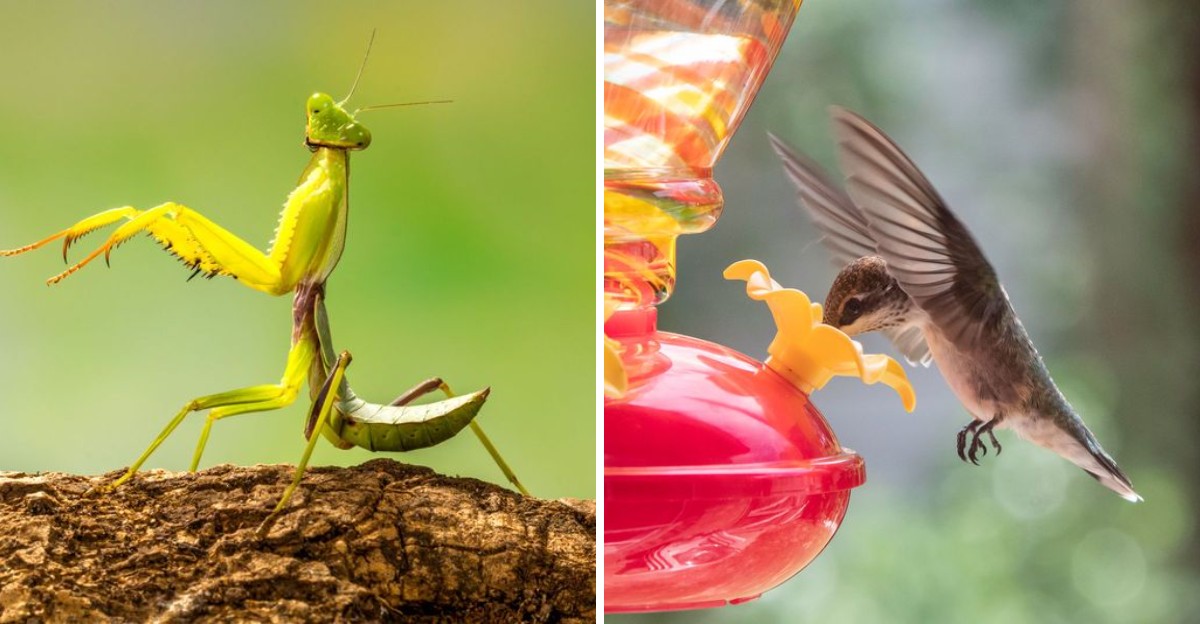
A hummingbird zips up to your feeder, wings buzzing like a tiny motor. It dips its beak for a sip. Then, in a split second, it’s gone. Snatched right out of the air.
No, it wasn’t a hawk. It wasn’t the neighbor’s cat either. The real culprit is much smaller, much quieter, and a lot harder to spot.
It could be waiting on your feeder right now, perfectly still, blending in with the leaves.
This hunter isn’t even from around here. It arrived from overseas more than a century ago and has since made itself right at home in Texas gardens.
Most of the time, it goes after bugs. But every so often, it aims much higher.
So what is this sneaky predator, and how can you protect your hummingbirds? Here’s what every Texas backyard birder should know.
The Non-Native Predator
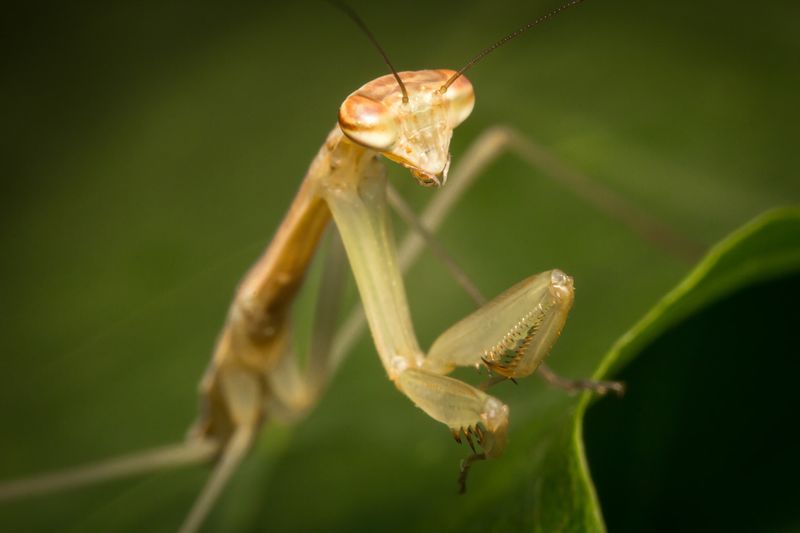
Back in 1896, a nursery near Philadelphia got more than it paid for. Tucked inside a plant shipment from Asia were mantis egg cases. Nobody planned it, but the Chinese mantis had just arrived in America.
Since then, the insect has spread far and wide. It now lives across most of the eastern United States.
It keeps showing up more and more in western states too. Texas is part of its growing range.
Size is what makes it stand out. The Chinese mantis is the largest mantis in North America.
Adults can grow to about four inches long. That is longer than many hummingbirds, which are often around three inches.
Being non-native means it did not grow up with local plants and animals. Native creatures have not had thousands of years to adjust to it.
So it can upset the natural balance in a yard or field. It eats helpful insects like bees and butterflies, not just pests.
People often think all mantises are good for gardens. That idea is only partly true. A mantis will eat whatever it can grab. It does not pick only the bugs you want gone.
Here is a fun fact. Chinese mantis egg cases look like small tan foam blobs stuck to twigs. Each one can hold up to 200 babies. When spring comes, tiny mantises pour out all at once.
So the next time you see a huge mantis on your fence, take a closer look. It may be a visitor from across the ocean. Knowing its story helps you understand why experts keep an eye on it.
How To Recognize A Chinese Mantis
Spotting one is a bit like playing detective. You need to check a few clues. Once you know them, you will not forget them.
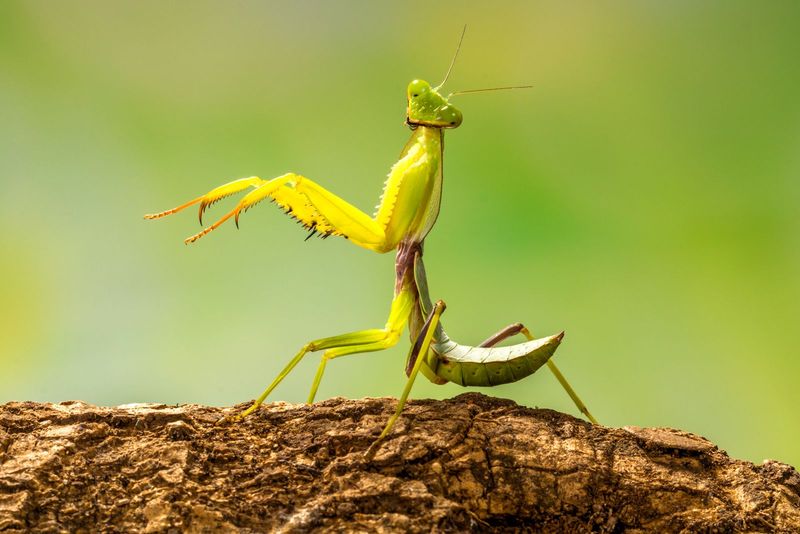
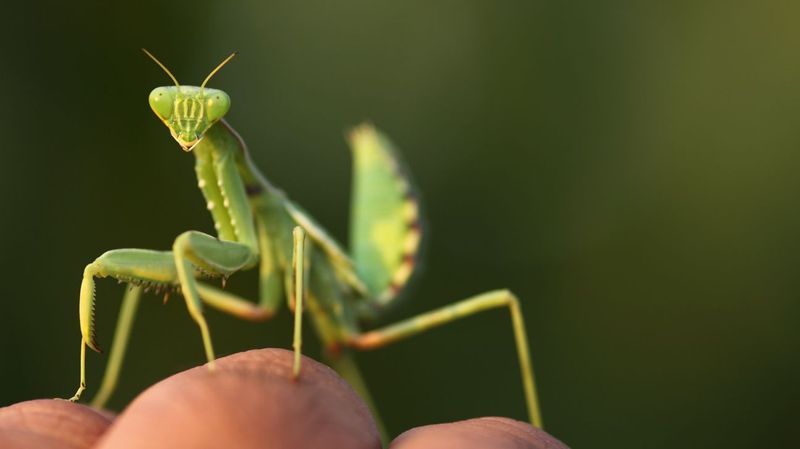
Start with the color. Chinese mantises can be bright green or light tan. Some have a mix of both.
Their wings often have a green edge along the side, which is easy to see when they rest.
Next, look at the body shape. The thorax, which is the long neck-like part, is stretched out and thin.
The front legs fold up like someone praying. Those legs are covered with tiny spines.
Your Texas Garden Changes Every Week. Your Plan Should Too.
Gardening in Texas changes quickly throughout the season. Every Friday you’ll receive a simple weekly plan showing exactly what to plant, prune, fertilize, harvest, and protect so you never miss the right timing.
Now check the head. It is shaped like a triangle. It can turn about 180 degrees, so the mantis can look right over its shoulder at you.
That trick can feel a little spooky the first time you see it. A key clue sits between the eyes. The Chinese mantis has a pattern of vertical stripes on its face.
Native mantises do not usually have that same marking. Snap a photo with your phone and zoom in to see it better.
Size gives the biggest hint. Adults are often around four inches long. Most native Texas mantises are smaller and slimmer. If a mantis looks huge, it is likely the Chinese kind.
Timing matters too. You will see the largest ones in late summer and fall. That is also when many hummingbirds pass through Texas on migration. Keep your eyes open during those months.
How A Mantis Catches A Hummingbird
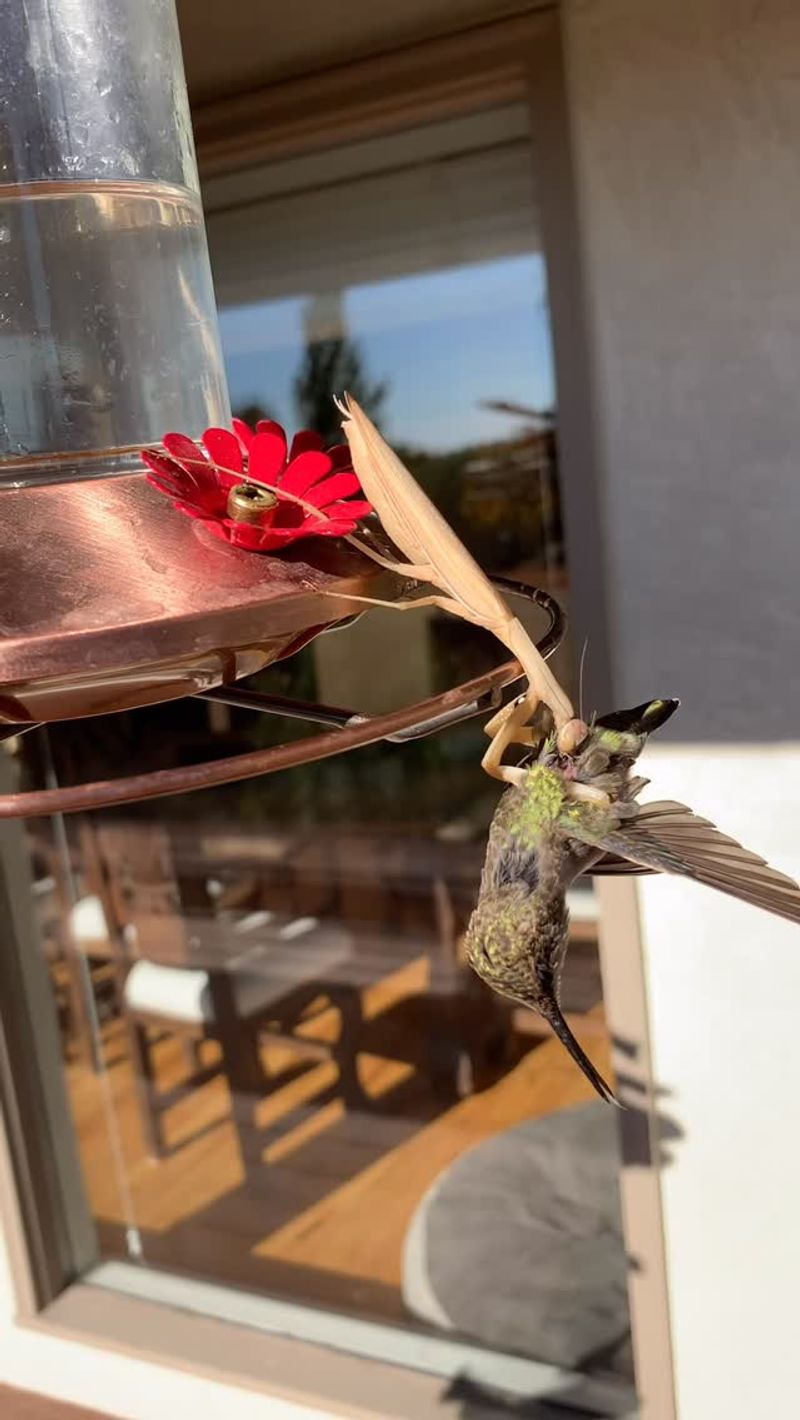
Patience is the mantis secret weapon. It does not chase its food. It waits, still as a twig, until something comes close enough.
Hiding is where it shines. A mantis blends into leaves, stems, and flowers. Green ones match fresh plants.
Tan ones look like dry grass or bark. A hummingbird zipping in for a drink may never notice it.
Then comes the strike. The mantis shoots out its front legs faster than you can blink. The spines on those legs work like hooks. They hold on tight, even to a wiggling bird.
Researchers studied many reports of mantises catching small birds. They found something surprising.
In about two out of three cases, the birds were bitten on the head, neck, or throat. The mantis goes for the weakest spots first.
Hummingbirds are at special risk because they are so tiny. Some weigh less than a nickel. A big mantis can overpower them.
The bird also has to hover right next to flowers and feeders, which is exactly where the mantis waits.
You might wonder how often it happens. It is not an everyday event. Still, people have caught it on camera in many places. Some sightings have come from Texas backyards.
So what can you learn from this? Watch the spots where hummingbirds feed. Look at the feeder ports, perches, and nearby plants. A quick glance each day can reveal a hidden hunter before it strikes.
Nature can be tough to watch. But understanding how the mantis hunts gives you the power to step in and help.
Why Backyard Feeders Put Hummingbirds At Risk
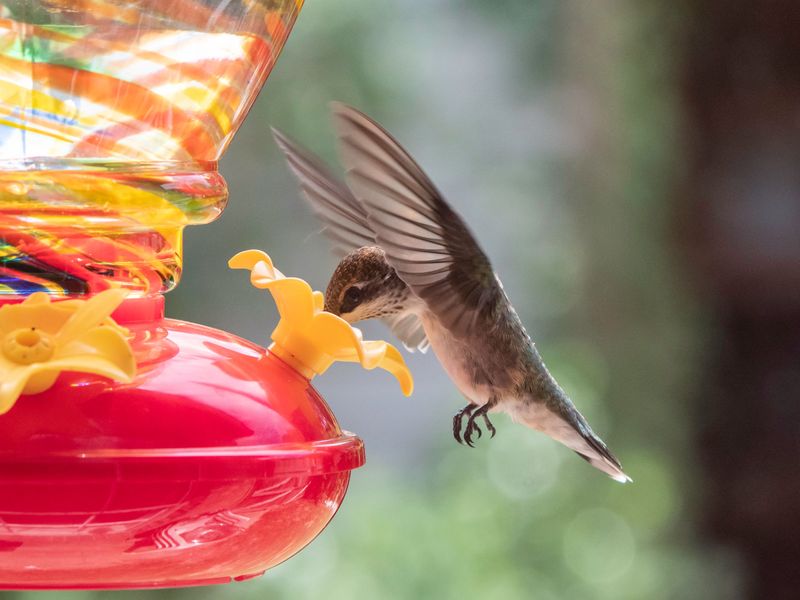
Here is the funny twist. People who love hummingbirds may be helping set the trap. They do not mean to, of course. It just happens.
Think about a typical garden. Folks hang feeders and plant bright flowers to bring in hummingbirds.
Some of those same folks buy mantis egg cases for pest control. Now birds and hunters end up in the same small space.
Scientists who study this problem point it out clearly. In the wild, these two would not meet as often.
Our yards bring them together in an unnatural way. It is a mix nature did not plan.
Feeders also attract more than birds. Sweet nectar draws ants, bees, wasps, and flies. All those bugs make a feeder a buffet for a mantis. It sits nearby, eats insects, and waits for bigger meals too.
A mantis that finds a good spot tends to stay put. Why leave when food keeps coming? Over days, it may get bold enough to grab a hummingbird.
So what can you do? Choose feeders with built-in ant moats and bee guards. Fewer insects mean fewer reasons for a mantis to camp out.
Keep the feeder clean and change the nectar every few days, especially in Texas heat.
Placement helps too. Hang the feeder away from thick bushes where a mantis could hide. A clear space around it lets birds see danger coming.
Your feeder can still be a happy place. With a few smart choices, it can stay a snack bar for birds instead of a hunting ground.
Native Mantises Aren’t The Main Problem
Not every mantis deserves the blame. Texas has its own native mantises, and they have lived here for a very long time. They are part of the local web of life.
One example is the bordered mantis. It is found in Texas and parts of the Southwest. It has been recorded catching hummingbirds a few times.
Still, those cases are much rarer than ones involving the Chinese mantis.
Why the difference? Size plays a big part. Many native mantises are smaller, so a bird is a harder target.
They also grew up alongside local wildlife. Nature had time to balance things out.
Other native types include the Carolina mantis and ground mantises. Some are tiny and brown.
Some live low in grass rather than up in flowers. Most of them stick to insects that fit their size.
Experts give simple advice here. Leave native mantises alone. They help control pests and feed birds, lizards, and other animals. Removing them can do more harm than good.
Of course, telling them apart takes practice. A great first step is taking photos of mantises you find. Compare them online or with a local nature center.
Some native ground mantises have females with tiny wings that cannot fly. They scurry along the ground like little hunters in the dirt.
So when you find a mantis, pause before acting. It might be a longtime Texas resident doing its job. Being fair to native species keeps your yard healthy and balanced.
How To Protect Hummingbirds At Your Feeder
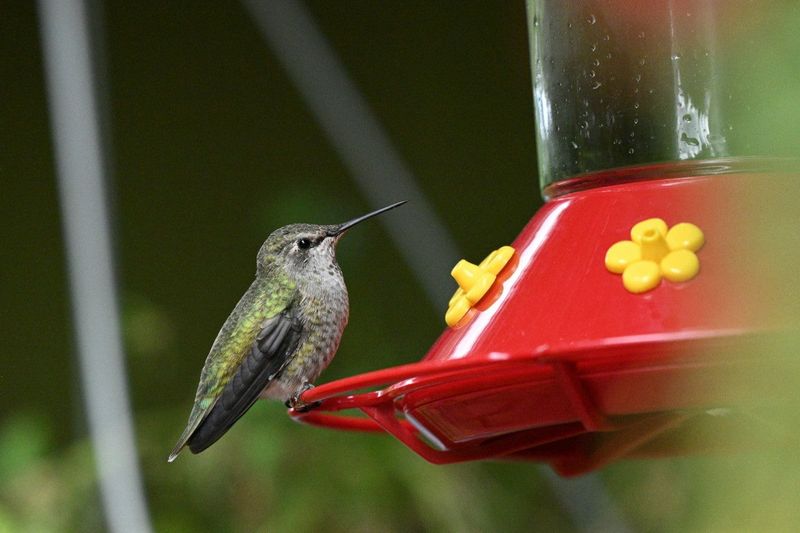
Good news, bird fans. Keeping hummingbirds safe is easy and does not cost much. A little daily attention goes a long way.
First, check your feeders often. Look at the top, the ports, and any hooks or hangers. Scan nearby plants too, since a mantis may lurk just a few inches away.
Morning and evening checks work well. Found one? Stay calm and be kind. Gently relocate the mantis instead of hurting it.
Slide a cup or jar under it, or let it climb onto a stick. Carry it far from the feeder, ideally to a field or wooded spot.
Next, skip the mantis egg cases at garden centers. They may sound like natural pest control. But many sold in stores are Chinese mantises or other non-native types.
Buying them adds more hunters to your yard.
Want better pest control? Try planting native flowers. They draw helpful insects like ladybugs and lacewings.
Birds also eat plenty of bugs on their own, so a healthy yard often takes care of itself.
You can also make feeders less inviting to mantises. Hang them on thin poles or wires that are hard to climb.
Keep branches trimmed away from them. Use bee guards to cut down on insect traffic.
Share what you learn with neighbors. When more people check feeders, more birds stay safe. You could even post your mantis sightings on a nature app to help researchers.
Every small step counts. Your backyard can be a safe stop for these tiny travelers as they zip across Texas each year.