15 Arizona Nut Trees That Produce for Generations Once Planted in Caliche
Caliche is that rock-hard, chalky layer under so many Arizona yards, and it has broken more shovels than anyone can count. Here is the good news: some trees don’t just survive it, they feed families for a hundred years or more.
The list below covers native legumes, desert shrubs, and a few proven imports that give you nuts, seeds, pods, or fruit along with shade and wildlife habitat. Plant one this fall, and your grandkids may still be harvesting from it.
1. Desert Ironwood
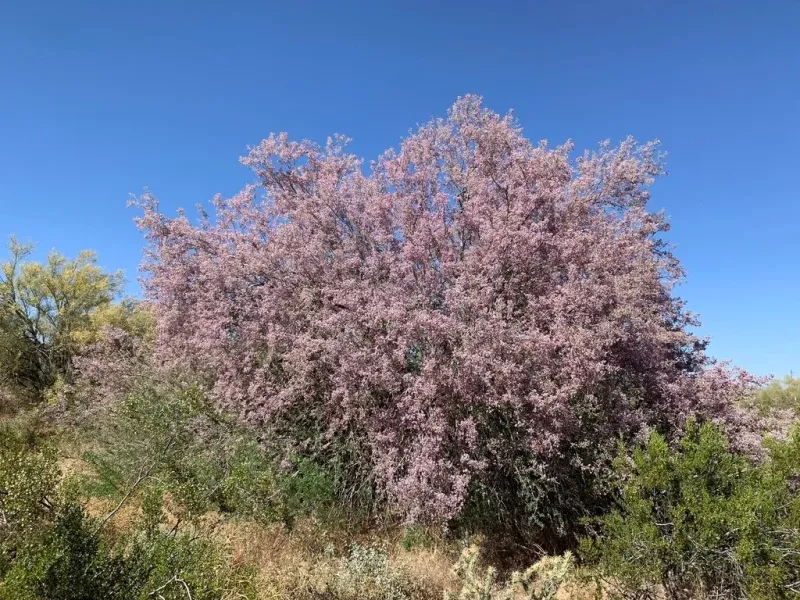
Some desert ironwoods alive today were already old when the first Spanish missions went up in Arizona. Estimates put the oldest specimens at 800 to 1,500 years, which makes this tree the ultimate generational investment for a low-desert yard.
Its small seeds taste a bit like peanuts and pack solid protein and fat. Many people blanch, sprout, or roast them before eating, and some grind them into a nutty flour.
The lavender spring flowers are edible too, sprinkled over salads.
Ironwood handles rocky, sandy, and gravelly ground well, so a caliche lot is familiar territory. Break through the hardpan when digging, or at least punch a drainage chimney, so water never pools around the roots.
Plant in October or November and water deeply every couple of weeks through the first summer.
The payoff goes far beyond snacks. Dense evergreen shade cools a west-facing patio, and the canopy shelters quail, doves, and lizards that may help keep insect numbers in check.
Ironwood also fixes nitrogen and acts as a nurse plant for young cacti. Keep it below about 2,500 feet elevation, since hard freezes can damage young trees, and give it plenty of room to spread over the decades.
2. Honey Mesquite
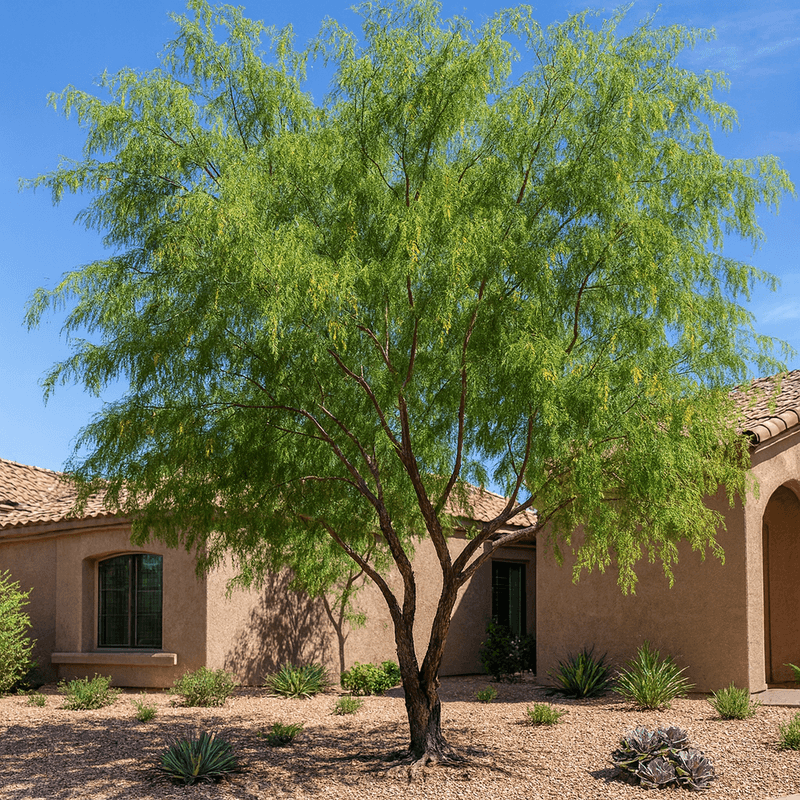
Picture a July afternoon at 110 degrees, and a tree still dangling sweet golden pods like nothing is wrong. Honey mesquite has been doing exactly that across the Southwest for centuries, with some trees documented past 200 years.
Those pods taste surprisingly sweet, almost like caramel with a hint of cinnamon. Gather them dry and crisp right off the branch before monsoon rains arrive, then grind them whole into mesquite flour for pancakes, cookies, or a sweet drink.
Pods that hit wet ground can grow mold, so harvest early.
Roots on this species dive remarkably deep, sometimes reaching groundwater far below the surface. That trait makes it forgiving in caliche, as long as you break up the hardpan in the planting hole for good drainage.
Once established, it can get by on occasional deep soaks.
Wildlife loves it. Quail, rabbits, and songbirds forage under the canopy, and bees swarm the fuzzy spring catkins.
Roadrunners often patrol mesquite thickets hunting lizards and insects, so your yard may become a little less inviting to scorpions. Choose a thornless selection near walkways, and prune lightly in late winter to shape it.
3. Velvet Mesquite
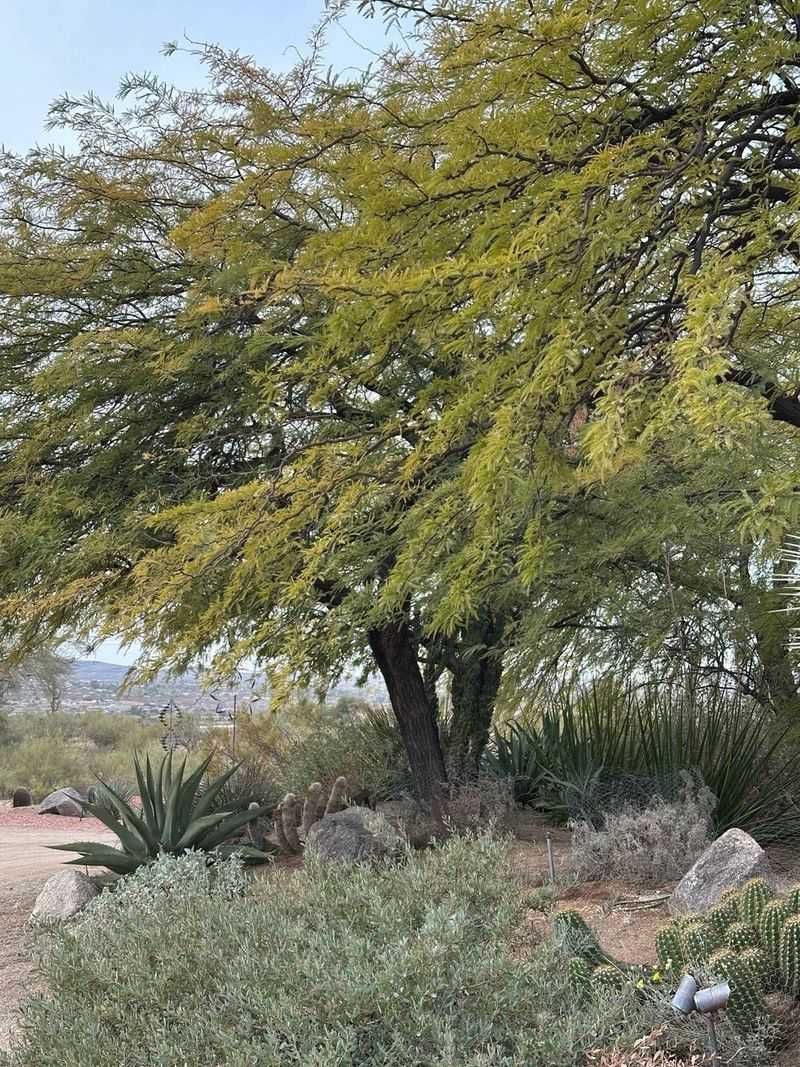
Run your fingers over a young velvet mesquite leaf and you will understand the name right away. Fine, soft hairs cover the foliage, helping this Arizona native hold moisture during brutal summers.
Your Arizona Garden Changes Every Week. Your Plan Should Too.
Gardening in Arizona changes quickly throughout the season. Every Friday you’ll receive a simple weekly plan showing exactly what to plant, prune, fertilize, harvest, and protect so you never miss the right timing.
Of all the mesquites, velvet is often called the toughest for low-desert conditions. It grows up to about 30 feet with a dark, twisted trunk that looks like sculpture by year ten.
Its tan pods are edible for people, ground into flour much like honey mesquite, though some trees taste sweeter than others, so sample a few before harvesting in bulk.
Caliche rarely slows it down. Deep taproots find their way through cracks, and the tree actually improves the soil above by fixing nitrogen.
Gardeners notice that plants tucked beneath its filtered shade often thrive, making it a natural anchor for a native understory of penstemon or globemallow.
Songbirds nest in the branches, and butterflies visit the spring flowers. Bats may cruise the canopy at dusk chasing moths and mosquitoes.
Plant in fall, stake loosely only if winds are harsh, and avoid frequent shallow watering, which encourages weak surface roots that can topple in monsoon storms.
4. Jojoba
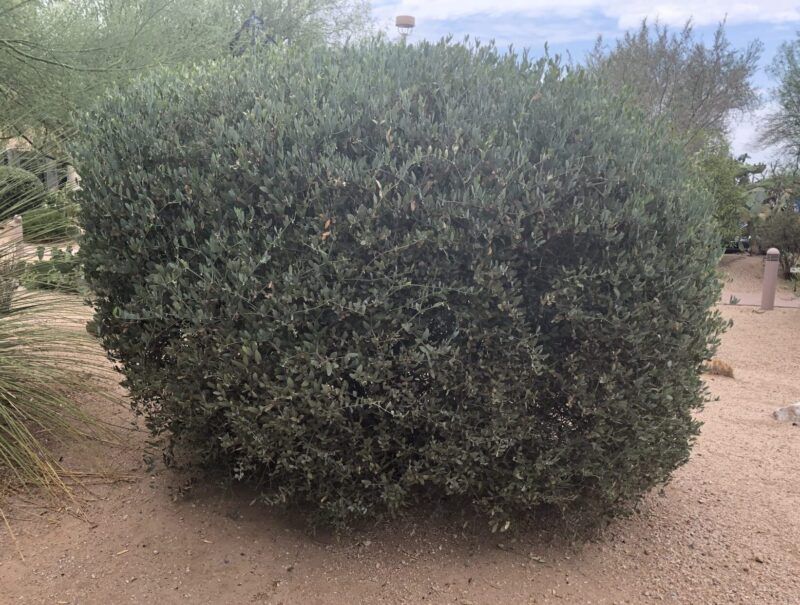
Call it the nut tree that thinks it’s a shrub. Jojoba usually stays between 3 and 10 feet tall, yet a single plant can keep producing seeds for 100 to 200 years.
The acorn-shaped seeds are famous for their liquid wax, prized in skin and hair care. Indigenous peoples in the Sonoran Desert once used them as food and roasted them for a coffee-like drink.
Raw seeds are bitter and contain compounds that upset digestion, so treat them more as a traditional curiosity than a daily snack.
Where jojoba truly shines is tough ground. It tolerates poor, rocky, and salty soils, including caliche, provided water drains away.
Once rooted, it barely needs a hose at all, making it a star for water-wise yards.
Plants are either male or female, and only females make seeds, so group several together to boost your odds. The dense evergreen foliage shelters quail, rabbits, and ground birds, while its deep roots help hold soil during monsoon downpours.
Use it as a living hedge along a block wall, where it may give lizards and birds that feed on insects a safe place to hang out.
5. Desert Hackberry
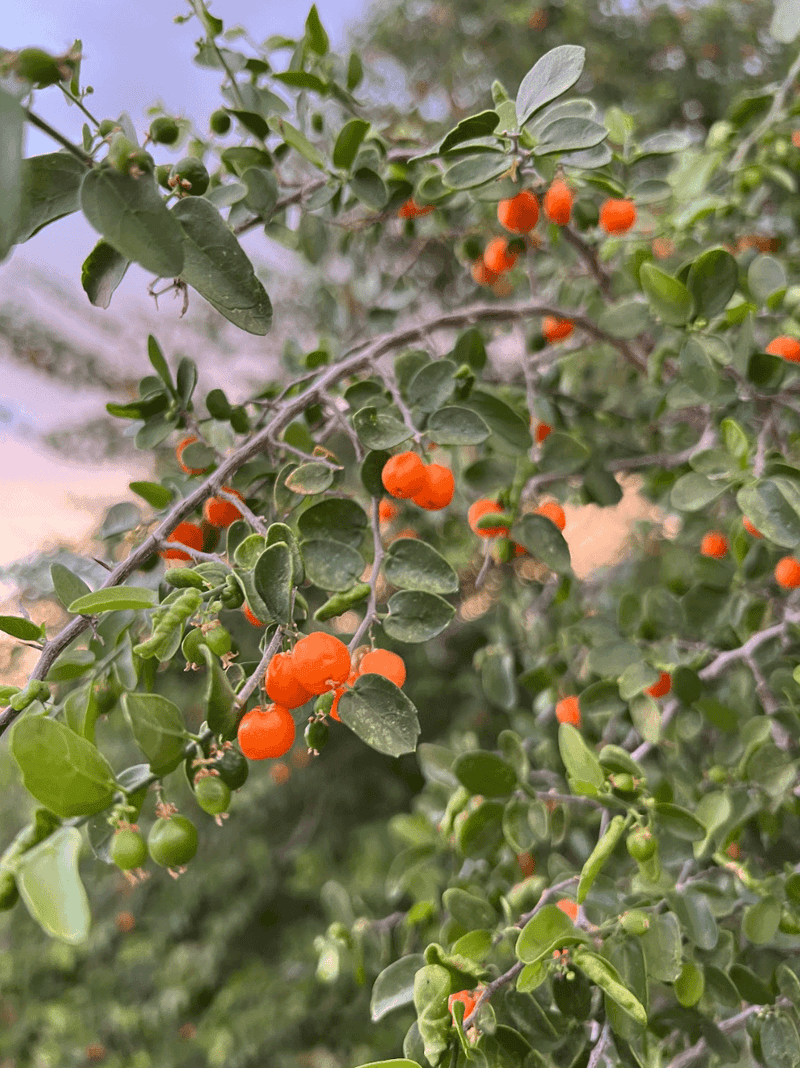
Quail practically cheer when they spot a desert hackberry. Its zigzag thorny branches form a fortress where coveys can hide from hawks, and its tiny orange berries keep them fed for months.
Those berries are edible for people too, with a sweet, thin pulp around a crunchy seed. Indigenous families ate them fresh or dried them for later.
You won’t fill a pie tin fast, but a handful in fall makes a fun trailside treat for kids.
Toughness is the headline here. Desert hackberry tolerates reflected heat, drought, compacted ground, salty conditions, and alkaline soils, which describes most caliche lots perfectly.
It shrugs off neglect and can live 150 to 200 years.
Butterflies, including the snout and empress butterflies, rely on it as a host plant. Birds and small mammals visit year-round, and the busy activity may help reduce insect populations near your home.
Plant it along a back fence or property edge where the thorns work as a natural barrier rather than a hazard. Water every week or two the first summer, then taper to monthly soaks and let it grow into a wild, useful thicket.
6. Date Palm
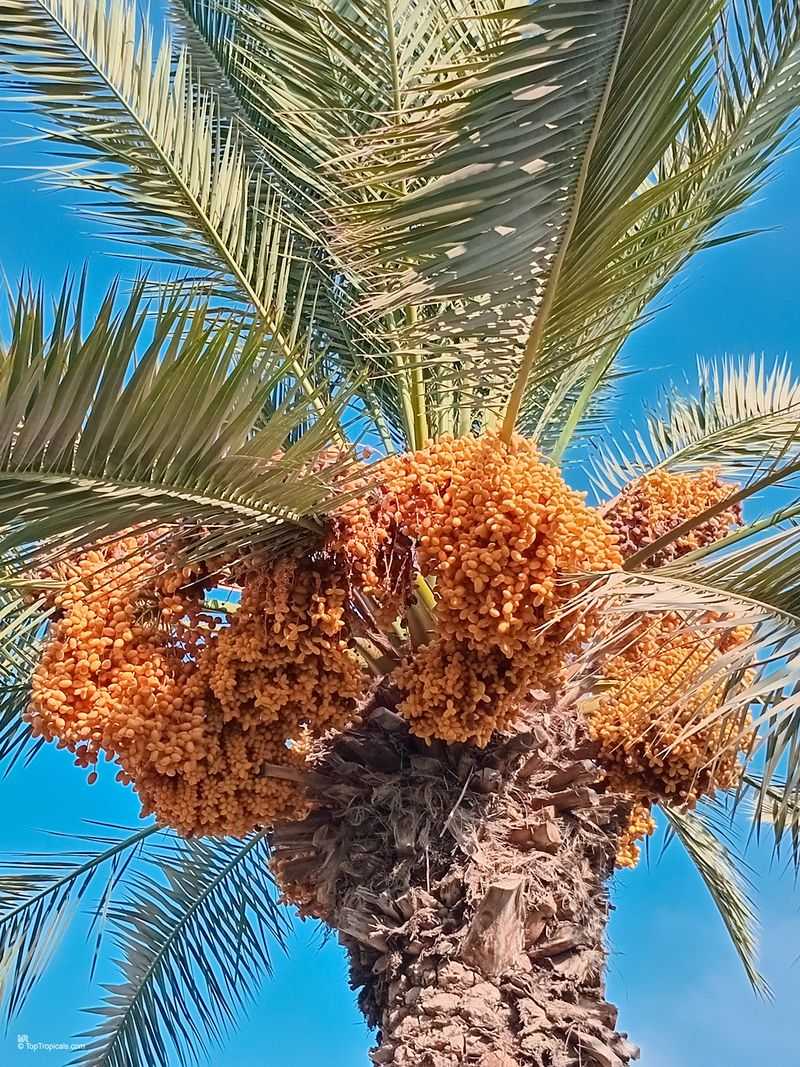
Yuma farmers have grown dates for about a century, and some of their palms keep fruiting year after year like clockwork. The low desert’s blazing summers are exactly what this ancient crop craves.
Medjool, Deglet Noor, and Barhi varieties all ripen well in Phoenix and Tucson from late summer into fall. Female palms bear fruit, and many home growers hand-pollinate in spring by tucking male flower strands into the female clusters.
Bagging bunches in summer keeps birds and monsoon rain from ruining the harvest.
Palms generally adapt to alkaline, salty, and caliche-type soils in Arizona. Still, break up hardpan in a wide planting hole so roots can spread and water can drain.
Date palms need more water than native trees to fruit well, so give them deep, occasional irrigation rather than frequent sips.
Once tall, a date palm throws cooling shade across a patio and offers roosting spots for bats that may snack on evening mosquitoes. Remove old fronds and fruit stalks yearly, since dense skirts can become hiding spots for pests.
Plant in late spring or early summer, when warm soil helps palm roots establish fastest.
7. Pindo Palm
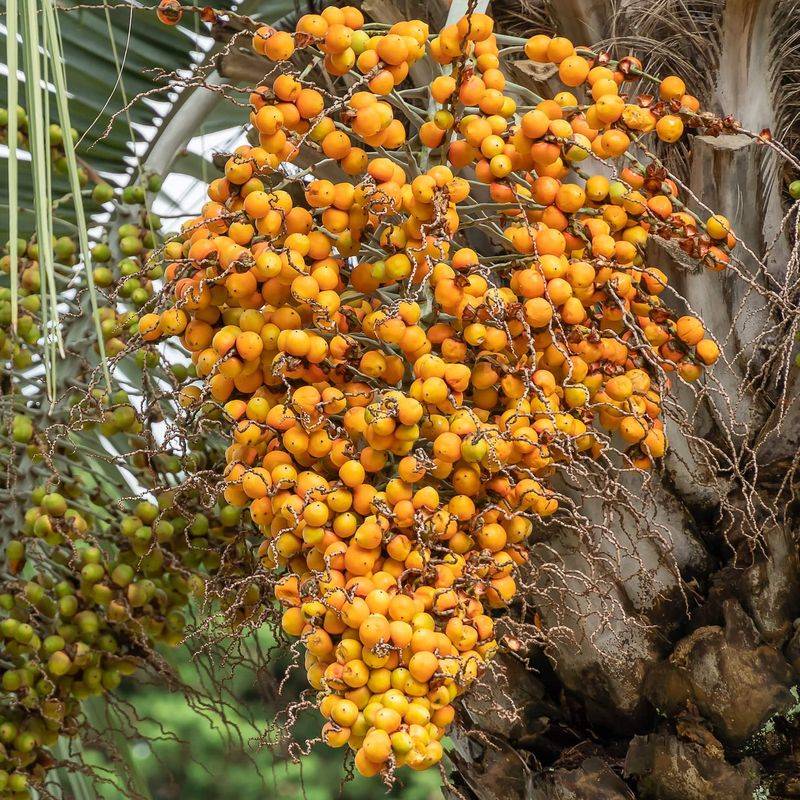
Jelly palm is the nickname, and one bite explains it. Pindo fruit tastes like a tangy mix of pineapple, apricot, and banana, and it makes a sunny golden jelly.
Grown in Arizona, this compact palm stays around 15 to 20 feet tall, perfect for smaller lots where a towering date palm would overwhelm the space. The arching blue-gray fronds look soft and graceful, and the orange fruit clusters appear in summer.
The pit inside each fruit even holds a small edible kernel, which ties it back to our nut theme.
Pindo palms adapt to alkaline, salty, heavy clay, and caliche-type soils, as long as drainage is decent. They grow slowly, which means patience, but that slow pace often signals a long, steady life.
Once settled, they need only low to moderate watering.
Give pindo filtered afternoon shade in the hottest low-desert spots to protect fronds from scorch. It is also surprisingly cold-hardy, handling frosty nights better than many palms.
Birds nibble dropped fruit, so gather ripe clusters promptly. Plant in late spring when soil warms, then water deeply once or twice weekly through the first summer.
8. California Fan Palm
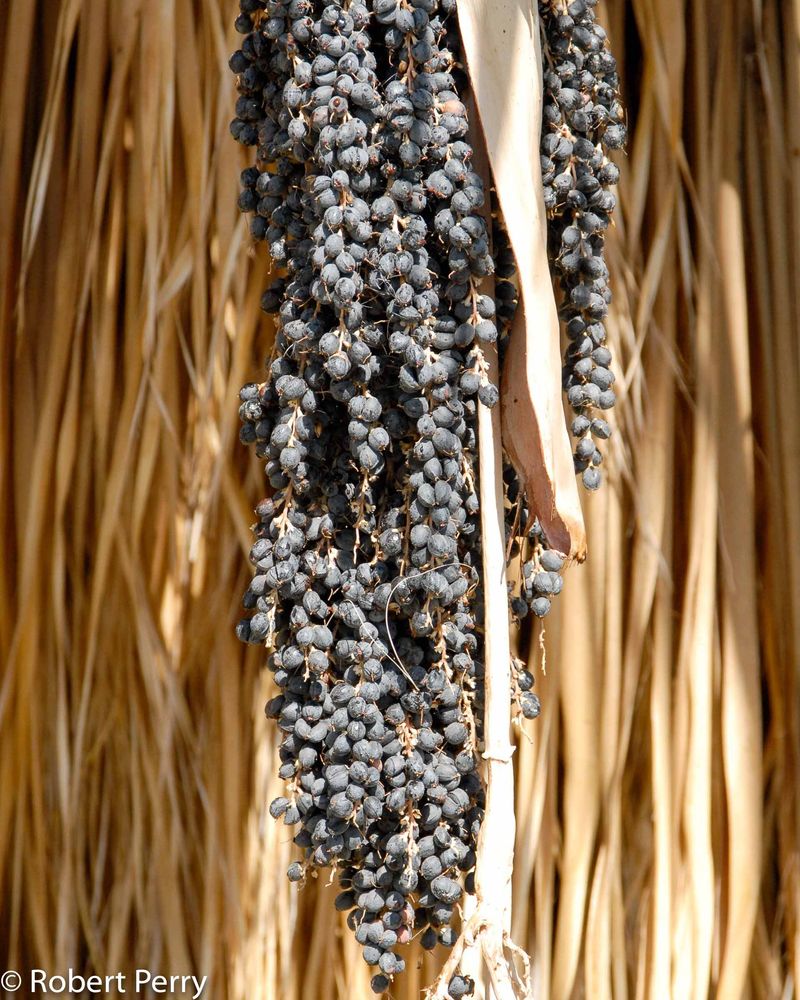
Only one palm is truly native to Arizona, and you can find it growing wild in Kofa canyons in the western part of the state. The California fan palm is a living link to ancient desert oases.
Each fall, long stalks spill out clusters of small black fruits. The thin sweet pulp around each seed tastes a bit like dates, and Cahuilla and other desert peoples dried and stored it for winter.
Most homeowners leave the harvest for wildlife, and orioles, mockingbirds, and coyotes happily oblige.
Soil type barely matters to this palm, as long as water drains. Alkaline desert ground and caliche are fine once you open the planting hole.
Its thick trunk and deep roots make it one of the most heat-proof trees on this list.
A word about the shaggy skirt of old fronds: it looks wild and beautiful, but it can shelter roof rats and scorpions. Trimming the skirt makes the tree less inviting to those critters while keeping the crown for shade and bat roosting.
Plant in warm months, water deeply until established, and let it tower for generations.
9. Pistachio
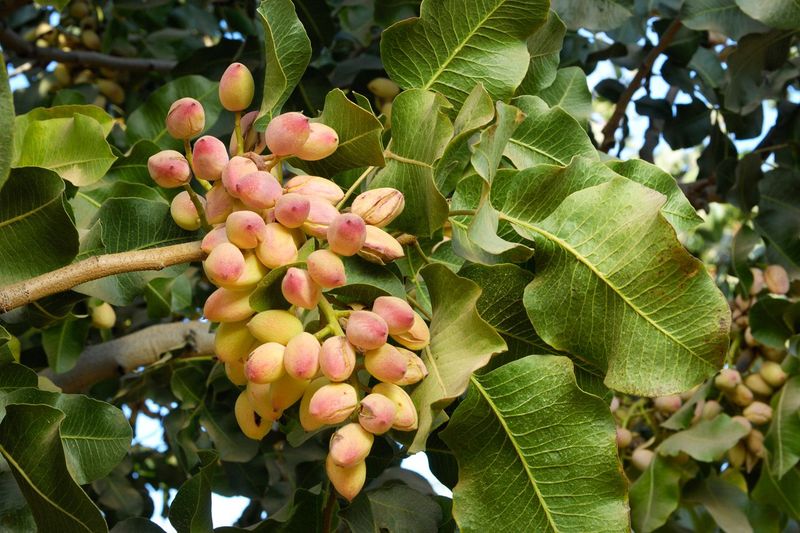
Ancient Persian orchards reportedly held pistachio trees that bore nuts for several hundred years. That kind of staying power, plus a love for long, dry, blistering summers, makes this a true Arizona crop.
Commercial orchards already thrive in Cochise County and other southern Arizona spots. Kerman is the classic female variety, paired with a Peters male for pollination, since you need both to get nuts.
Expect your first real harvest in five to seven years, then a long, steady run.
Pistachios tolerate alkaline and salty soils better than most orchard trees. Break up caliche thoroughly, though, because they hate soggy roots.
Once established, they handle summer drought well, although deep watering in spring improves nut fill.
One catch for low-desert growers: pistachios need some winter chill to bloom evenly. Higher spots like Tucson’s east side or the Willcox area give better results than central Phoenix.
The broad canopy offers good shade, and fallen husks feed ground-foraging birds. Harvest in early fall when hulls turn rosy and slip easily.
Shake branches over a tarp, hull promptly, then dry and roast for your own homegrown snack bowl.
10. Foothill Palo Verde
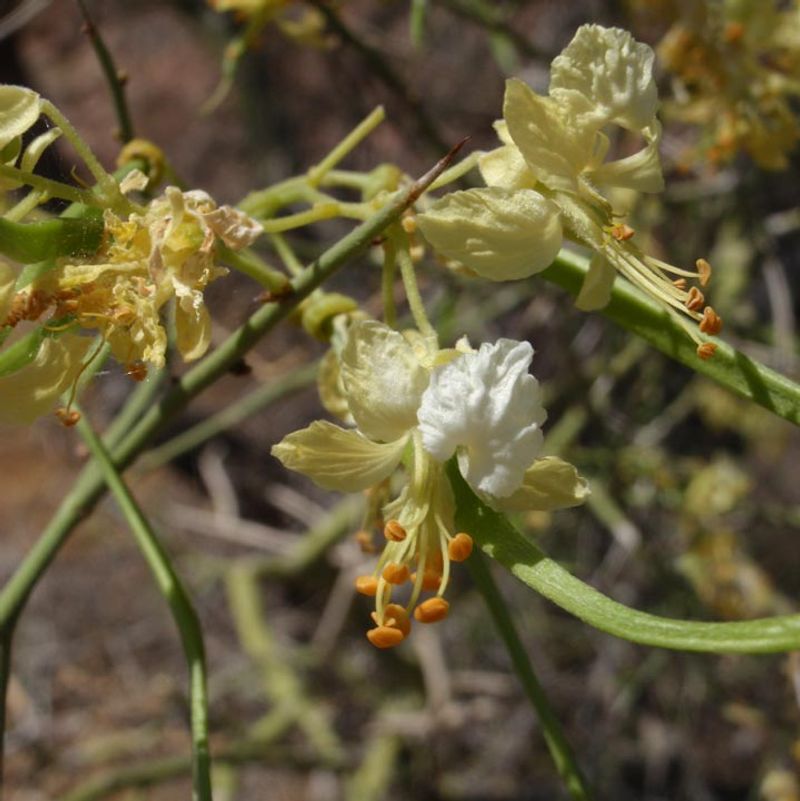
Hike almost any bajada around Phoenix and you’ll see a young saguaro tucked under a foothill palo verde. That nurse relationship can last a century, and some palo verdes may reach 400 years old.
For foragers, the fun starts in spring. Green pods taste like fresh garden peas when picked young, and the pale yellow flowers are edible too.
Mature dry seeds can be sprouted or ground into flour, following a tradition Indigenous communities kept for hundreds of years.
Caliche is home turf. This species naturally grows on rocky slopes and hardpan plains between 500 and 3,500 feet, so it handles tough ground better than almost anything else.
Water occasionally for the first year or two, then it can live mostly on rainfall.
Bees and butterflies crowd the April bloom, while birds and small mammals use the airy branches for shelter. Its green bark keeps photosynthesizing when leaves drop in drought.
The small size, roughly 15 to 20 feet, fits suburban yards well. Plant in fall, skip heavy fertilizer, and prune only lightly, since over-thinning invites sunburn on the trunk.
11. Blue Palo Verde
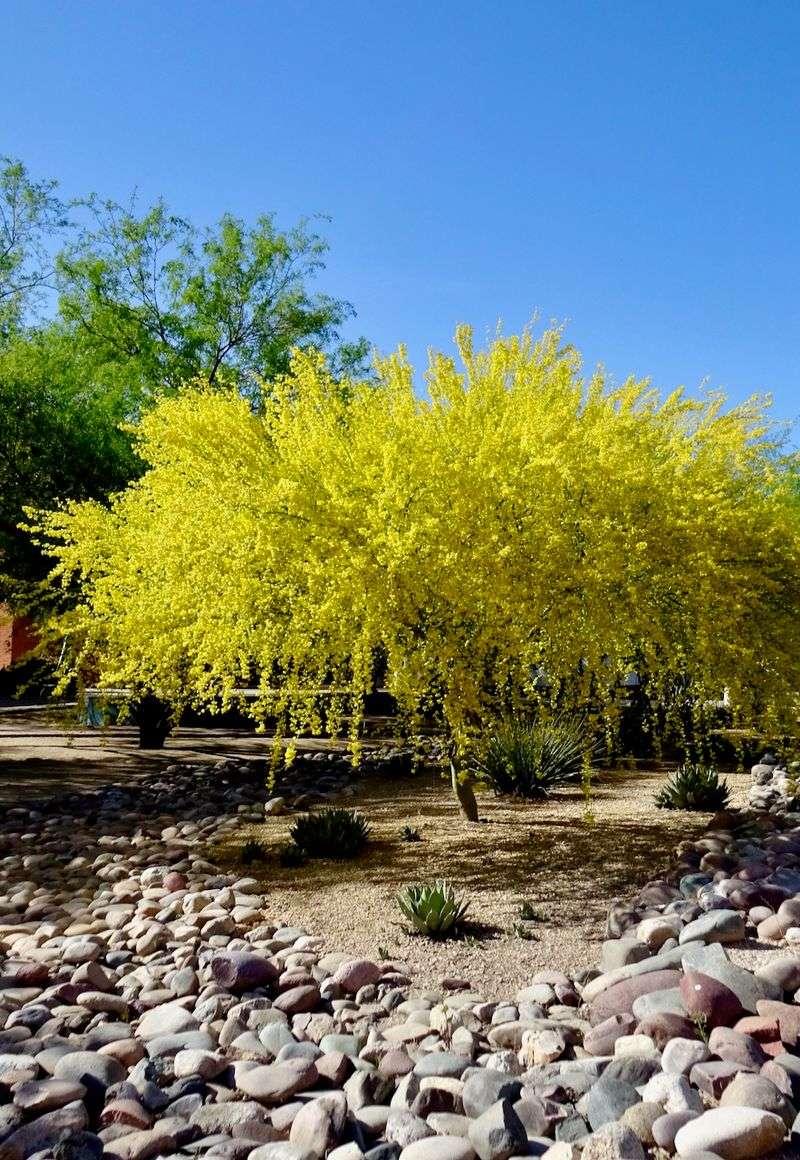
Every spring, blue palo verde turns entire desert washes an electric yellow. As Arizona’s official state tree, it earns a spot on this list for pride alone, but its edible pods seal the deal.
Young green seeds taste sweet and bright, a little like edamame. Blanch and eat them fresh, freeze them for later, or let pods mature and grind the dry seeds into flour.
The blossoms are edible as well and add color to salads.
Compared to its foothill cousin, blue palo verde grows faster and larger, reaching around 25 to 30 feet. It prefers slightly more water, often growing along washes, so place it where roof runoff or a rain basin collects monsoon water.
It tolerates most soils, including caliche, when drainage is opened up.
Its blue-green bark keeps producing energy after leaves fall during drought. Pollinators flock to the bloom, and the canopy acts as a nurse for saguaro seedlings.
Plant in October or November and water every two weeks the first summer. Watch for palo verde root borer beetles in stressed trees, since regular deep watering helps keep them healthy and more resistant.
12. Carob Tree
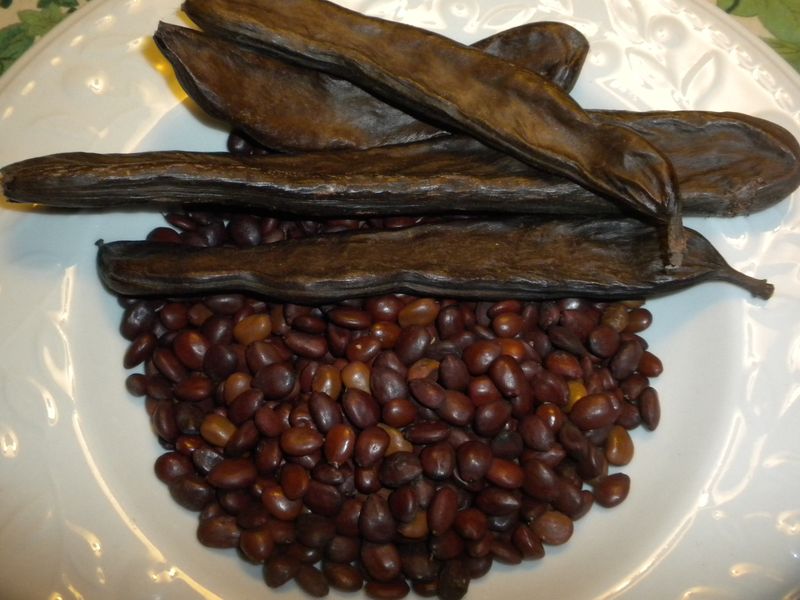
Chocolate lovers, meet the tree that makes the classic substitute. Carob pods, dried and ground, produce a naturally sweet powder that works in brownies, smoothies, and hot cocoa.
Originally from the Mediterranean, carob has settled comfortably into the low desert, thriving in zones 9b and 10a around Phoenix and Tucson. Trees can bear for 100 to 150 years, with some estimates stretching toward 500.
Grafted female varieties produce pods in a few years, while seedlings take longer and may turn out male.
Alkaline and salty soils don’t bother carob, and it tolerates caliche well once you break through for drainage. Established trees handle drought beautifully, needing only deep, infrequent watering.
The glossy evergreen canopy casts some of the densest shade on this list, a real blessing for a sun-baked west wall.
Birds and pollinators visit, and the thick foliage offers cover year-round. Keep carob away from pools and patios if dropped pods bother you, though they rake up easily.
Protect young trees from hard frost with covers on the coldest nights. Plant in spring after frost danger passes, so roots can grow strong before winter.
13. Texas Mulberry
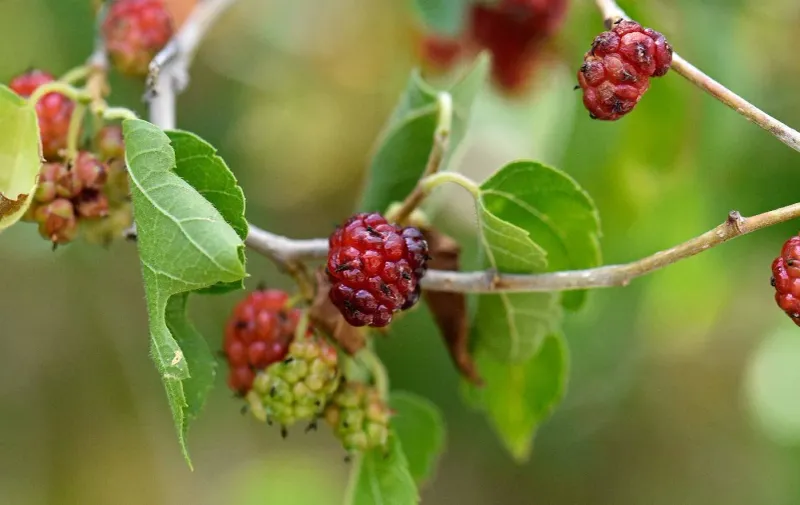
Kids remember purple-stained fingers from a mulberry tree for the rest of their lives. The native Texas mulberry brings that nostalgia to Arizona without the water bill of big fruiting mulberries.
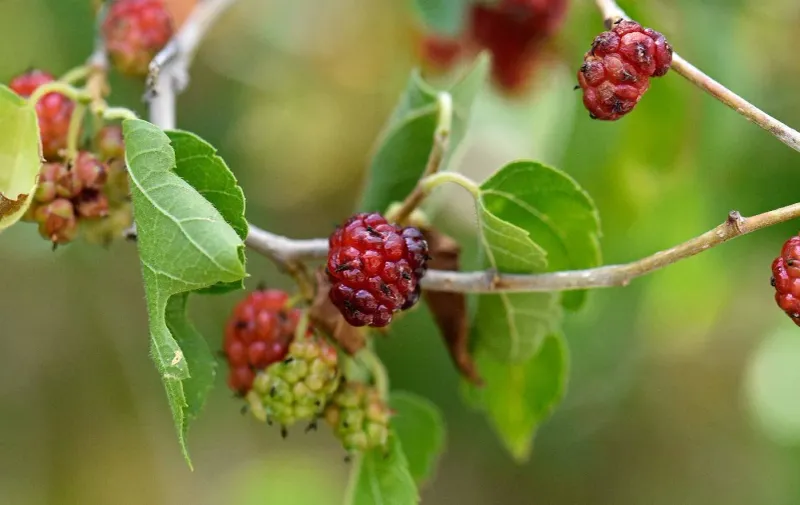
Growing naturally in canyons and rocky slopes across southern Arizona, this small tree reaches 10 to 20 feet. Its berries are tiny but sweet and tart, ripening in late spring.
American Indian tribes traditionally ate them fresh or dried, and they make a lovely small-batch jam.
Alkaline ground is no problem, and caliche is manageable once you open a drainage path. Mulberries in general can fruit for 100 to 300 years, so this is a tree your grandkids might climb.
Unlike fruitless mulberry, a common landscape tree known for pollen, the fruiting native is a modest, well-behaved choice.
Birds are the biggest fans. Mockingbirds, finches, and phainopeplas descend on ripe berries, which brings lively activity and may help with insect control around the yard.
Plant in fall, water every week or two through the first summer, then cut back. Place it away from light-colored patios, because birds and falling fruit leave purple souvenirs.
14. Fig
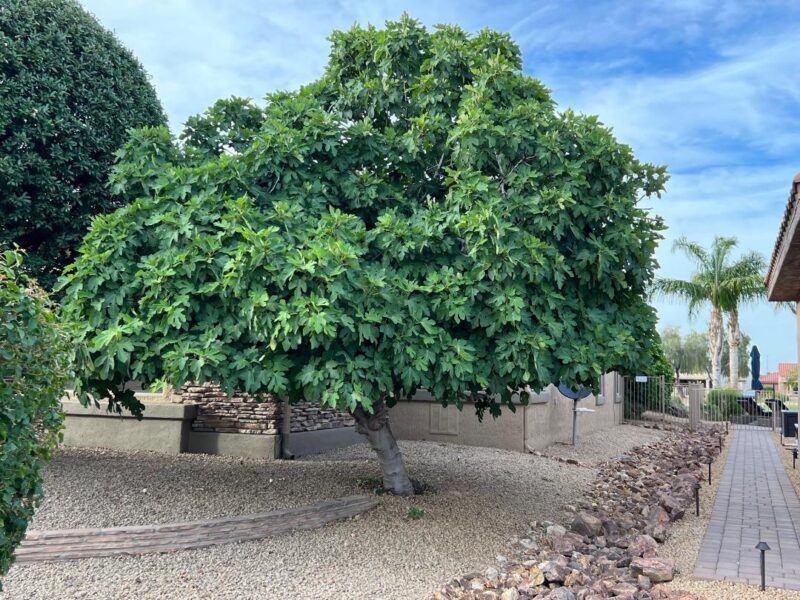
Grandma’s fig tree is a real thing in old Phoenix neighborhoods. Walk through Mesa or central Tucson and you’ll find figs planted decades ago still dripping with fruit every June.
Figs love dry heat and need very few chill hours, a perfect match for the low desert. Black Mission, Brown Turkey, and Kadota are reliable picks.
Many trees give two crops: an early breba harvest in late spring and a main crop in late summer. Some figs have been known to live 200 years.
They grow in many soil types, but caliche must be broken up so roots don’t sit in water. Mulch the root zone heavily with wood chips to keep soil cool and moist.
Figs need more water than natives, so plan for deep weekly soaks in summer.
Place a fig on the east side of the house, where morning sun and afternoon shade protect its big leaves from scorching. Those leaves cast wonderful shade, and birds love any fruit you miss.
Plant in late winter or early spring, and cover young trees on frosty nights. Pick figs when soft and slightly drooping for the sweetest flavor.
15. Pecan
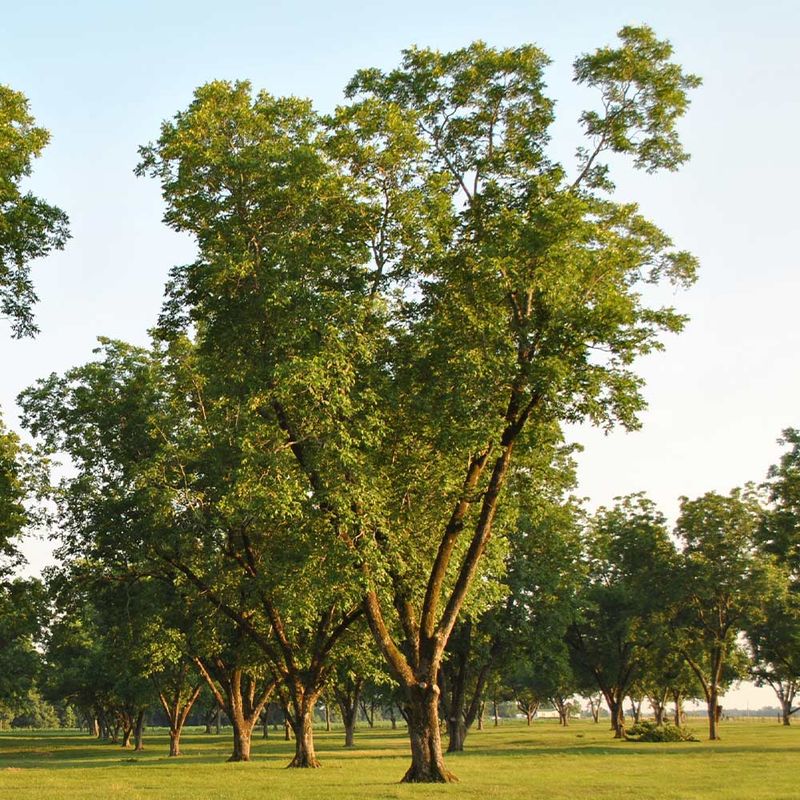
Drive through old farm neighborhoods near Chandler or along the Santa Cruz River and you’ll spot giant pecans older than the houses beside them. These trees can live 200 to 300 years and bear nuts for well over a century.
Pecans love the long, hot, low-humidity summers of Arizona. Western Schley and Wichita are popular low-desert varieties, and planting two types improves pollination and yields.
Expect nuts in six to ten years, then a generous fall harvest of buttery pecans for pies and snacking.
Here’s the honest part: pecans are the thirstiest and pickiest tree on this list. They demand deep, well-drained soil, so caliche must be fully broken through, often with an auger or backhoe.
Many growers dig down several feet to reach native soil beneath the hardpan. Zinc supplements help, since alkaline ground locks up that nutrient.
The reward is massive shade that can drop the temperature under the canopy dramatically on a 110-degree day. Squirrels, jays, and woodpeckers visit.
Plant bare-root trees in January or February, water deeply on a regular schedule, and think of it as a family heirloom.