Native Virginia Groundcovers That Crowd Out Weeds Better Than Mulch
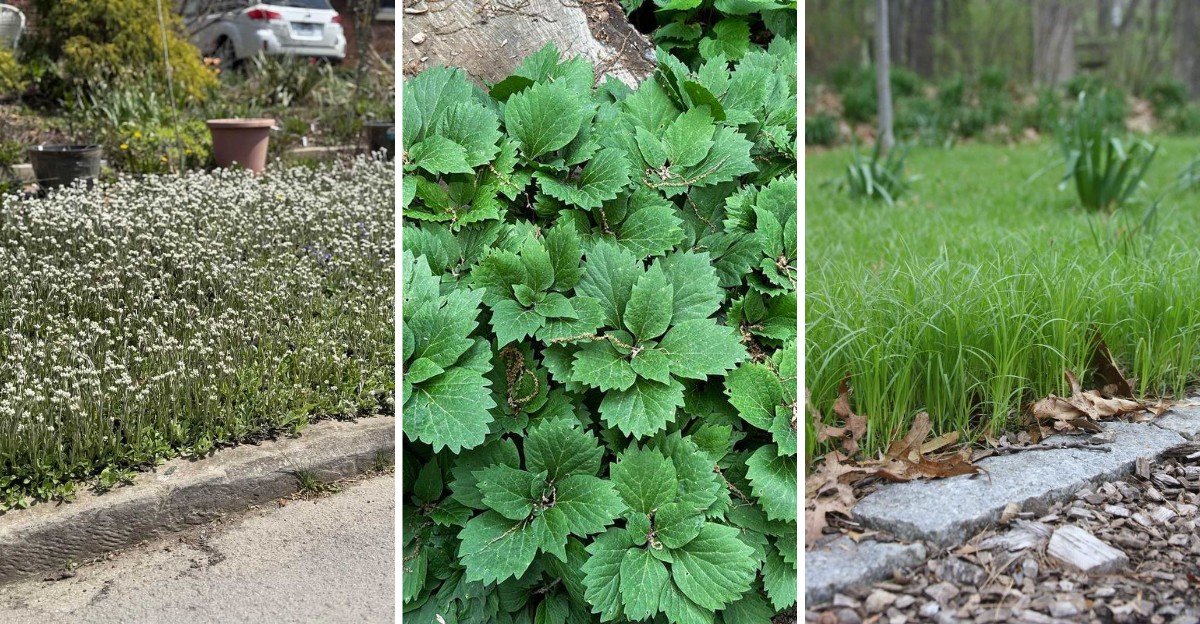
Mulch looks tidy for about three weeks, and then the weeds come roaring back. You rake, spread, and sweat, but crabgrass still pokes through like it owns the place.
Living plants can take over that job once they fill in. Across Virginia, a handful of native groundcovers spread into thick carpets that leave weeds little room to sprout.
Some bloom in bright yellow, some glow silver, and one even hands you tiny sweet berries. They also feed bees and hold soil in place on slopes.
These plants grew here long before any garden center opened. That deep local history means they handle the heat, humidity, and clay far better than many imports.
The groundcovers below include picks for shady corners and baked, sunny strips alike. Give them a season or two, and your mulch pile could shrink dramatically.
1. Pennsylvania Sedge Forms A Soft, Weed-Blocking Mat
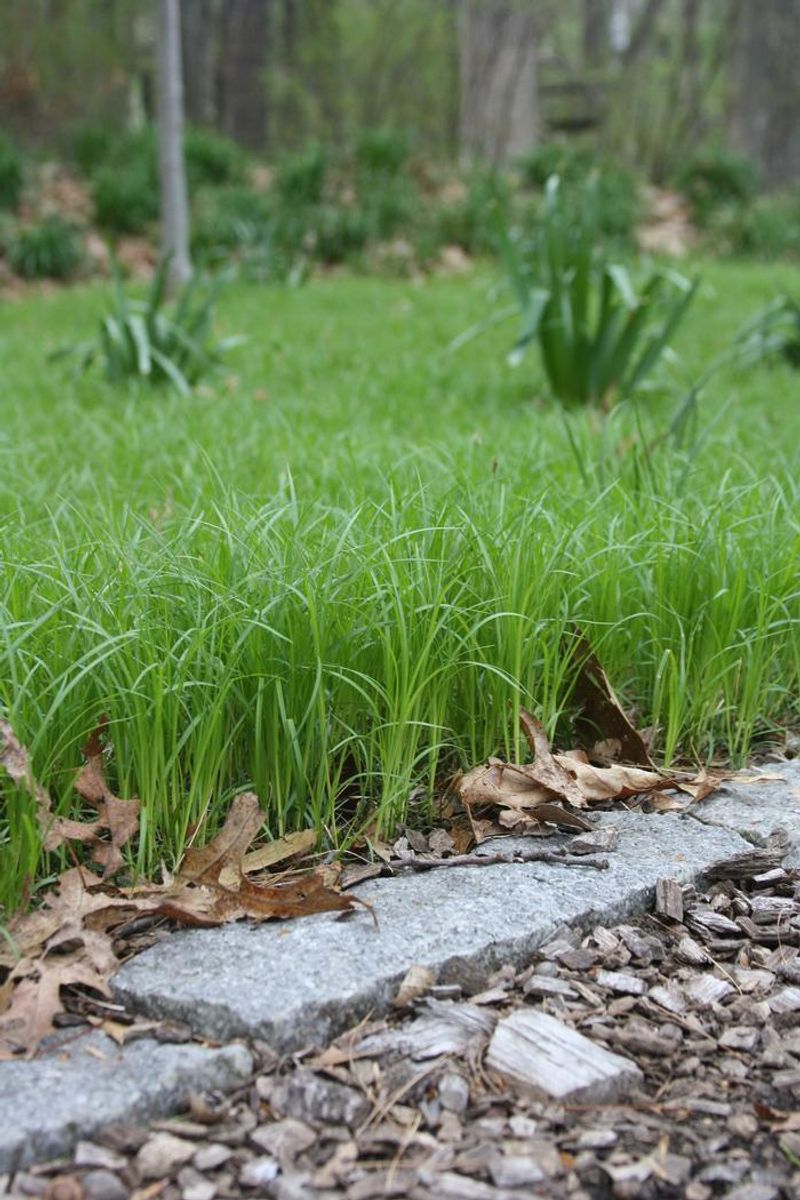
Picture a lawn that asks for almost no mowing and thrives under big oak trees. Pennsylvania sedge makes that dream real for many shady yards.
Botanists call it Carex pensylvanica, and it looks a lot like fine, floppy grass. Plants usually stay 6 to 12 inches tall and spread 12 to 18 inches wide.
Underground stems called rhizomes help each clump creep outward over time. Slowly, the clumps merge into a thick, arching mat that shades bare soil.
Weed seeds need light to sprout, and this sedge steals most of it. You get a living mulch that renews itself every spring without a trip to the store.
Shade is its happy place, from partial to full. Well-drained soil that runs dry to moist suits it, especially if it leans acidic, sandy, or loamy.
Plenty of homeowners use it where turf grass keeps thinning out. Wooded lots in the Piedmont and mountains are a natural fit.
Deer usually pass it by, which is a big relief in many neighborhoods. Its roots also grip soil well, so it helps calm erosion on gentle slopes.
For quicker coverage, plant plugs about 8 to 12 inches apart. Water them regularly during the first season until roots settle in.
A light trim in early spring keeps the mat looking fresh and neat. Otherwise, you can mostly let it do its own thing year after year.
Soft to walk on and pretty in every season, it earns its spot. Few groundcovers make shade feel this calm and cozy.
2. Green-And-Gold Blooms While It Spreads
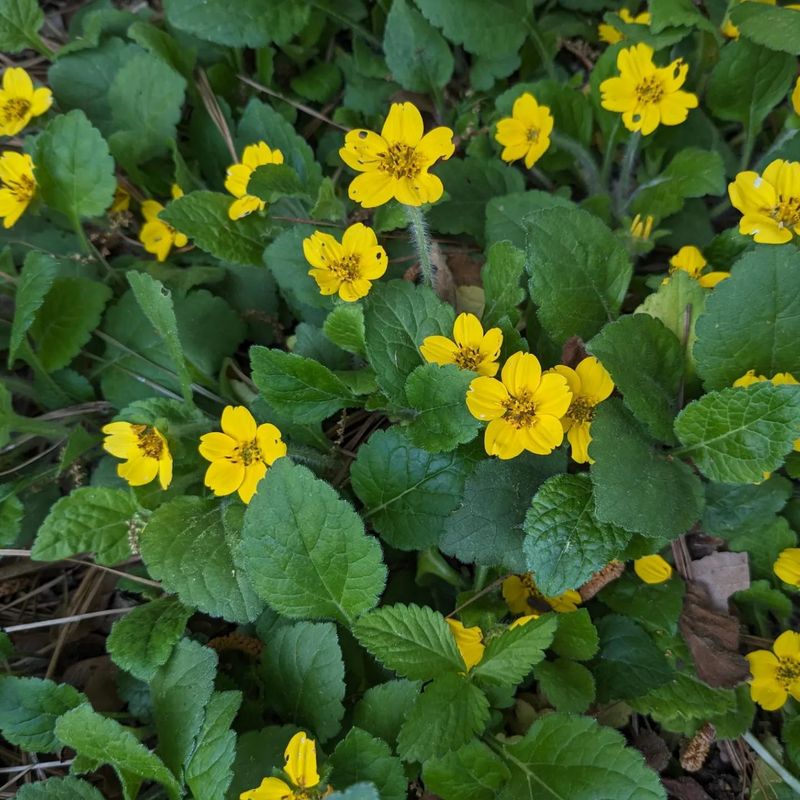
Some plants carry a state name for good reason. Green-and-gold goes by Chrysogonum virginianum, a nod to its deep roots in Virginia soil.
Low and friendly, it hugs the ground and spreads steadily sideways. Each new patch fills gaps where weeds would love to settle.
Bright yellow flowers shaped like little stars pop up in mid to late spring. Blooms last for weeks, so your garden stays cheerful for a long stretch.
Flexibility is its secret talent. It handles full sun, full shade, and nearly everything in between.
Soil can be dry or moist, and it still manages to grow well. One combo gives it trouble, though, and that is hot sun paired with dry ground.
Your Virginia Garden Changes Every Week. Your Plan Should Too.
Gardening in Virginia changes quickly throughout the season. Every Friday you’ll receive a simple weekly plan showing exactly what to plant, prune, fertilize, harvest, and protect so you never miss the right timing.
Morning sun with afternoon shade tends to work beautifully. Woodland edges, path borders, and spots under small trees are great choices.
Here is a handy bonus for thrifty gardeners. Green-and-gold transplants easily, so you can dig up small pieces and move them around.
Start with a few plants and divide them after a year or two. Before long, you will have a spreading carpet without buying more.
Space new plants about 12 inches apart for a fairly quick fill. Tuck a thin layer of leaves around them until they knit together.
Friends and neighbors often ask about those sunny little flowers. Sharing a clump is easy, and it keeps a true local plant growing nearby.
3. Creeping Phlox Knits Shady Ground Together
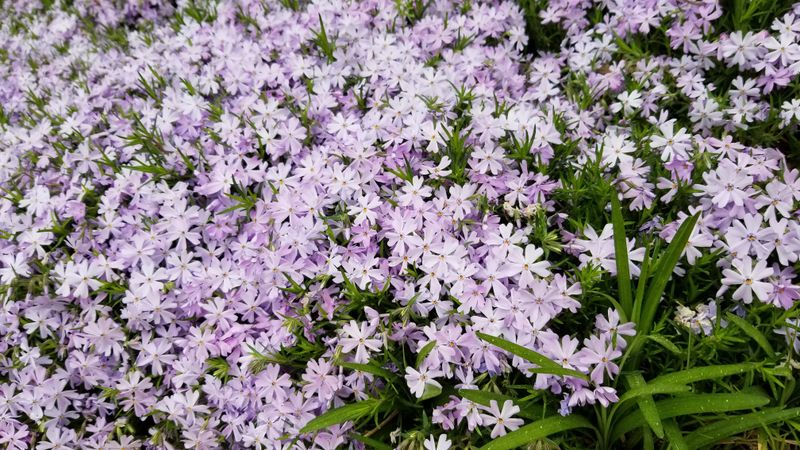
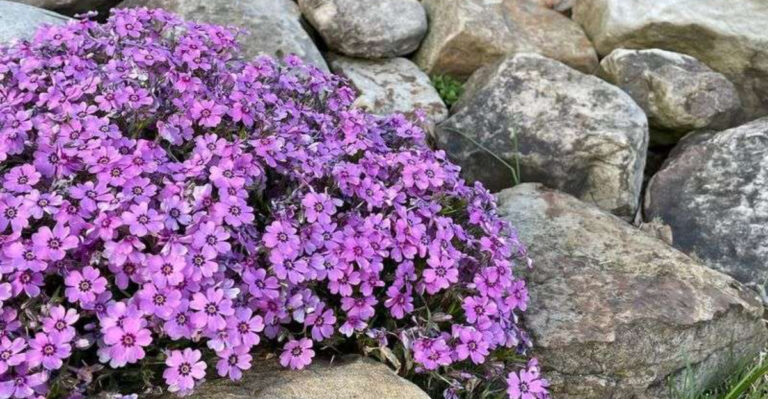
Walk through an Appalachian forest in April, and you might spot a lavender haze near the ground. Creeping phlox is often the reason.
Known as Phlox stolonifera, it grows wild in the mountains, including parts of western Virginia. Gardeners love bringing that woodland magic home.
Leaves form a loose, semi-evergreen mat just about 3 inches high. Flower stems rise to 6 to 10 inches when spring arrives.
Blooms come in lavender, blue, or white from about April to May. Bees and butterflies show up quickly once the petals open.
Runners and underground stems let each plant wander into new ground. Happy plants can build large colonies that leave weeds squeezed out.
Bright shade suits it best, the kind found under tall trees. A little morning sun is fine, but strong southern light tends to stress it.
Soil matters with this one. Aim for rich, moist ground that drains well and leans slightly acidic.
Mixing compost or shredded leaves into the planting hole gives roots a fine start. Keep the soil evenly damp during its first summer.
Once settled, it spreads with real enthusiasm. You may even need to pull a few runners off your paths now and then.
Try pairing it with ferns for a layered forest look. The soft blue flowers against fresh green fronds feel like a spring postcard.
4. Wild Strawberry Runs Across Sunny Patches
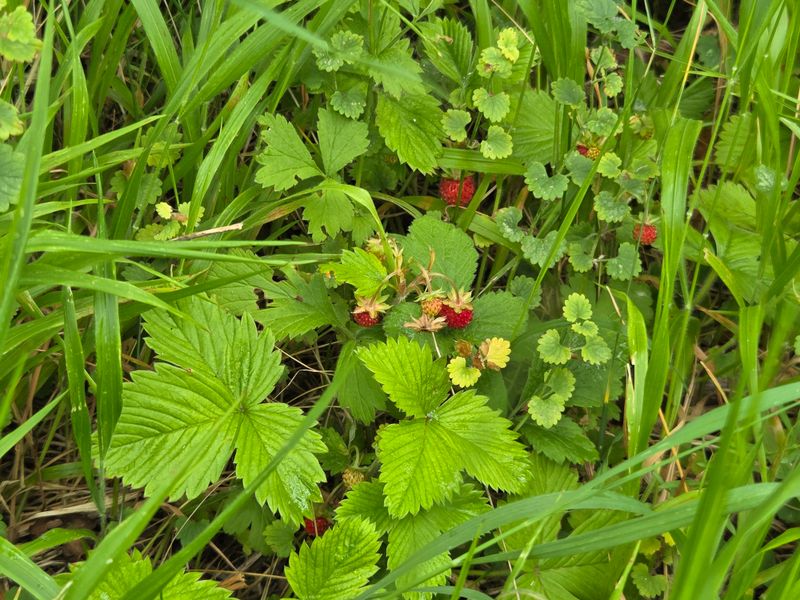
Imagine kneeling in your yard and popping a tiny red berry into your mouth. Wild strawberry makes weed control taste surprisingly sweet.
Its scientific name is Fragaria virginiana, and it grows in every county across the state. That wide range proves how tough and adaptable it is.
Runners shoot out in every direction, rooting wherever they touch soil. Soon you have dense, semi-evergreen colonies covering once-bare patches.
Weeds struggle to break through that leafy blanket. Even pushy invasive plants have a harder time getting a foothold.
Full sun to part shade works nicely for it. Moist soil, dry soil, and even poor soil are all fair game.
After roots settle, it copes with drought quite well. Sunny slopes, hellstrips, and rocky corners can all become green and lively.
White flowers appear from late March through May. Small berries follow, and they pack more flavor than many store-bought strawberries.
Birds, box turtles, and chipmunks will want a share, too. Plant plenty, and there should be enough for everyone at the table.
Set plants about 12 to 18 inches apart and let runners do the rest. Within a season or two, gaps usually close on their own.
Kids especially love hunting for the hidden fruit. A patch like this can turn yard work into a fun summer snack break.
5. Allegheny Spurge Carpets Deep Shade
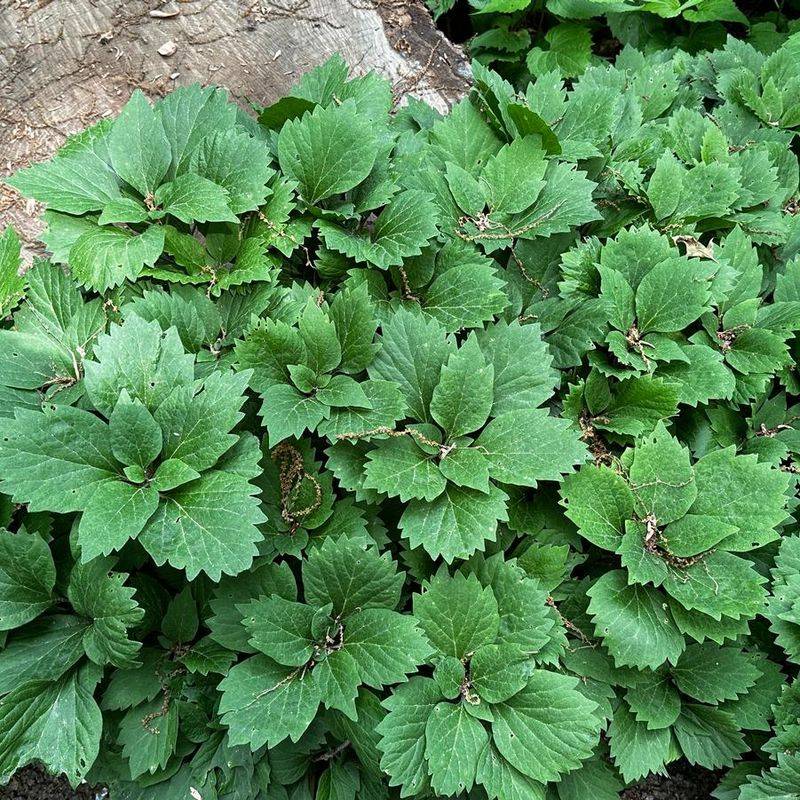
Forget the Japanese pachysandra your neighbor planted years ago. Its native cousin, Allegheny spurge, offers the same thick cover with far more charm.
Pachysandra procumbens hails from nearby southern states rather than Virginia itself, but it grows beautifully here. Leaves often show soft silver mottling that brightens dark corners.
Plants reach about 6 to 12 inches tall. Underground rhizomes push outward slowly but steadily, forming a dense carpet.
Patience pays off with this plant. Once the leaves overlap, weeds have very little chance to take hold.
Deep shade does not scare it one bit. Spots under large trees, where grass gives up, are exactly where it shines.
Rich, moist, acidic soil that drains well suits it best. After a year or two, it handles dry spells better than you might expect.
In warmer places like Virginia, the foliage tends to stay evergreen through winter. You get green cover even when most gardens look bare.
Early spring brings fuzzy spikes of white to pinkish flowers. Lean close, and you will catch a light, pleasant fragrance.
Deer usually leave it alone, and its roots help steady sloped ground. Those traits make it a smart pick for wooded hillsides.
Plant it about 12 inches apart and add a thin leaf layer between plants. Time and gentle watering will reward you with a lush green rug.
6. Pussytoes Seals Off Dry, Poor Soil
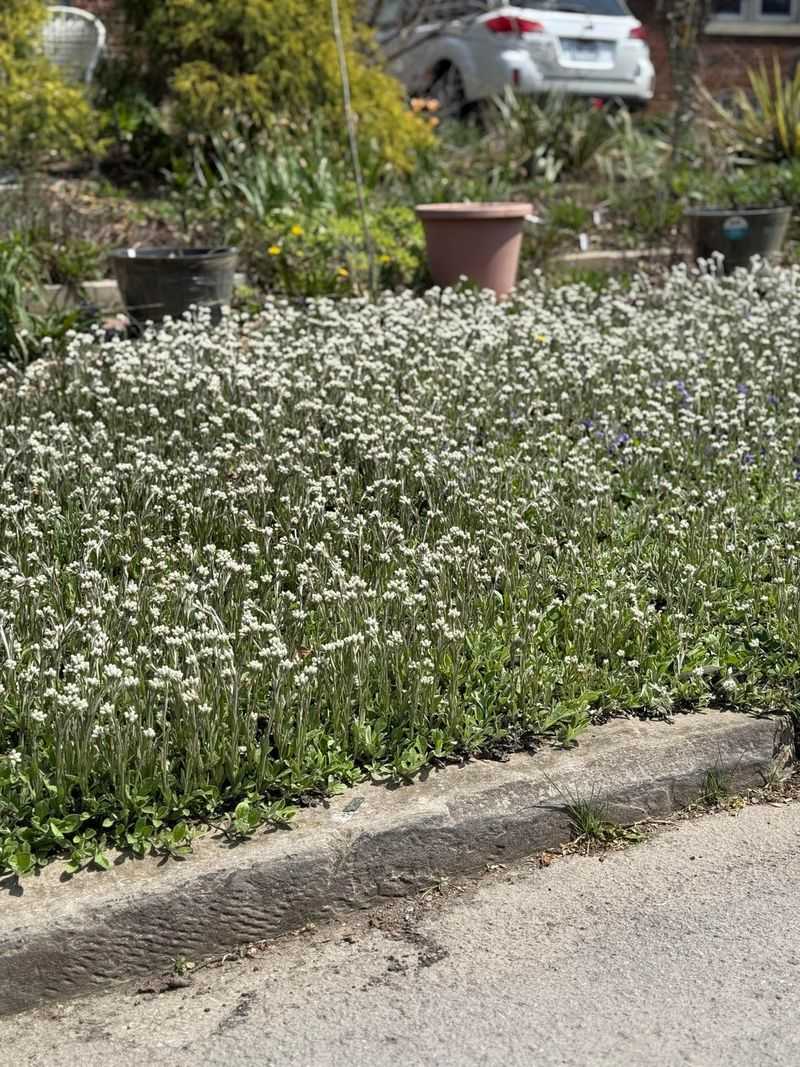
Fuzzy flowers that look like a kitten’s paw? Pussytoes earns its adorable name every spring.
Antennaria plantaginifolia grows in nearly all counties of the state. Many people walk right past it on dry roadsides without noticing.
Silvery-gray rosettes feel soft and velvety to the touch. They sit just 1 to 3 inches high, hugging the ground tightly.
Stolons and seeds help the plant spread into flat, dense mats. Those mats smother weeds by blocking light and space.
Here is a quirky fact worth sharing. The leaves are allelopathic, meaning they release natural chemicals that slow other seeds from sprouting nearby.
Tough conditions are where it truly thrives. Dry, lean, sandy, or rocky soil with some acidity suits it perfectly.
Full sun to partial shade works fine for it. Soggy spots or packed-down clay, however, usually cause it to struggle.
Skip the fertilizer and rich compost with this one. Too much pampering can make it weak and floppy.
Small fluffy flowers in white or pale pink open in spring and early summer. Early butterflies, including the American lady, rely on it as a host plant.
Try it between stepping stones or along a hot, gravelly edge. Few plants handle such stingy soil while looking this soft and silvery.
7. Golden Ragwort Holds Ground With Evergreen Leaves
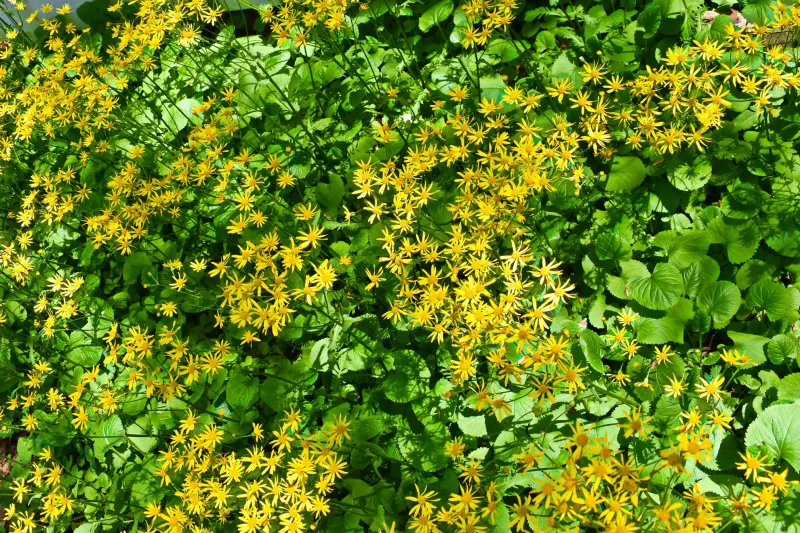
Garlic mustard is one of the most annoying invaders in eastern woods. Golden ragwort can actually outcompete it, which makes it a real garden hero.
Packera aurea is common throughout Virginia, especially in damp woods and stream banks. It fills space fast and holds it firmly.
Heart-shaped leaves form lush, semi-evergreen mats. Much of the year, those leaves stay green while other plants rest.
Spreading happens two ways, through rhizomes and by dropping seeds. That double strategy helps it cover ground quickly.
Bright golden-yellow flowers look like cheerful little daisies. They open in early spring and can keep going into summer.
Pollinators flock to the blooms when few other flowers are open. Early bees especially appreciate that first spring meal.
Light needs are easygoing, ranging from full sun to full shade. Average to wet soil works, though steady moisture keeps it happiest.
Avoid pairing strong sun with dry ground. Rain gardens, soggy low spots, and creek edges suit it well.
Deer tend to skip it, which saves plenty of frustration. Its fast growth also makes it handy for patching bare areas.
Because it self-seeds, give it room or pull extra seedlings. Trimming after bloom can keep it tidy if you want tighter control.
8. Foamflower Spreads By Runners In Shade
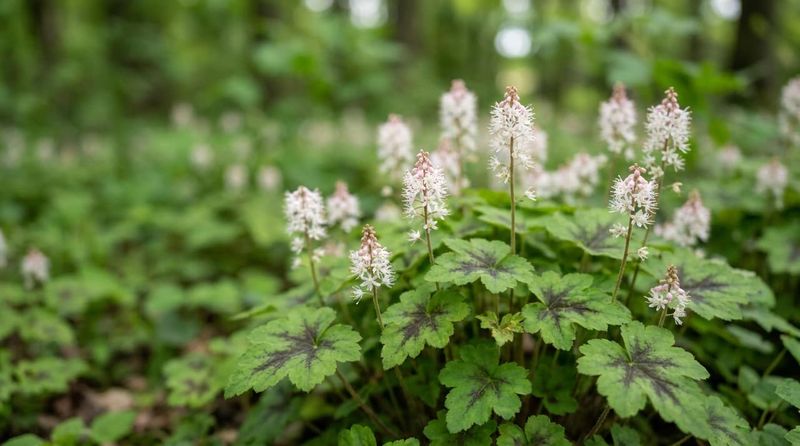
Frothy white spikes rising above green leaves look almost like sea foam. Foamflower brings that soft, bubbly charm to shady beds.
Gardeners know it as Tiarella cordifolia, a standout native groundcover for Virginia. Nurseries across the state often carry several varieties.
Leaves are semi-evergreen and stay put through winter. Many take on reddish or bronze tones when the weather turns cold.
Runners reach out sideways and root as they travel. Over time, they create a steady carpet that crowds out weeds.
Mid-spring brings delicate spires of tiny white flowers. Some types show a pink blush, which adds extra sweetness.
Light is rarely a problem in shade, from dappled to deep. Moisture, though, is the one thing it truly needs.
Keep the soil evenly damp, especially during summer heat. Dry spells can leave the leaves crispy and tired.
Adding compost or leaf mold helps hold water near the roots. A shady spot near a downspout can work surprisingly well.
Plant it about 12 to 18 inches apart for a full look. Mix it with ferns or wild ginger for a layered woodland scene.
With a few foamflower patches, your shade garden will feel finished and alive. Swapping mulch for living plants suddenly feels like an easy choice.