This California Native Plant Can Help Keep Sloped Yards From Washing Out
Sloped yards have a habit of losing ground, quite literally, every time a hard winter storm rolls through. Bare soil washes downhill, clogs drains, and leaves muddy streaks across sidewalks.
A slope covered in the right plants tells a very different story after the same rain.
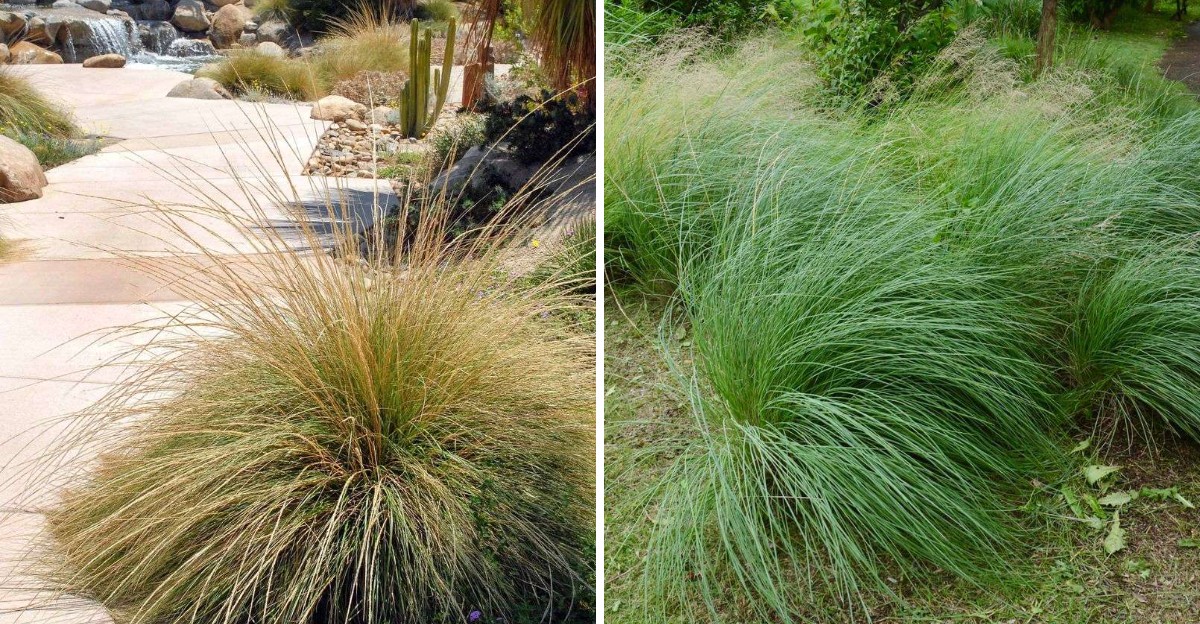
Deer grass, a California native bunchgrass, ranks among the most reliable choices for this job. Its dense clumps and deep, fibrous roots grip the soil and slow running water.
The plant also handles dry summers, asks for little care, and fits naturally into California landscapes.
For hillsides that shed dirt with every downpour, this tough grass may be exactly the fix they need.
Deer Grass Anchors Soil With Deep Roots
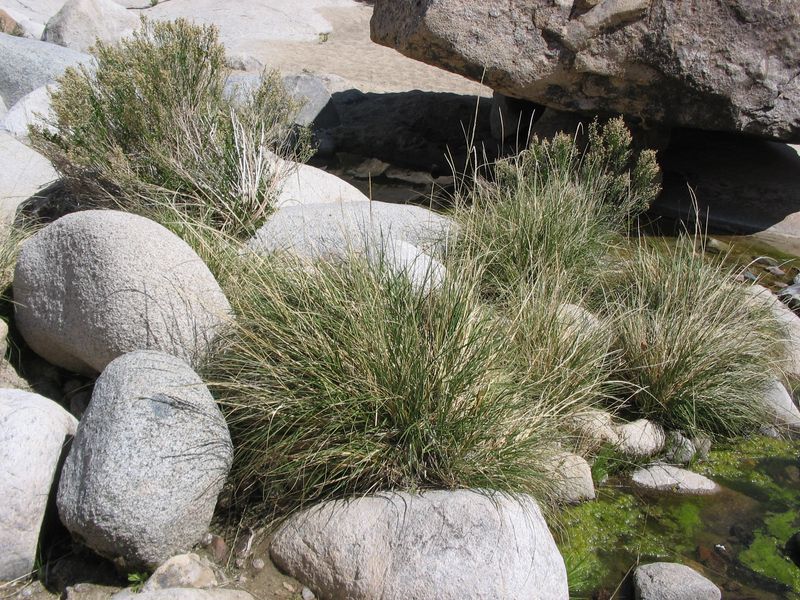
Underground, this grass does far more work than its graceful leaves suggest. Known as Muhlenbergia rigens, deer grass is a bunchgrass native to California and parts of the Southwest.
Above the soil, it forms a fountain of narrow leaves that can reach three to five feet tall and wide. The real hero, though, sits below the surface.
Deer grass grows a thick mass of fine, fibrous roots that spread down and outward. They work like thousands of tiny threads stitching the dirt together, so rain can’t easily carry it away.
Fibrous roots differ from a single thick taproot, like the one on a carrot. A taproot goes down in one spot, while fibrous roots fill an entire area with a tangled web.
That web holds soil particles in place. It also slows water as it soaks in, which reduces runoff on steep ground.
University of California and native plant groups describe deer grass as deep-rooted and well suited to slopes. Exact root depth depends on soil type, water, and plant age, so any single figure found online deserves some caution.
Many California Native American communities valued this grass for another reason, too. Its tall flower stalks have long been gathered to weave sturdy coiled baskets, a tradition that continues today.
The lesson for homeowners is simple. Bare soil has nothing holding it together, while soil packed with deer grass roots has a living net running all the way through it.
Clumping Habit Resists Erosion Naturally
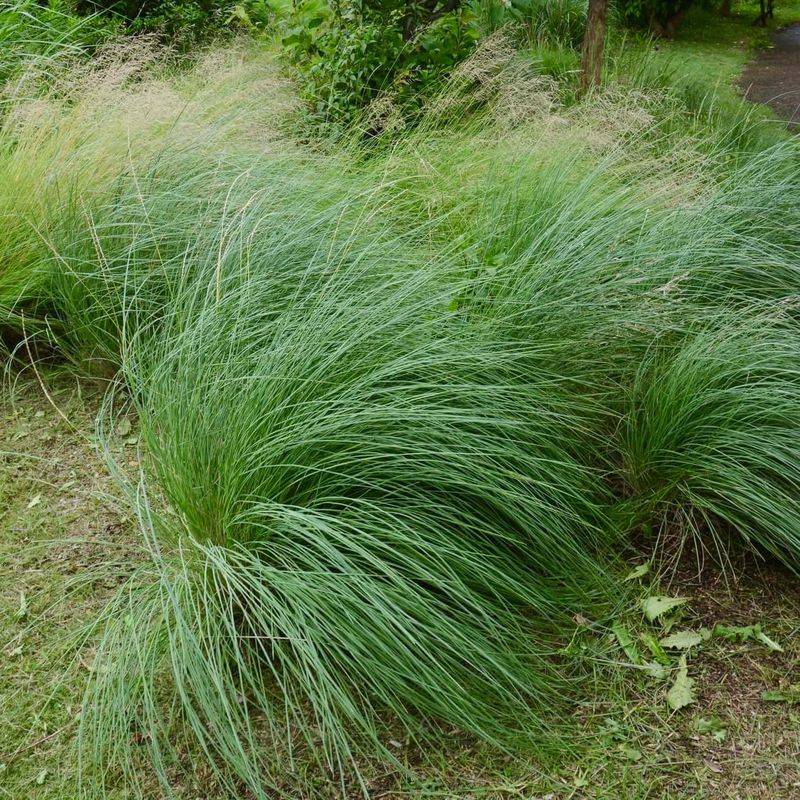
Some garden plants behave like party guests who never leave. Running grasses and certain groundcovers creep through the yard with underground stems, popping up in flower beds and patio cracks.
Deer grass isn’t one of those. It grows as a clump, also called a bunch, widening slowly over time while staying in one tidy mound.
That predictable habit makes it easy to manage on a slope. No runners means no surprise sprouts in nearby flower beds.
Each mound works a lot like a small dam. Rain flowing downhill bumps into the dense base of the plant, slows down, and drops some of the soil it was carrying.
Roots under each clump hold the ground right where the plant sits. Many clumps across a hillside create a pattern of little speed bumps and anchors from top to bottom.
Your California Garden Changes Every Week. Your Plan Should Too.
Gardening in California changes quickly throughout the season. Every Friday you’ll receive a simple weekly plan showing exactly what to plant, prune, fertilize, harvest, and protect so you never miss the right timing.
As a California native, deer grass also belongs here. It doesn’t threaten wild areas the way some imported grasses, like pampas grass, have done in many parts of the state.
That means soil protection without worry about plants escaping into nearby canyons. It’s a rare and welcome combination of strength and good manners.
Layout matters, too. A staggered zigzag pattern works far better than straight rows running downhill.
Straight lines can form channels where water rushes through. Staggered plants force water to wind around each clump and slow down.
Drought Tolerance Suits Dry Slope Conditions
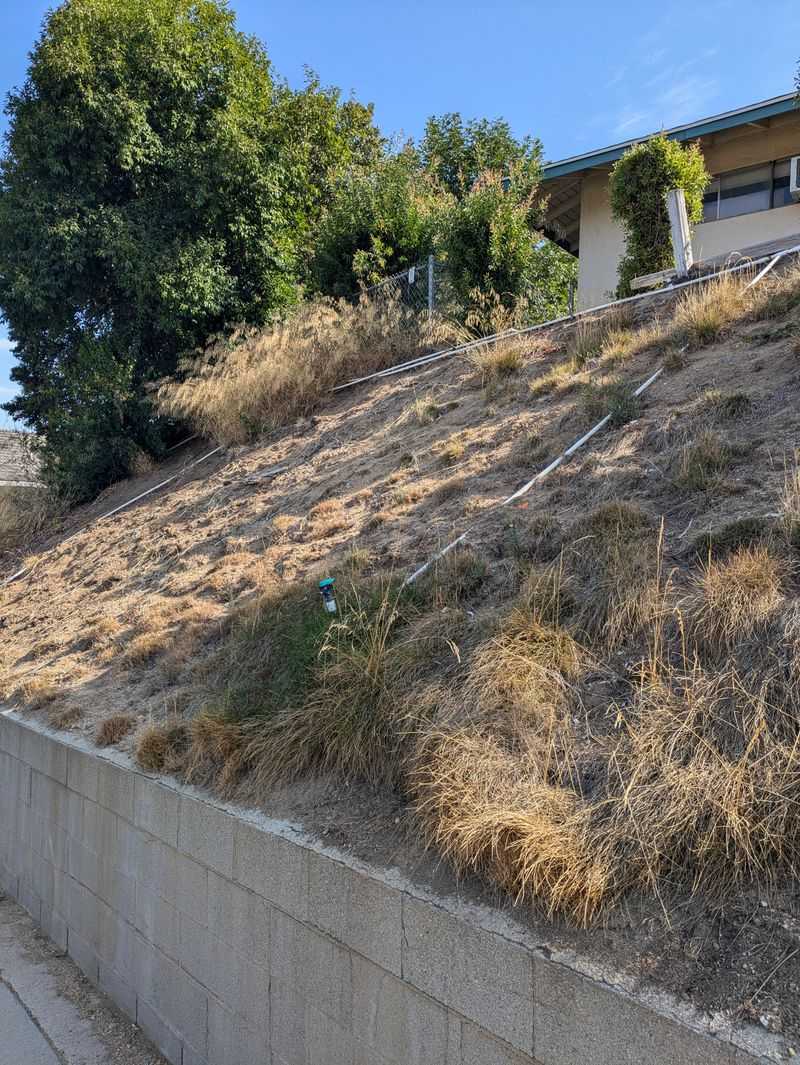
California summers can be hard on hillsides. Water runs off a slope faster than flat ground, and soil often dries out quickly under strong sun.
Plenty of plants struggle in those conditions, but deer grass handles them well. Once established, it’s genuinely drought tolerant.
In the wild, it often grows along seasonal streams, in meadows, and on hillsides that see little or no rain from late spring through fall. Deep roots help it reach moisture that shallow-rooted plants can’t touch.
Established is the key word, though. Young plants need regular watering during the first year to build their roots.
Deep watering followed by a pause until the top few inches of soil dry out works well. That rhythm encourages roots to grow downward.
After the first season, many plantings get by with occasional deep summer watering, especially in hot inland areas. Cooler coastal gardens may need even less, and a plant that looks a little tan in late summer is usually just resting.
Saving water helps the slope itself, too. Heavy irrigation on a hillside can soak the soil and make it more likely to slump or slide. A plant that thrives on less water keeps the ground firmer.
Deer grass also grows in full sun or light shade. That flexibility comes in handy on slopes, where one side may bake all afternoon while another stays partly shaded.
Minimal Maintenance Once It Establishes
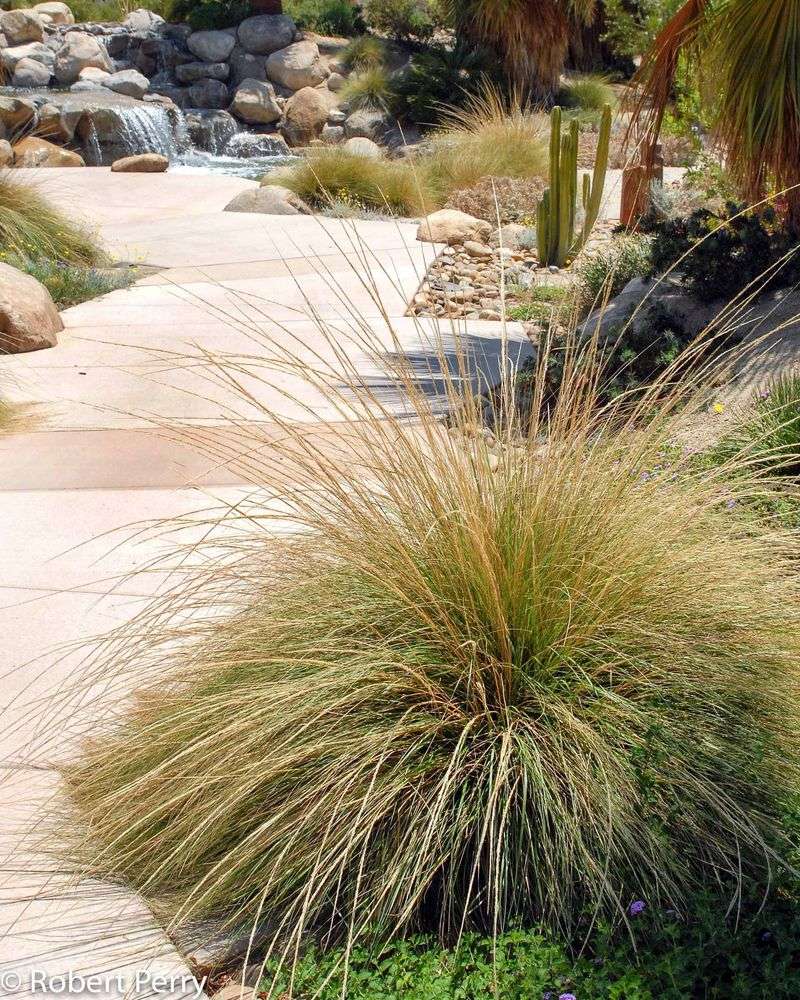
The hardest part of caring for deer grass might be resisting the urge to fuss over it. Once plants settle in, they ask for very little.
That’s great news on a steep yard, where climbing up and down is nobody’s favorite chore.
Regular fertilizer isn’t needed. Native plants are adapted to California soils, and extra feeding can make them floppy or weaken them over time.
Mowing is off the table, too. Nobody has to drag a lawnmower across a tricky slope, since the clumps keep their natural fountain shape on their own, season after season.
Over a few years, old, spent leaves can build up in the center of each clump. Some gardeners comb them out with a gloved hand or a rake.
Others cut plants back to a few inches tall in late winter, every two or three years. That lets fresh green growth push through cleanly each spring.
Many California Native American communities traditionally used fire to refresh deer grass stands, encouraging straight new stalks for basket weaving. At home, careful trimming does the same job safely.
Weeding matters most in the first year, before the clumps fill in. Pulling weeds while they’re small and spreading mulch between plants helps block new ones.
After that, the slope mostly takes care of itself. The reward is more free weekends and far fewer muddy cleanups after storms.
Pairs Well With Other Native Groundcovers
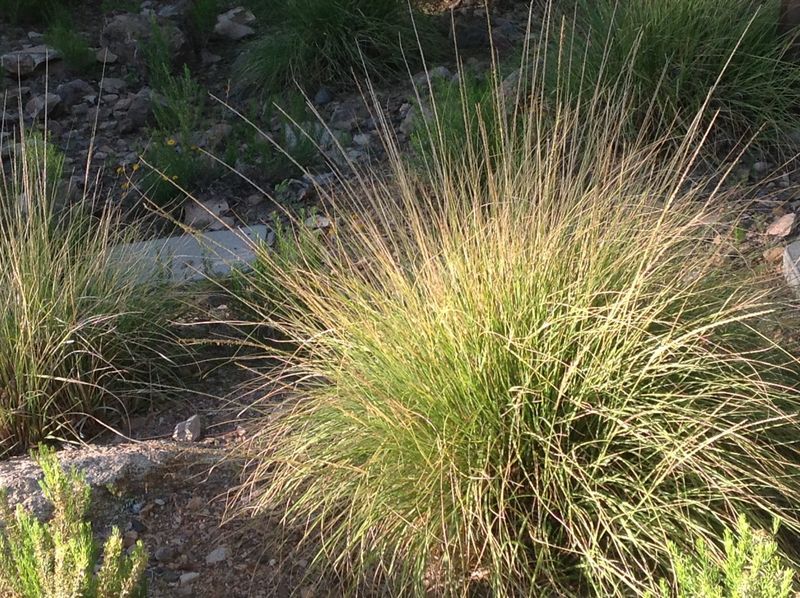
A hillside works best as a team rather than a solo act. Deer grass is a strong player on its own, but it does even better alongside low-growing natives that cover the bare spaces between clumps.
Layering is the idea here. Deer grass provides the tall, deep-rooted middle layer, while low groundcovers spread across the surface.
Those groundcovers shield soil from raindrops that would otherwise splash it loose. Together, the two layers protect the slope from top to bottom, even during heavy storms.
Several California natives make popular partners. Low manzanitas, such as certain Arctostaphylos varieties, hug the ground, while creeping sages like Salvia sonomensis and low ceanothus types spread to cover soil.
Yarrow fills small gaps nicely. California poppy seeds sprinkled between plantings add quick color and cover during the slow first season while everything else grows in.
Matching water needs is a smart move on any slope. Partners that also prefer dry summers prevent overwatering one plant just to keep another happy.
A local native plant nursery or California Native Plant Society chapter can suggest combinations suited to the area. Spacing helps the whole team succeed, too.
Deer grass needs room to reach its full width, often around four to five feet, with groundcovers tucked into the gaps. The finished look resembles a wild California hillside, buzzing with bees and butterflies right in the backyard.
Fall Planting Gives Roots A Head Start
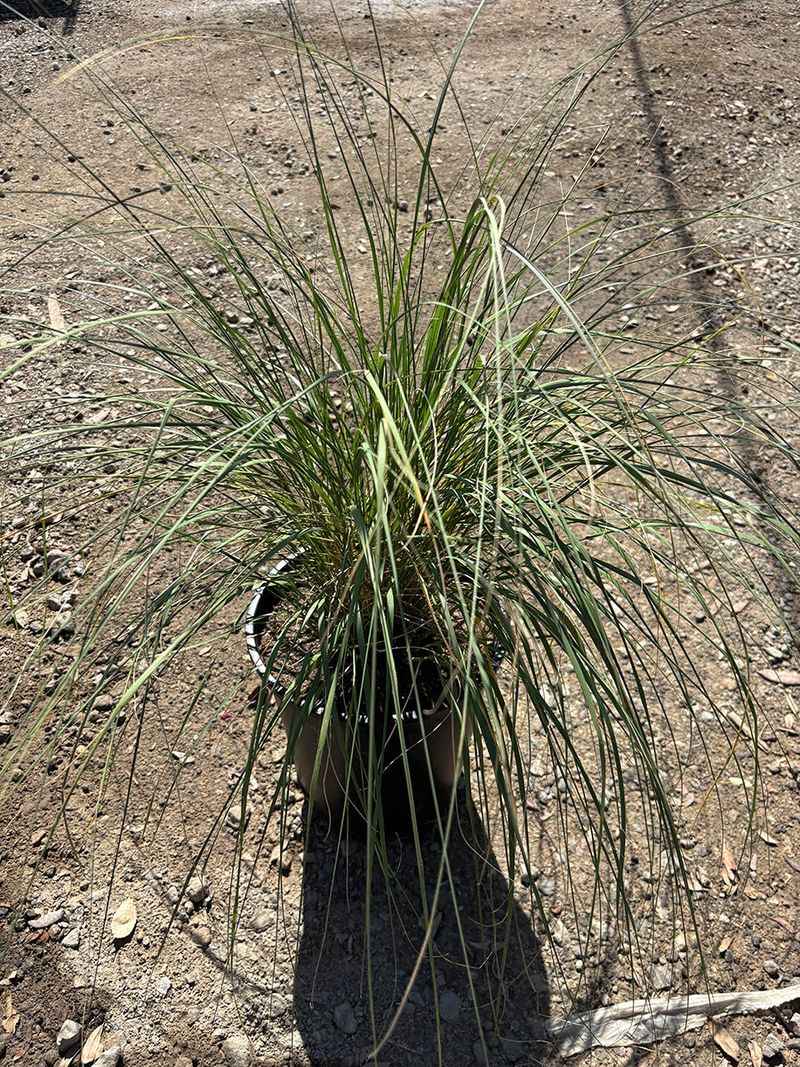
Timing can make or break a slope planting. In much of California, the best moment to put deer grass in the ground is fall, usually from October into early winter.
UC experts and native plant groups widely recommend this window for most native plants, not just grasses. Cooling weather means young plants lose less water through their leaves.
At the same time, the soil is still warm, which encourages root growth. That combination gives new plantings a strong, steady start.
Winter rains then take over much of the watering. Roots get months to spread before the hot, dry summer arrives, leaving fall plantings far better prepared than spring ones.
A few planting details help even more. A hole about as deep as the nursery pot and a little wider works well.
The crown, where leaves meet roots, belongs right at soil level rather than buried.
On steeper slopes, a small flat basin shaped on the downhill side of each plant catches rainwater. That tiny shelf lets water soak in instead of racing past.
Erosion control matting or straw wattles protect bare soil during the first rainy season. They hold the ground while deer grass roots are still young and growing.
Dry spells can still happen in a California winter. New plants appreciate a deep drink whenever the rain takes a break for a few weeks.
One Grass Can Change A Whole Hillside
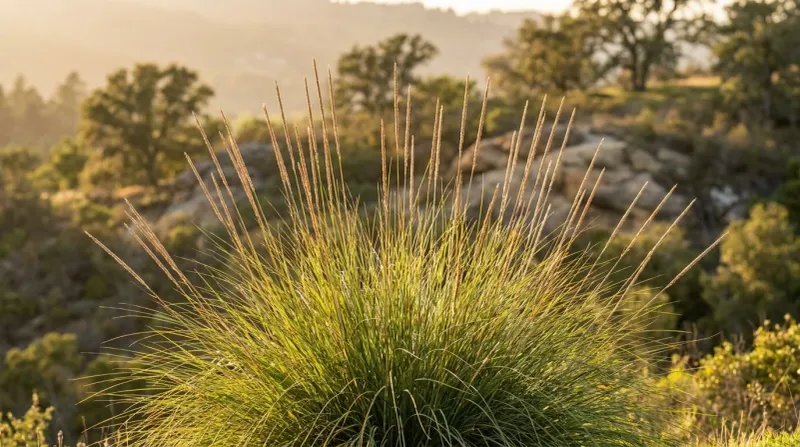
A few years after planting, a mature deer grass slope looks remarkably different. The soil stays put, rain soaks in, and tall flower spikes wave in the breeze.
It’s a living answer to one of the most frustrating yard problems. The value is real and well documented.
Deer grass has long been used in restoration and erosion control projects across California, thanks to its fibrous roots and sturdy clumps. As a native, it also won’t run wild.
Patience is part of the deal, though. A newly planted slope won’t be fully protected right away, and good things take a little time on a hillside.
A full growing season, and often more, passes before roots spread far enough to give the complete benefit. Planning for that waiting period makes a big difference.
Mulch, straw wattles, or erosion matting help during the first rainy season. Checking after big storms for small gullies allows quick repairs before they grow.
Very steep slopes or areas that have already slid call for a professional opinion before planting. Plants help a great deal with surface erosion, but they can’t fix deep soil problems or poor drainage alone.
With realistic expectations and a little early care, deer grass can turn a muddy hillside into a stable, good-looking part of the yard. Years later, it may well be the most dependable plant on the property.