How To Tell A Young Rat Snake From A Copperhead In Your Georgia Yard
A small, blotchy snake slipping under the porch steps can make your heart jump, especially in a Georgia yard where copperheads live.
Your first thought might be that it is dangerous, and that caution makes sense until you know more.
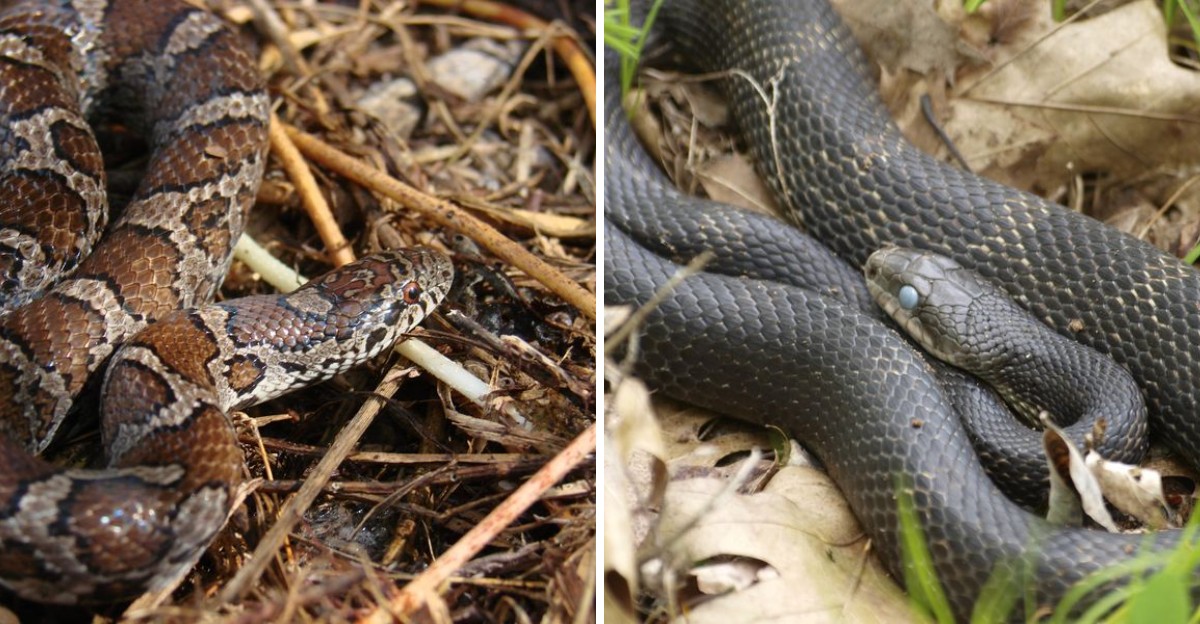
Young rat snakes have a patterned look that can resemble a copperhead at a glance. That similarity fades as they grow, but small ones fool plenty of homeowners each fall.
Mistaking one for the other can lead to a harmless snake getting hurt for no good reason.
It can also work the other way, with someone reaching too close to a snake they assumed was safe. Neither outcome is one you want.
Keep your distance and take a good look at the pattern before deciding what you are dealing with.
1. Blotchy Gray Juveniles Often Get Mistaken For Something Dangerous
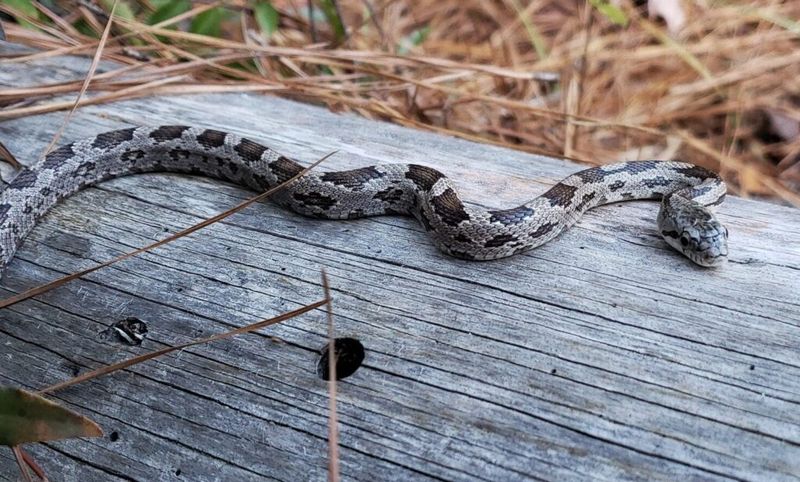
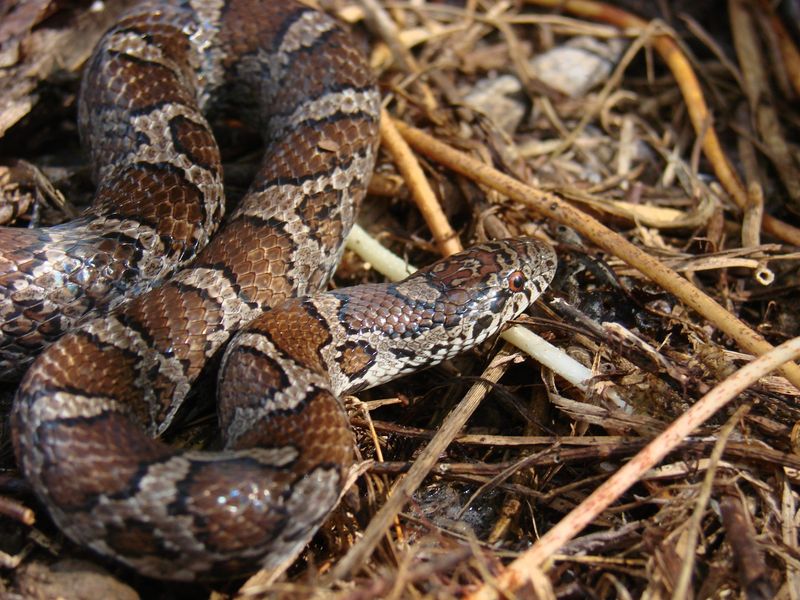
Baby rat snakes look like a completely different animal from their parents. Instead of a plain dark body, they hatch with bold gray or brown blotches on a pale background.
That busy pattern is exactly why so many people mistake them for copperheads.
In Georgia, the gray rat snake and its close relatives are common in yards near woods. Hatchlings usually show up in late summer and early fall, often around porches, sheds, and garden beds.
A young rat snake hatches at roughly 10 to 14 inches long, which is close to the size of a young copperhead.
Size, then, does not help much at first glance. You need to look at pattern shape and color instead of length.
Watch how the snake behaves if you happen to see it moving. Young rat snakes may freeze, vibrate their tails in dry leaves, or strike when cornered.
Tail vibrating is common in harmless snakes and does not mean the animal is venomous.
Rat snakes are good climbers, so you might spot one on a fence, a tree trunk, or brick wall. Copperheads can climb low shrubs at times, but they spend most of their time on the ground.
Keep in mind that one clue alone can fool you, so compare several features before deciding what you are seeing.
2. Hourglass-Shaped Crossbands Are The Copperhead’s Clearest Marking
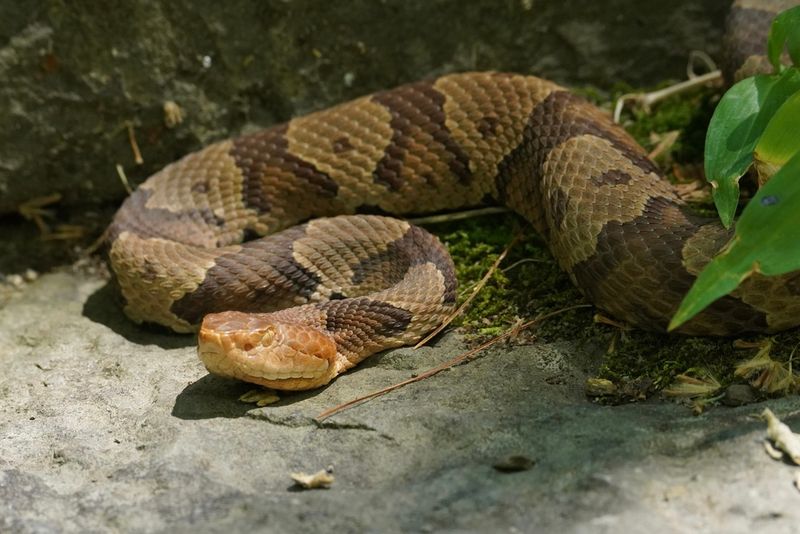
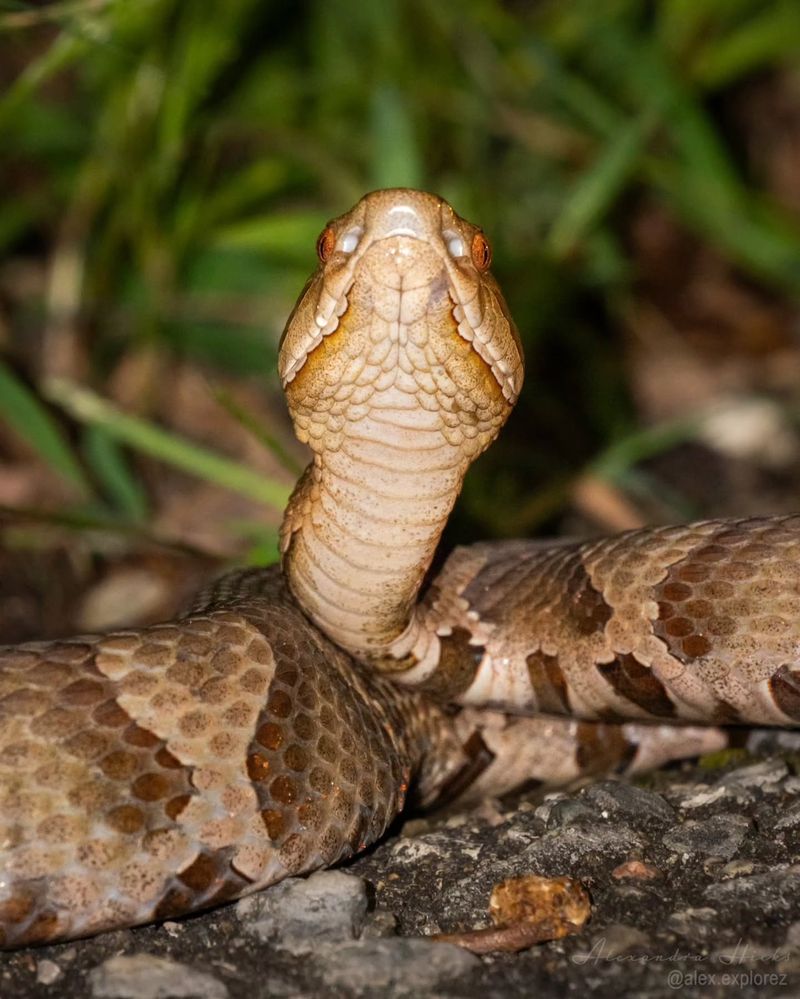
Picture an hourglass lying across a snake’s back, and you have the copperhead’s signature look. Each band is wide along the sides and pinches narrow at the spine.
Seen from above, the bands can look a bit like Hershey’s Kisses lined up along the body.
Copperheads in Georgia usually have a tan, pinkish, or light brown body with darker chestnut or copper bands. The colors blend in extremely well with fallen oak and hickory leaves.
That camouflage is a big reason people step close to them without noticing.
If you can see the snake from the side, look at the wide part of each band near the belly. On a copperhead, the band widens as it drops down the side.
Young copperheads carry the same hourglass shape as the adults, just in slightly grayer or softer tones.
Your Georgia Garden Changes Every Week. Your Plan Should Too.
Gardening in Georgia changes quickly throughout the season. Every Friday you’ll receive a simple weekly plan showing exactly what to plant, prune, fertilize, harvest, and protect so you never miss the right timing.
Some bands may break apart or connect irregularly, so expect a few odd ones on any single snake. Look at the overall pattern rather than one band.
You can usually judge this marking from six feet away or more, so there is no need to move closer.
Leaf piles, wood stacks, and rock borders are favorite hiding spots, so check those areas carefully during warm months.
3. Young Rat Snakes Wear Squarish Saddles Instead
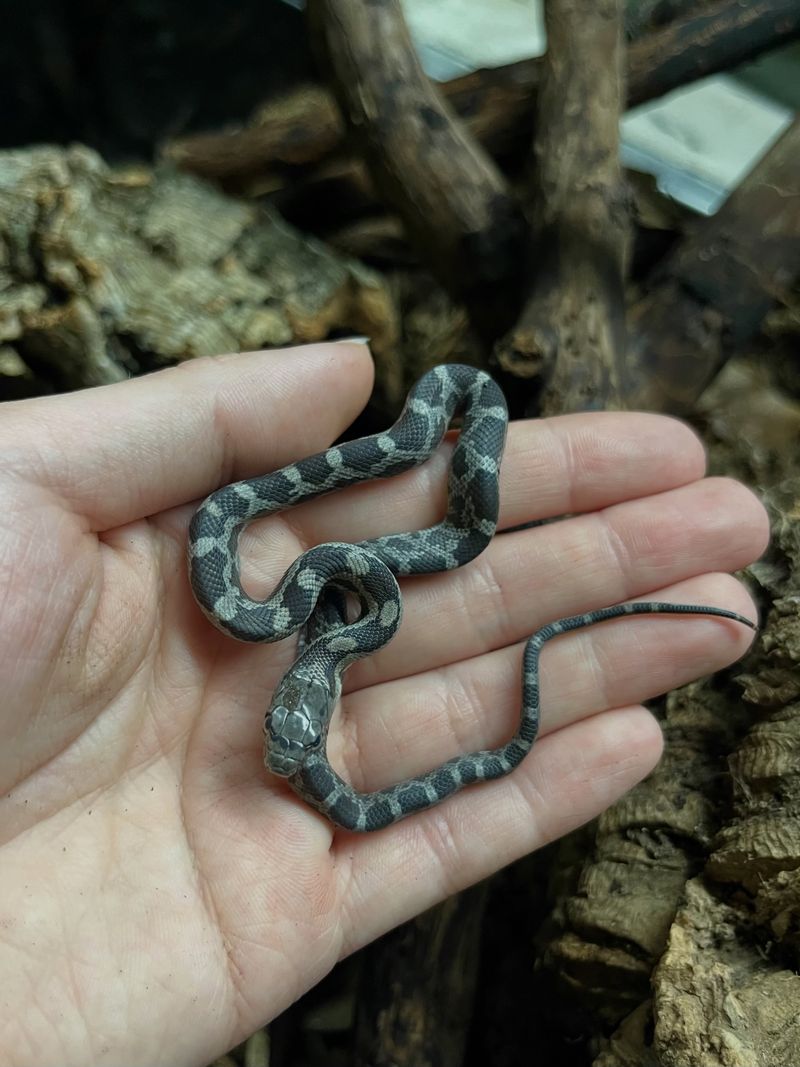
Squares, not hourglasses, are what you want to notice on a baby rat snake. Its back blotches tend to be boxy or rounded, sitting on top like saddles.
Unlike a copperhead band, these blotches usually stay roughly the same width or get narrower down the sides.
Along the sides, you will often see a second row of smaller spots between the larger saddles. That checkered side pattern is a helpful extra clue.
Copperheads generally lack that neat row of small side spots.
Another sign sits right on the face. Many young rat snakes have a dark stripe running from the eye back toward the jaw, almost like a mask.
Their bellies often show a checkered black and white pattern, though you should only notice that if the snake flips or climbs.
Around Georgia homes, young rat snakes often hunt small lizards, frogs, and young mice. Finding one near a shed or bird feeder is common because those spots attract prey.
Pattern contrast varies from snake to snake, and some juveniles look faded or muddy.
When the blotches look squarish and stay narrow toward the belly, you are probably looking at a rat snake. Still, give it space until you are sure.
4. A Yellowish Tail Tip Can Mark A Baby Copperhead
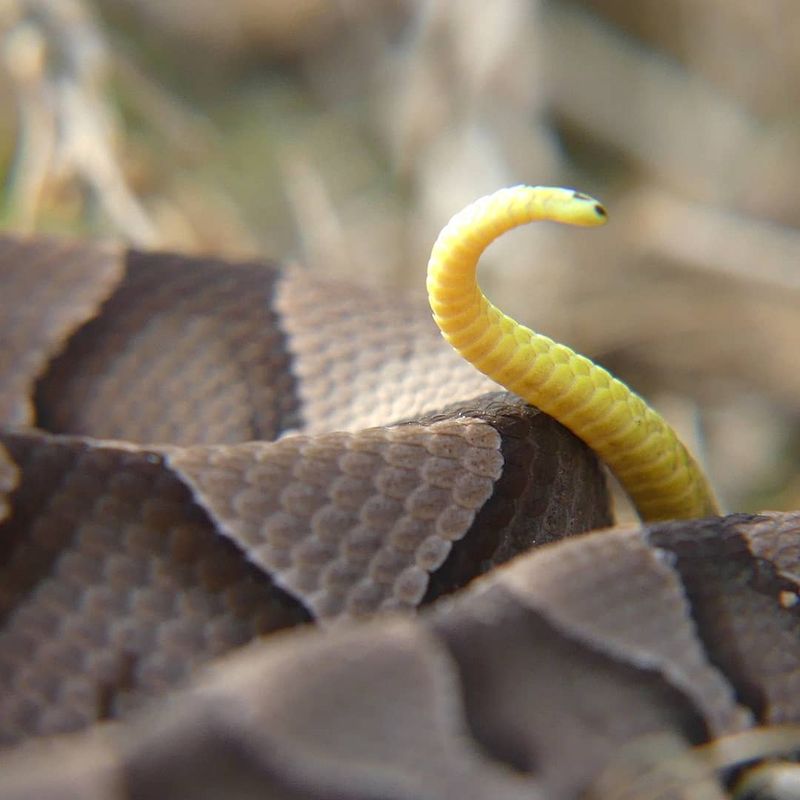
Bright yellow on the very end of a small snake’s tail is a red flag worth respecting. Baby copperheads are born with a sulfur-yellow or greenish tail tip.
They sometimes wiggle that tip to lure frogs and lizards close enough to strike.
Copperheads give birth to live young, usually from late August through early October. During that window, Georgia homeowners tend to see more small copperheads in leaf litter and flower beds.
Young rat snakes have tails that match the rest of their patterned body, with no bright yellow tip.
The yellow color fades as a copperhead grows, usually within its first year or so. An adult copperhead will not show that bright tip, so this clue mostly helps with small snakes.
Lighting matters here, since sunlight on wet scales can make any tail look pale.
Spotting the tail does not require handling or poking at the snake. A phone camera with zoom works well for a clear, safe look.
Remember that baby copperheads are venomous from birth, and their bites need medical attention.
If you see that yellow tip, keep children and pets indoors and let the snake move on. Calling a local wildlife removal service is a reasonable choice when it stays near busy areas.
5. Head Shape Alone Can Mislead You
Everyone seems to know the old rule about triangle-shaped heads meaning danger. Sadly, that rule trips people up all the time.
Harmless rat snakes can flatten and widen their heads when they feel threatened, making them look much more triangular.
Copperheads do have a fairly broad head with a slim neck behind it. Still, a calm copperhead may hold its head in a way that does not look especially wide.
Judging from a quick glance at head outline can lead you to the wrong answer either way.
Pupil shape is another clue people mention. Copperheads have vertical, cat-like pupils, while rat snakes have round pupils.
Seeing pupils requires getting close, and that is not a safe trade in a Georgia yard full of hiding spots.
Copperheads also have a small heat-sensing pit between each eye and nostril. Like the pupils, it is hard to spot without getting too near.
Body pattern and tail color are much easier and safer to read from a distance.
Treat head shape as a small supporting detail, never the main deciding factor. Combining two or three clues gives you a far more trustworthy answer than one feature by itself.
6. Many Rat Snakes Darken Considerably As They Age
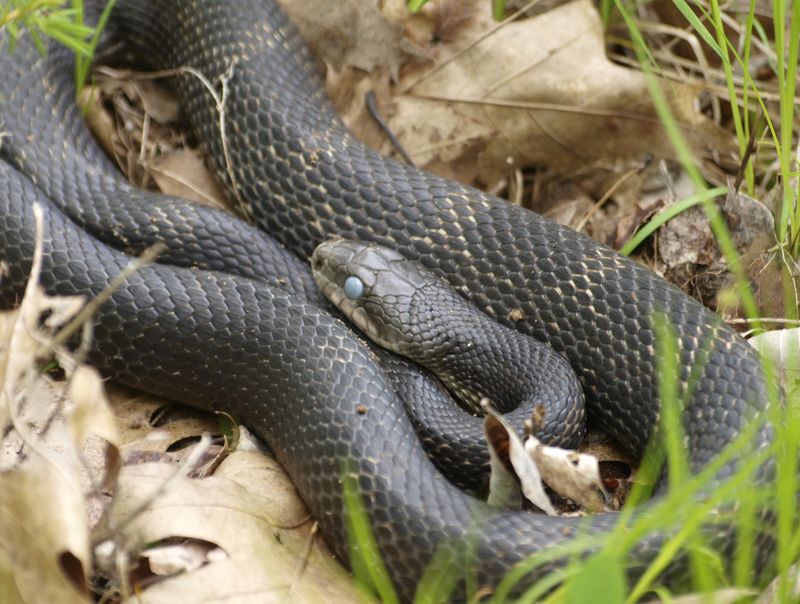
Watch a rat snake over a few years and you might hardly recognize it. Its bold baby blotches slowly fade as the body darkens.
Depending on the type and location, adults may turn mostly black, gray, or shades of brown.
In northern Georgia, adult rat snakes often look glossy black with faint traces of their old pattern. Farther south, some stay grayer with blotches still visible.
Yellow and gray rat snakes found across parts of the Southeast can look quite different from each other, too.
That color shift usually happens gradually over the first couple of years. Midway through, a snake can look dusky and blotchy at the same time.
Those in-between snakes are often the hardest to identify, so take your time.
Copperheads keep their hourglass bands for life, even as their colors shift slightly with age. A large, mostly black snake climbing a tree is very unlikely to be a copperhead.
Shed skins left behind in attics or garages can also hint at which snake lives nearby.
Rat snakes eat rodents and are welcome helpers around barns and gardens. Seeing a big dark one regularly may mean fewer mice near your home, though it will not handle a serious rodent problem alone.
7. Keeping A Respectful Distance Works For Both Species
Space is your best safety tool, no matter which snake you find. Most bites happen when someone tries to grab, move, or harm a snake.
Staying about six feet away gives you room to observe while giving the snake room to leave.
Rat snakes are not venomous, but they can still bite if handled, and those bites may get infected. Copperhead bites are rarely life-threatening for healthy adults, yet they are painful and need prompt medical care.
If anyone is bitten, call 911 or head to an emergency room right away.
Snakes are protected from needless harm in many situations under Georgia law, especially nonvenomous species. Leaving them alone is usually the simplest and safest choice.
A gentle spray from a garden hose can encourage a snake to move along without anyone getting close.
Reducing hiding spots helps more than any repellent product. Keep grass short, store firewood off the ground, and clear brush piles near doors and play areas.
Wearing boots and gloves while gardening is a smart habit from spring through fall.
When a snake keeps showing up in a busy spot, contact a licensed wildlife removal professional. They can identify it and relocate it safely, which takes the guesswork off your shoulders.